| |||||||||
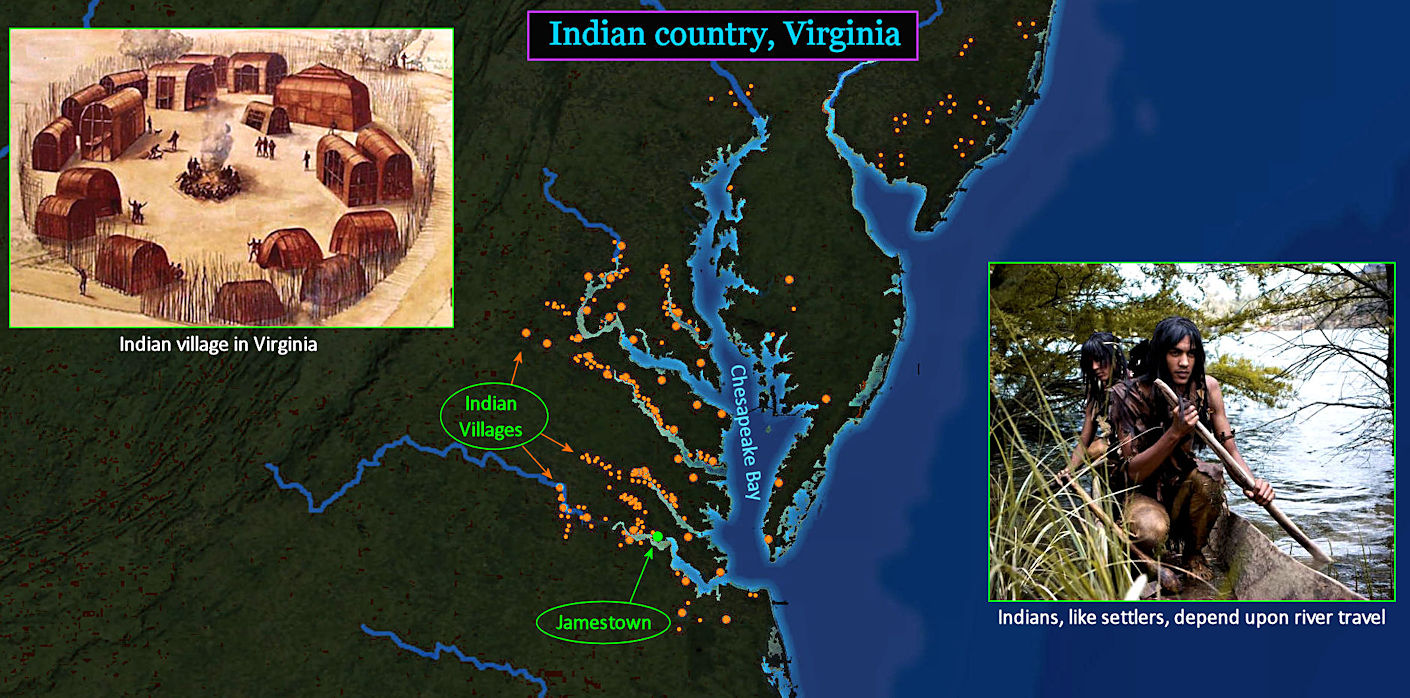
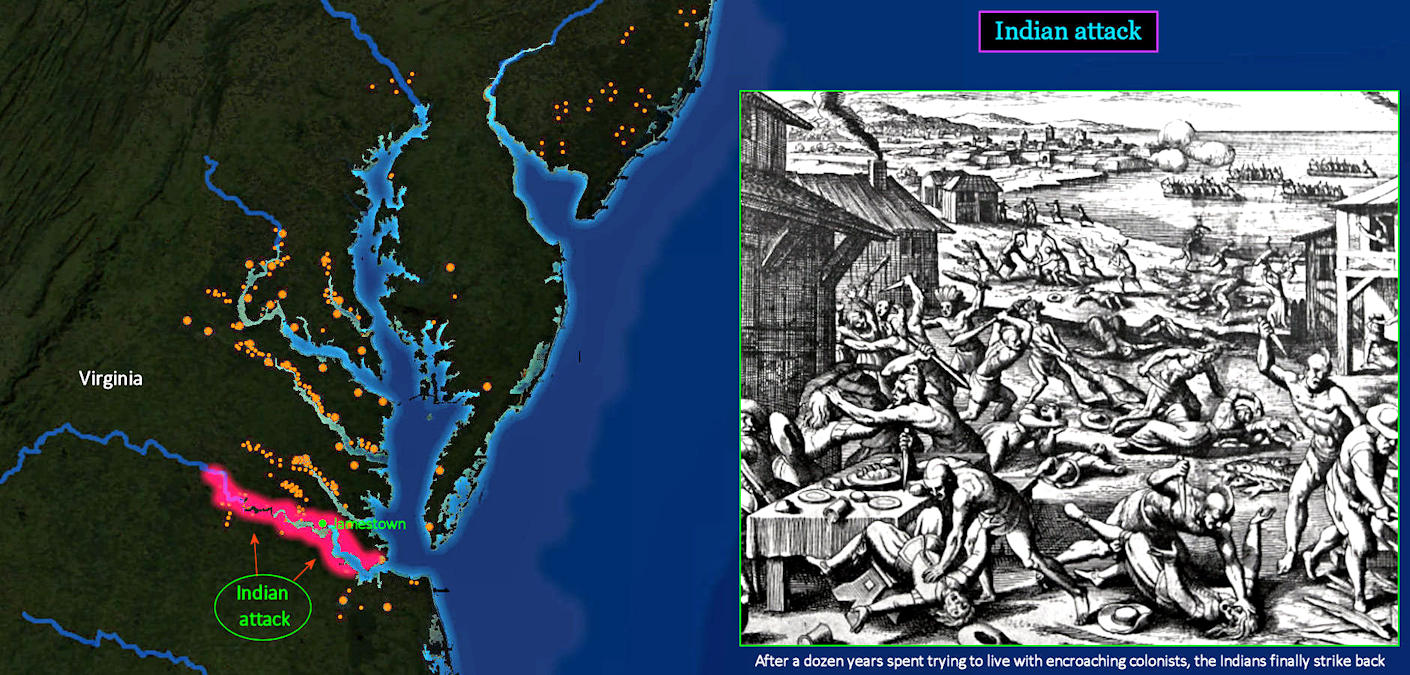
Surrounded by Hostiles The entire western side of Chesapeake Bay is Indian country. The ORANGE dots indicate Indian villages. Jamestown is the GREEN dot in their midst, a swampy site which the Indians don't want. Although the settlers are counting on establishing friendly relations, the situation soon deteriorates. Newly-arriving settlers come into conflict with Indians over shoreline areas, which they want for additional tobacco fields. | |||||||||
| |||||||||
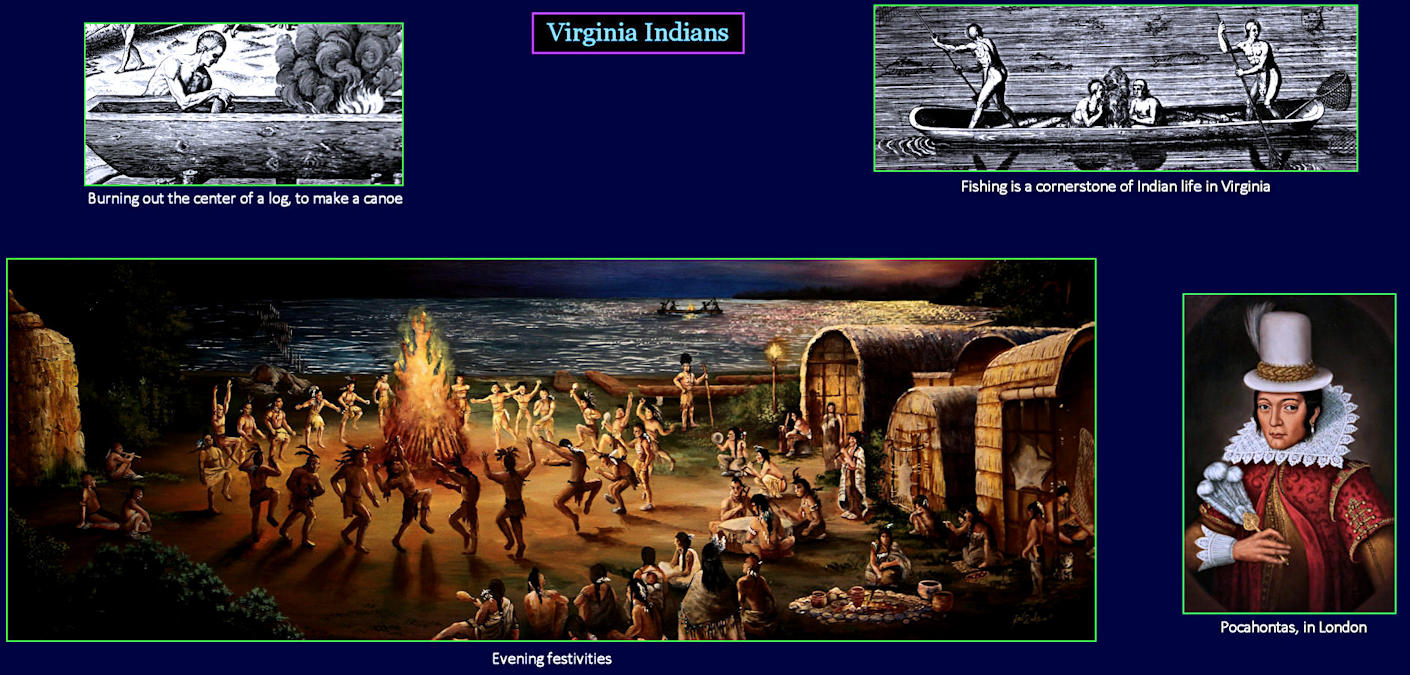
Indian Ceremony The Indian culture in Virginia is based on fishing. The Indians fish from dugout canoes made from tree trunks, using small fires to burn away the interior of the log (top left). The view at bottom suggests that they also know how to party. But the Indians are increasingly harassed by the encroaching English. One famous story that has endured is that of Pocahontas, the favorite daughter of the Indian chief. In an attempt to restore peaceful relations, she is allowed to marry an Englishman, and sails off to England with him. In London, she dresses up and is treated like a celebrity (lower right), but then dies of sickness before she can return home. | |||||||||
| |||||||||
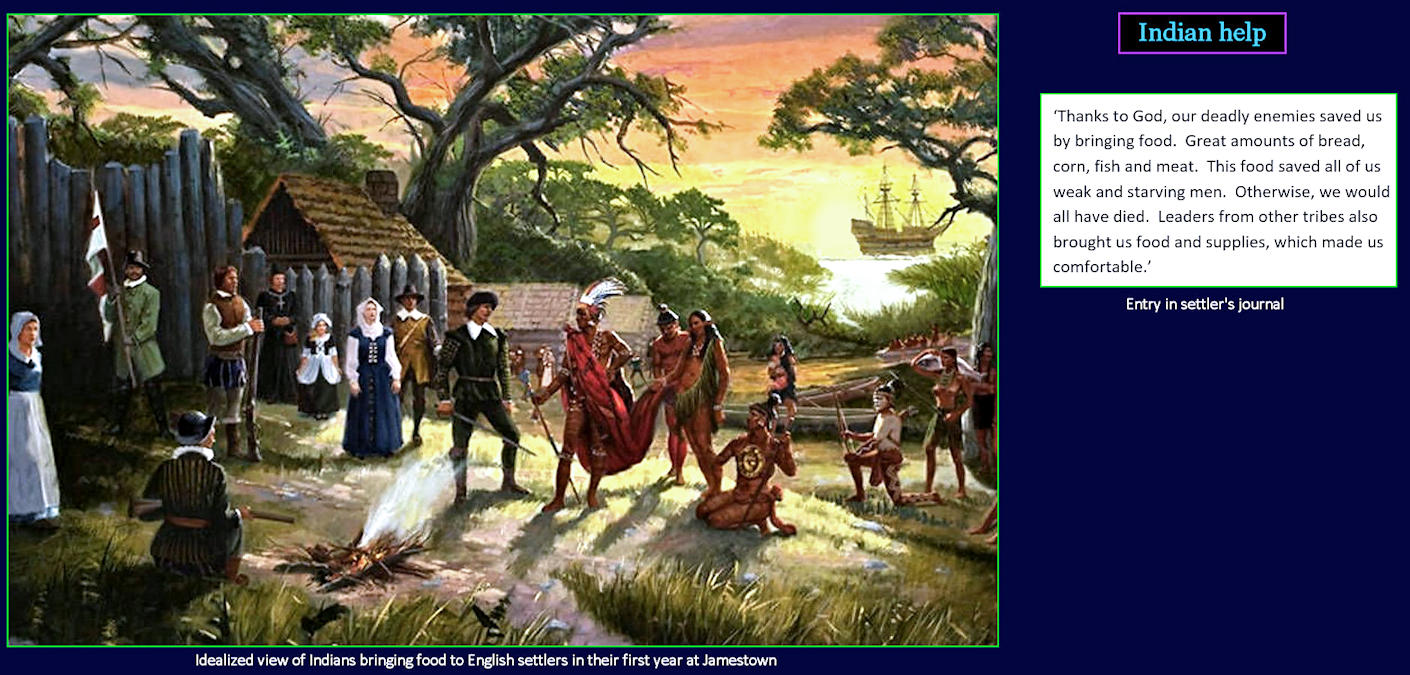
Friendly Indians, at first During the first year at Jamestown, food quickly becomes a problem. The Indians, meanwhile, are initially hopeful that friendly relations can be established with their dangerous new neighbors. The text above is from the journal of one of the settlers during that first year, and highlights the importance of early Indian help. But as soon as the colony begins to prosper, with income from the yearly tobacco crop, the situation changes. More Englishmen keep arriving, establishing ever more new tobacco plantations along the river, and tensions begin to mount. | |||||||||
| |||||||||
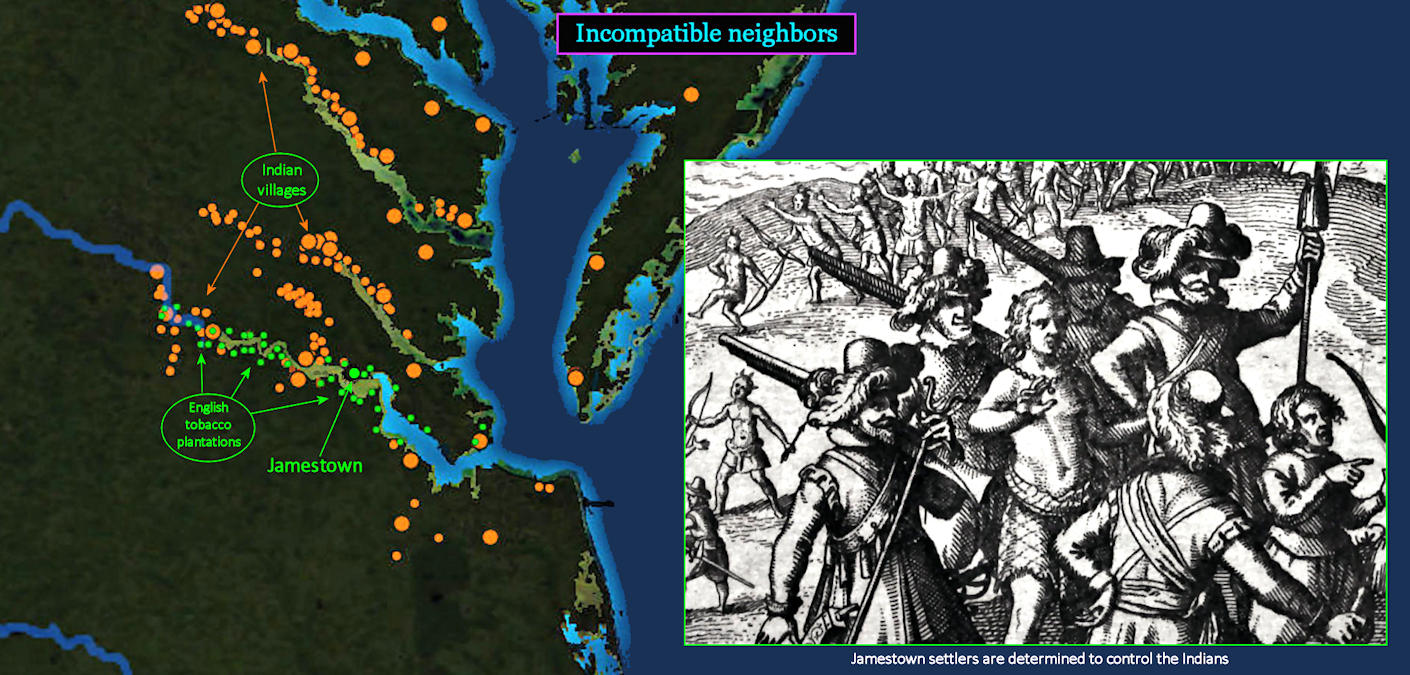
Turf Wars As time goes on, settlers keep extending their settlements further and further upriver from Jamestown (GREEN dots above), into land already well-settled by Indians. Back in England, word has quickly spread about the fantastic wealth that is being generated in far-away Virginia, simply by growing one magical crop. Within 10 years, there are 1400 settlers, including a few Dutch, Germans and Poles. The once-friendly Indians now begin to view the English settlement as a spreading cancer, which must be wiped out by any means necessary, and the result is prolonged warfare. | |||||||||
| |||||||||
Colonists Massacred The biggest event of the Indian Wars occurs early. It's a coordinated attack by the Indians on all of the English riverfront settlements, including Jamestown. The Indians act friendly right up to the day of the attack, but then rampage through the colony, wiping out one-third of the colonist population. Over 300 settlers are killed in 30 different locations. Despite the ferocity of the attack, however, the settlers are not dislodged from their foothold in Virginia. This is largely due to a timely warning about the attack by a single friendly Indian boy, which narrowly saves Jamestown itself from destruction. There are four separate Indian Wars, stretching over 20 years. The Indians are finally forces to accept defeat, however, and begin paying Virginia taxes. | |||||||||
| |||||||||
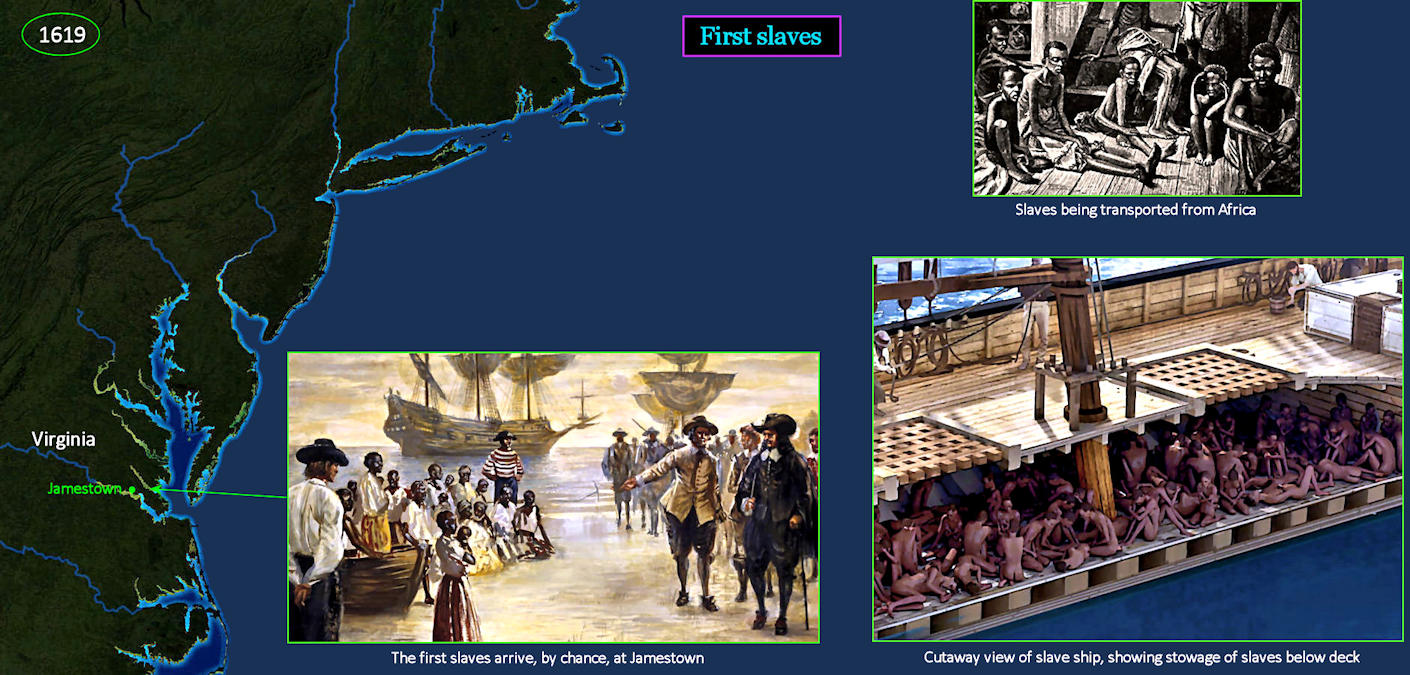
Unexpected Cargo While Jamestown settlers are having their difficulties with neighboring Indians, a ship arrives in 1619 at the nearby port of Hampton, at the mouth of Chesapeake Bay. On board are Blacks who have been captured in Africa, and are being transported to Mexico for sale as slaves. Enroute, the ship is attacked and captured by an English captain, who gives 20 of the slaves to a boyhood friend who happens to live in Jamestown. The slaves find eager buyers, as tobacco is a labor-intensive crop, and there are no other laborers for hire in the area. Slavery has its first toehold in America. | |||||||||