| |||||||||
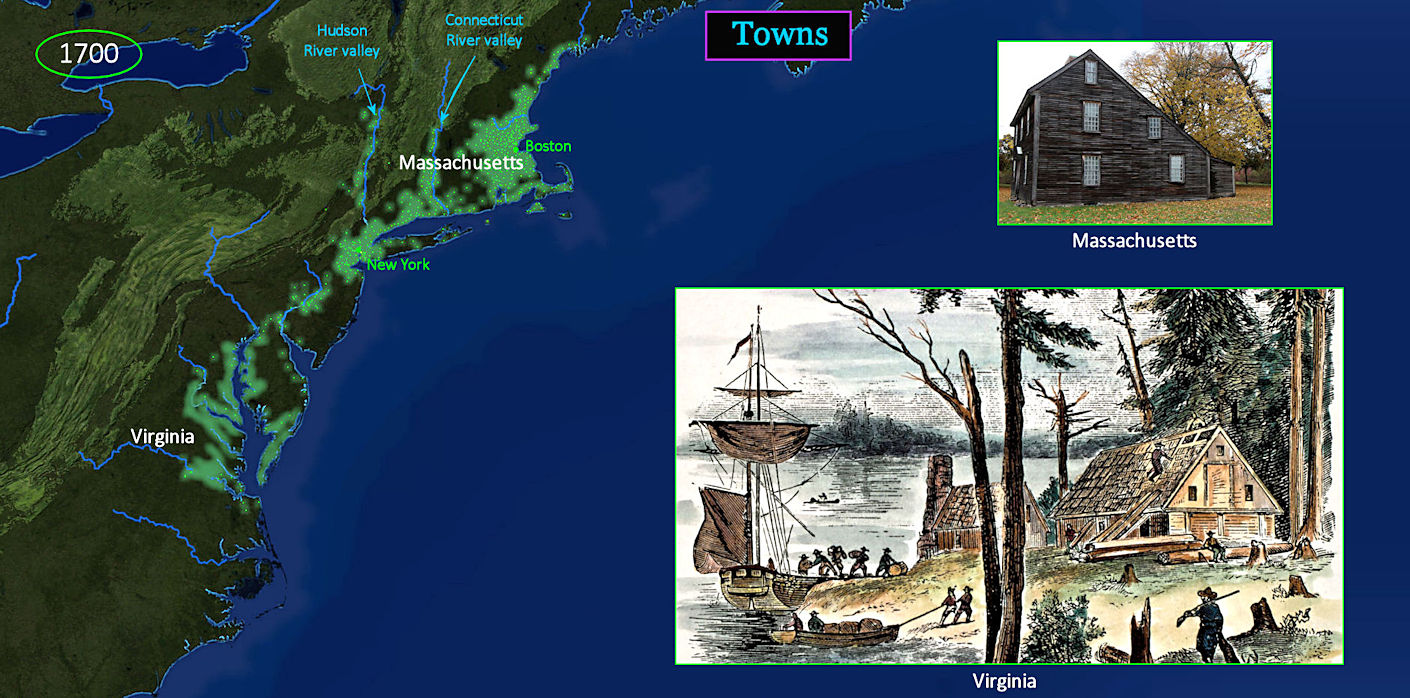
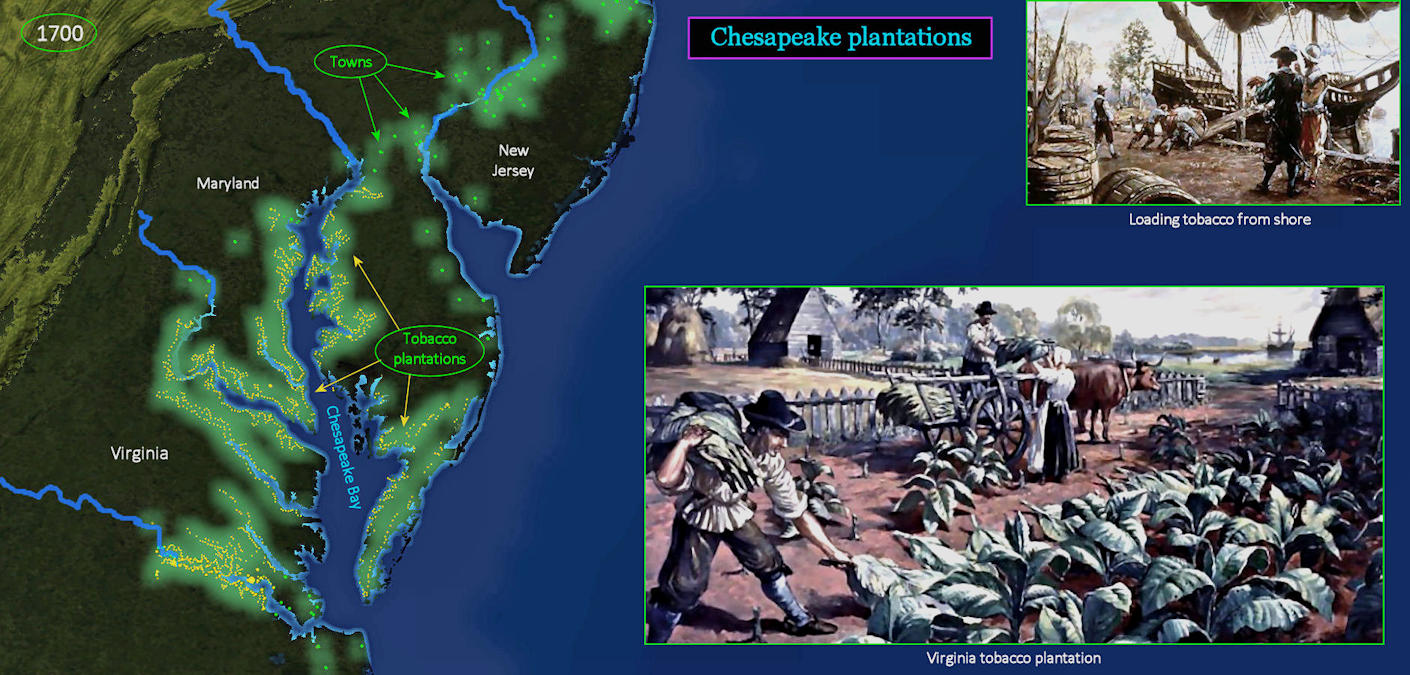
Coastal Development By 1700, the entire New England region is peppered with towns (GREEN dots), from well north of Boston down to New York. Farmsteads cover the coastal regions, and extend far up the broad Hudson and Connecticut River valleys. But down south in the Chesapeake region, the principal means of travel is the boat. Instead of towns, strings of tobacco plantations crowd the shoreline without extending very far inland. Each has its own private dock for unloading supplies, and for loading barrels of tobacco headed back to England. | |||||||||
| |||||||||
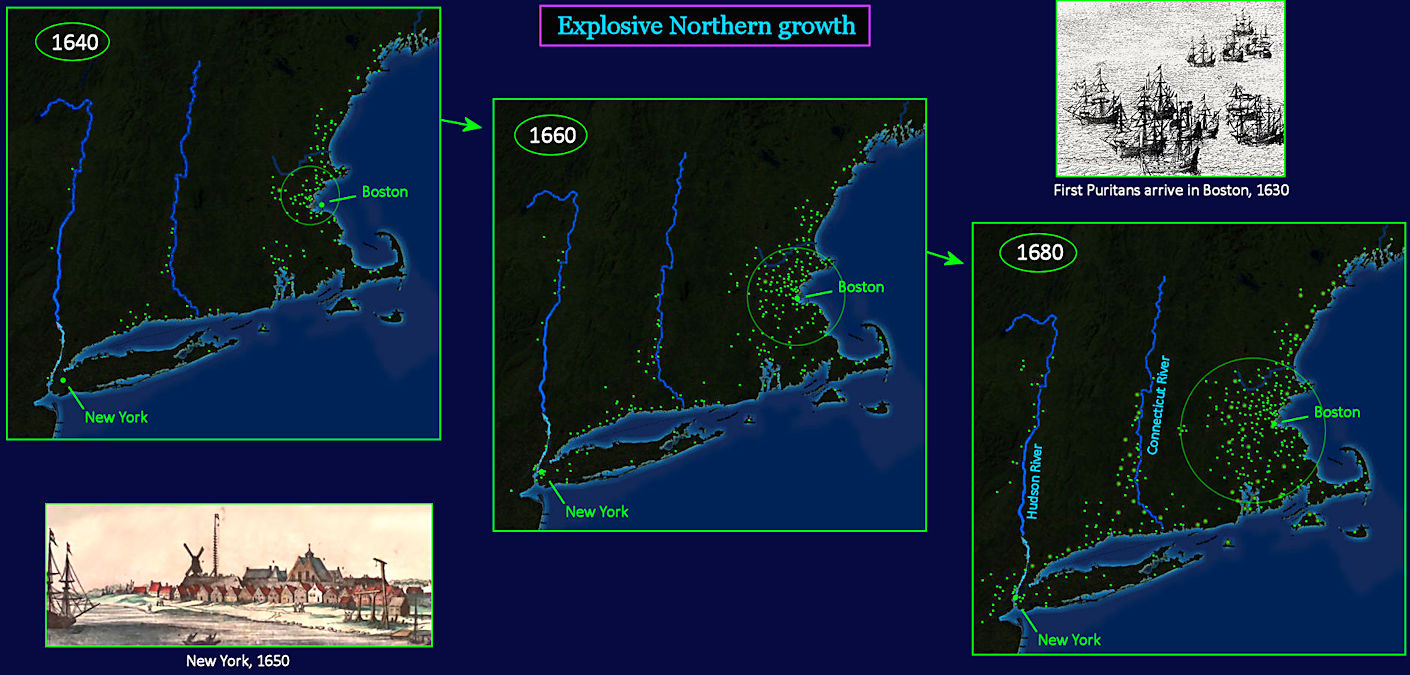
New England The maps above show New England after 60 years of growth. By 1640 (top left), the Boston region is already well populated, having been settled just ten years earlier by the first of 20,000 Puritans. The center view is 1660, shortly before the English seize New York from the Dutch. Note the typically Dutch windmill in the view at lower left. By 1680 (at right), the whole region is filling in, including the Hudson River Valley stretching north from New York. The Connecticut River Valley has been settled all the way up into what will become New Hampshire. | |||||||||
| |||||||||
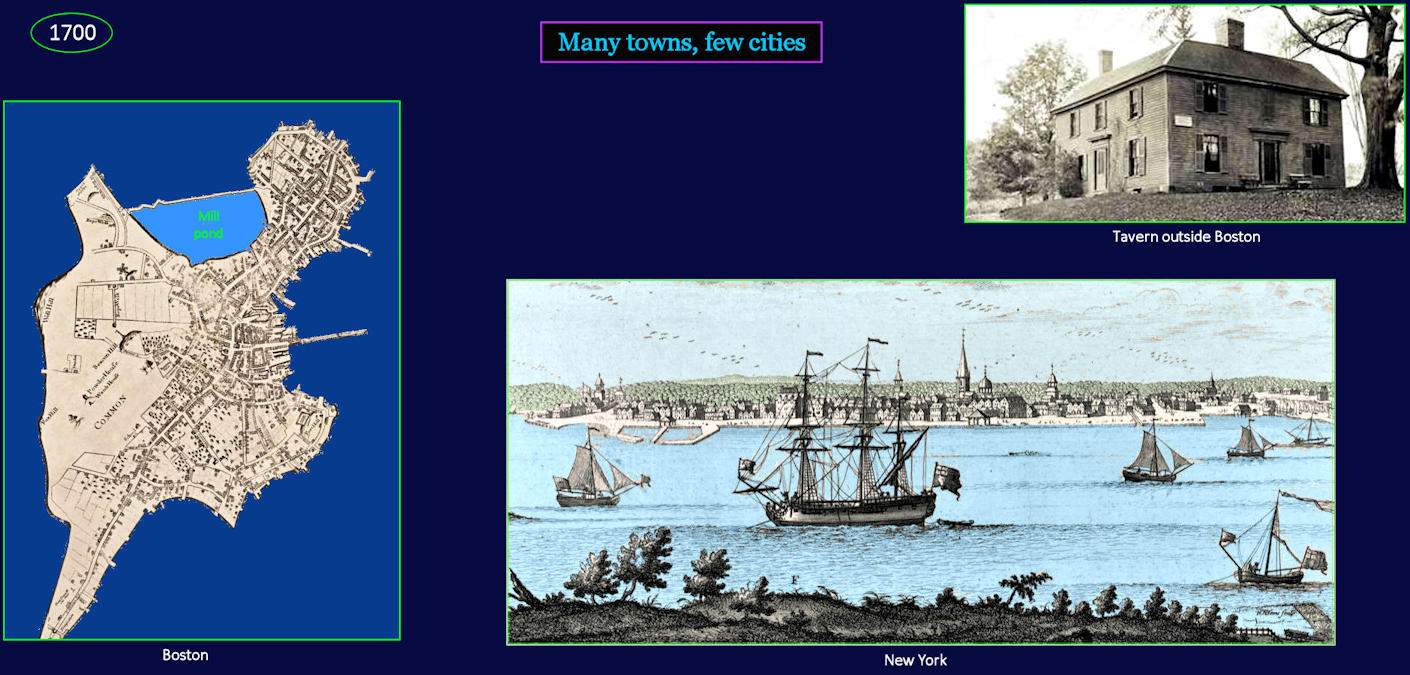
Ports are the Only Cities There are no big cities anywhere in America in 1700, and only three small ones. Boston is America's largest city, but contains only 7,000 residents. New York is the second largest, with just 5,000. Philadelphia has just been incorporated as a city, and also has a harbor. There are no cities at all that lack a good harbor. Small farming towns are popping up everywhere in the North, but typically contain only a few hundred residents. Plantations are spreading in the South, but only Jamestown and the new capital of Williamsburg even qualify as towns. Outside these few places, travelers must rely on country taverns (top right), which provide warm meals and a single large sleeping room upstairs, which men share. For this reason, few people actually do travel. | |||||||||
| |||||||||
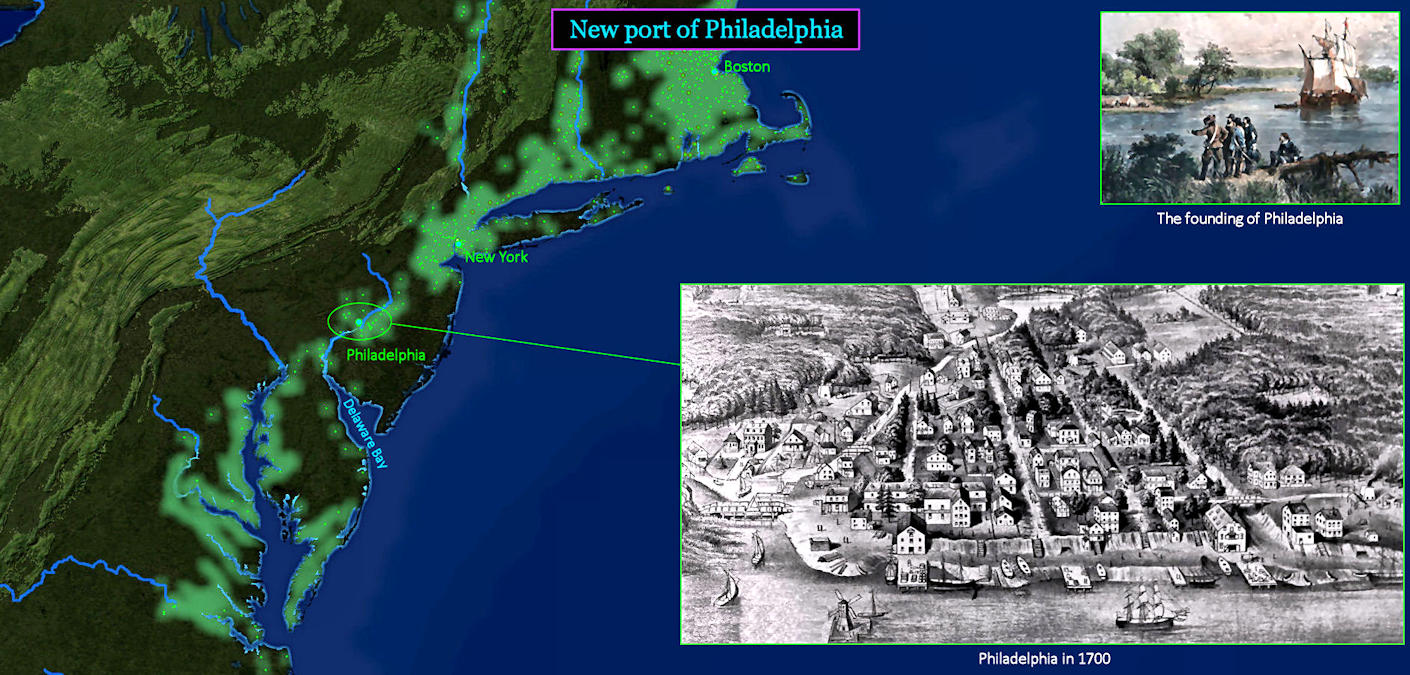
America's Newest Port Just as the ports of Boston and New York are beginning to hit their stride, another important port is being established at Philadelphia (GREEN oval). It is founded on the banks of the Delaware River (top right) in a thinly-settled region which had previously been home only to a few adventurous Swedish families. Philadelphia is founded by Quakers who, like the Pilgrims and Puritans, have a vision of establishing an earthly utopia, free from the domination of the Church of England. Quakers believe in simplicity, and refuse to participate in any form of warfare. They begin their settlement by pledging perpetual peace with the surrounding Delaware Indians. | |||||||||
| |||||||||
Chesapeake Bay This is the Chesapeake Bay region in the year 1700. Small, stand-alone plantations line the shore throughout the region (tiny YELLOW dots). The land is flat and very near sea level, with extensive swamps and wetlands that make land travel impractical. As a result, almost everyone and everything travels by boat. The plantations are dedicated to growing a single crop for export. Tobacco. Planters load barrels of tobacco onto transport vessels that travel the shoreline at harvest time (top right). Although tobacco no longer commands a high price in London, Virginians have few other options for making a living. Almost all available land is planted in tobacco, and the number of black slaves has risen to 15,000, most of whom have been shipped from sugar plantations in the Caribbean Islands. | |||||||||
| |||||||||
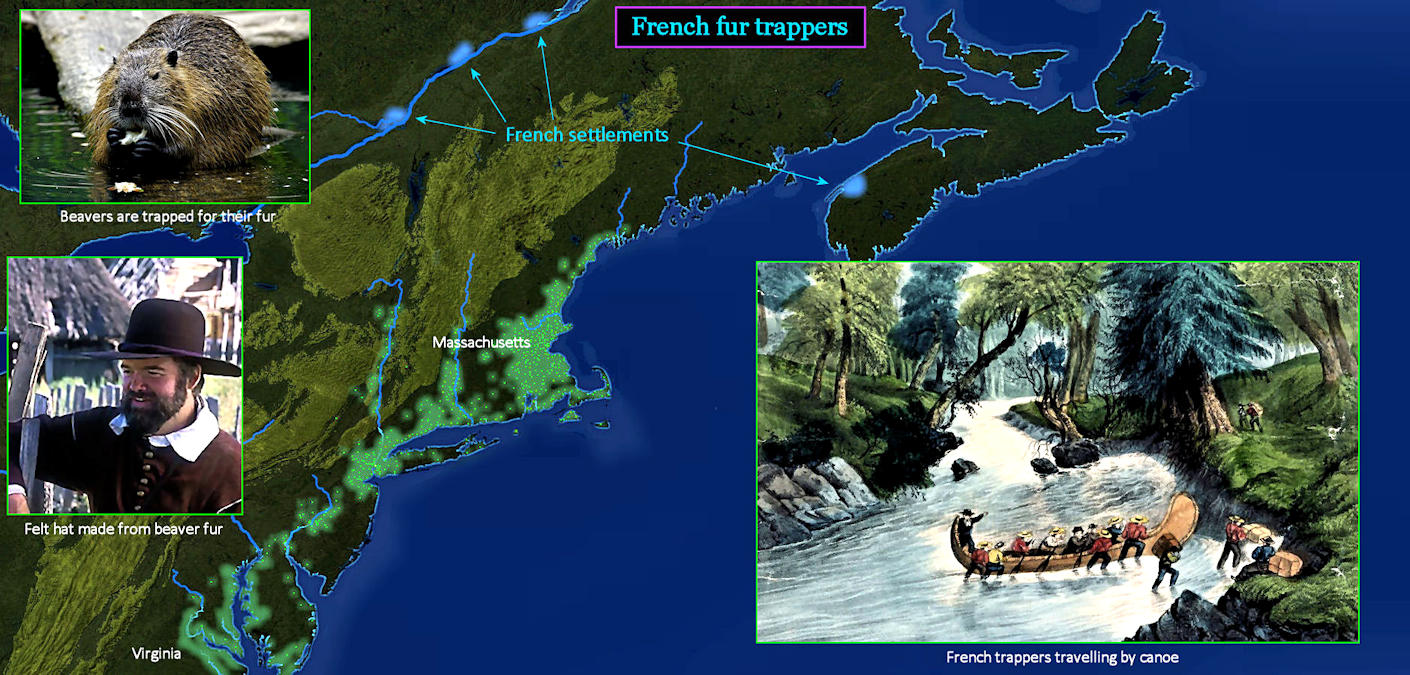
French Neighbors While the English are busy clearing land for new homes in the lower regions of America, a few French settlers are exploring the land we now call Canada, in search of beaver. The fur of the beaver (top left) is a prized commodity, because it can be used to make inexpensive felt hats for everyday use (lower left). The French have established a few forts along the St. Lawrence River, and the shore of Nova Scotia (BLUE highlights on map). But French trappers are free-ranging people, living in tents and traveling by canoe. They do their own trapping, but also rely on trade with northern Indians to get additional furs. Beaver country originally extended well down into the English colonies, but by this time is largely exhausted. | |||||||||