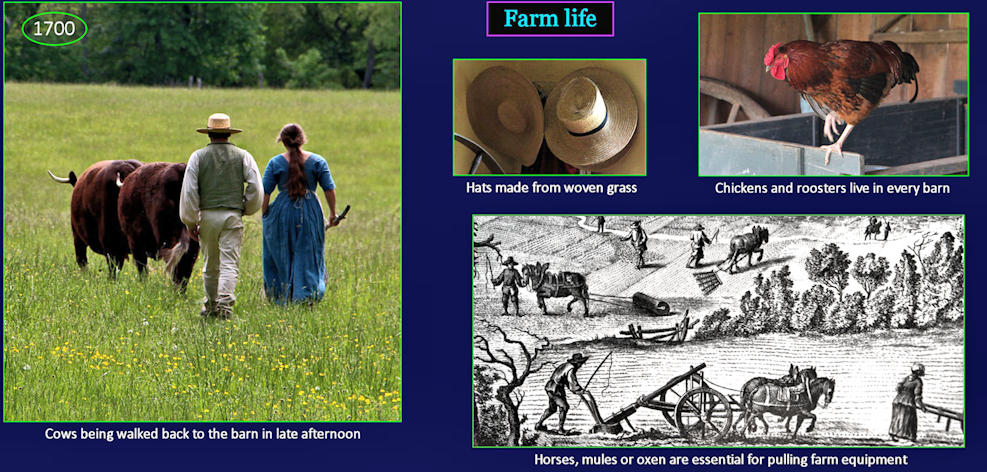
Living the Slow LifeWhile the land is called America, the colonies are still owned and managed by England. The settlers are English citizens, but are left pretty much to fend for themselves. Anything shipped to the colonies has to be paid for. The English are keen to protect home-grown English business from competition with the American colonies. They witaaold anything that might help colonists become self-sufficient, especially in manufacturing or finance. Banks are not permitted in the colonies, so business loans can only be arranged through London bankers. Colonists can import items needed to stay alive, but nothing that will enable them to develop their own manufacturing capacity. |
| ||||||||
| |||||||||
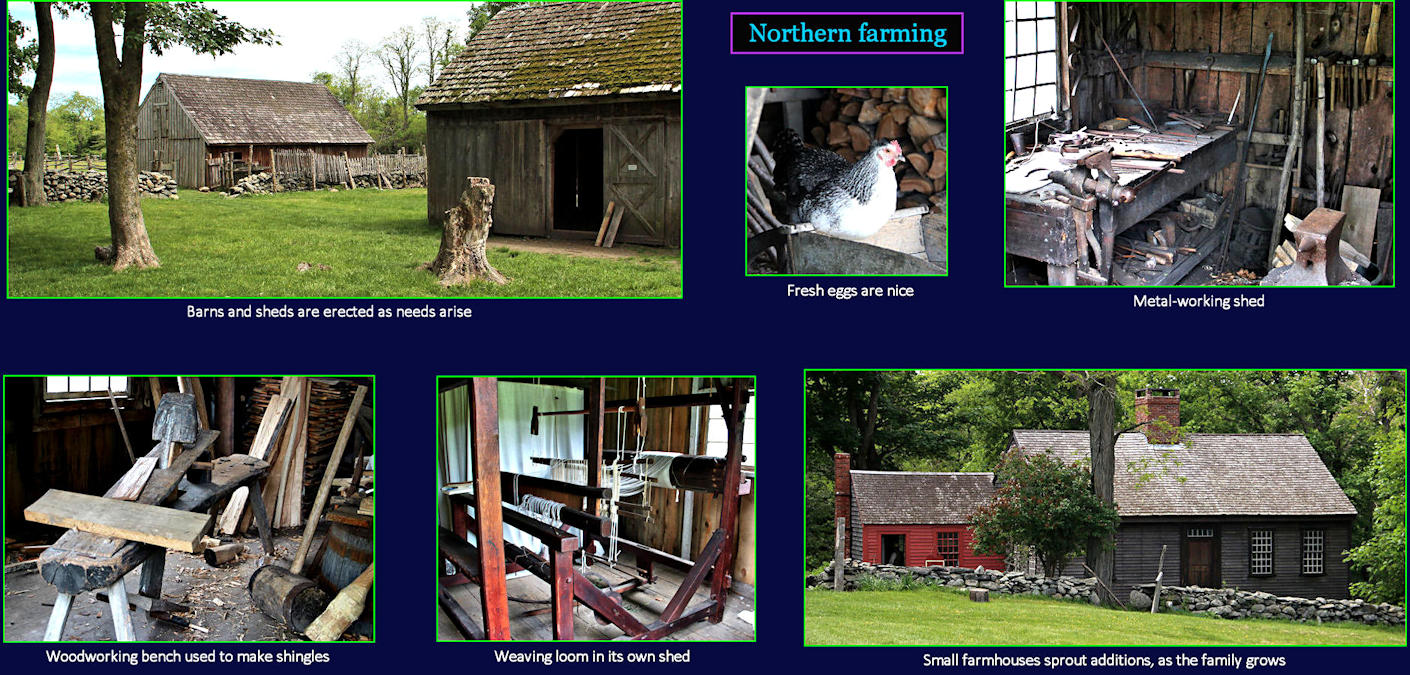
Do-it-yourself Farming Farms have small, simple barns, and sheds that often contain tools for both carpentry and metal-working. Farmers need many skills to survive, using simple tools and materials that are close at hand. The workbench at lower left is used to smooth cedar shingles for the roof. Blacksmiths can make horseshoes, nails and simple hardware, but almost anything else made of metal has to be imported at great cost from England, or crudely fashioned in the shed. Some wives have a loom to weave coarse fabric from flax grown in an outlying field. In addition to horses, cows, sheep and pigs, every farm keeps roosters and hens, geese, ducks, and even turkeys. Poultry roams everywhere, nesting somewhere in the barn. | |||||||||
| |||||||||
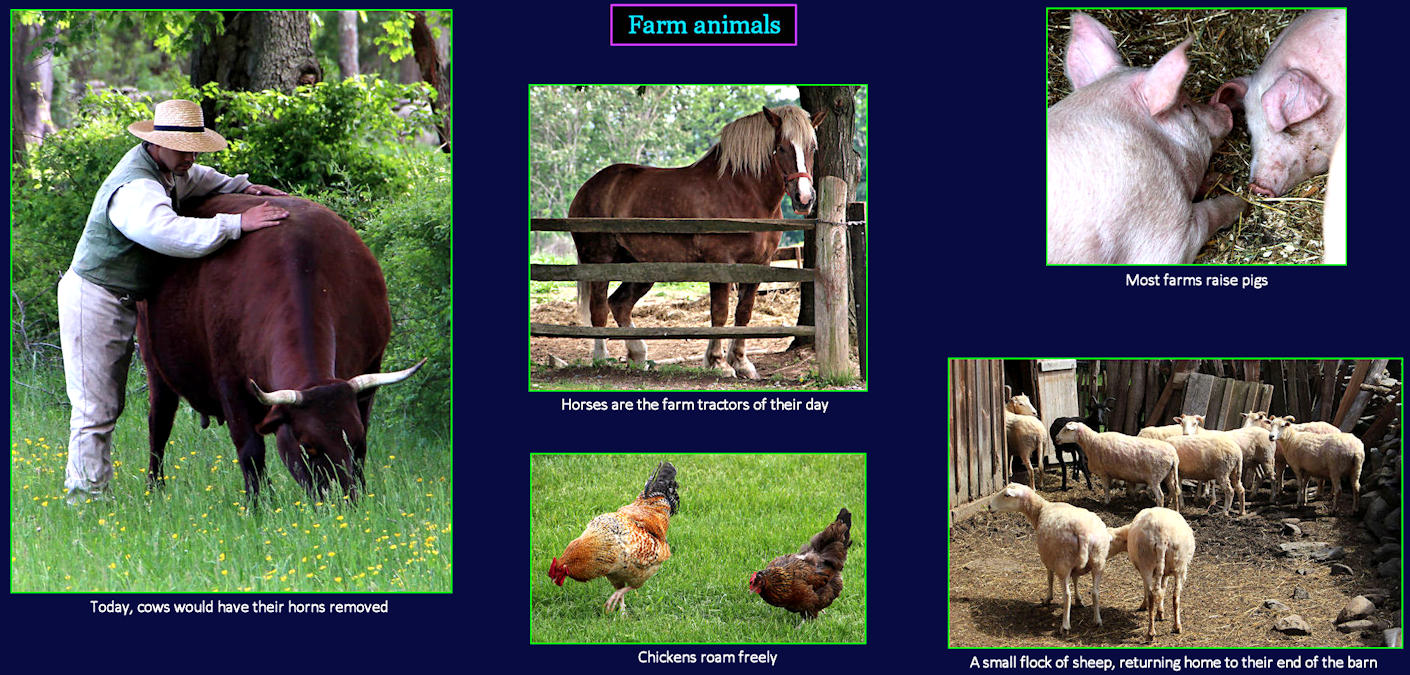
Managing the Livestock Farm families keep all kinds of animals, including some pretty large ones. Horses are required to pull plows and wagons, and most farmers also keep two or three cows, which need daily milking. The cream which settles on top is skimmed off to make butter, by hand-churning. Pigs provide pork and bacon, which is preserved by smoking or salting. Sheep require little care, but their fluffy wool coats need sheering in both spring and fall. Hay is grown in the field, and stored in the barn to feed livestock through the winter. All this keeps colonists busy from dawn to dusk, and sometimes far into the evening during harvest season. Winters are easier, but there is always wood to cut and split, and all manner of things that need mending or fixing. | |||||||||
| |||||||||
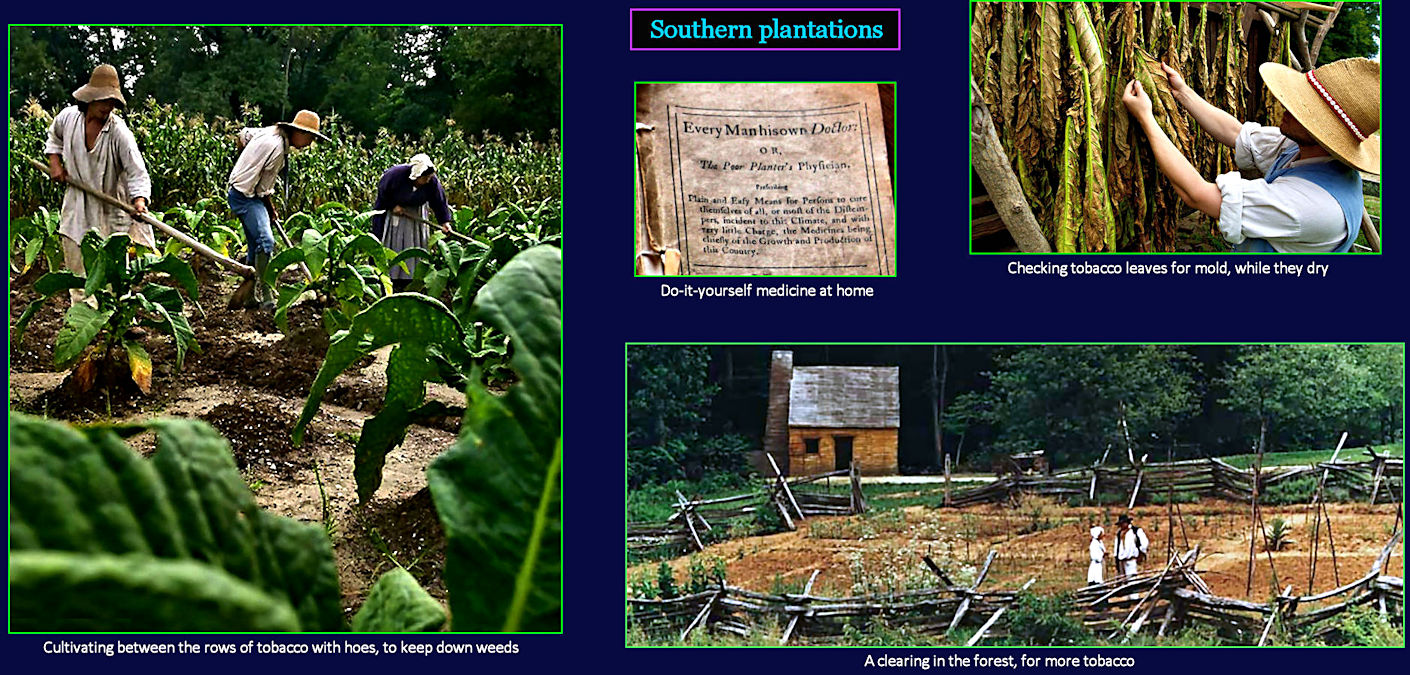
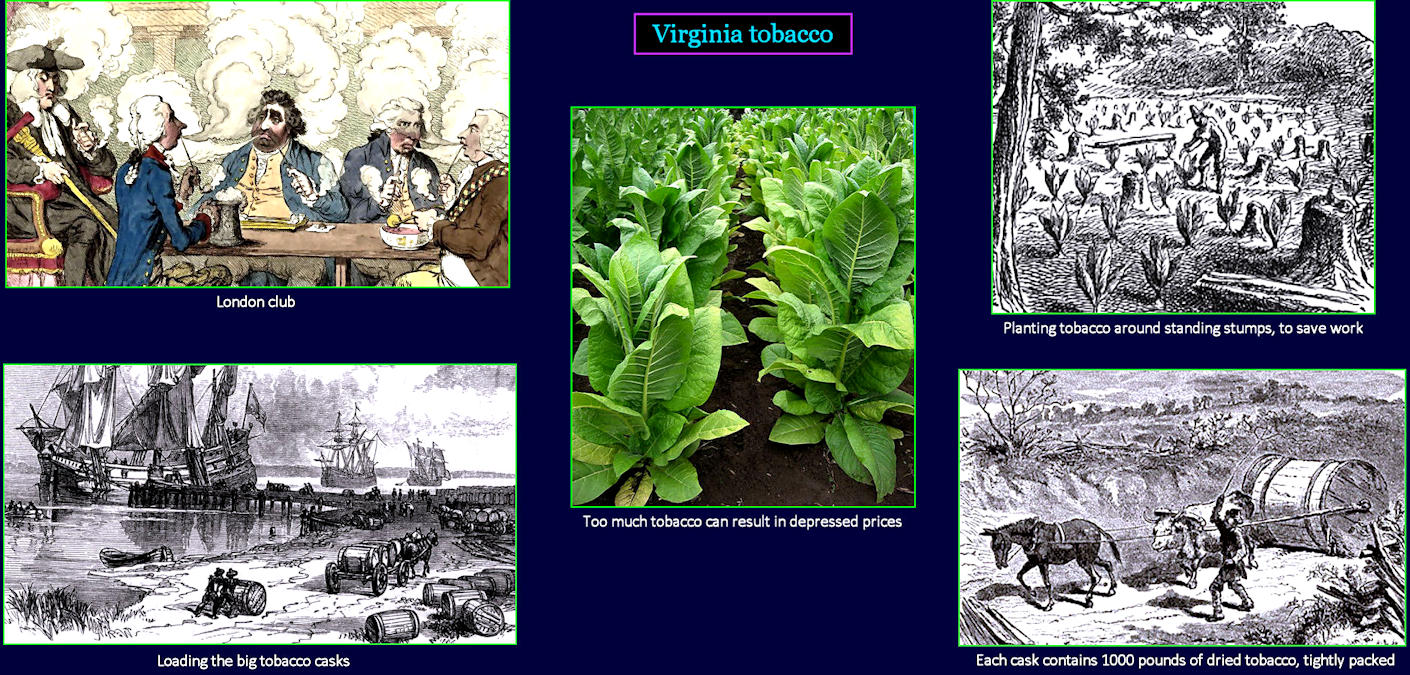
Tending Tobacco Farm work on southern plantations is almost completely different. Tobacco plants need special care under a blazing sun, the work is hard, and hired help is impossible to find. Slaves are only just beginning to become available, at great expense, but loans can only be obtained by those born to wealth, with pre-existing ties to London bankers. Farmers focus all their efforts on the main export crop, which is tobacco. The large tobacco leaves are gathered in bunches, and hung on hooks or strings to dry. As they gradually turn brown, they have to be checked for mold (top right). Even more so than up north, southern farmers are on their own. The pamphlet above contains tips on how to be your own doctor. | |||||||||
| |||||||||
Boom and Bust London smoking clubs provide a lucrative market for Virginia tobacco, and cultivation of tobacco rises rapidly in Virginia throughout the 1600s. Plantations gradually move further inland, as the thin soil at shoreline sites becomes exhausted. The production of tobacco continues to rise, reaching an amazing total of 20 million pounds a year by 1700. This causes the price to fall dramatically, driving smaller farmers out of business. The larger plantations need more labor to tend larger fields, which increases the demand for slaves. The slave trade remains relatively undeveloped until London traders take over in the mid-1700s, but a few New England shippers are actively engaged in transporting slaves into Charleston from English sugar plantations in the Caribbean. | |||||||||
| |||||||||
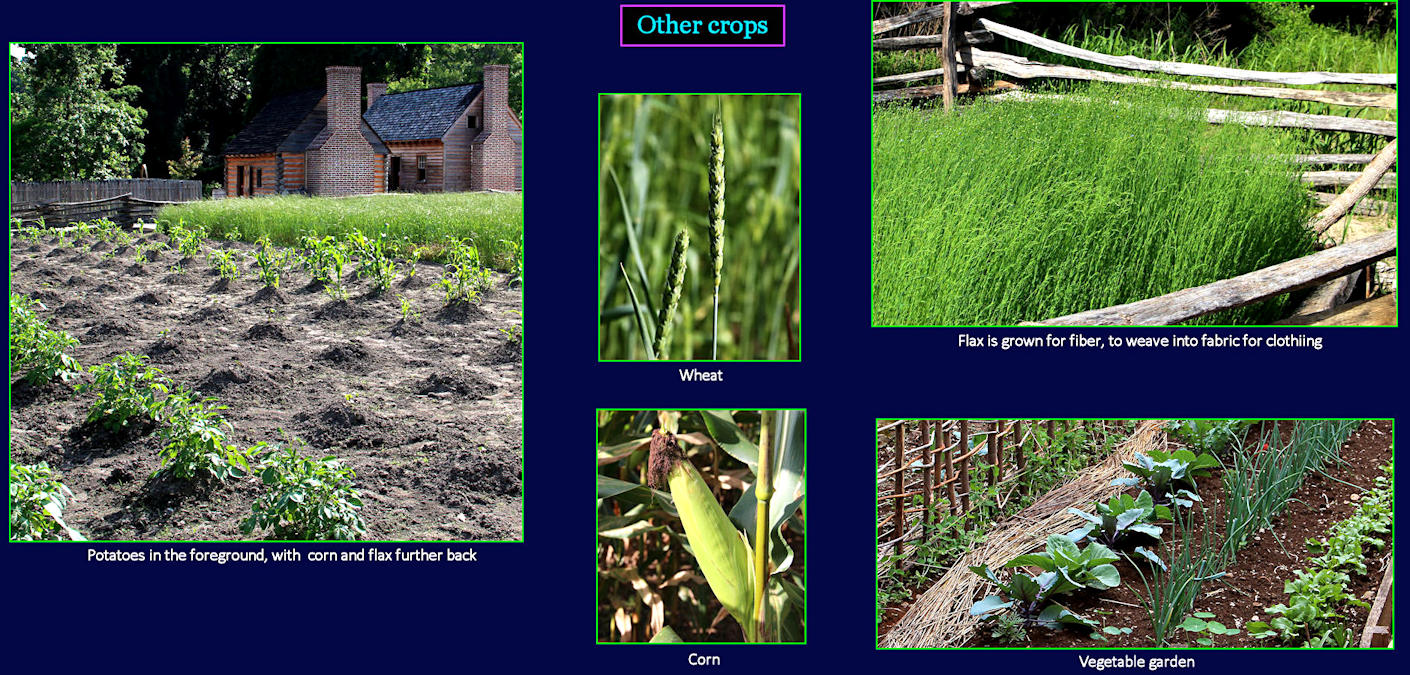
Potatoes, Corn, Wheat and Flax Tobacco is the big export crop, but Virginia farmers also raise other plants for food. Potatoes can be stored for months in a root cellar, while wheat and corn can be dried and stored all winter. Wheat produces a spike of seeds (center top) that can be dried and kept for years. Corn is often dried right on the cob after harvesting, and saved to feed livestock during the winter. Kernels can be easily stripped off by hand later, when needed. Most farms also grow an acre or two of another grass-like plant called flax (top right), which is grown only for the fibers in the stalk. With lots of preparation, these fibers can be spun into a fine yarn, woven into fabric, and then hand-stitched to make everyday clothing. All from grass. | |||||||||