| |||||||||
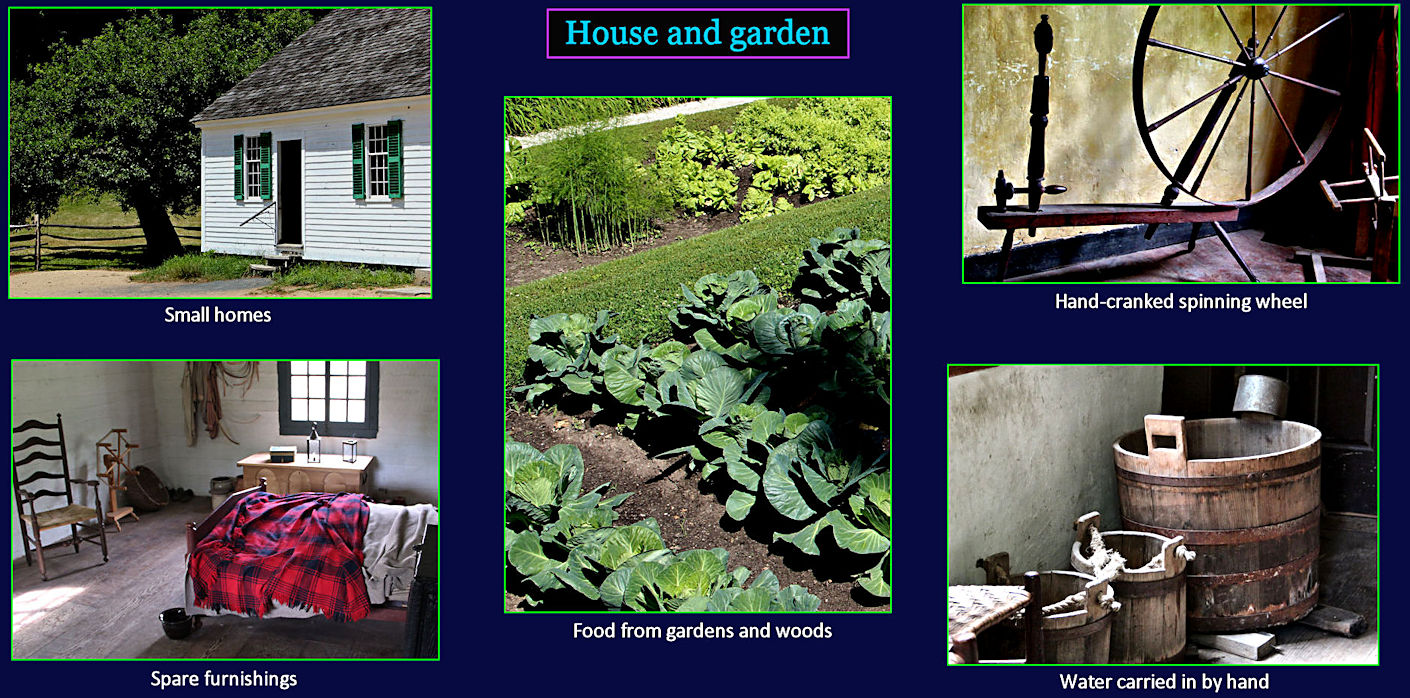
Clothes, Food and Water Life is plain and simple on the colonial farm. The same clothes are worn pretty much every day, with any special clothing kept in a chest or small set of drawers. Water is carried into the kitchen in wooden buckets from the well out back. The gardens, and occasional orchards, provide fresh food sufficient to feed the family. Many wives also spin yarn to make 'homespun' clothing, using a big spinning wheel turned by a small hand crank (not quite visible in photo at top right). Later spinning wheels are smaller, operated by a foot pedal. | |||||||||
| |||||||||
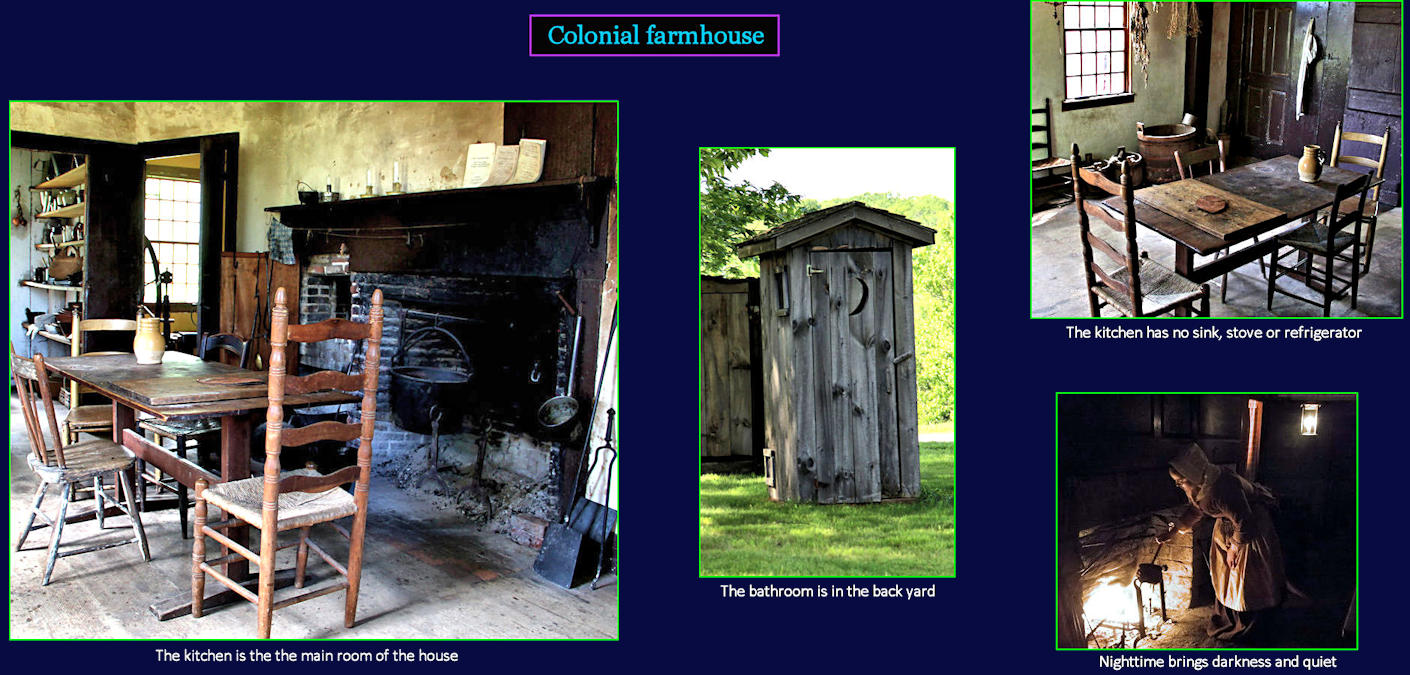
All-in-one Kitchen Farm living centers around the great kitchen fireplace (left), where all the cooking is done, and where families gather in the evening. Everyone eats in front of the fire, which provides the only real warmth in the home. This all-purpose room combines the functions of living room, dining room and kitchen, all in one. The outhouse out back (center top) is convenient only in daylight, the alternative being a bedroom chamber pot. During winter evenings, activities are limited, with candles (sometimes in lanterns) providing the only lighting. In upstairs bedrooms, water left in a cup on a winter night might be frozen solid by morning. | |||||||||
| |||||||||
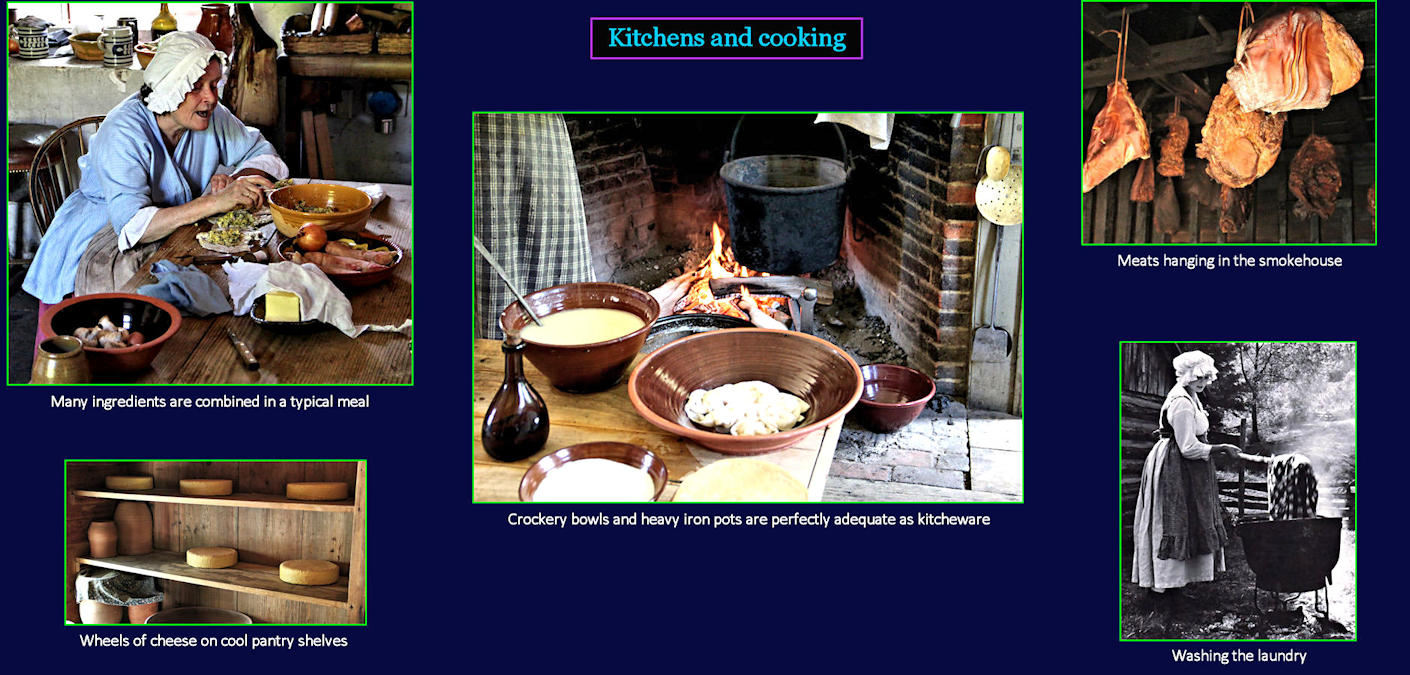
Surprising Abundance Kitchens are often the busiest place on the farm. There is no refrigeration, so food is prepared fresh most of the year. Meat can be hung over a smoldering fire in a small smokehouse, which preserves it for a month or more (top right). Wheels of cheese will also last a long time, when stored in a cool back room (lower left). Cookware is mostly cast iron, while mixing bowls and storage jars are made of crockery, fired in a local kiln. Laundry is boiled in tubs or kettles, using water heated over an open fire, sometimes down by the stream out back. Some kitchens have a sink carved from soft soapstone, but most colonists wash up in a bowl or bucket, right on the table. | |||||||||
| |||||||||
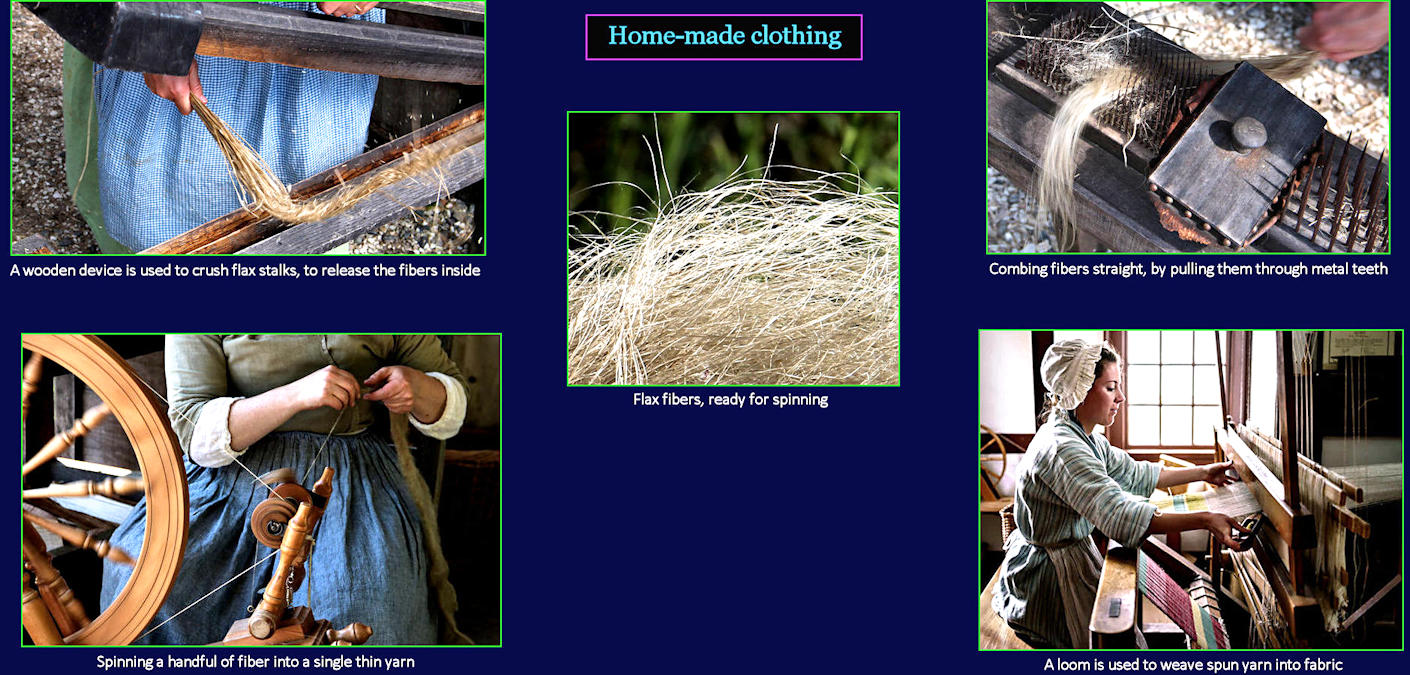
Do-it-yourself Clothing Ready-made, store-bought clothing is unavailable almost anywhere in colonial America. Few families can even afford to buy fabric, which has to be imported from England. So most families make their own clothing, from scratch. First, you plant a field of flax, to provide fiber to make the coarse yarn. Flax is like grass, but when dried and crushed in a simple wooden tool (top left) will produce a handful of very soft, fine fiber, much like human hair (center top). This is pulled through a crude metal comb (top right) to separate and align the fibers, prior to spinning. The fibers are then spun into thin yarn (lower left), which is woven into fabric on a locally-made loom (lower right). The fabric is then cut into pieces, and hand-stitched together. | |||||||||
| |||||||||
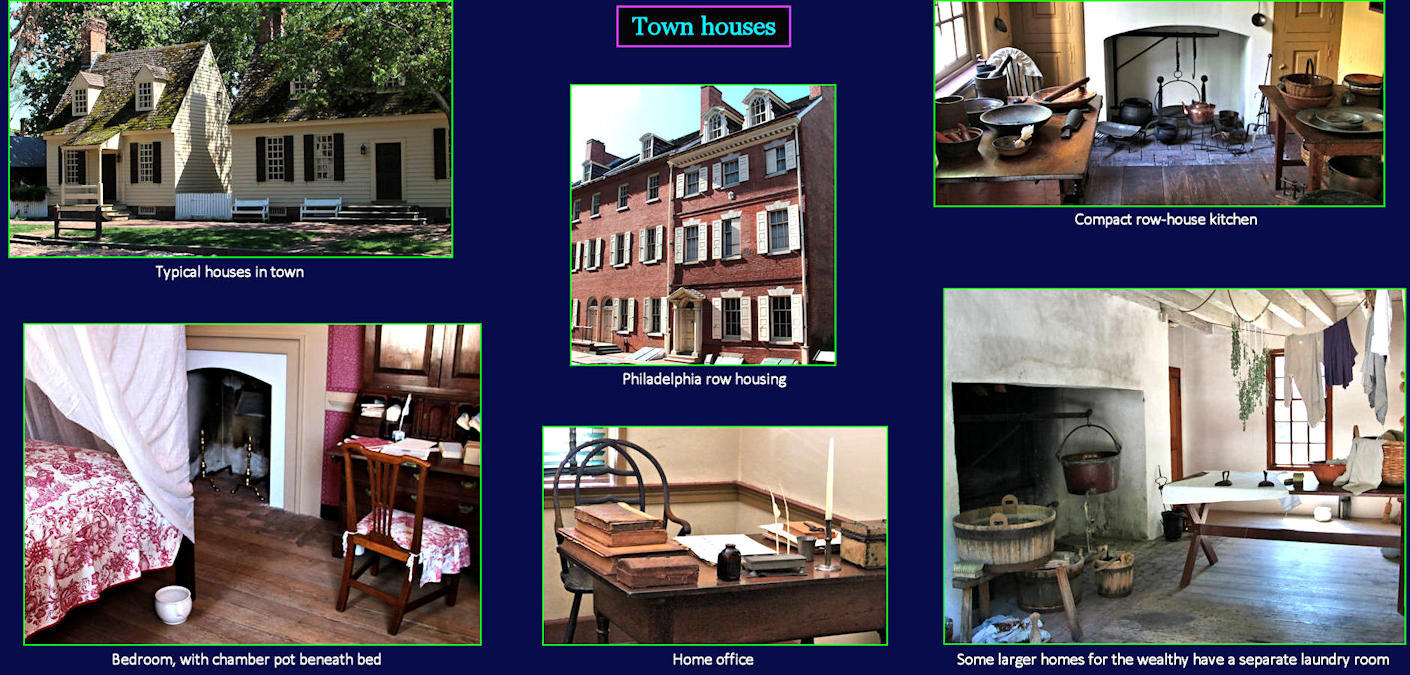
Getting Fancy Houses in town are several steps up from the country farmhouse, although the structures themselves are often quite modest, even in important towns like Williamsburg (top left). But they can also be quite spacious, like the three-story townhouses in thriving Philadelphia (other photos above). Townsfolk are more likely to be merchants, shopkeepers or professionals, like lawyers and bookkeepers. This means they might have money to spend on tasteful furnishings, and even entertain guests. Some might have special amenities like an early home office for correspondence (center bottom), or a separate laundry room (lower right). In a townhouse, food may still come from a back garden, but also from the town market. | |||||||||
| |||||||||
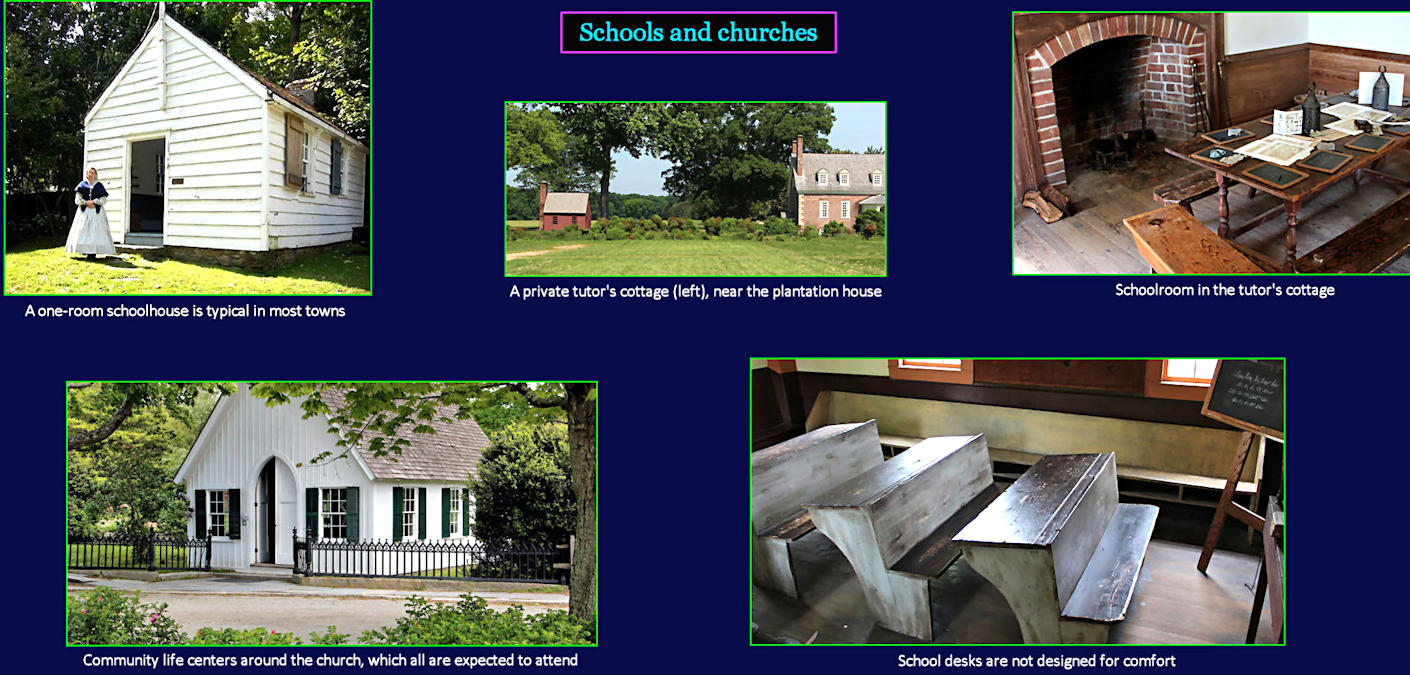
Community Buildings Schools and churches are small and simple during the 1700s. In the North, children (mostly boys) attend small, one-room schools with a single teacher. All children, regardless of age or grade, are taught in the same room, sitting on simple wooden benches. Boys normally attend school only from late fall till spring, since they are needed on the farm during the growing season. In the South, where there are few towns, there are likewise few schools. Sons of plantation owners might be sent up north for school, or be taught by private tutors. The small cottage above (center top) is used by the family tutor, who teaches downstairs (top right) and lives above. | |||||||||