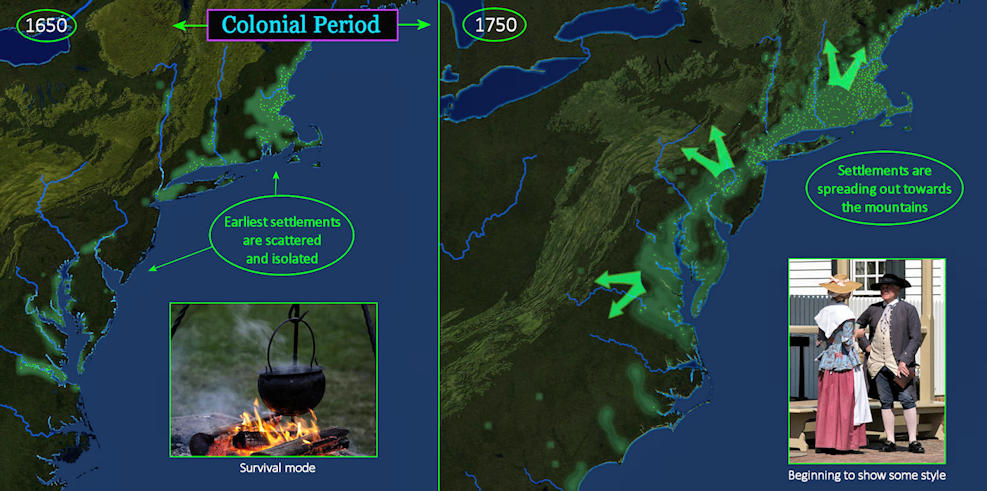
Looking BackThe two maps shown here are separated by just 100 years, but it is already clear that people are spreading into all available unsettled land. Technology plays almost no role, and exports are limited to crops and wood products. Colonists are moving rapidly into upland areas, sharing the land with the native Indians before pushing them aside. The mountains are the only real constraint, as wagon roads are only practical in flatter coastal areas. The motivation behind this growth is easily understood. Settlers, who know that wealthy Europeans all live on large estates, hope that by owning land in America, they might also become wealthy. |
| ||||||||
| |||||||||
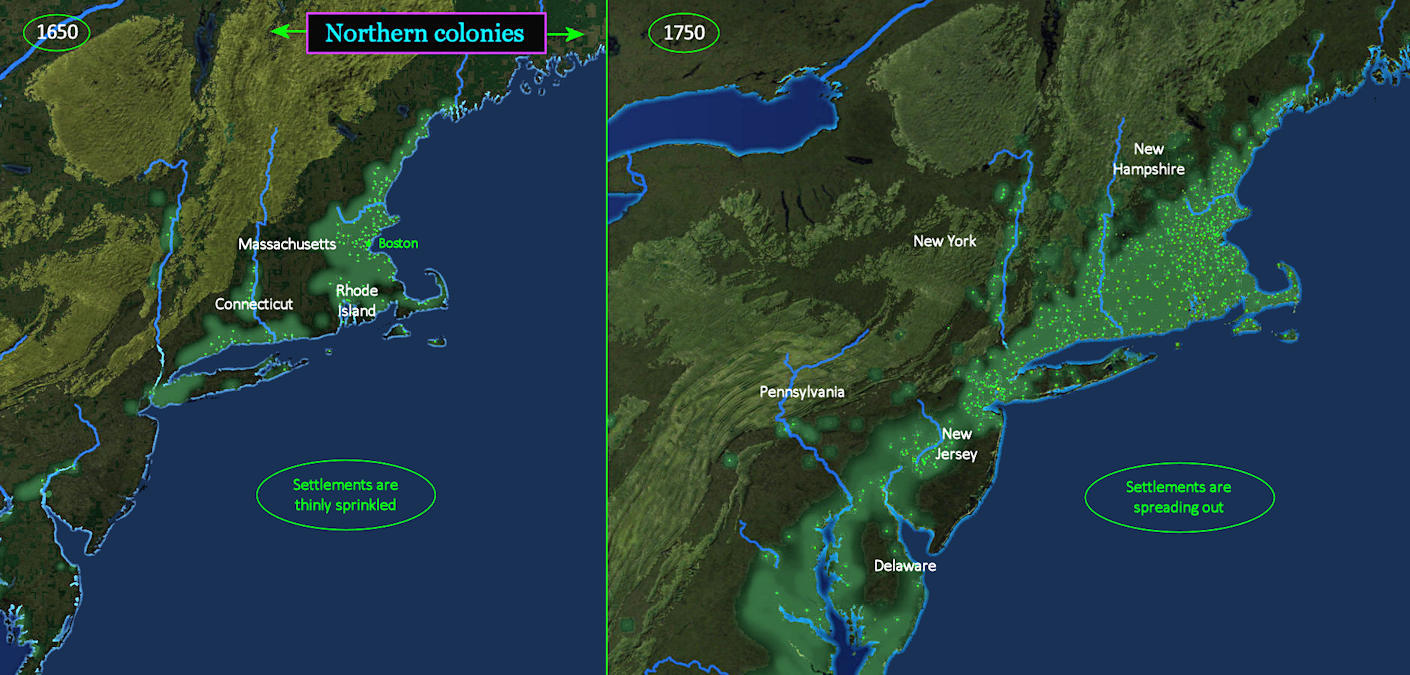
Spreading from Boston These magnified maps show more clearly the pattern of colonial spread in the North. In 1650 (left), new towns are clustered loosely around Boston, with offshoots climbing up the shoreline into what will become Maine, and down into Rhode Island and Connecticut. Settlement is just beginning to spread up the broad, fertile valley of the Connecticut River. By 1750 (right), towns have spread westward everywhere. They're creeping up the Hudson River valley into what was previously a Dutch colony, westward into New Jersey and Pennsylvania, and southward into Delaware. The new colonies named above are the result of new land grants. Note how towns are heavily clustered in northern colonies. | |||||||||
| |||||||||
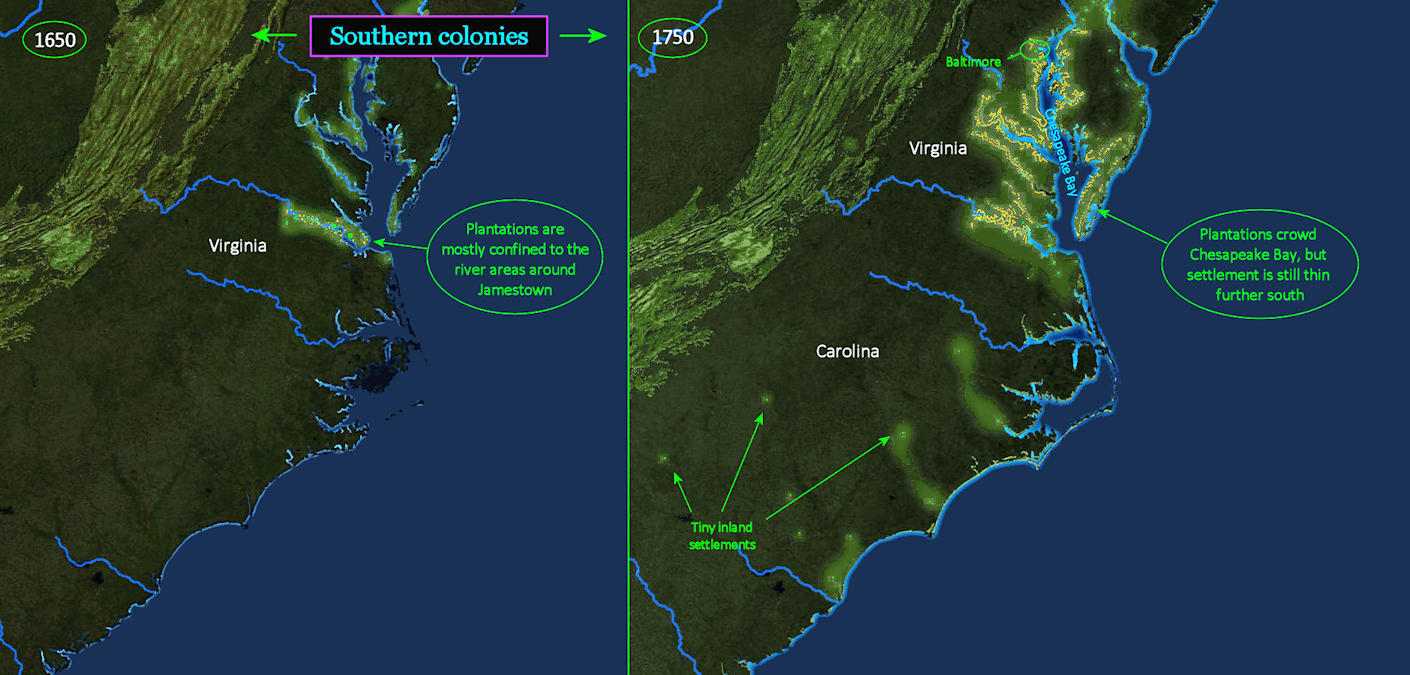
Spreading Tobacco Plantations In the South, the pattern of settlement is completely different. All the settlements in 1650 (left) are strung along the river in the area surrounding Jamestown. By 1750 (right), there are well-established tobacco plantations lining all the prime Chesapeake Bay shoreline sites (YELLOW dots). But there are virtually no towns or connecting roads, which leaves settlers dependent upon coastal vessels for both imports and exports. Inland tobacco plantations begin to appear in the area known as Carolina, where settlers move after shoreline locations are exhausted. Jamestown is being overtaken as the shipping center by Baltimore, far up Chesapeake Bay, with its much better harbor. | |||||||||
| |||||||||
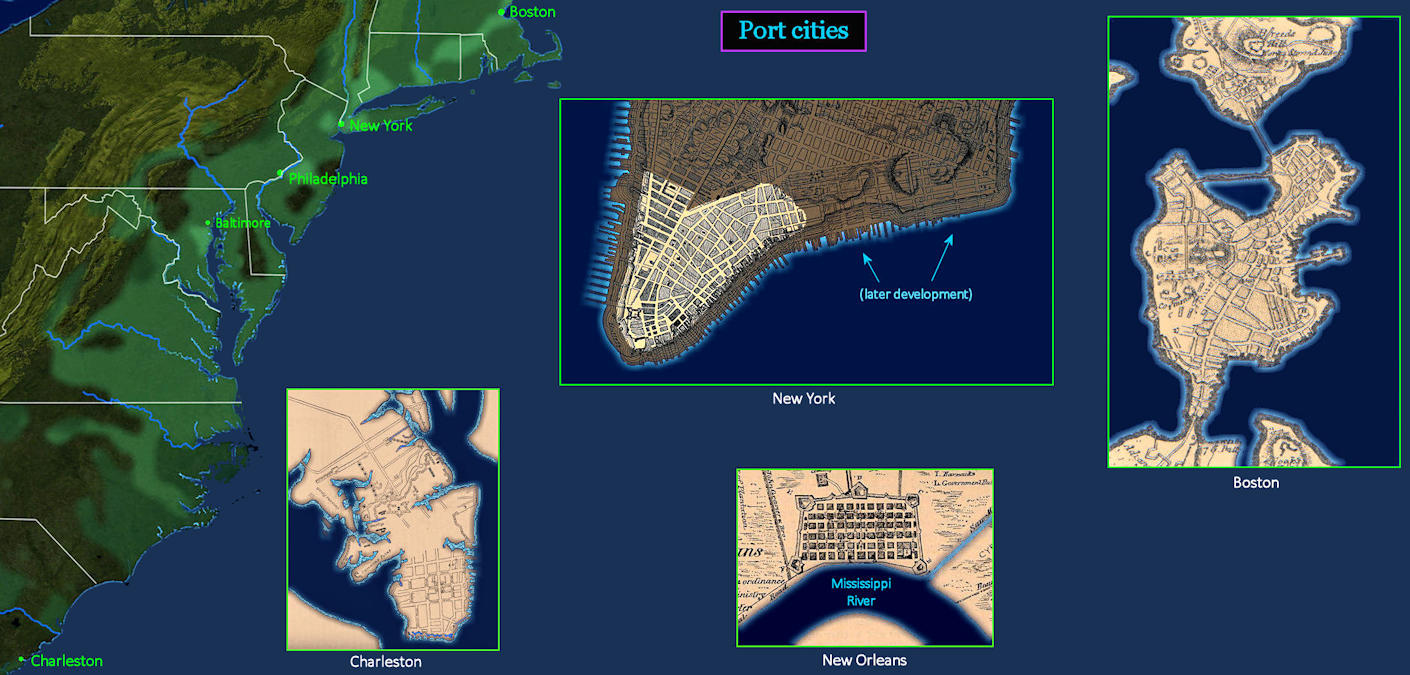
Real Cities By 1750, the major ports have become real cities. The big northern ports of Boston, New York and Philadelphia are now roughly the same size, with populations close to 20,000 each. In the South, Charleston and New Orleans have both grown to 10,000 residents. Charleston is swelling due to the rapidly growing slave trade. New Orleans is still a Spanish possession, but will be absorbed by America within 50 years. Chesapeake Bay finally has a thriving deep-water port at Baltimore, with 5,000 residents. Manufacturing has not yet developed, however, and America remains a semi-developed land, with people that Europeans routinely dismiss as 'provincials.' This is a term describing people living out in remote provinces, far from civilization. | |||||||||
| |||||||||
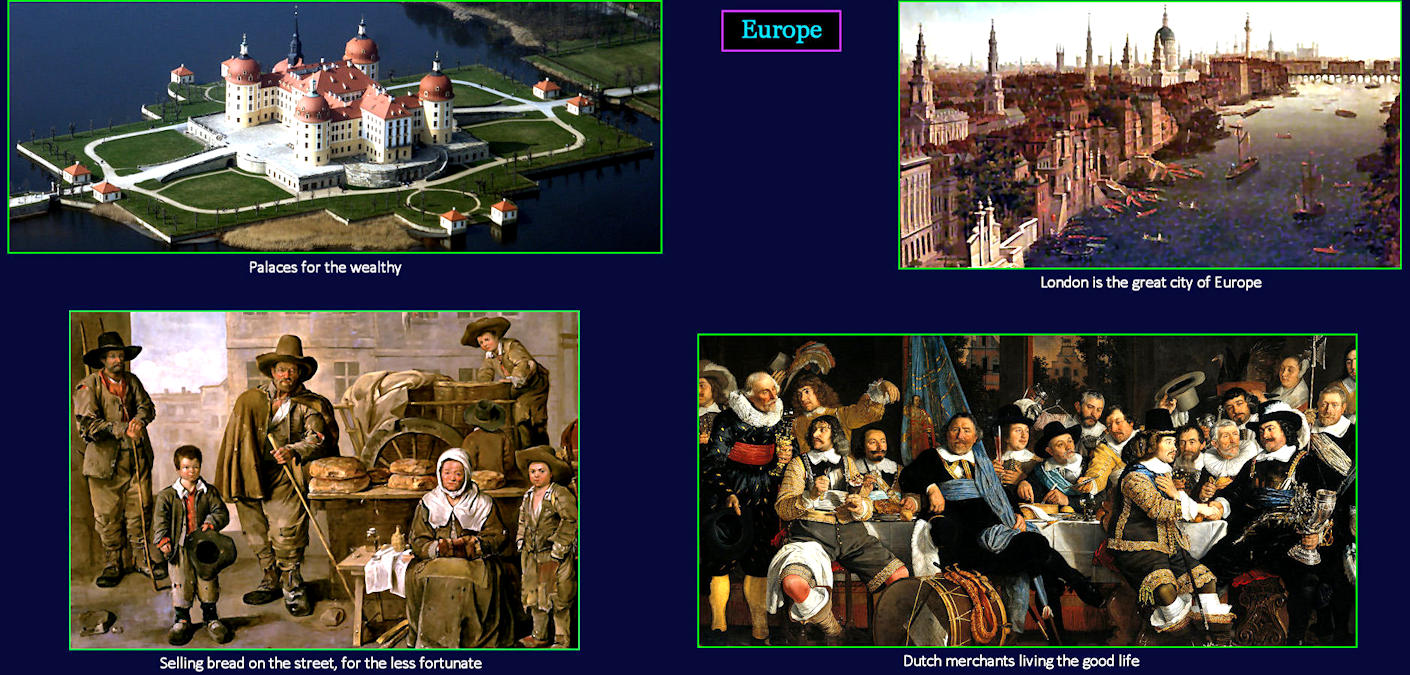
European Aristocrats, and Peasants While colonists scratch out a living on rural homesteads, Europeans live in a world of extremes. Wealthy noblemen are surrounded by the finest of everything, enjoying the high life in country estates and grand palaces (top left). Meanwhile, the great bulk of society lives much more simply, getting by in teeming cities as best they can (lower left). Merchant empires support great cities like London (top right), while parties in Amsterdam rival those of today's Silicon Valley entrepreneurs (lower right). Little of this lifestyle is yet evident in America. England treats her American colonies with little respect, valuing them only as a cheap source of raw materials. | |||||||||
| |||||||||
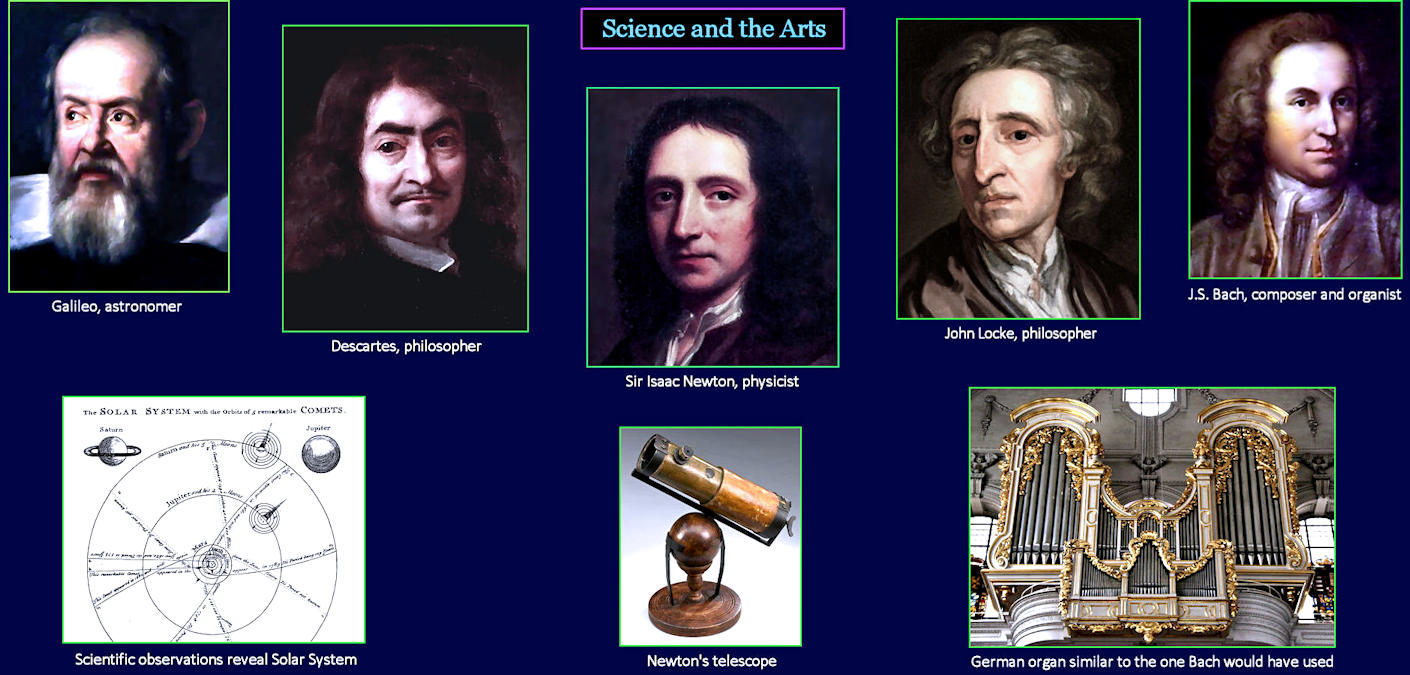
The Enlightenment All during the colonial period in America, great thinkers in Europe are pushing science and the arts into new territory. Galileo develops an improved telescope to provide convincing evidence that the earth revolves around the sun, and not the other way around. Descartes champions the 'scientific method,' where beliefs are based upon observable reality, instead of rigid doctrines of the Catholic Church. Sir Isaac Newton virtually invents mathematics and physics through careful observation. John Locke argues that life is not preordained by God, but is instead like a blank slate, waiting to be filled in by actual experience. Meanwhile, Bach creates mathematically precise music that perfectly mirrors the new emphasis on scientific principles. | |||||||||