| |
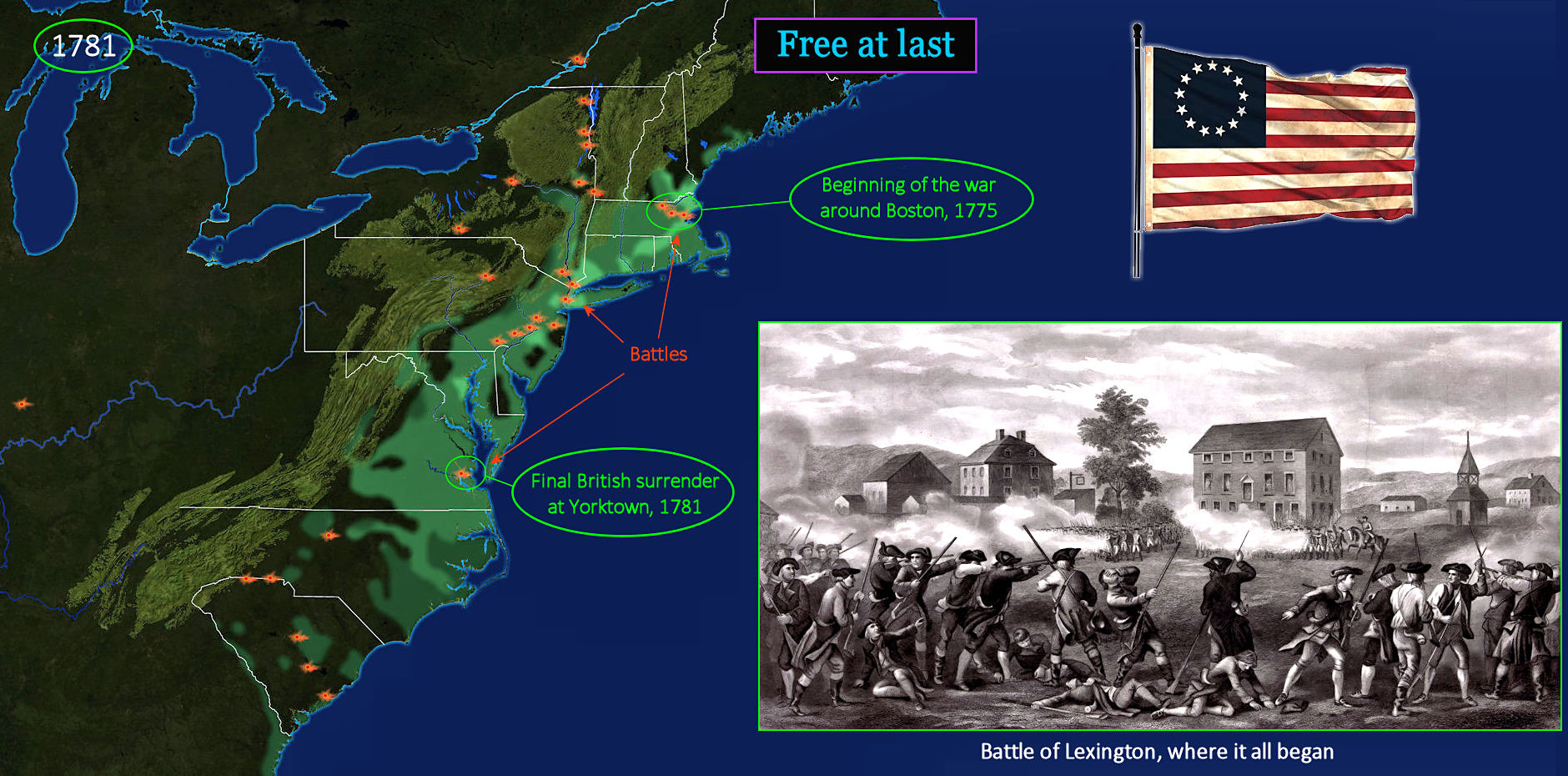
Who's in Charge? Back when the Revolutionary War began, colonists were really only pushing back against the oppressive occupation of Boston. When it finally ends in victory, six years later, the Americans are in full possession of their country. But there is no real government to run it. The rules hurriedly adopted back in 1777 prove increasingly inadequate to unify the nation. All the states are broke, saddled with large war debts. Beyond that, the Continental Congress has almost no power to compel states to comply with new funding requests, or much of anything else. |
| |||||||||
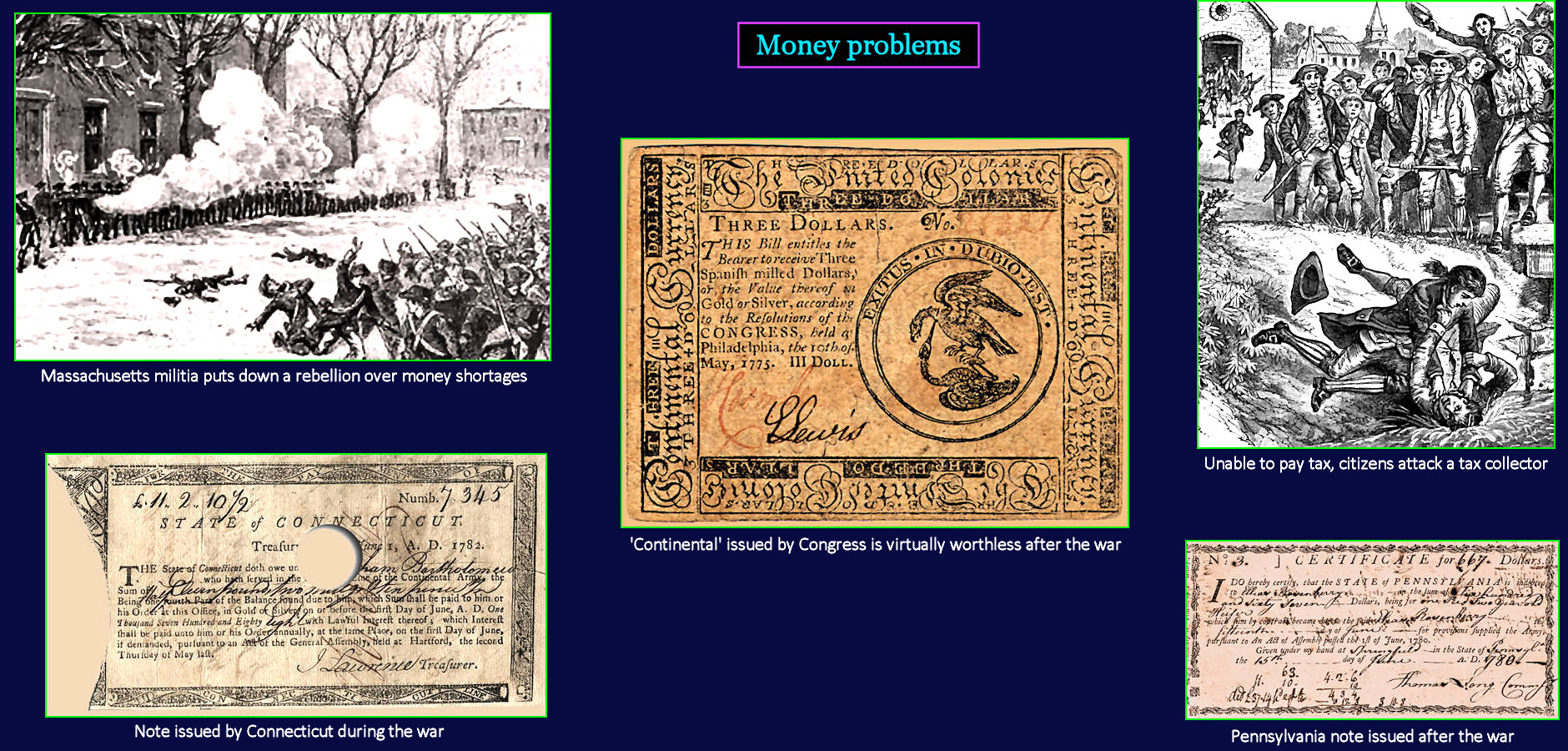
Post-war Chaos Right from the start, the problem is money. Congress has issued paper money to pay for the war (center top), while individual states have issued their own notes (bottom left and right). With the war over, these paper notes are now nearly worthless. Troops who had been paid with such paper find that no one will accept it, and are forced to borrow. When they are unable to pay back these loans, their property is confiscated. Meanwhile, the entire country is in a deep economic slump. Tobacco prices have dropped by half, while wholesale prices for farm produce are down by two-thirds. A mob of farmers in Massachusetts attacks the state armory demanding relief (top left), while tax collectors are sometimes assaulted on the street (top right). | |||||||||
| |||||||||
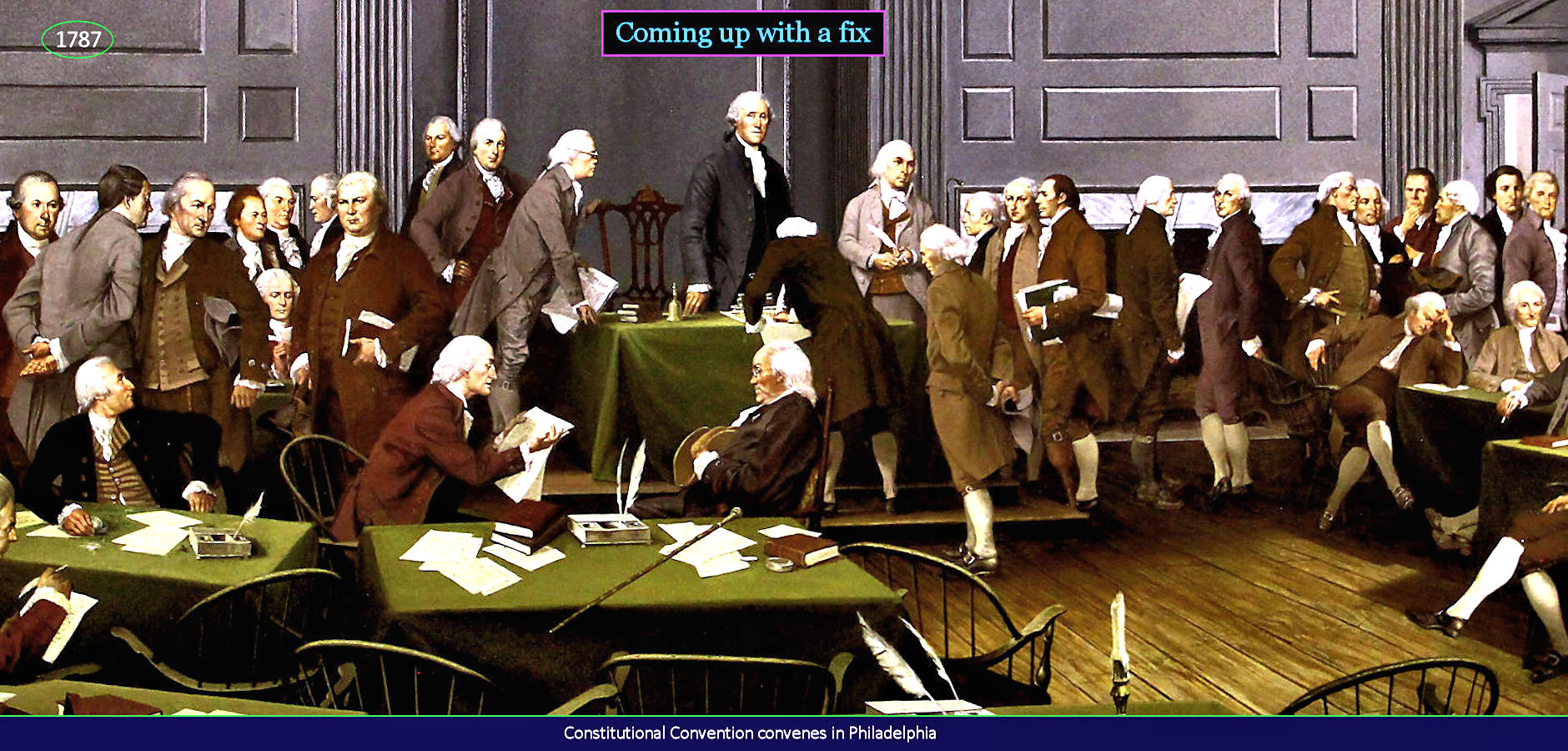
What to do? After six years of frustration, the states once again send delegates to meet in Philadelphia. The original intent is just to patch up the existing system, but it doesn't take long to realize that the system has to be scrapped altogether. America needs an entirely new document, a Constitution, to create a functional government that preserves individual freedom. No one has tried to develop a system of government responsive to the needs of ordinary citizens since the old days of the Roman Republic. For centuries, kings have been the rule everywhere. But the Enlightenment in Europe has produced fresh ideas on how society might be transformed to serve the common good. The delegates in Philadelphia struggle to turn this vision into reality. | |||||||||
| |||||||||
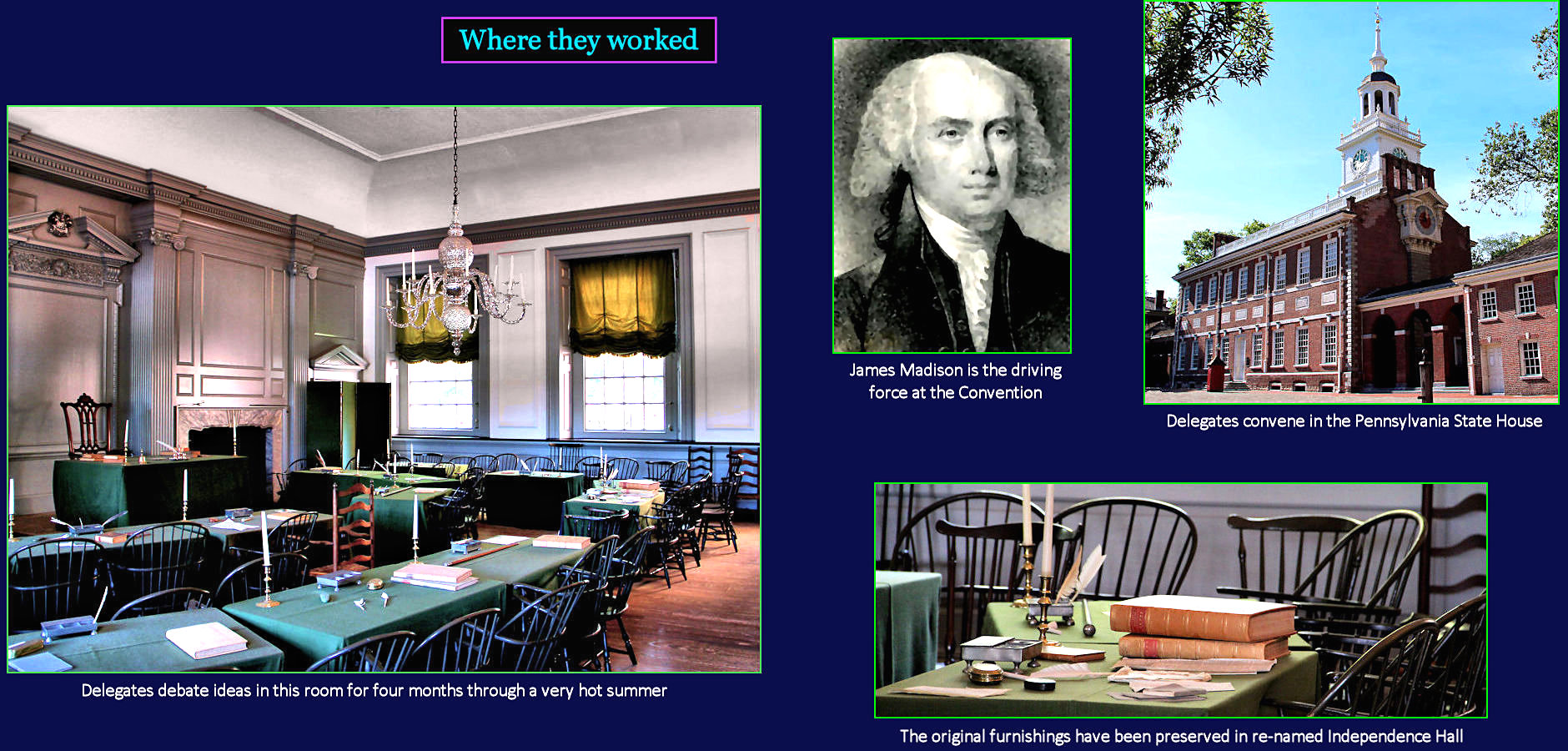
Constitution Hall This is the original room, now restored, where delegates meet all through the very warm summer of 1787. Because they are working on a total remake of government, with many issues to thrash out, they work in closed session. Despite the heat, the windows are kept shut so that debate can be free-ranging. This is to prevent anyone listening in at the windows, leaking details of half-finished proposals. Delegates are not allowed to take notes, or discuss anything outside the chamber. George Washington, presides, but says little. The master of the proceedings is soft-spoken James Madison (center above), a slight man. His management results in a carefully crafted document, earning him the unofficial title of Father of the Constitution. | |||||||||
| |||||||||
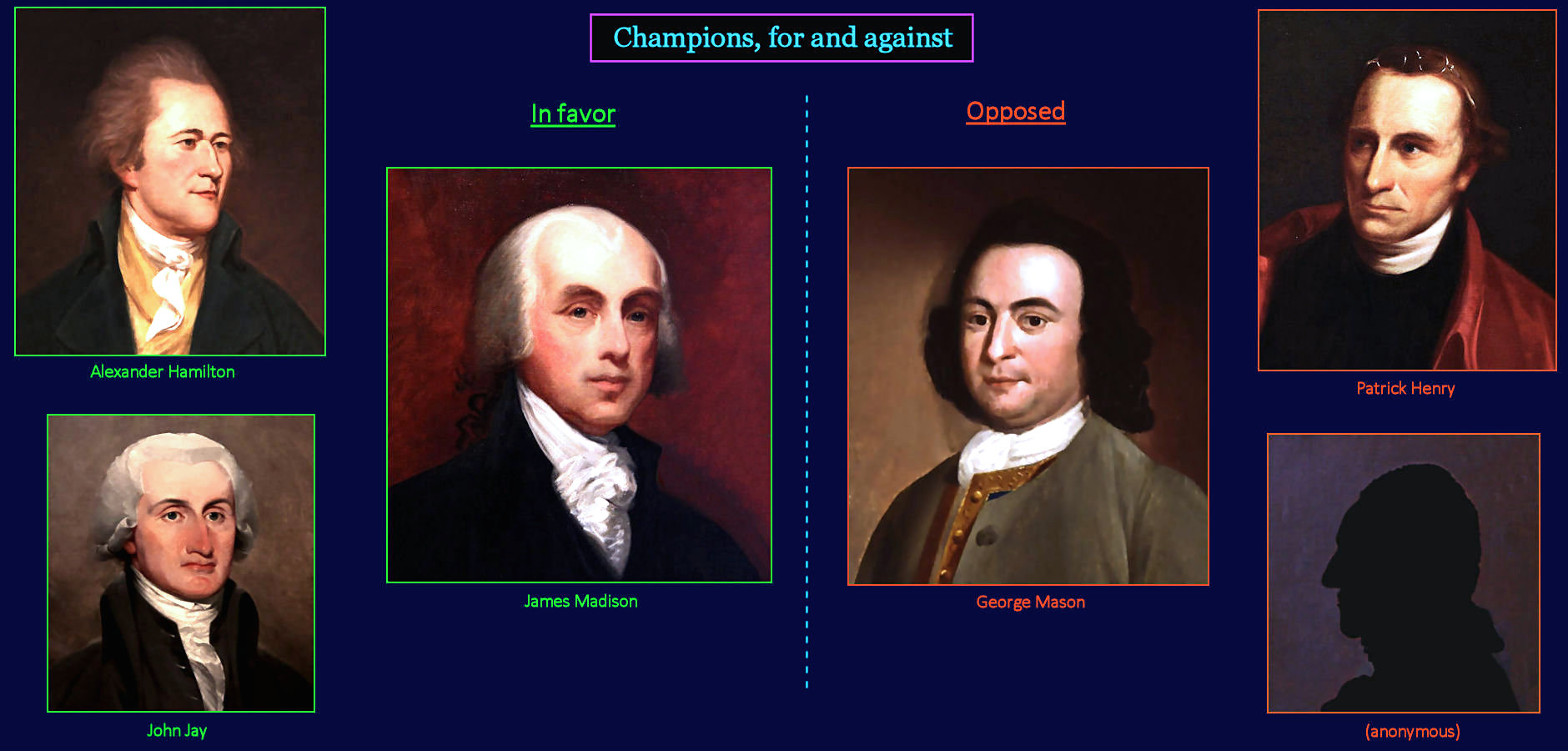
The Persuaders Although the Constitution is eventually finalized, it won't become effective unless ratified by two-thirds of the states, which means at least nine states. This is a dicey proposition. Both sides lobby hard for their positions, but those who argue in favor (left side, above) are better organized, and more persistent. They support a strong central government to unify the states, and minimize petty local squabbles. Those against (some, under pen names) are concerned that such a centralized structure will overwhelm existing state governments, resulting in a new kind of tyranny. George Mason is the most persuasive of those concerned that leaders will eventually turn oppressive, unless individual rights are explicitly guaranteed. | |||||||||
| |||||||||
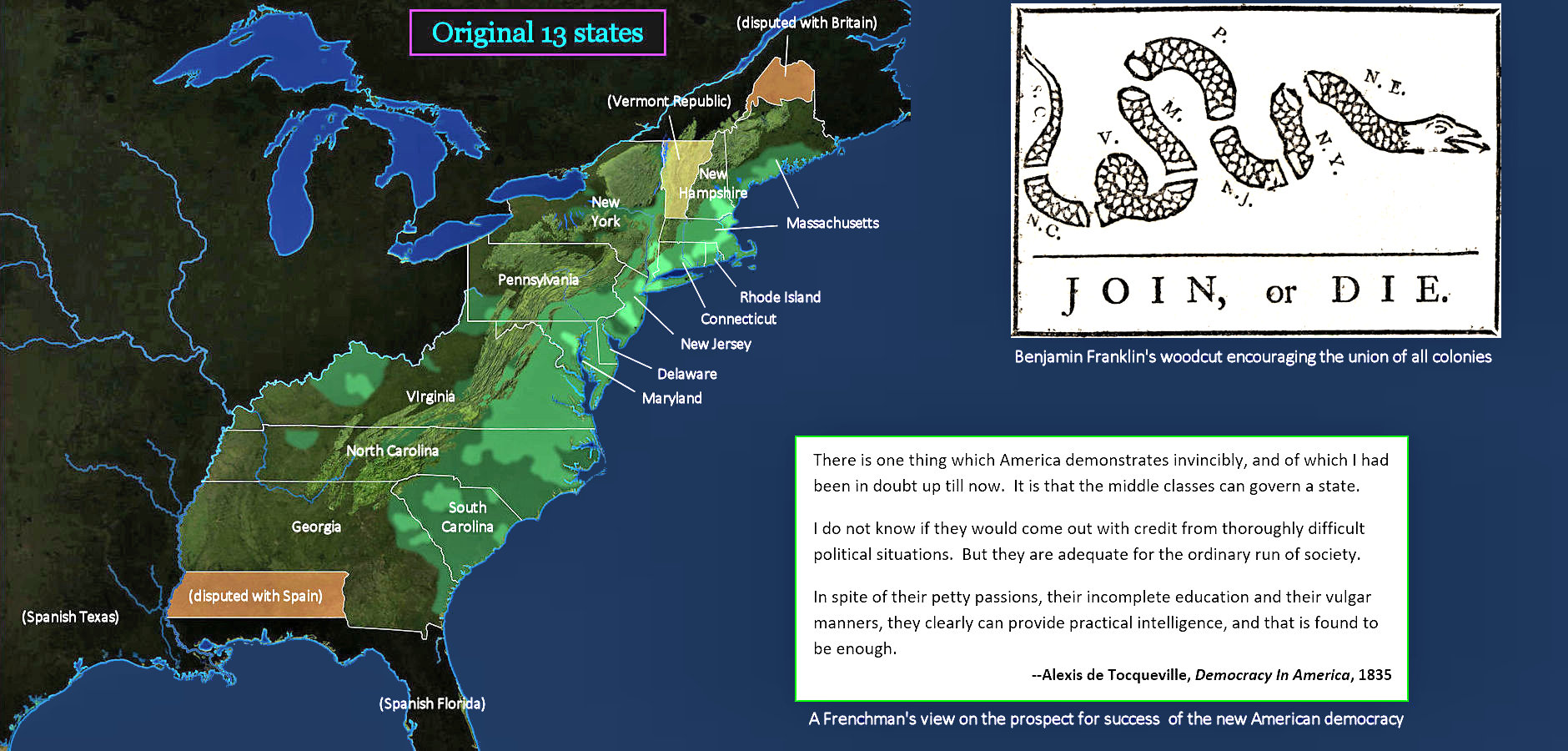
Out from Many, One The idea of unifying all 13 states into one nation, called the United States, seems obvious. All are located in the same area, and all want to be free of distant British rule. But the states are very different from one another. Northerners don't have tobacco plantations with hundreds of slaves, and southerners don't build ships to sail the seas. The southern drawl, and relaxed lifestyle is very unlike the clipped New England accent, and jostle of northern life. There are large states and small states, well-settled states, and virtually empty states, like Georgia. The big question is how to join such diversity into a unified whole in a manner acceptable to all. It won't be easy. | |||||||||