| |
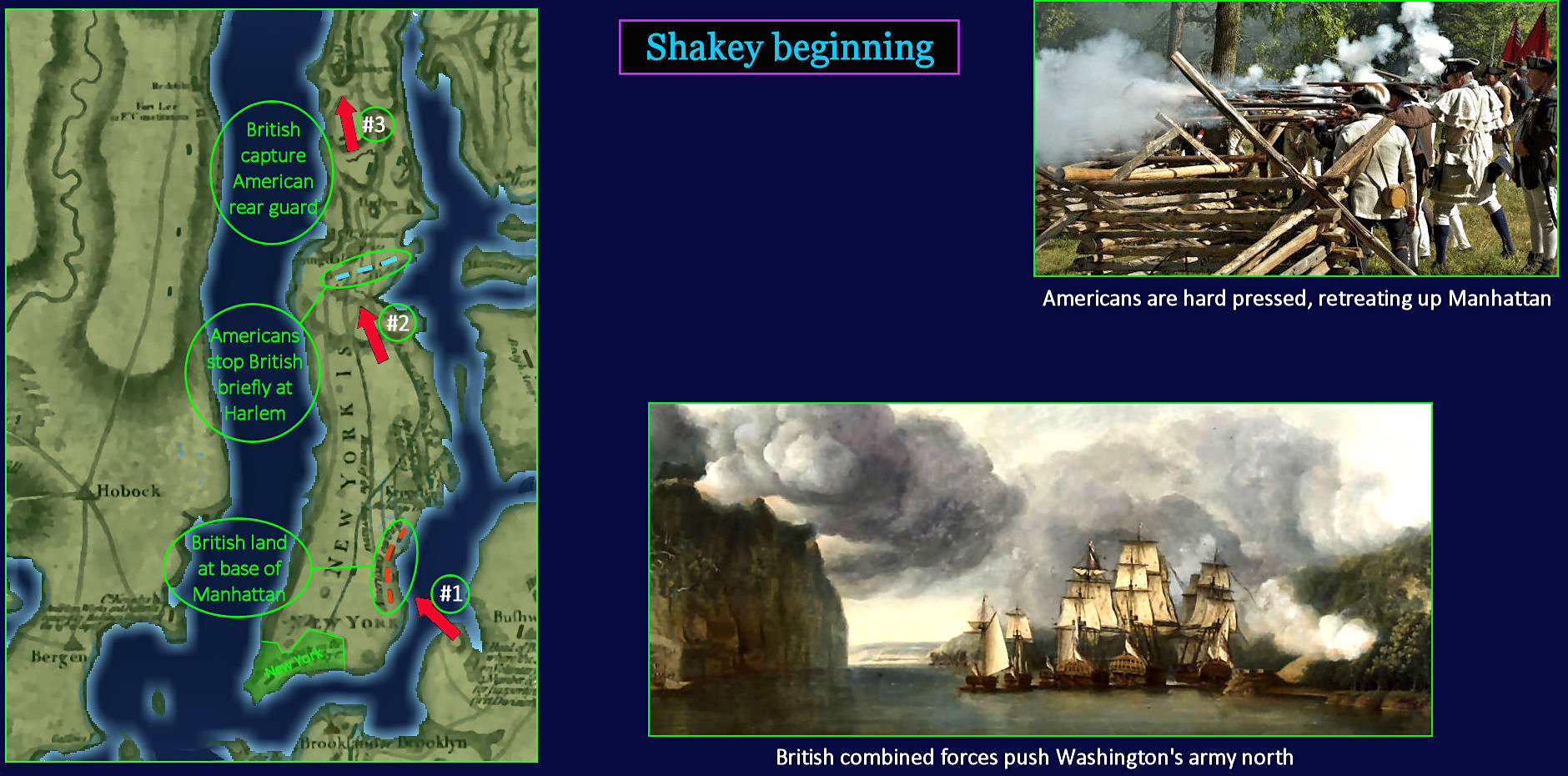
British Advance After the American withdrawal, the British land their entire army near the bottom of Manhattan (#1), securing the city for an occupation that will last the entire war. They then push north to fight the Americans at Harlem Heights (#2), where Washington is able to stop their advance, for a time. After pausing to regroup, the British again move north, pushing the Americans before them. They surround and capture 3,000 Americans making a last-ditch stand (#3), attempting to cover Washington's retreat from Manhattan, with the main body of his army. |
| |||||||||
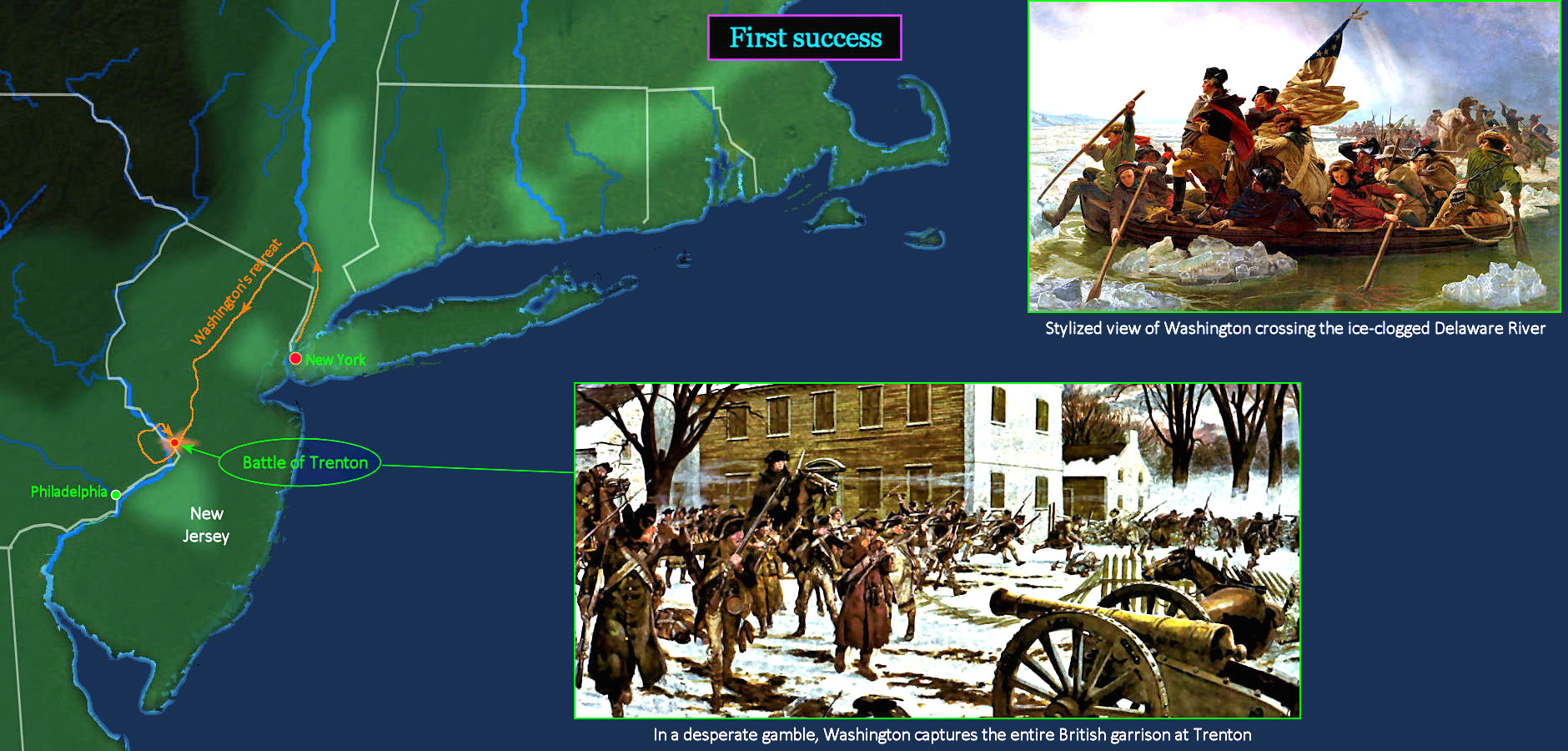
British Surprised After being forced out of New York, Washington makes a detour north to get cross the Hudson River, then heads down into New Jersey (ORANGE line). The British have withdrawn their main force back to New York for the winter, but leave a few outposts in New Jersey. Washington hopes an attack on one of these isolated positions can provide a quick morale boost for his ragged army, which is close to collapse after the extended retreat. Although his army is now south of the Delaware River, Washington circles back, re-crossing the river in a winter storm (top right), and launches a surprise attack on the British encampment at Trenton. It's the day after Christmas, the British are completely surprised, and the Americans have their first clear win. | |||||||||
| |||||||||
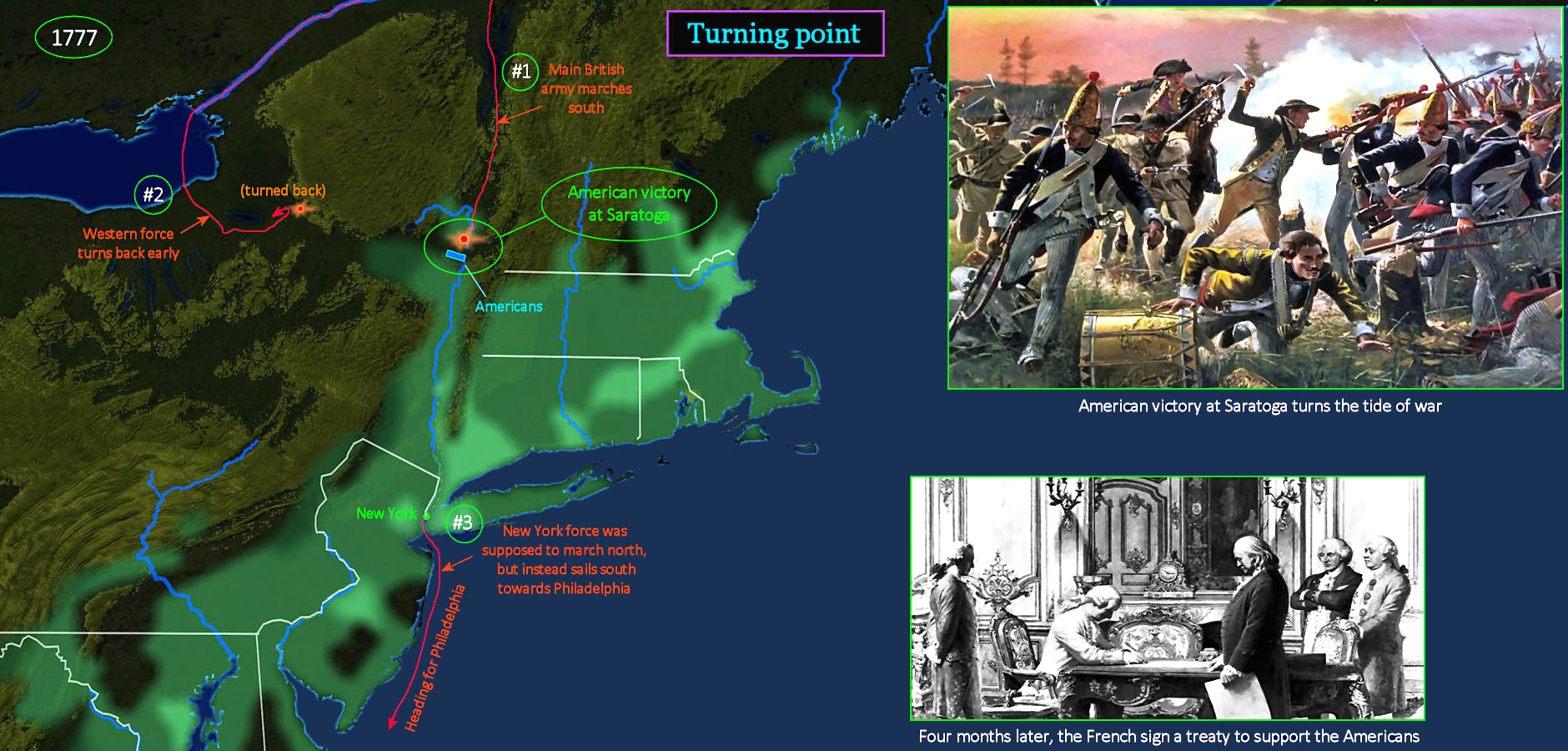
Smashing American Victory There are several minor battles and skirmishes the following year, but nothing decisive. Then comes October. The British have decided to cut off New England from the rest of the colonies. Three forces are supposed to converge from three directions, but the plan goes awry. The main force comes straight down from Quebec, as planned (#1). But the western attack is turned back (#2), while the army which was supposed to march north from New York (#3) goes elsewhere, due to a misunderstanding. The main force chops its way through semi-wilderness, losing strength, before being surrounded and forced to surrender to American forces gathered at Saratoga. It's a stunning American victory, and the French sign an alliance with America soon afterwards. | |||||||||
| |||||||||
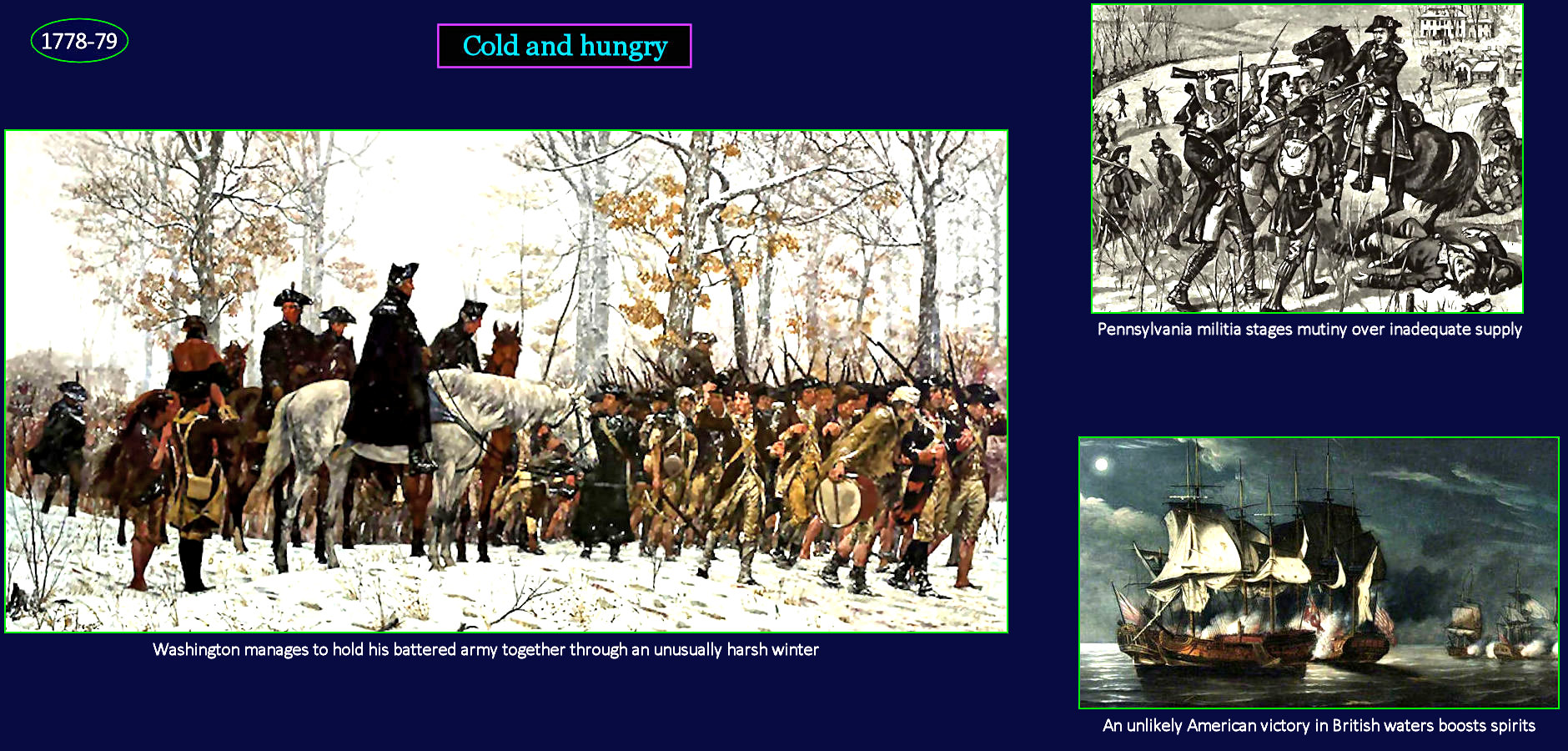
Hard Winter After indecisive battles in New Jersey throughout 1778, morale in Washington's army has fallen to a new low by winter. Public support for the war, now in its third year, is declining. Congress is having difficulty finding money for supplies, and American troops are drifting away. A pair of troop mutinies (top right) highlight the delicate condition of the American forces. But there are bright spots. An American captain, John Paul Jones, creates a near-sensation when his small squadron somehow manages to capture a much stronger British frigate, right off the coast of Britain (lower right). The night-time action ends with the American ship sinking, but with Jones sailing off in the surrendered British vessel. | |||||||||
| |||||||||
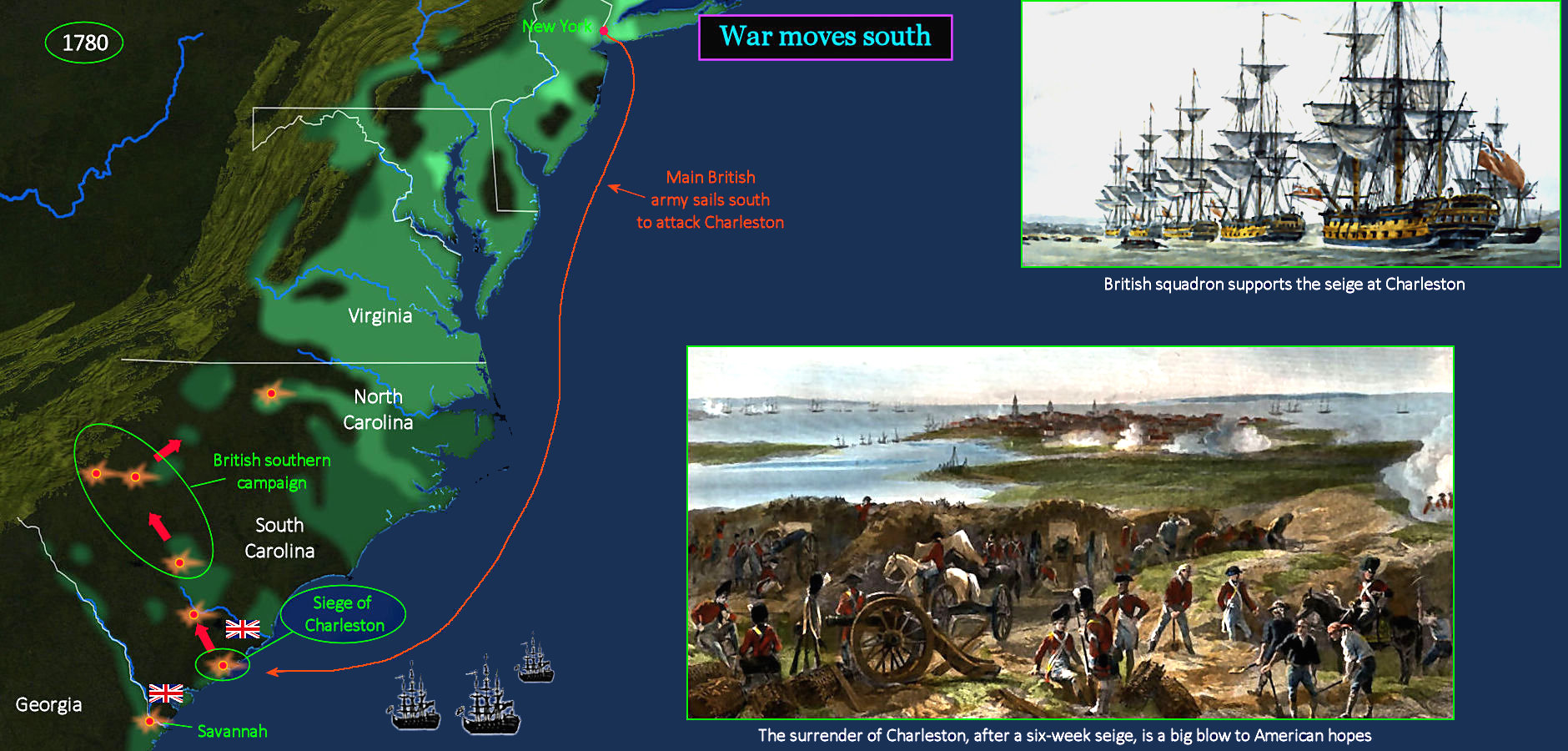
Charleston Surrenders By 1780, with stalemate in the North, the British turn their attention to South Carolina, hoping to split off the entire South. They have already taken Savannah, and now launch a full-scale invasion, starting with the important port of Charleston (lower right). A six-week siege ends with the surrender of the city, and the capture of the entire 5,500-man garrison. It's the worst American defeat of the war. The British push on into sparsely-populated interior areas, then turn up into North Carolina the following year. They are resisted at every step by determined Americans, who manage to win a couple of victories, and frustrate the attempt to divide America. | |||||||||
| |||||||||
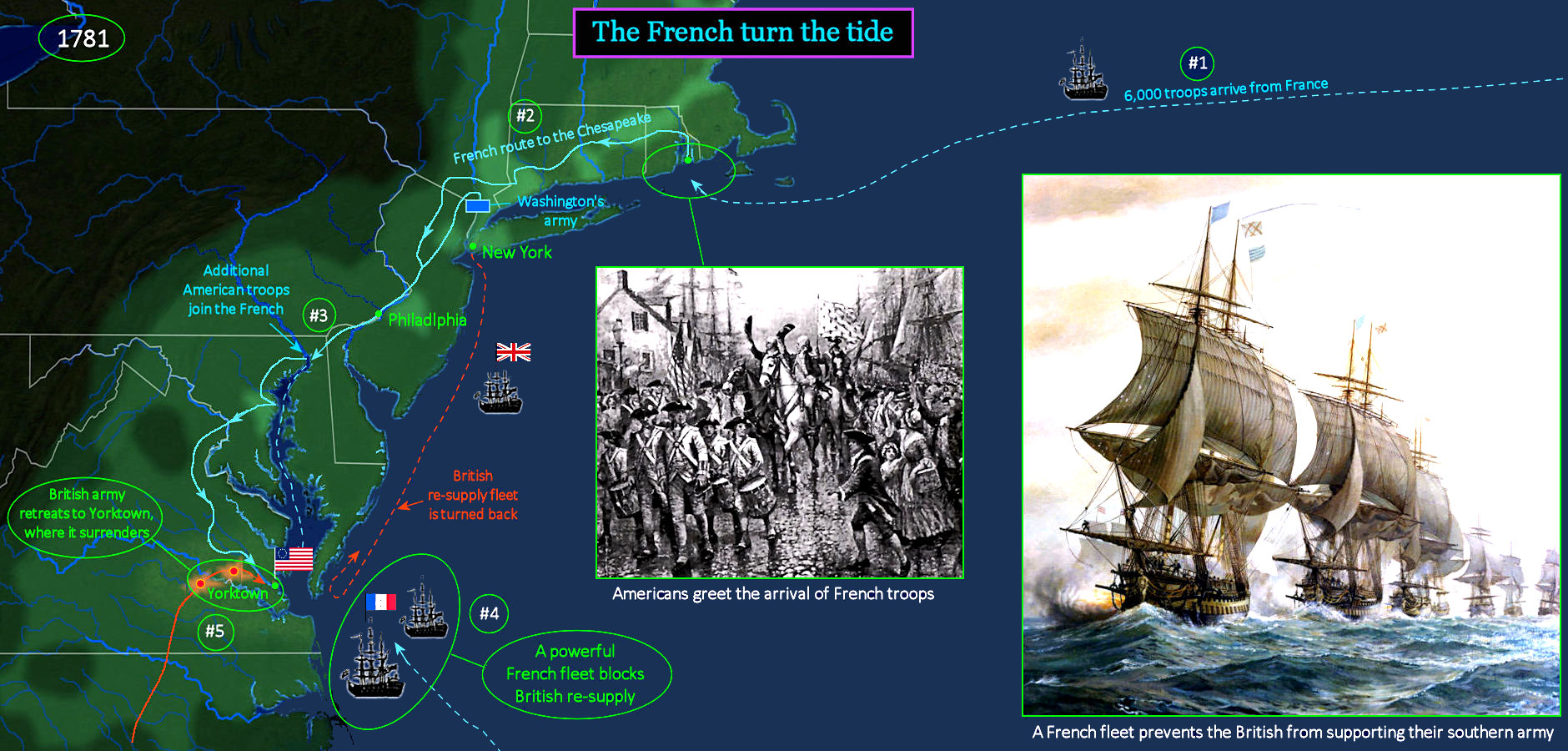
Trapping the British The French have been smoldering with resentment against the British ever since their humiliating defeat in the previous war. By 1780, they are finally ready to honor their alliance with America, and land 6,000 fresh troops in Rhode Island (#1). The following year, they march around the British stronghold at New York to join up with Washington and the bulk of the American troops, heading south to try to trap the British against the sea. The real muscle, however, is the French fleet, which sails north from the Caribbean to set the trap. It manages to turn back the British fleet sailing down from New York, in an attempt to re-supply their troops. Left stranded, the entire British army at Yorktown is forced to surrender, and the war is effectively over. | |||||||||