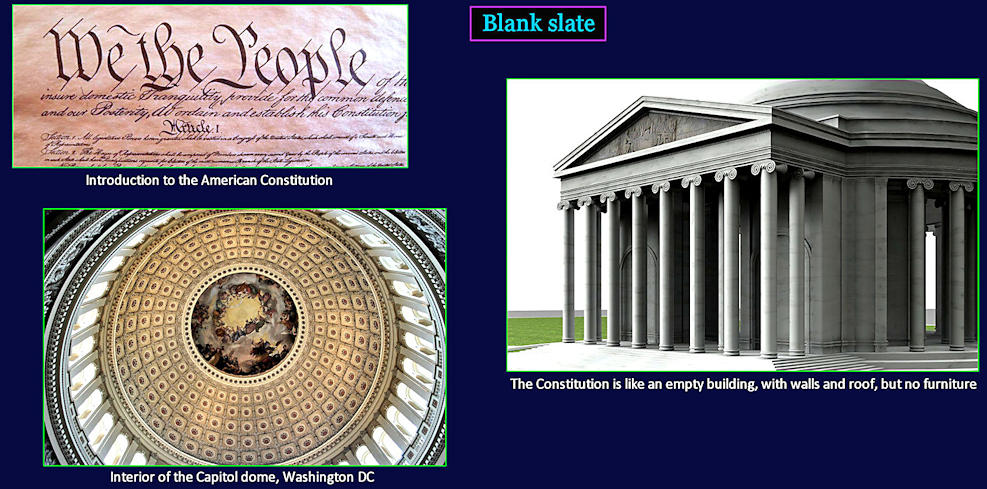
Filling in HolesFor one thing, the Constitution calls for a Congress, with a House and a Senate. But that's about it. A few simple powers are enumerated, but there are no details concerning how they will be implemented. The President has the duty to enforce the laws, but there are no guidelines concerning how. There is no mention of the many departments that will be created later, to manage such things as the treasury and the military. The Constitution calls for a Supreme Court, but doesn't specify how many justices there will be, or what qualifications should be met. It calls for the creation of lower courts, but again, without any details. |
| ||||||||||||||||
| |||||||||
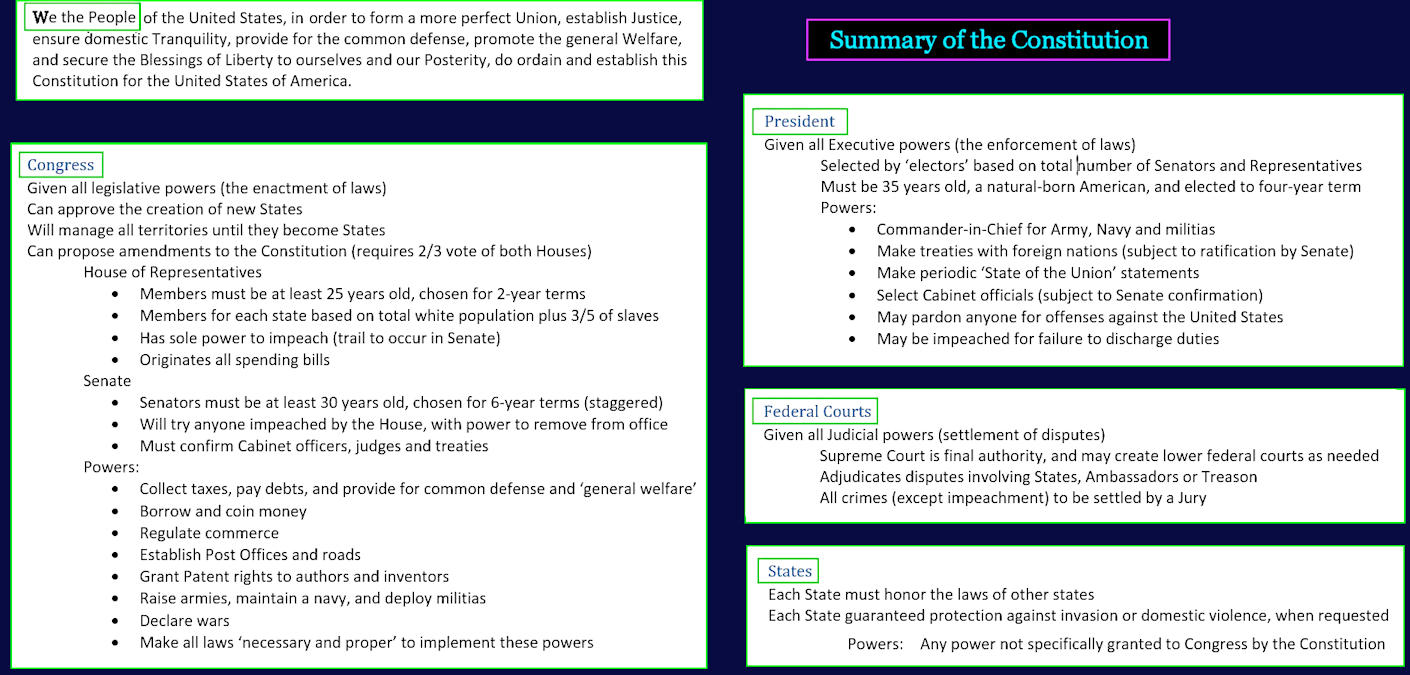
Just the Essentials The main text of the Constitution is summarized above, though there are additional details. The key elements are mostly limited to how members of each branch should be chosen. Note how few 'powers' are actually mentioned. Congress can collect money, regulate commerce, establish armed forces, declare war, and provide for the general welfare. That's basically it. Today, the powers to 'regulate commerce' and provide for the 'general welfare' are used to justify almost everything else the government does. The President is given almost no power beyond enforcing laws, and acting as Commander-in-Chief. The individual states are supposed to retain all powers not specifically granted to Congress, but this provision has been ignored since the early 1930s. | |||||||||
| |||||||||
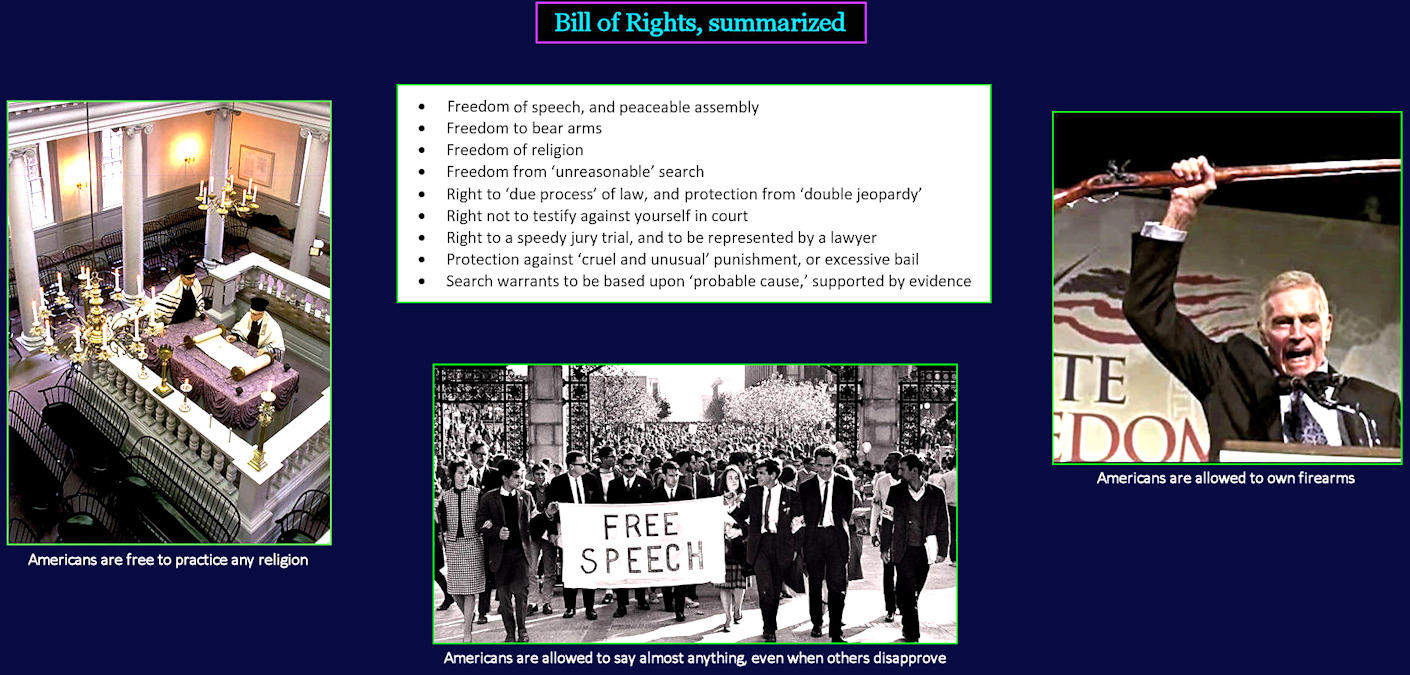
Core Freedoms If you ask someone today to describe the Constitution, they are likely to mention only a handful of provisions included in the Bill of Rights. But these were not part of the original document that the states voted to approve. The Bill of Rights is a collective term for the first 10 amendments to the Constitution, which were ratified two years later. They are largely the creation of James Madison, intended to address concerns raised by those who had originally opposed adoption of the Constitution. The rights it guarantees were generally favored by delegates at the Philadelphia Convention, but they adjourned before agreeing on the exact wording. The list above summarizes the rights most often cited today, although not presented in their original order. | |||||||||
| |||||||||
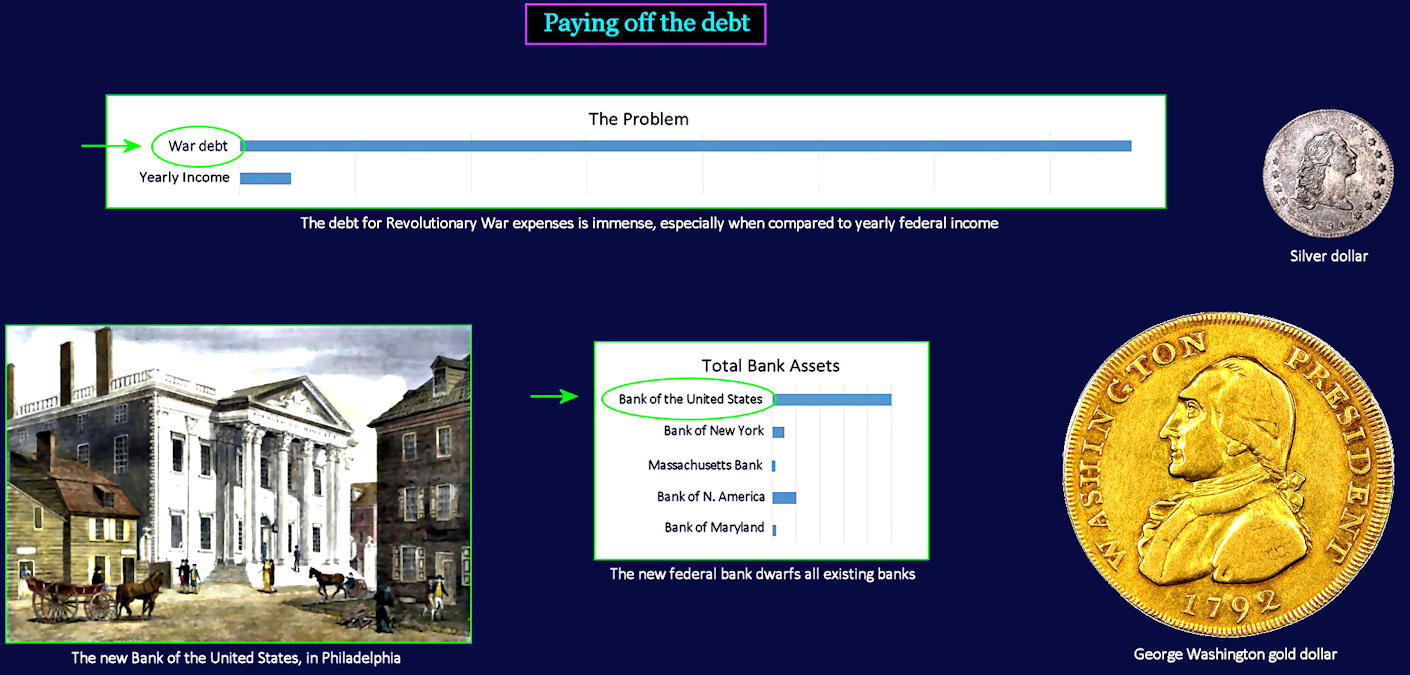
Fixing the Money The big problem facing the new American government is the huge pile of debt from the War of Independence, also known as the Revolutionary War (top center). Much of this debt has been incurred by individual states, in efforts to support local militia. The solution is to combine all federal and state debt, paying it off gradually from the new federal treasury. A new Bank of the United States, much larger than any of the handful of existing banks, is created to manage repayment of the debt, but little else. In the first few years, the government spends fully half of its total income on interest payments. Congress also creates the $10 gold piece and $1 silver coin (right), but few are ever minted. The dollar bill we now use won't appear for another 70 years. | |||||||||
| |||||||||
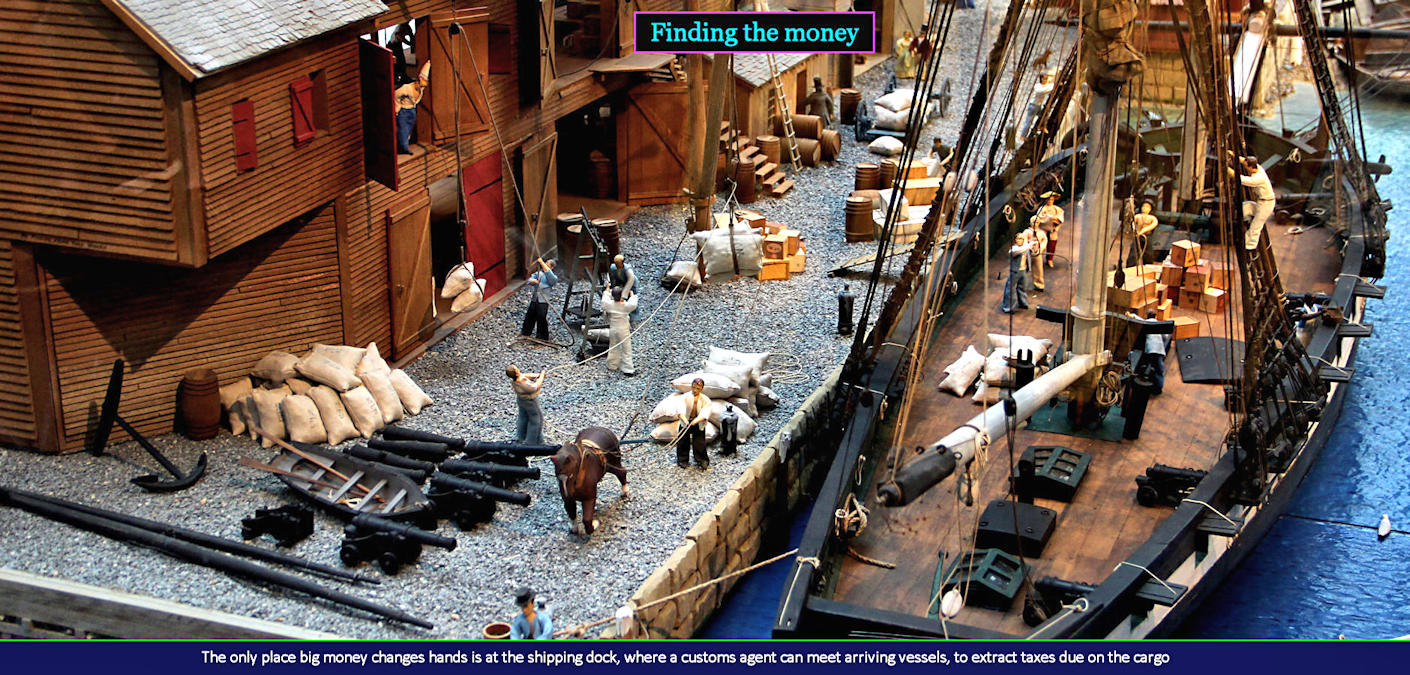
Taxing Imports The new federal government needs a source of income to begin paying down the war debt, and fund the small army and navy. The easiest source of income at this time is the same as it has been since the 1500s. Taxation of imports. Ports are the only places where large amounts of money are involved, and can be taxed. It is relatively easy to spot a cargo ship arriving in port, and a simple matter for a customs officer to meet it at the dock, and determine what is taxable. Taxes on imports are called 'tariffs,' and provide almost all the income to fund the government for many years. There won't be a federal income tax for another 125 years. | |||||||||
| |||||||||
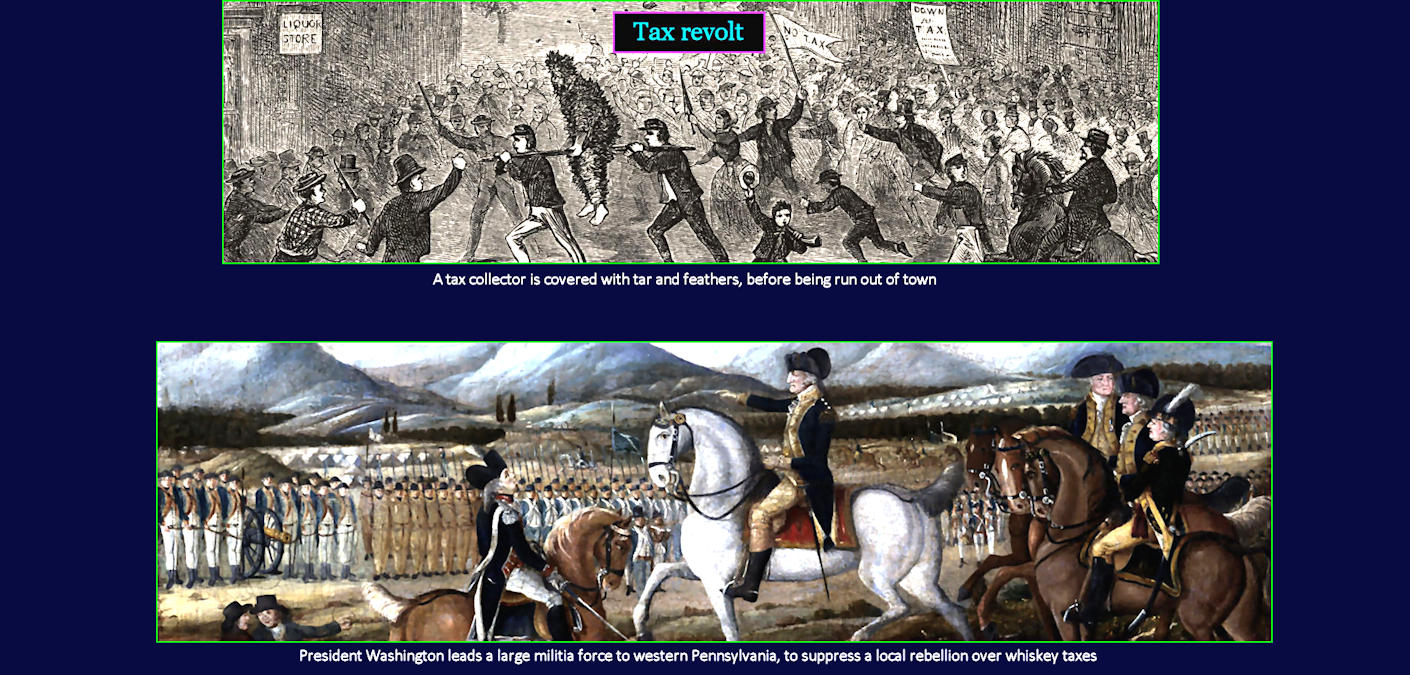
Early Challenge Tariffs provide almost all federal income during the early days. To boost income just a little more, however, Congress passes a new tax on alcoholic beverages made in the states, believing this will be more popular than a tax on land. Soon after the law goes into effect, however, citizens in the remote western portions of Pennsylvania refuse to pay. Whiskey is virtually the only product in this region, and thus one of the few sources of income. As resistance grows, tax inspectors are sometimes 'tarred and feathered' (top). President Washington decides the co-called Whiskey Rebellion needs to be shut down, hard, and personally leads an army of 13,000 federalized militia to Pennsylvania. The rebellion quickly collapses. | |||||||||