| |
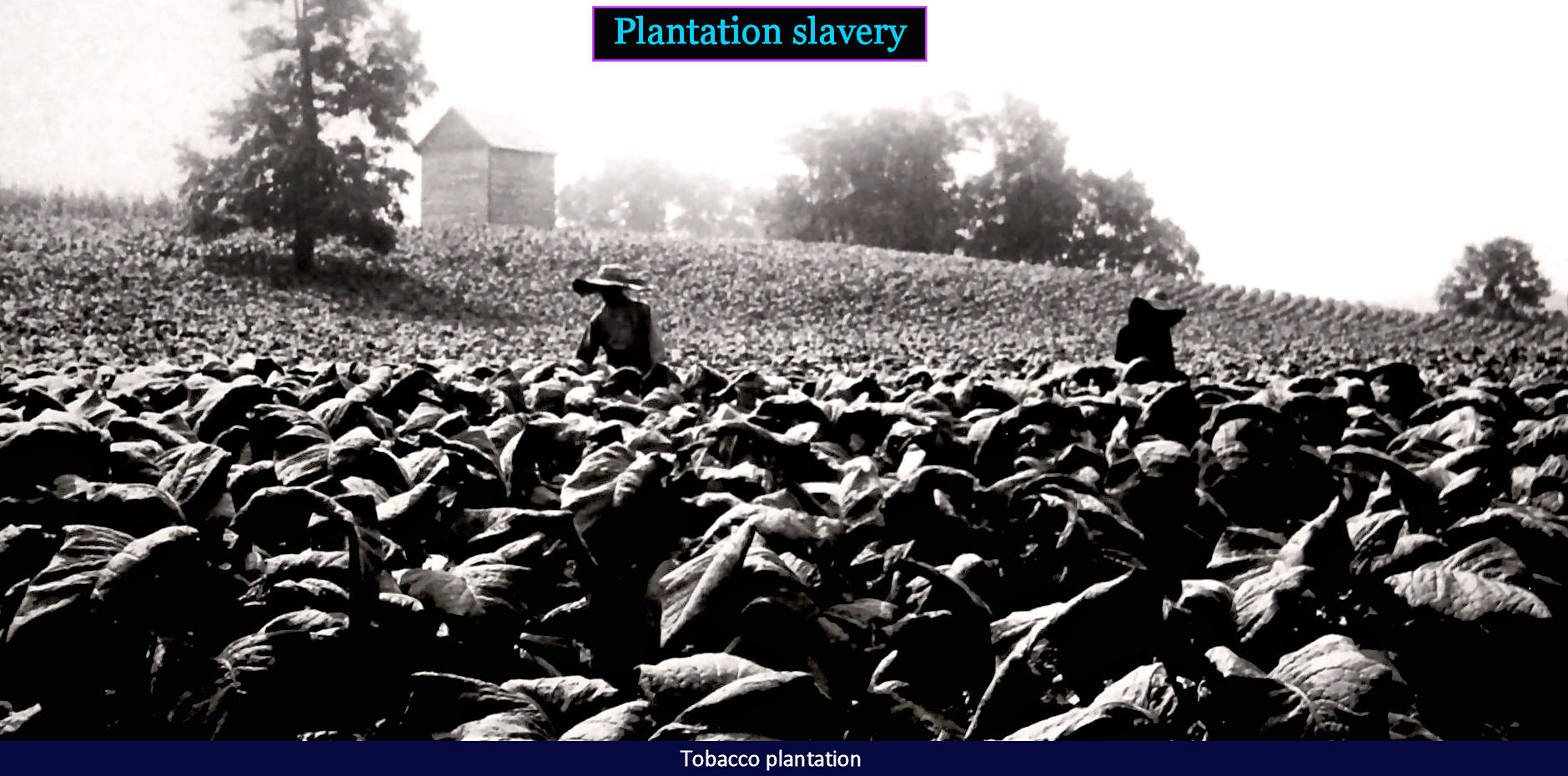
Sea of Tobacco The size of the tobacco field shown above gives a pretty good idea of the scale of the problem in the South. Every plant needs personal attention, but the fields are huge, and there is no machinery to tend or harvest the crop. This is equally true of rice, which can only be grown in hot climates, on land that has been flooded ankle-deep. Ditches, canals and plenty of extra labor is required just to get the rice crop started. Tending and harvesting come later. |
| |||||||||
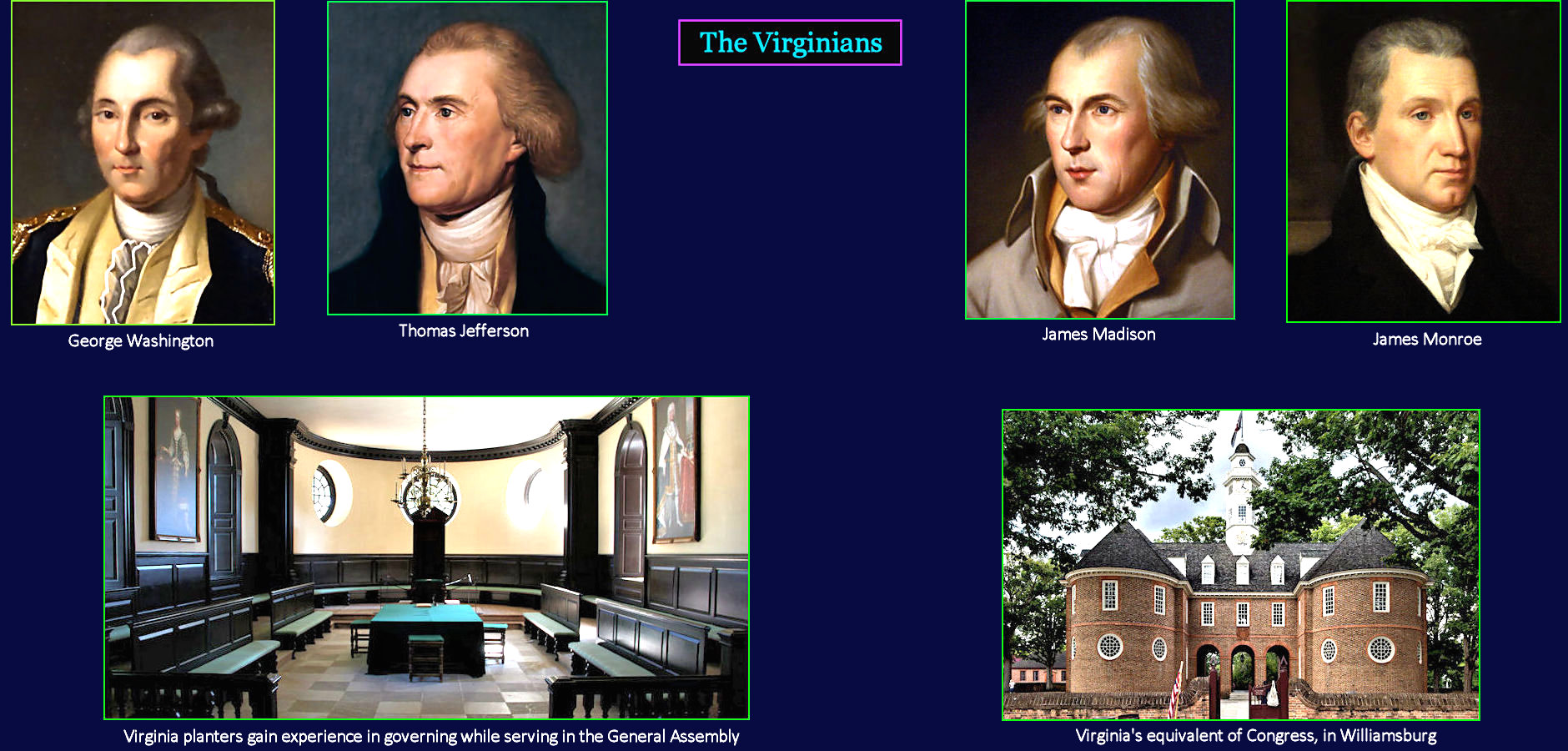
America's Aristocrats Virginians are prominent among the Founding Fathers of America, and all are tobacco plantation owners. Washington and Jefferson each own more than 100 slaves. Some planters act kindly towards their slaves, but this is not the general rule. Plantations need an active workforce, and slaves can only be forced to work through constant prodding, and threats of punishment. Tobacco, rice and indigo plantations produce 85% of all southern income, on land that isn't well suited to any other profitable business activity. Southerners argue, unconvincingly, that slaves actually need and appreciate the care they get from plantation owners. Slaves, they reason, are a lot like children. They need stern parents. | |||||||||
| |||||||||
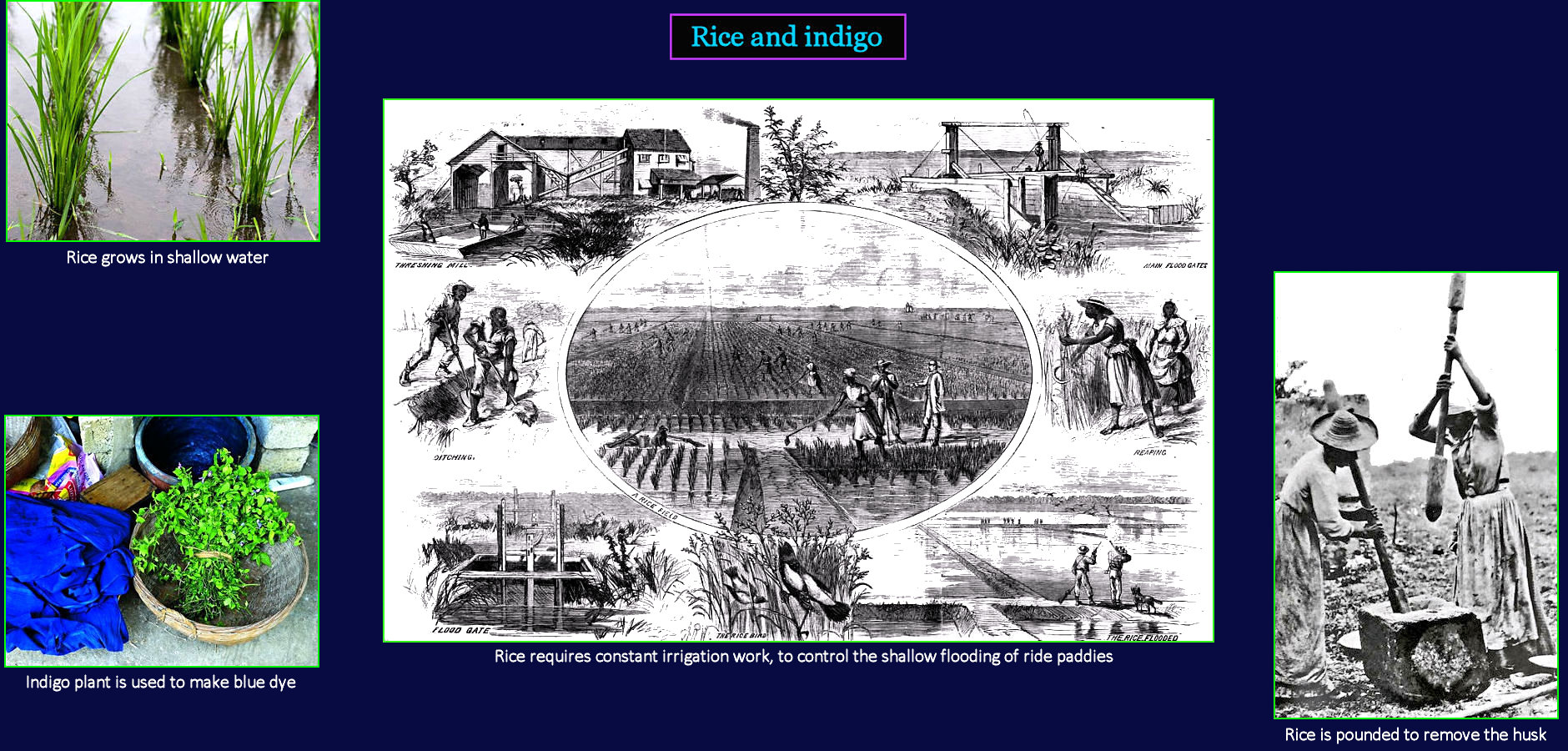
Lesser Plantation Crops Plantations are different from other farms in that they specialize in growing large amounts of a single crop. Rice is vital to the southern economy and, like tobacco, is grown on plantations with a large slave labor force. Rice grows best along the coast in South Carolina and Louisiana, where the summer heat is brutal for field workers. Few Whites can work in such heat. Rice requires even more work than tobacco, because it grows in shallow standing water. This requires the additional labor of constructing and maintaining canals and ditches. After harvest, rice must be pounded to separate the kernels from the husk. Indigo is another southern plantation crop, though much less common, which is grown to extract a blue dye. | |||||||||
| |||||||||
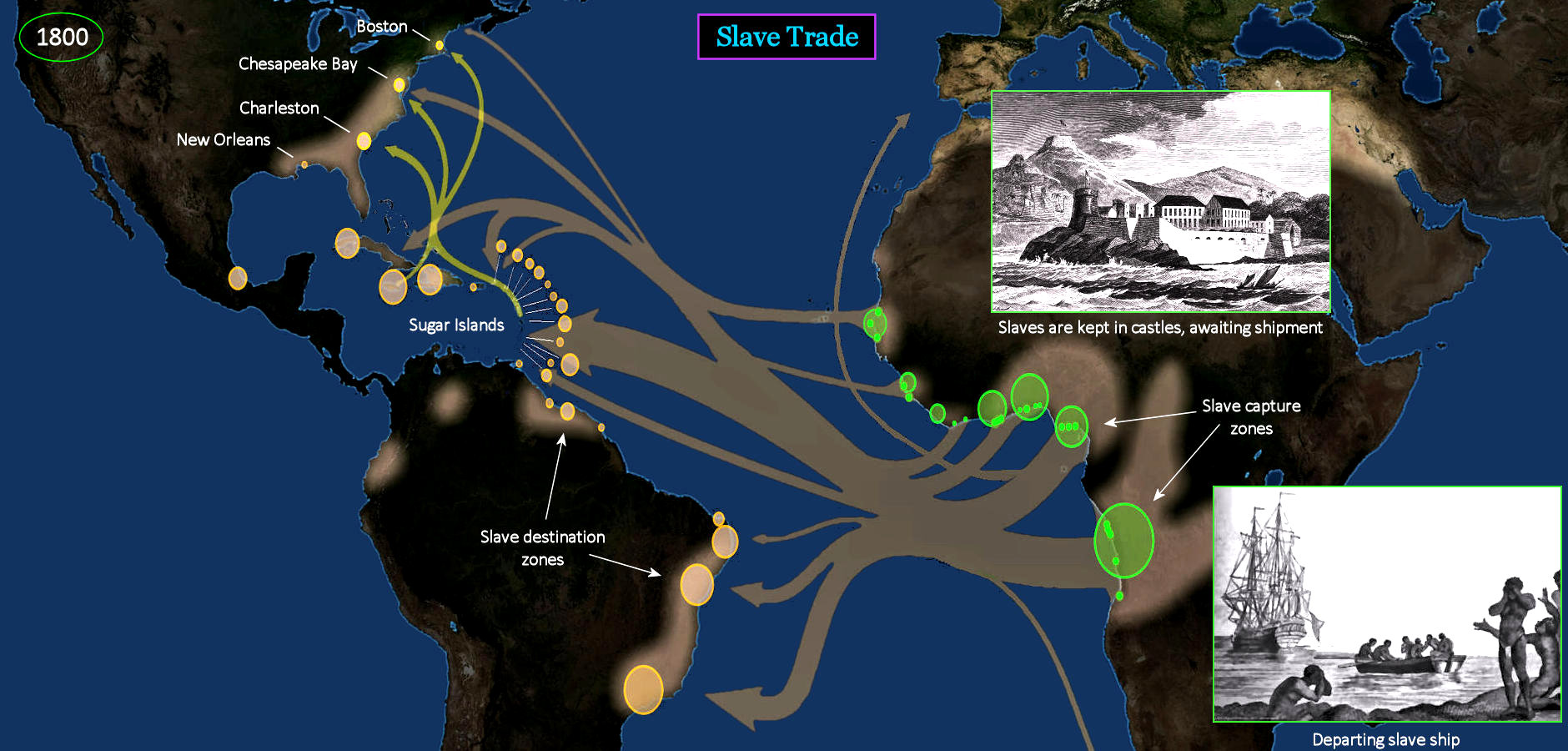
Dirty Business This is the trans-Atlantic slave trade at its peak, around 1800. The small GREEN dots are slave ports. Larger GREEN and ORANGE circles are departure and landing sites. The larger the circle, the greater the volume of slave traffic at that site. Slaves are kept in confinement structures resembling castles (top right) until ready to be loaded onboard. This will all soon come to an end, when the British finally abolish the trans-Atlantic transportation of slaves. Shipments to American ports effectively cease by 1825. Existing slaves remain in servitude, however, and their numbers continue to grow, as the result of births to slave mothers. Slavery continues in America until the Civil War. | |||||||||
| |||||||||
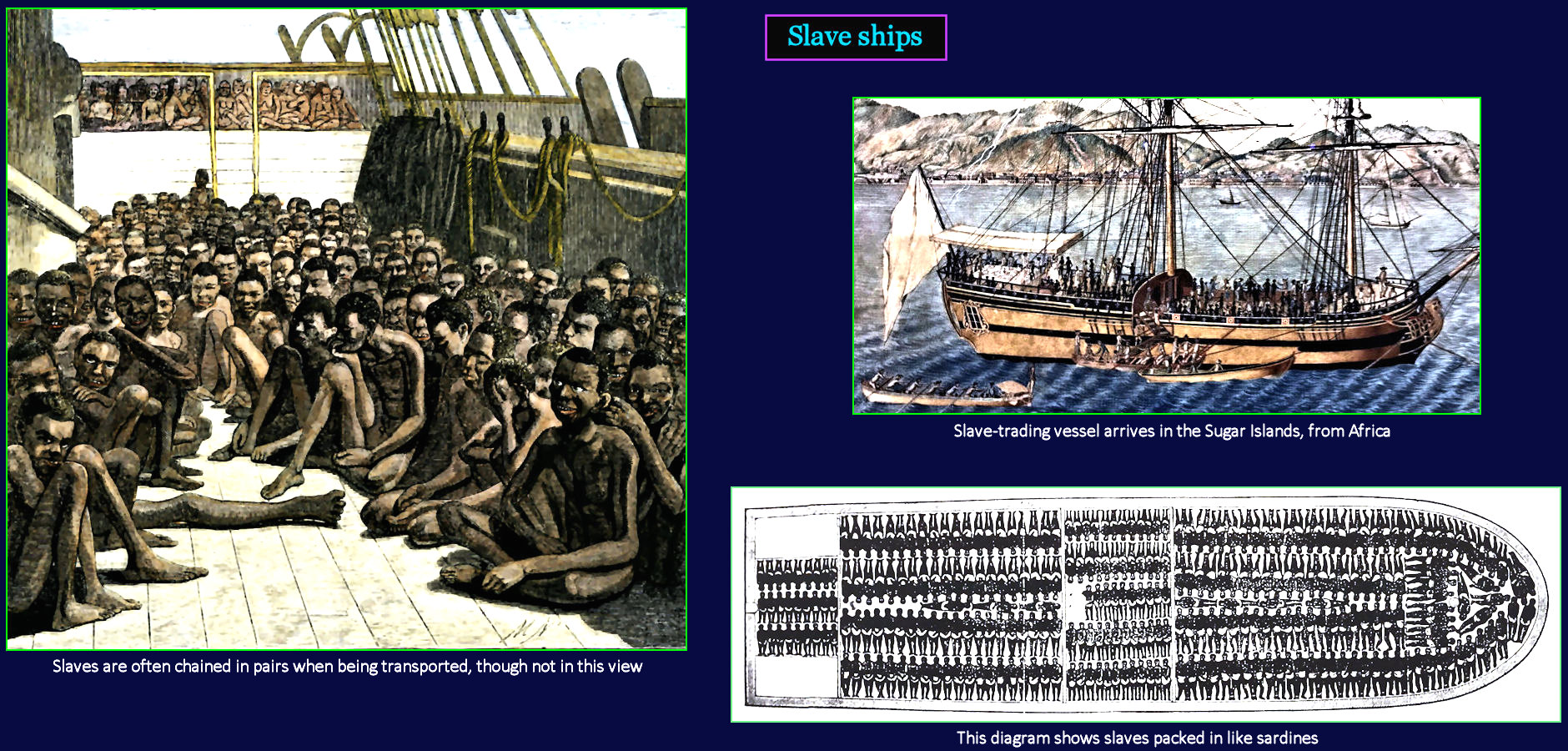
Miserable Voyage Getting slaves from Africa to America takes many weeks, often aboard ships never intended for this kind of cargo. Decks are re-arranged to make room for as many slaves as can be carried. Many die enroute, but this seems to be the only way to manage human cargo for extended voyages. It's hard to imagine how this scene could have been repeated for the tens of thousands of individual voyages that occurred during the 1700s and early 1800s. But profits are handsome in the slave trade, and Blacks are generally considered to be sub-human, like domesticated animals. The view at left depicts faces that express dark menace, a common apprehension about Blacks that continues to this day. | |||||||||
| |||||||||
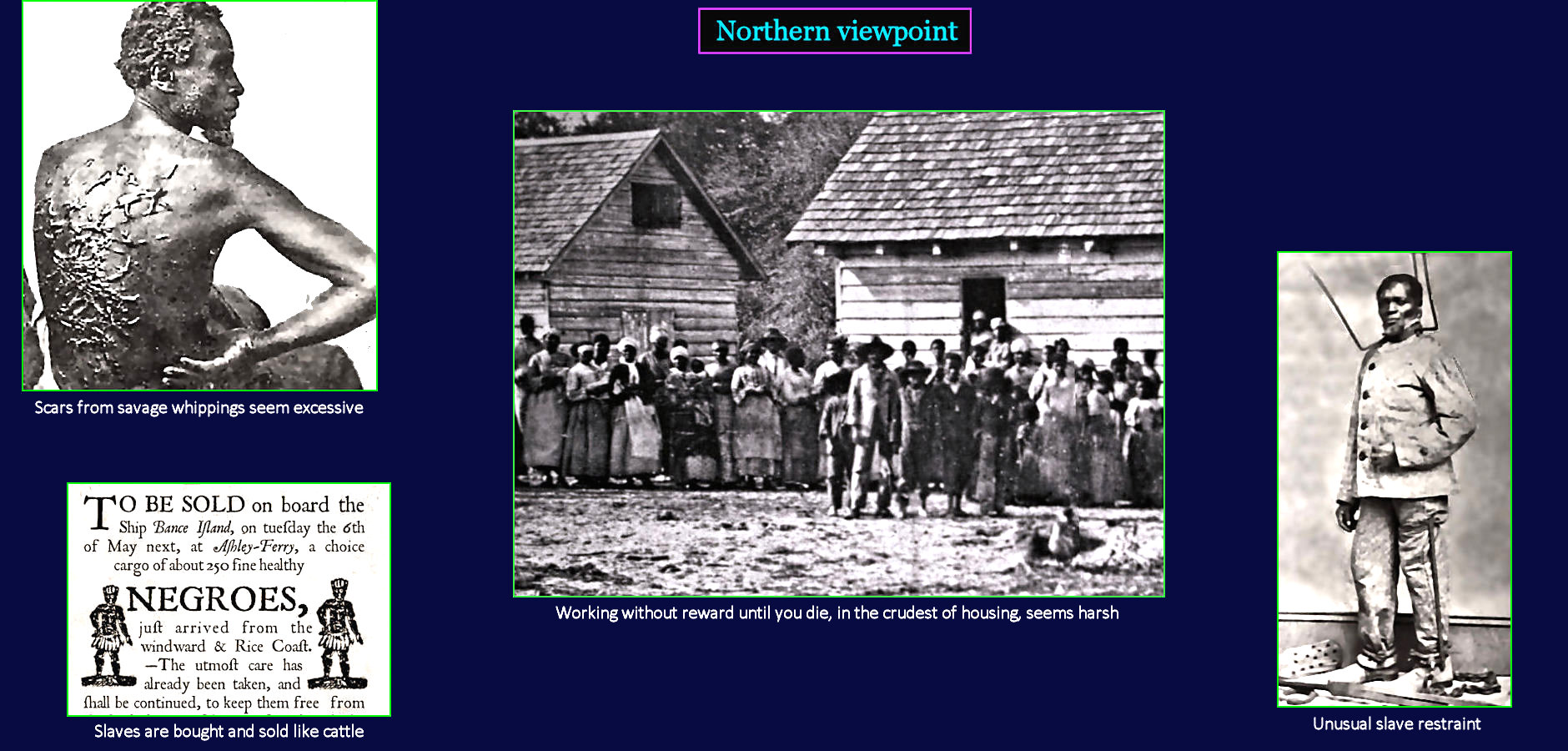
Anti-slavery Perspective From the northern perspective, slavery is just plain wrong. Human beings should never be chained up and sold like cattle, it is argued. Actually, slaves in the South are seldom chained, unless they try to run away. In such cases, they might also be made to wear restraints like the 'escape-proof' iron collar at right, though this is unusual. Whippings, however, are common, and often brutal. The worst cases leave scars that can only evoke sympathy in northern eyes (top left). But just as bad is the fact that slaves are kept in perpetual captivity, with no other option in life. Slaves are slaves until they die, at work. The abolitionist movement in the North to end slavery has barely begun, but will soon grow. | |||||||||