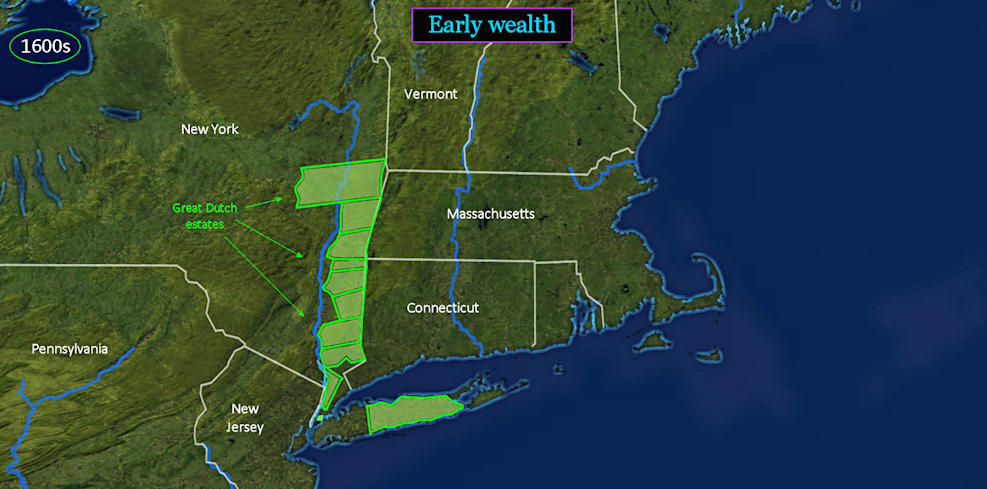
Land GrantsBut there isn't much actual wealth, as no small farmer ever got rich by farming. Most of the wealth at this time is tied up in 100 or so great estates, owned by people who were already wealthy before arriving in America. Most have been bought as single large parcels of land from colonial governors holding the royal charter, sometimes as part of complicated business deals. The Livingston parcel in New York boasts 160,000 acres. Virginia has its share of prominent estates, but many more are located near Philadelphia, and along the Hudson River in New York, on land originally settled by the Dutch. Most estates are later divided among family members. |
| ||||||||||||||||
| |||||||||
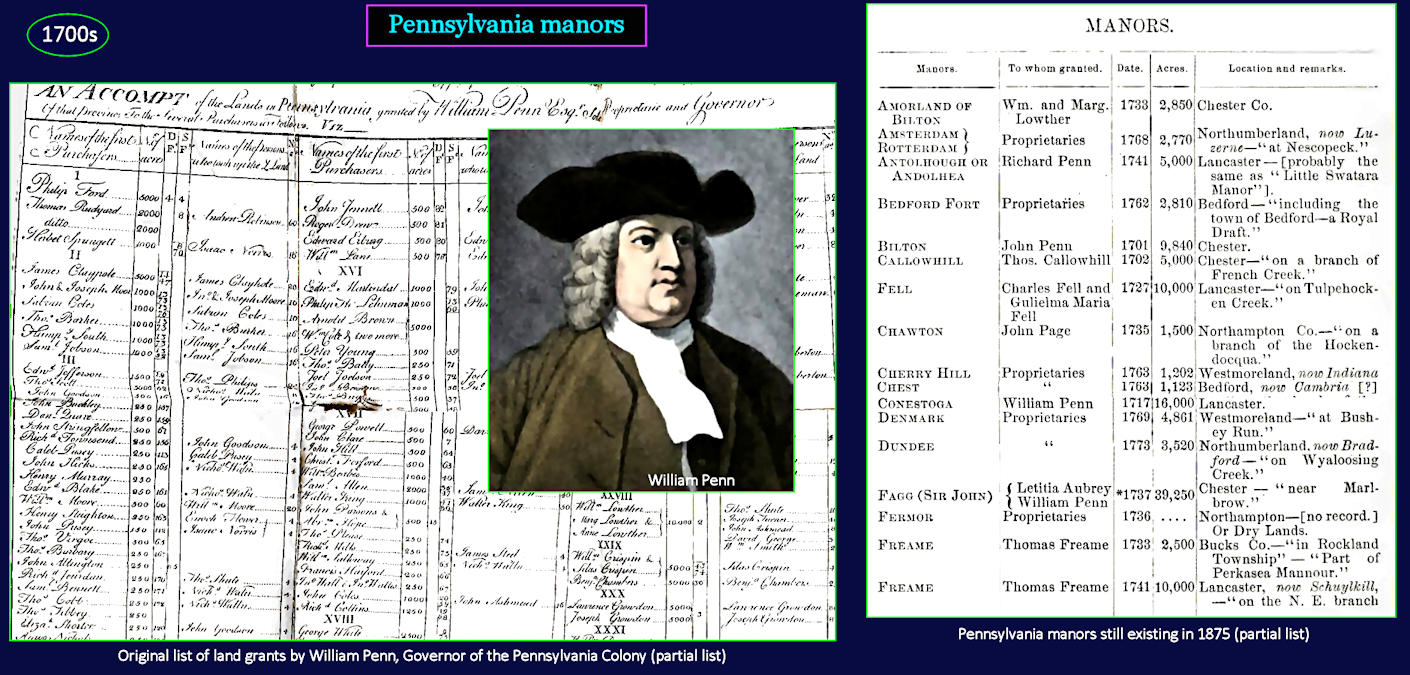
Plenty of Land Large land grants continue into the 1700s, as William Penn's Pennsylvania Colony is granted a vast tract of land by the King of England, partly as a place to dispose of troublesome Quakers. Penn anchors his colony at Philadelphia. With so much land at his disposal, he is soon handing out estates of up to 65,000 acres each, called manors, which remain intact for many years. Some are eventually reorganized as entire towns. The listing at left (above) is a small portion of the landholdings around Philadelphia granted by Penn, typically for 500 to 2500 acres each. After the American Revolution, Pennsylvania buys out much of the land held by Penn's heirs, but leaves certain manors intact, totaling 420,000 acres (partial list at right). | |||||||||
| |||||||||
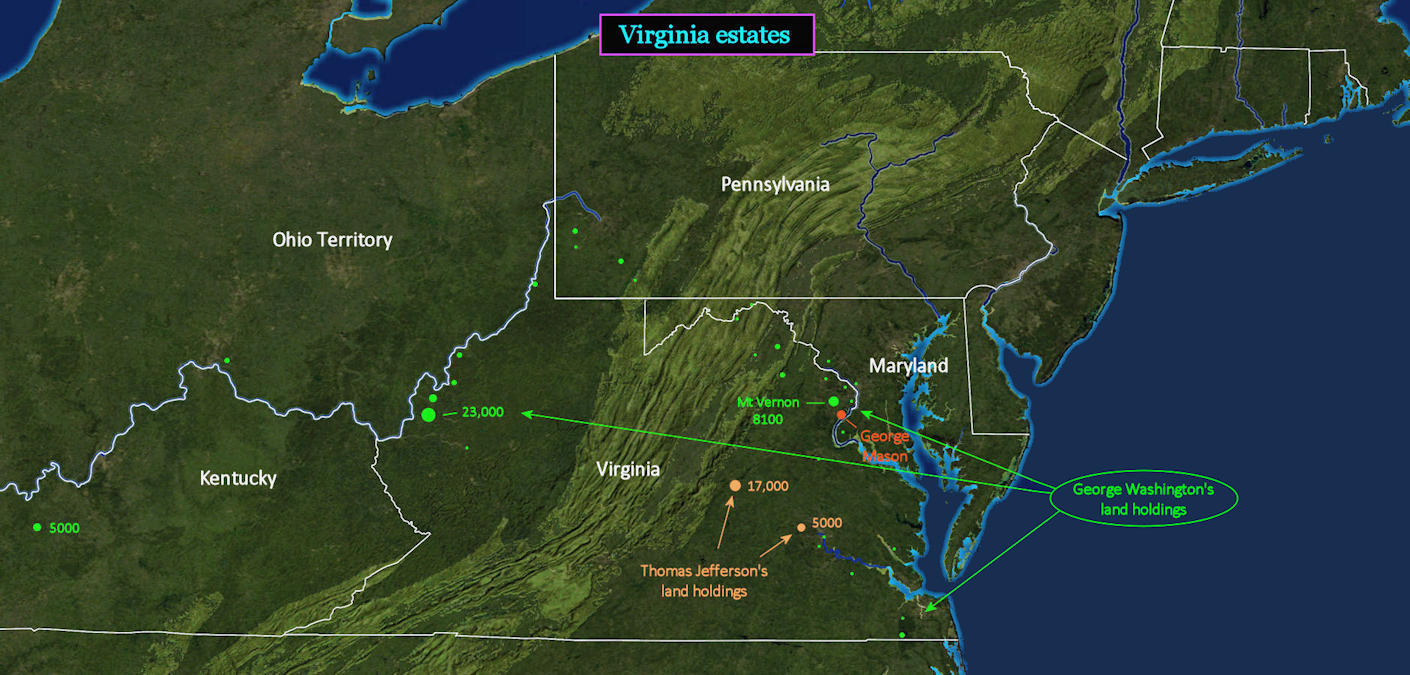
Accumulated Wealth When America gains its independence from Britain, many estates are gradually broken up, as the English practice of preserving such estates intact is abandoned. But this doesn't stop Americans from creating their own large estates, through purchase. Some of the Founding Fathers have inherited large land holdings in Virginia, which have been enlarged over generations. Most prominent is George Washington, with his 8,000 acre plantation at Mount Vernon, another 20,000 acres in the Ohio River Valley, and various other smaller holdings (GREEN circles, numbers indicate acreage). Thomas Jefferson also has major land holdings (ORANGE circles), while George Mason owns thousands of acres on the Potomac River (RED). | |||||||||
| |||||||||
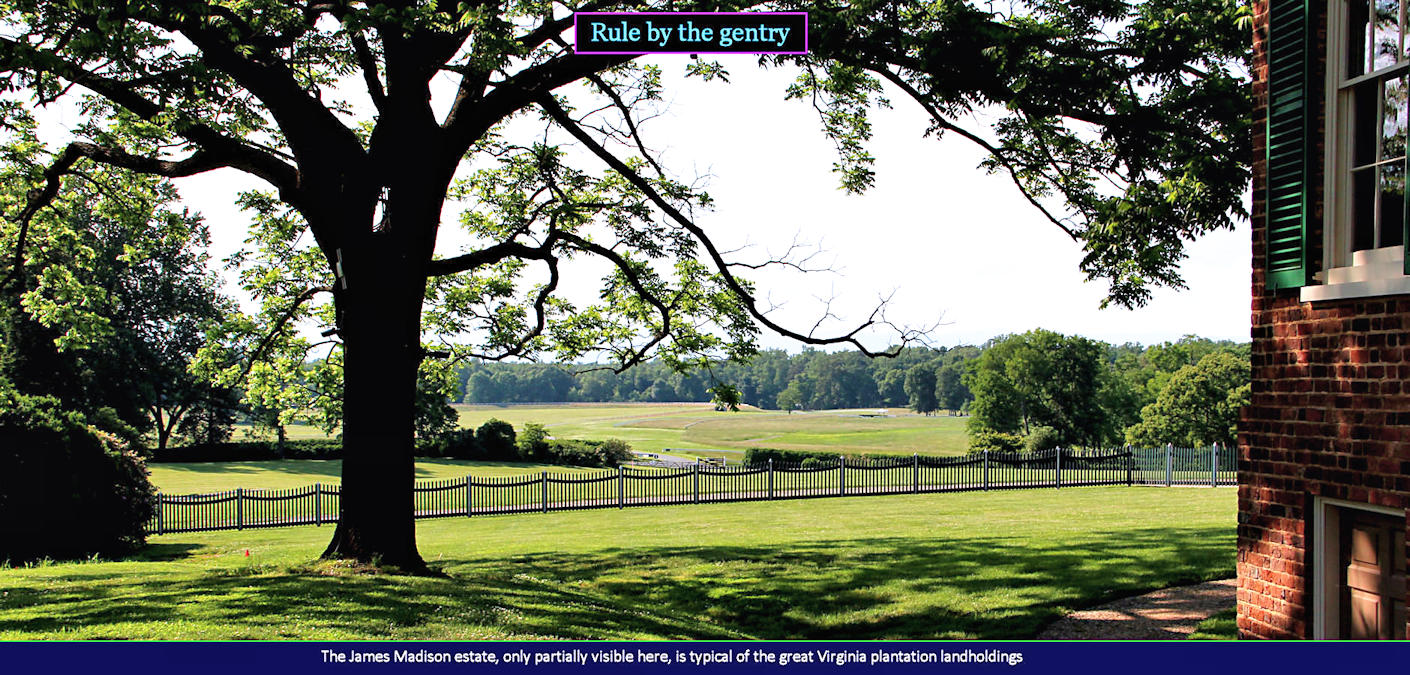
Wealth and Power As might be expected, the owners of the great estates are prominent members of the colonial assemblies that make the laws. Most are perpetually elected to positions of power in the counties where they reside, giving them effective control. The governing assemblies also include a healthy proportion of merchants, but these are generally subservient to the big landowners. Ordinary farmers, who are also sometimes elected as representatives, have little influence. Land continues to be the chief source of wealth, until shipping interests gradually begin to fill out the ranks of America's upper class, during the early 1800s. | |||||||||
| |||||||||
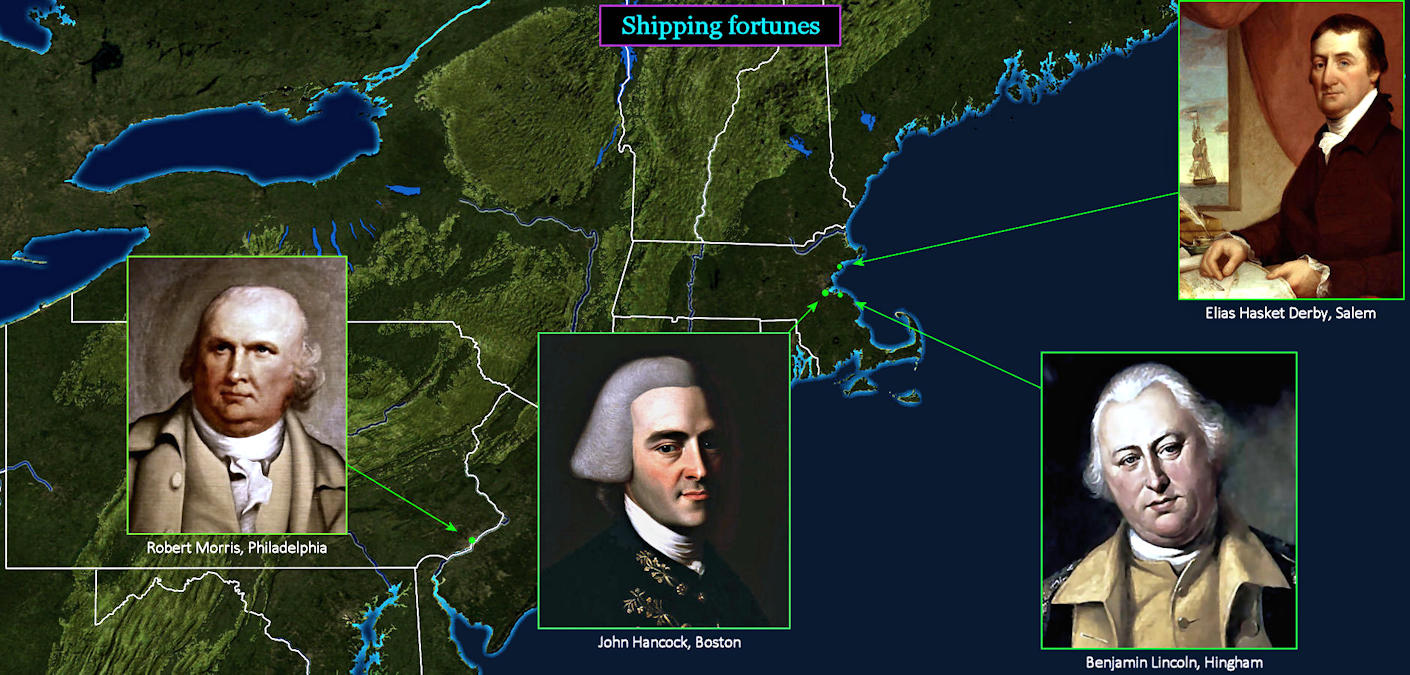
New Players at the Table The northerners shown above are the most prominent financial supporters of the Revolutionary War, and all have made their fortunes in shipping. They rank among the top tier of America's wealthy. In the South, the road to fortune runs straight through tobacco plantations, but up north the measure of wealth is how many ships you own. A 21-year-old in Salem owns 13 trading vessels (top right, later in life). The trade with India is just picking up at this time, and profits are stunning. During the Revolutionary War, many ship owners are granted permission to prey on British shipping, which increases their wealth. During the war, they seize 1,500 British merchant vessels, mostly right off the coast of Britain. Salem alone is home port to 150 armed privateers. | |||||||||
| |||||||||
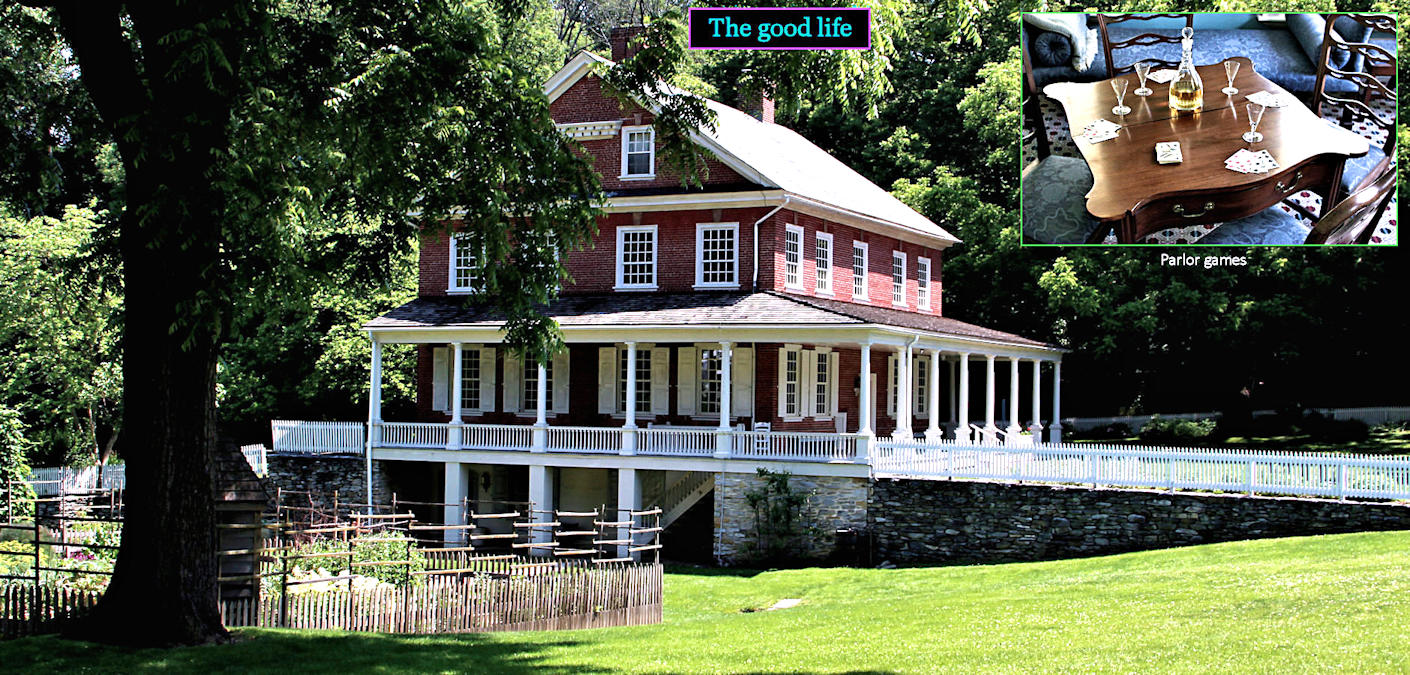
Northern Estate While the grandest homes in America are mostly located on southern plantation, there are also smaller estates sprinkled across northern states. The restored estate shown above is located in the heart of Pennsylvania's rich farming region. The owner of the estate served under George Washington as a general, during the Revolutionary War. While not overly grand, it's far beyond the means of an ordinary citizen. Like most such estates, it's comfortably furnished with the best items of local craft, while the abundant garden and surrounding fields make it almost entirely self-sufficient. Although this is Pennsylvania, there are still slave quarters out back. | |||||||||