| |
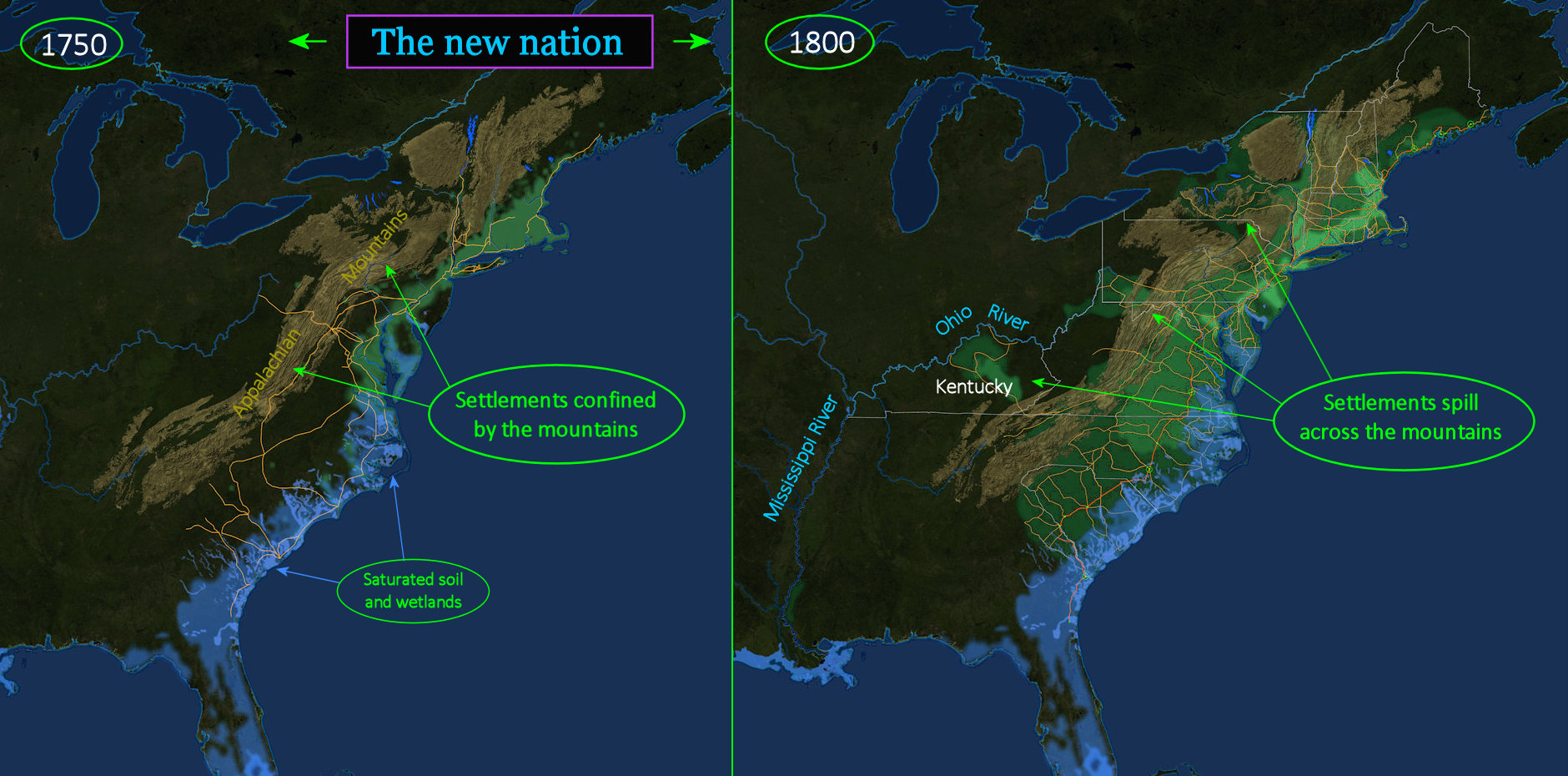
Settled Area Triples Before America wins its independence, settlements barely reach the foothills of the Appalachian Mountains (left). But just 50 years later, settlements spread in all directions, right up to the mountains and beyond. All this new settlement is held together by rough roads maintained and improved by the newly-energetic US Postal Service, with federal money (right). Kentucky has just been added as the first 'Western' state, and the limits of the frontier wilderness are now the Ohio River and the Mississippi River. The race westward has begun. |
| |||||||||
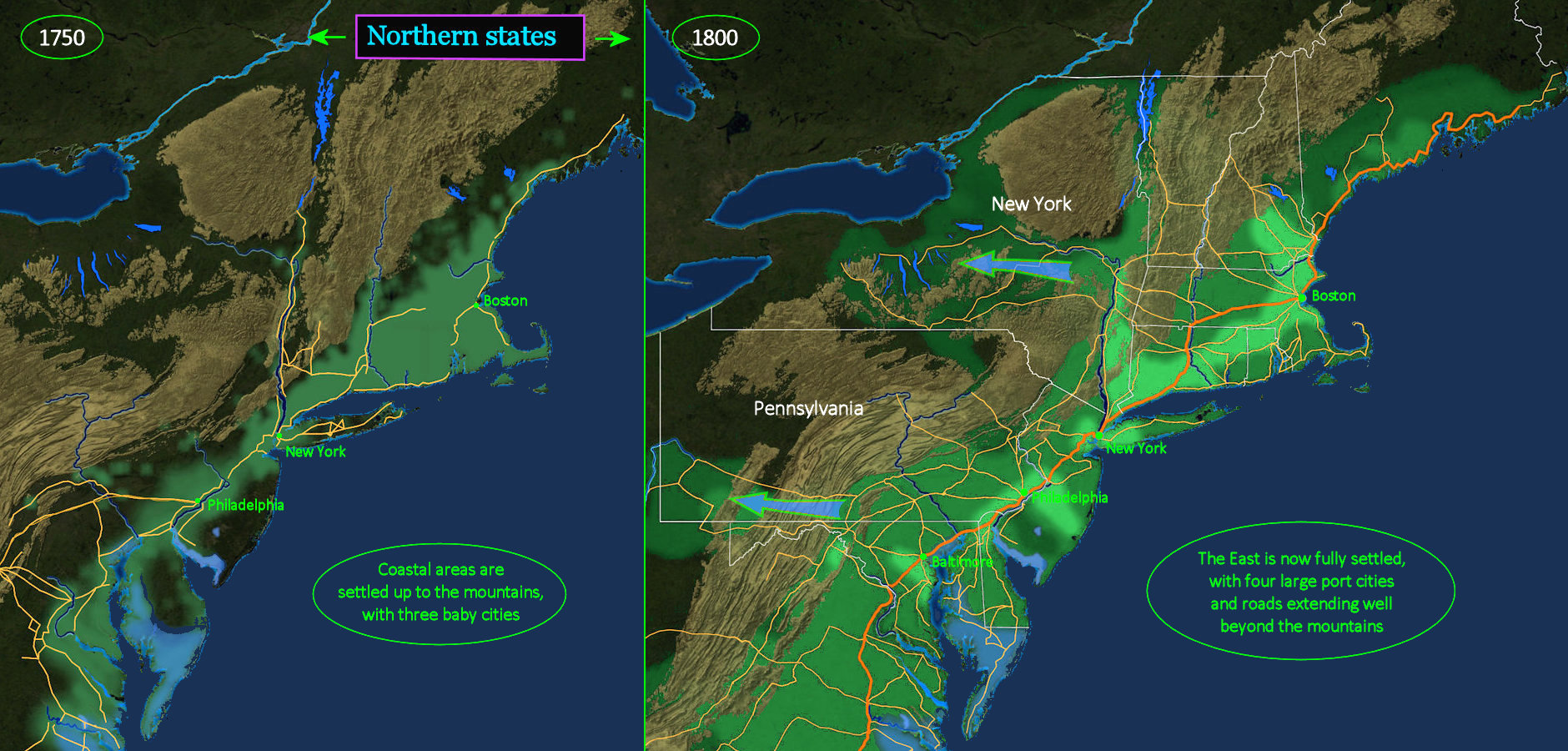
Filling in Fast By 1800, roads in northern states (right) have spread well up into New Hampshire, Vermont and coastal Maine. Business is still mostly confined to the major port cities, but tax revenues from shipping are no longer flowing to Britain, but staying in America. Settled areas have expanded, but have also filled in at the same time, with more people and more farms. The areas highlighted in BRIGHTER GREEN are the more thickly populated areas. The improving road network allows colonists to communicate better with each other, though it still takes several days to send a letter by mail coach from Boston to New York. The boundaries of Pennsylvania, New York, New Hampshire, Vermont and Maine have now been firmly established. | |||||||||
| |||||||||
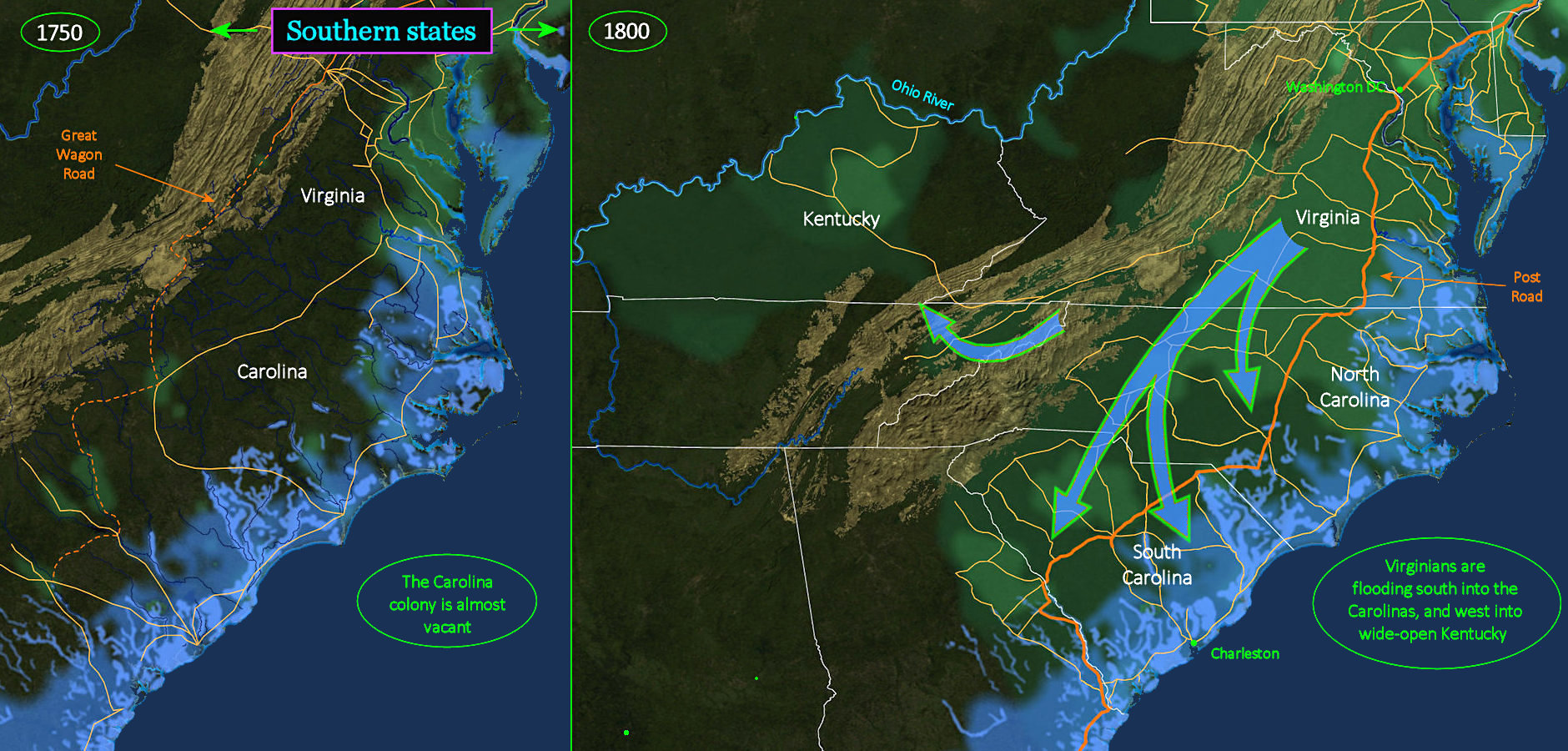
Flowing South and West Growth in the South is equally dramatic, led by Virginia tobacco planters who are spreading outwards to establish new plantations on fresh soil. They pour through a narrow mountain gap into Kentucky, and then down into Tennessee, where settlement is temporarily constrained by the wild Tennessee River. Virginians are also pushing further south into what had been the Carolina Colony, but is now formally separated into North and South Carolina. Settlement in Georgia is also expanding westward. The newly-invented cotton gin results in the establishment of the first big cotton plantations, which are suddenly profitable. This is the first instance of new technology having a major impact on the future course of American history. | |||||||||
| |||||||||
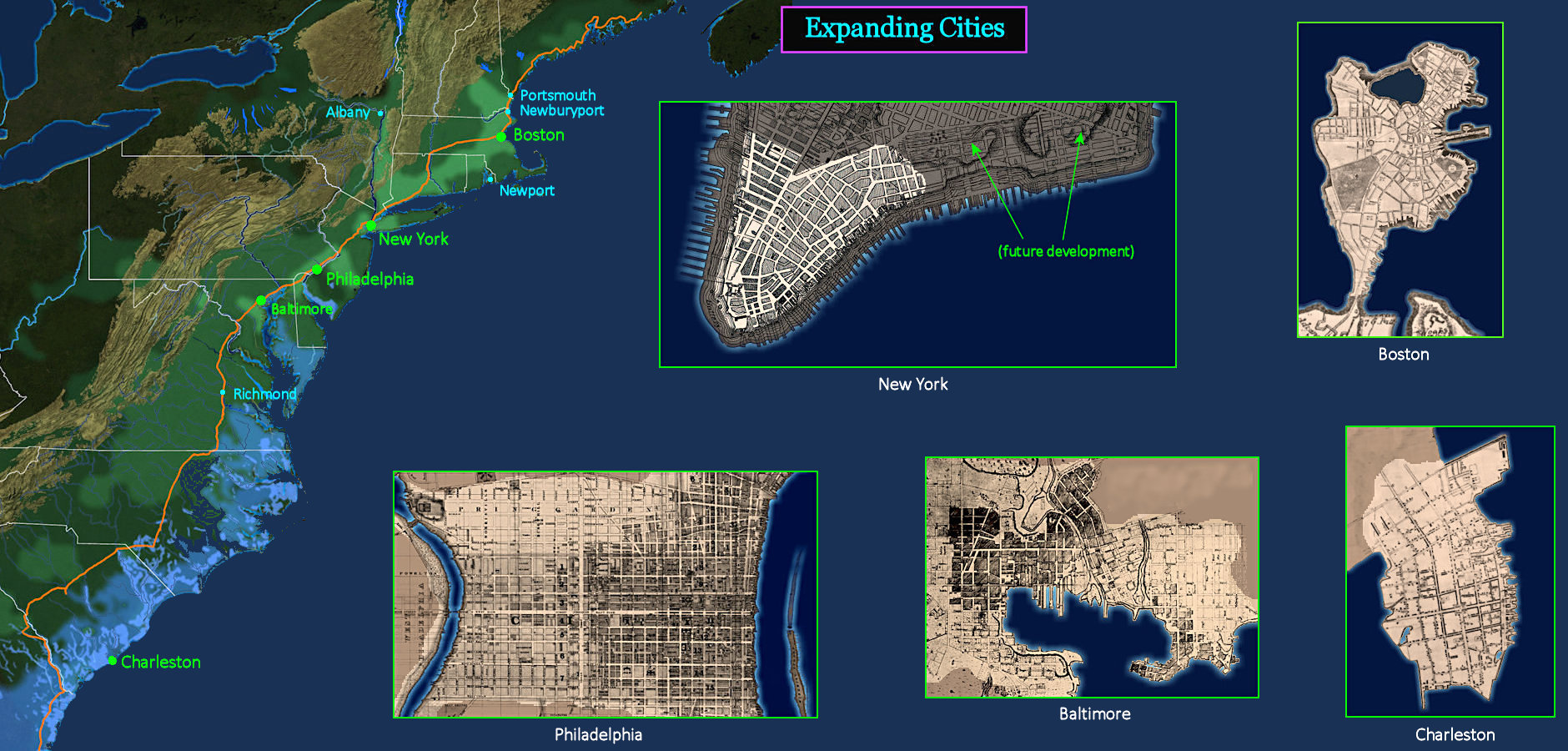
Ports Get Bigger By 1800, colonial ports are beginning to look like real cities, with warehouses surrounding the dock areas, and substantial commercial districts developing just beyond. Boston, New York and Philadelphia are now thriving business centers, linked by the main north-south Post Road (ORANGE). Each will soon have 20,000 inhabitants. Baltimore has grown into another important port city, far up Chesapeake Bay. Meanwhile, Charleston is now the big southern commercial center, supported by a brisk trade in slaves from the British Sugar Islands, in the Caribbean. A second tier of smaller port cities has also appeared, with 5,000 residents each (labelled above). Albany and Richmond are located on rivers carrying commercial traffic inland from the coast. | |||||||||
| |||||||||
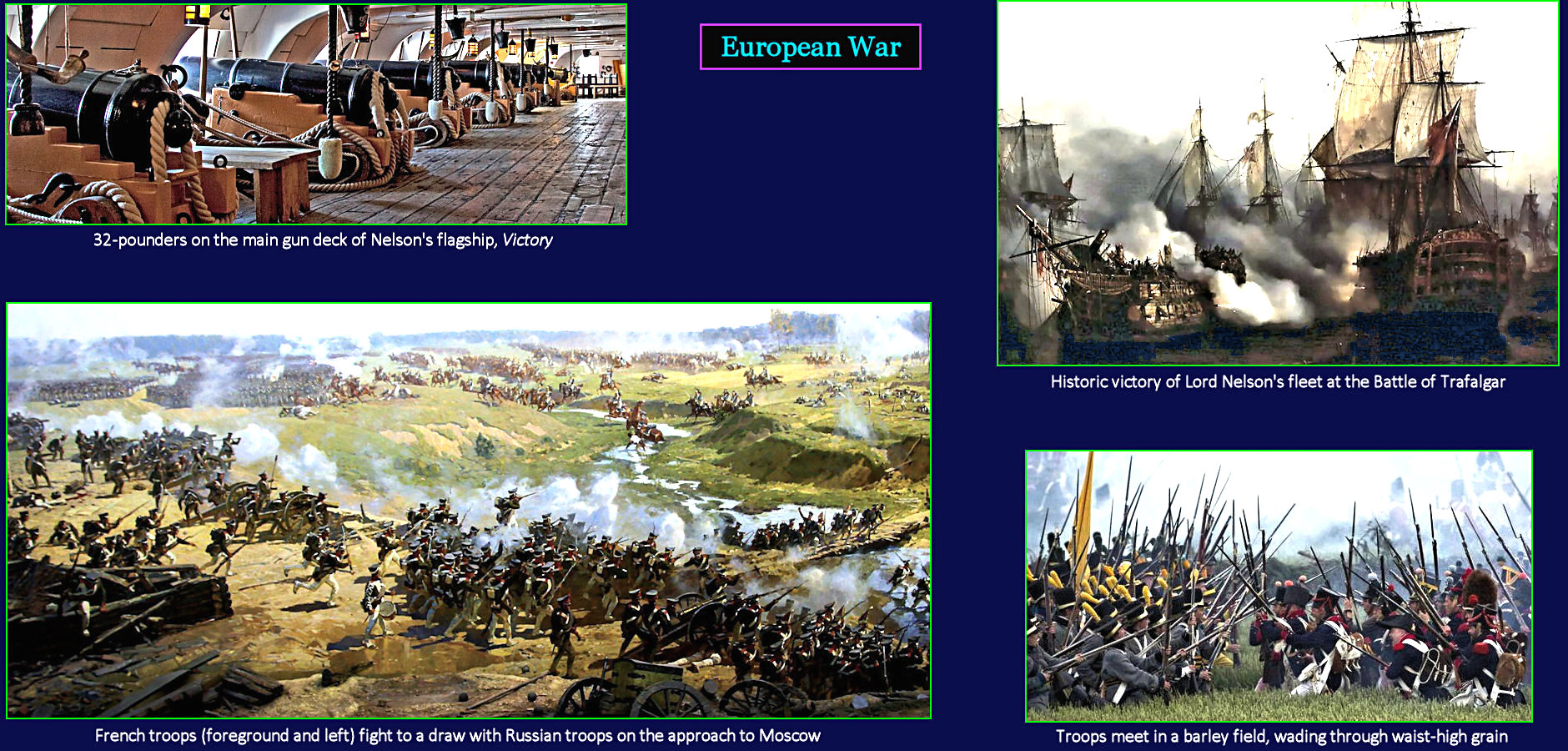
Increasingly Deadly Wars The Napoleonic Wars last for 15 years, resulting in six million dead, including nearly a million civilians. This is a prelude to the kind of warfare that will unfold in the coming years, including the bloody American Civil War. Military technology has advanced somewhat, with better field artillery, but the primary weapon for infantry is still the clumsy muzzle-loading musket. Trained soldiers might get off three shots a minute, with an effective range of about the length of a football field. A multi-deck ship-of-the-line mounts massive 32-pound cannons on the lower deck, firing 6-inch balls up to a mile. Point-blank range is four football fields. | |||||||||
| |||||||||
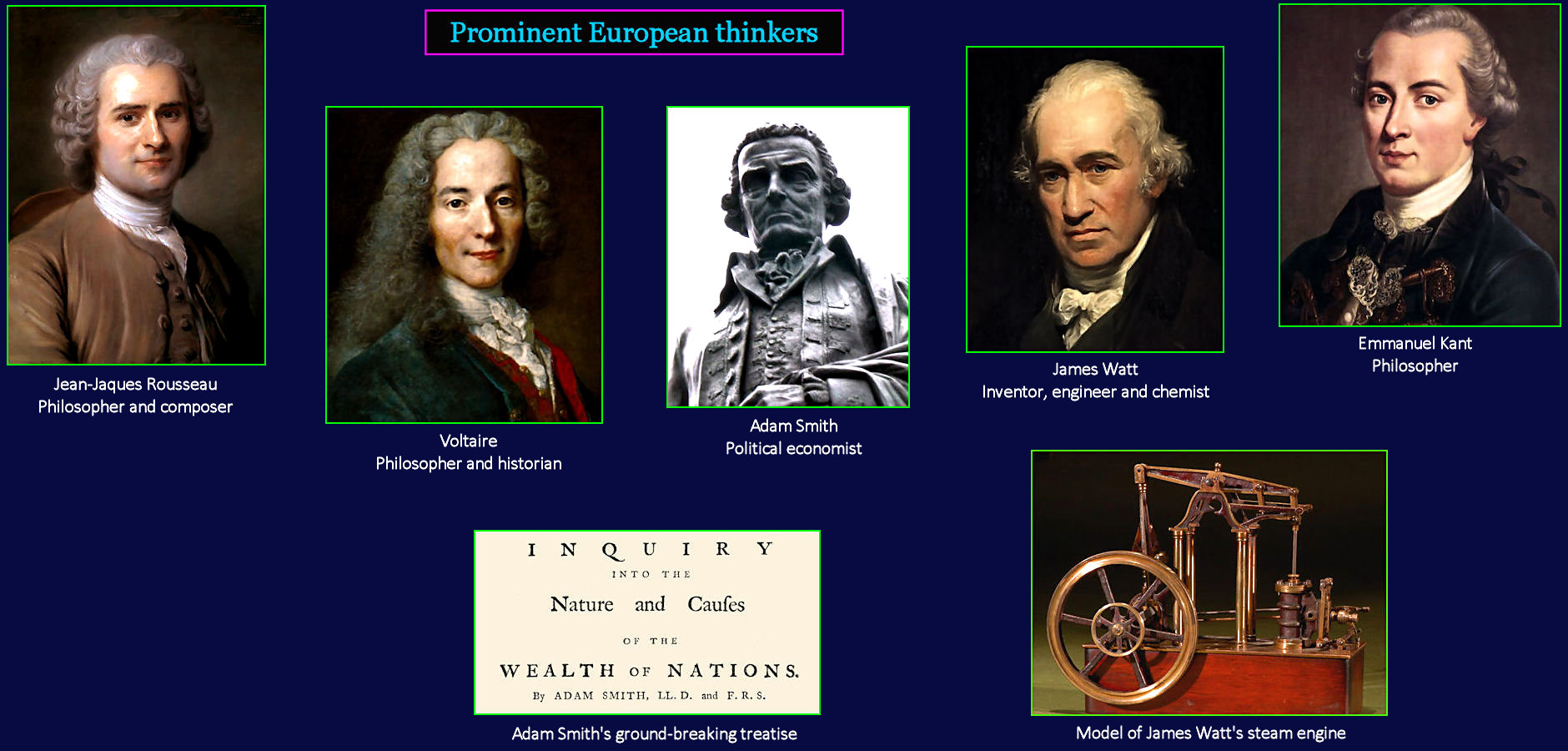
Philosophers and More The Enlightenment in Europe continues its inquiry into improved organizing principles for society, with an increasing emphasis on economics and engineering. Adam Smith creates the concept of the 'Invisible Hand,' which highlights the benefits of free market capitalism. Modern apologists have transformed this simple concept into a much broader defense of corporate expansion, with its single-minded, relentless pursuit of market dominance (the exact opposite of Smith's vision). James Watt's steam engine sparks the beginning of the Industrial Era. It will take the later availability of coal, as an abundant and cheap fuel, to turn the spark into a raging blaze. | |||||||||