| |
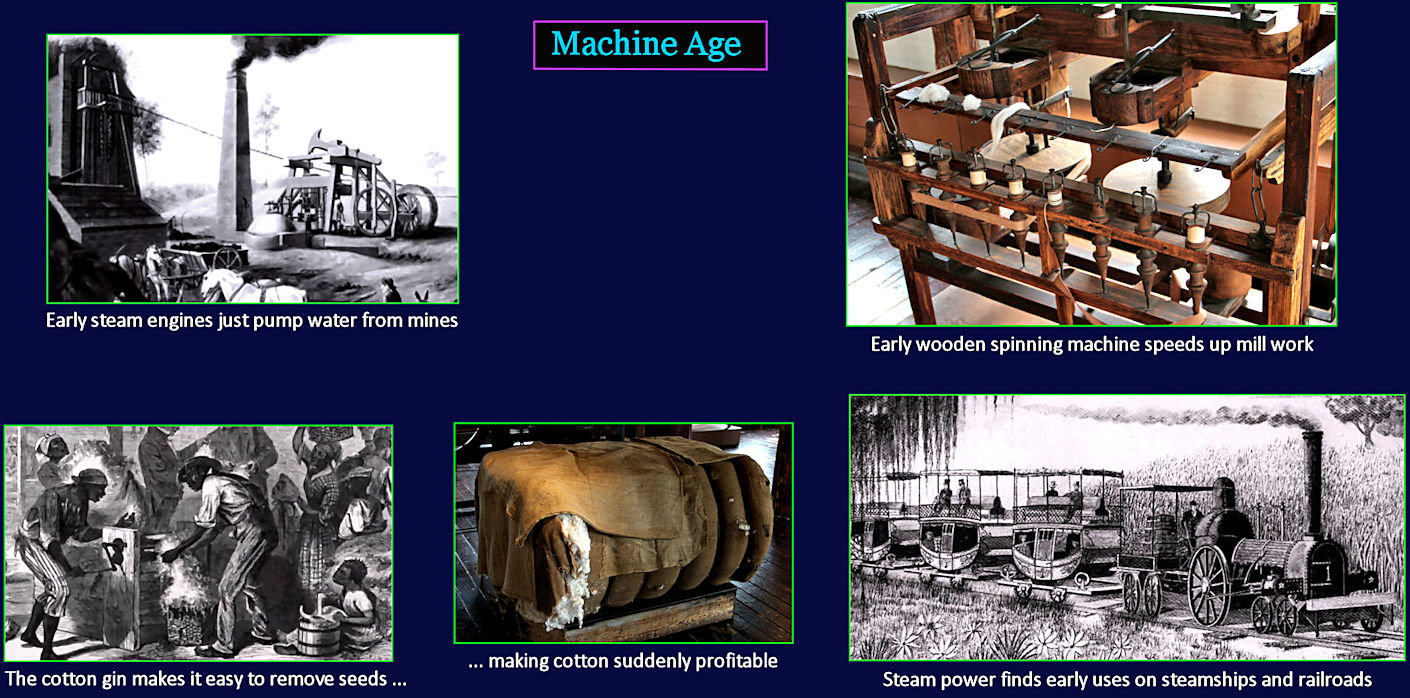
Powered Equipment The first steam-powered machines are giant pumps used to remove seepage water from mines (top left). Next come crude wooden devices to speed up the tedious spinning process needed to produce woven fabrics (top right). Then comes a machine to magically remove seeds from cotton (bottom left), unleashing enormous changes in the South. Plantations begin switching from low-profit tobacco to high-profit cotton. This is followed by advances in steam engines, which can now be made smaller, yet still powerful enough to pull a string of train carriages. |
| |||||||||
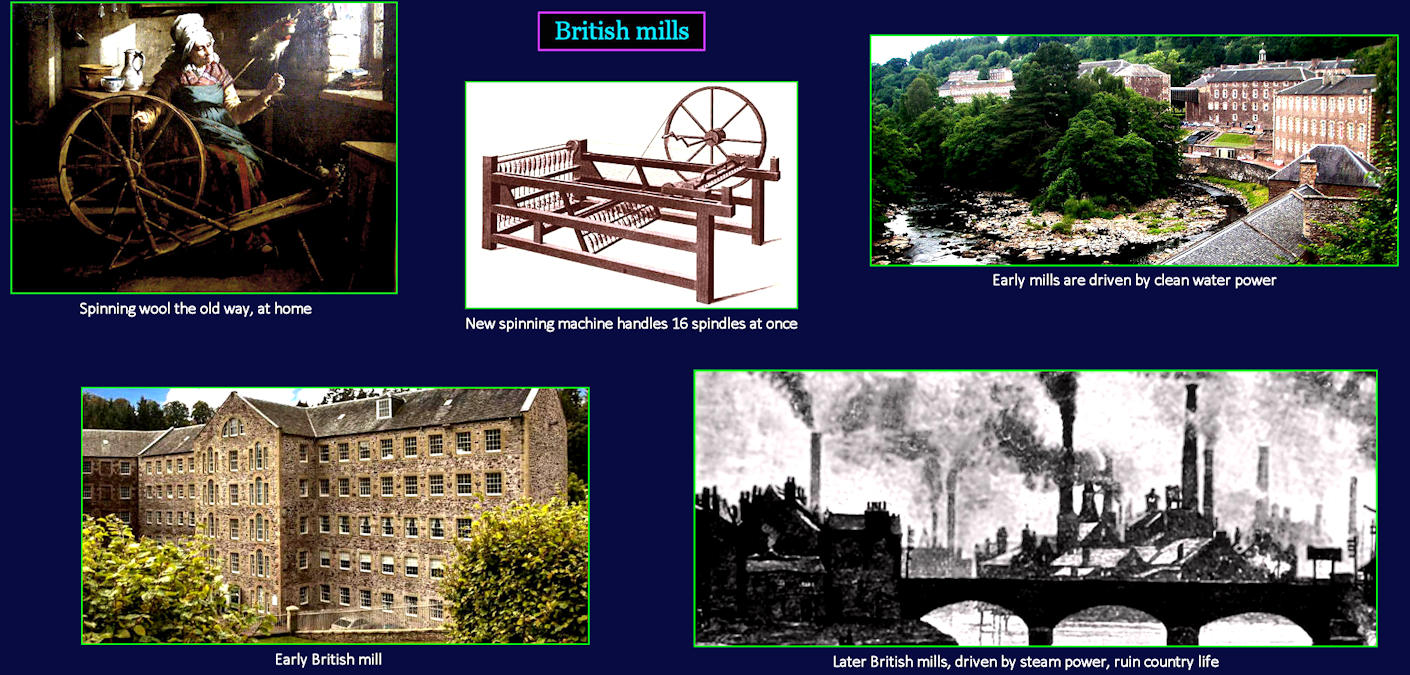
Water-powered Mills For centuries, the great British woolen industry had depended upon women spinning yarn by hand in their country cottages, using large spinning wheels (top left). By the mid-1700s, however, new wooden machines are beginning to replace the old spinning wheels, including a hand-cranked device that can spin wool onto 16 spindles at the same time (center top). Most mill owners pay scant attention to worker welfare, but one mill provides its workers with comfortable housing, without killing profits (as was feared). By 1800, large mills are sprouting up wherever there is waterpower to drive them. Later, when steam power becomes available, mills can be located anywhere, burning lots of dirty coal (lower right). | |||||||||
| |||||||||
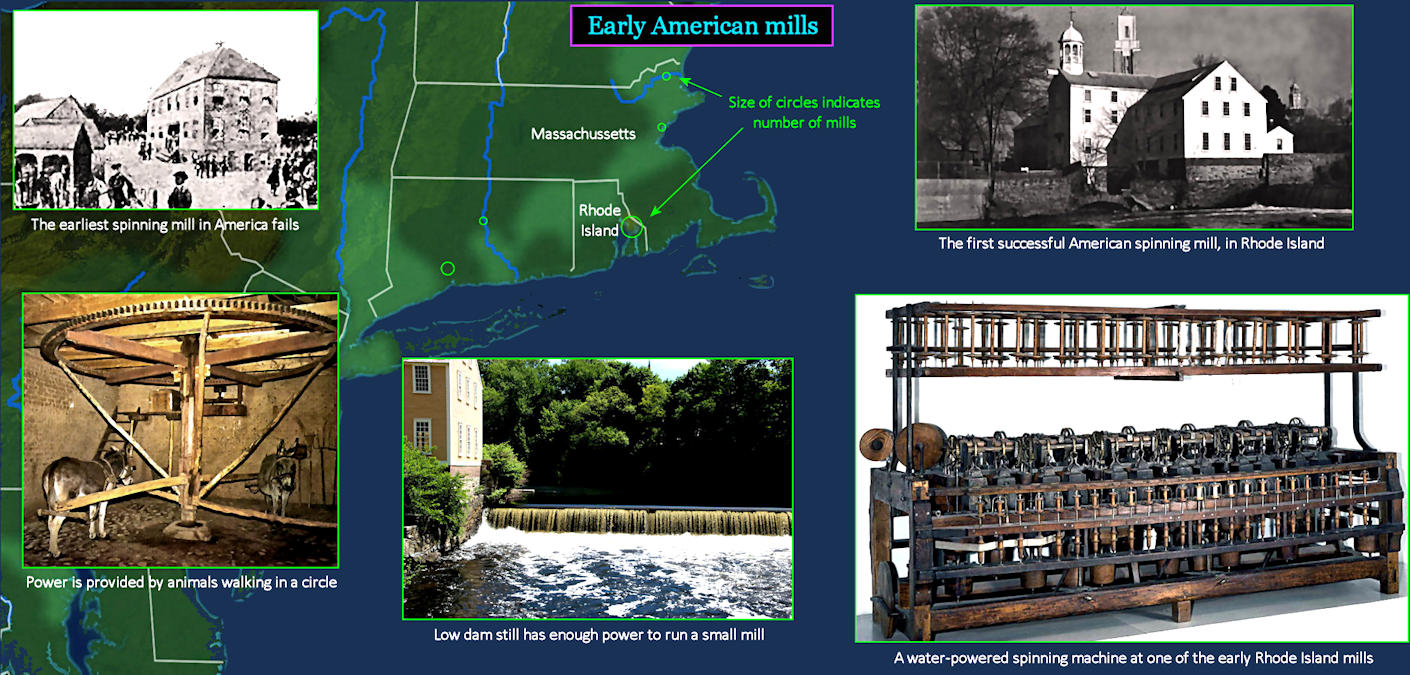
American Copies It doesn't take long for Americans to begin building mills of their own. The first mill (top left) is located near Boston, and is driven by horses walking slowly around the main drive shaft in the basement (lower left). Even so, it generates lots of enthusiasm among those who want to promote manufacturing in America, including George Washington. This mill eventually fails, but dozens of others soon spring up all over New England (GREEN circles), powered by waterwheels. They have improved machinery (lower right), but remain relatively small operations, which can only spin yarn. Americans have not yet figured out how to make British-style power looms, which are needed to weave yarn into finished cloth. | |||||||||
| |||||||||
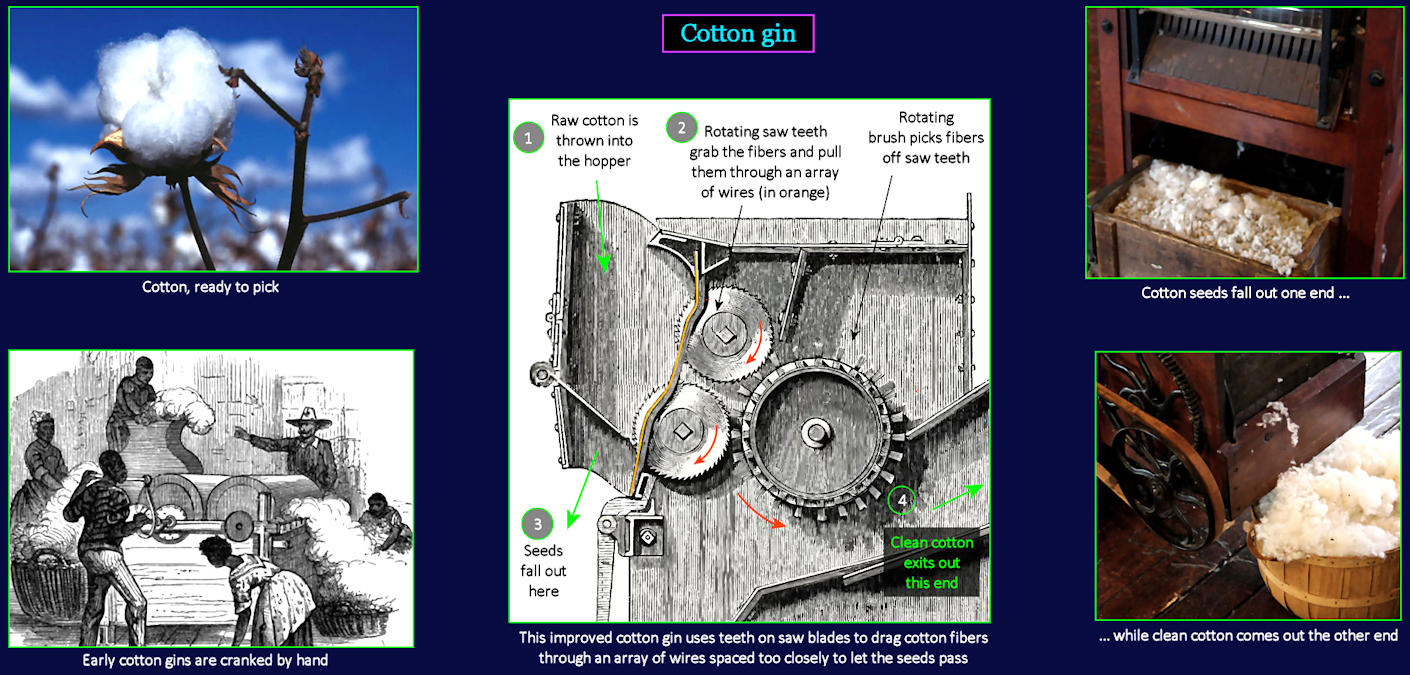
Launching a New Industry Another machine which is critical to the sudden growth of American spinning mills is the so-called cotton gin. Cotton plants produce lots of puffy white balls (top left), but each is cursed with big seeds that are devilishly difficult to pick out by hand. When a machine is invented that can pick them out just by turning a crank, however, raising cotton becomes instantly profitable. Southern cotton is soon flooding northern mills. The cotton gin has a hand crank that spins an array of metal disks with teeth, like circular saw blades (top right). The teeth drag fibers through a set of metal fingers spaced so closely together that the seeds cannot pass, and fall out from one end of the machine. At the same time, clean cotton falls out from the other end. | |||||||||

| |||||||||
Fighting the British, Again Back in Europe, Britain and France are involved in yet another knock-down, drag-out war lasting a dozen years, which puts great demands upon the British navy. Desperate for more seamen, the British start seizing them off of American vessels, claiming they are actually deserters from their own navy. America responds by halting all trade with Britain, but eventually feels compelled to declare war. It is a strange war with just a single major battle, won by General (and future-President) Andrew Jackson, at New Orleans (top left). There are also minor naval engagements, with a few Americans victories. Near the end, a British raid manages to burn the White House, and America's new capital building, in Washington DC (lower left). The war ends without lasting results. | |||||||||
| |||||||||
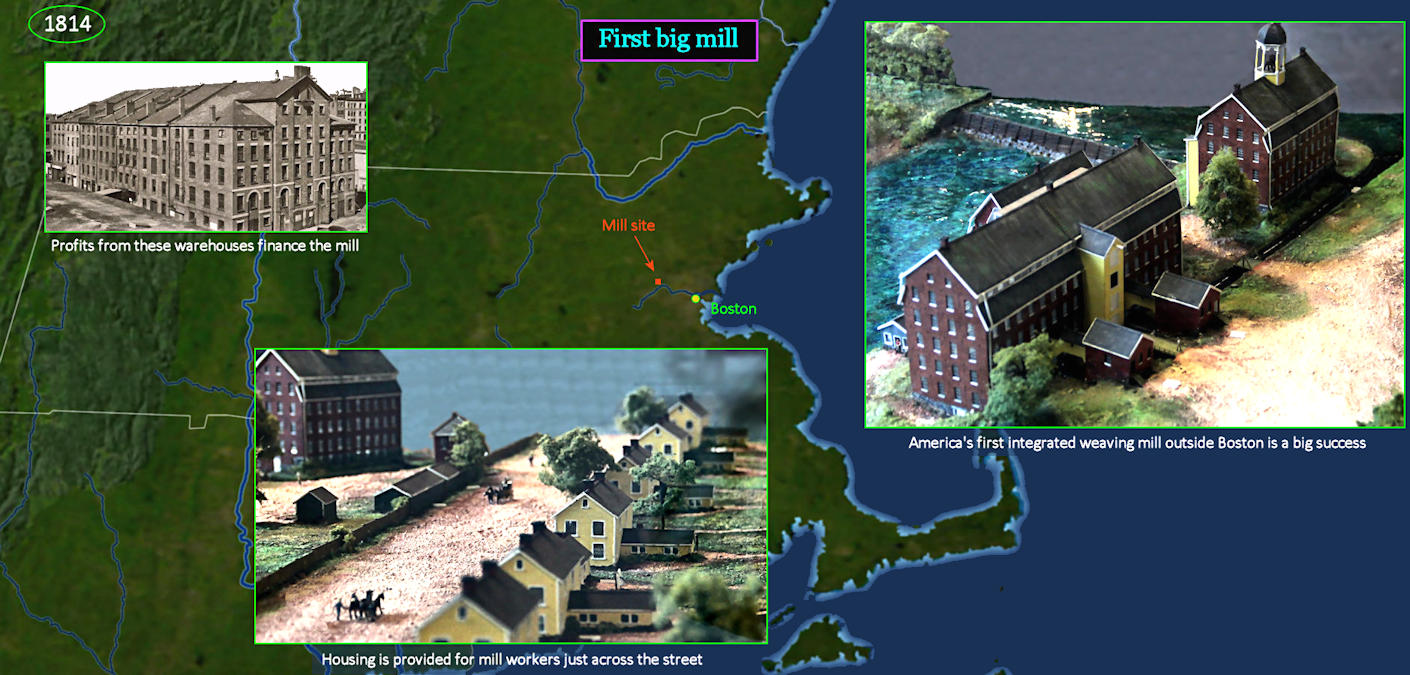
Going Big Just as the War of 1812 is ending, a brand new type of business is being developed outside Boston. A group of the most successful merchants is starting to think big, building a row of huge warehouses just behind docks where they receive imports from China (top left). This dwarfs any previous commercial venture, and its success leads them to think even bigger. Selecting a site west of Boston, they build America's first large-scale textile mill (top right), which houses all the machinery required to produce woolen fabric under one roof. This includes America's first power looms. One key feature of the mill is the inclusion of worker housing, which is needed to attract workers from surrounding farms (lower left). To get to the mill, workers only need to cross the road. | |||||||||