| |
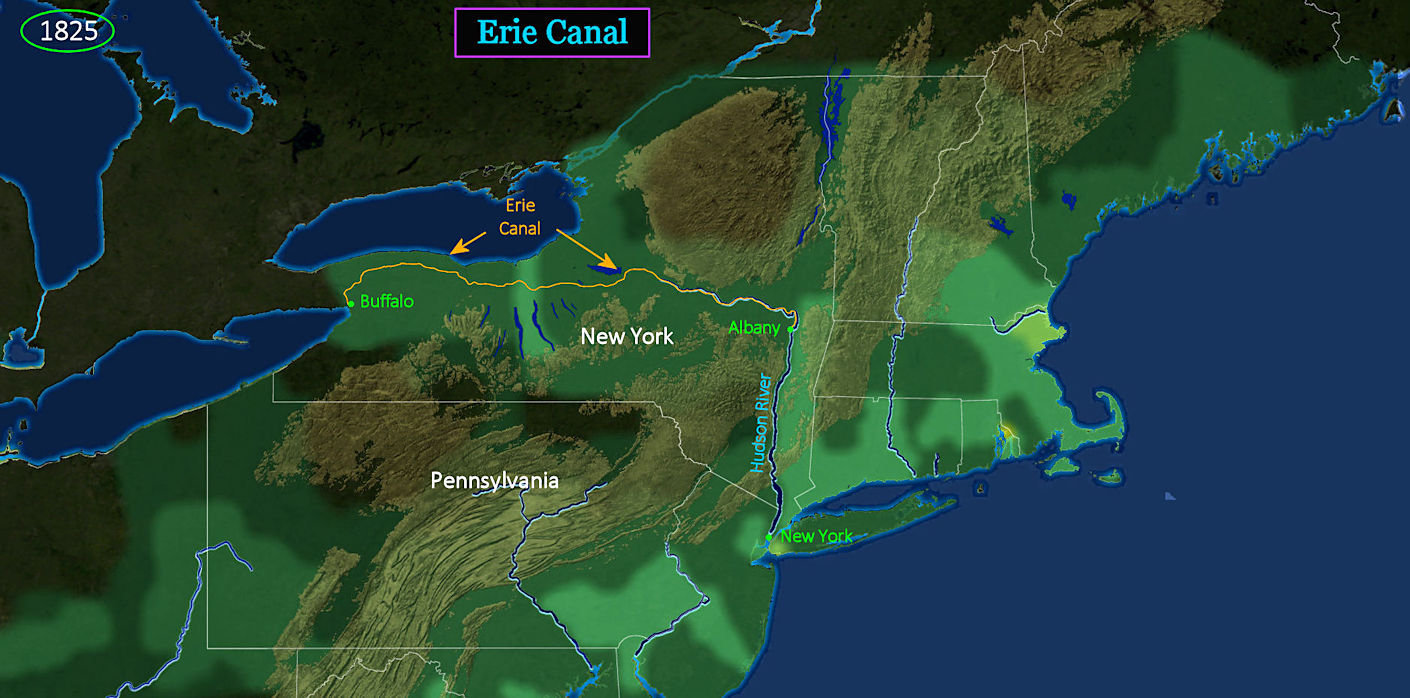
Albany to Buffalo The Erie Canal reduces the cost of transporting cargo by a monumental 95%, and lowers travel time by 70%. A single barge can now transport 30 tons of cargo, or a load of passengers out for a comfortable, elegant excursion. Although construction costs are immense, tolls collected from the brisk barge traffic cover the entire expense within 10 years. The canal connects the Great Lakes with New York City by an all-water route, and transforms New York City into the dominant shipping and financial center of America. |
| |||||||||
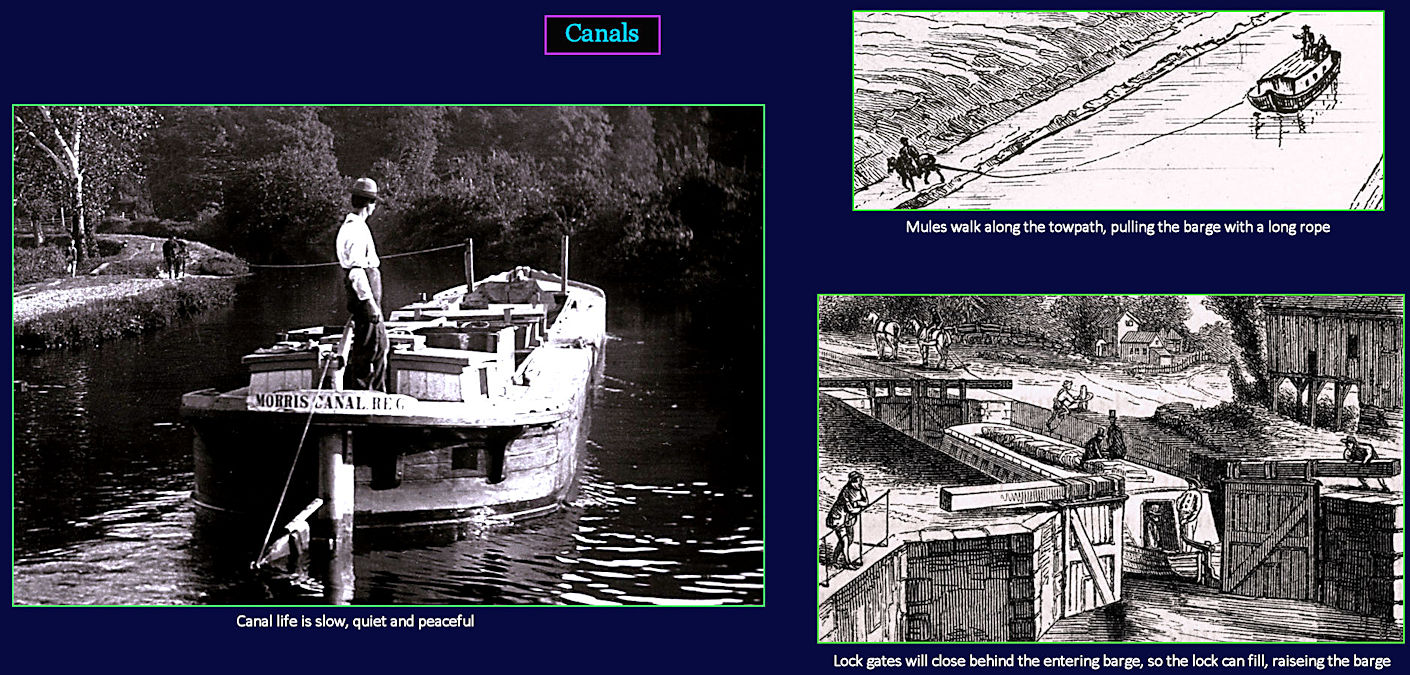
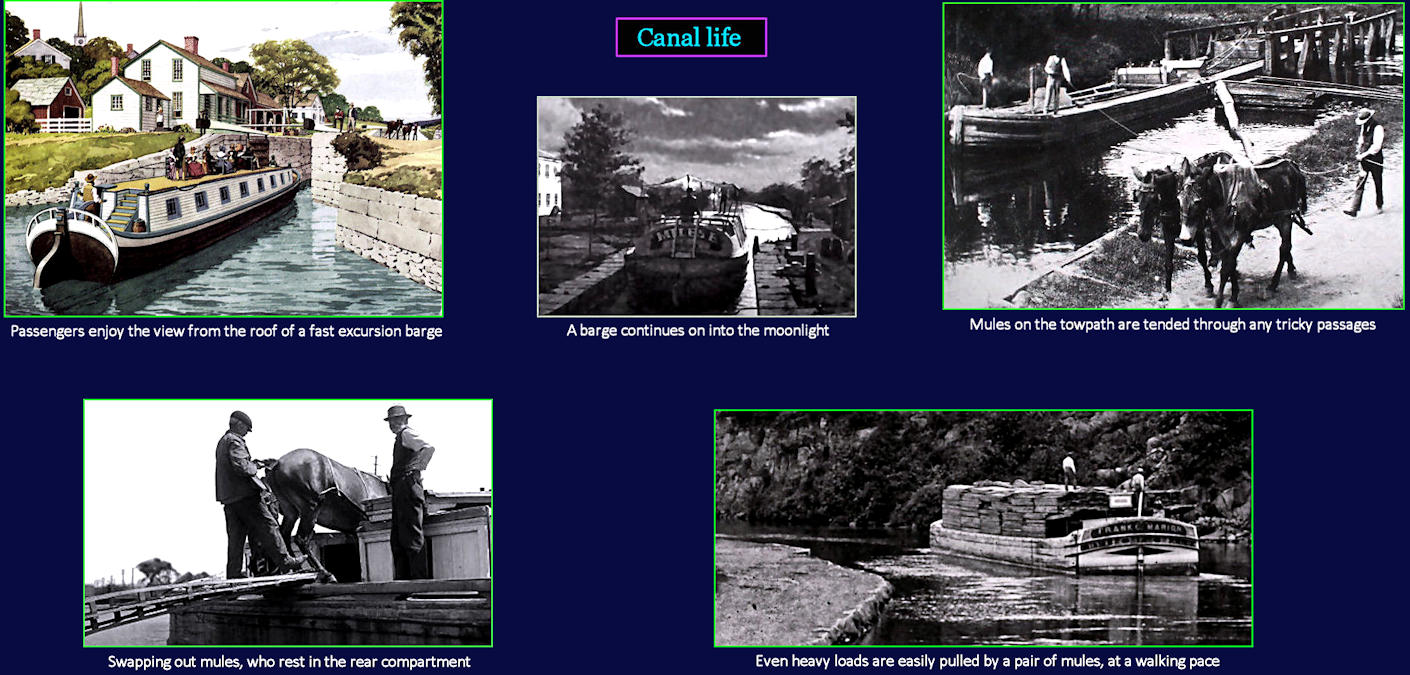
Leisurely Travel A canal is a very simple contrivance requiring only a mule (or two) for power. Except where locks are required to manage a change in elevation, canals are generally level, which means there is almost no current. This allows a single mule to pull a load that would otherwise require 20 mules and many wagons. Digging the canal by hand requires a large crew, but little skill. Locks are expensive to construct, but simple to operate, magically raising and lowering barges without effort. All you need to complete the canal is a towpath along one bank, for the mules that pull the barges with long ropes. Anywhere this is possible, you can suddenly move cargo with ease, and steady speed. By swapping out mules, travel can continue through the evening. | |||||||||
| |||||||||
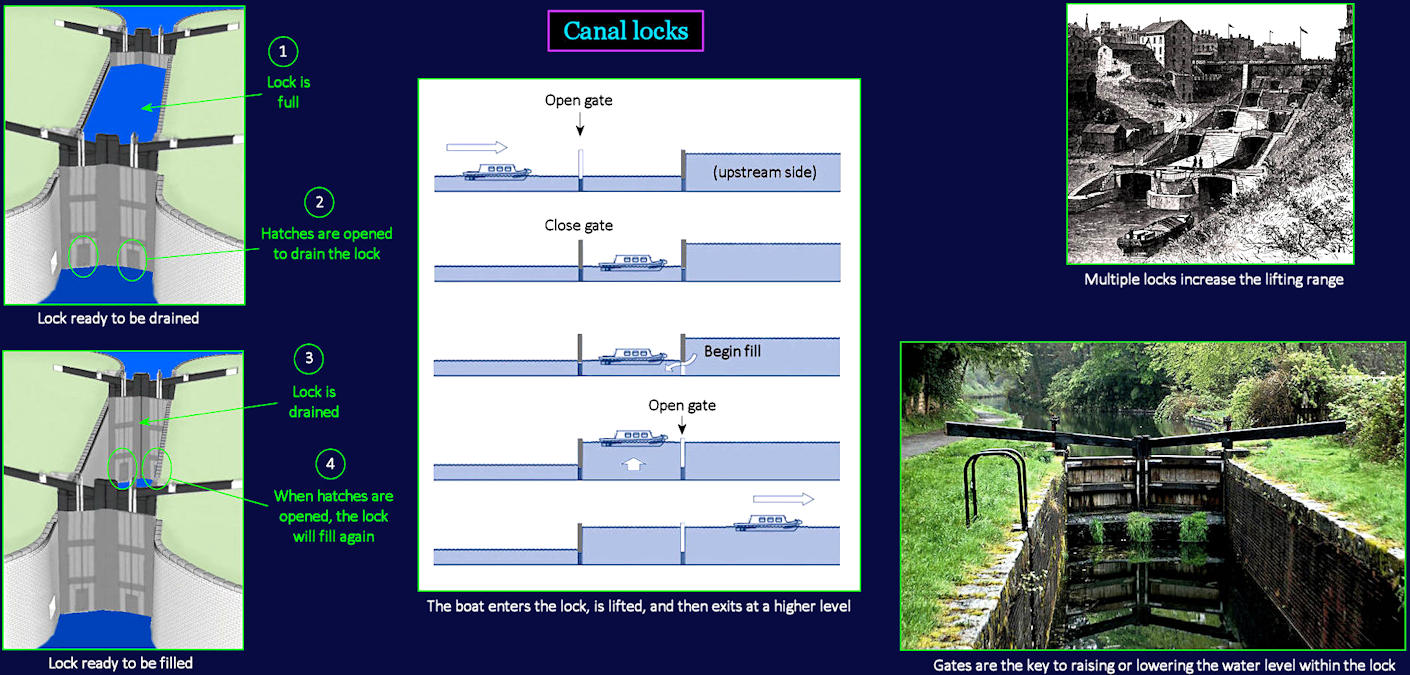
Gravity-powered Locks Canals are made possible by the development of the canal lock, which is operated by opening and closing a pair of large wooden gates. When traveling upstream, the barge enters the lock while the upstream gate is kept closed. The downstream gate is then closed behind the barge, and water is allowed to flow into the lock from the upstream side, slowly filling it and lifting the barge. When the lock is full, the upstream gate is opened, to allow the barge to continue upstream. No power is required. The lock operates completely by gravity, either filling from the upstream side (to lift), or draining to the downstream side (to lower). Locks are sometimes built in several steps, to overcome large changes in elevation (top right). | |||||||||
| |||||||||
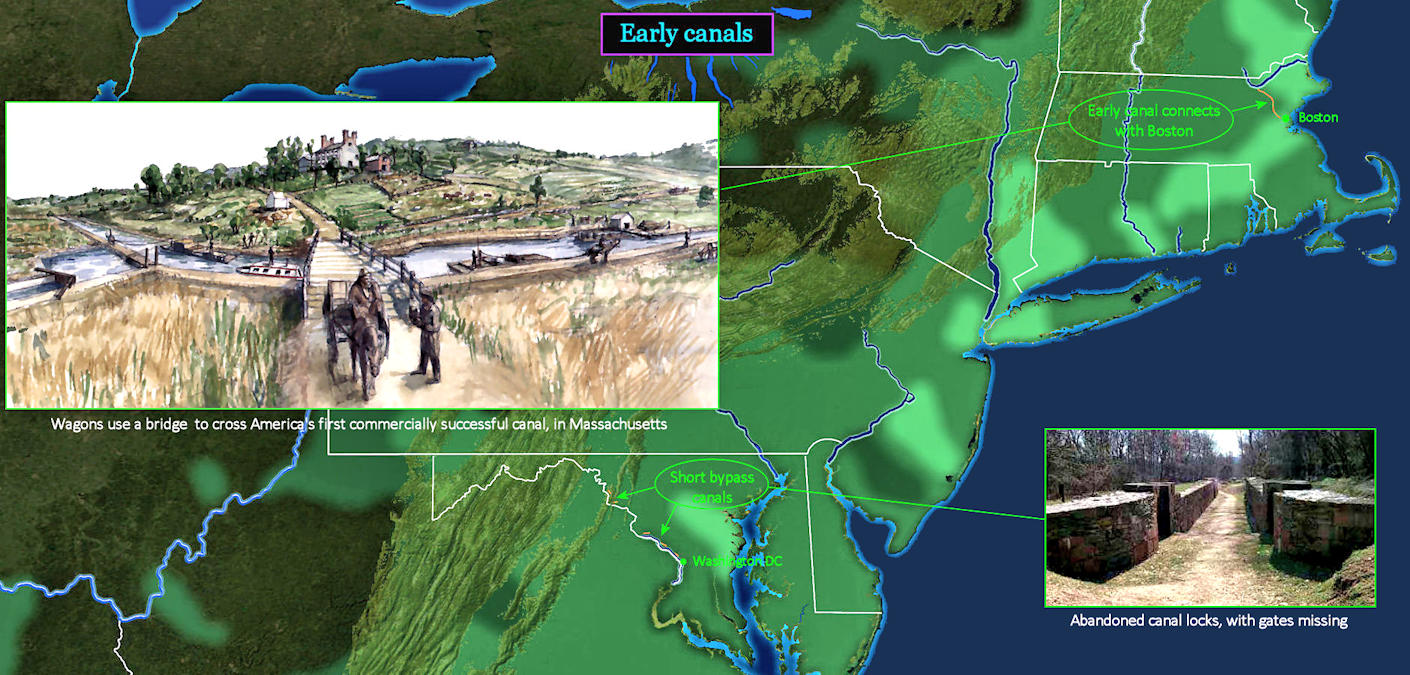
Earlier Canals The Erie Canal is an enormous triumph, but it is not the first successful canal in America. That honor goes to a canal dug 20 years earlier, to float lumber rafts from a New Hampshire river directly into Boston (top left). This canal operates successfully until railroads finally put it out of business. Even earlier, George Washington champions a tiny canal to bypass falls and rapids on the Potomac River, as it flows down from higher ground into Washington DC. A continuous canal would be too costly, so short bypass canal locks are constructed just to get past the obstructions (lower right). This venture is never profitable, and all that remains today is a dirt path running between the abandoned locks (lower right). | |||||||||
| |||||||||
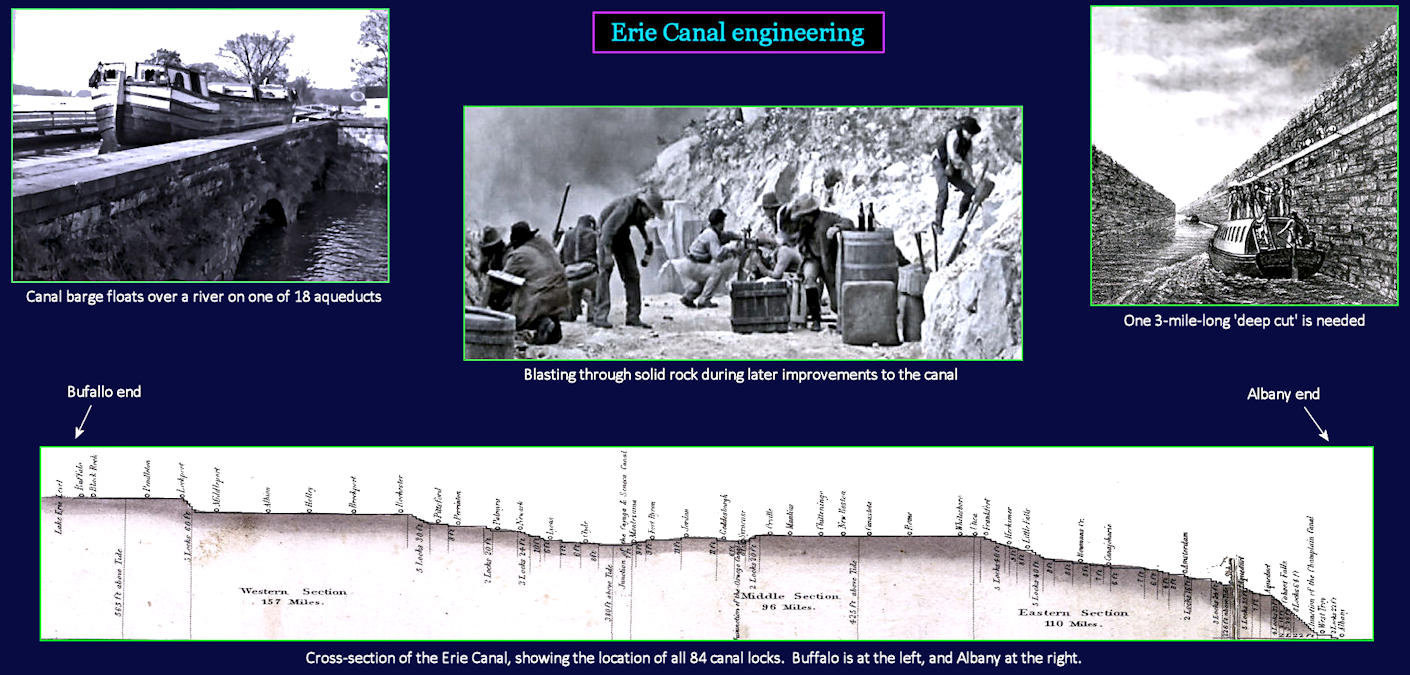
Ditches and Aqueducts Engineers face many obstacles in creating rivers where none exist naturally. Water level in every canal section has to remain almost level, so the only way to get past hills is to build locks, or blast your way through. The diagram above greatly exaggerates the vertical scale of the Erie Canal to show the lock locations. There are 84 separate locks, some clustered in groups, which raise barges from the low end at Albany (at right) to the high end at Buffalo. In between, there are 18 locations where the canal has to cross over existing rivers, which generally run crosswise to the canal. Each location requires an aqueduct, which is a bridge with side walls that actually contains water (top left). This rather unnatural contrivance allows the barge to float across, above the river. | |||||||||
| |||||||||
Bargemen and Mules Canals today are just nostalgic relics from the distant past, but in 1830 they are hugely attractive business ventures. Despite the need for massive investment, and years of planning, the Erie Canal demonstrates the potential for outsized profits, whatever the cost. Almost instantly, canal fever spreads to almost every place where canals are feasible, and a few places where they are not. Still, it is the last gasp of a slower, simpler time, when a canal cruise on one of the fast excursion boats (top left) is a festive event. Mostly, of course, the bargemen and their families just haul cargo. Families often live right on the boat, as do spare mules needed to keep the barge moving all day (lower left). Railroads will soon bring this brief era to a quiet end. | |||||||||