| |
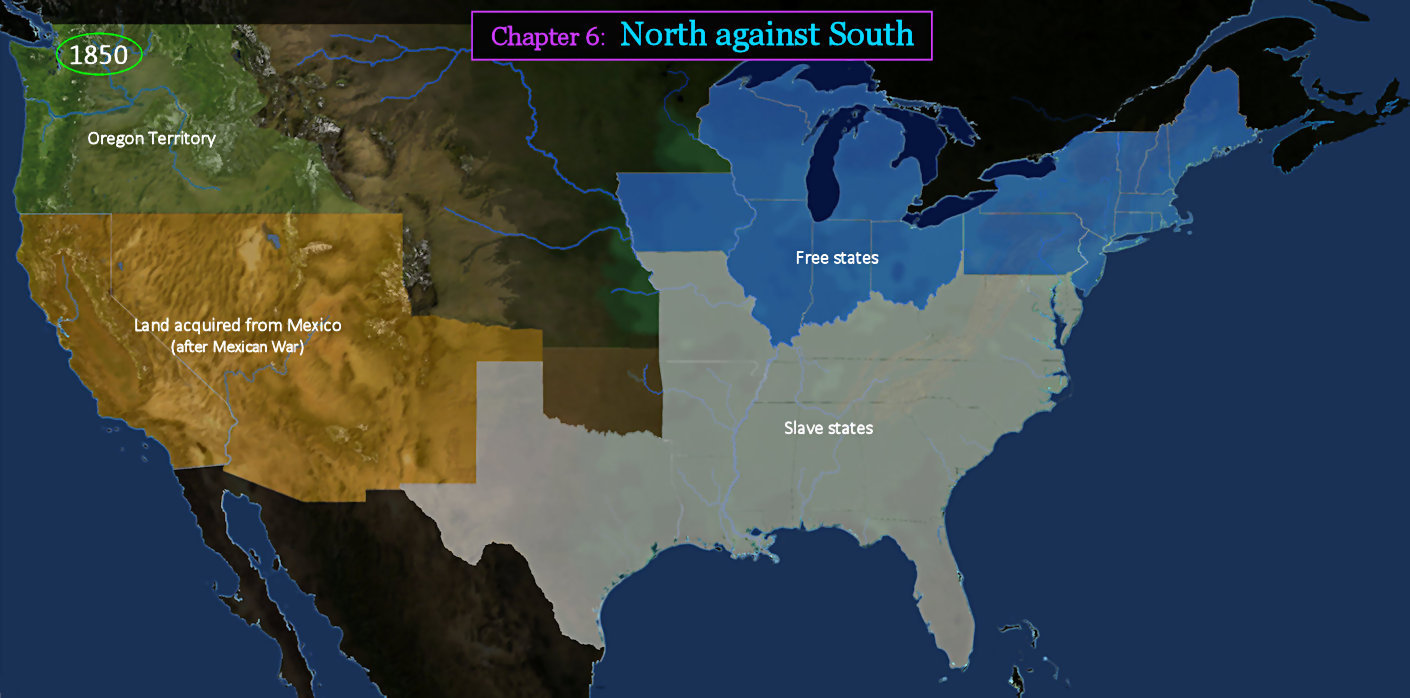
The Slavery Question The problem for the South is how to ensure the continued spread of slavery into the wide-open western territories. Pro-slavery states still control both houses of Congress, while the Supreme Court is headed by a Southern slave-holder. As long as the South maintains control of the government, it can block any anti-slavery legislation proposed by the North. But if new western states are admitted as free states, the South could lose control of Congress. |
| |||||||||
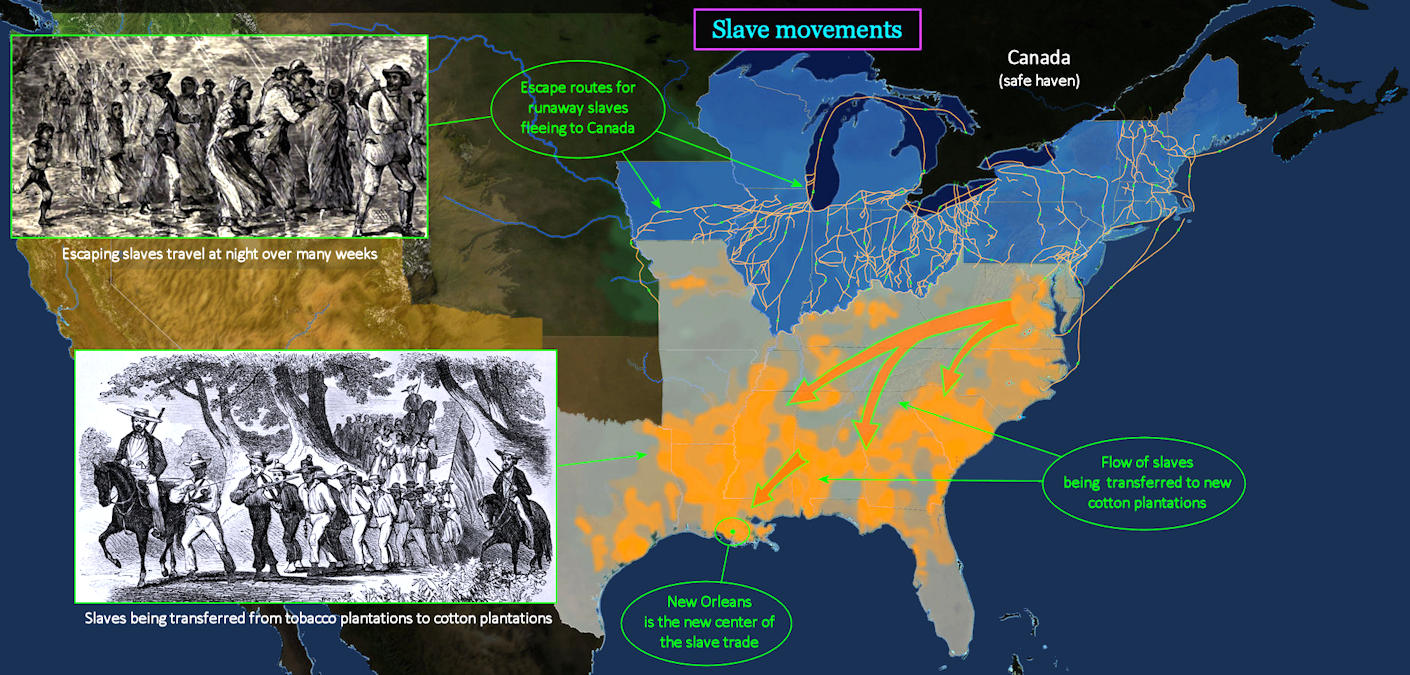
Moving in Two Directions Slavery is at the center of everything. Sympathetic Northerners continue to maintain secret routes to help runaway slaves escape to safe haven in Canada (ORANGE lines). Barns and other hideouts are made available for runaways to rest during the day, so they can travel at night. This is called the 'Underground Railroad,' though it isn't a railroad, and nothing is underground. It's merely hidden, and illegal. The routes are concentrated mostly in the Midwest, and slaves use them in great numbers to reach a land where they hope to gain freedom. Over a period of 50 years, perhaps 100,000 former slaves reach Canada in this manner. Meanwhile, Southerners are moving slaves to more profitable cotton plantations in the Deep South (ORANGE arrows). | |||||||||
| |||||||||
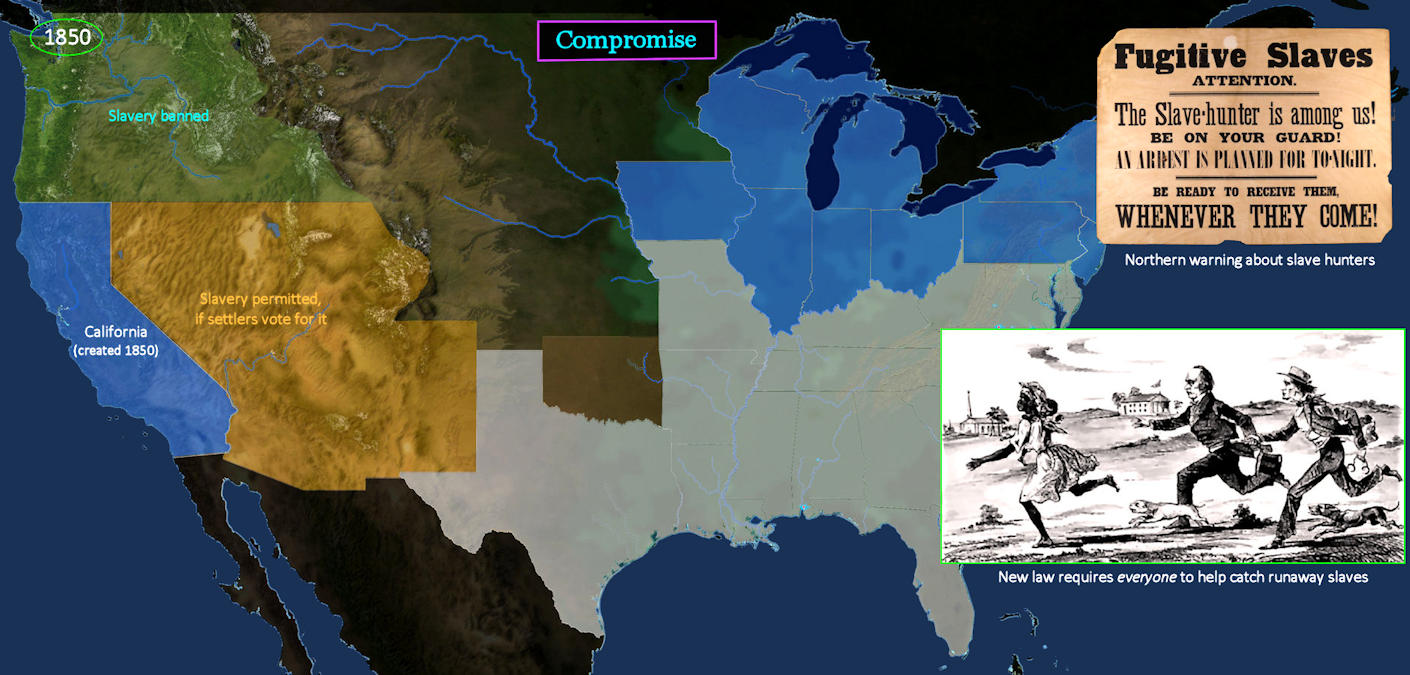
Maintaining Balance The Compromise of 1850 is a complicated, five-part deal that attempts to maintain the balance between slave and free states. It admits California as a free state, and replaces the so-called Missouri compromise, which had been in effect since 1820. Slavery was already banned in the Oregon Territory. Now, slavery in the land just acquired from Mexico will be settled by a vote of the settlers. In order to sweeten the deal for the South, a new Fugitive Slave Act is included to help Southerners catch runaway slaves, and hopefully shut down the Underground Railroad. Everyone, in every state, is required to help catch and return any slave that tries to escape, no matter where the slave escapes, or is finally captured. | |||||||||
| |||||||||
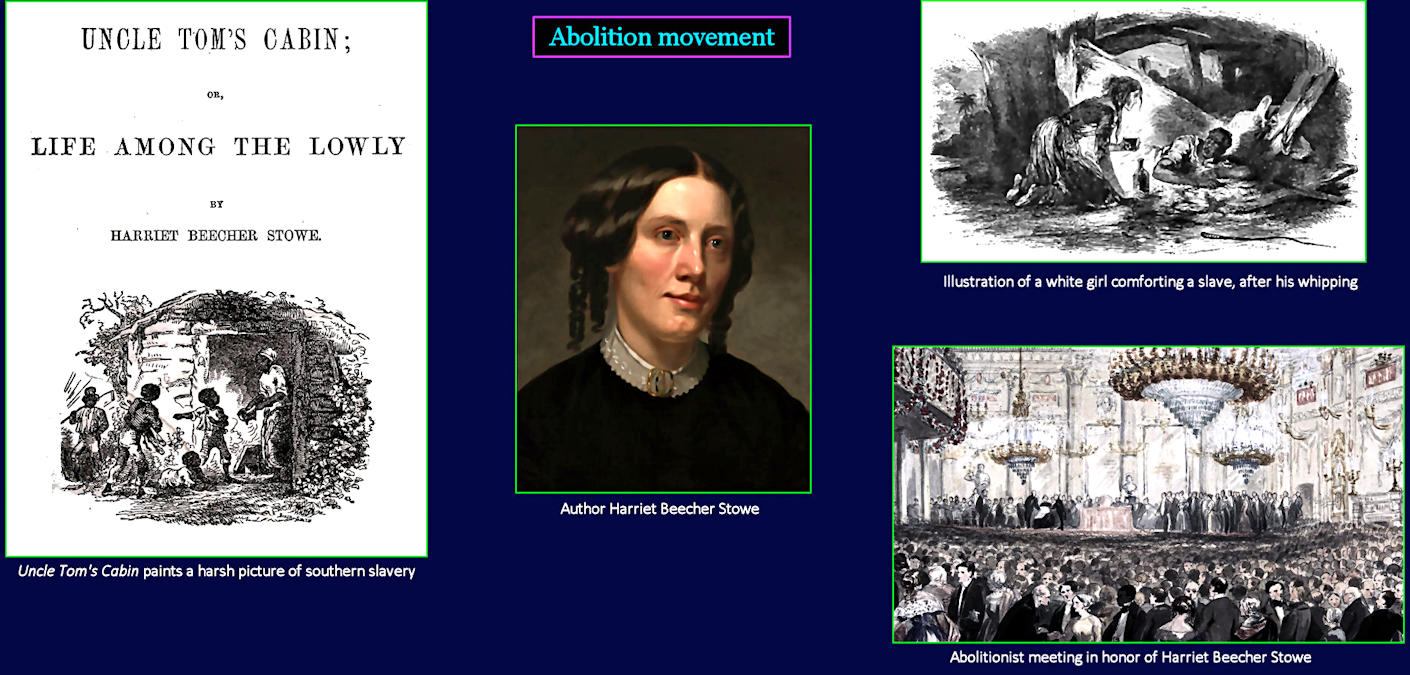
Spark That Ignites a Flame The Fugitive Slave Act is extreme. It authorized enormous, unpayable fines for anyone who helps runaway slaves. Supporters hope this will ensure compliance, out of fear of the huge fine. But the act largely backfires, as Northerners are indignantly resistant. Within a year, 39-year-old Harriet Beecher Stowe (center) publishes a story personalizing the plight of slaves, and portraying slave masters as evil brutes. It runs as weekly installments in a popular magazine, but is soon published as a book called Uncle Tom's Cabin. The book is a sensation, the first American publication to go viral. More widely read than any book except the Bible, it boosts the activity of so-called 'abolitionists,' whose goal is to abolish slavery entirely. This is the South's worst nightmare. | |||||||||
| |||||||||
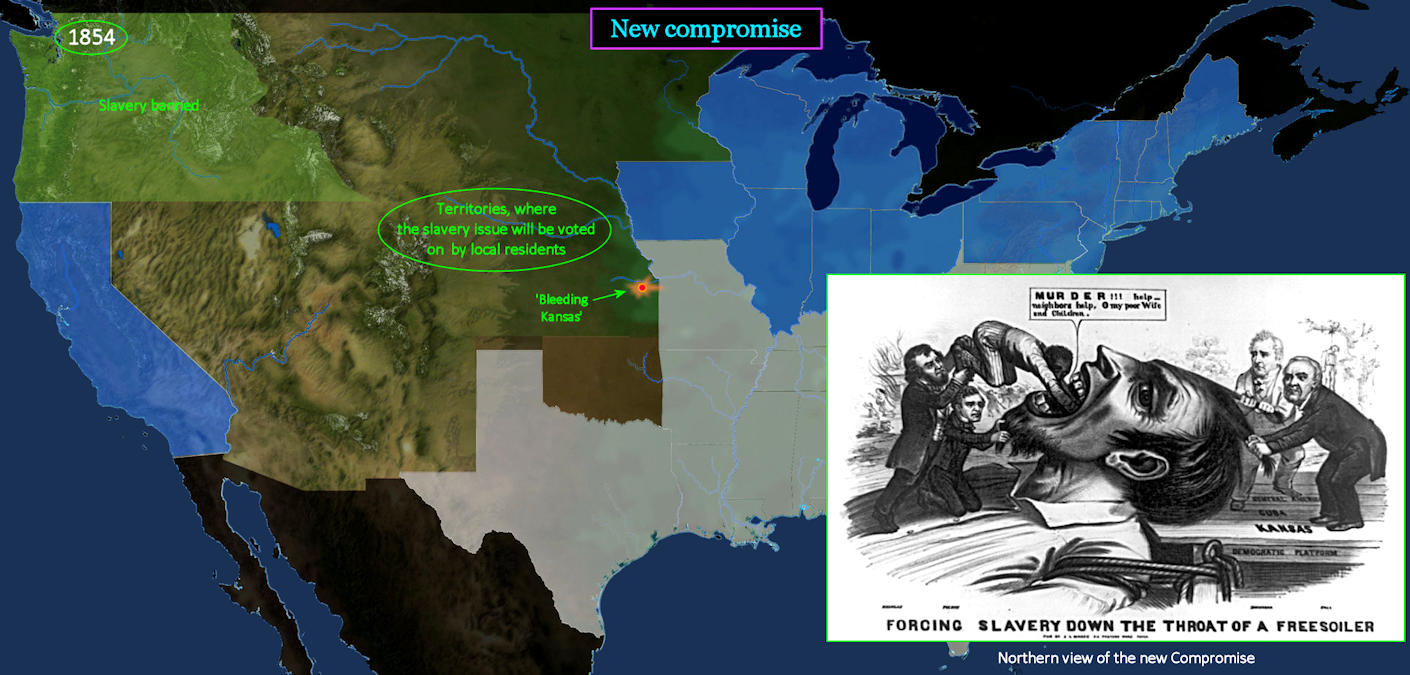
Amended Deal Just four years after the initial compromise, a new deal is pushed through Congress, this time much more favorable to the South. It takes months to thrash out, but the Southerners stick together while northern opposition splinters. Rather than designating territories as either 'free' or 'slave,' the new compromise creates a vast new Kansas Territory, in which settlers in each new state can decide for themselves whether or not slavery will be allowed. The result is a redrawn map, with the territory where slavery is forbidden greatly reduced. The deal immediately sparks bitter local fighting in the Kansas Territory. Pro- and anti-slavery settlers struggle to gain control, creating a hot battle zone that is quickly dubbed 'Bleeding Kansas.' | |||||||||
| |||||||||
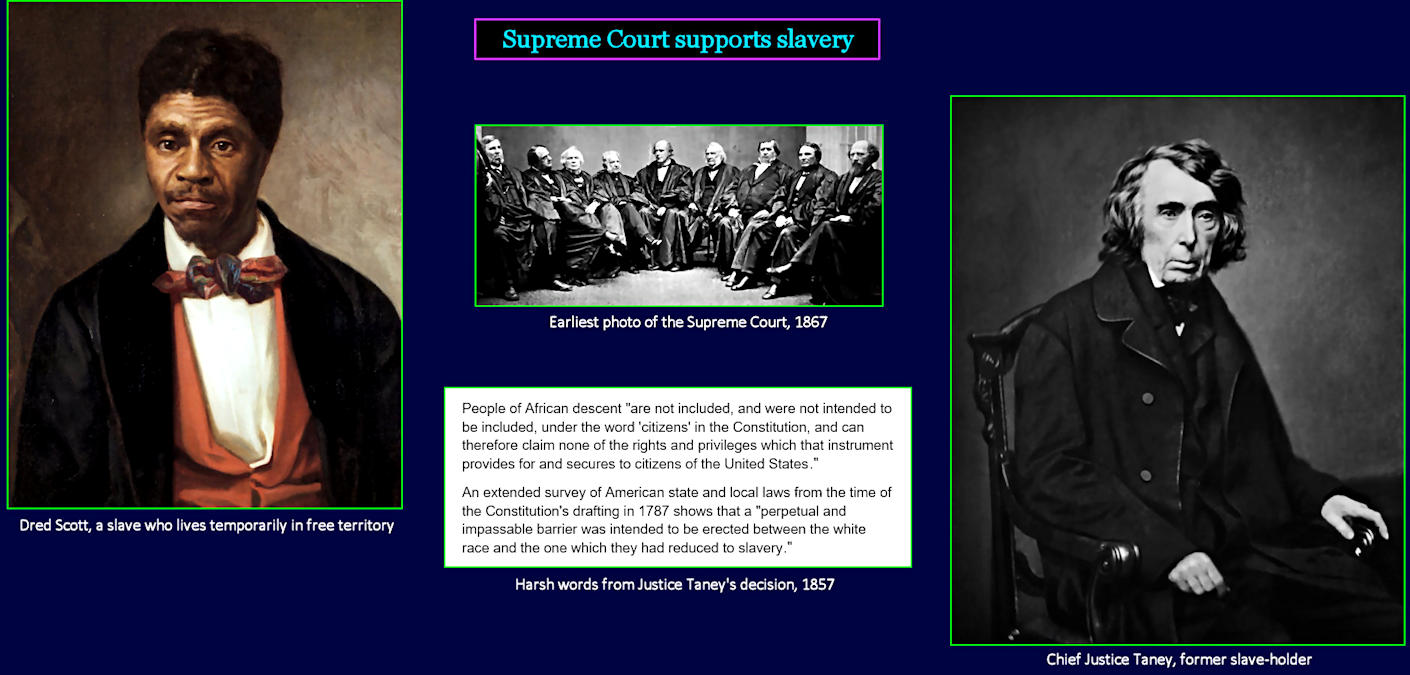
Do Slaves Have Any Rights? With so much at stake, it's inevitable that the Supreme Court will eventually be called upon to settle matters. This happens in 1857, when a slave named Dred Scott (top left) sues to obtain freedom for himself and his family. The family has been dragged by its owner, an Army officer, to various posts in western territories, where slavery is not allowed. When Scott sues that his family can therefore no longer be bound to servitude, the Supreme Court attempts to settle the slavery debate for good. First, it rules that slaves have no rights, and therefore aren't even entitled to bring suit. The Court further rules that Congress has no authority to decide matters of slavery in the territories. It will be another 10 years before this is overturned by the 14th Amendment. | |||||||||