| |
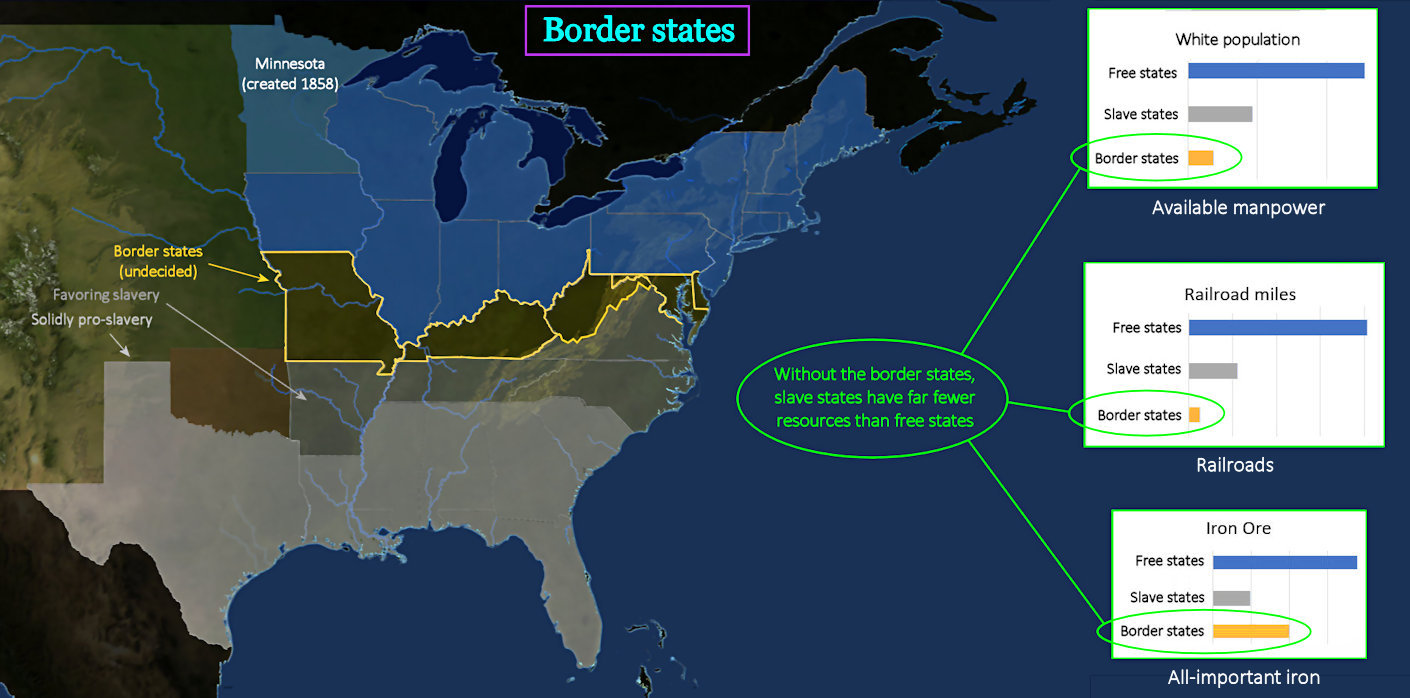
Hanging in the Balance The border states (YELLOW outline) are the northern-most row of states where slavery is permitted. If a conflict were to arise between North and South, it's anyone's guess how these states will react. If they join with the Deep South, then the pro-slavery cause is greatly strengthened. In a hot war, things like railroads and iron production will become important. Beyond that, the manpower available to raise armies will also be affected. One thing the South can count on is cotton production. Almost all large cotton plantations are located in the Deep South. |
| |||||||||
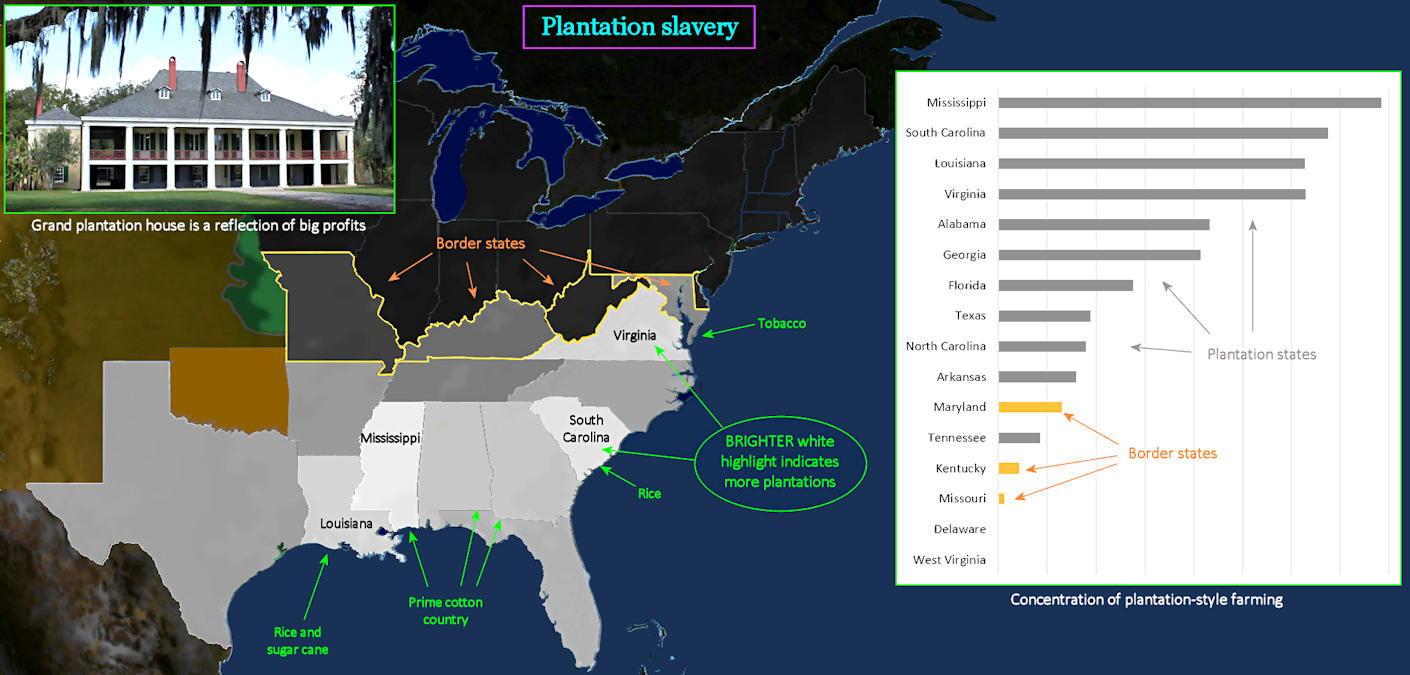
Plantations Are Different The coming conflict is clearly about slavery, but the real dividing line is actually a particular kind of slavery. Plantation slavery. Most families live on farms, both north and south, but only plantation farming effectively requires slaves. Today, we would call it 'agribusiness,' because it relies on large-scale production of a single crop. It also requires heavy investment in the means of production, which in this case is slaves. The WHITE highlighting on the map reflects the degree of reliance upon plantation-style farming. States with the greatest number of plantations (relative to total state population) are shown in brighter white. Notice that the border states are relatively dark. They have few plantations. | |||||||||
| |||||||||
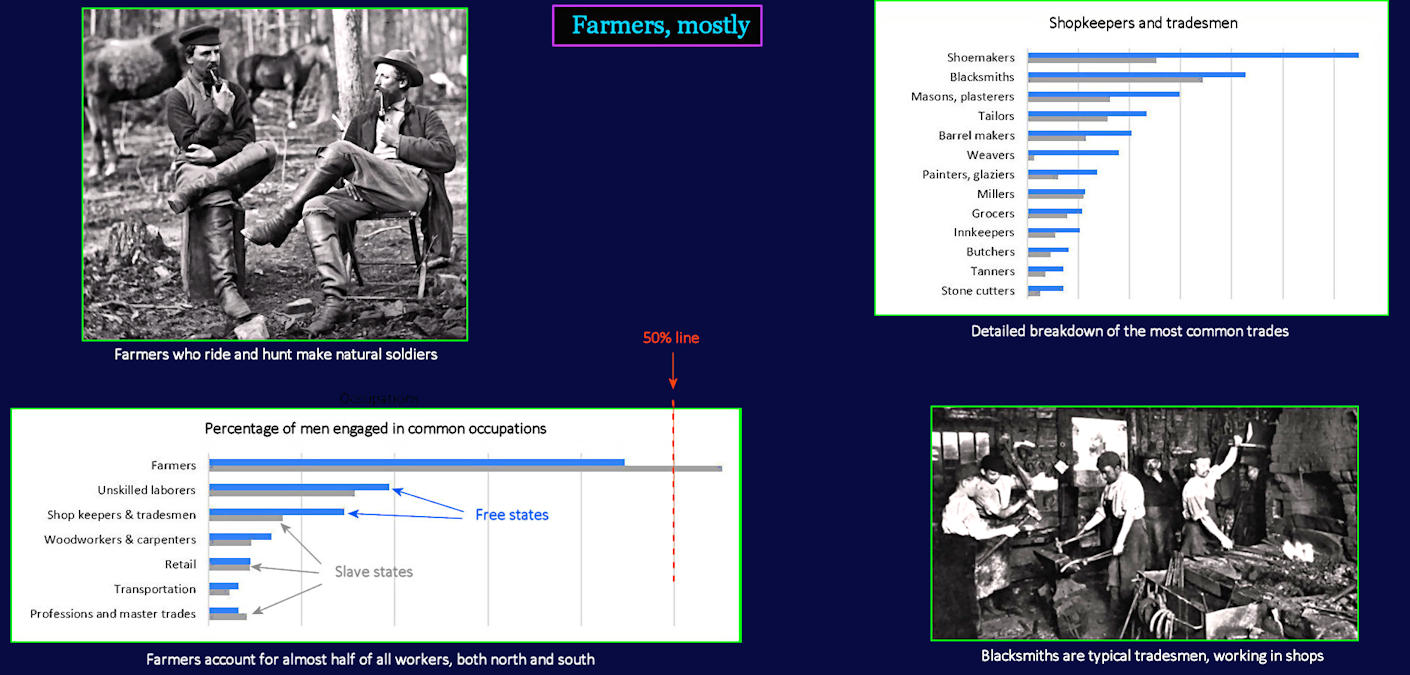
Good Potential Soldiers All across America, the about half of all men are engaged in farming. The next most common occupation is unskilled laborer, followed by shopkeeper and tradesman (the chart at right gives a breakdown of this category). If you compare the blue bars with the gray bars on the charts, it's clear that the North enjoys an advantage in almost every category. But southern farmers are better at back-country skills, such as riding and shooting. Many Northerners live in areas where such skills are less well-developed. In addition, Southerners are far more fervent in support of their cause. Few Northerners have much interest in conditions on southern plantations, though most generally support efforts to prevent the nation from splitting apart. | |||||||||
| |||||||||
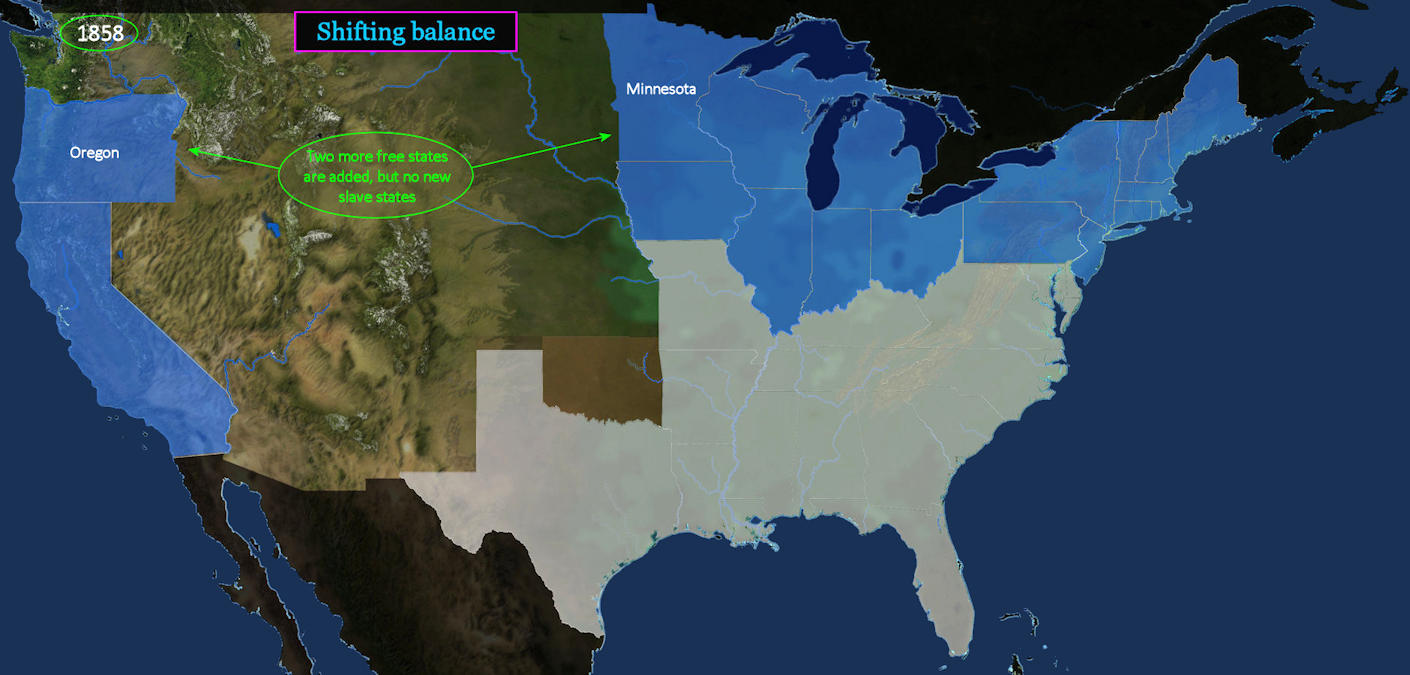
The Pressure Builds By 1858, the fuse for open warfare is already burning. Southerners are casting about for options, sensing they are already past their high-water mark, and realizing that the tide may soon turn against them. Slavery finds few champions north of Missouri, where plantations are rare, and the prospect of adding new slave states in the northern territories is fading. Politically, Southerners are already beginning to lose ground, as the new states of Minnesota and Oregon have both joined the Union as free states. They are not matched with any new slave states, which upsets the long-standing balance in the Senate, setting up the Presidential election of 1860 as a make-or-break event for the South. A loss to anti-slavery Northerners is likely to be catastrophic. | |||||||||
| |||||||||
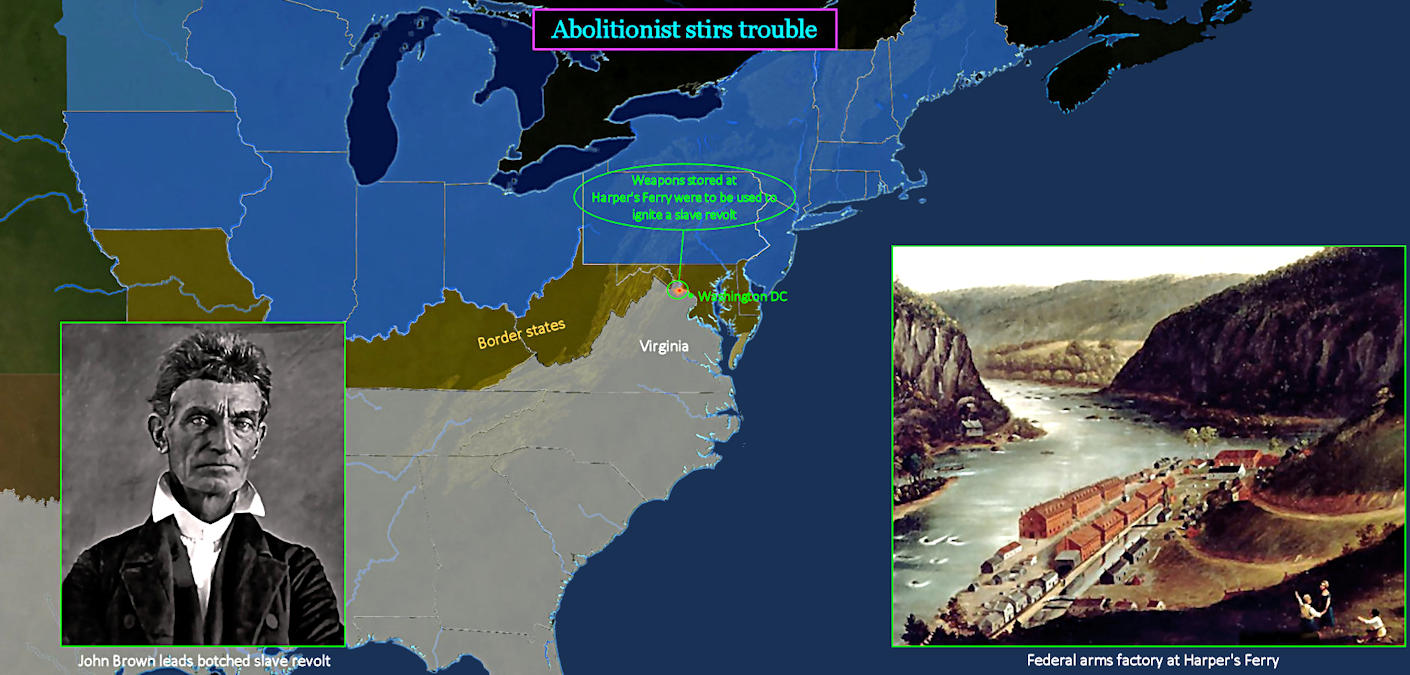
Abolitionist Attack The abolitionist movement in the North begins gathering steam after the publication of Uncle Tom's Cabin. The 1854 compromise, and Fugitive Slave Act, only make things worse. In Kansas, farmers are already fighting over slavery, attracting the attention of real extremists, like John Brown (left). A self-proclaimed evangelical Christian born in Connecticut, Brown and his sons are involved in the fighting in Kansas. Unsatisfied with efforts to stop the spread of slavery, Brown then leads a raid on the federal armory at Harper's Ferry, in Virginia. He is hoping to use weapons stored there to fuel a slave rebellion. The plot quickly fails, however, and Brown is hanged in Virginia for treason, transforming him into an abolitionist martyr. All this brings matters to a high boil. | |||||||||
| |||||||||
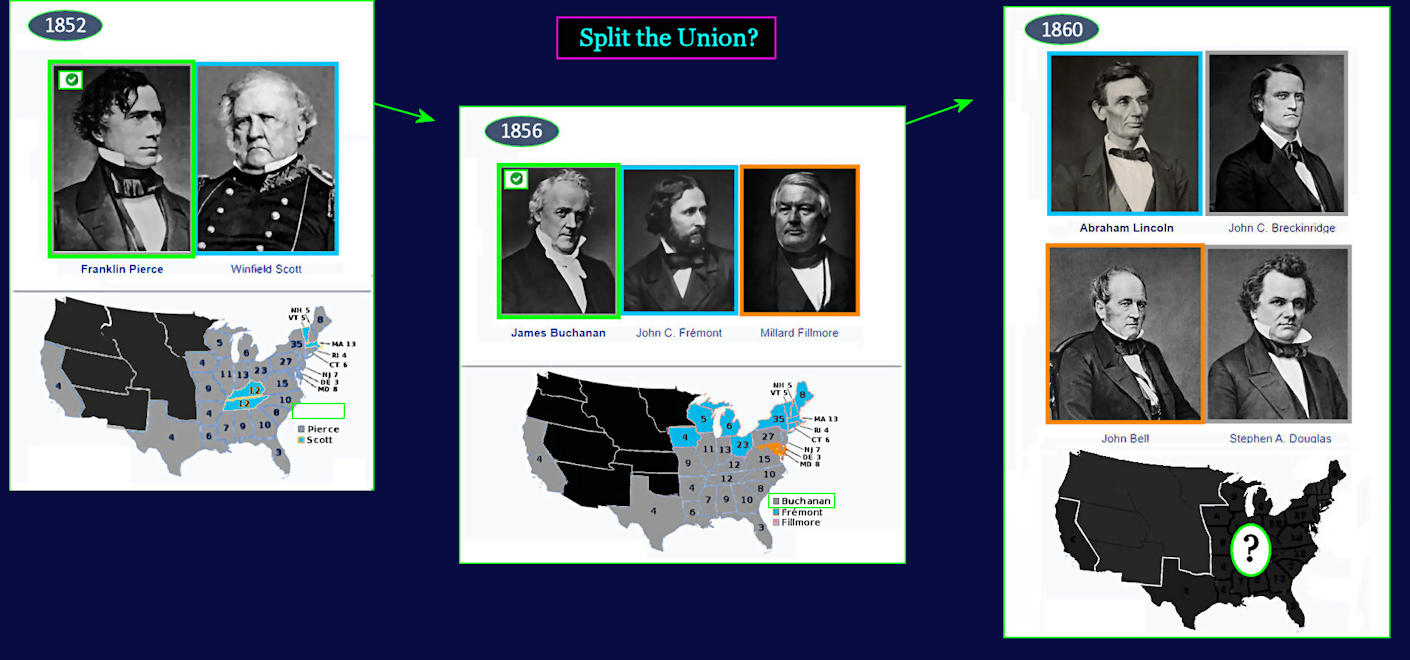
Cliff-hanger As the 1860 election season arrives, everyone is on edge. Pro-slavery southern candidates have won the previous two elections handily (left and center). But positions on slavery are so divided in 1860 that the normally-solid southern states can't agree on a candidate. In the end, they nominate three. Two support slavery, while the third is focused mainly on preserving the Union. On the anti-slavery side, Abraham Lincoln from Illinois is a distinct underdog, but the only available choice. Even if he were somehow elected, however, the South could still play its final card by simply withdrawing from the Union, and declaring itself independent. This is called 'secession,' and has been debated for years. So far, it has all been just talk, but this may soon change. | |||||||||