| |
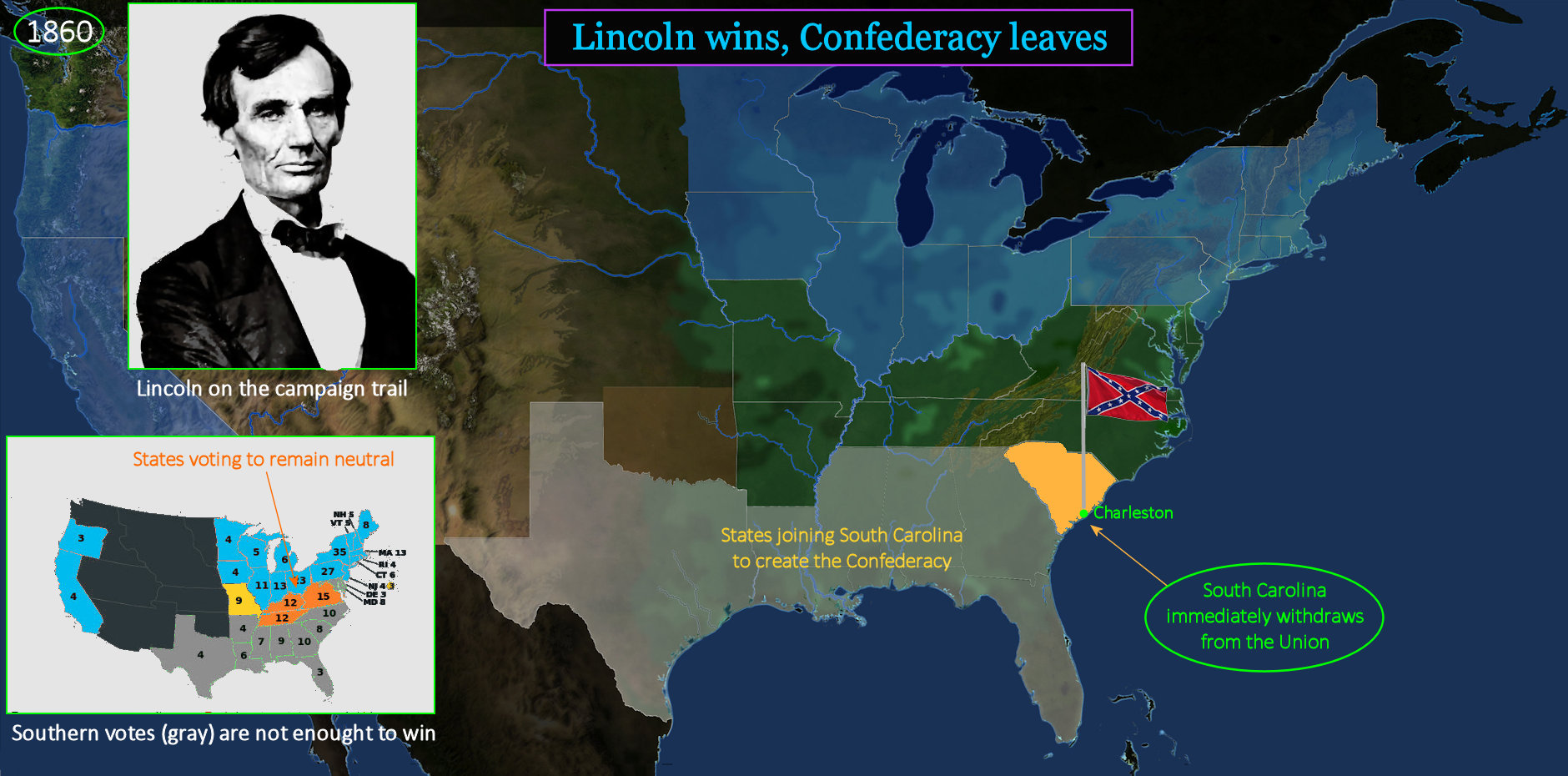
America is Split The election of Abraham Lincoln in 1860 is like a bell ringing for Southerners to get out of town. South Carolina votes to secede almost immediately, followed by the entire Deep South (in GRAY). But the war doesn't start immediately. There is a lull, as each side tries to figure out how to proceed. Lincoln is determined to keep the Union together, while Southerners are just as determined to split away. Note that eight states in the 'border' area have not yet made a decision to join the Confederacy, including Virginia, and are thus not shown in gray highlight, above. |
| |||||||||
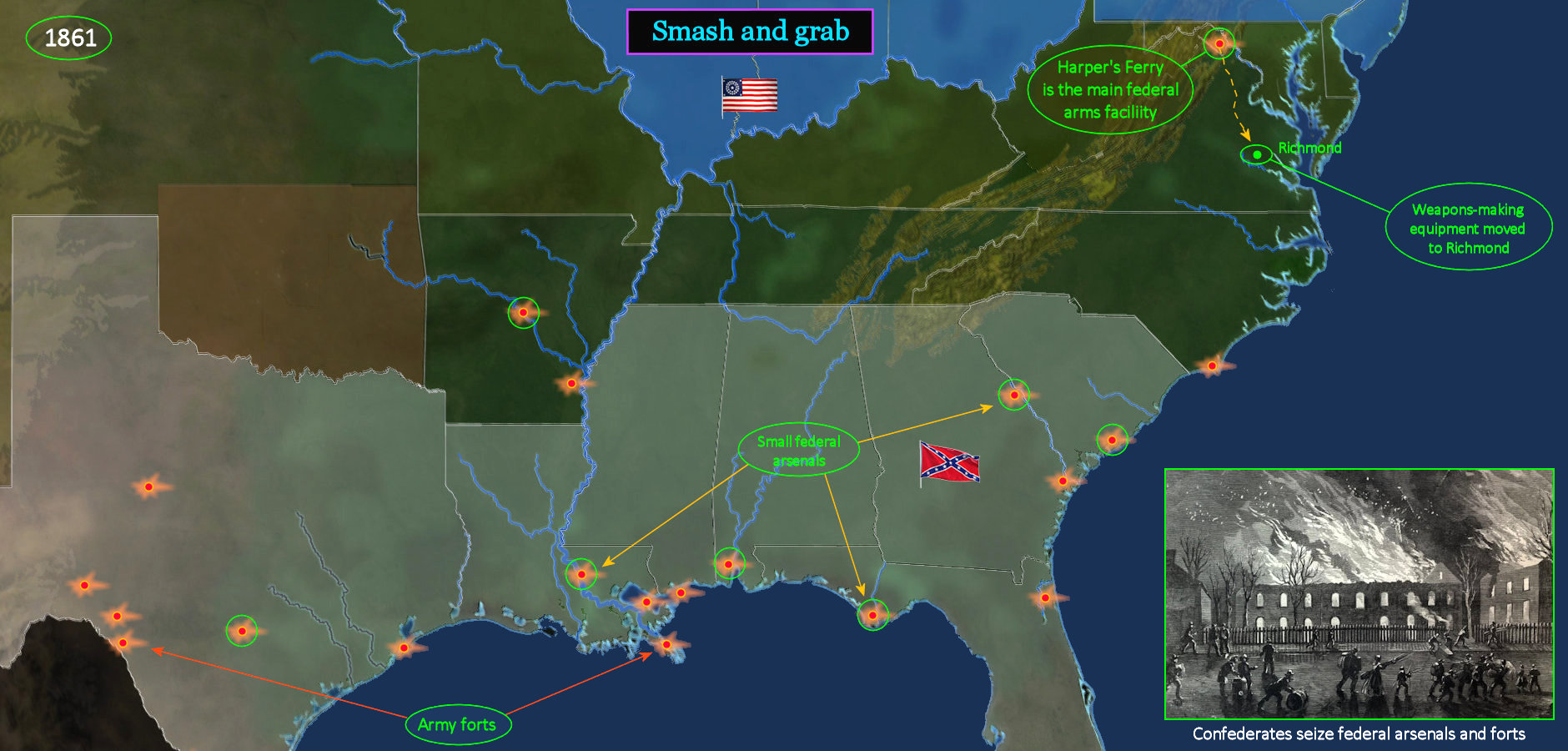
Seizing Weapons There is a 4-month delay between Lincoln's election and his inauguration, which gives Rebels an opportunity to take quick action. They are called Rebels because the South is now in armed rebellion. Rebels quickly seize US Army installations all over the South, including many forts. More important, however, are the federal arsenals (GREEN circles), which contain weapons and ammunition. And most important of these is the armory at Harper's Ferry, the site of John Brown's failed raid. This arsenal is one of only two in the country that produces army muskets. Musket barrels require special equipment, which the Confederates are able to down move to Richmond. Had the armory been better defended, the South would have had more difficulty equipping its armies. | |||||||||
| |||||||||
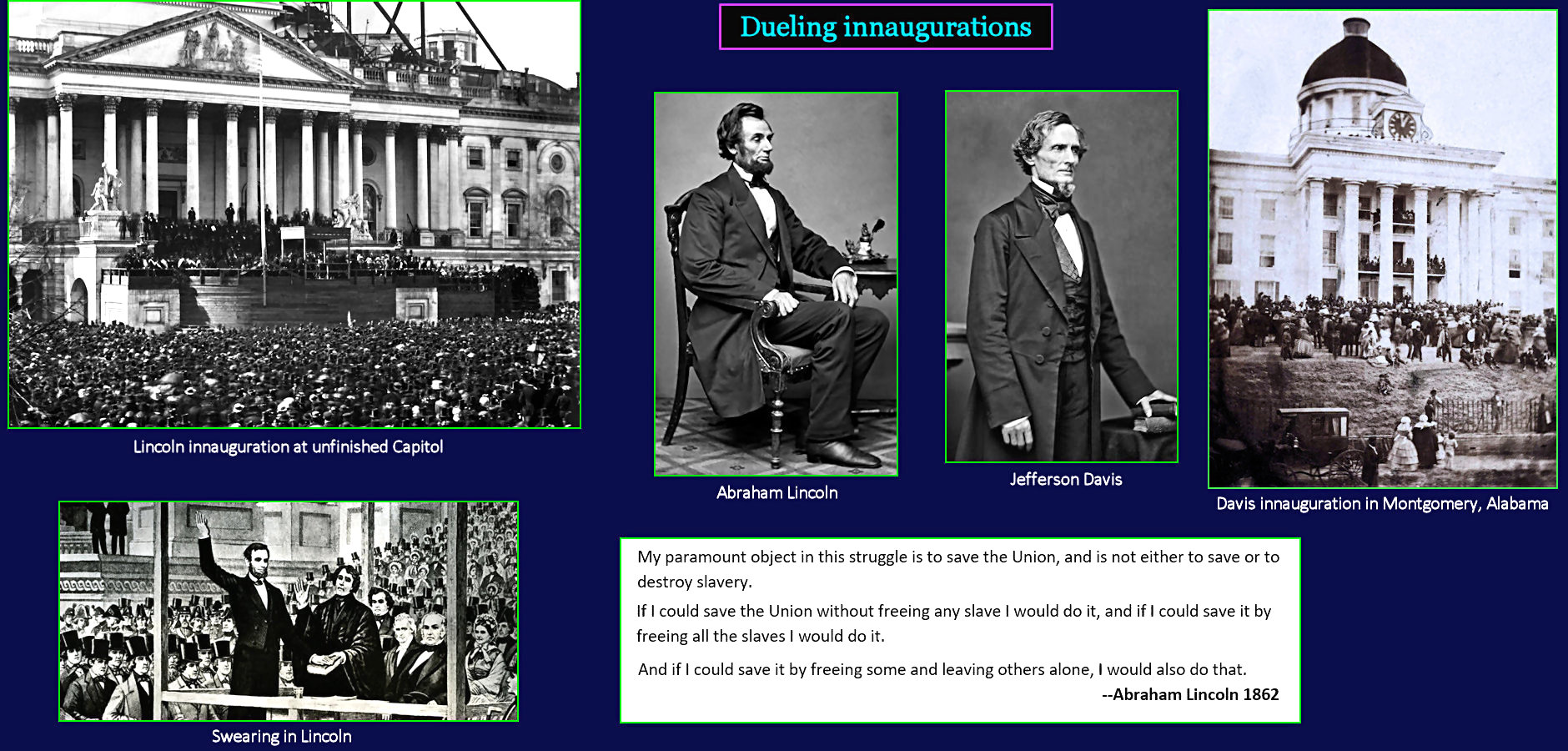
Competing Presidents When Lincoln is sworn in as President in March, Jefferson Davis has already been sworn in as President of the Confederacy, in the southern capital in Alabama. Davis, a West Point graduate and Mississippi Senator, is firmly focused on securing the independence of the Confederacy. Lincoln's job is less clear. The South hasn't actually declared war, but instead has merely withdrawn from the Union. One option would be to just let the South secede, and be clear of the slavery issue forever. Lincoln never considers this option, believing from the beginning that it is his sacred duty to preserve the Union, at all costs. The quote above, issued the following year, makes clear that slavery is a secondary consideration for Lincoln. | |||||||||
| |||||||||
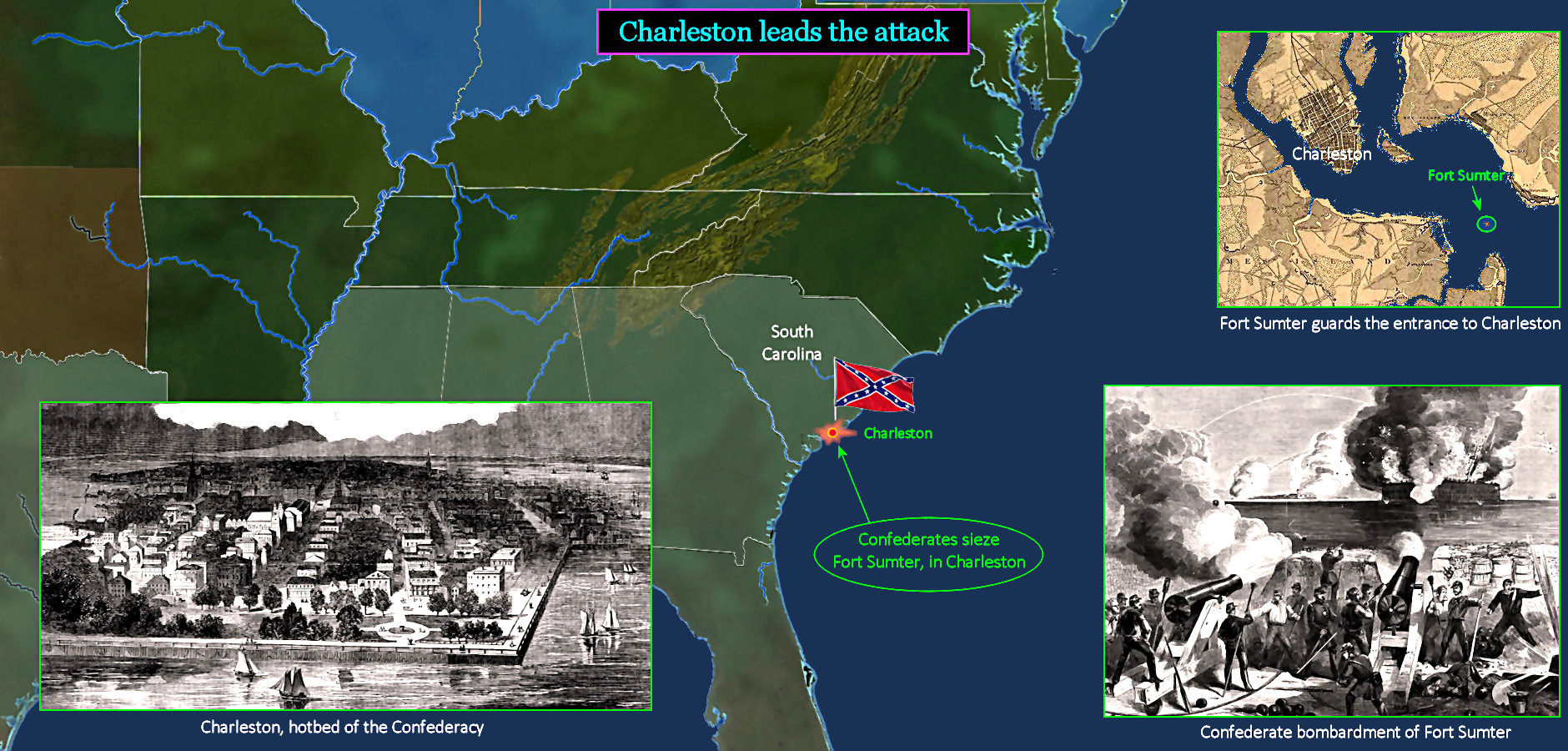
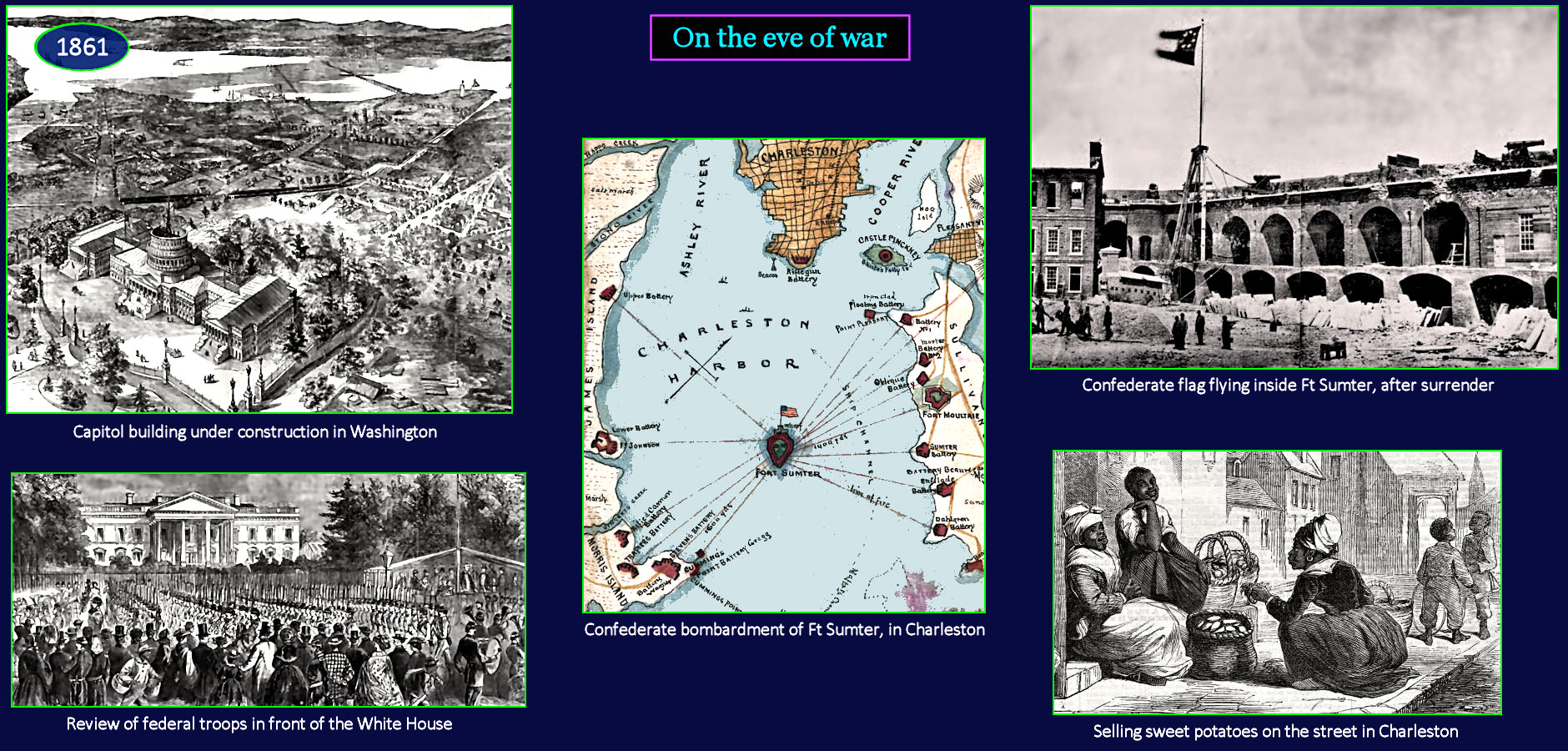
South Carolina Takes the Initiative For South Carolina, the immediate issue is Fort Sumter. It's a US Army facility, built to protect Charleston Harbor from attack. But it can also become a choke point for southern shipping, should Lincoln decide to press the issue. Lincoln himself has other matters to attend to, as the incoming President. Arriving by train from Illinois, he has to evade would-be assassins in Baltimore just to get to the Capital, in Washington. In the meantime, Confederates cut off supplies to Fort Sumter, and then attack in April, with a thundering bombardment lasting 34 hours. Charleston residents watch from their balconies, and drink salutes to the opening of hostilities. The fort has little ammunition, and no prospect of reinforcement. It surrenders the next day. | |||||||||
| |||||||||
Just Getting Started This is the scene, North and South, shortly after Lincoln's inauguration, on the 4th of July. In Washington, the new capitol dome is still under construction, overlooking a city with lots of open space leading down to the Potomac River. Troops are presented to Lincoln during the holiday celebration (lower left). In Charleston, meanwhile, the guns of war have already fired. Ft Sumter, previously a federal fort, now flies the Confederate flag (top right), while street life continues as normal. In barely two weeks, armies from both sides will clash at a small Virginia railroad depot between Washington and Richmond, near a stream called Bull Run. The battle there begins a great conflict, unlike anything seen in America, before or since. | |||||||||
| |||||||||
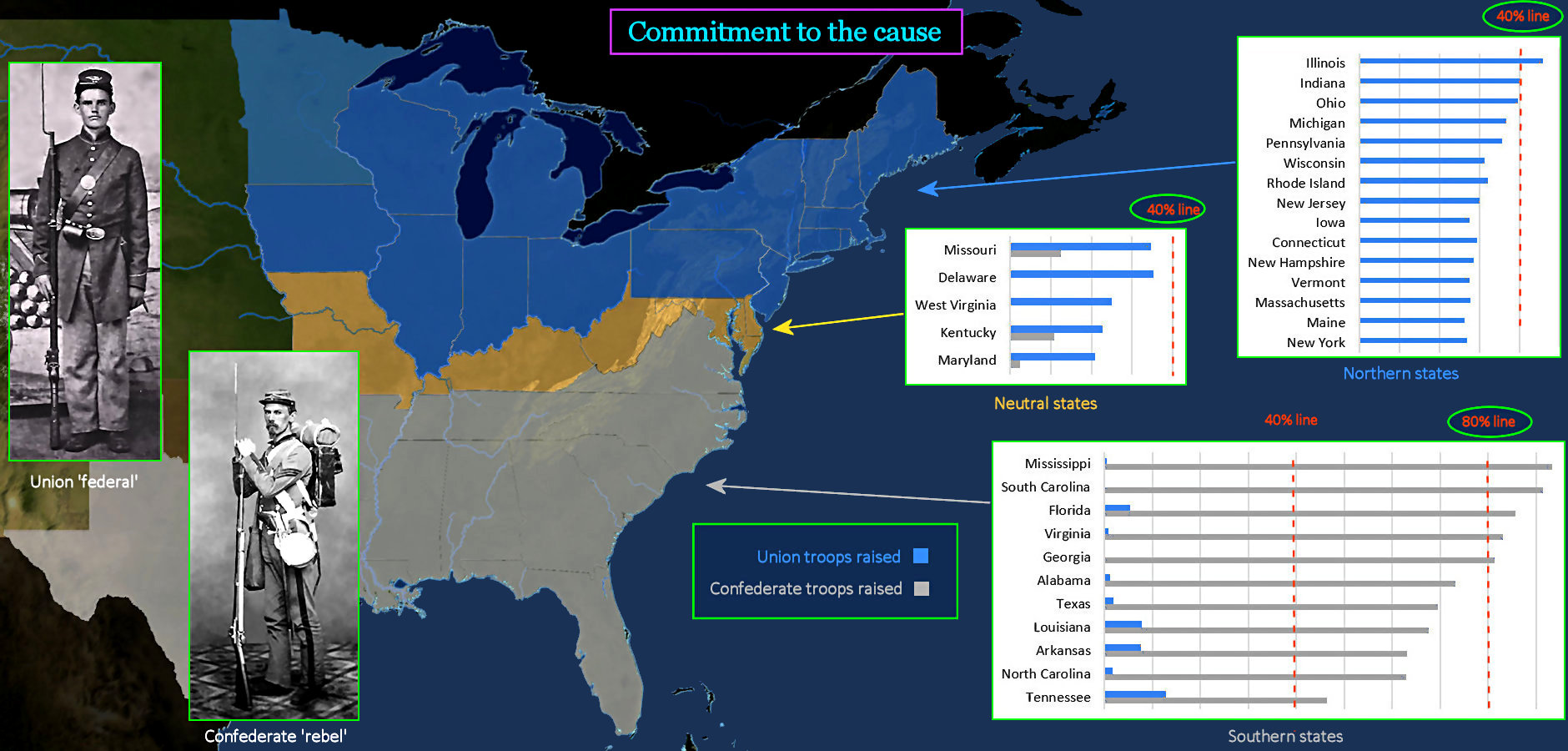
Southerners Man Up The real test of commitment to the war effort is the number of troops raised by each state during the course of the war. The charts show that most Union states enlist 30-40% of all eligible males. The enlistment rate in the South is twice as high, averaging about 75%. Somewhat surprisingly, the supposedly-neutral border states contribute around 30%, with roughly two-thirds of enlistees fighting for the North. Even more surprisingly, nearly every Confederate state also raises regiments that fight to preserve the Union, facing other Southerners in battle. This will become, in part, a war of brother against brother, and father against son. | |||||||||