| |
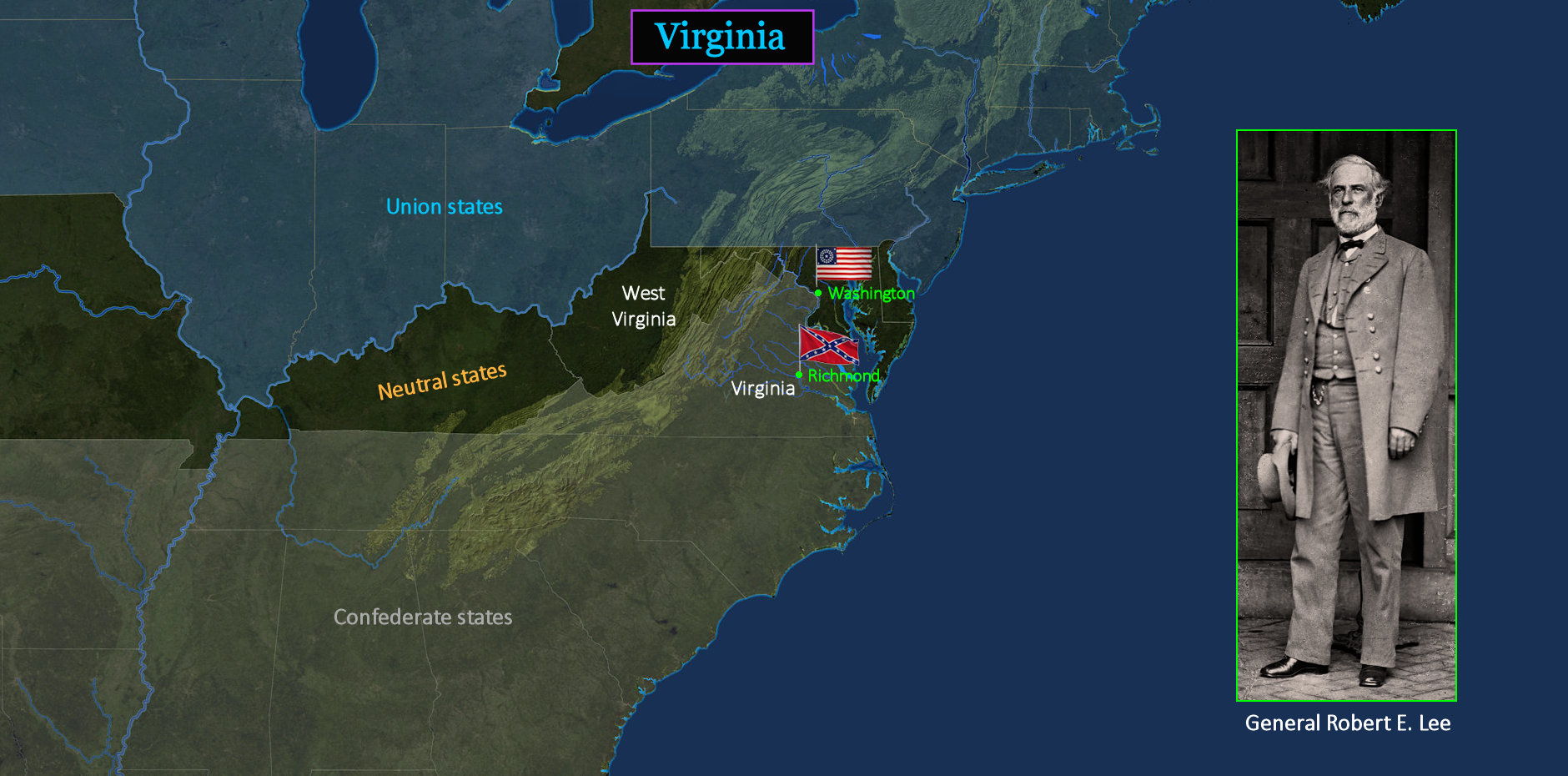
Two Virginias When Lincoln is elected President, West Virginia is still part of Virginia. Much of Virginia's initial hesitancy to vote with the other slave states is due to the lack of support in West Virginia, on the far side of the mountains. At the time, this is still officially part of Virginia. But with few plantations, the area has little interest in secession, and effectively splits away. This clears the way for Virginia to join the Confederacy, which moves its capital to Richmond. The rest of the war will be a titanic struggle to defend the city, championed by West-Point-graduate Robert E. Lee. |
| |||||||||
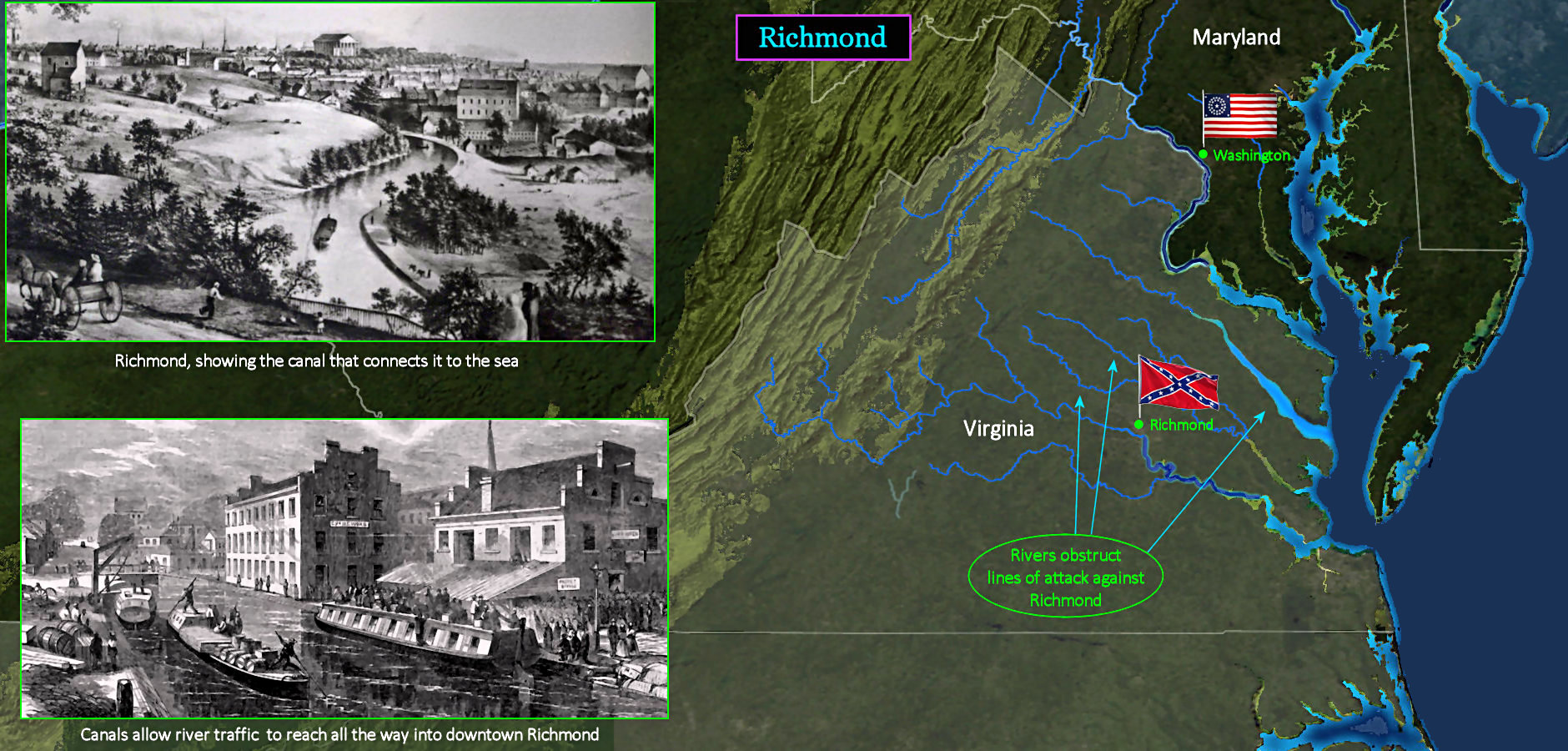
Richmond is Unique Although located inland, Richmond is a thriving port, serviced by canals that connect to the sea. But it also has a strong manufacturing base, and is the main source of cannons, muskets, locomotives, rolled iron and ammunition for the Confederacy. The problem is defense. Richmond is just 100 miles from the Union capital at Washington, and is thus within easy striking distance of Union armies. Luckily for the Confederacy, it's protected from attack by a series of rivers stretching inland from the sea. Any Union army would need to cross four rivers, which are very wide in places, and lack bridges. Trying to get an entire army across each one would be a major headache for Union generals. | |||||||||
| |||||||||
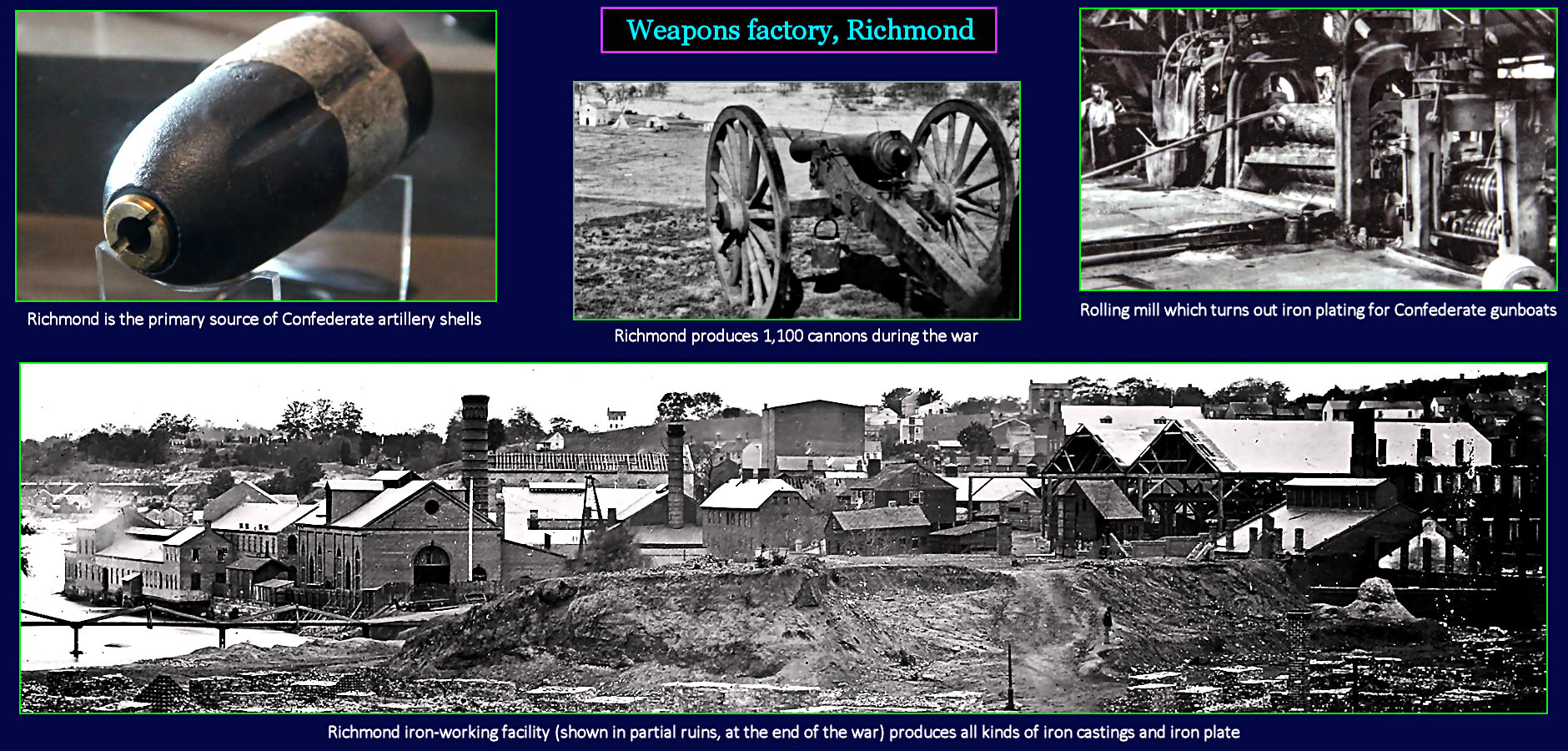
Confederate War Machine Richmond is the iron and coal capital of the Confederacy, operating mostly on waterpower. The iron-working factory (shown at bottom, after the war) uses slave labor to increase production as the war begins. The factory is never able to operate at full capacity, due to shortages, but is still the largest producer of weaponry for the Confederacy, by far. A separate facility in Richmond houses the musket-producing equipment which was seized from the federal armory at Harper's Ferry, at the beginning of the war. Richmond produces over 60,000 muskets during the war, and 70 million musket cartridges. Girls between ages 9 and 12 can each make 1,200 cartridges per day. | |||||||||
| |||||||||
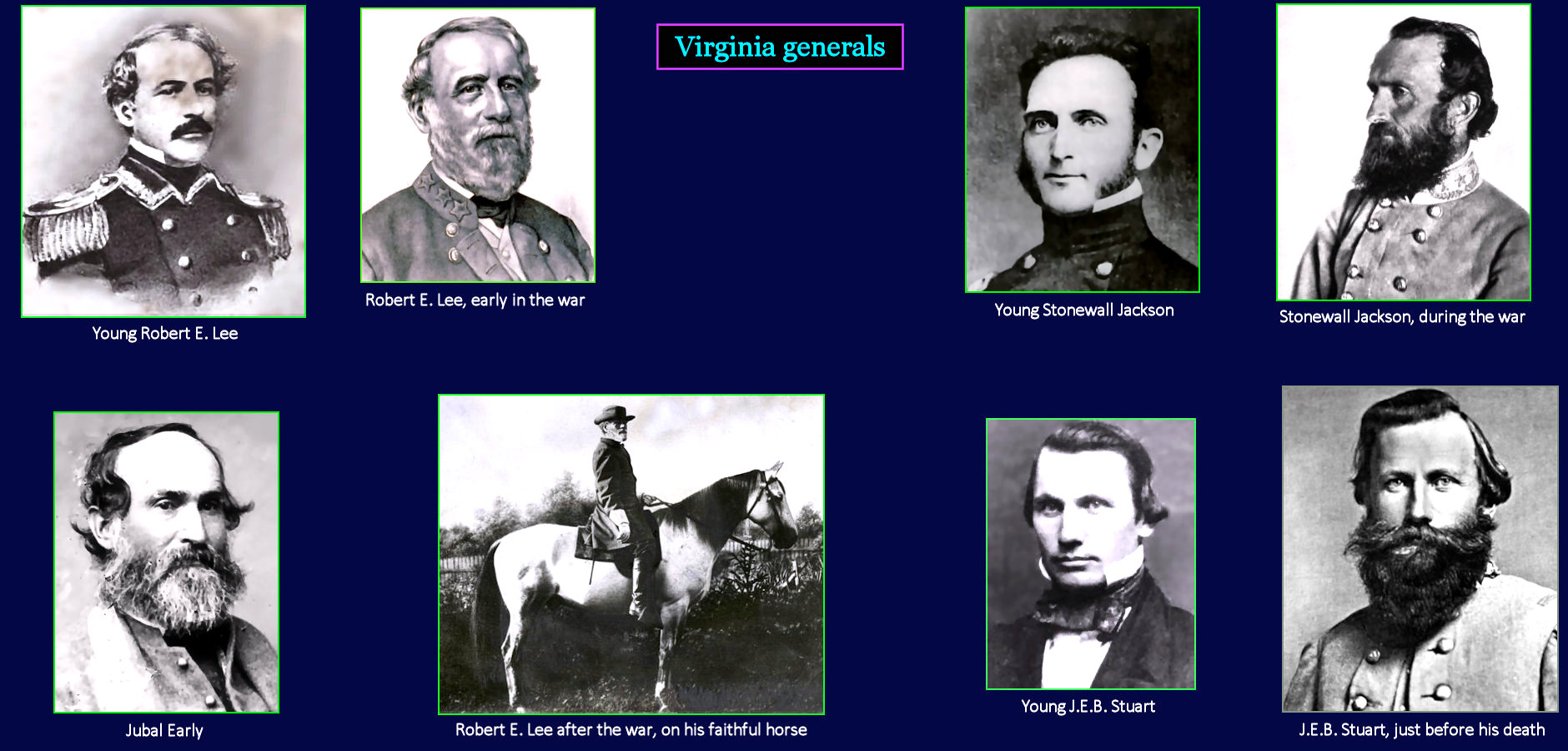
Something Special Of all the generals produced by the Confederacy, those from Virginia stand out for tactical brilliance, backwoods cunning, and willingness to take calculated risks. Lee is widely considered a genius, but he might have been far less effective without the aggressive cavalry scouting of J.E.B. Stuart, and Stonewall Jackson's uncanny ability to always be where he is needed most. All three combine to produce the most remarkable Confederate victory, at Chancellorsville. Together, they provide a stout defense of the Confederate capital for the duration of the war. Another grizzled Virginian, Jubal Early, leads a bold raid on Washington late in the war, that nearly succeeds in taking the capital, with Lincoln in it. | |||||||||
| |||||||||
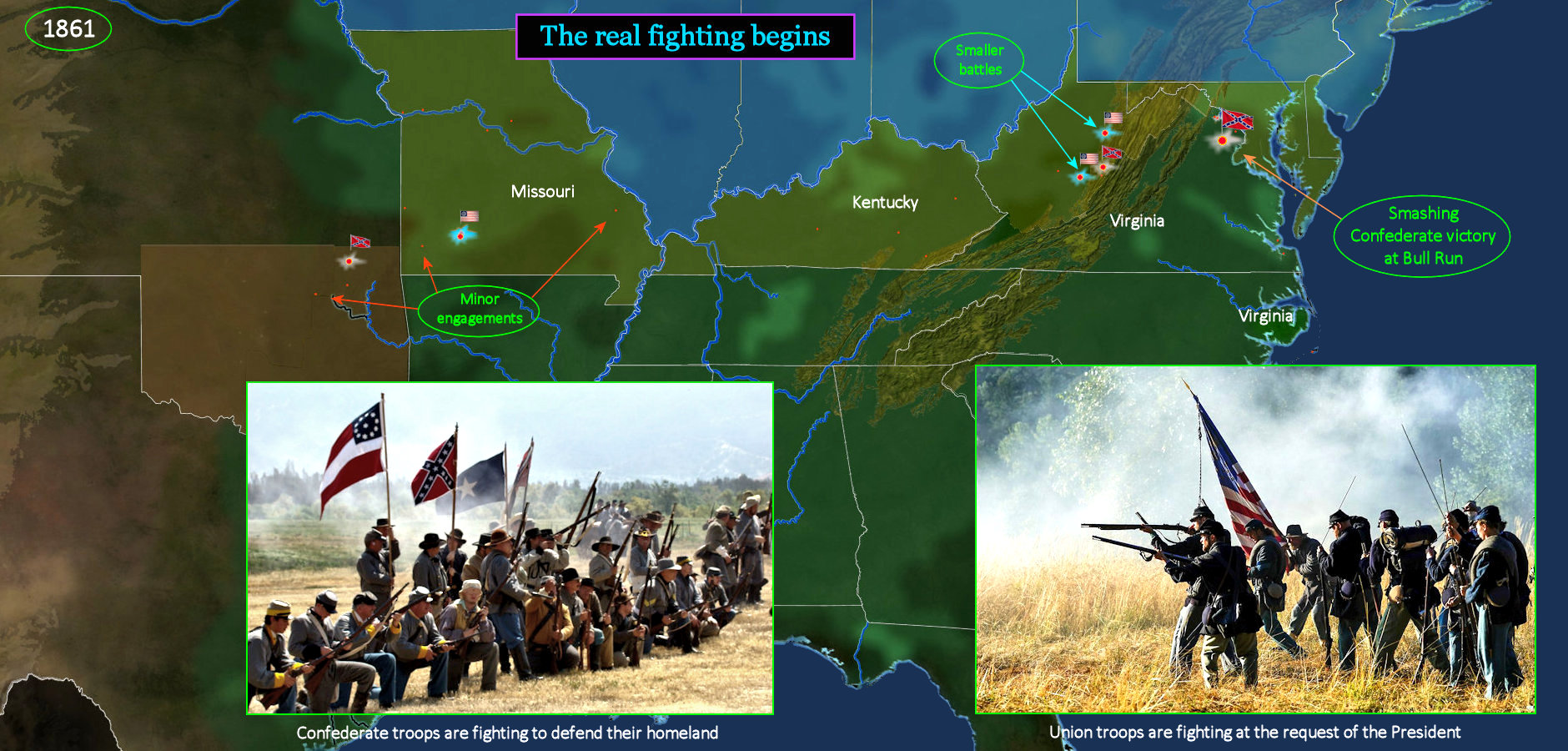
Early Rebel Victory As soon as Virginia throws its lot in with the Confederacy, both sides begin hastily assembling armies to take into battle. The map above shows all the battles of the first year of war, 1861. Most are minor, and fought in neutral territory. But the border states are only technically neutral. All have raised regiments that will fight on both sides in the coming cataclysm. The only place where the battles really matter, however, is Virginia. The big question is how long it will take the greater resources of the North to overcome the greater enthusiasm and commitment of the South. The only major battle of 1861, at Bull Run, is a stunning Confederate victory, just 30 miles from Washington. This will not be a quick war. | |||||||||
| |||||||||
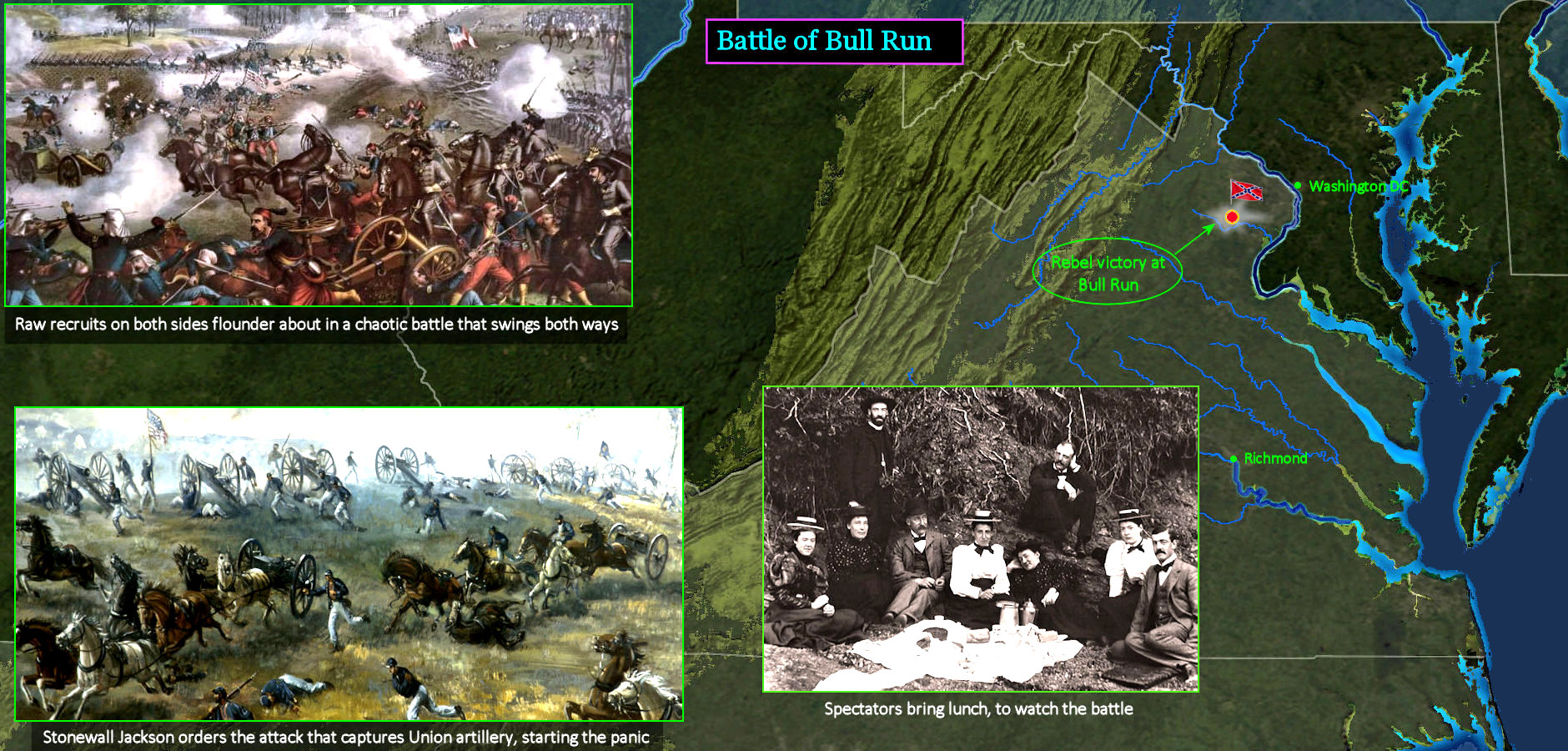
Too Close for Comfort The first big battle of the war is a rushed affair, with both sides scrambling to gain an early advantage. Union troops meet Rebels occupying a settled defensive position, just miles south of Washington. The North is confident of victory, while the South is determined to protect Richmond. Sentiment is so positive in the North that spectators drive their carriages to the battlefield, bringing a festive lunch. They expect to see the Rebels get thrashed. But when Confederate reinforcements arrive by rail in the afternoon, the tide turns, and the Union retreat quickly turns into a wild rout. Army wagons streaming back to Washington choke the road, hampered by the carriages of spectators. | |||||||||