| |
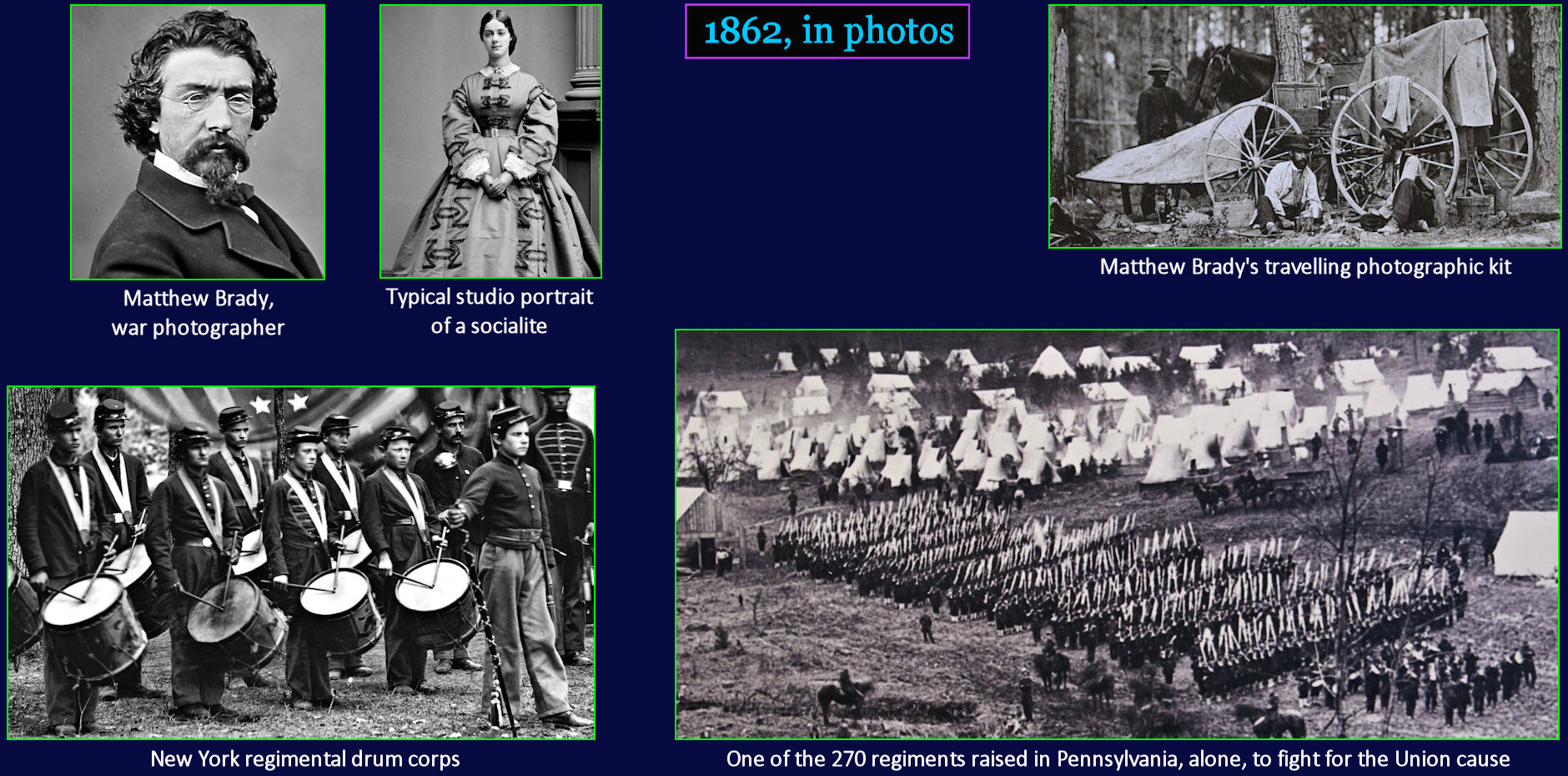
Traveling with the Troops The year 1862 marks the real beginning of serious war, as the North has been unable to put a quick end to the rebellion. The Battle of Bull Run, the previous year, convinces the North that this war is going to last much longer, and require much more effort, than was previously anticipated. It takes time to train the troops, but also to build up weapons, ammunition and supplies. Matthew Brady, pioneering photographer, captures it all from the very beginning. These are the first photographs ever taken during an actual war. |
| |||||||||
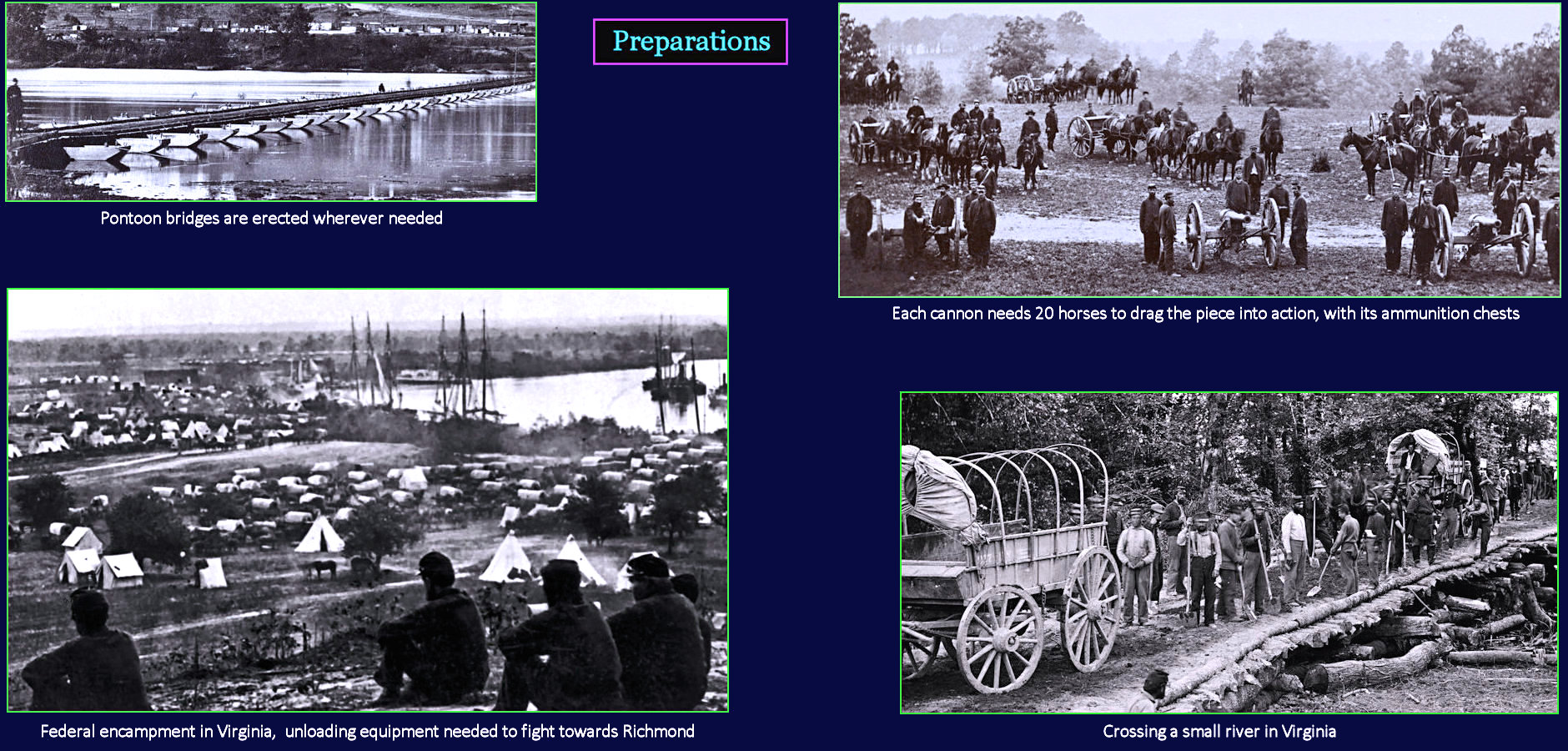
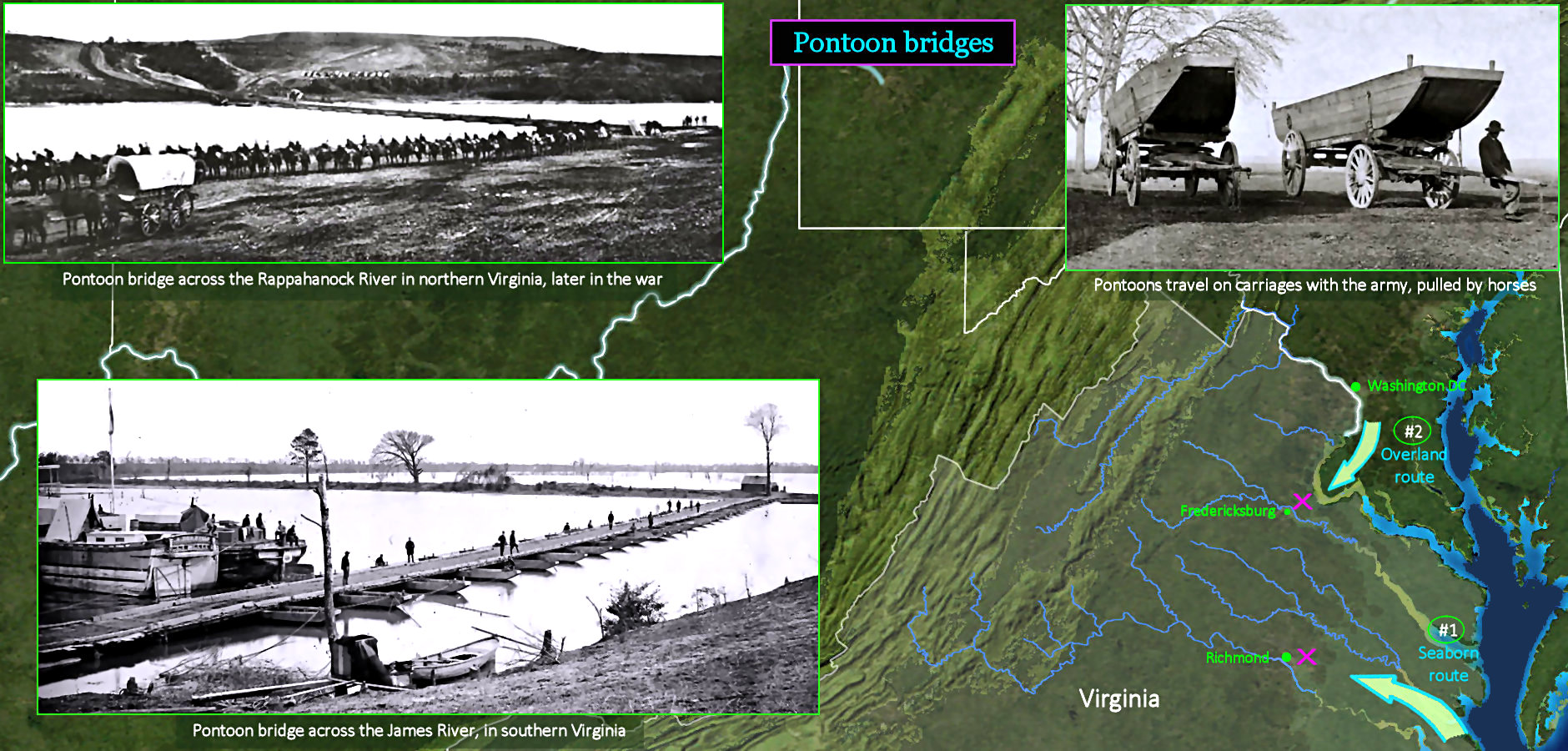
Going Around the Rivers When the Union begins preparing for the 1862 spring campaign, it decides not to try to fight its way across all four rivers that block the way. This would require the extensive use of pontoon bridges, which are only useful if you control the opposite bank of the river. Without the bridge in place, it's hard to get to that bank. So the plan involves moving the entire army, with all its cannons, ammunition, horses and gear, down the Potomac River by boat. The army lands on the Virginia shore of Chesapeake Bay, which utilizes all available vessels, and takes a month. Such a movement can't be kept secret, but it's relatively safe. Most Confederate forces are positioned closer to Richmond, which is still 90 miles away. All that's left is to fight inland to challenge them. | |||||||||
| |||||||||
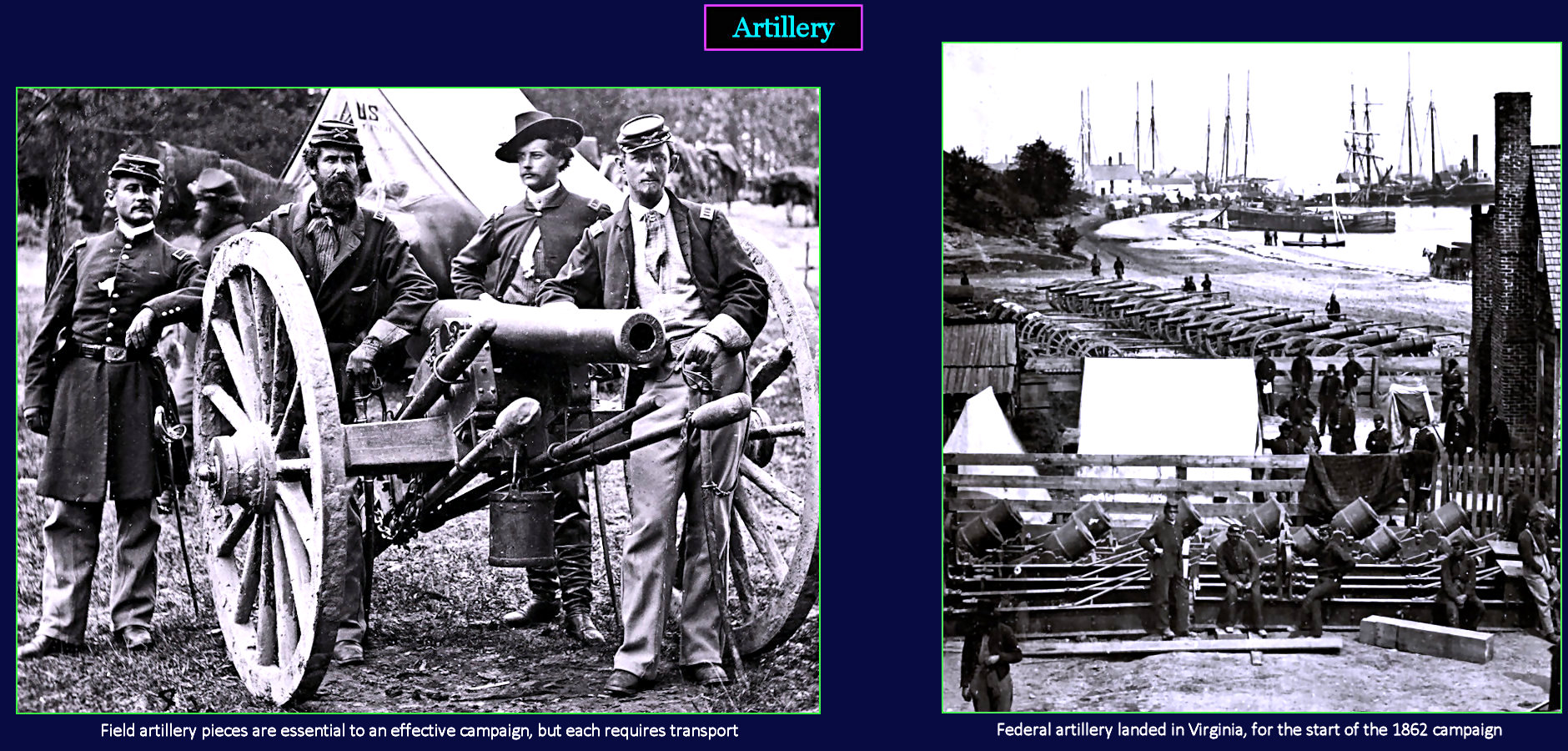
Moving the Equipment Field artillery pieces, which can be moved around the battlefield easily, are essential to waging effective war. In sustained action, each cannon needs several ammunition chests, which are kept behind the battery with their own horse teams. Siege guns are somewhat heavier, and consequently less mobile. Bombardment of fortified positions calls for the use of short, fat mortars, to lob shells in a high arc over any obstructions. These are visible near the bottom of the photo at right. In preparation for the spring 1862 campaign, the Union transports 220 field pieces, 1,200 wagons and 15,000 horses to Virginia, by boat. | |||||||||
| |||||||||
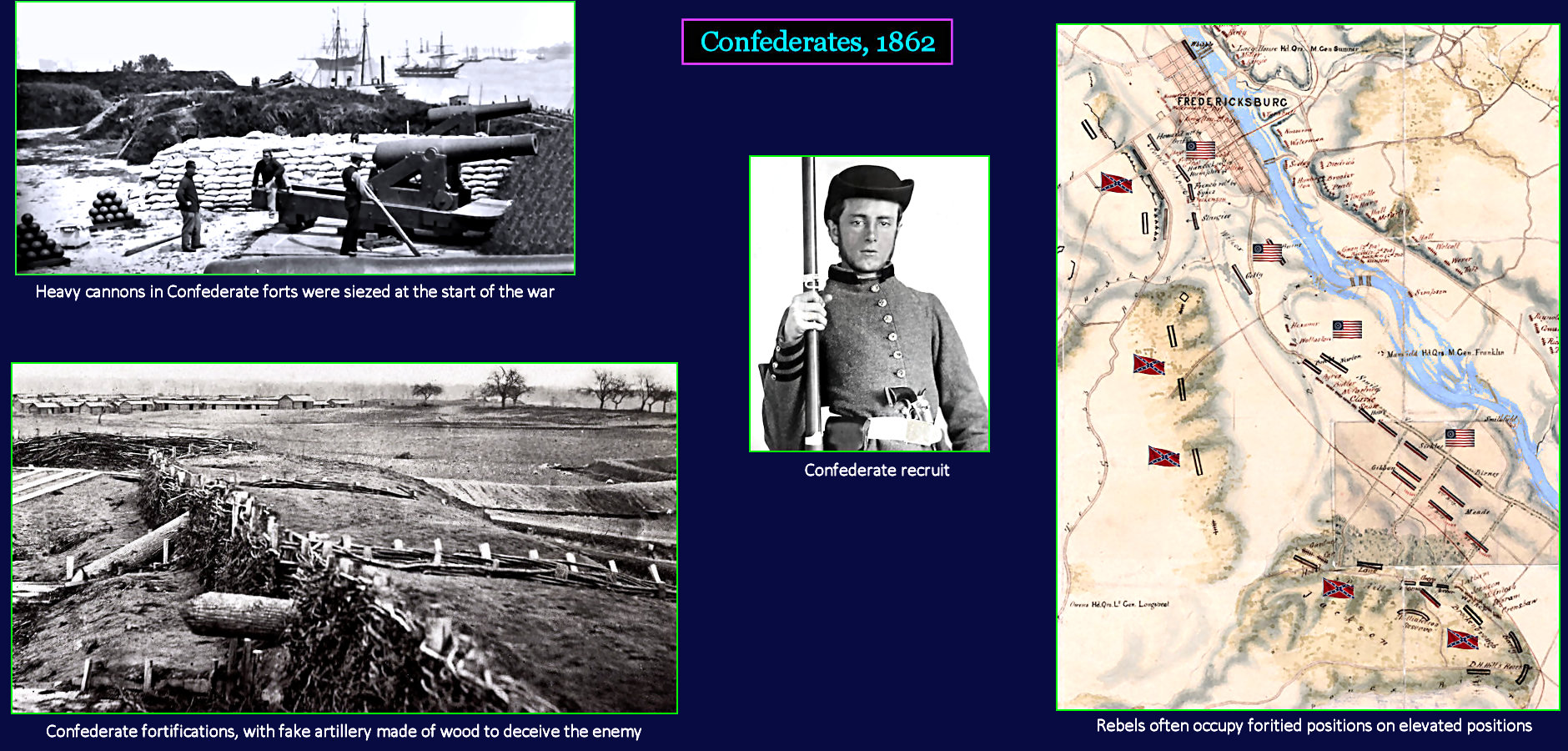
Advantage, Defense It's widely believed that Lee and his Confederates are superheroes, always managing to defeat less resourceful opponents through cunning and daring, despite being outnumbered. The Union, it is thought, only succeeds by methodically bludgeoning the Confederacy into submission with overwhelming force. Actually, Confederates lose most of the major battles, and all the campaigns, in the West. The only place they hold their own is in Virginia, where they occupy strong defensive positions. They build extensive earthworks, and hold forts seized at the beginning of the war. In many battles, they have the advantage of occupying higher ground, dug in behind rivers and streams, to wait for the Federals to waste themselves in futile frontal assaults. | |||||||||
| |||||||||
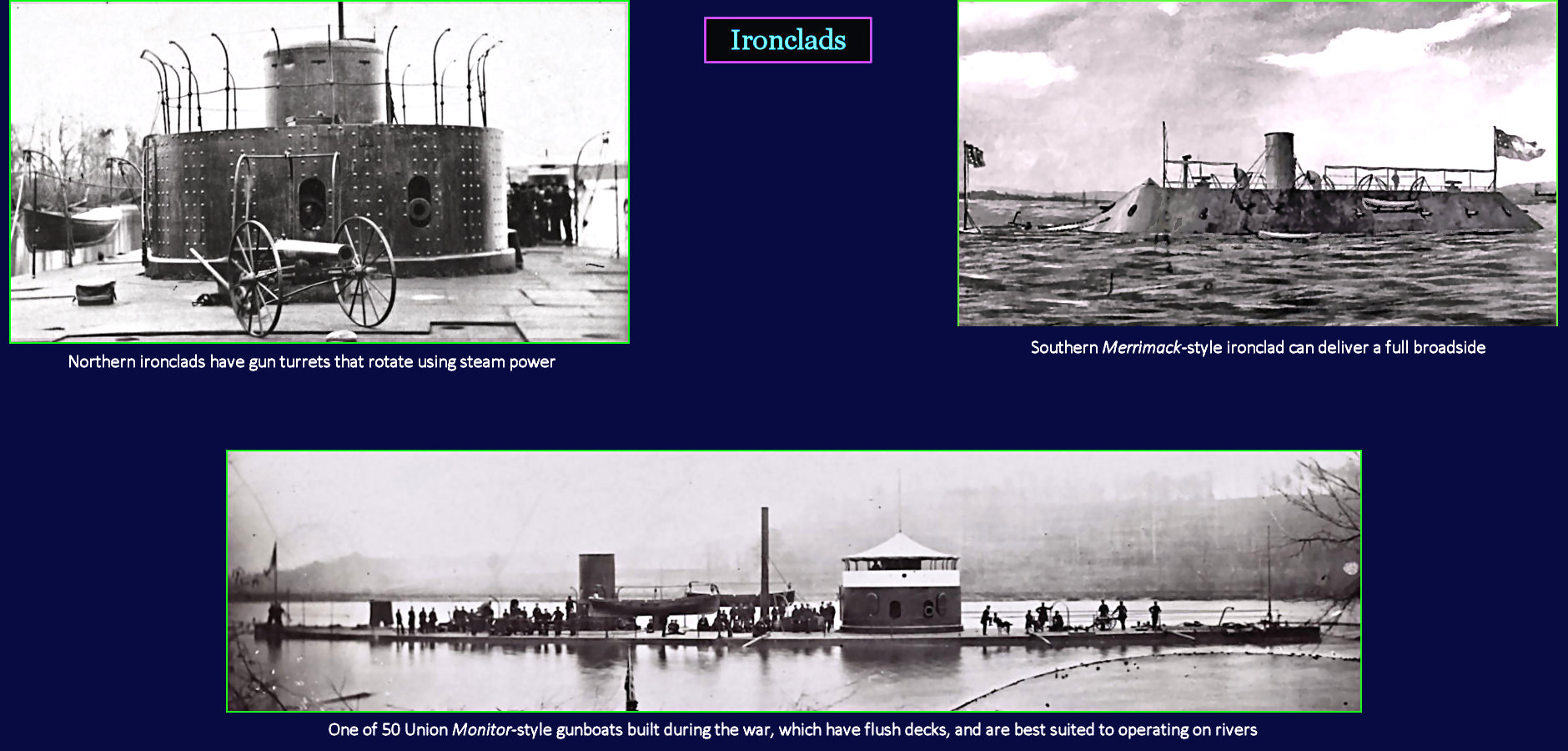
Metal Warships When the Civil War begins, all warships are still being built of wood. But both North and South are preparing experimental 'ironclad' vessels, with armor plate added to resist the penetration of cannon balls. The Monitor is typical of many Union ironclads built during the war. The original has a single turret, but later vessels often have two, or even three. The southern version of the ironclad is quite different. The first rebel ironclad is built on top of the hull of a sunken, burned-out frigate, and has a new gunroom built on a flush iron deck, with sloping sides covered in iron plates. The South builds 20 similar ironclads, but many suffer from a lack of materials, and few achieve any important result. | |||||||||
| |||||||||
Rivers and Floating Bridges The seemingly obvious invasion route into Virginia for the Union army is to advance directly south from Washington, but there are several rivers in the way. There aren't any bridges in this semi-wilderness, so Federals will have to drag large numbers of pontoons with them, to be deployed at each river. A simpler route is to ship forces down Chesapeake Bay by boat, and advance towards Richmond between the rivers. The Union tries both approaches in 1862, beginning with the seaborn route (#1) in June, which is stopped almost within sight of Richmond. A second attempt in December tries the northern route (#2), but is stopped with heavy losses at Fredericksburg, partly because of a delay waiting for pontoons to arrive. | |||||||||