| |
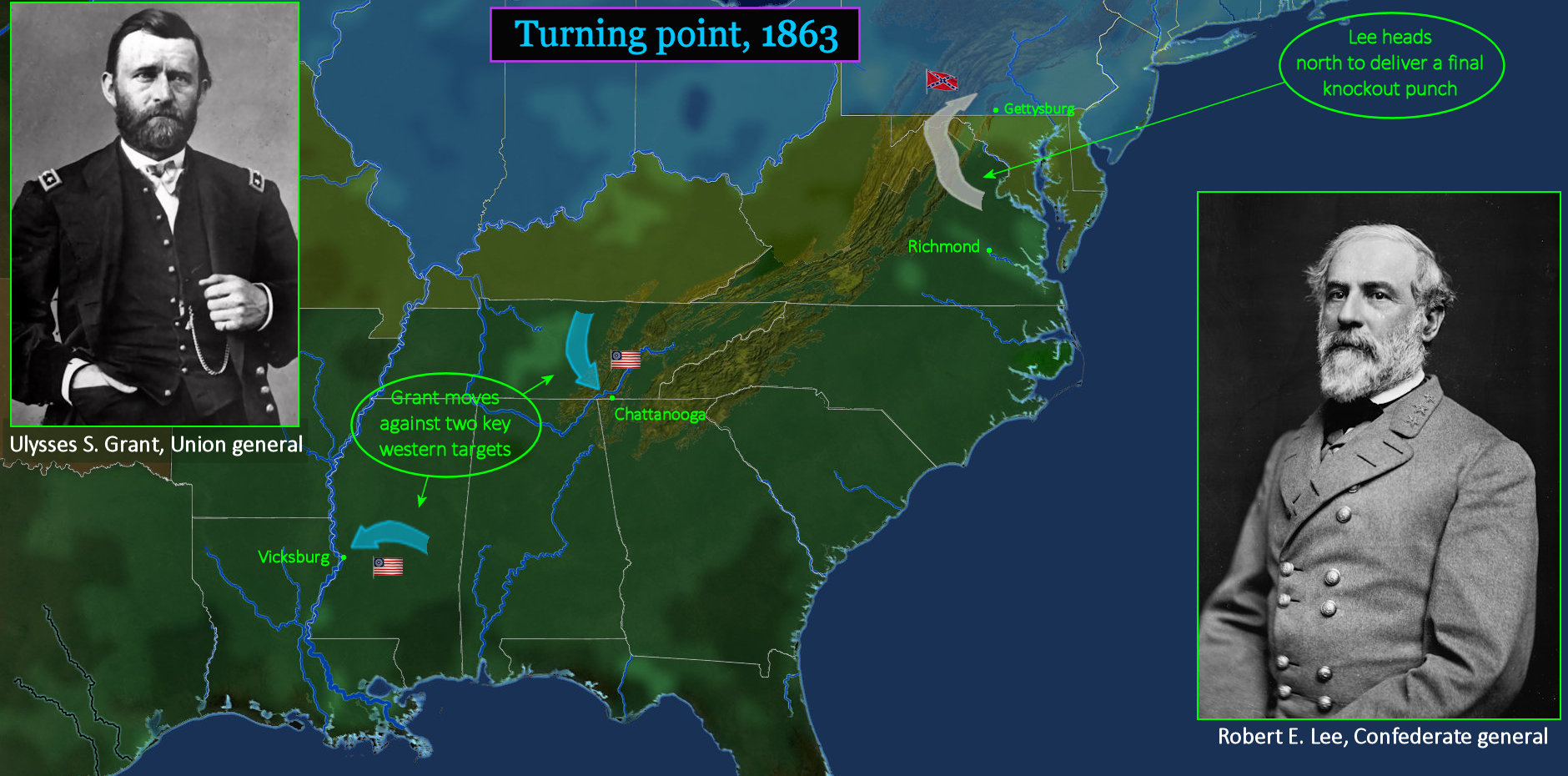
Grant and Lee At the start of 1863, the main northern goal remains taking Richmond, which would end the war immediately. Lee is planning the opposite, hoping to end the war by finally finishing off a Union army that plods along under cautious management. In the West, meanwhile, Grant has free reign to continue his methodical reduction of rebel defenses. Lee is closely supported by the South's primary military supply base in Richmond. By contrast, Confederate commanders in the West are much more isolated, being far from resources they need to sustain a defense. |
| |||||||||
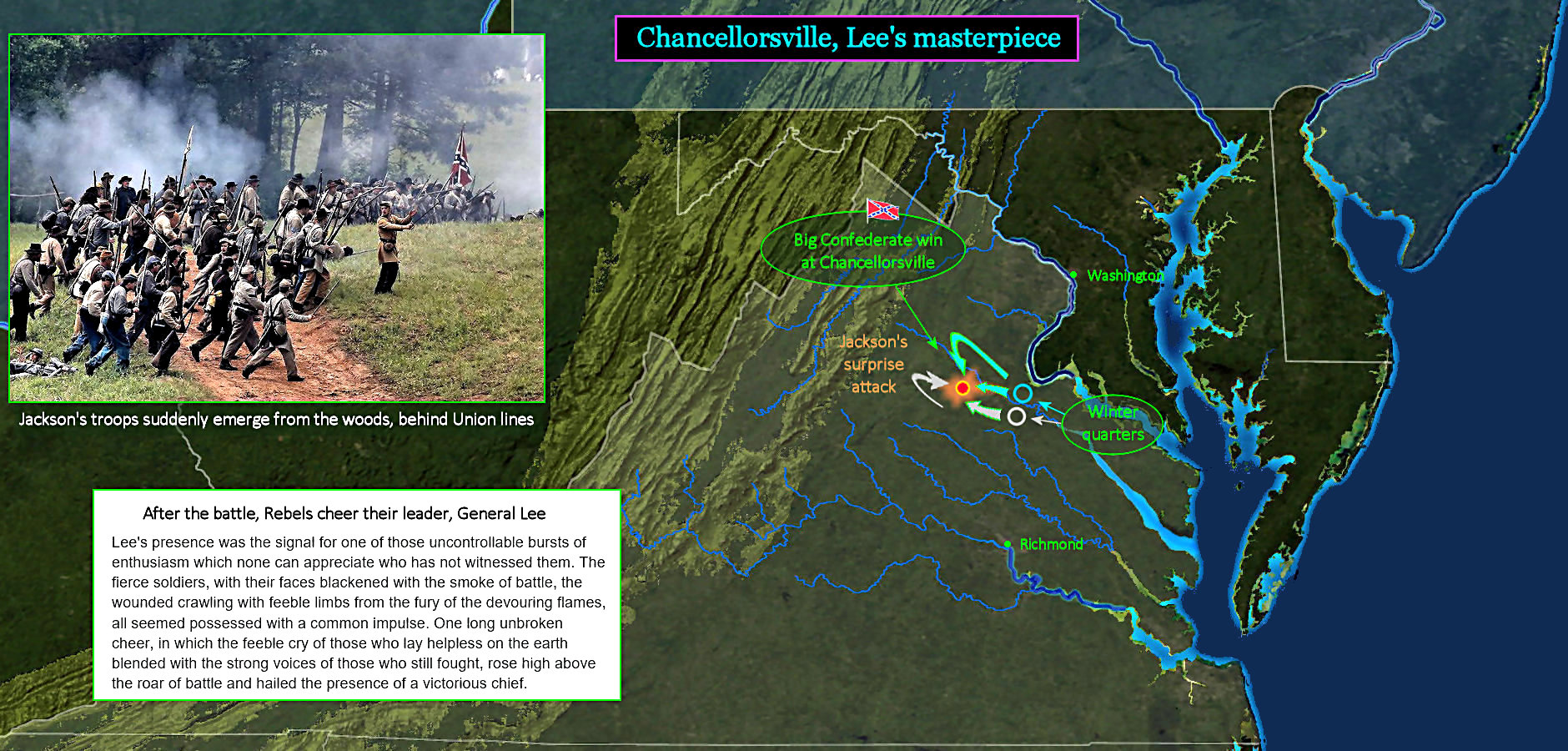
Jackson's End Run More than any other battle, Chancellorsville is responsible for establishing Lee's reputation as a brilliant tactician. Sending his army north to shadow the Union army's northern move, he gathers his forces to repulse the expected Union attack near Fredericksburg. Though seriously outnumbered, Lee sends Stonewall Jackson's troops on a wide arc through woods known locally as the 'wilderness,' behind Union lines, They stun the Federals by emerging suddenly in the Union rear. Though the Union army remains intact at the end of the four-day battle, it gradually withdraws. This allows Lee to pursue an even bolder plan. He decides to move north into Pennsylvania, to crush Union resistance with a fierce and sustained attack. | |||||||||
| |||||||||
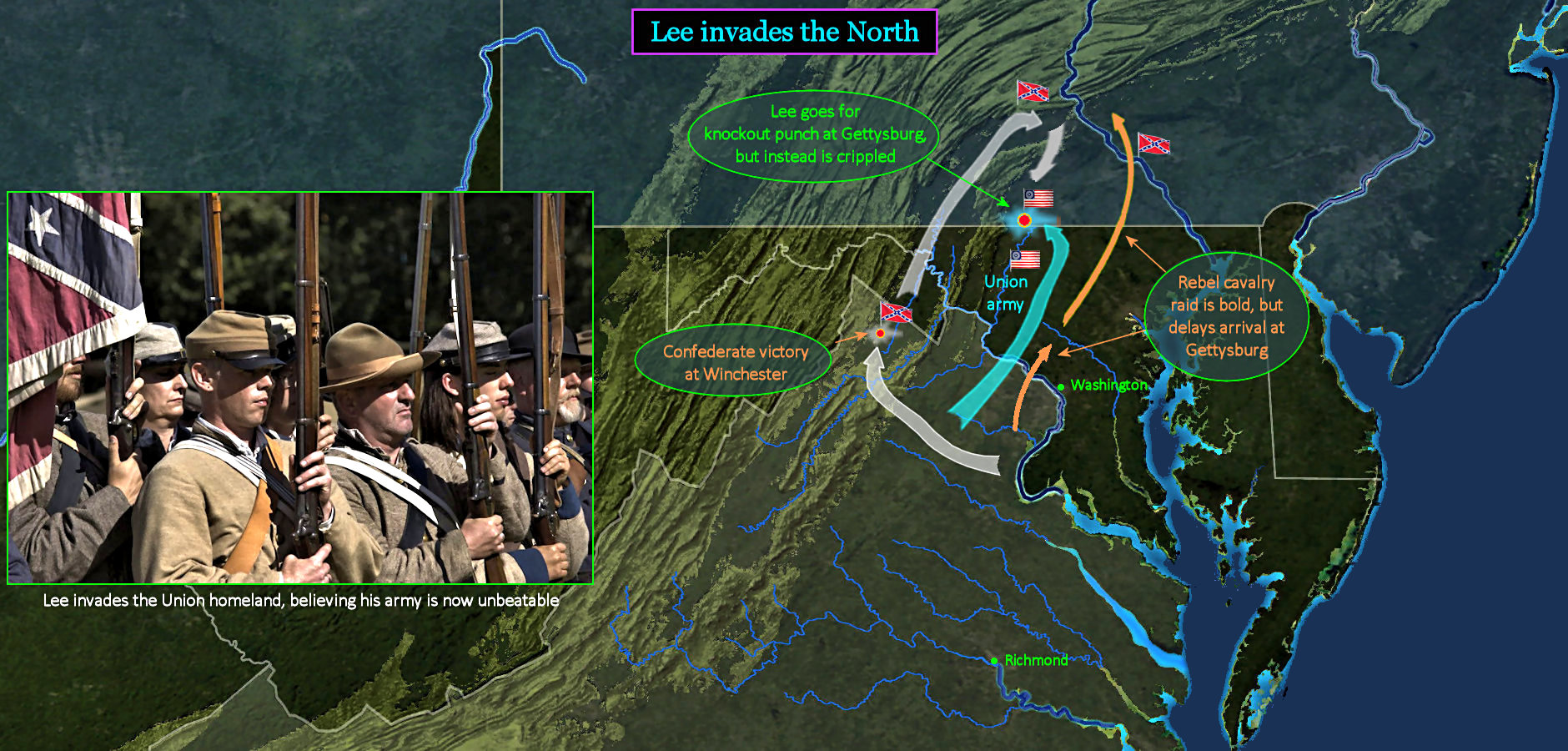
Betting Everything Lee's decision to invade the North is based upon the momentum he has established, and the growing feeling that his army is invincible. He believes that support for the war in the North is fading fast, and a determined push will result in destruction of the Union army. Although short on supplies, he expects to seize what he needs along the way. He badly miscalculates. Not only is Union morale better than supposed, but he is now missing both of his best generals. Jackson has been killed at Chancellorsville, while J.E.B. Stuart is off on a daring cavalry raid that is intended to encircle and trap Union forces, but leaves him out of touch. Just as important is the fact that Lee is no longer operating in friendly rebel territory, and thus lacks local informants. | |||||||||
| |||||||||
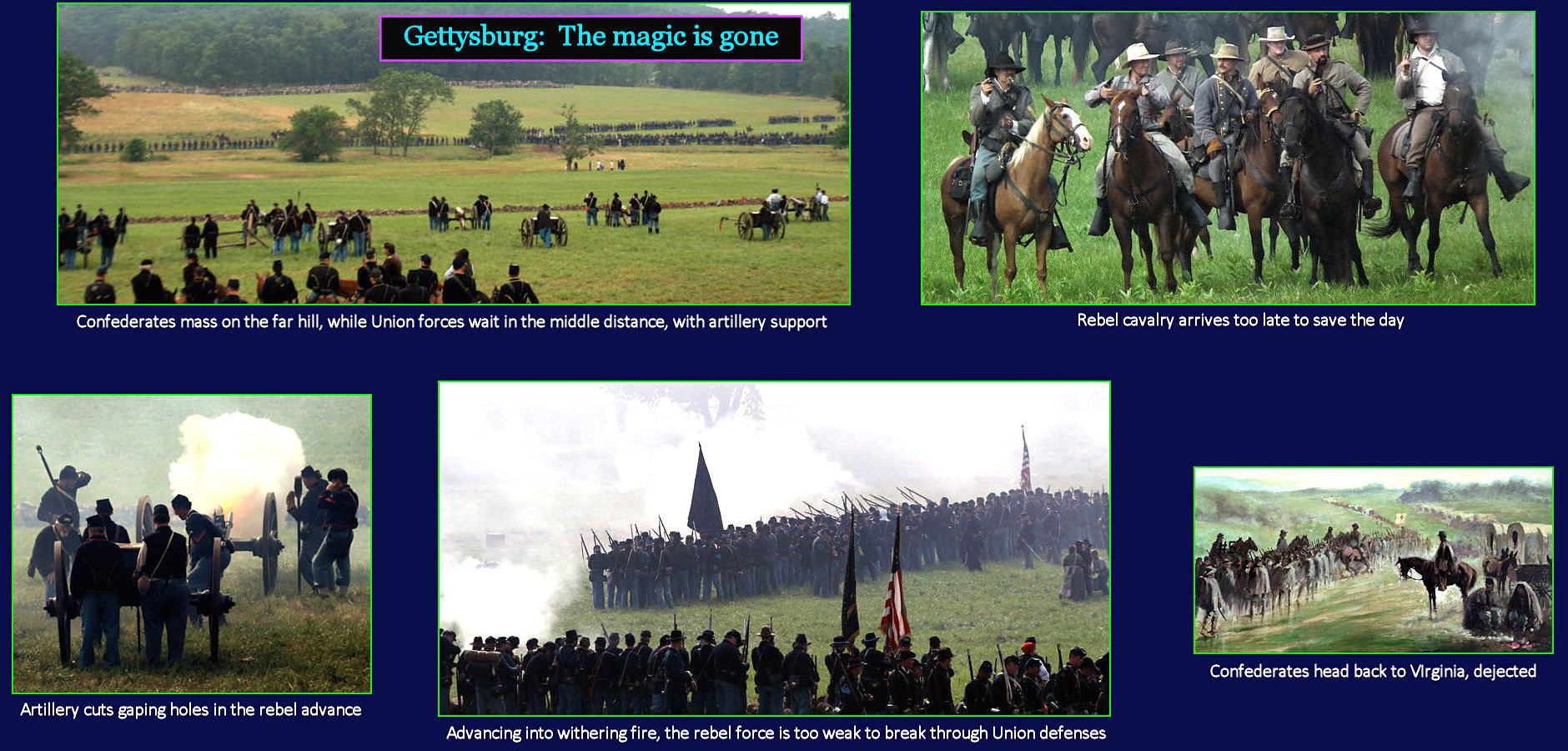
Failed Gamble When Lee discovers the Union army close on his heels, he wheels southward to an important crossroads at Gettysburg. But his all-important cavalry arrives late, being off an a raid. By the time they arrive, the Union lines are consolidated on rising ground. Against advice, Lee gambles everything on the third day. He orders a grand assault on the Union center, in sweltering July heat, across exposed fields. Many are convinced it is doomed to fail, like so many earlier frontal attacks by the Union. The Rebels manage to make it through merciless fire to Union lines, but are exhausted, and turn back. Lee has now lost more than a third of his men, and is short on ammunition. His only option is to retreat back towards Richmond, with the battered remains of his army. | |||||||||
| |||||||||
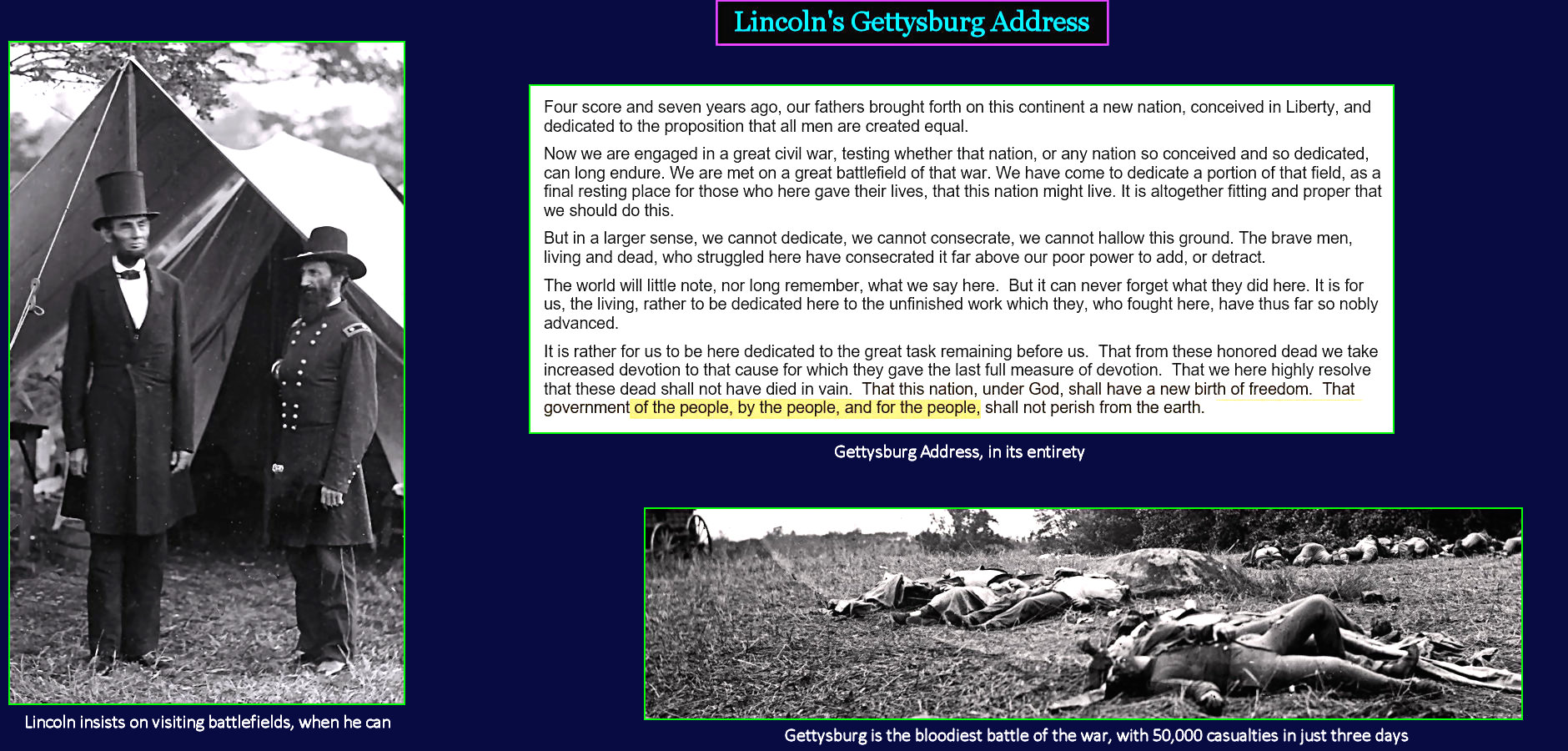
Lincoln's Deep Involvement A huge sigh of relief goes up all over the North when Lee is turned back at Gettysburg, with crippling losses. Lincoln is elated as well, but troubled that his general failed to pursue and destroy Lee's army, as it retreated after the battle. The same thing happened after Antietam, the previous year. Lincoln takes a keen interest in the war, often camping out at the telegraph headquarters in Washington, to hear the latest battlefield news. He likes to visit the war front when he can, though his aides warn him of the danger. He takes a strong interest in his generals, firing one after the other when they fail to deliver good results. Lincoln travels to the Gettysburg battlefield four months after the battle, to deliver his famous Gettysburg Address. | |||||||||
| |||||||||
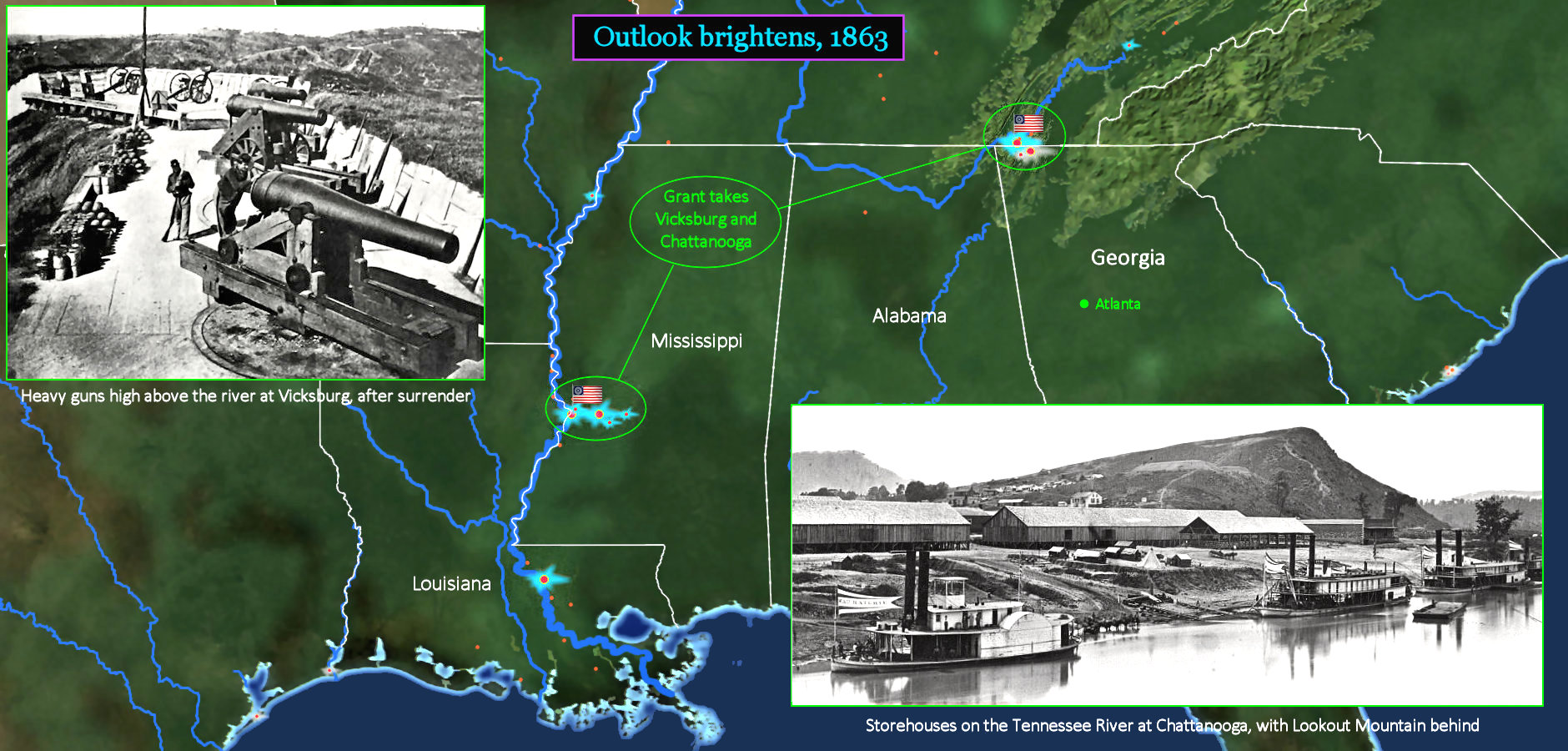
Confederacy Losing its Grip The day after the big victory at Gettysburg, Lincoln receives word that Ulysses Grant has finally captured Vicksburg, the last rebel holdout on the Mississippi River. In the process, he captures the entire Confederate army remaining there, which assures Union control of the full length of the Mississippi. The one-two punch of Gettysburg and Vicksburg send the North into unrestrained joy, especially given the string of defeats preceding these victories. Lincoln quickly sends Grant to Chattanooga, a key rail hub which is still contested by the South. With victories in battles on the heights surrounding the city, Grant destroys another rebel army. The Union now has a direct path towards Atlanta, the all-important rail and supply center of the South. | |||||||||