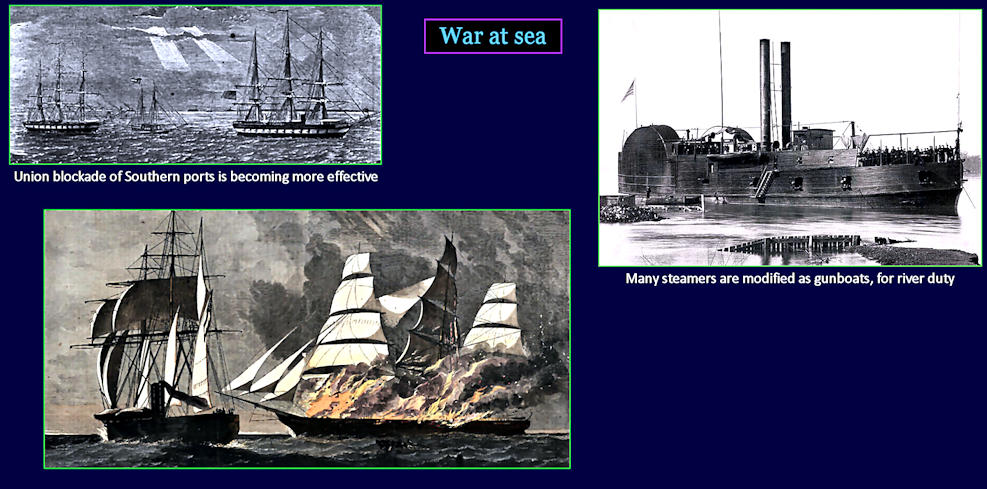
Blockades and VesselsSome southern steamers manage to break through the blockade with an early-morning dash, when boilers on federal warships have reduced steam pressure. But only the fastest make it to the safety of the open ocean. Commerce raiders are different, as they don't need access to southern ports. Instead, they roam the high seas, attacking Union shipping of all kinds. The three most deadly raiders are all built in England, and remain at sea. The Union attempts to take forts protecting major Confederate ports, but most land-based attacks fail. As the war continues, more and more forts are finally taken with the help of ironclad gunboats. |
| ||||||||||||||||
| |||||||||
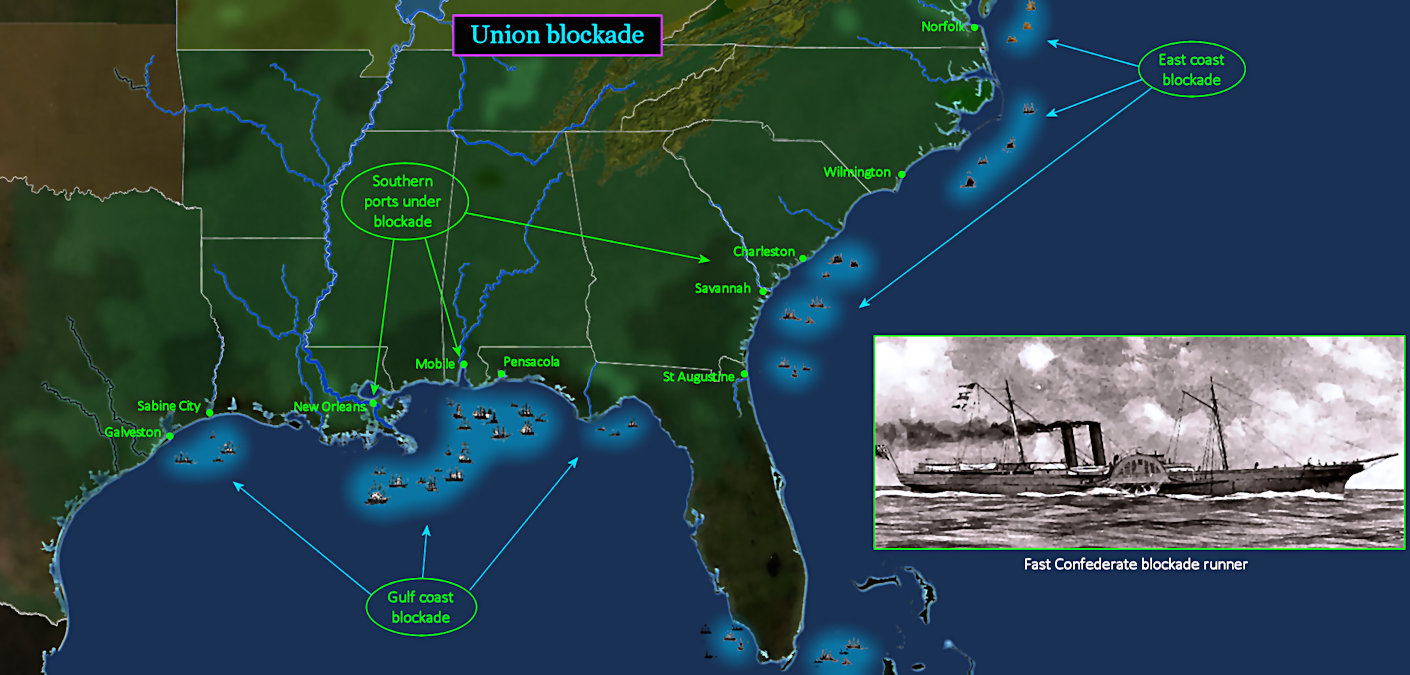
Blockade Tightens Over time, the Union blockade of southern ports is able to choke off 90% of southern exports, including their big money-maker, cotton. By the end of the war, 500 ships are involved in blockading duties, destroying or capturing 1,500 Confederate blockade runners, which are their fastest steamers. The blockade also prevents imports, including food, medicine, war materials and luxury items. Salt, which is important for preserving meat and tanning leather, becomes increasingly difficult to obtain. Prior to the war, ships delivering southern cotton to New England mills would sometimes return with a cargo of salt from upstate New York. This is no longer possible. | |||||||||
| |||||||||
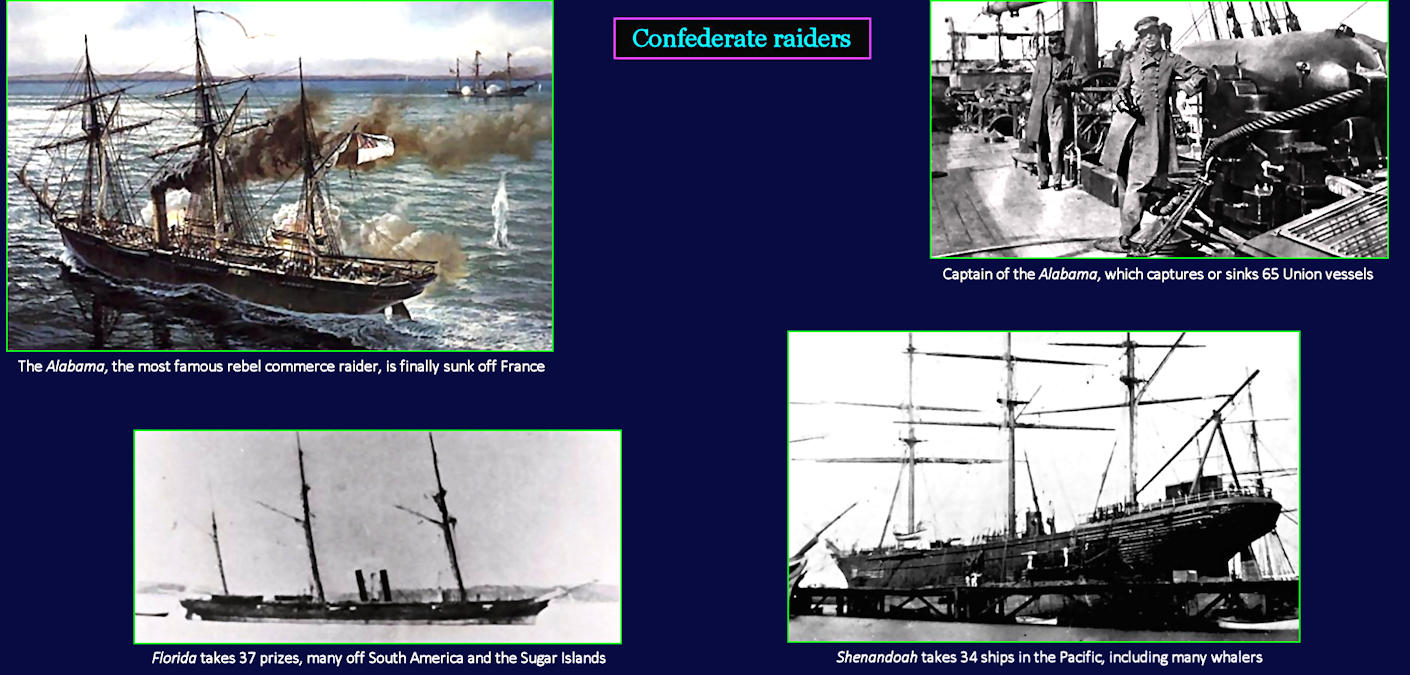
Fighting Back at Sea While blockade runners are merchant vessels carrying cargo to and from Europe, commerce raiders are pure warships. The three that cause the most damage are all built in England, and sail the world's oceans without ever needing to enter southern ports. The Alabama is financed with cotton. The South also uses privateers, which are private vessels authorized to attack Union shipping. Maine, alone, loses 100 ships to southern raiders. After the war, the United States sues Great Britain for damages caused by British-built ships, and is awarded $15.5 million by a process of international mediation. This establishes a precedent for punishing supporters of marauders in future wars. | |||||||||
| |||||||||
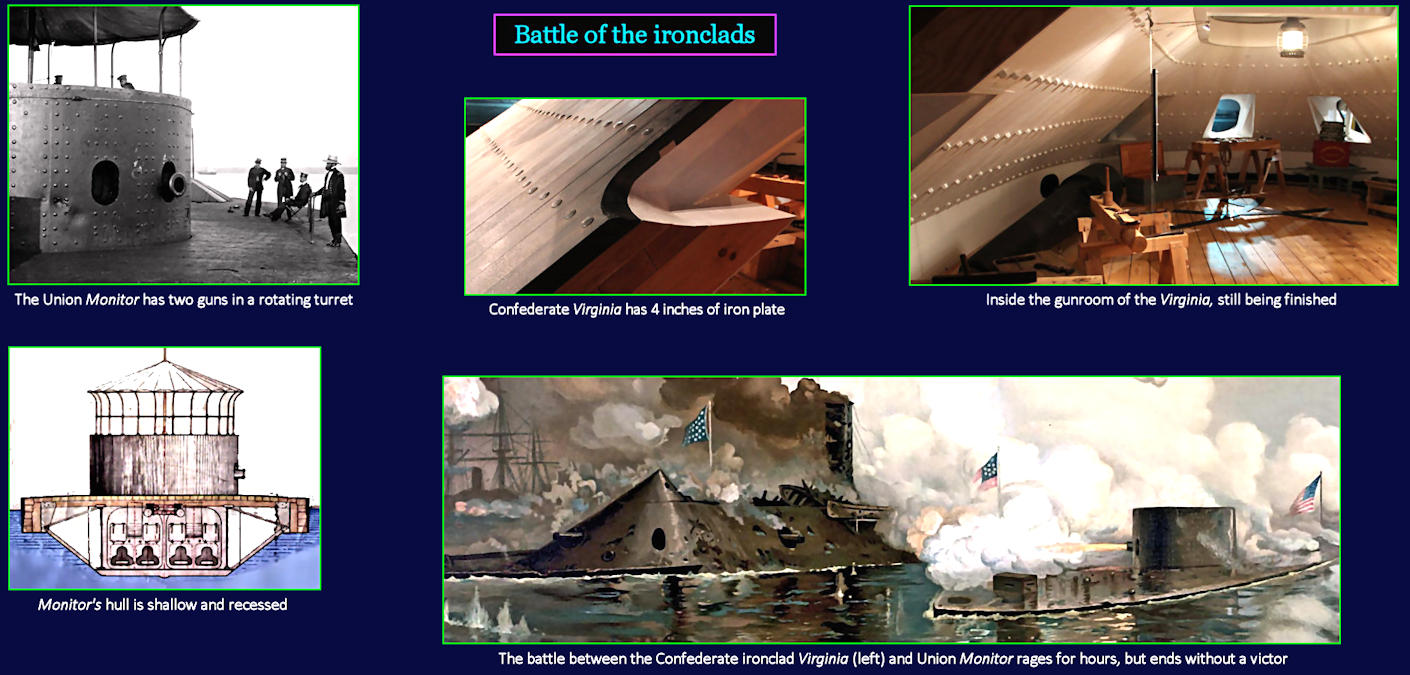
Iron Meets Iron The most famous battle between ironclads occurs early in the war. The Confederates manage to launch their vessel first, attacking vessels on federal blockade duty near the mouth of Chesapeake Bay. A new topside has been built on the burned-out hull of an abandoned federal frigate called the Merrimack, which is re-named the Virginia. Nothing can withstand her fire. But when she returns the following day to finish the job, a new federal ironclad, called the Monitor, suddenly appears to challenge her. Neither vessel can disable the other, but the Virginia eventually retires to harbor, where she remains bottled up until destroyed two months later, to avoid capture. | |||||||||
| |||||||||
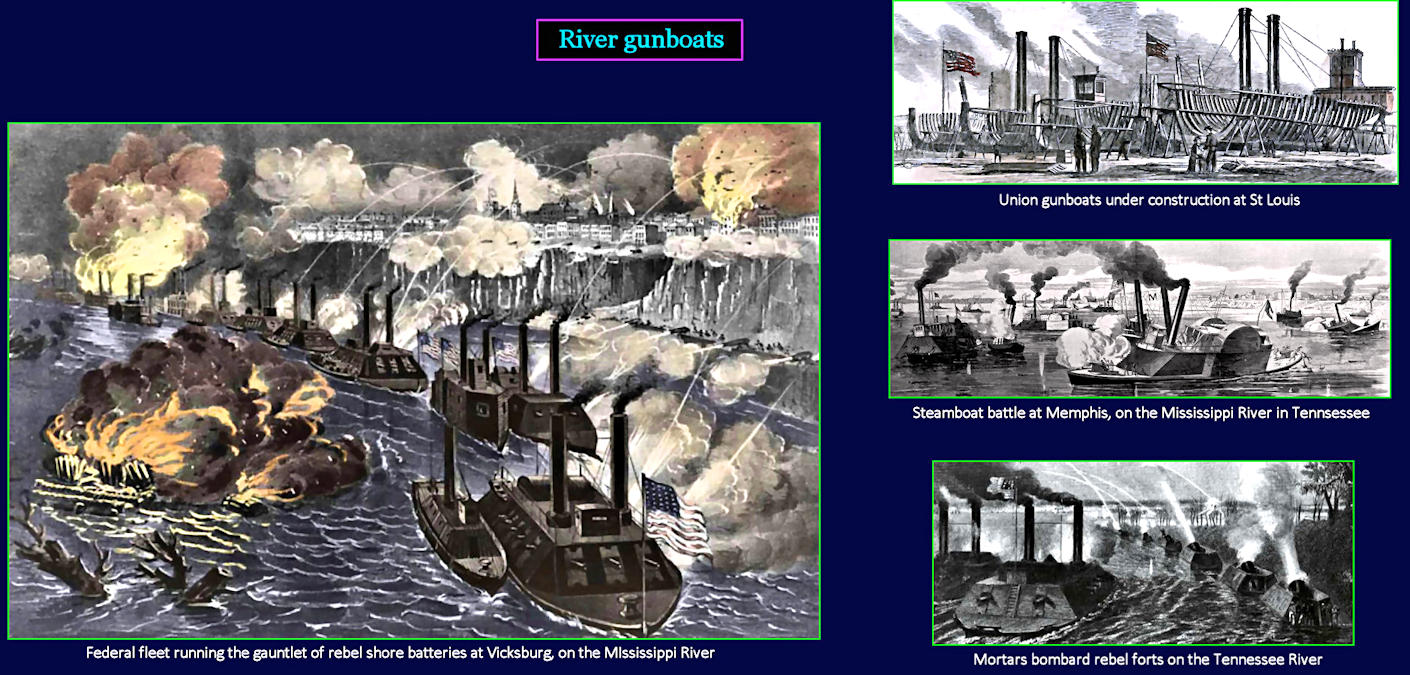
Fighting on Rivers The gunboats used on rivers are mostly converted river steamboats, although the Union also builds seven new ironclad gunboats for its Mississippi River campaign (lower left). The Rebels have plenty of steam gunboats, but are hampered in their ability to build new ironclads. The main problem is the lack of iron, for plating, but they also find it difficult to build new steam engines of the necessary size. Meanwhile, the Union has plenty of materials for anything it needs. Grant builds a set of ironclads, and a string of ironclad mortar barges, for his attack on forts guarding the Tennessee River (lower right). | |||||||||
| |||||||||
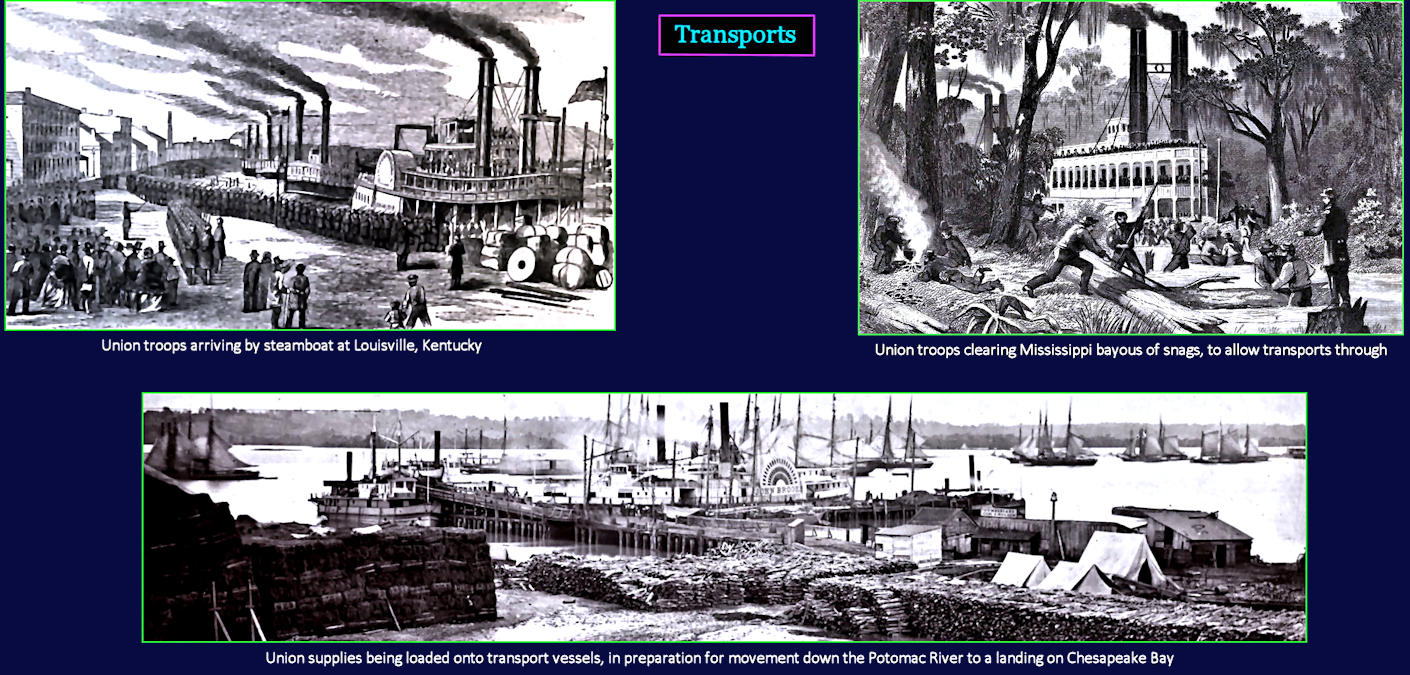
Moving the Equipment Transport vessels of all kinds are used by the Union to position troops and supplies. In the West, river steamboats are the preferred vessel (top left and right). Back east in Virginia, sailing ships can be used for movement down the coast (bottom). Note the huge stacks of wood on shore, which are needed to build fortifications and fuel the steamers, which still burn wood. The Confederacy has very little need for transports, as most of its troop movements are inland, where railroads are far more important. The Union's greater need for transports reflects the fact that it is waging a war of invasion, while the Confederacy has the relative luxury of maintaining a primarily defensive stance. | |||||||||