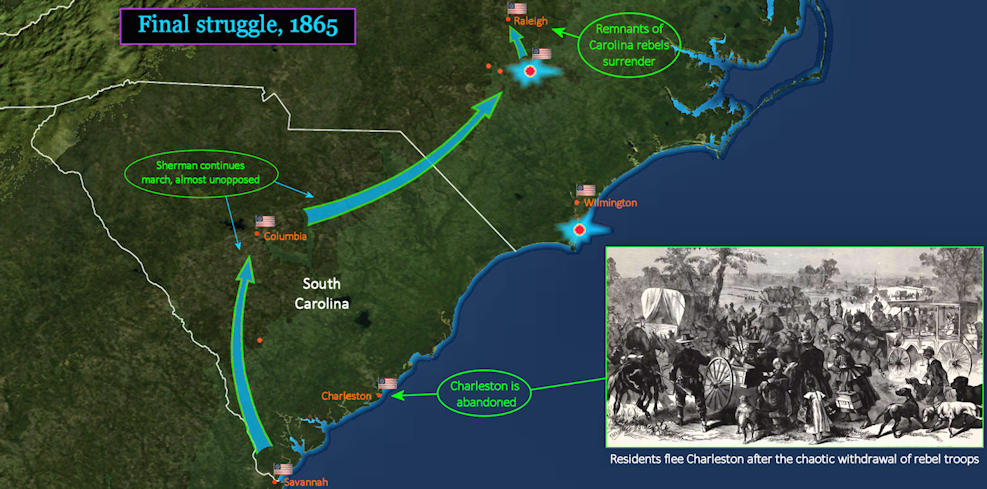
End of the LineLincoln himself privately doubts he will be re-elected. But when Atlanta finally falls to Sherman, Lincoln's re-election is assured. He wins in a landslide, capturing almost all of the military vote. The Union onslaught continues. South of Virginia, Sherman's Union army is marching north virtually unopposed, to meet up with Grant and put the final stake in the heart of the Confederacy at Richmond. Token rebel opposition in the Carolinas is extinguished. At this point, Lee is still holding out in Petersburg, but there are no more reserves, and Britain is remaining neutral. The South should probably fold its tent and accept defeat, but instead fights stubbornly on, under a fully-committed Lee. |
| ||||||||||||||||
| |||||||||
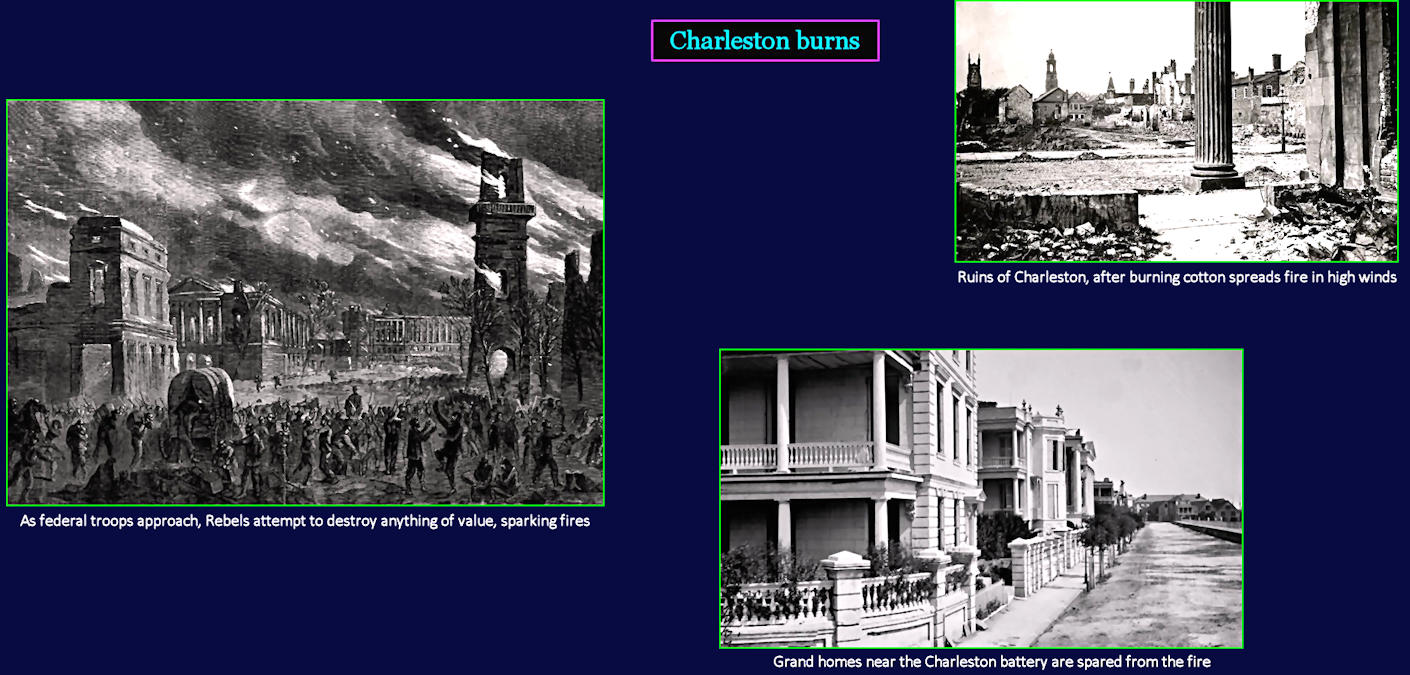
Self-inflicted Damage As they prepare to evacuate Charleston, Rebels attempt to burn anything of military value, including ironclad warships and 100 bales of cotton at the railroad depot. The burning cotton sets off nearby ammunition, thus reducing a large part of Charleston to rubble, without any action on the part of Union forces. A few weeks later, Richmond is likewise accidentally burned by abandoning Rebels, leaving Atlanta as the only city deliberately torched by the Federals. Other devastated cities, like Vicksburg and Petersburg, were damaged by military engagements during lengthy sieges. | |||||||||
| |||||||||
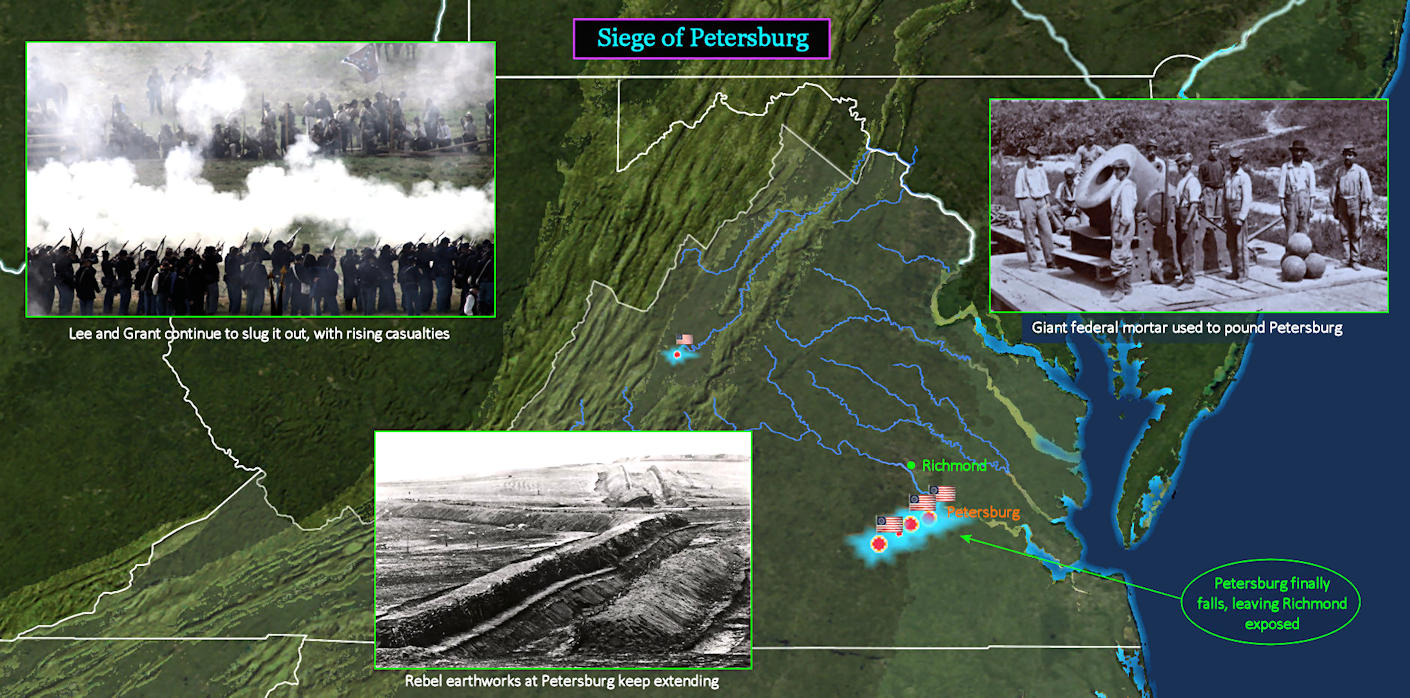
Lee Exhausted By 1865, everything depends upon Petersburg. Grant is gradually extending his lines around the city, with an army twice the size of Lee's, forcing the Confederates to extend their earthworks in response. Artillery positions on both sides keep up a steady bombardment. The numbing struggle continues for nine months, gradually inching west, with a series of costly battles that leave both sides mauled. Grant loses one-third of his troops, while southern losses through action and desertion leave Lee with barely half his army, which was only half the size of Grant's to begin with. By early spring, the Rebels are stretched to the breaking point, leaving Richmond dangerously vulnerable. | |||||||||
| |||||||||
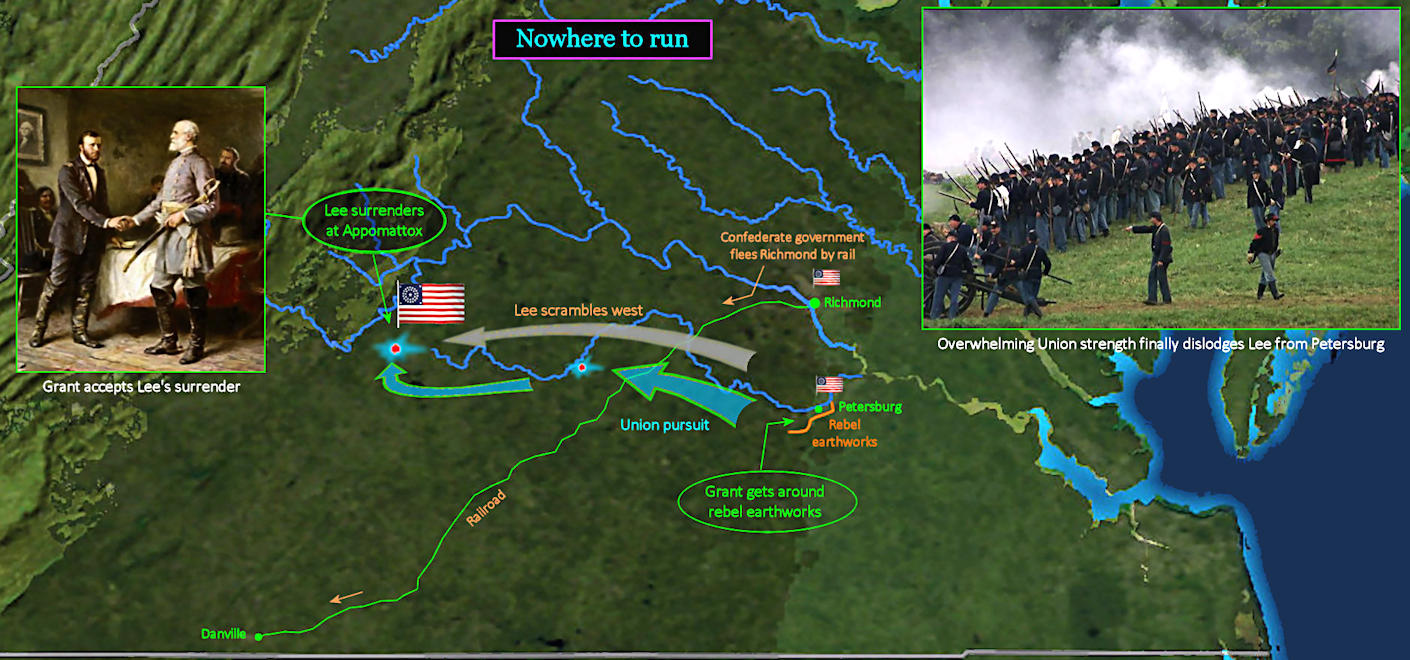
Run for the Mountains With Sherman steadily approaching from the south, Grant finally gets around the end of Lee's lines at Petersburg, threatening the last remaining supply connection to Richmond. The Confederate government packs up its remaining gold and evacuates Richmond by train. Lee pulls his entire army out of Petersburg that same night, beginning a desperate race towards the relative safety of the mountains, to the west. He never gets there. After a last-ditch attempt to break through Union lines, Lee finally surrenders his starving army to Grant at Appomattox This effectively ends the war, although pockets of resistance remain, and Confederate commerce raiders in the Atlantic continue attacking shipping for months. | |||||||||
| |||||||||
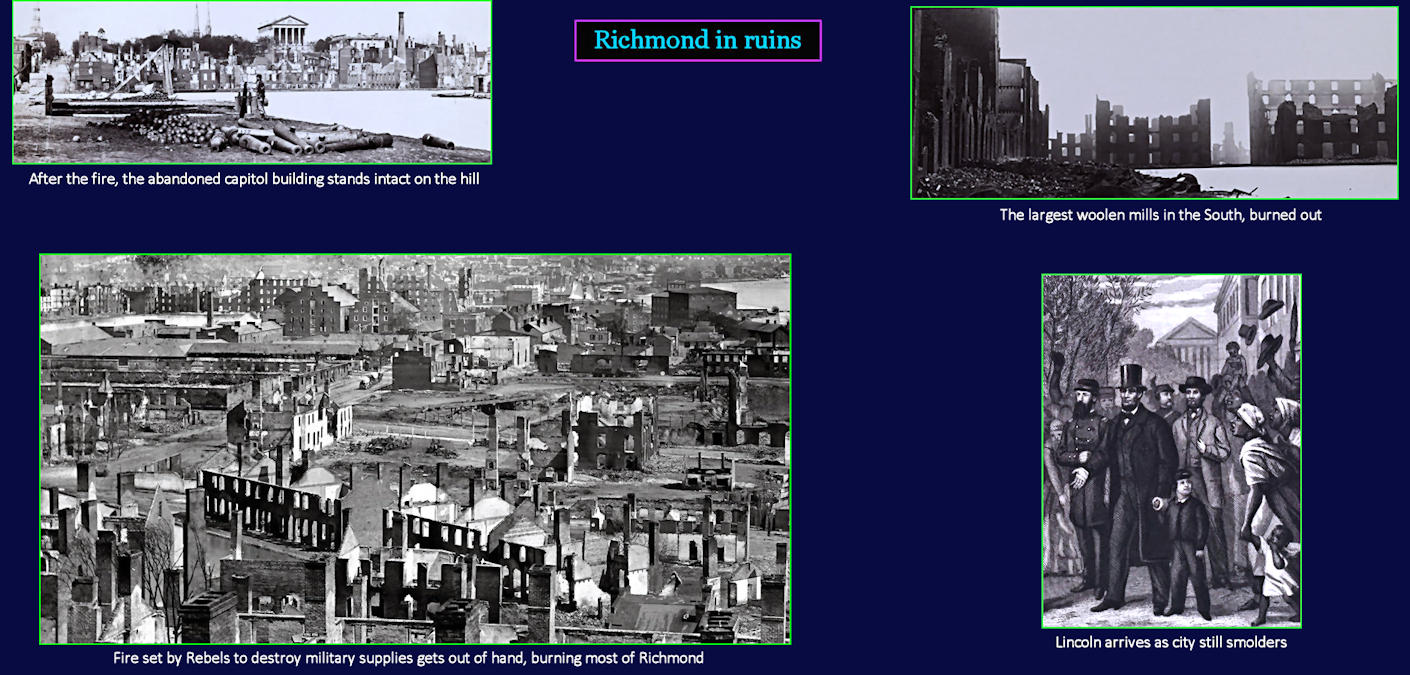
More Self-inflicted Damage Before they leave, Confederates frantically attempt to destroy documents, ammunition, tobacco, cotton and food, but the fires they set for this purpose are whipped out of control by high winds. When the iron works and arsenal catch fire, explosions rock the city. By the next morning, 800 buildings have been damaged or destroyed. Abraham Lincoln insists, against advice, on visiting Richmond as soon as the Confederates are gone, and finds a smoking ruin. This is now the third city where rebel actions during evacuation result in widespread destruction, at their own hands. | |||||||||
| |||||||||
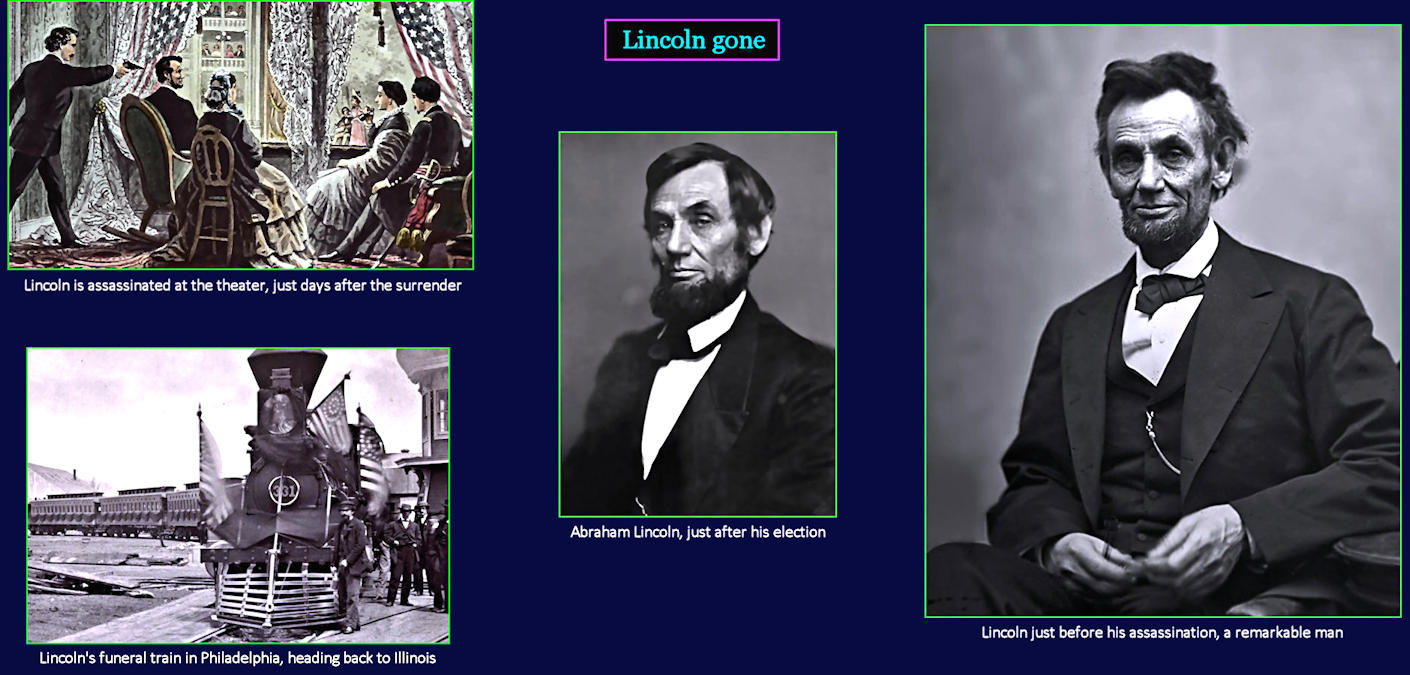
Rebels Don't Leave Quietly It's both ironic and tragic that Abraham Lincoln, sometimes called America's greatest President, is killed just five days after the Civil War is effectively at an end. He is thus deprived of his great wish, which is to heal the country he has led into war. Many Southerners, however, feel embittered by defeat, having been denied victory in a cause they believe is both noble and just. One such man is John Wilkes Booth, a 26-year-old actor. He hatches a plot to kill the President, Vice President and Secretary of State on the same evening, hoping to foment chaos that will revive the southern cause. Due to mishaps, only Lincoln is actually killed. Booth is hunted down and executed, while Lincoln lives on as a great martyr in the cause of unity and freedom. | |||||||||