| |
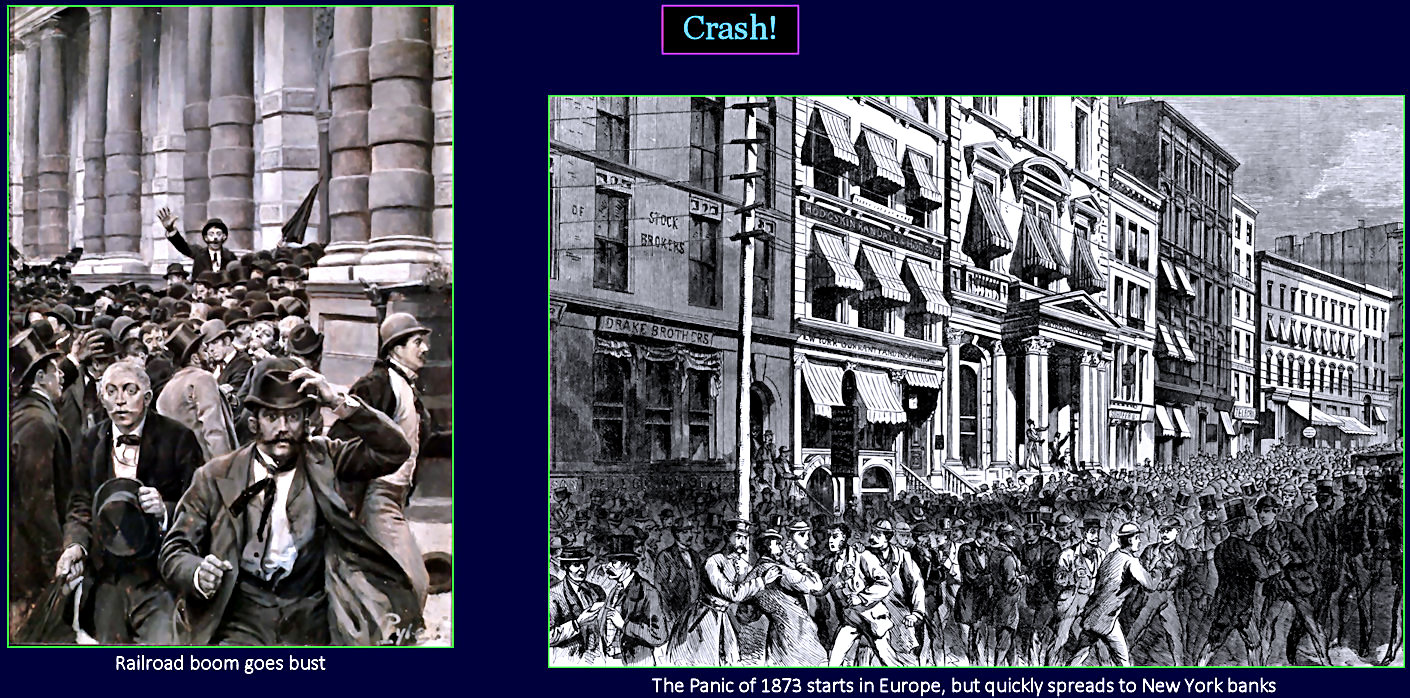
The Dikes Burst The Panic of 1873 is a world-wide event, lasting even longer in Europe than in America. It exposes some of the worst management excesses of the railroads, which had been largely hidden up to this point. Banks all over the Midwest begin to fail. Investor panic spreads from New York to Washington, Pennsylvania and the South, peaking in riots later dubbed the 'Great Railroad Strike.' This is America's first big labor crisis. It begins in Virginia, where Federal troops are dispatched, then spreads to Pittsburgh, Chicago and Pennsylvania coal-field hubs. |
| |||||||||
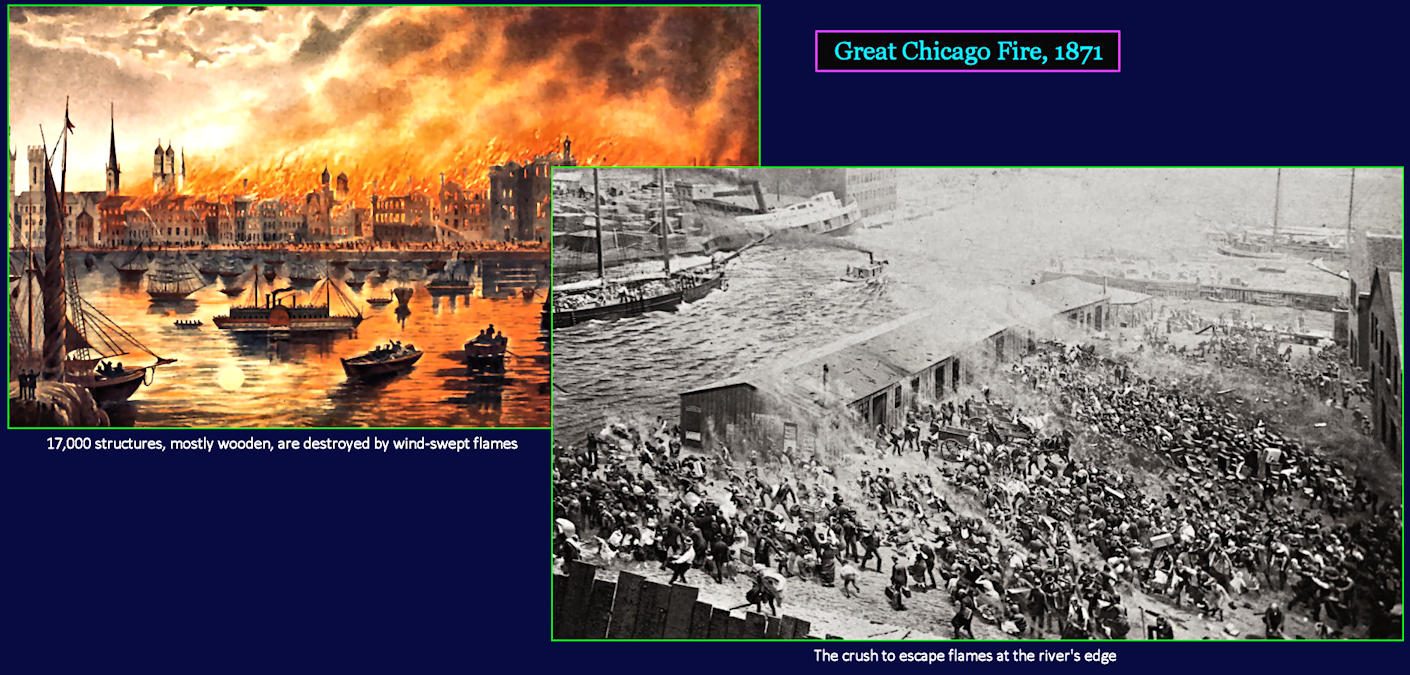
Up in Flames Chicago is America's fifth largest city, having nearly tripled its population in the 10 years preceding the Great Fire. It is filled with hurriedly-constructed wooden buildings. Famous as the 'windy city,' it burns like a tinderbox, leaving one-third of residents without a home. Martial law is declared for two weeks, and then rebuilding begins. This time, however, masonry replaces wood as the preferred building material. | |||||||||
| |||||||||
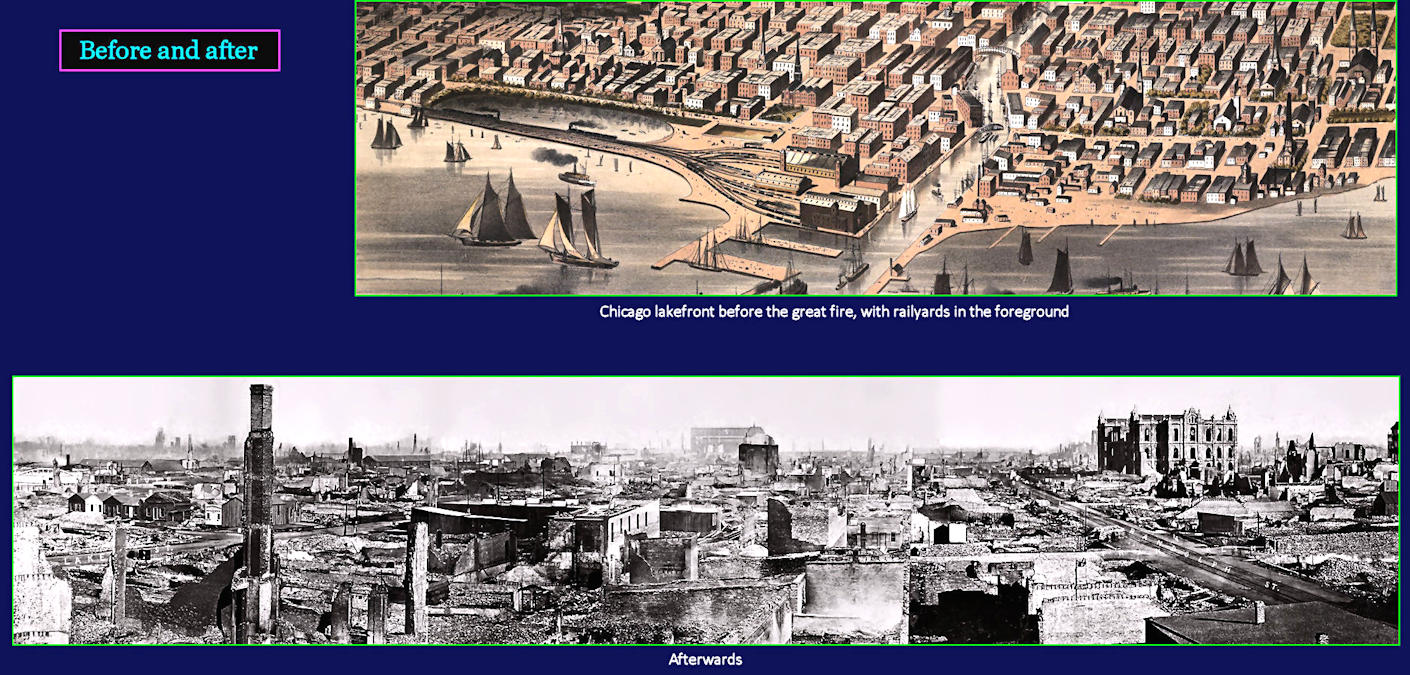
Chicago Levelled The Great Chicago Fire becomes a blessing in disguise. At a single stroke, it sweeps away all the flimsy wooden buildings that had sprung up like weeds during the first wild years of expansion. Within 10 years, the smoking ruins are replaced with proper masonry construction, and Chicago is back on its feet. | |||||||||
| |||||||||
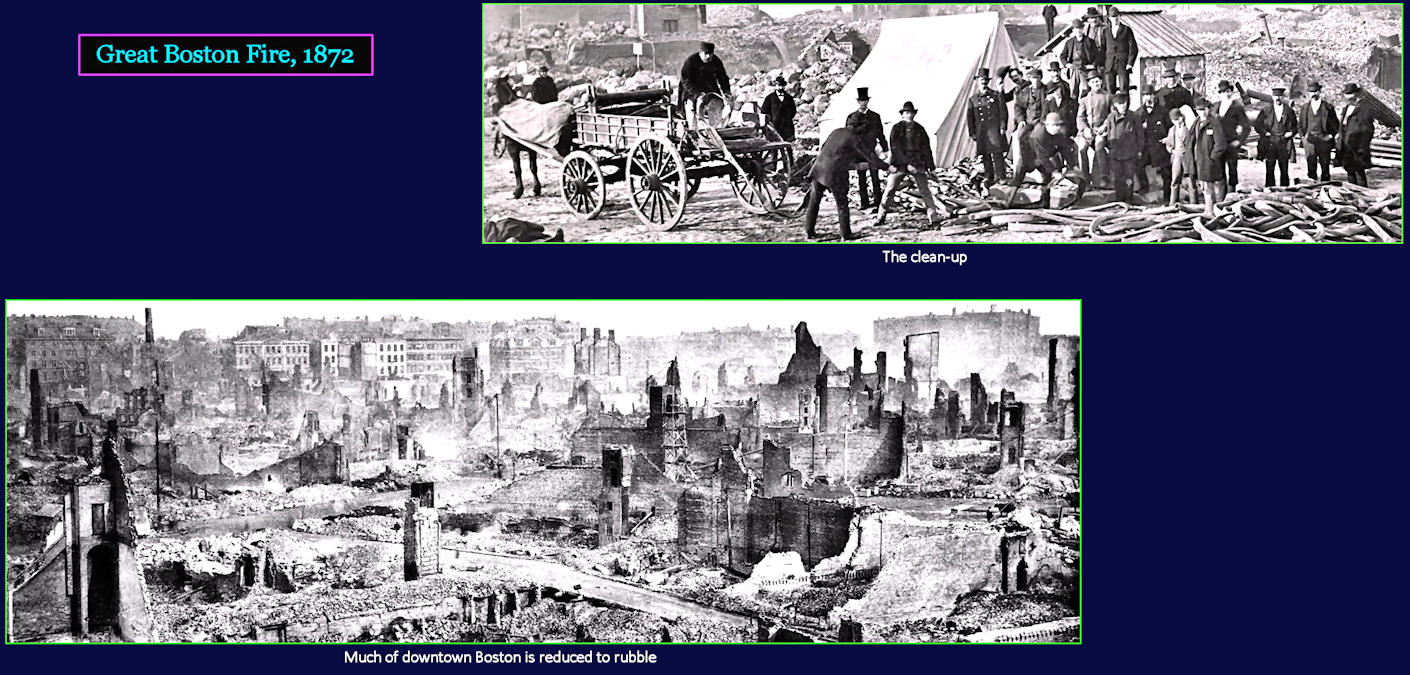
Boston is Next Just a year after the big Chicago blaze, Boston has its own fire disaster. Although Boston's population is nearly as great as that of Chicago, the devastation is mostly confined to the downtown financial district. The losses are perhaps 5% of those in Chicago. | |||||||||
| |||||||||
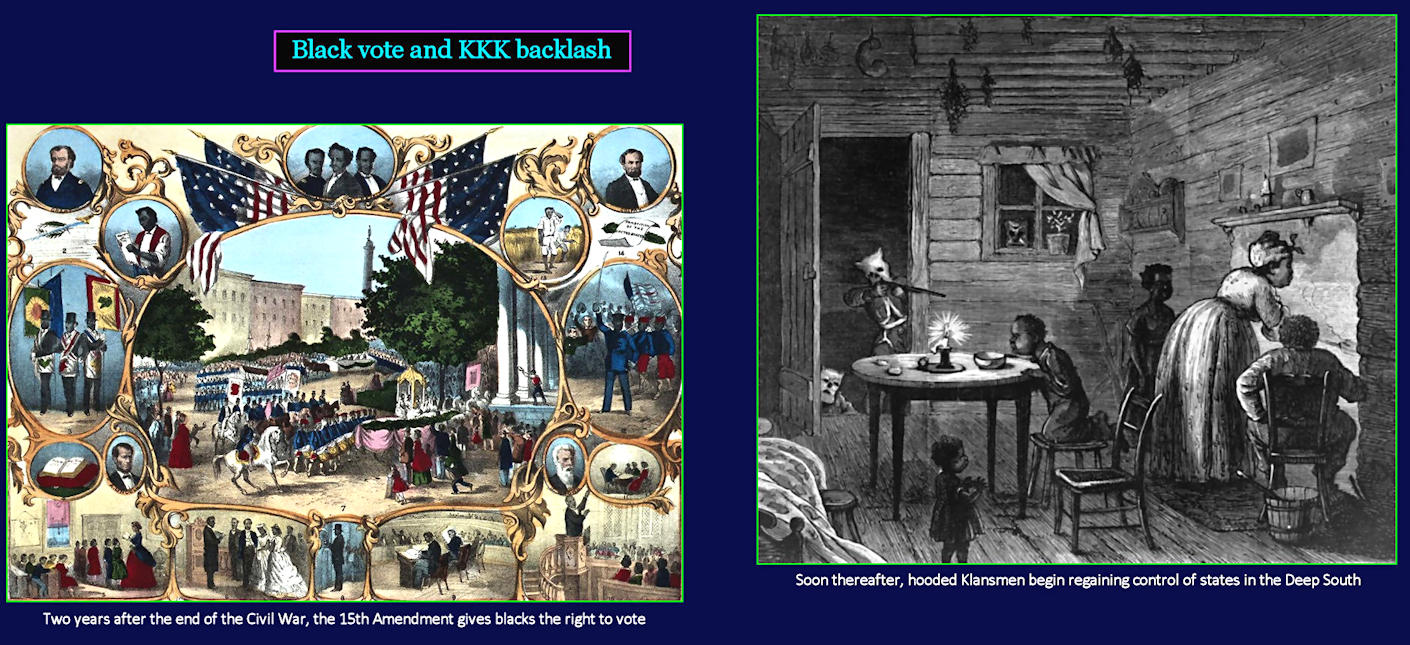
Southern Blacks The Panic of 1873 effectively ends the Reconstruction Era, as Congress tires of trying to manage affairs in the South. Meanwhile, three-quarters of states finally vote to ratify the 15th Amendment, giving Blacks the right to vote, and Congress follows up by giving Blacks the right to hold office and serve on juries. Southern Whites respond by forming local vigilante groups known as the Ku Klux Klan (KKK), which terrorize black voters in an effort to turn back the clock. Congressional legislation puts a temporary end to the Klan, and results in 600 prosecutions of Klan members. Yet Blacks are still not safe. Within a few years, former Rebels again begin rising to positions of local power throughout the South, which is gradually returning to old patterns of white domination. | |||||||||
| |||||||||
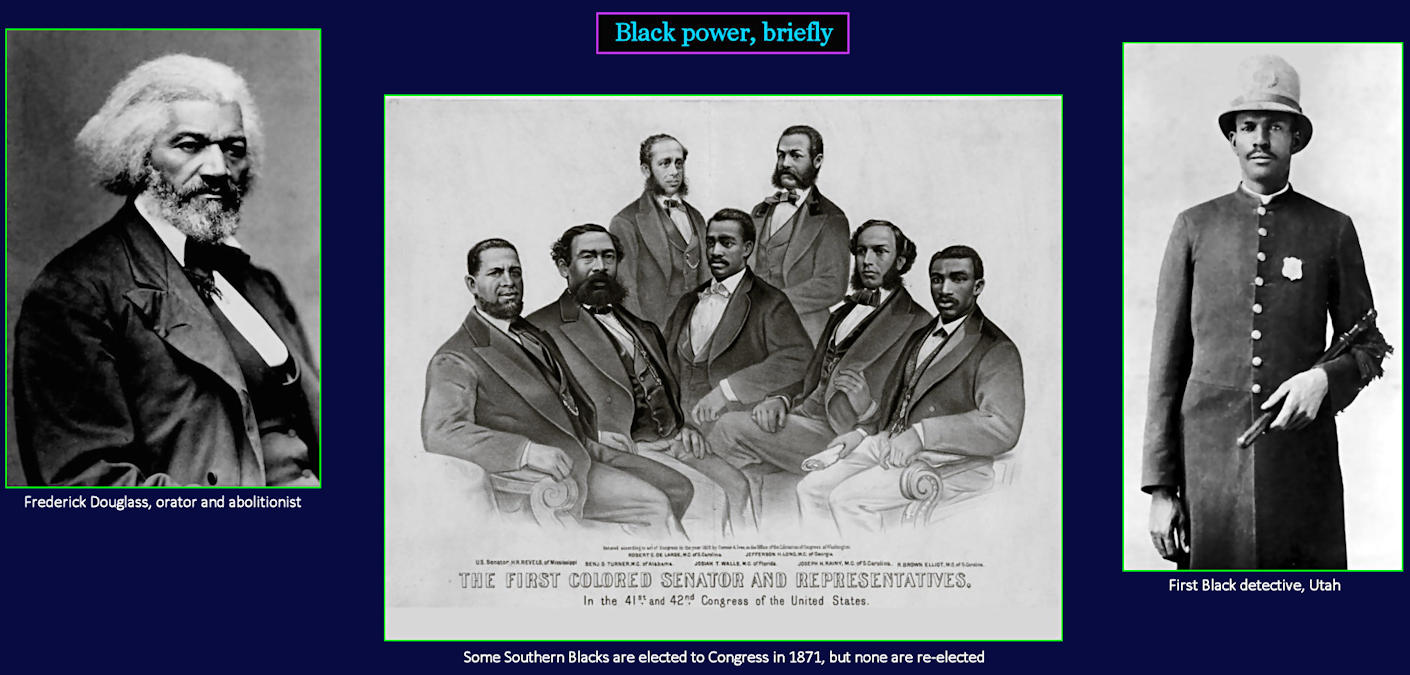
And Then They're Gone The election of 1870 is the first in which Blacks can vote. Since former Confederate soldiers won't have their voting rights restored until the following election, this provides a brief period during which Blacks are elected to Congress (center top). None are elected to a second term, although a few Blacks do manage to get elected in the following years, in southern states where federal troops have not yet been withdrawn. Frederick Douglass is the great champion of Black rights, having escaped from slavery in Maryland by taking a train to New York, in 1838. He publishes a book about it in 1845, and goes on to become active in abolitionist politics. Douglass meets with President Lincoln three times during the Civil War, in the White House. | |||||||||