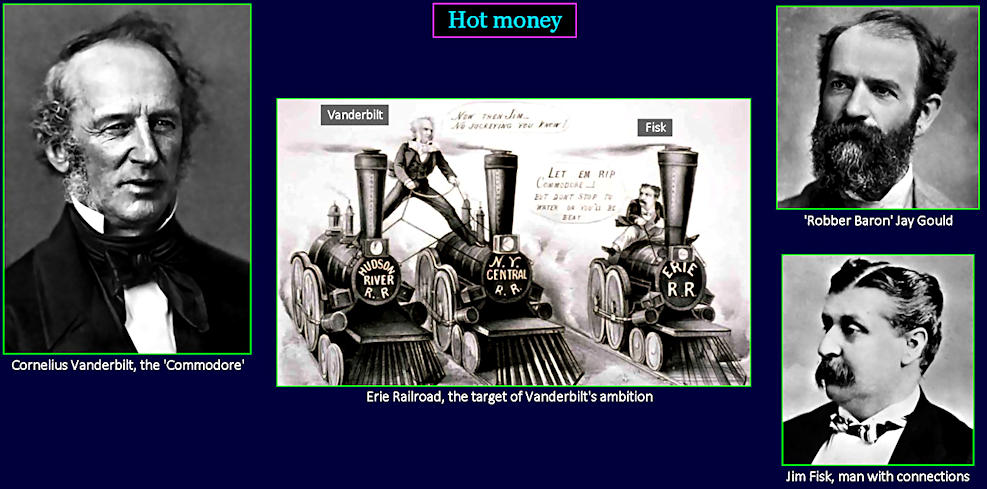
Clash of TitansThe Erie is the first big railroad to get into trouble, due to high construction costs and financial mismanagement, and it finally goes bankrupt. But like many failed corporations today, it doesn't just disappear. It gets reorganized. This makes it vulnerable to a takeover, and Cornelius Vanderbilt is just the man for a quick grab. He made his fortune monopolizing steamship operations in New York, before turning to railroads as his field of conquest. Vanderbilt gets his foot in the door by buying up and consolidating competing rail lines anchored in New York, and then he sets his sights on the Erie. His opponents are Jay Gould and his partner, Jim Fisk. Fists will fly. |
| ||||||||||||||||
| |||||||||
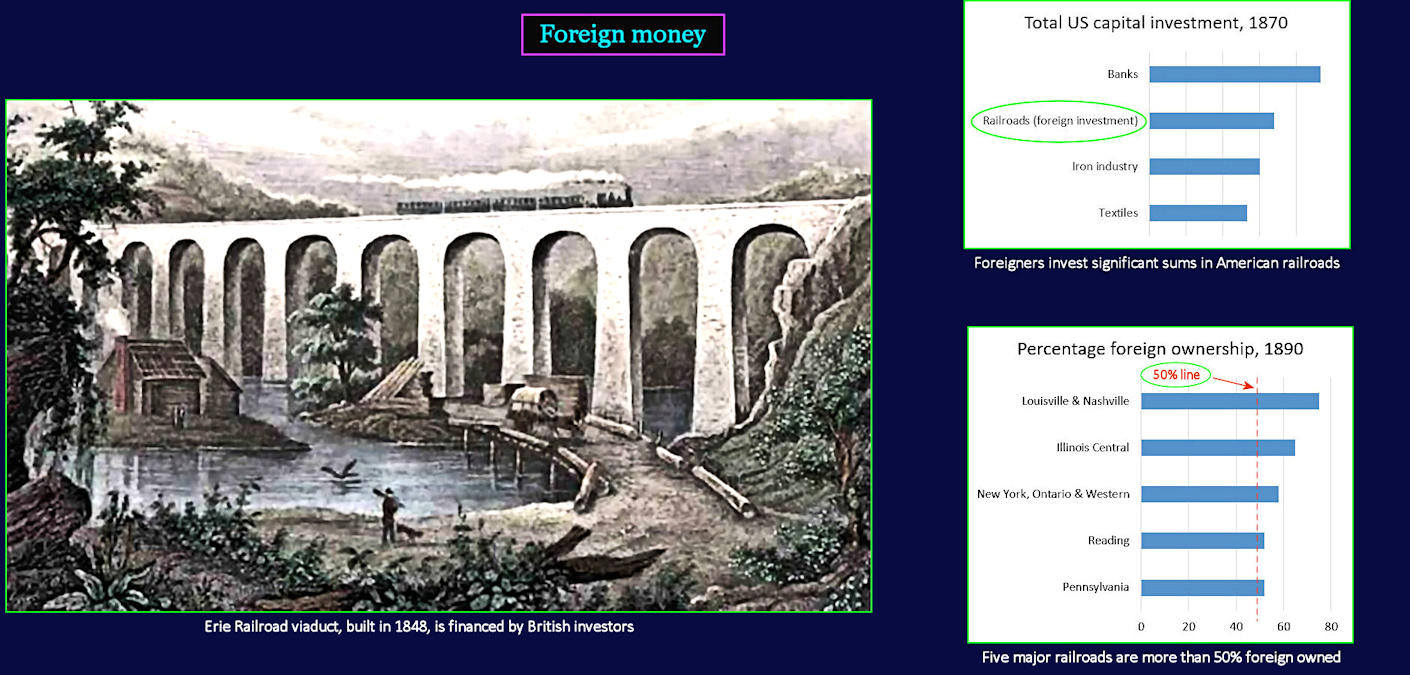
European Investors Also Attracted From the beginning, foreigners invest significant amounts in American railroads. This is partly because foreigners have far more investment capital available than Americans. The chart at top right shows that foreign investment in US railroads is greater than American investment in either the iron or textile business, and almost equal to the total capitalization of all US banks. Without this foreign capital, railroads might have struggled to find adequate funding. The lower chart shows major railroads, all in the East, which are majority-owned by foreigners. The vast majority of these are British, though substantial amounts are also invested by the Dutch and Germans. | |||||||||
| |||||||||
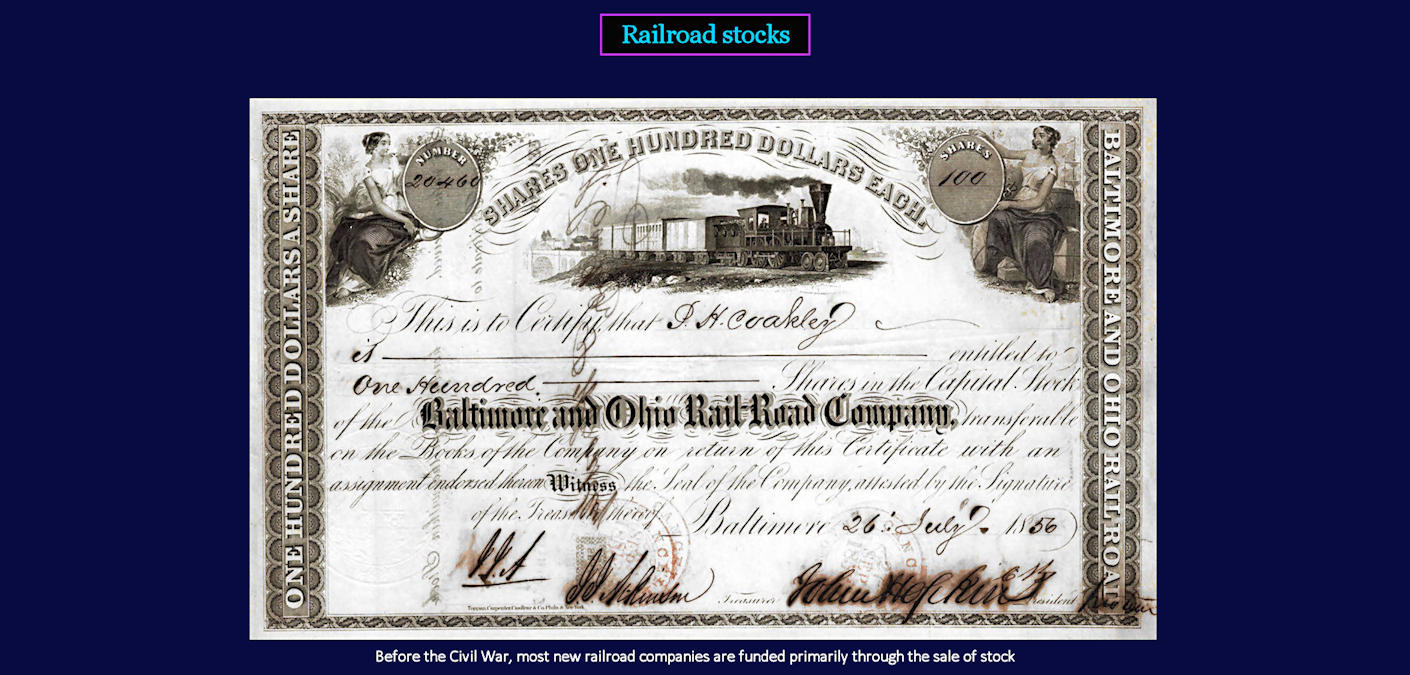
Hot Stocks The railroad industry is the first to require enormous up-front investment. Only the Lowell mill project is comparable. The normal way to finance a startup is by pooling the resources of a small number of initial investors, but this seldom raises capital on the scale required to launch a railroad. Such vast amounts can only be raised by the issue of company stock, offered publicly. In the beginning, most railroads are built in the East, where local commercial banks are often able to take large positions in initial stock offerings. But as railroads push further west into thinly-settled areas, and funding requirements grow, this method of funding often proves insufficient. Far from New York financiers, they have limited access to foreign investors. | |||||||||
| |||||||||
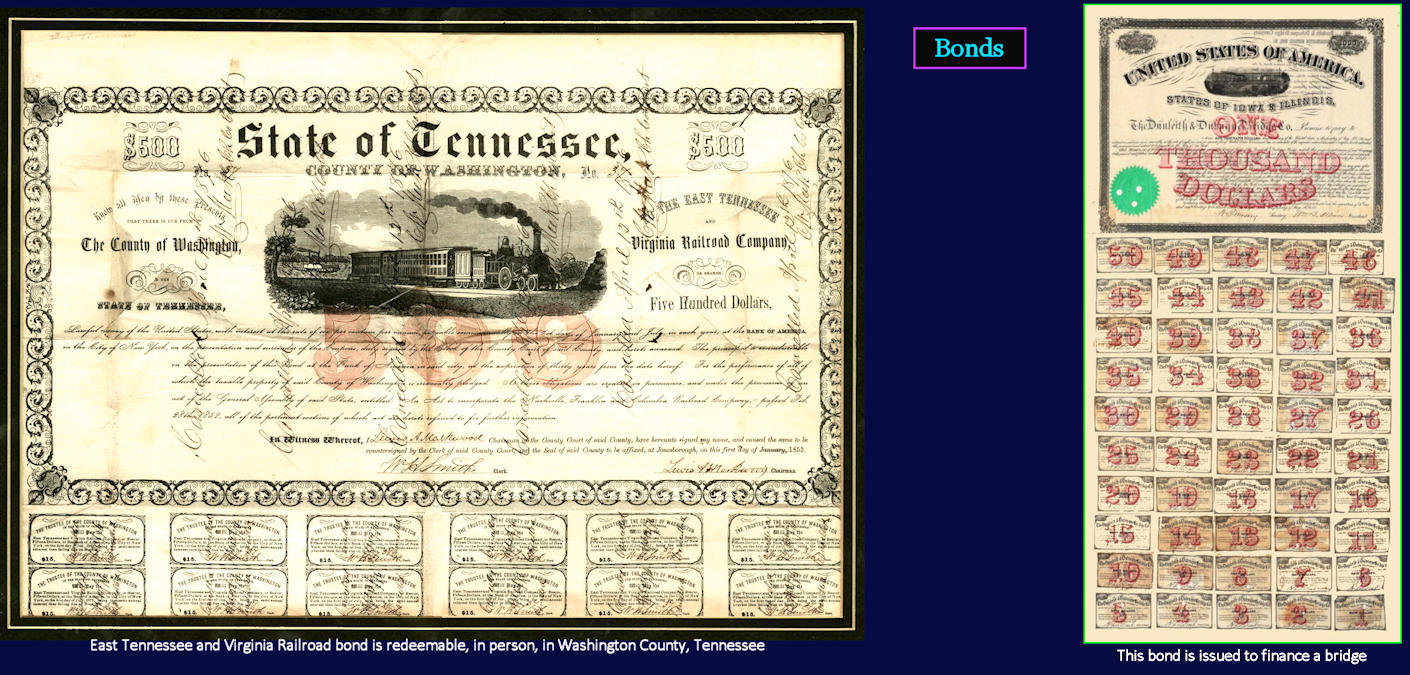
Borrowing From the Public After the Civil War, bonds become an increasingly common method for financing railroads, especially when capital requirements are large. Though bond and stock certificates look similar, there's an important difference. The money a company receives from the sale of its stock is never returned. Instead, the company pays out 7% to 10% of profits each year, divided among all stockholders. Bonds are much more like a loan to the company, but from the general public instead of a bank, which is repaid in full when the bond matures. Until that time, every bondholder receives periodic interest payments, averaging 5% per year. In the 1800s, many bonds come with coupons attached, which are punched or clipped by the bank, as each dividend is paid out. | |||||||||
| |||||||||
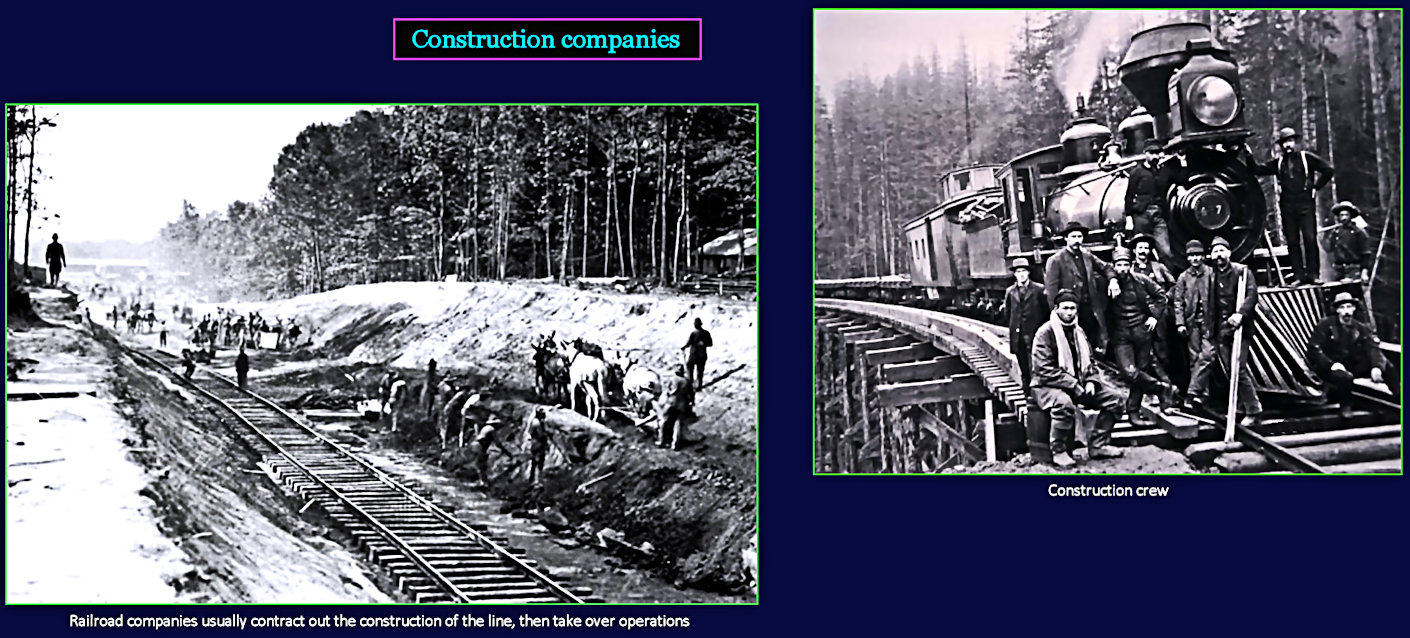
The Middlemen While railroad companies manage overall finances, the initial construction phase is usually handled by a separate construction company, which is often created specifically for this purpose. Since early expenses are so enormous, the construction company typically starts with just enough funding to get started. More money is needed as the line progresses, especially for occasional big-ticket items like bridges. These are often funded by separate bond issues. Unlike the main railroad bonds, which are secured using all company assets as collateral, a bridge bond uses the bridge itself as collateral. If the railroad is abandoned for any reason, the bridge often becomes essentially worthless, wiping out its bondholders. | |||||||||
| |||||||||
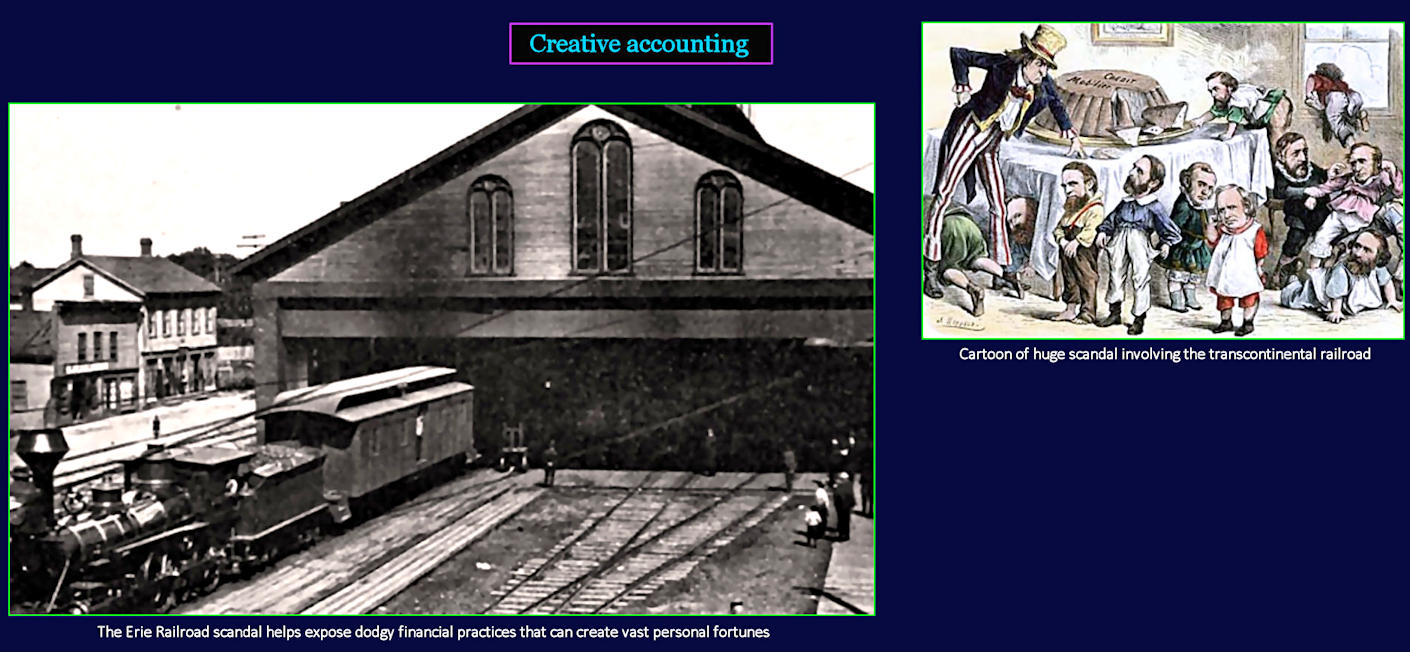
Cooking the Books By 1870, large railroad fortunes have been amassed through sometimes unscrupulous means. Railroad finances are often ramshackle affairs, stitching together a loosely defined tangle of relationships between investors, company stock, and assets pledged as collateral against bonds and temporary loans. The final arbiter of ownership is company stock. Whoever owns the stock controls the company. But company officers and managers are almost always also stock-owners, with extraordinary discretion to approve additional stock issues. In some notorious cases, managers grant themselves huge blocks of stock at little cost. Such arrangements help fuel the railroad mania, but also set the stage for some spectacular looming bankruptcies. | |||||||||