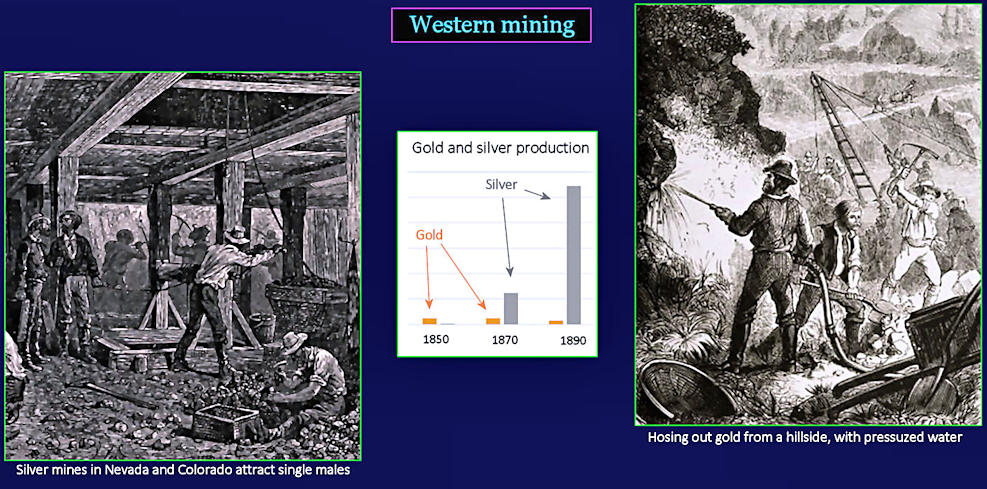
Striking it RichMining towns are altogether different from farming communities. Filled with mostly unmarried men and their prostitutes, these rugged towns are pretty miserable affairs. Main street is mud, and lined with saloons. Nonetheless, silver production explodes. New mining claims are being filed every week, and mining companies are suddenly issuing stock. Gold is found in some of the same areas, extending down into southern California. Prospectors are also combing the hills for other minerals, like lead, borax and copper. Mining leads to the settlement of western land, far from any railroad, which is seemingly unsuited to settlement. It's a rough life. |
| ||||||||||||||||
| |||||||||
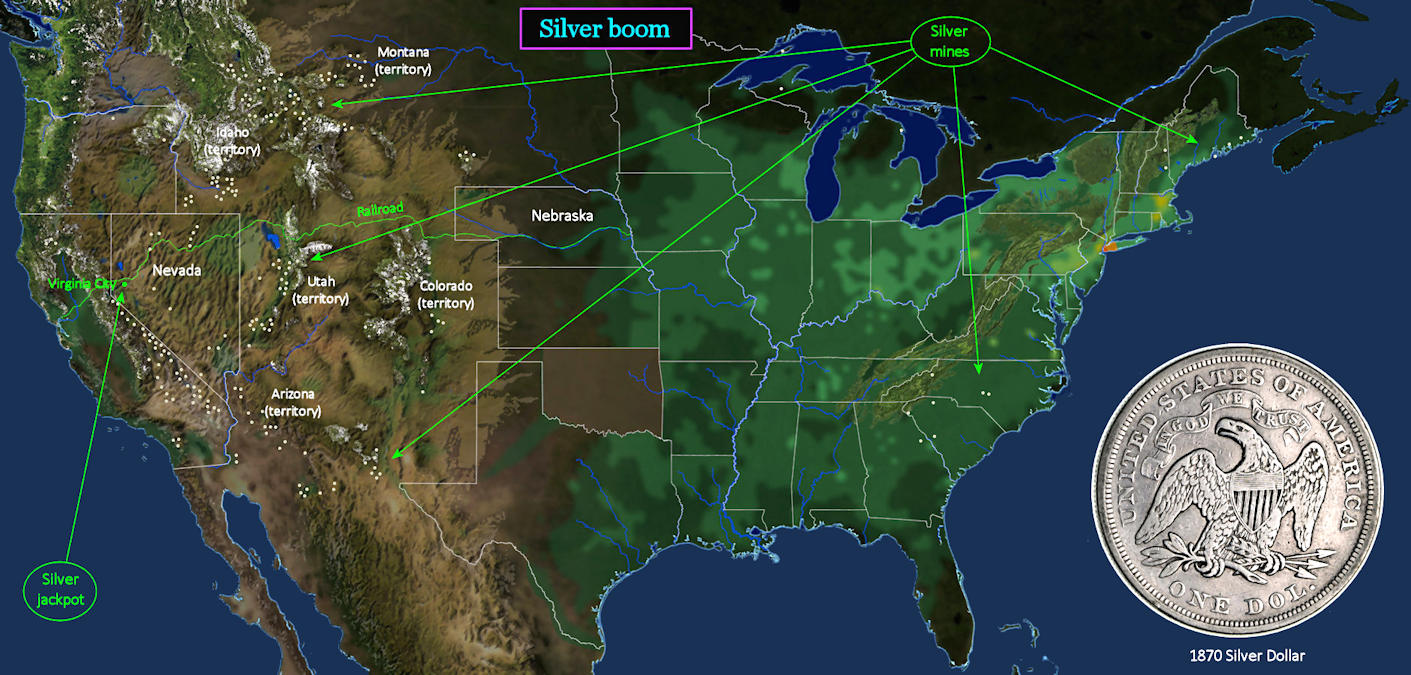
Silver Now Dominates This map shows silver strikes by 1870. The amazing thing about the pattern of dots is the fact that only a single railroad exists anywhere near these western sites. The transcontinental railroad runs through the largest siler-producing deposit at Virginia City, but nowhere else west of Nebraska. There aren't even any roads, other than settler trails. Precious metals are found mostly in mountainous areas, which are particularly difficult to reach. Most of the locations are outside of existing state borders, where Indians and buffalo are the only neighbors. Yet miners somehow manage to roam the mountains in every direction, hoping to strike it rich. | |||||||||
| |||||||||
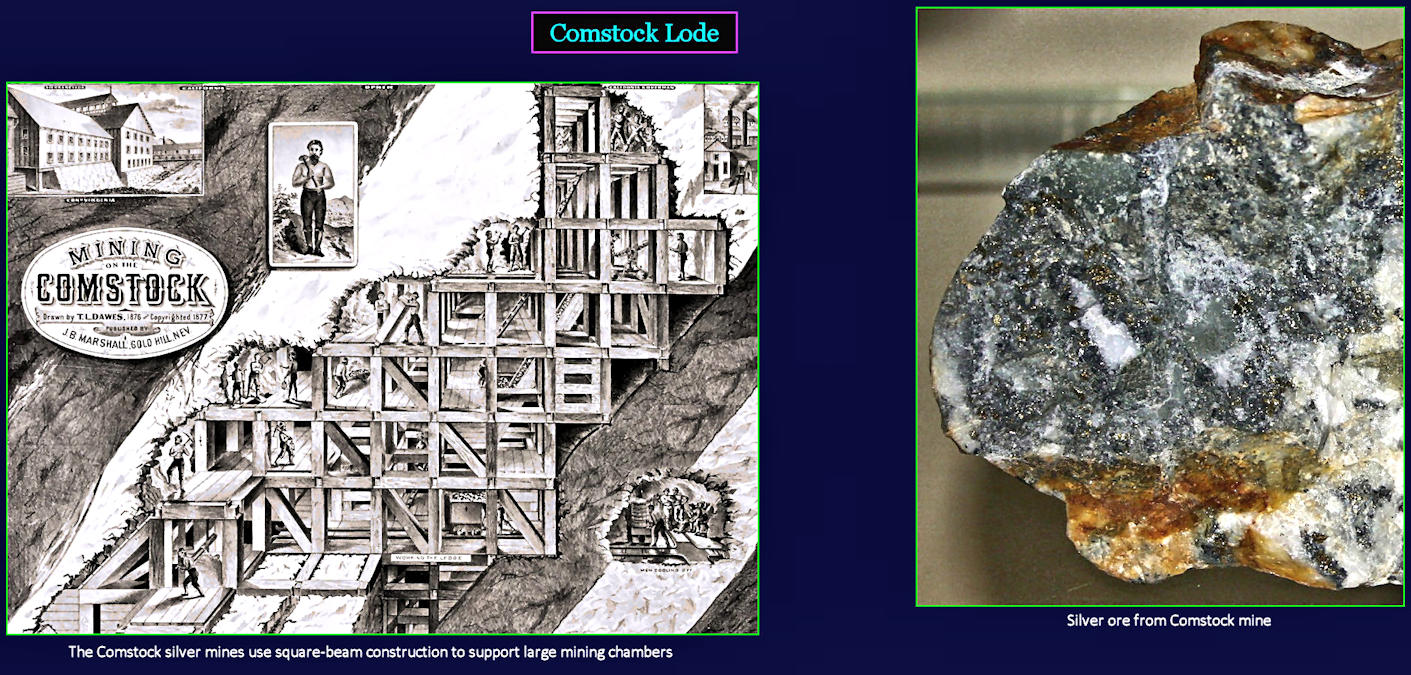
The Big One The silver bonanza in the Nevada hills is stupendous, involving many companies and mining operations. The drawing at left is made in 1876, just as production from this area is peaking, at $35 million a year. Note the well-developed company buildings along the top of the drawing. Immense fortunes have already been drawn from the many mine shafts that dot the hillside, sloping down to the river below. Population peaks at 11,000 in 1410, but then plummets down to less than 1,000 by 1930. This cycle of boom and bust is typical of many mining sites scattered across the West. Most are now just ghost towns. Then, as now, extractive industries simply shut down and move on after exhausting a site. | |||||||||
| |||||||||
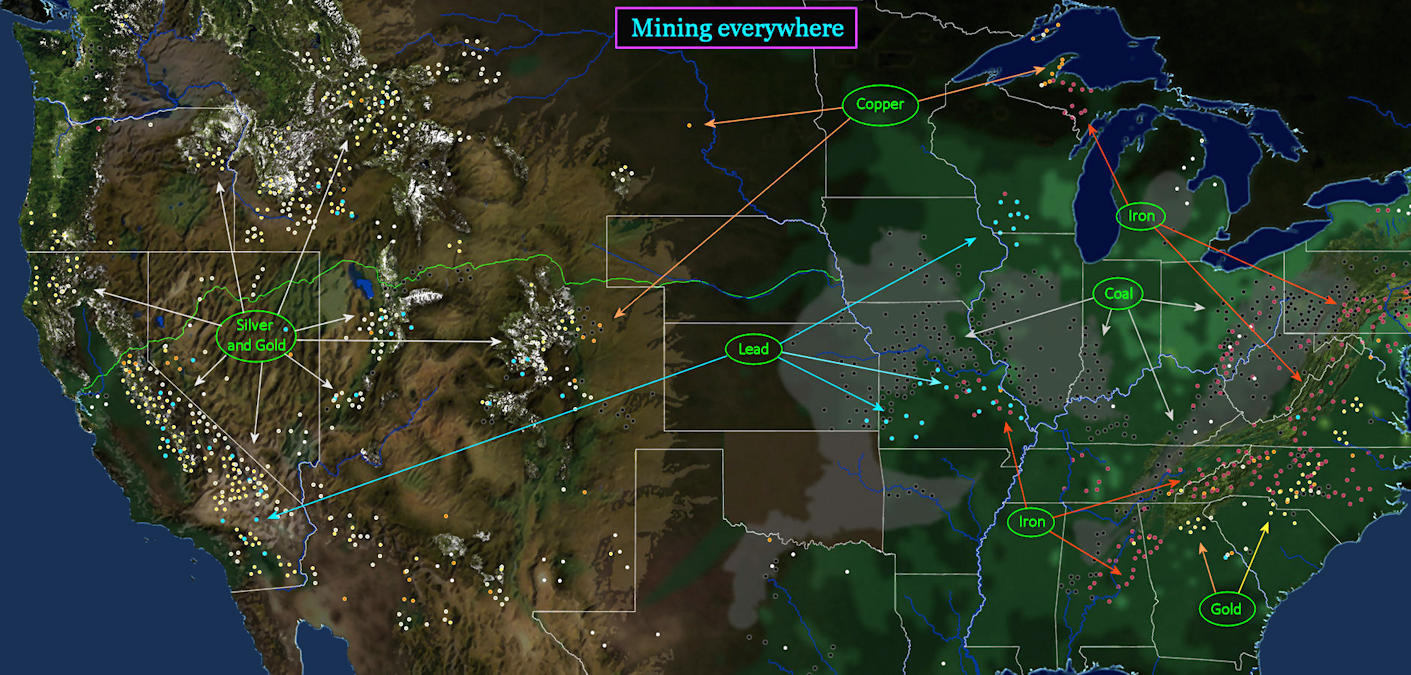
Mostly Metals This map summarizes mining activity in 1870, when coal and iron are the main products in the East. Western states focus primarily on silver and gold, while metals like copper and lead are being extracted in widely scattered locations. Somewhat surprisingly, gold is also being mined in the upland South, and will soon be discovered in South Dakota. Mining operations at this time are less than 10% of total manufacturing activity. The cluster of mining activity in the northern Great Lakes region, however, will soon grow to fuel a burst of increased industrial activity during the coming steel boom. | |||||||||
| |||||||||
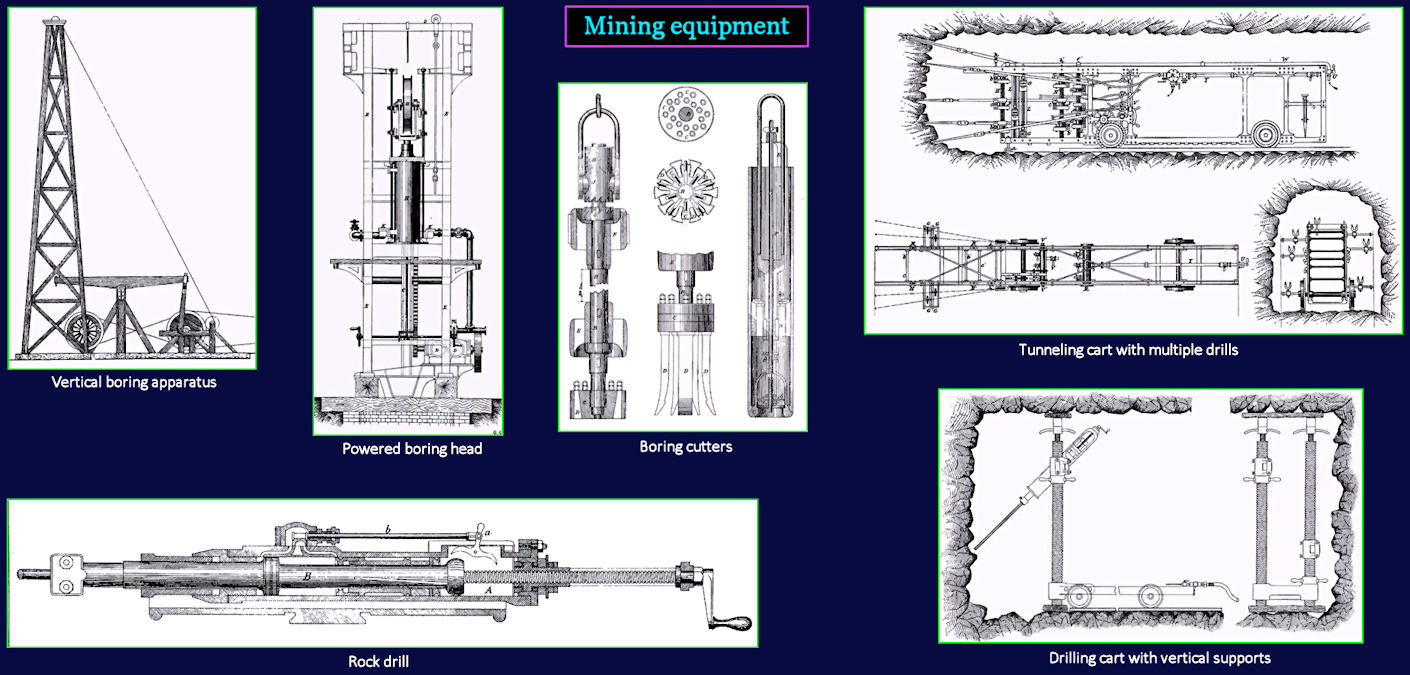
Industrial Tools Mining is different from manufacturing, in that equipment has to be frequently moved about. Ingenuity is required to design equipment that will perform efficiently when working on solid rock. Some are powered by steam engines in nearby structures. Smaller equipment is moved about on carts, and is typically pneumatically powered. This requires a steam-powered compressor to deliver pressurized air to the tool, via long hoses. A variety of odd-looking tools are devised to handle particular types of deposits. For the first time, mining is more than a slow, laborious manual process, but it's still hard work. | |||||||||
| |||||||||
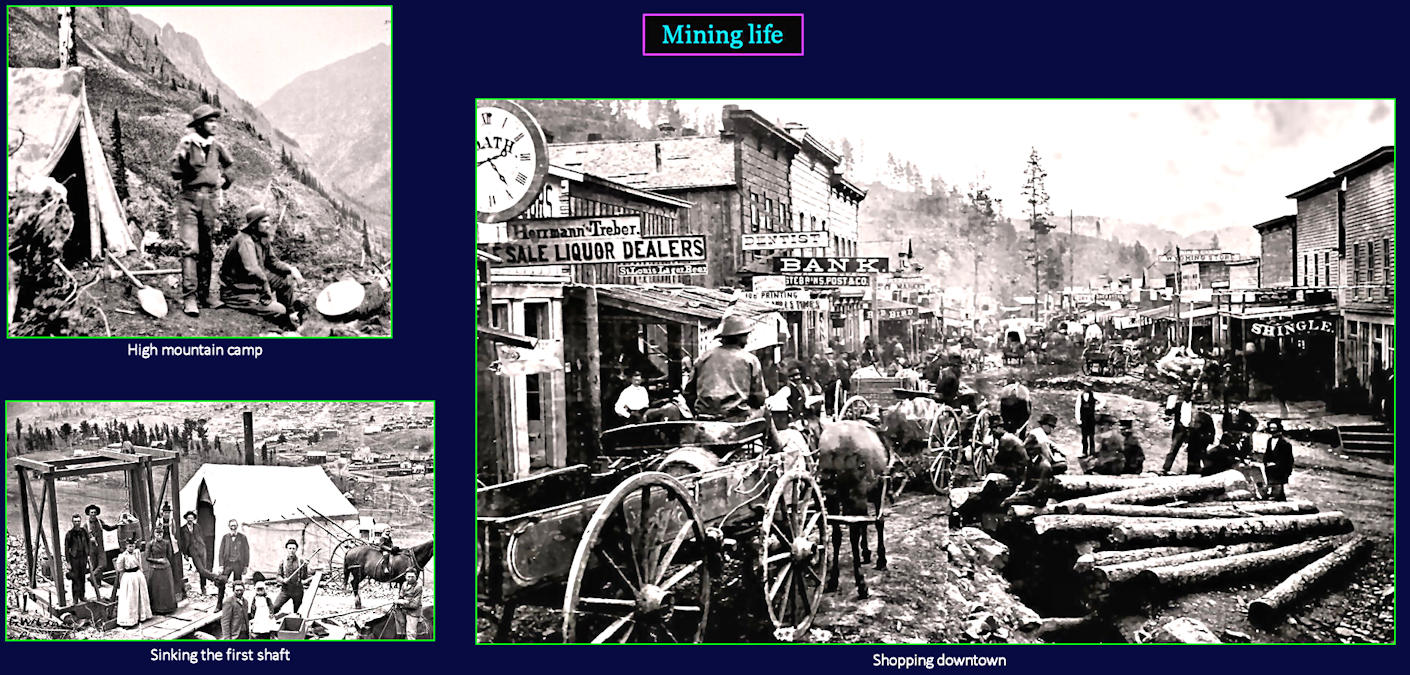
Down and Dirty The miner's life is most pure when still prospecting for a site, with nothing but a canvas tent, a mule, and an assortment of picks and shovels. When the site is finally chosen, and the first shaft sunk, it's time to celebrate. Downtown is a mess. | |||||||||