| |
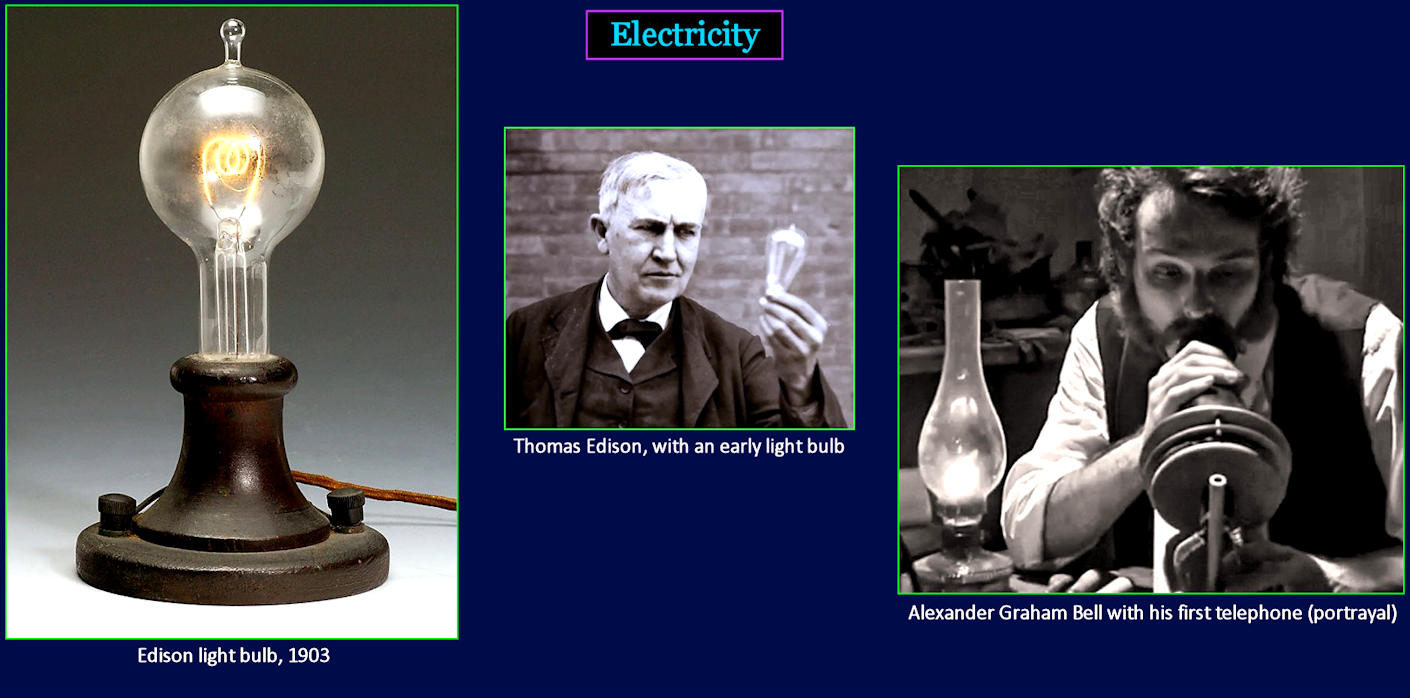
Let There be Light Of all the new electrical devices that begin appearing in the 1410s, the ones most familiar today are the light bulb and the telephone. The magic is all related to the original discoveries of Englishman Michael Faraday. Electric batteries have been around since 1800, mostly as a laboratory curiosity, but Faraday somehow discovers that electricity can also be created simply by passing a loop of wire between the poles of an ordinary magnet. Nothing could be more astonishing. |
| |||||||||
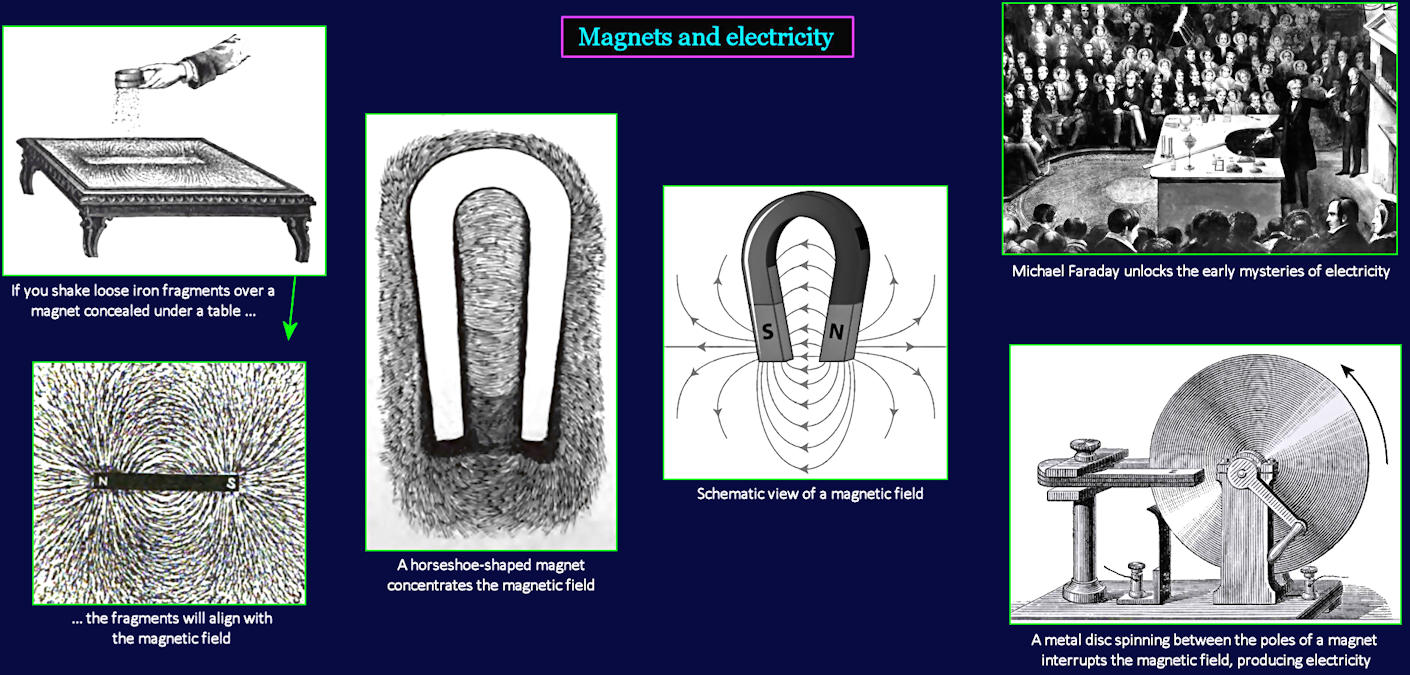
Mystical Properties Electricity is just plain spooky. The energized field surrounding a magnet is not normally visible, but you can 'view' it by placing the magnet beneath a thin surface, and then sprinkling loose iron fragments on top (top left). The fragments will all align with the magnetic field surrounding the magnet, making its shape visible (bottom left). With a horseshoe-shaped magnet, the field is concentrated near the poles of the magnet (center). For reasons that seem to defy understanding, if you momentarily interrupt the magnetic field by passing something made of metal between the poles of the magnet, you somehow generate electricity (lower right). | |||||||||
| |||||||||
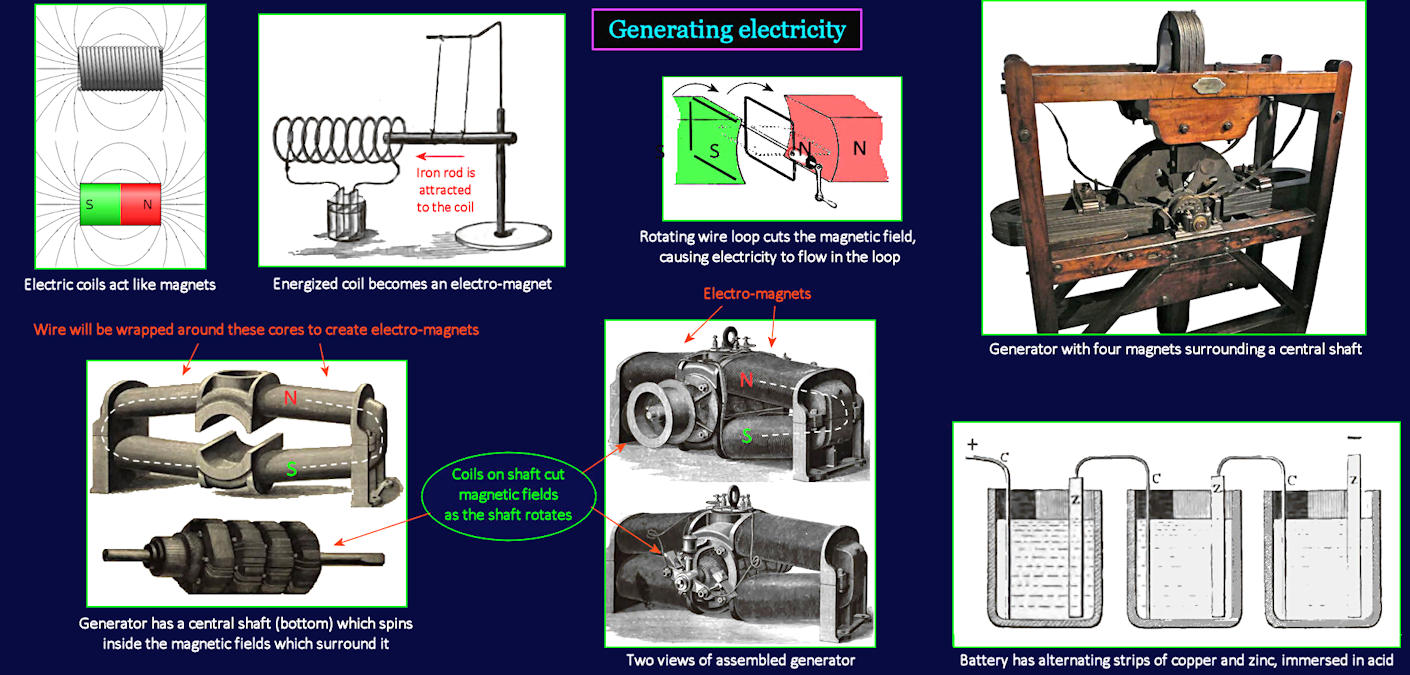
Unlikely Relationship One of the strangest features of electricity is its ability to turn a coil of wire into a magnet (top left). If an electric current is applied to a coil from a battery, the coil will attract other metal objects, just like a magnet (top middle left). Stranger still, when a loop of wire is rotated inside a magnetic field, it produces electricity by momentarily interrupting the field (top center). Generators are devices that magically produce electricity just by spinning a central shaft inside an array of magnets. The generator at top right uses four magnets, arrayed in a circular pattern around the spinning central disk, which contains coils. The other way to make electricity is with a battery, made by wiring together strips of different metals, suspended in an acid bath (bottom right). | |||||||||
| |||||||||
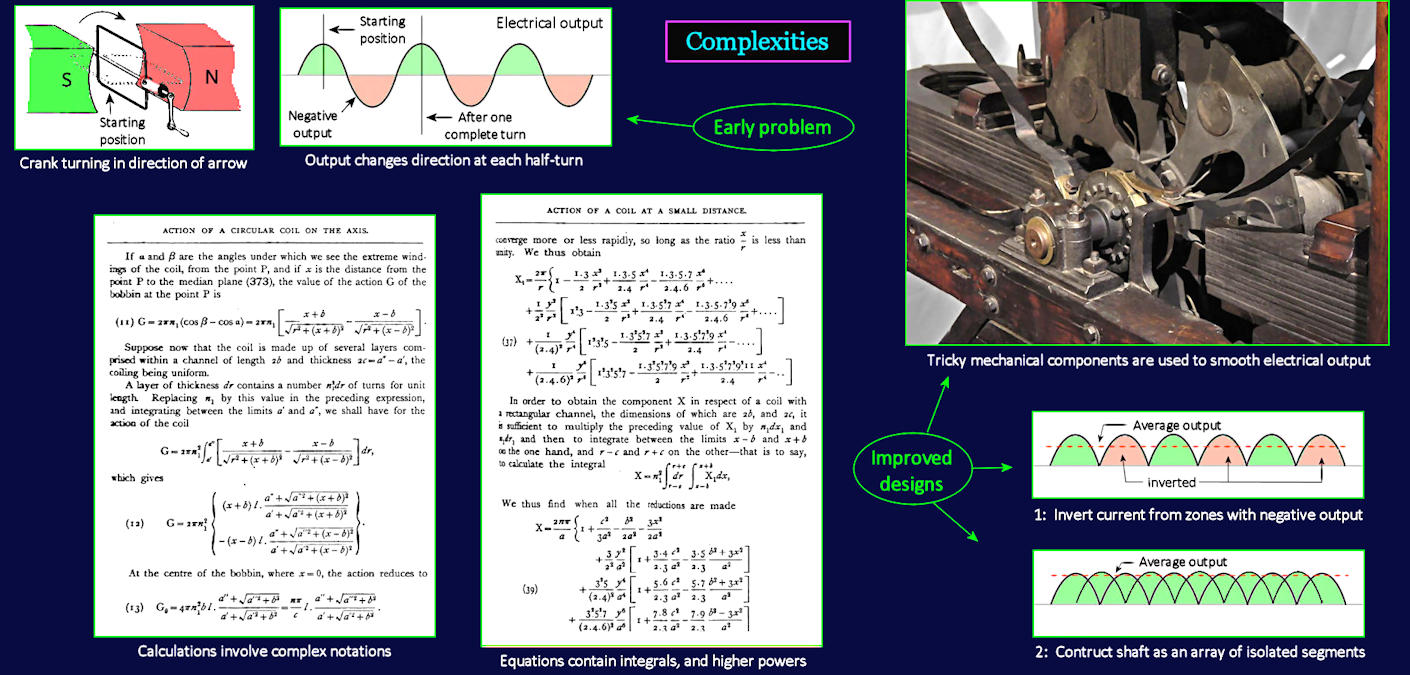
Higher Math It's not important to understand anything shown above. The main point is that obtaining a relatively smooth electrical output involves complex math, and some fairly complicated mechanical assemblies (top right). It takes 50 years to move from the earliest working electrical generators to the kind of equipment that can provide reliable power for an entire downtown area. | |||||||||
| |||||||||
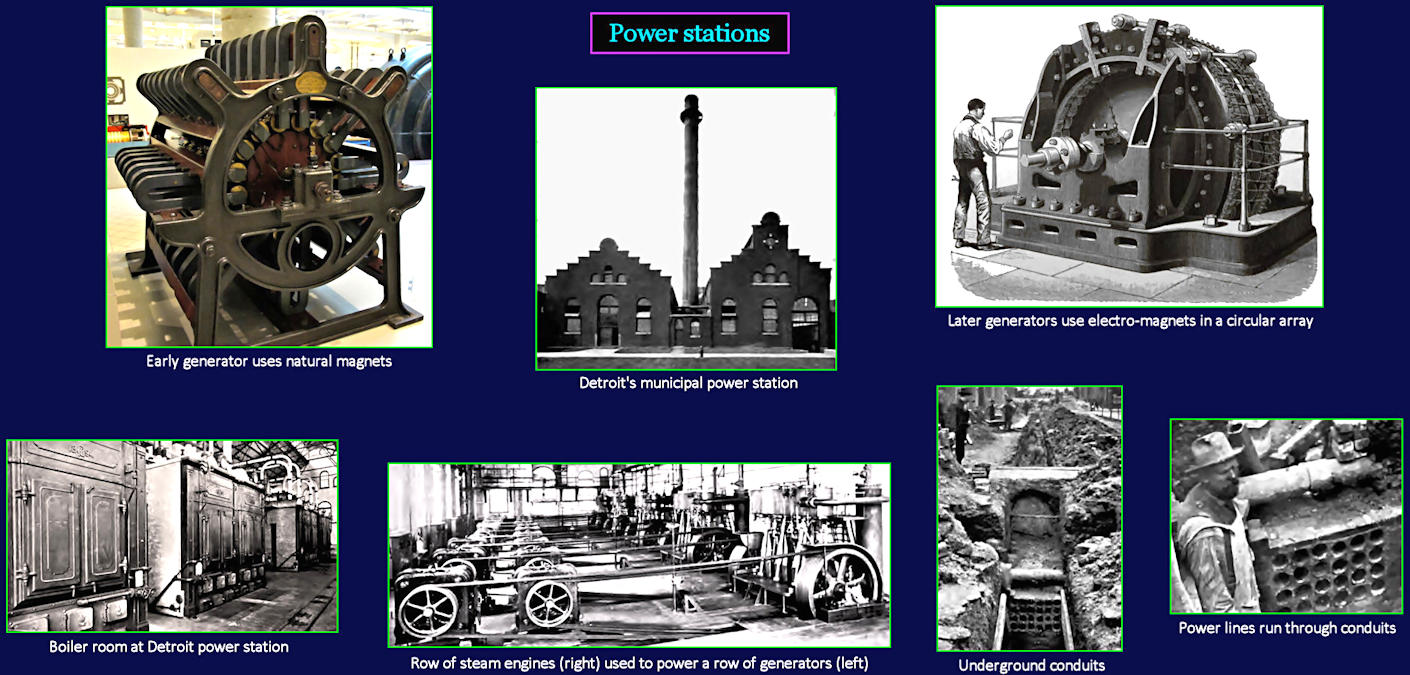
Delivery System As American cities grow larger, they feel an increasing need for street lighting at night. The first streetlamps burn gas created from coal, beginning in the early 1800s. By 1870, the Baltimore Gas Light Company has 15,000 customers. But gas lights have to be lit each night, and extinguished each morning. As the design of electric generators matures, cities begin installing municipal power stations (top center) to generate electricity for a new kind of streetlight, called an arc lamp. The light is produced by an electric spark (or arc) jumping between two rods of pure carbon. The electricity is produced by a long row of generators, powered by a matching row of steam engines (bottom center), and transmitted to the lamps by underground cables (lower right). | |||||||||
| |||||||||
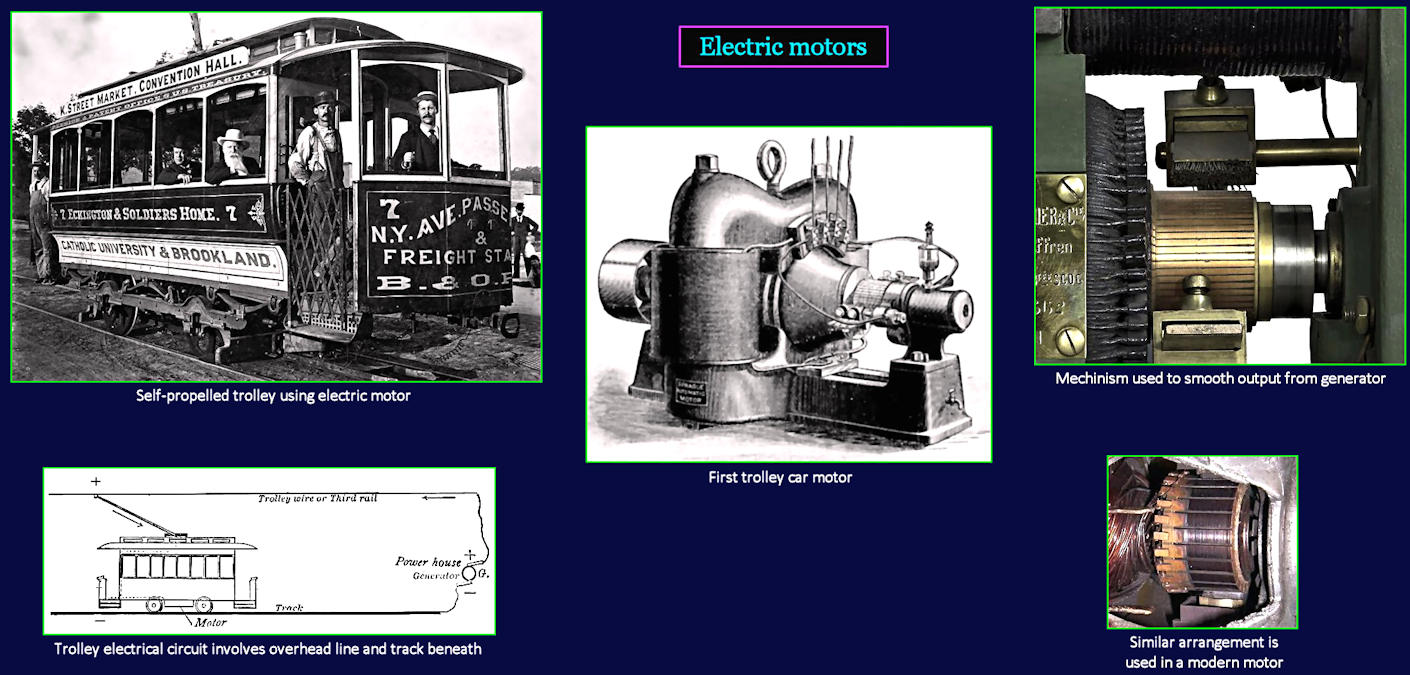
Handy Portable Power Once the generator is invented, it doesn't take long to discover another astonishing relationship between electricity and magnetism. It's crazy enough that you can use electricity to make magnetism, and magnetism to make electricity. But you can also make an electric motor out of a generator, or the reverse, with very little change. In a generator, you spin the shaft-mounted coils to extract electricity, while in the motor this is reversed. You supply electricity to the shaft-mounted coils, and this causes the shaft to spin. Note the similarity between the pictures at top and bottom right. The first commercial electric motor (top center) is used to power urban trollies. | |||||||||