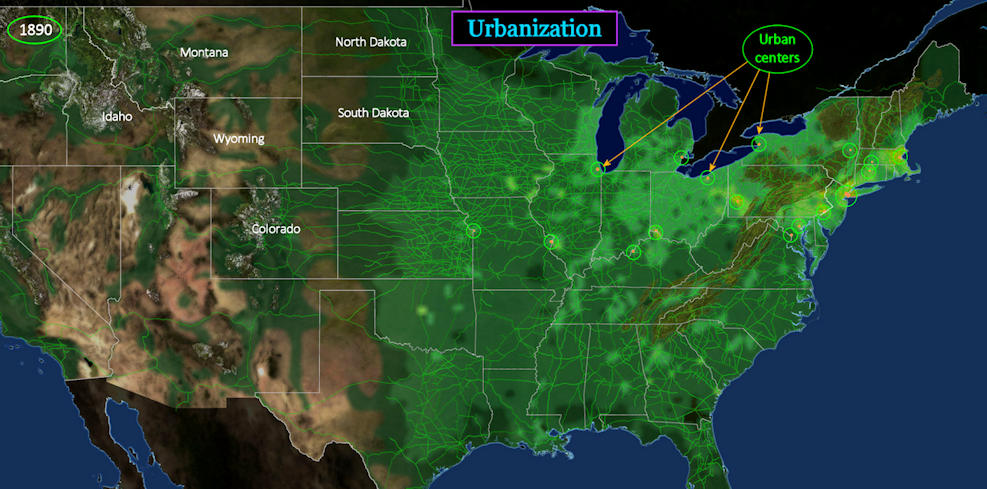
Urban livingThis continues the 60-year-old trend of railroads moving west into the latest frontier zone. But somehow, the old magic isn't taking hold in the same way. Cities still spring up at rail hubs, but western settlement remains thin. Meanwhile, cities are growing bigger in a hurry, creating densely-packed urban centers bursting with every business imaginable. Suburban areas are spreading into the outskirts, connected by trolley lines. Oil has been discovered, first in Pennsylvania and then gradually down to Kentucky. At first, the only use is for lighting, as kerosene begins to replace whale oil in lamps. But gasoline-powered engines are now a possibility. |
| ||||||||||||||||
| |||||||||
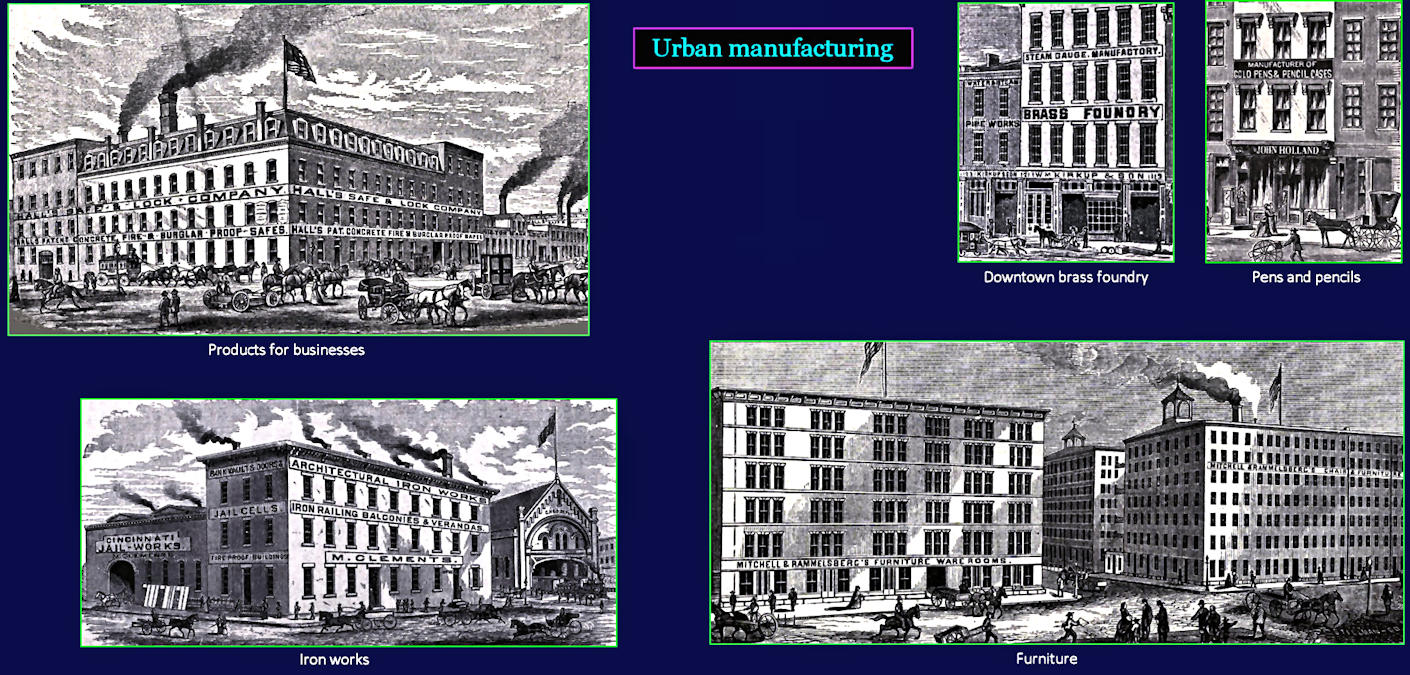
Downtown Factories When we think of major urban areas today, what usually comes to mind are things like restaurants, bars, and (especially) shopping, but certainly not industrial factories. Back in 1890, the newly-emerging urban zones feel very different. There are plenty of hotels and storefronts, but the major business of cities is manufacturing. Factories are mixed in with retail establishments all up and down the broad avenues and smaller cross streets. Instead of being relegated to suburban industrial parks, manufacturing enterprises are integrated into the downtown cityscape. Many street-level businesses offer items that are manufactured on the floors above. Smokestacks are evident everywhere, as are horse-drawn conveyances of every sort. | |||||||||
| |||||||||
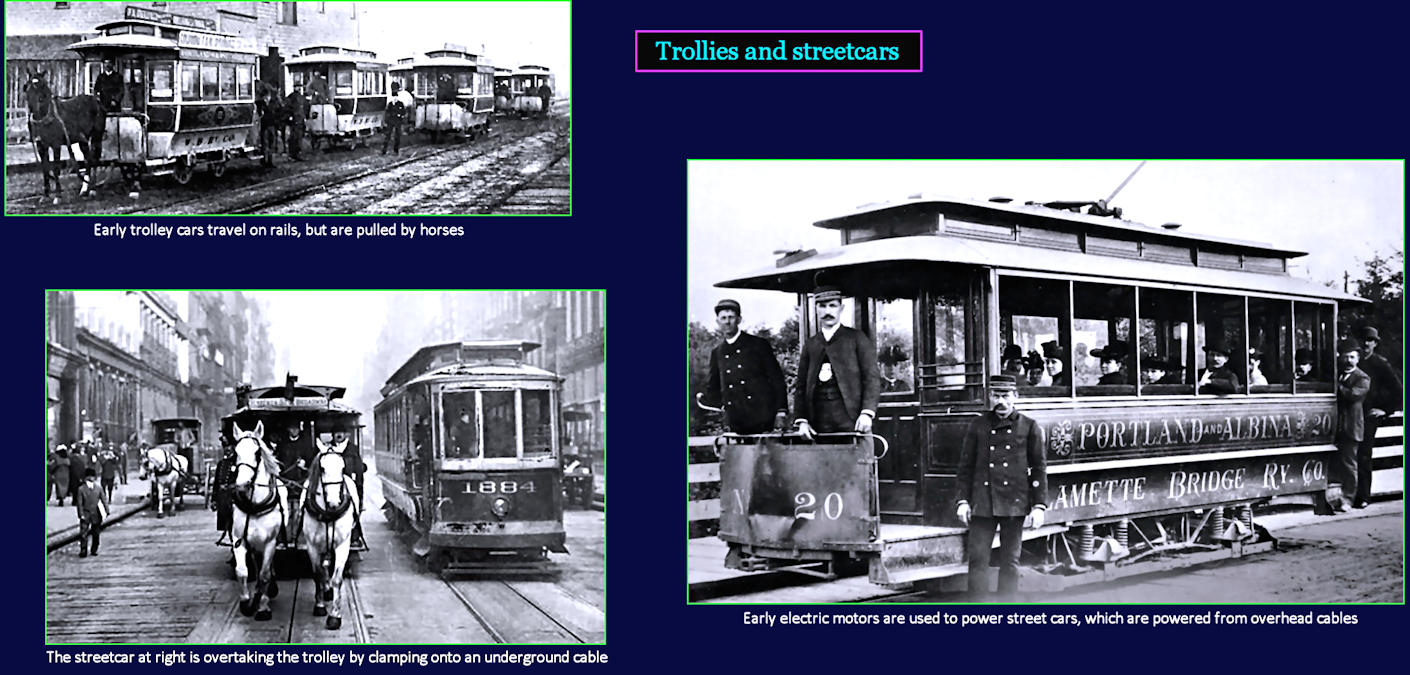
Getting Around Town Railroads are originally built to span long distances at high speed, connecting distant points. But as cities grow in size, there's a growing need to develop smaller urban systems to bring people downtown from surrounding locations. At first, horse-drawn trollies are adapted to run on rails, which provides a much smoother ride. But people soon begin to look for ways to introduce mechanical power. One solution is to run an underground cable between the rails (bottom left). The cable is driven by a steam engine at one end, while the streetcars have mechanisms to grab or release the cable. An alternative solution is to use large electric motors, which are just beginning to appear, but require a system of overhead cables (right). | |||||||||
| |||||||||
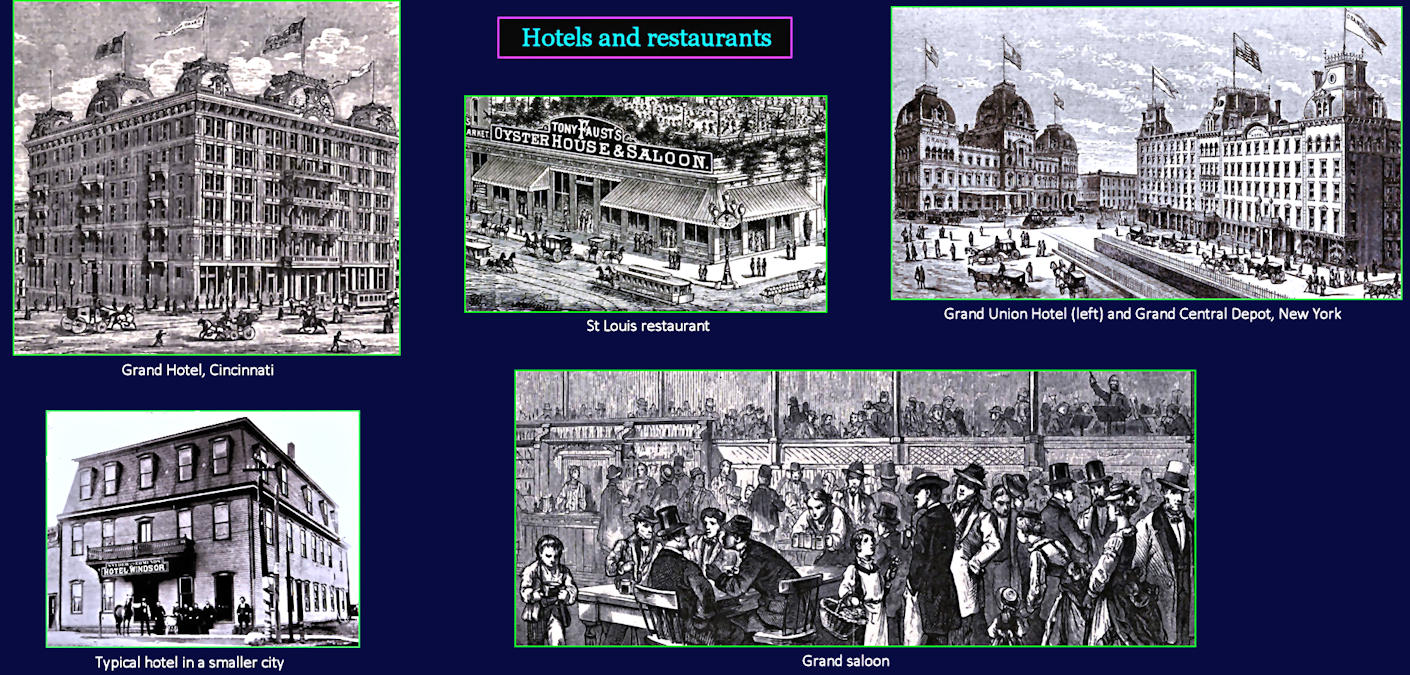
Big and Fancy The 'grand' style is on full display at big city hotels, which are sometimes simply called the 'Grand Hotel.' Huge flags are prominent, flying from fancy turreted rooflines. Railroad stations, called depots, often adopt the same over-the-top styling. Restaurants and saloons are also part of this fabulous world, where ordinary citizens can feel like royalty for a few hours. Of course you have to dress the part, but that's easier than ever before. Ready-made, factory-produced clothing is available for a fraction of what custom-tailored clothes used to cost, just a decade earlier. | |||||||||
| |||||||||
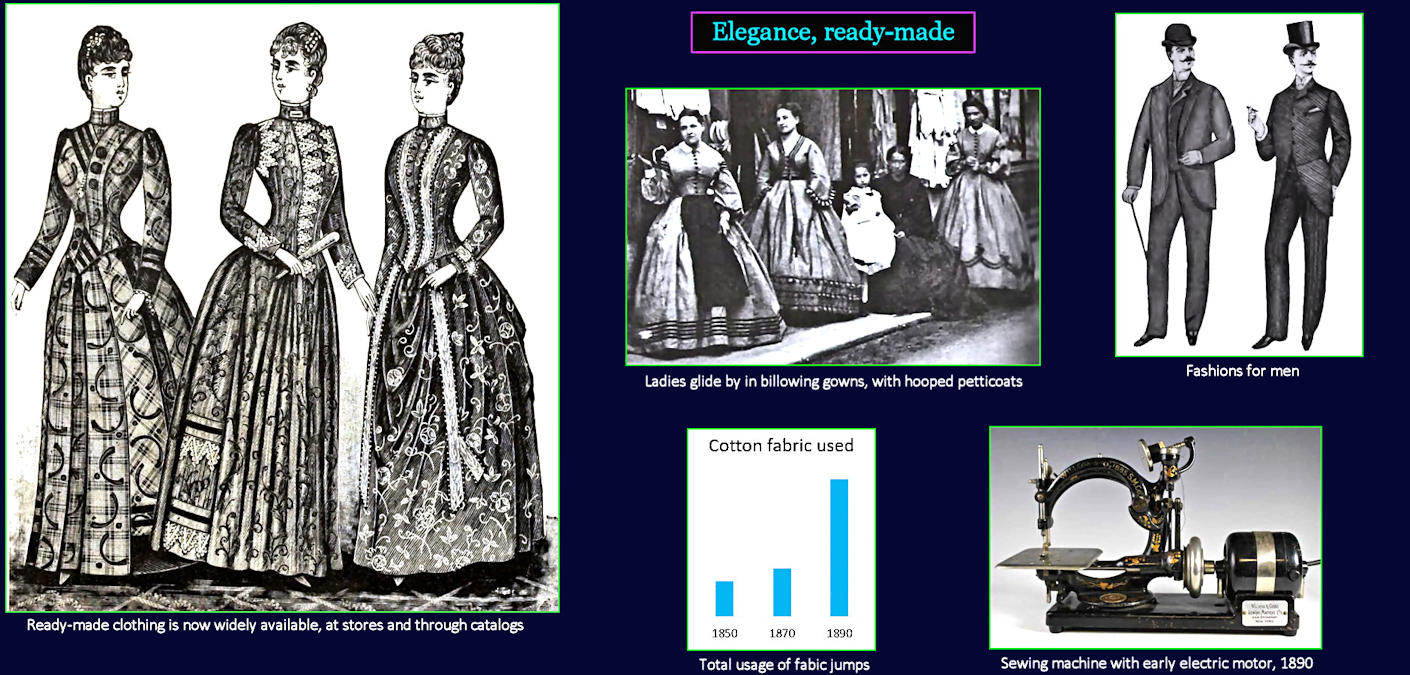
Clothing Grows Up Elegant fashions become more prevalent as America becomes wealthier. Helping this along is the growing trend toward inexpensive ready-made clothing, which is no longer limited to simple working-class wear. This is partly due to better sewing machines, but also to the improved quality of fabrics coming out of American mills. Lace-making equipment is now capable of creating amazingly intricate patterns. These are originally intended for curtains, but also begin appearing as exotic trim on clothing. At the same time, new automatic knitting equipment is turning out hosiery and undergarments on a large scale. By this time, 60% of clothing is ready-made, although tailored adjustments might still be required to achieve a perfect fit. | |||||||||
| |||||||||
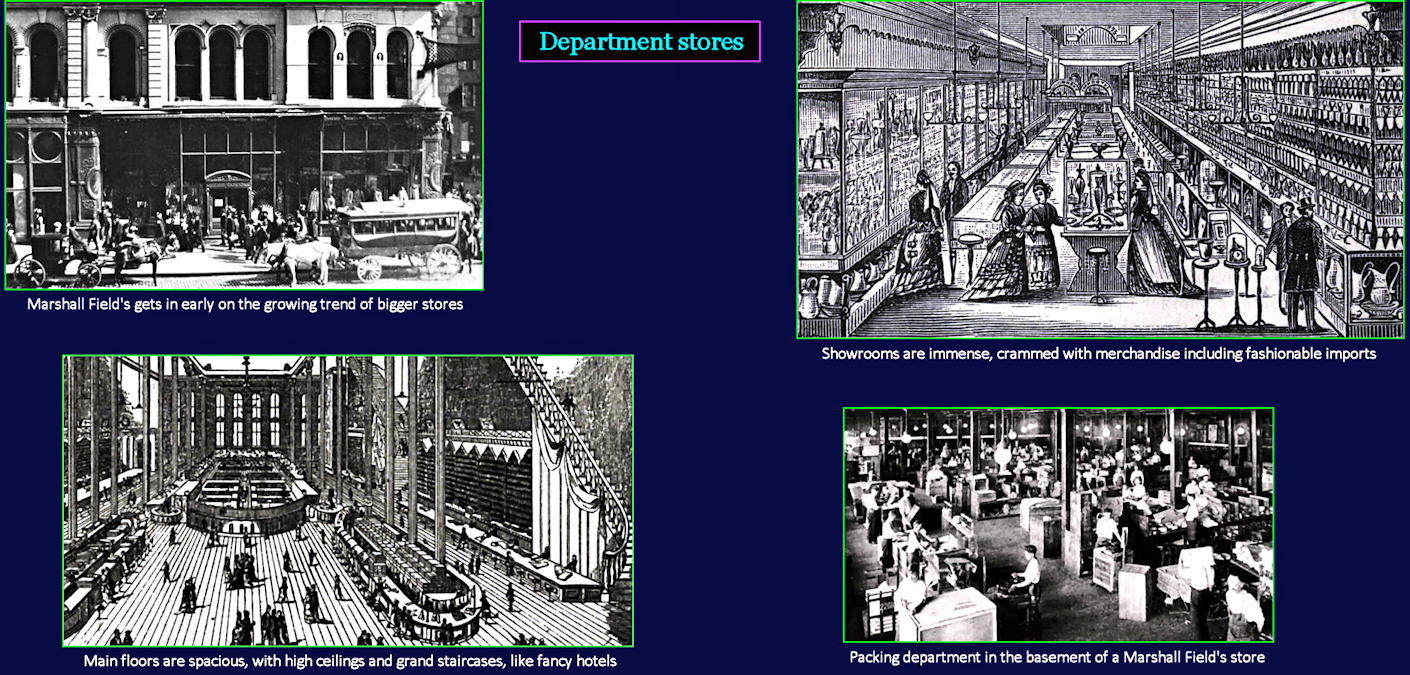
First Big-box Stores Posh department stores in downtown centers first appear in Paris and London, but America quickly follows suit. Marshall Field opens his new mega-store in Chicago in 1873 (top left), after his original store is destroyed in the Great Chicago Fire. He introduces the practice of offering unconditional refunds, and instructs his staff not to push goods on uninterested customers. He originates the phrase 'The customer is always right,' and attracts fashion-conscious customers with a large inventory of imported goods. But his wholesale business soon outstrips his retail store, bringing in five times the revenue and requiring a separate building. The scenes above depict department stores in 1875, as this new trend in retail is just getting started. | |||||||||