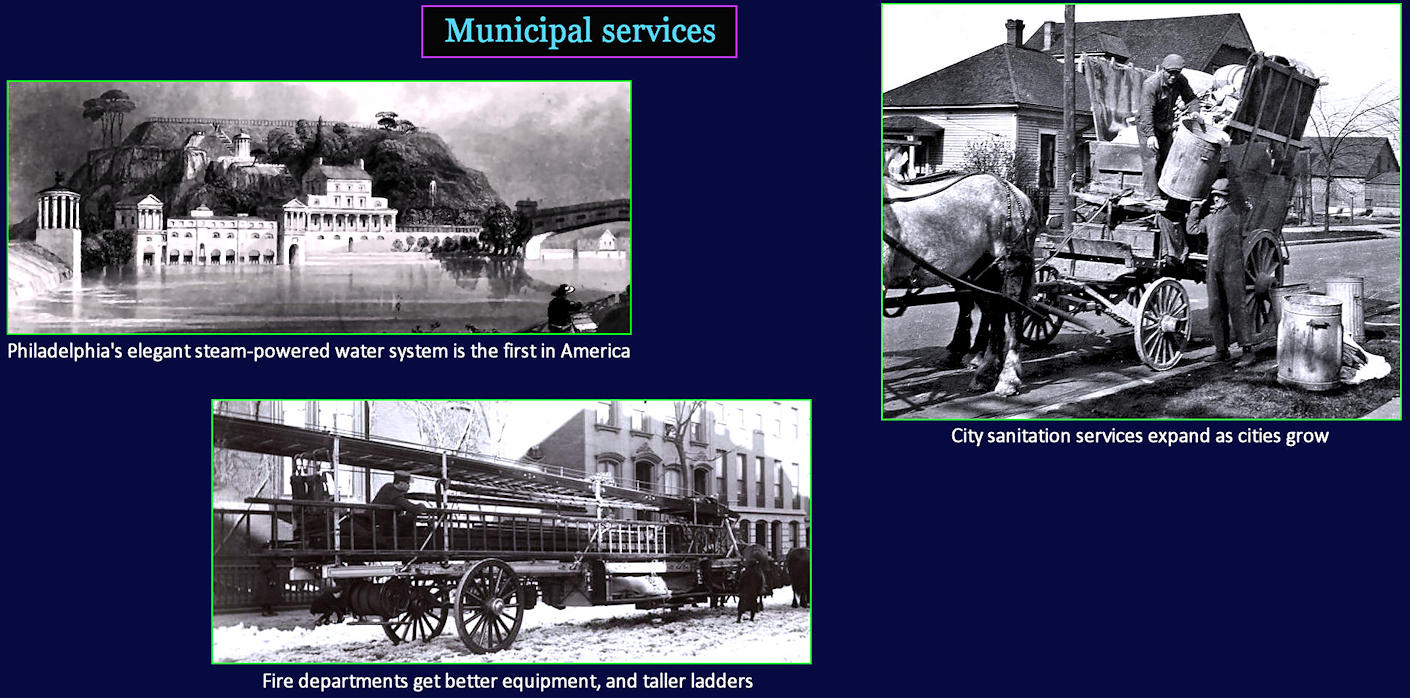
Public SystemsDrilling wells everywhere is not a great option, so cities look for ways to supply pressurized city water. Philadelphia is the first city to build a powered water system, which uses steam engines to pump water up from the river. In addition to such 'water works,' cities also may also offer connections to 'gas works' located outside of town. These contain large arrays of ovens, which burn coal to extract the coal-gas widely used for city street lighting. City fire departments are replacing private fire companies, using water from new city hydrants. Most cities also have public hospitals, and some larger cities are beginning to install city-wide sewer systems. |
| ||||||||||||||||
| |||||||||
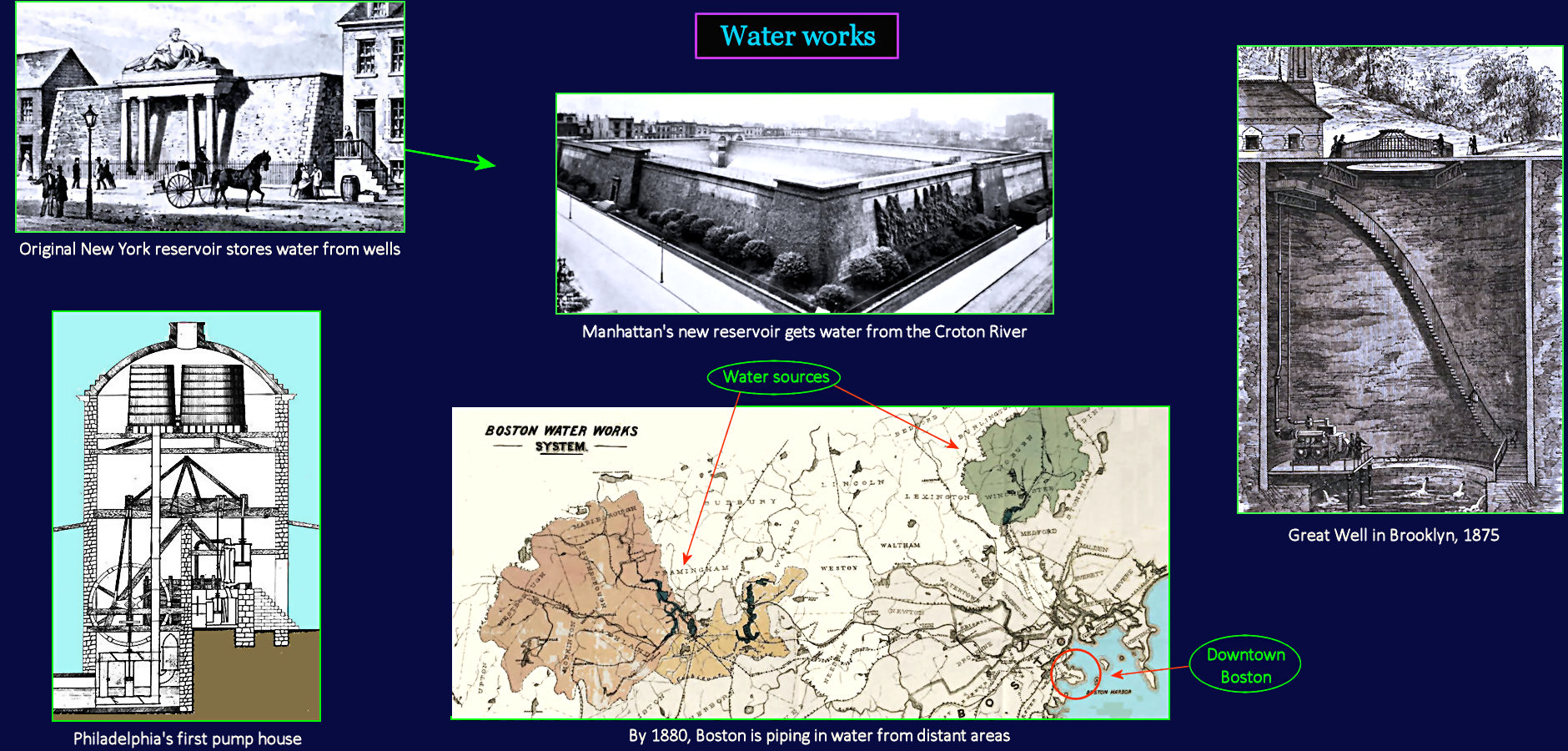
Water from a Tap To create pressure, water systems store water in tanks above street level, so it flows down by gravity. The original tanks and pump at Philadelphia are shown at lower left. New York originally stores well water in a stone reservoir located downtown, near City Hall (top left). This is replaced in 1842 with a much larger stone reservoir (top center), near the current site of the NY Public Library, which is fed from a river 40 miles away. Brooklyn gets water from a giant well in Prospect Park (top right), pumped up by a steam engine. Boston uses a gravity system to feed from surrounding reservoirs on higher ground (bottom center). By 1890, America has 25,000 miles of water mains, in cities from Maine to California. | |||||||||
| |||||||||
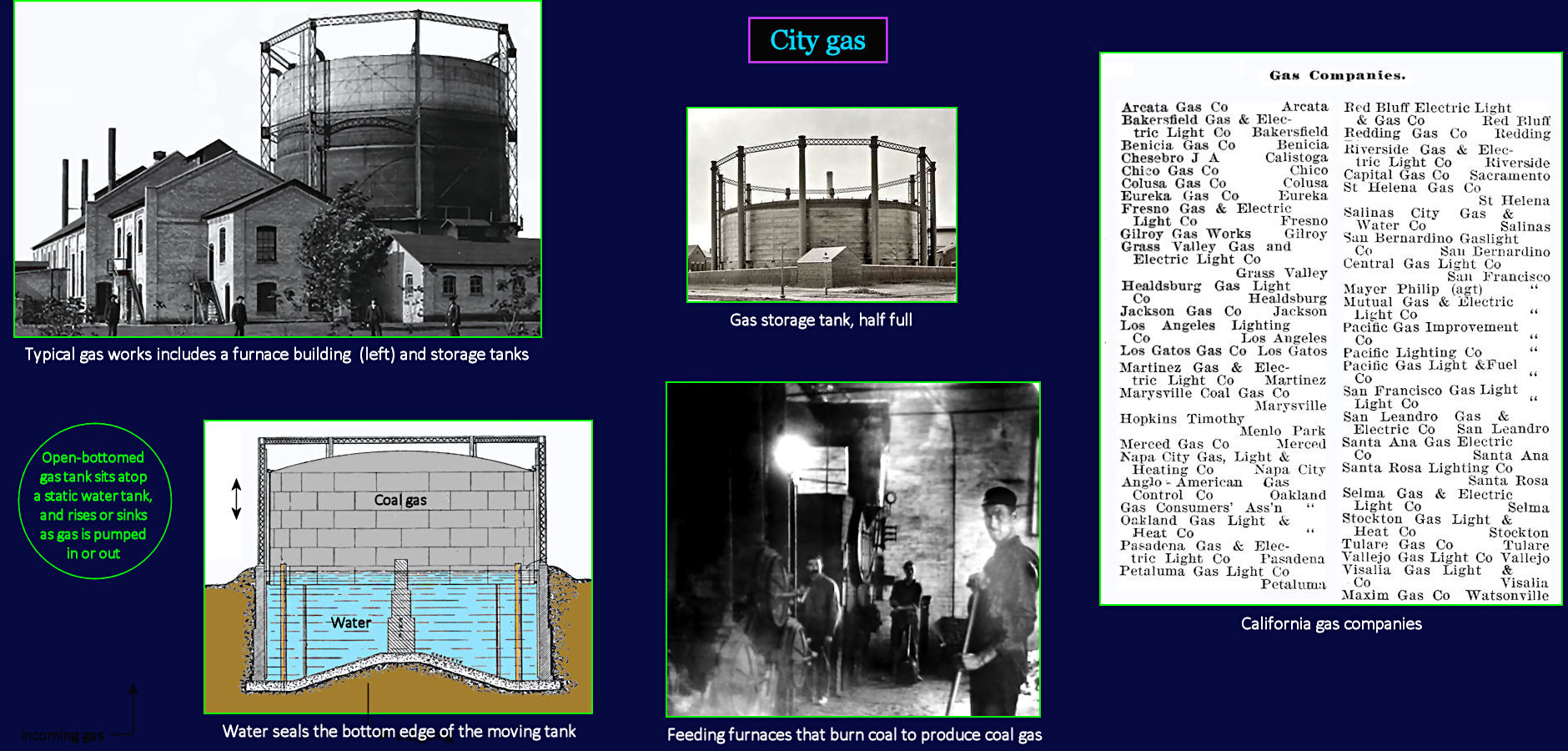
Gas from a Pipe Gas works (top left) are usually privately owned, supplying gas under contract to municipal systems, which pipe the gas underground to streetlights, businesses and some residences. The upper tank has no bottom, and acts like an inverted cup to trap gas above the underground water tank. Water provides the seal for the upper tank, as it moves vertically. This tank rises as gas is pumped into the tank, and sinks as it is consumed by customers (lower left). The job of stoking the furnaces with coal is dirty and exhausting (top right). Gas companies are plentiful, as shown in the partial list above (top right). San Francisco has seven suppliers, but even towns with just a few thousand residents might have one. Gas is used to fuel stoves, lamps and heaters. | |||||||||
| |||||||||
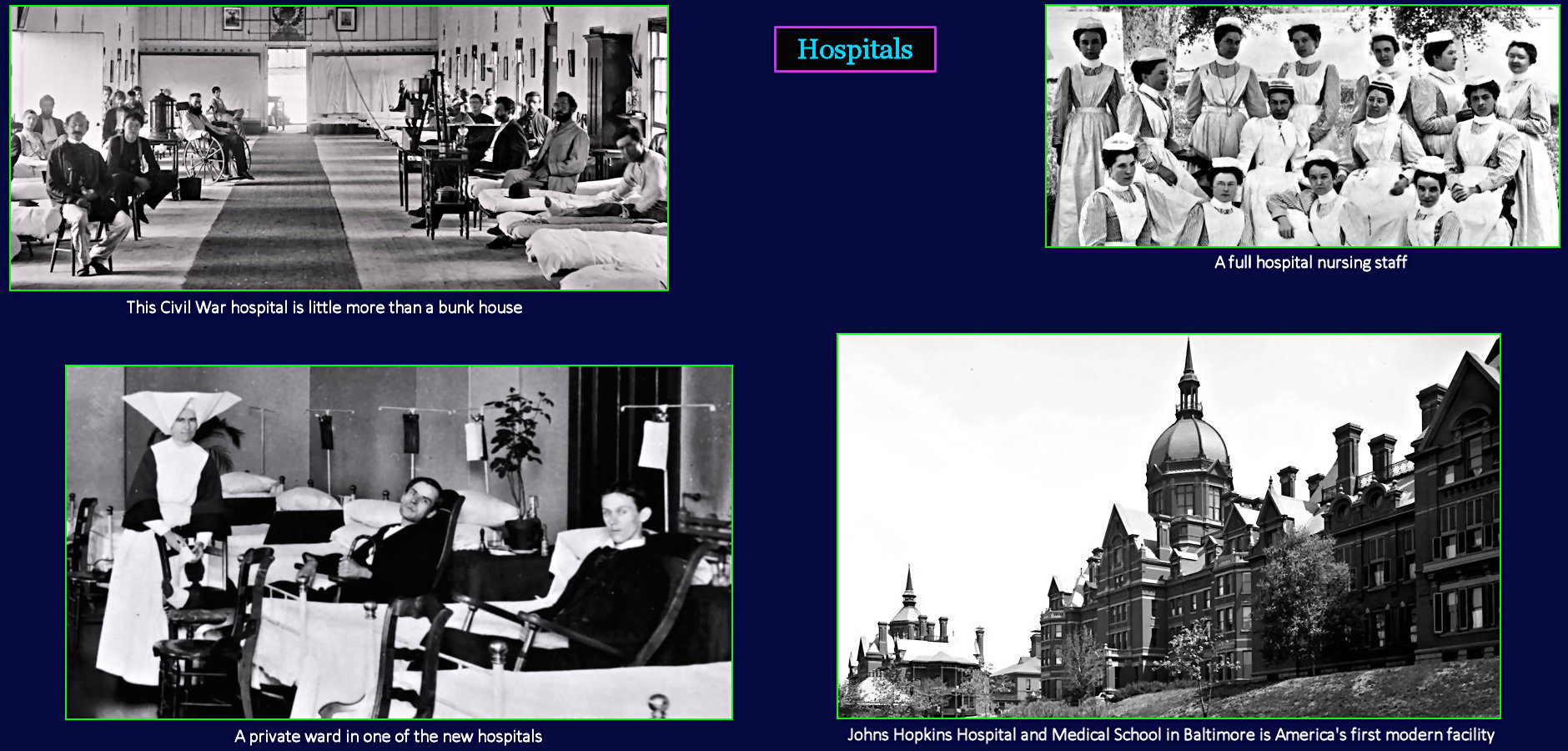
Health Industry is Born The Civil War highlighted the need for better-equipped hospitals. Just 25 years later, hospitals have private wards (lower left) and full nursing staffs (top right). Many cities have modest hospitals, but Baltimore is the first to get a complete medical institution (bottom right). It isn't paid for by taxes, however, but by a bequest from Johns Hopkins, a local merchant and philanthropist. He isn't the first person to fund local philanthropic endeavors, but the size of his endowment sets something of a standard. Foundations set up later by Andrew Carnegie, John D. Rockefeller and Henry Ford follow his example. | |||||||||
| |||||||||
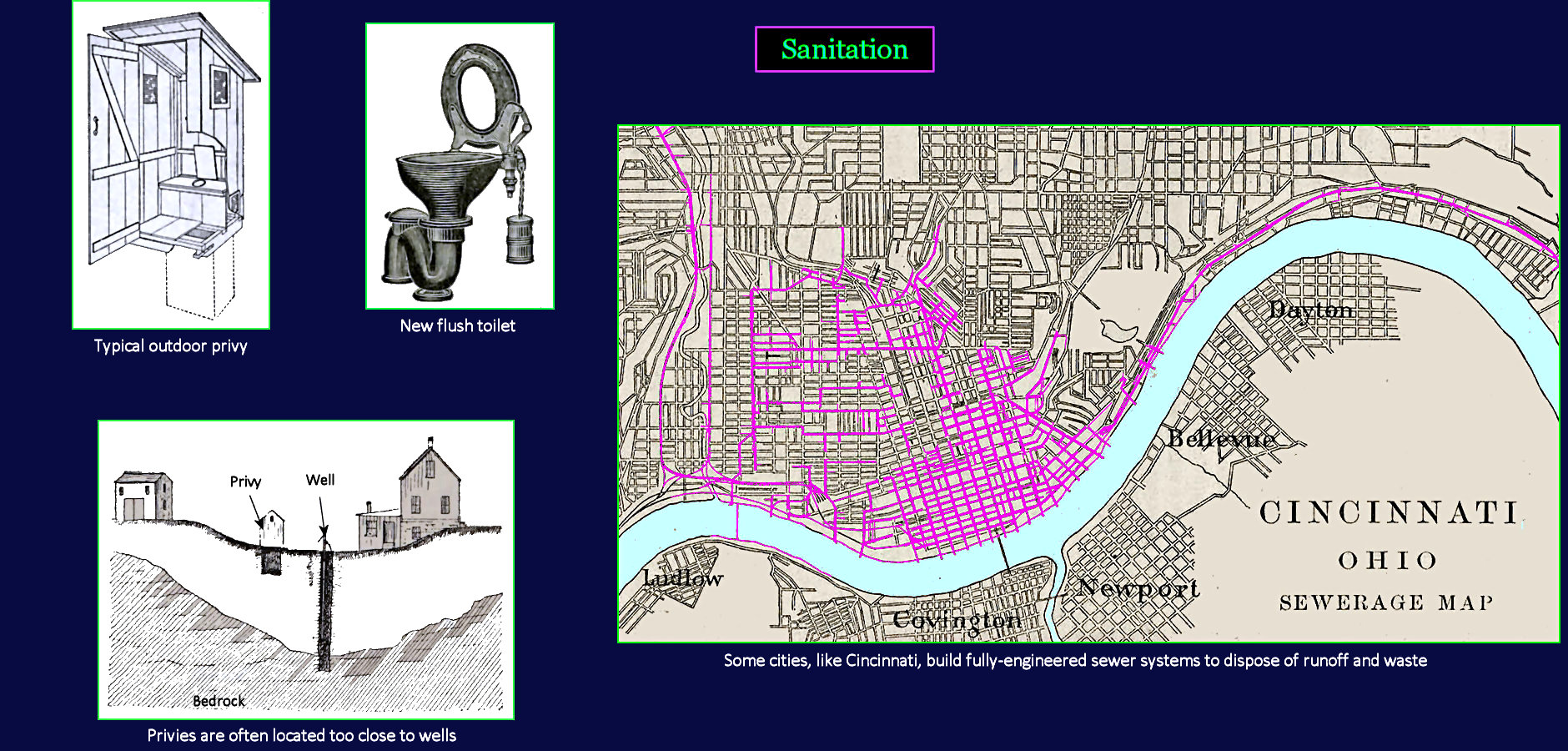
Flush it Down Environmental awareness is so limited at this time that people are slow to understand the linkage between sickness and contaminated water. After it is shown, however, that pollutants from outdoor privies and cesspools can travel through groundwater in the soil to contaminate nearby wells, Chicago becomes the first American city to build a major sewer system, in 1855. Other major cities soon follow, with waste flushed down one of the new-fangled toilets. Most waste is dumped directly into rivers, untreated, but Worcester Massachusetts becomes the first city to use chemicals to pre-treat sewer waste, in 1890. | |||||||||
| |||||||||
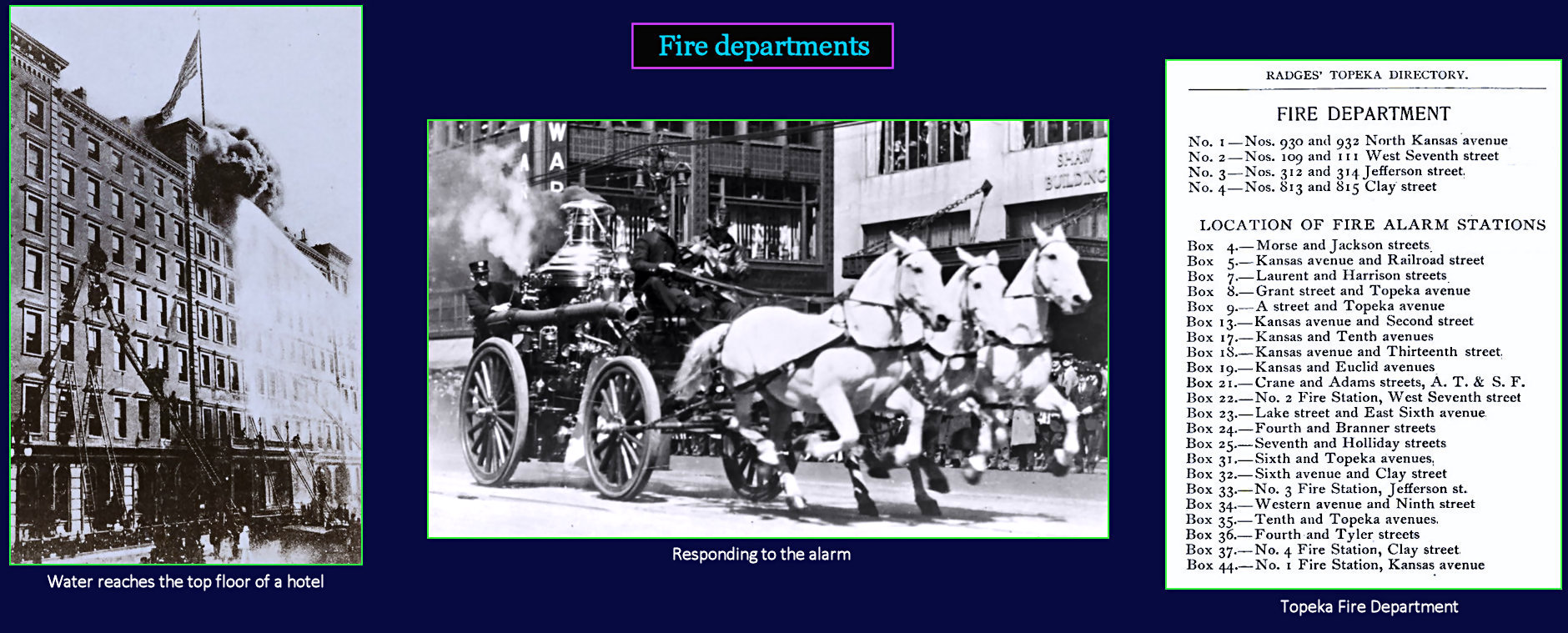
Horses and Ladders Steam-powered fire engines are still pulled by horses, but can develop enough pressure to allow fire hoses to reach the top of the tallest buildings (left). Every large city needs a fire department. Topeka has just 30,000 residents, but an impressive list of fire stations and fire alarm call boxes (right). | |||||||||