| |
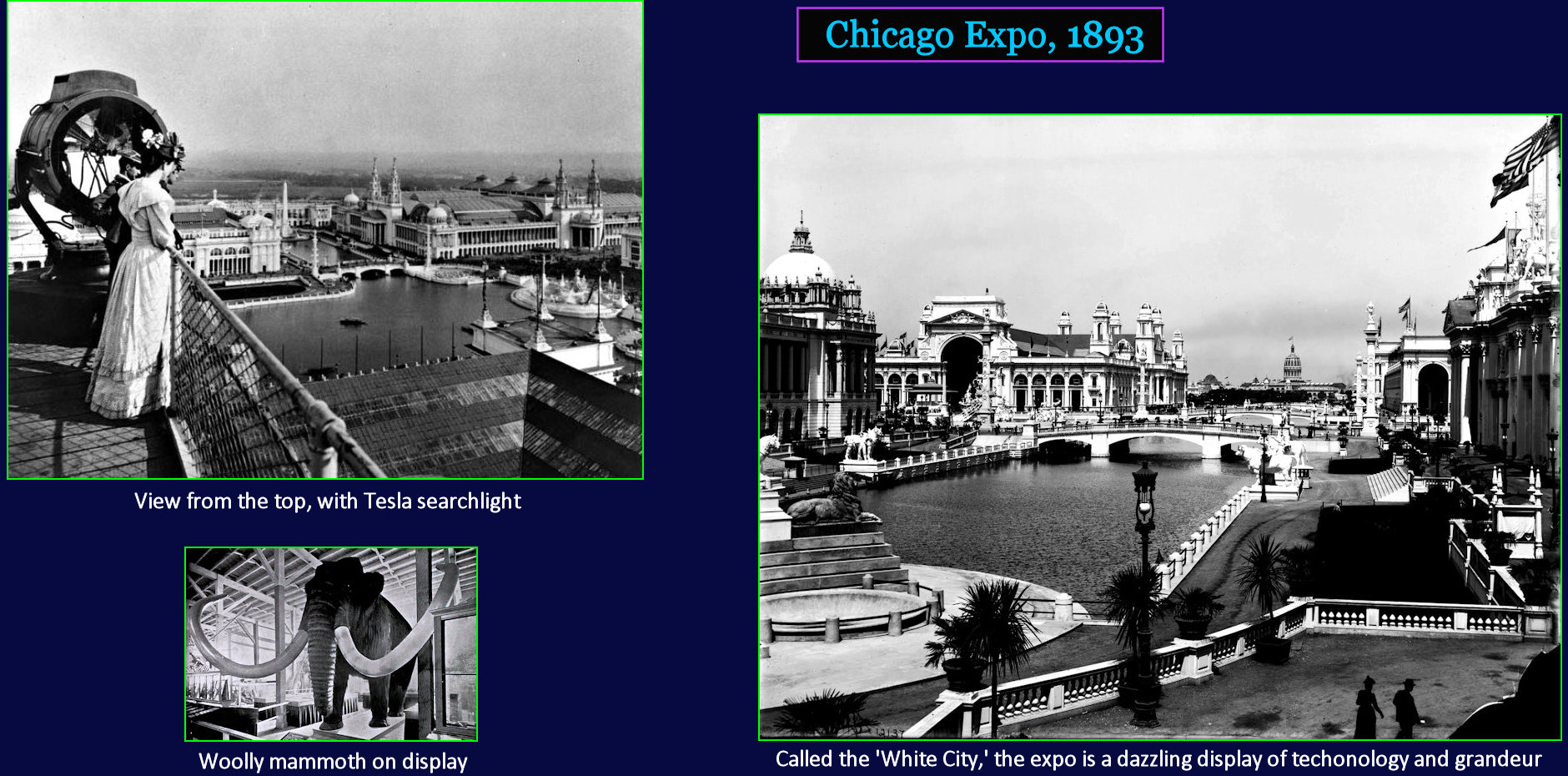
Cherry on the Top It's no accident that America's grand celebration is staged in Chicago. Rising at warp speed from the ashes of the 1871 fire, Chicago is the city of the future. It's growing faster than any city has ever grown, situated at the gravitational center of an expanding country. The fairyland that magically appears on a swampy stretch of shoreline is built using cheap, temporary materials. But you would never know it, walking down the grand plazas lining picturesque lagoons. By the time it closes, the show has pocketed a tidy $2 in million profit. |
| |||||||||
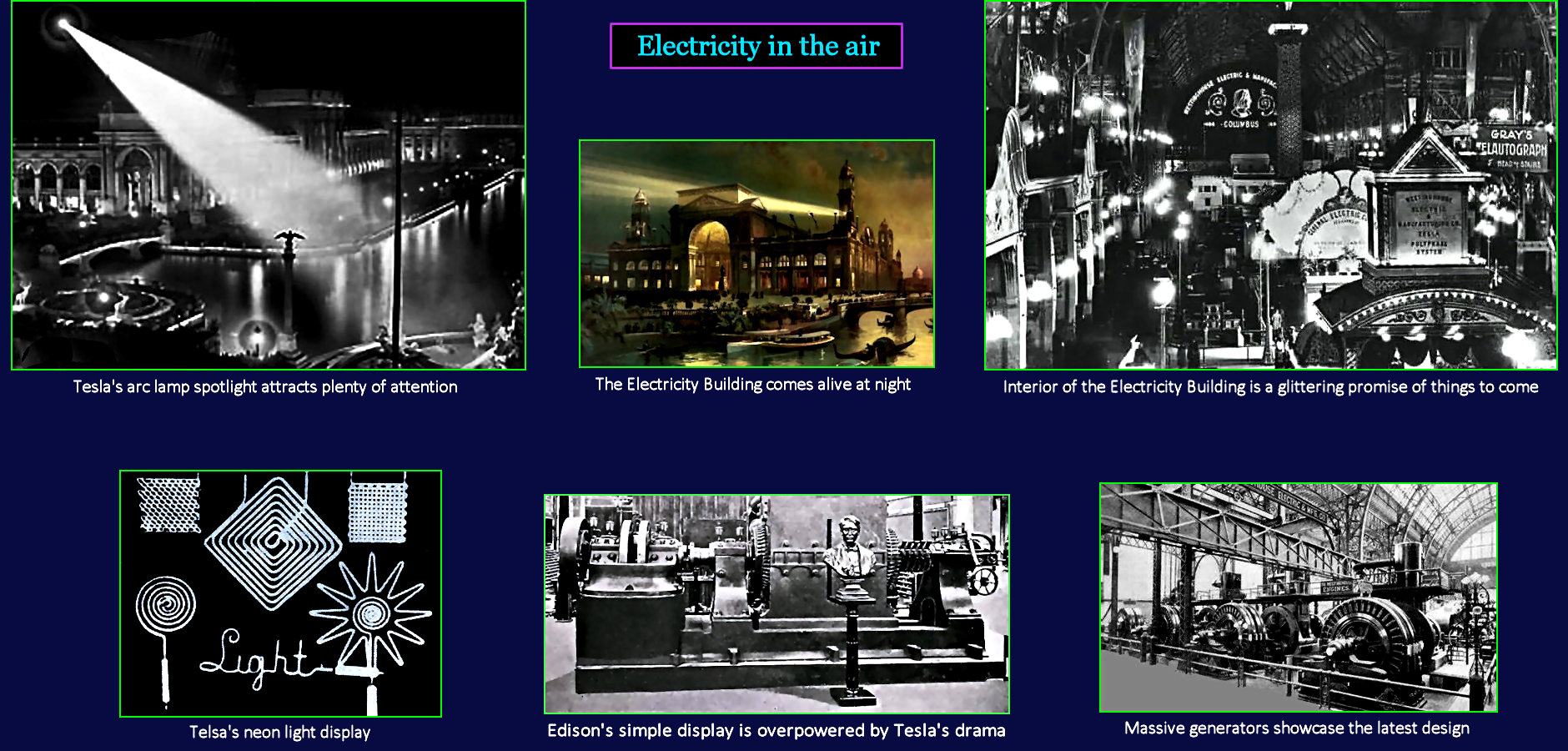
Lighting up the Night The centerpiece of the show is the newcomer. Electricity. It's seemingly everywhere, from the spotlight that swings about the grounds, to the moving walkways, elevators and train cars. All powered by electricity. The generating equipment is equally impressive. Both Edison and Tesla have individual displays, but the show marks the end of Edison's crusade to power the world with his brand of DC electricity. Tesla's AC version will power the future. | |||||||||
| |||||||||
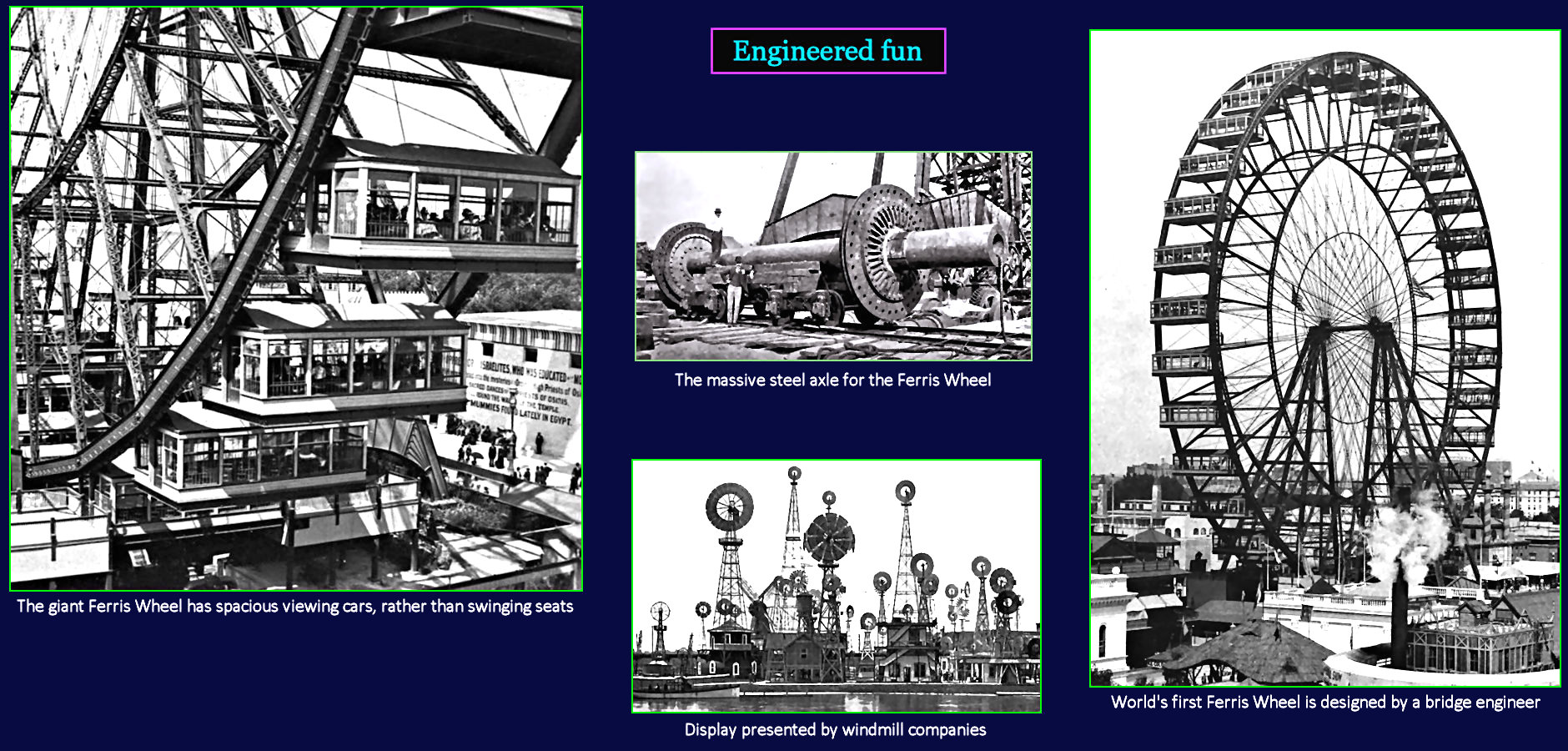
Giant Erector Set The Chicago Expo is a mixture of amusement park and museum of the future. The one feature that everyone remembers is the giant Ferris Wheel, named for its designer, a graduate of the oldest engineering school in the country. This is a monumental feat of engineering, as well as a pretty interesting idea. Like modern bicycle wheels, the rim is supported entirely by thin wire spokes. The axle for the wheel (top center) is the size of a locomotive, and the largest hollow forging in the world. Just lifting it to the top of the two towers that support it is a big job. Assembling the wheel's rim and spokes must have been equally challenging. The passenger cars are each fitted with 40 swivel chairs, for comfort and delight. | |||||||||
| |||||||||
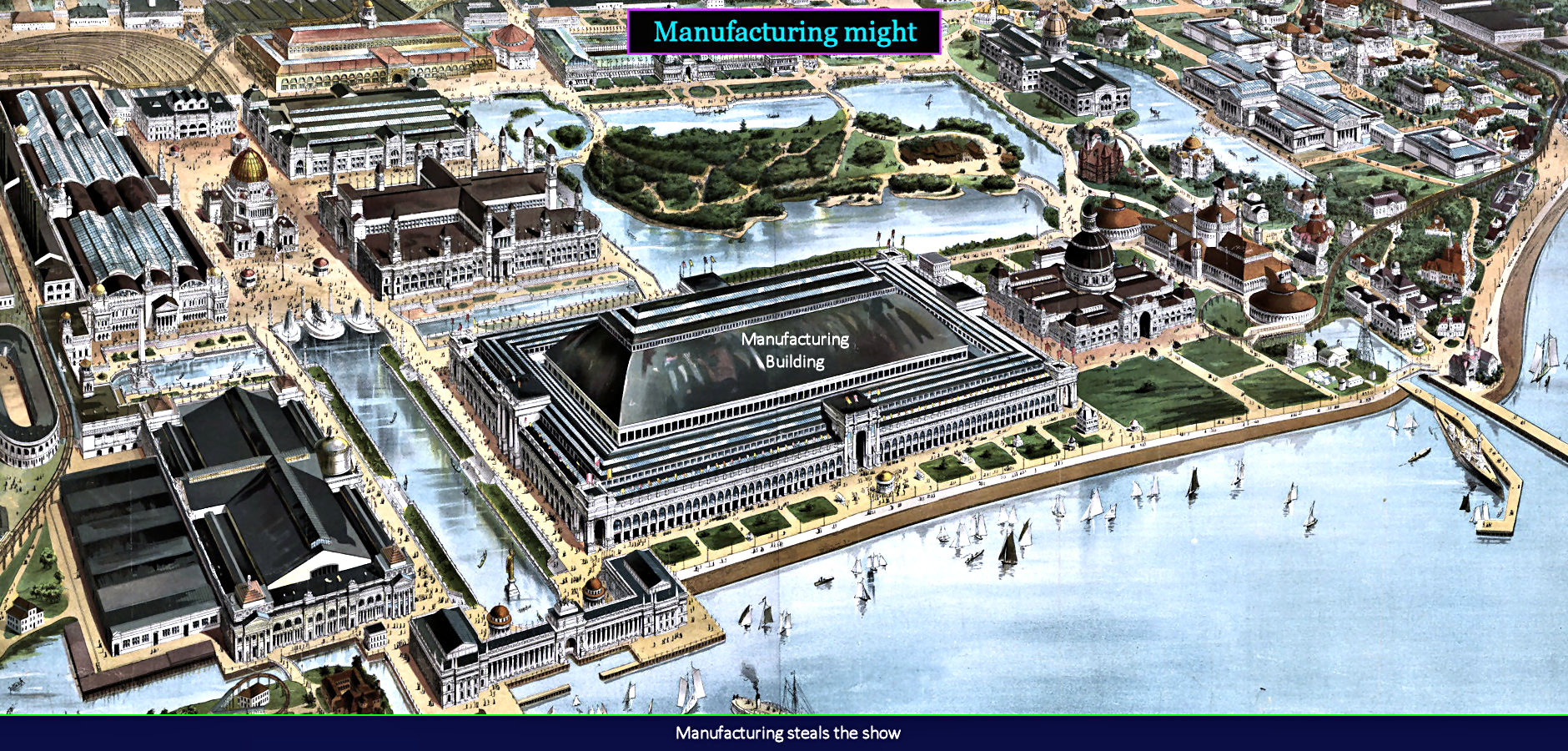
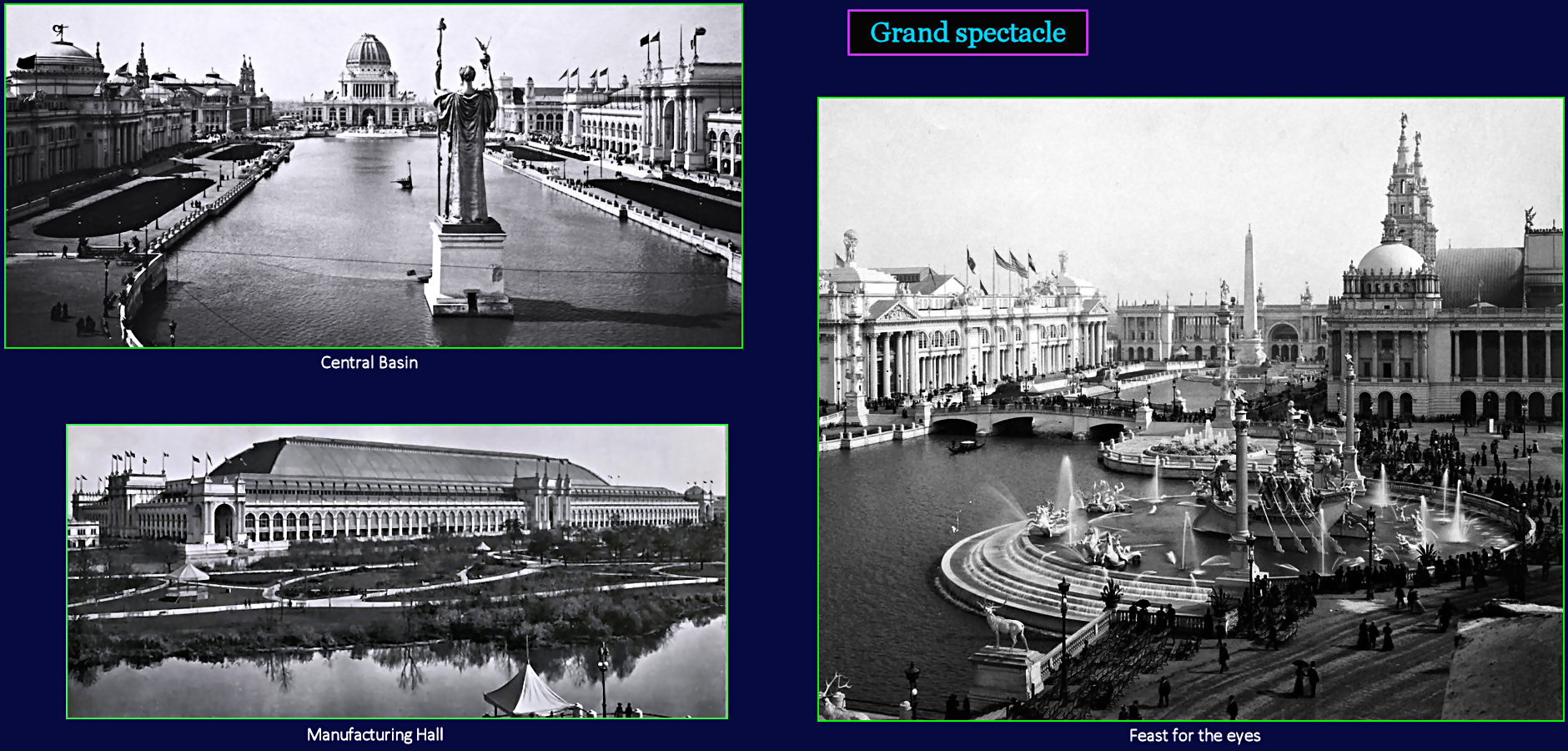
Making Space for Machinery Judging purely by floorspace, the centerpiece of the exhibition is the Manufacturing Building (center bottom), which dwarfs all others. This is in addition to the Machinery Hall, with its huge steam engine. Other exhibit halls are dedicated to agriculture, the arts, mining, anthropology, fisheries and (of course) electricity. | |||||||||
| |||||||||
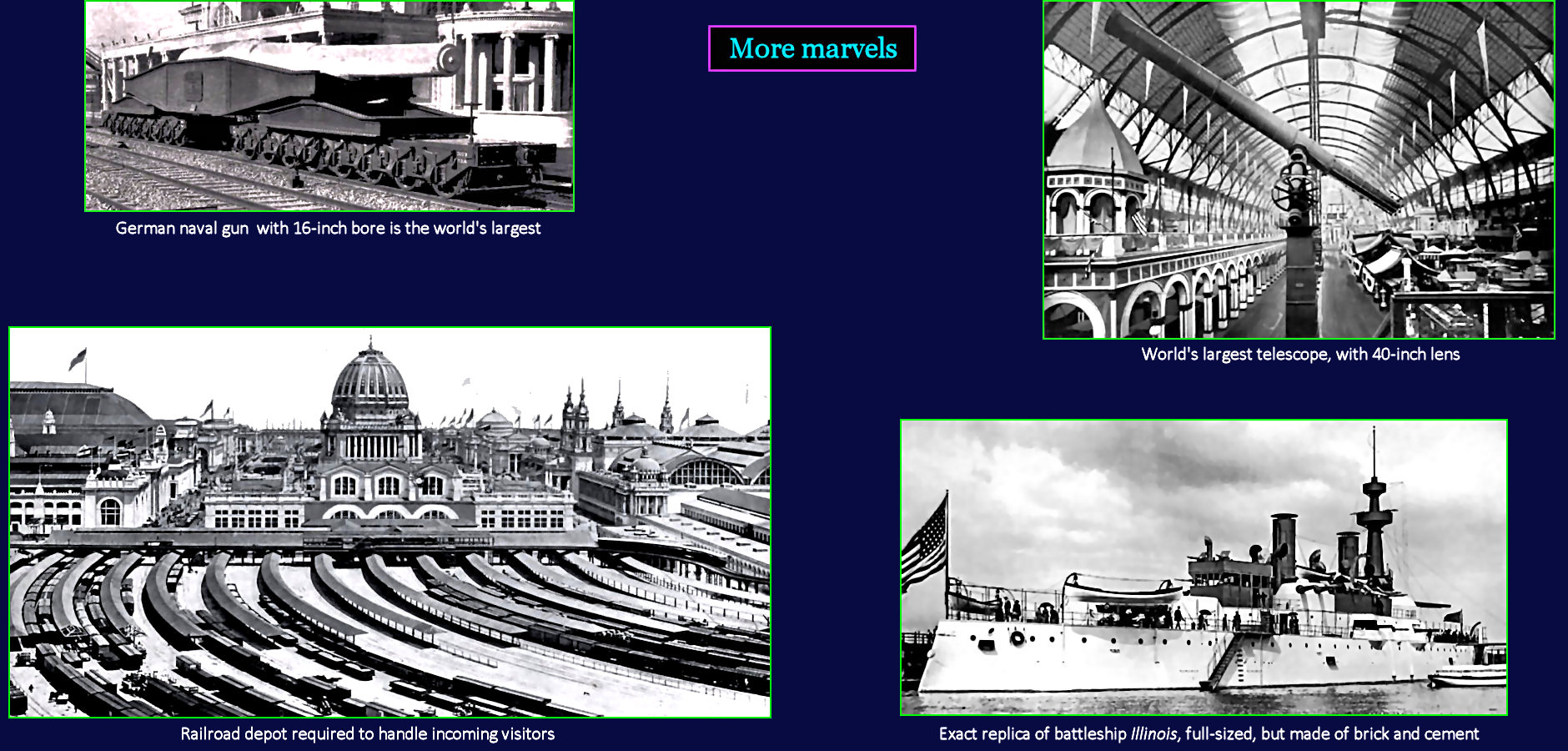
Armaments Showcase The naval gun shown above (left) is made by Germany's famous Krupp company, which furnishes most of Germany's armor and largest weapons all the way through the Second World War. Krupp brings it to America in hopes that Americans might be interested in buying some. Similar guns, smaller and made in America, are mounted on US Navy warships, like the mockup of the yet-to-be-built Illinois (lower right). In the Science Hall, the telescope (top right) has a lens which is 40 inches in diameter. | |||||||||
| |||||||||
The Future is Now The success of the Expo is surely due in large part to the grandeur of the architecture, full of fountains, water basins and fanciful adornments. Europeans may have seen similar sights in their great capital cities, but it's all brand new to Americans. | |||||||||