| |
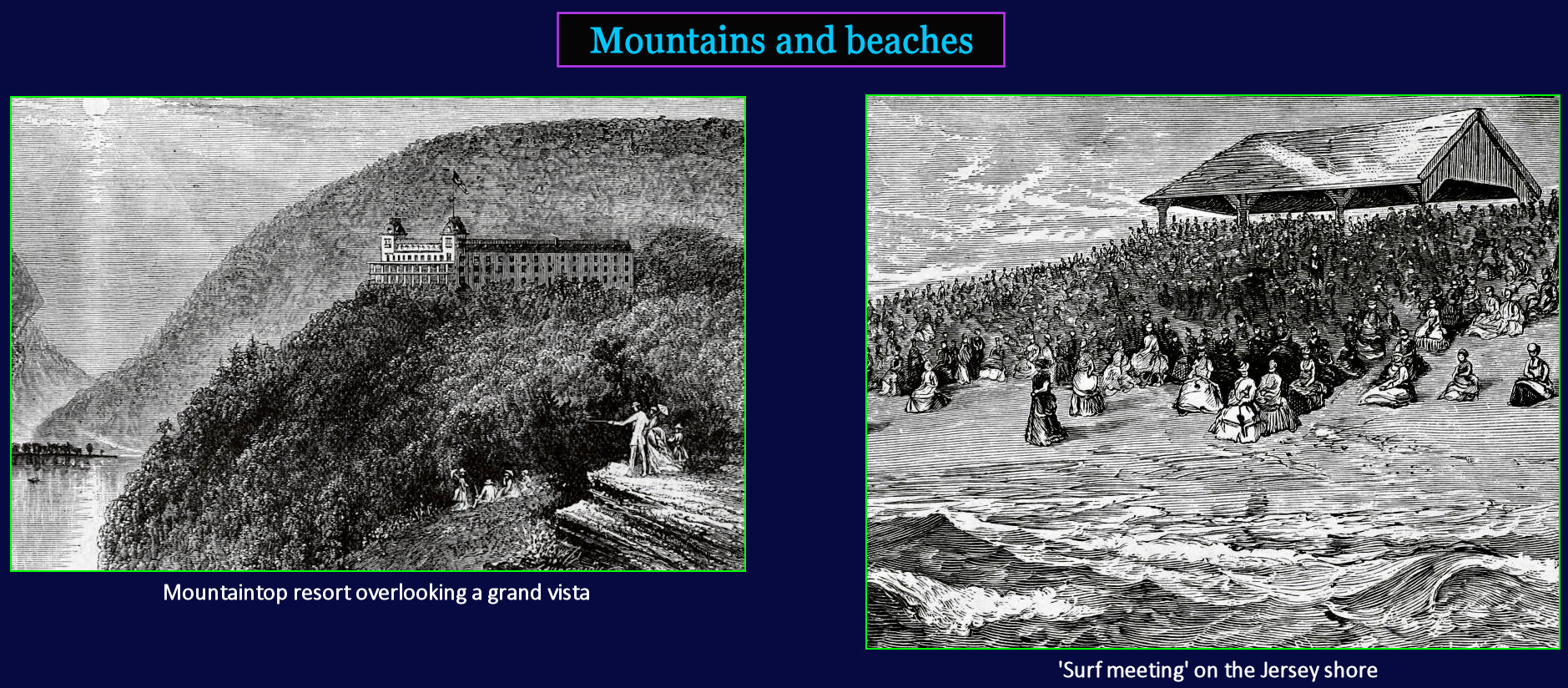
Getting Away The two main attractions are sweeping vistas and pounding surf. Beach facilities are soon flourishing near every city that is anywhere near the coast. Resorts offer grand facades, fine food and plenty of fresh air. All are wooden structures, and many are accidentally burned to the ground. But while they last, they attract visitors in droves. It's all part of America's first big fitness craze. |
| |||||||||
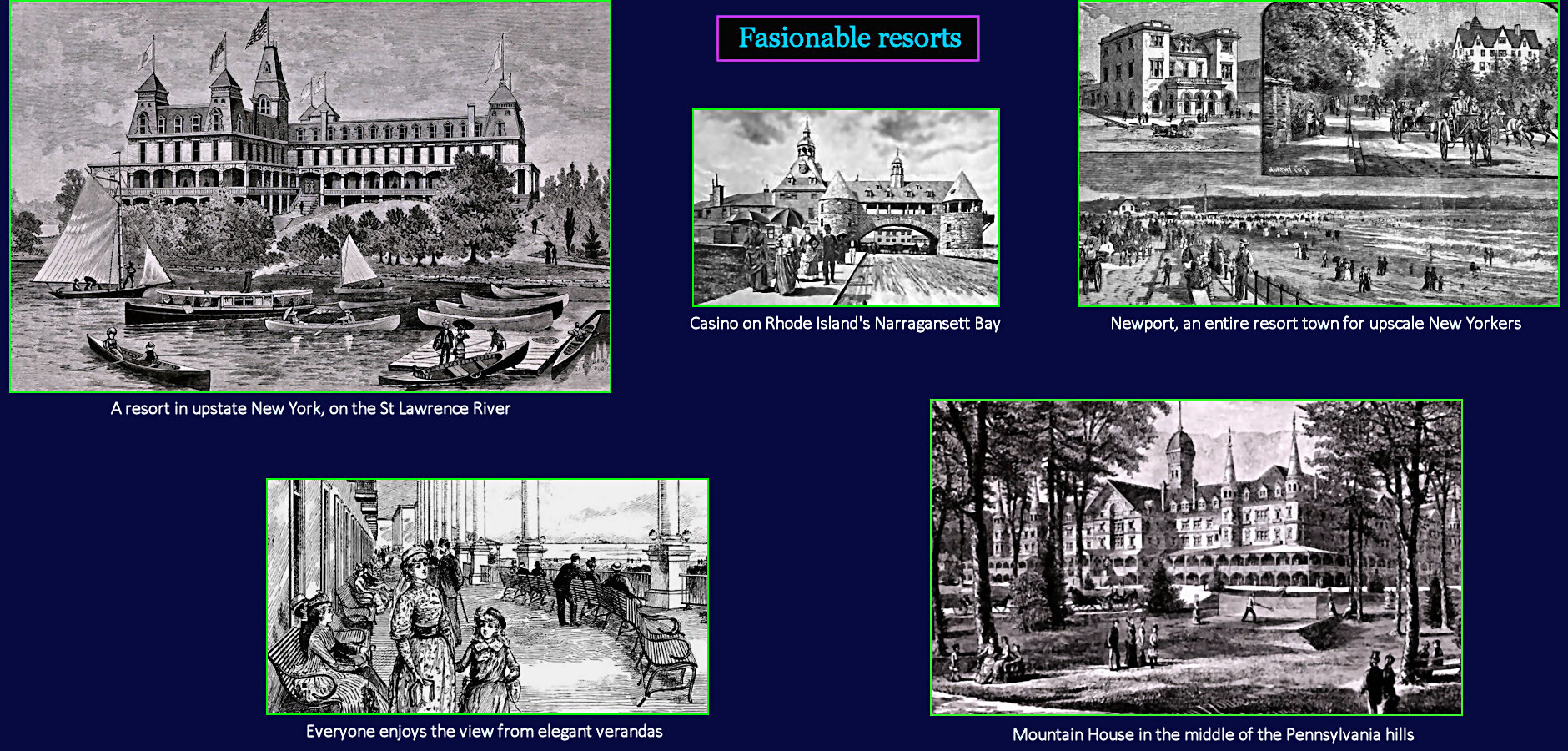
Bring Your Best Clothes In addition to the occasional rustic retreat, there are lots of big summer resorts showcasing fancy architecture, whether on the shore or up in the mountains. Couples stroll around well-kept grounds, typically in fashionable attire. A sea breeze is always a welcome addition, but even in woodlands the air is pure and thrilling. People accustomed to living and working in cramped cities, with coal smoke in the air, find such settings entirely refreshing. | |||||||||
| |||||||||
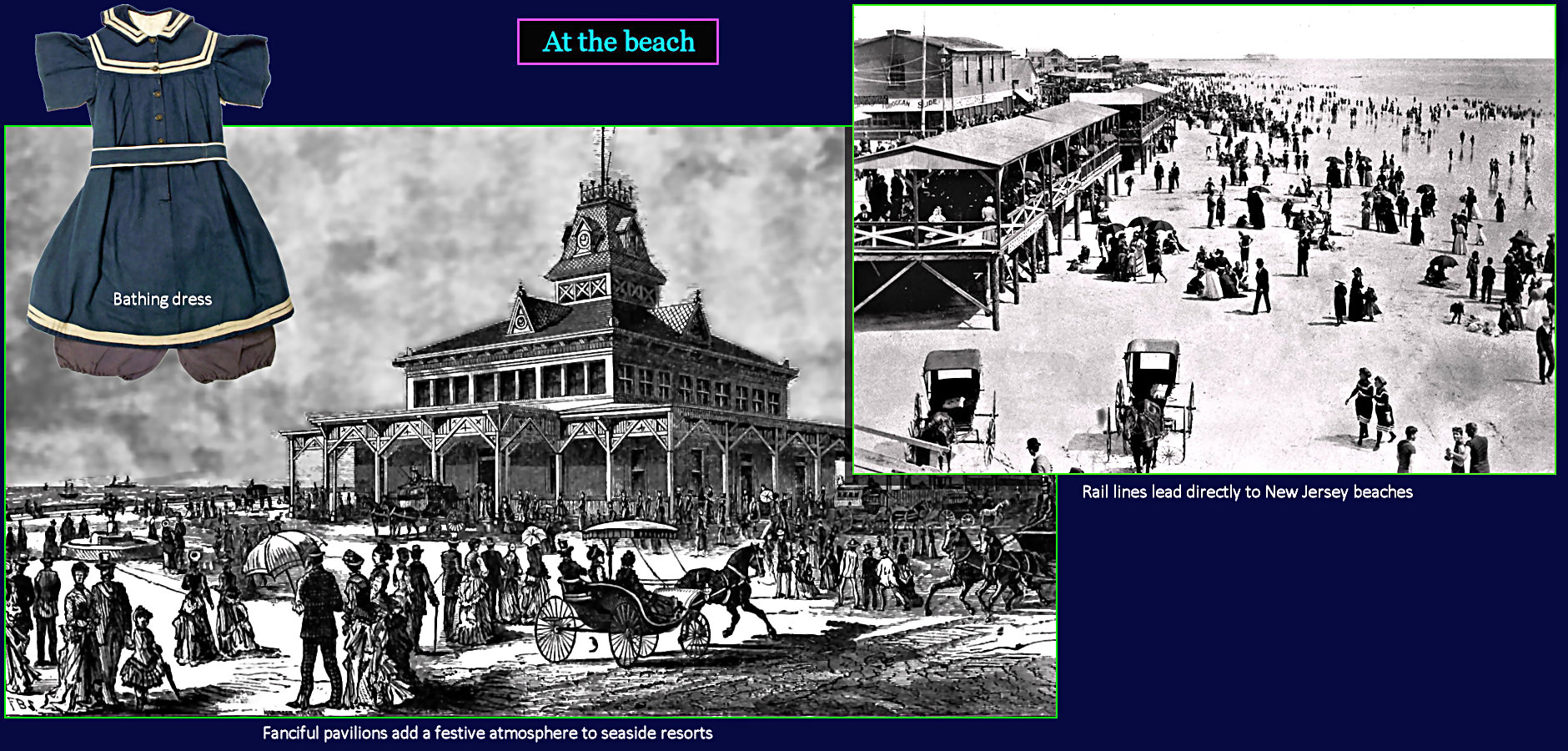
But Keep Your Skin Covered The vision of a refreshing week at one of the big beachside resorts is hard to resist, if you have the money. Increasingly, people do. Trains are inexpensive, and now run directly to both the mountains and the shore. Bathing suits, however, are not yet the revealing, minimalist garments they will eventually become. | |||||||||
| |||||||||
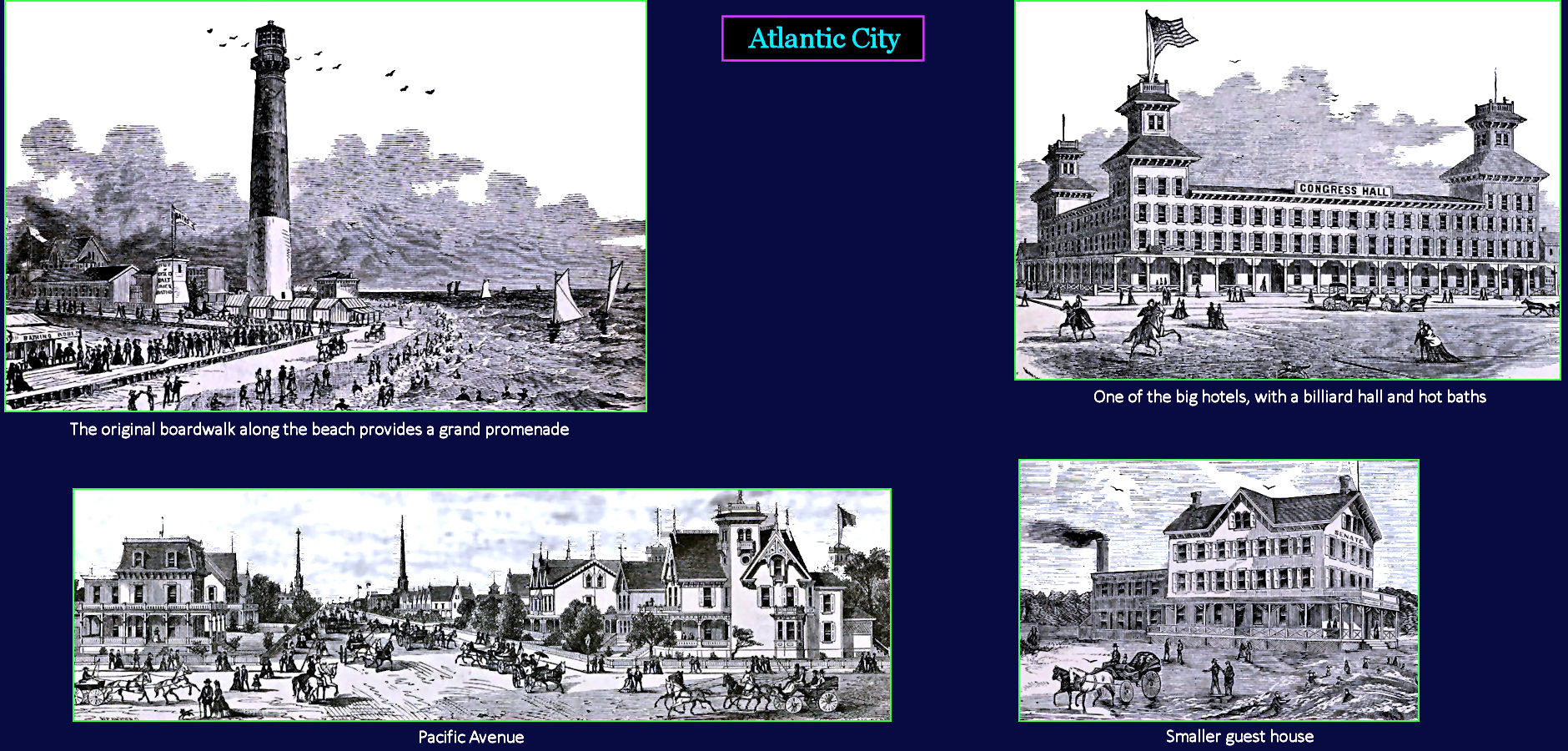
America's First Mega-Resort This is Atlantic City, before it became the giant tourist attraction it is today. The first big hotel opens in 1853, and rail service arrives the following year. By 1875, half a million visitors are arriving yearly, by rail. The finest hotel, owned by the railroad, has 600 rooms on a 14-acre site. The first boardwalk is built in 1870, to help keep sand out of hotel lobbies. It is later destroyed by a hurricane, and rebuilt much bigger. | |||||||||
| |||||||||
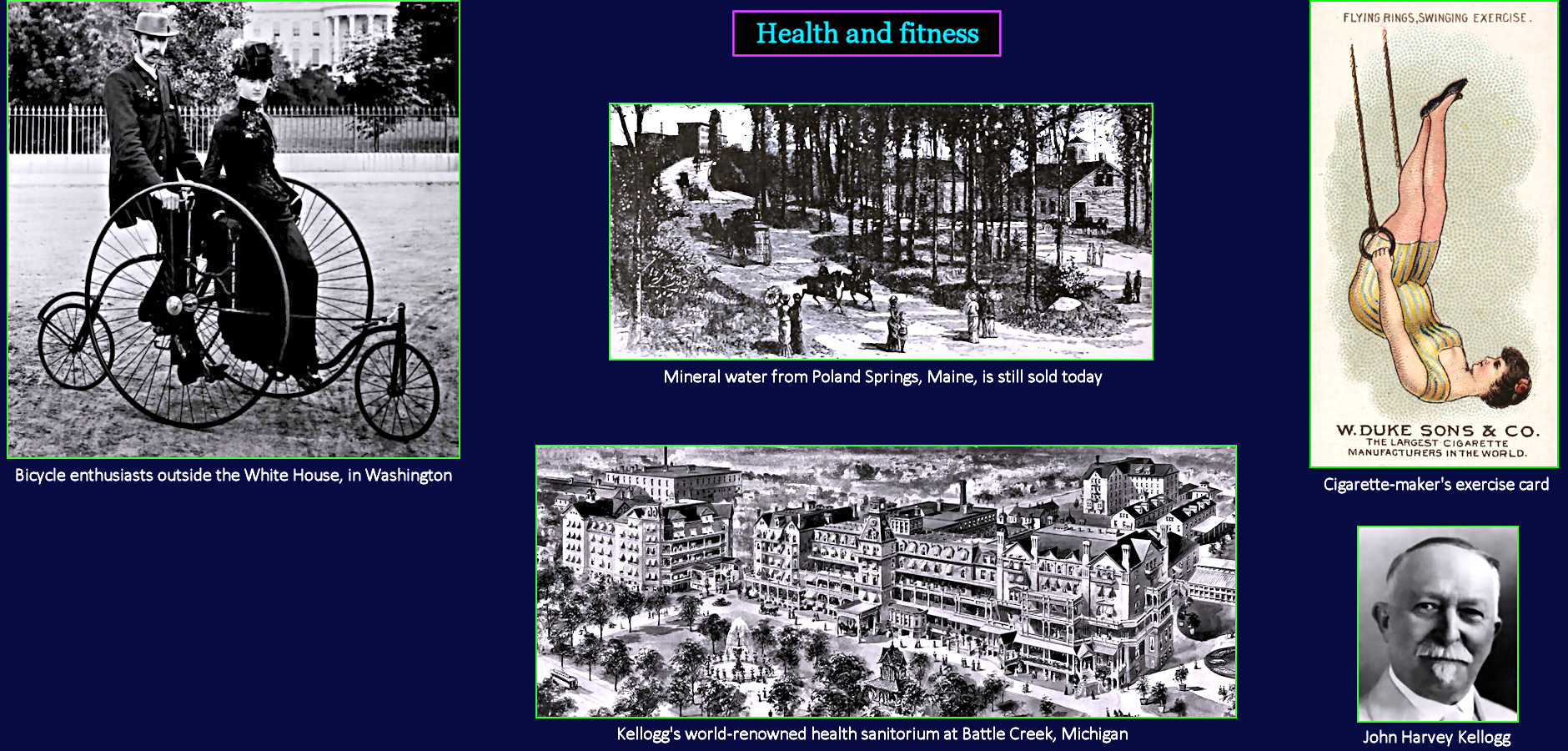
The Original Fitness Craze Health spas are suddenly popular in the 1880s, especially those with hot springs or mineral waters, which are thought to promote miraculous cures. The leading health resort is the sanitorium in Battle Creek (bottom center), founded by America's first health guru, John Harvey Kellogg (bottom right). Kellogg is a businessman, inventor and physician, who popularizes the connection between good nutrition and good health. His sanitarium features vegetarian meals and enemas, while prohibiting tobacco, alcohol and sexual activity. He invents Kellogg's Corn Flakes, and is also an early spokesman for eugenics, which is the study of ways to improve human society by breeding out harmful traits. Hitler will later take this pseudo-science to a sinister extreme. | |||||||||
| |||||||||
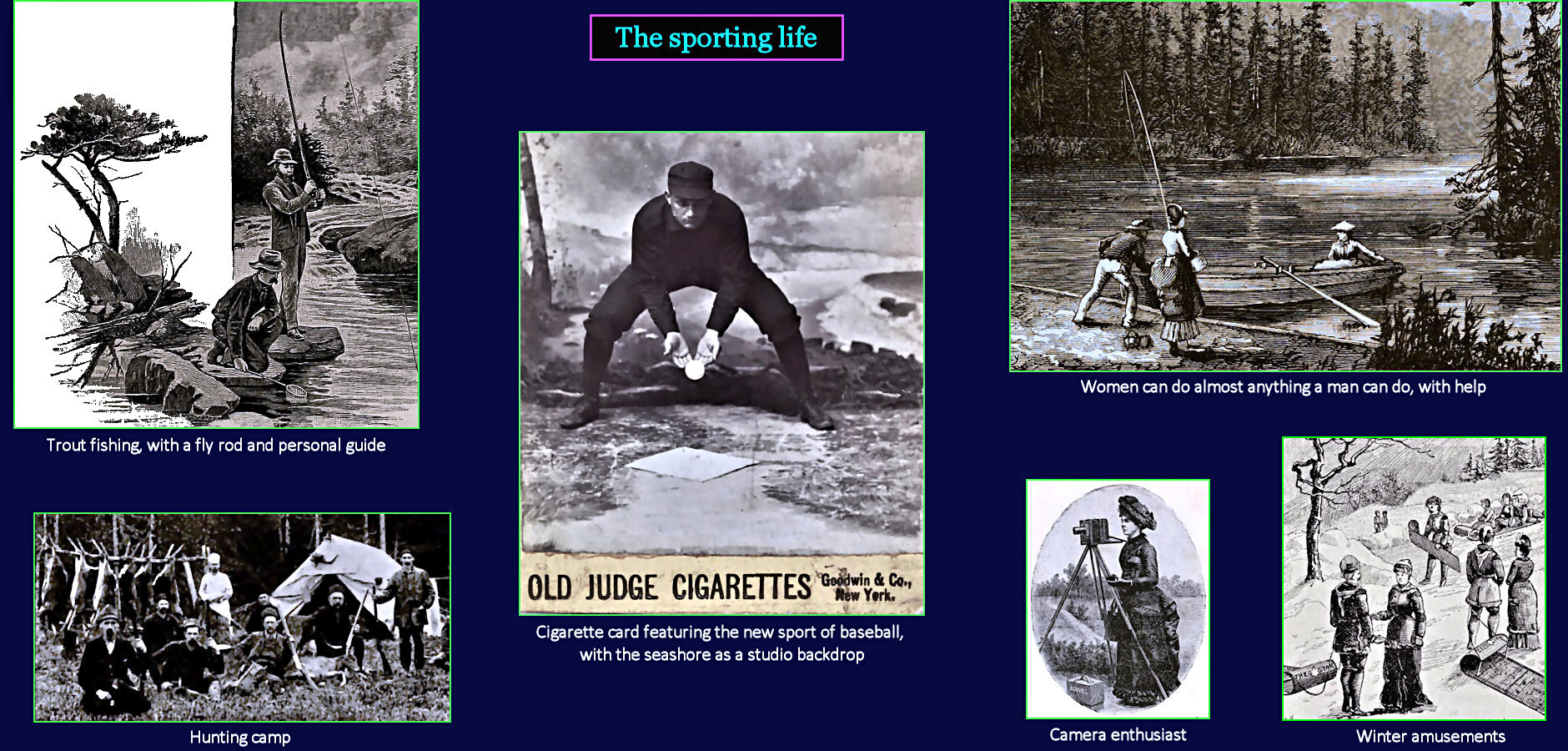
Pack Your Gear With newly-acquired wealth, Americans also display a zestful new attraction to athletic and sporting activities. Resorts and advertisements both promote this lifestyle, and outdoor amusements are popular everywhere. | |||||||||