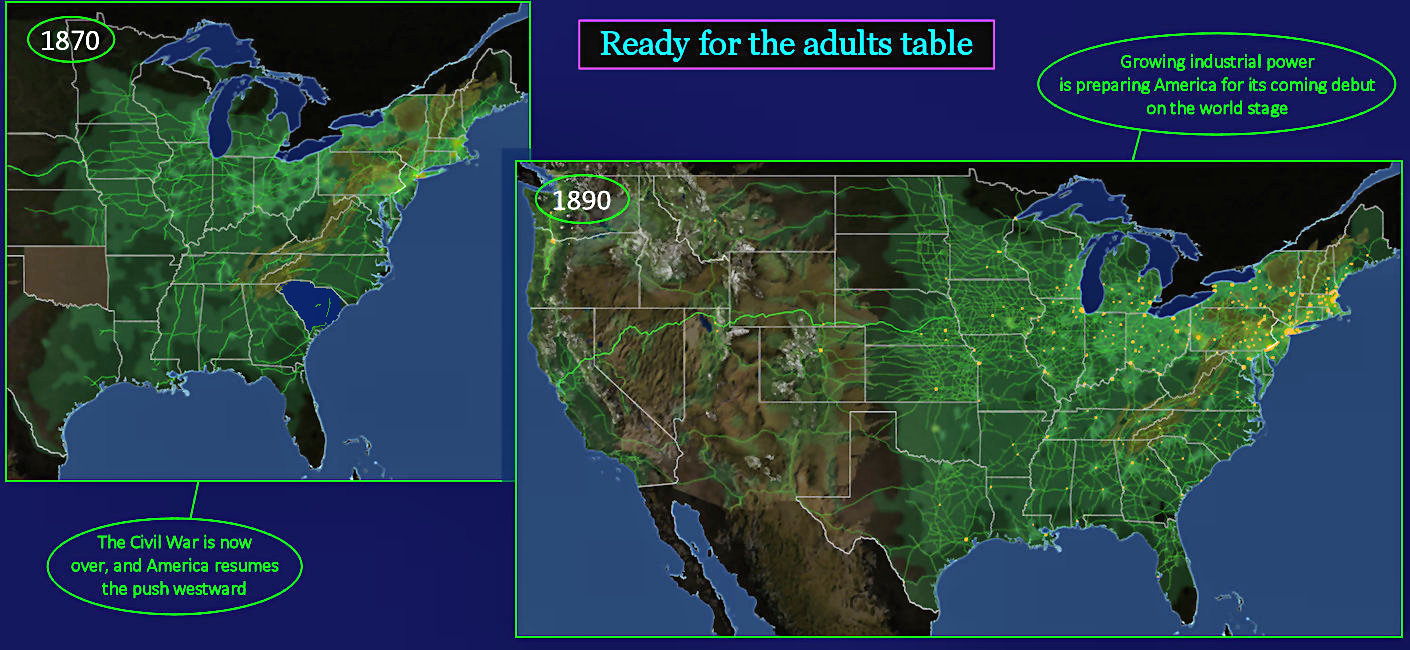
More of EverythingRailroads continue to drive America's industrial growth, as four different transcontinental railways link the Eastern and Western halves of the nation. Steel production, turbo-charged by coal, is behind everything. Also notable is the sudden emergence of urban areas, which did not even exist in 1870. Cities pack more people together in dense downtown spaces, but also concentrate the dynamic growth of business. Electricity is the spark that now allows cities to literally glow in the dark. Generators power the grid day and night, while telephones have replaced telegraphs as the connective tissue that supports commerce. |
| ||||||||||||||||
| |||||||||
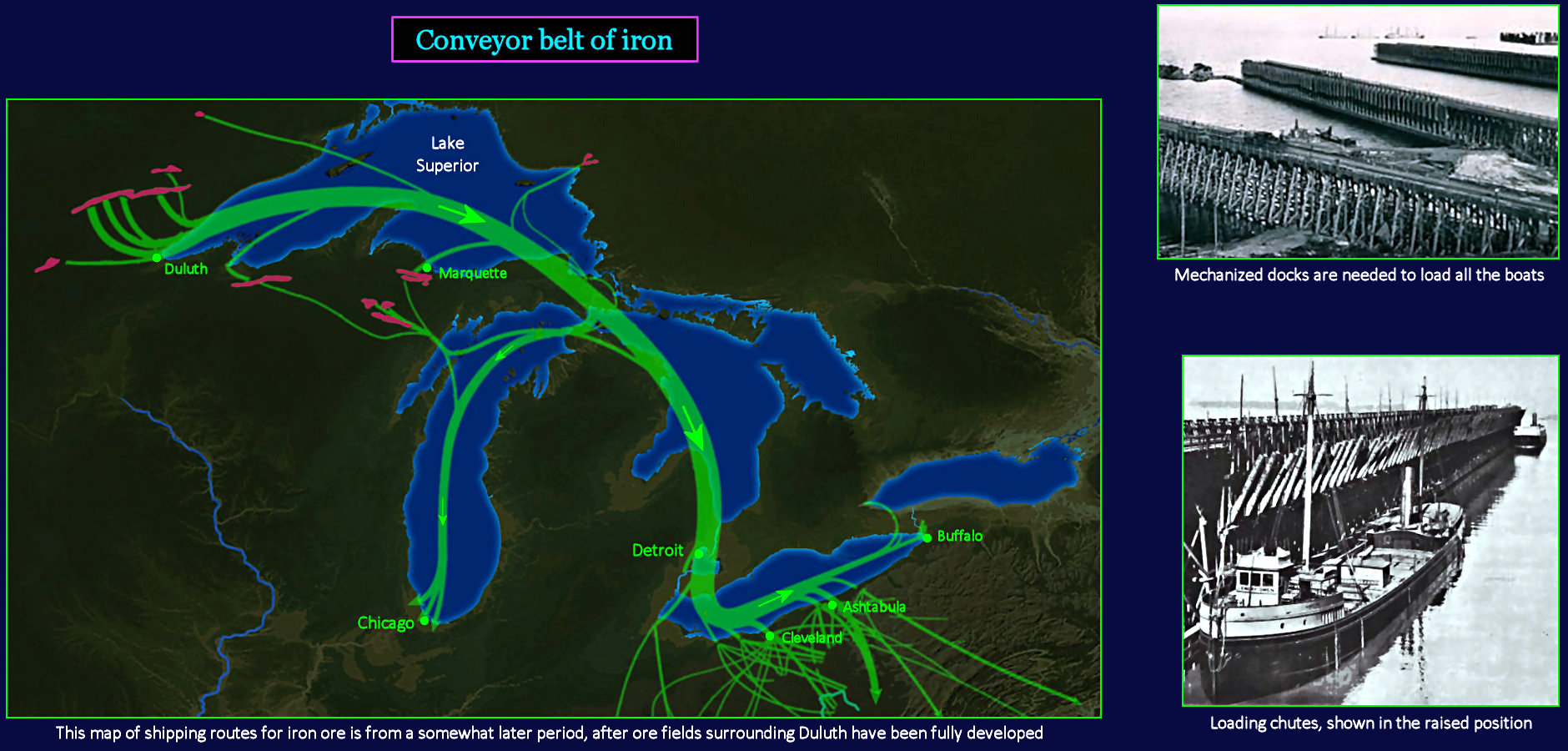
Non-stop Production Lake Superior ore is the best, and most abundant in the world. Huge deposits around the edge of Lake Superior are key to the continuing growth of the American iron and steel industry. The best fields surround Duluth (far left), but are only just beginning to be developed. Most ore still comes from the Marquette region. The pictures at right show how the ore is loaded onto ore boats. The long docks are fitted with an array of loading chutes, which are lowered down into position over each of the hatches on the ship's deck. Ore arrives from the mines continually, by rail car, and is positioned on top of the docks, ready to dump down the chutes. | |||||||||
| |||||||||
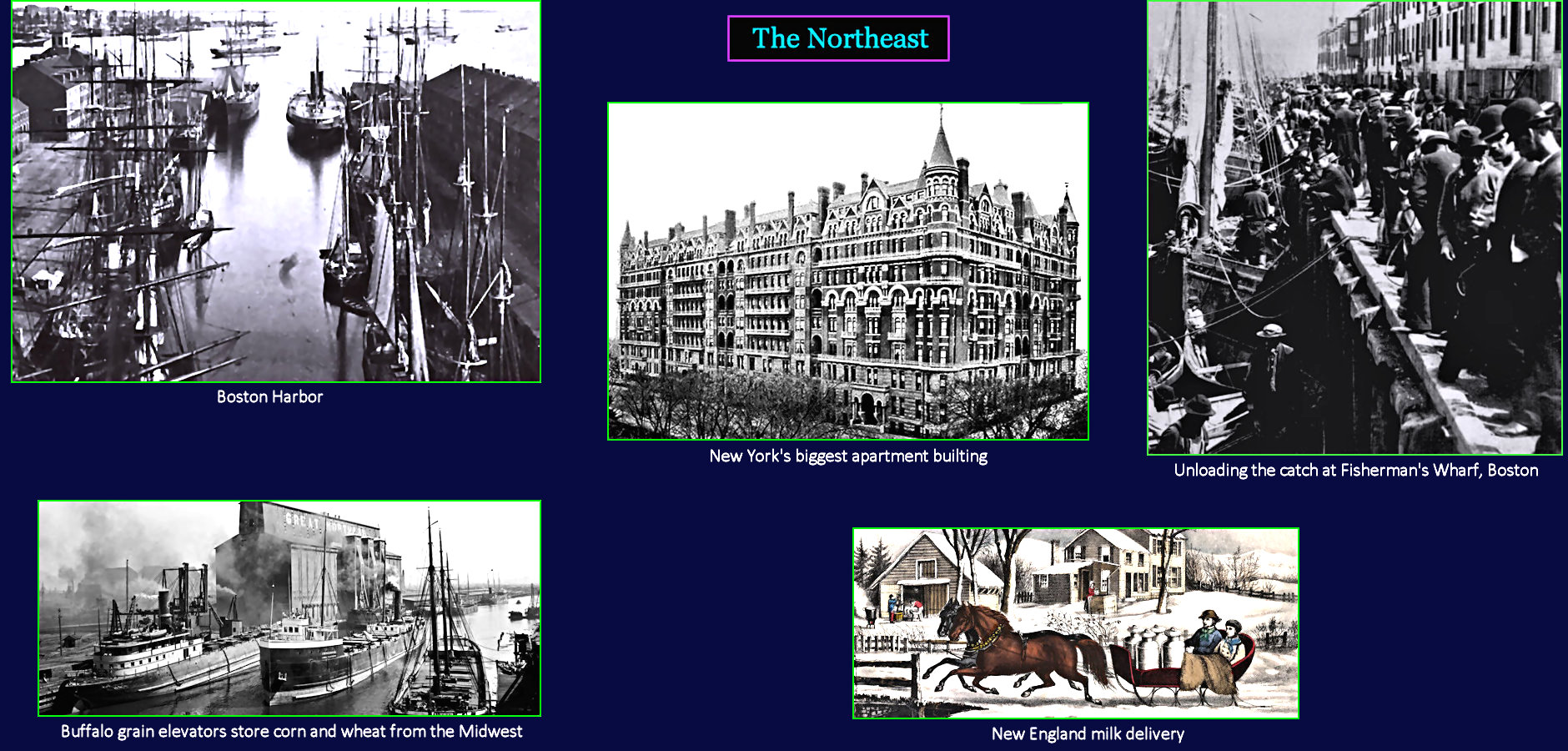
Stuck in the Past Surprisingly, Boston Harbor still has far more sailing ships than steamers (top left). Many are fishing schooners (shown unloading, at top right). Grain elevators line the river at Buffalo (bottom left), which is the final destination for many lake steamers. Most are filled with grain from the Midwest. Meanwhile, New York's buildings just keep getting bigger (top center), while sleepy New England seems to linger in a bygone era (bottom right). | |||||||||
| |||||||||
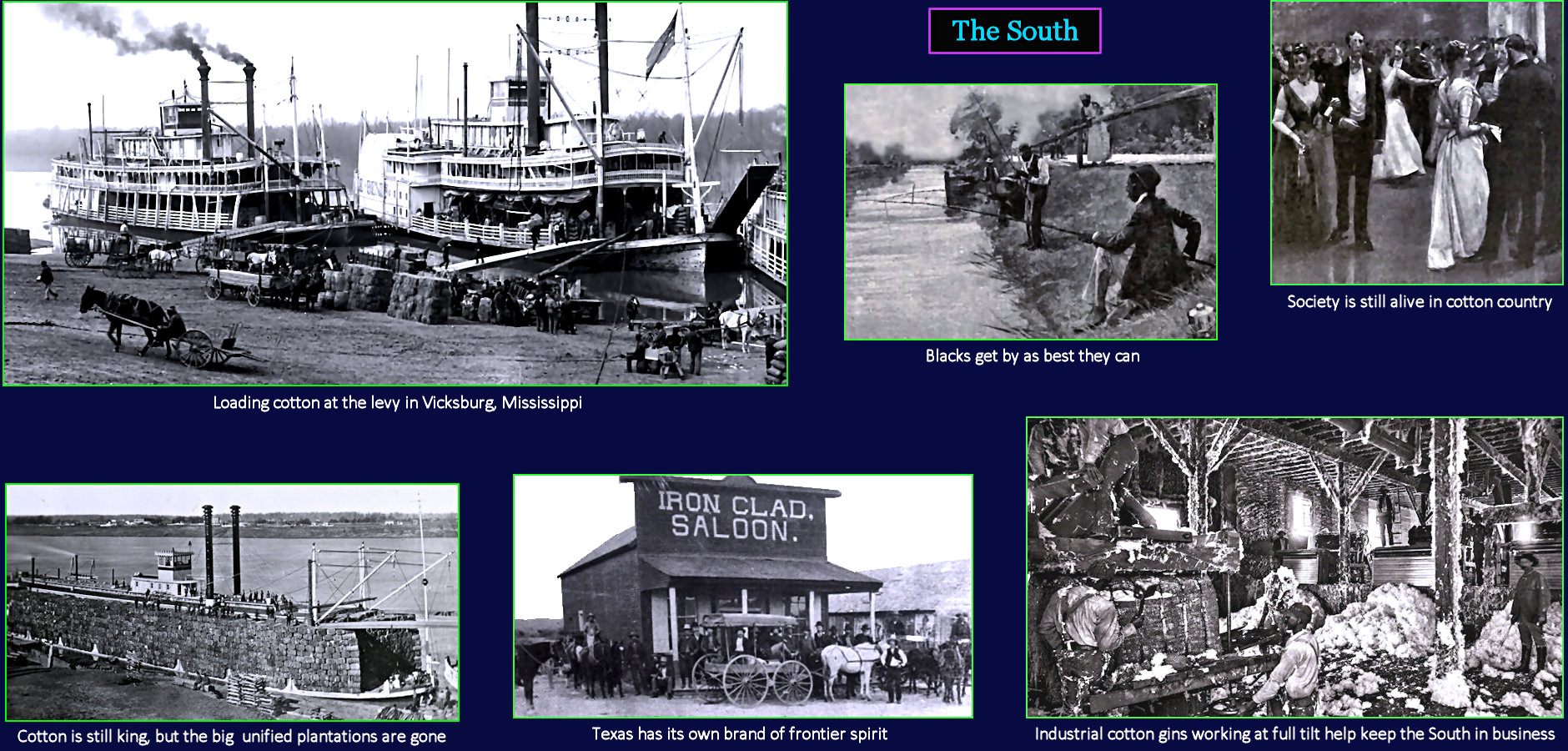
Cotton Keeps Coming The South changes very little after federal troops are withdrawn at the end of Reconstruction. Cotton is still king, and harvested in great quantities. Blacks still tend the fields, though they are no longer slaves. Field hands, both white and black, commonly subsist as 'tenant' farmers, working a small patch of ground rented from a former plantation owner. They live in shacks not unlike the old slave quarters. Meanwhile, the big landowners live on in a style that harkens back to pre-war days. Surprisingly, there is little visible hostility between Blacks and Whites, who learn to live separately while apparently still living together. | |||||||||
| |||||||||
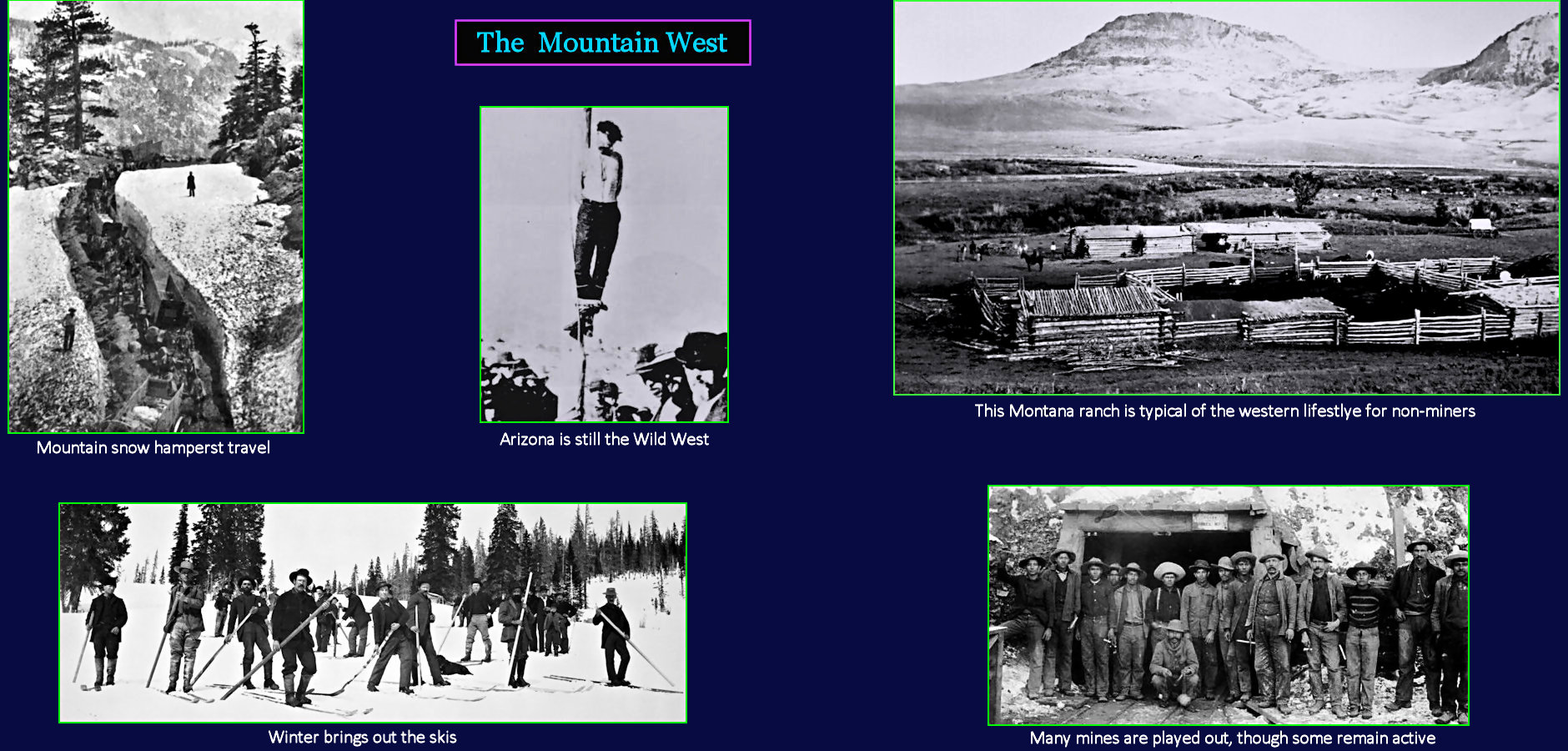
Still Developing The 'Mountain West' includes all the states in the dry western half of the country that were neither right on the coast (like California, Oregon and Washington) nor in the semi-desert southern region that would later become Arizona and New Mexico. This was primarily a land of sprawling ranches, with pockets of mining activity sprinkled all around at higher elevations. In a land with few real pleasures, Westerners still find ways to have fun (lower left). The thin settlement patterns meant that people were largely on their own, without major nearby towns, and often without law enforcement. Places like the Arizona Territory were notorious for men taking the law into their own hands, as popularized in movie westerns (top center). | |||||||||
| |||||||||
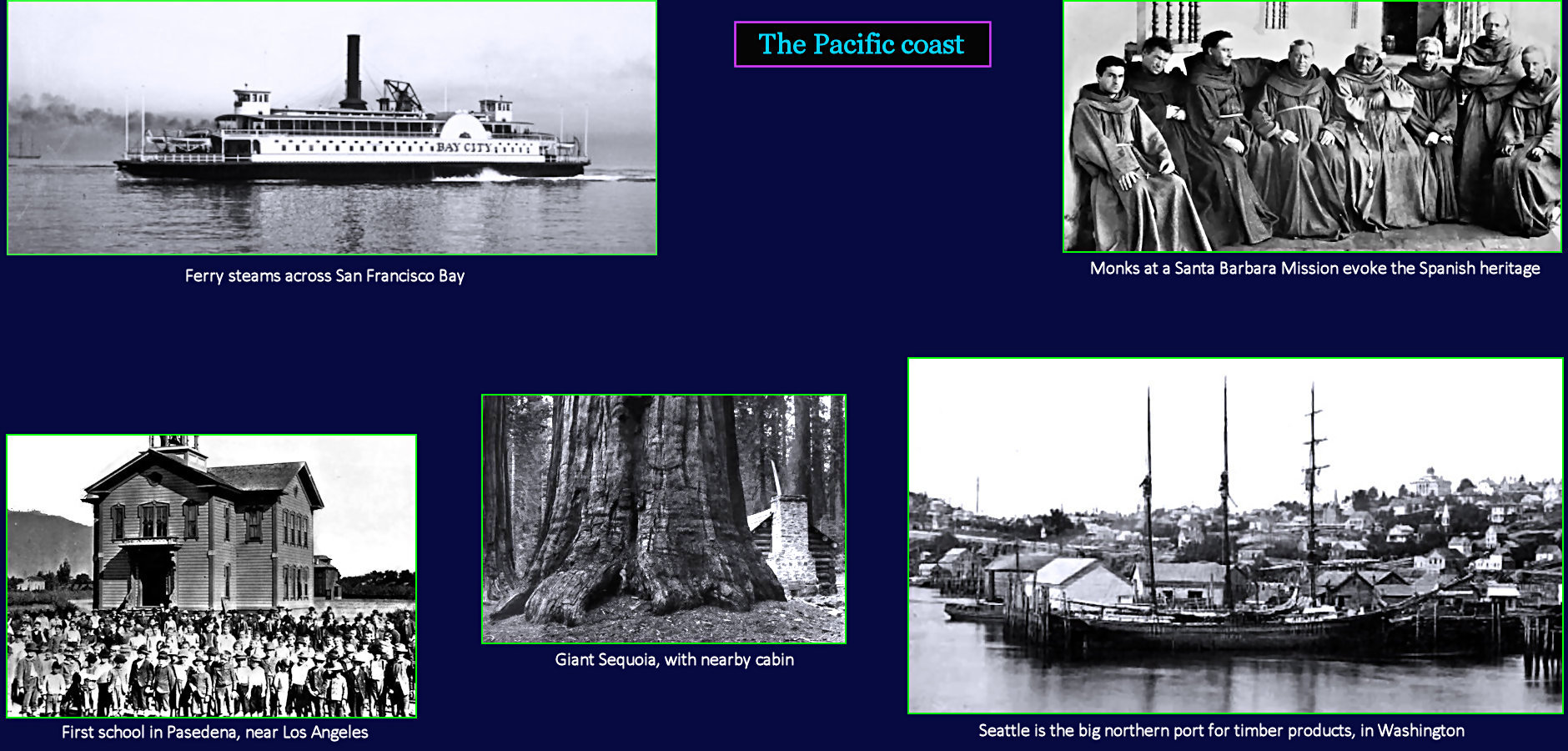
Moisture, Timber and Fish The Pacific coastal states are utterly unlike the Mountain West, with thick forests bathed in constant moisture from Pacific Ocean currents. California's Sacramento Valley is the center for agriculture, which ships from San Francisco. Further north, lumber shipments are four times greater than agricultural shipments. The much drier southern region surrounding Los Angeles and San Diego is slower to develop, and still retains a distinctly Spanish flavor. | |||||||||