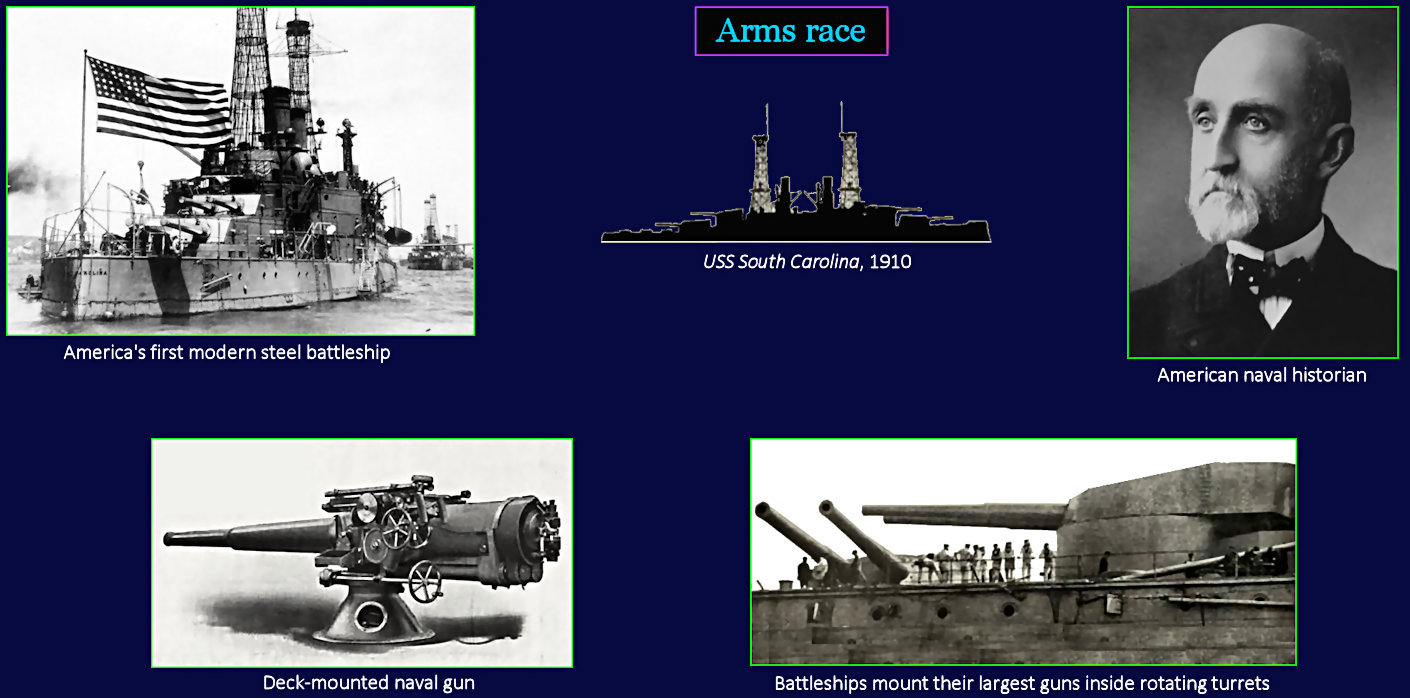
Out Come the Big GunsBut these are all rendered essentially useless when Britain launches a new type of battleship, with more than twice the firepower of previous types. It's also longer and faster, making every existing battleship instantly obsolete. Britain has ruled the seas for 100 years, with a navy that none could match. The race is now on to see if she can maintain that lead, with second-generation warships. Only the biggest steel-producing nations can compete. The USS South Carolina (top left and center) is America's first warship of the new type. She's shorter than the biggest ore boats on Lake Superior, but more than twice as heavy, with steel armor up to a foot thick. |
| ||||||||||||||||
| |||||||||
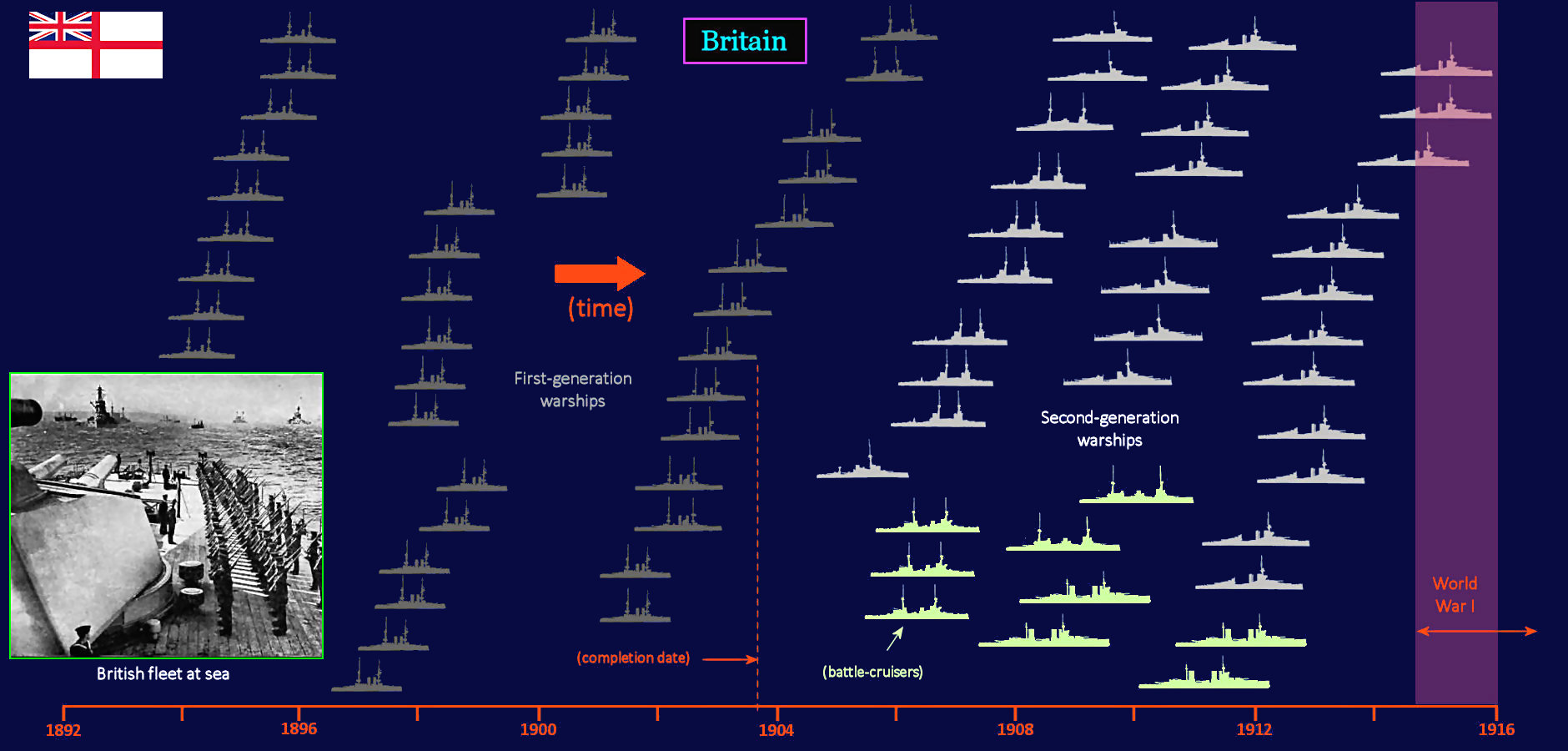
Excessive? Britain starts off the warship race with the largest fleet of first-generation battleships (dark silhouettes, at left). She also gets a head start in Round #2 of the race, with an early spurt of second-generation battleships (light silhouettes, at right). Few people suspect that a major world conflict looms just around the corner, but Britain will be ready with a world-dominant fleet when World War I suddenly erupts, in 1914. | |||||||||
| |||||||||
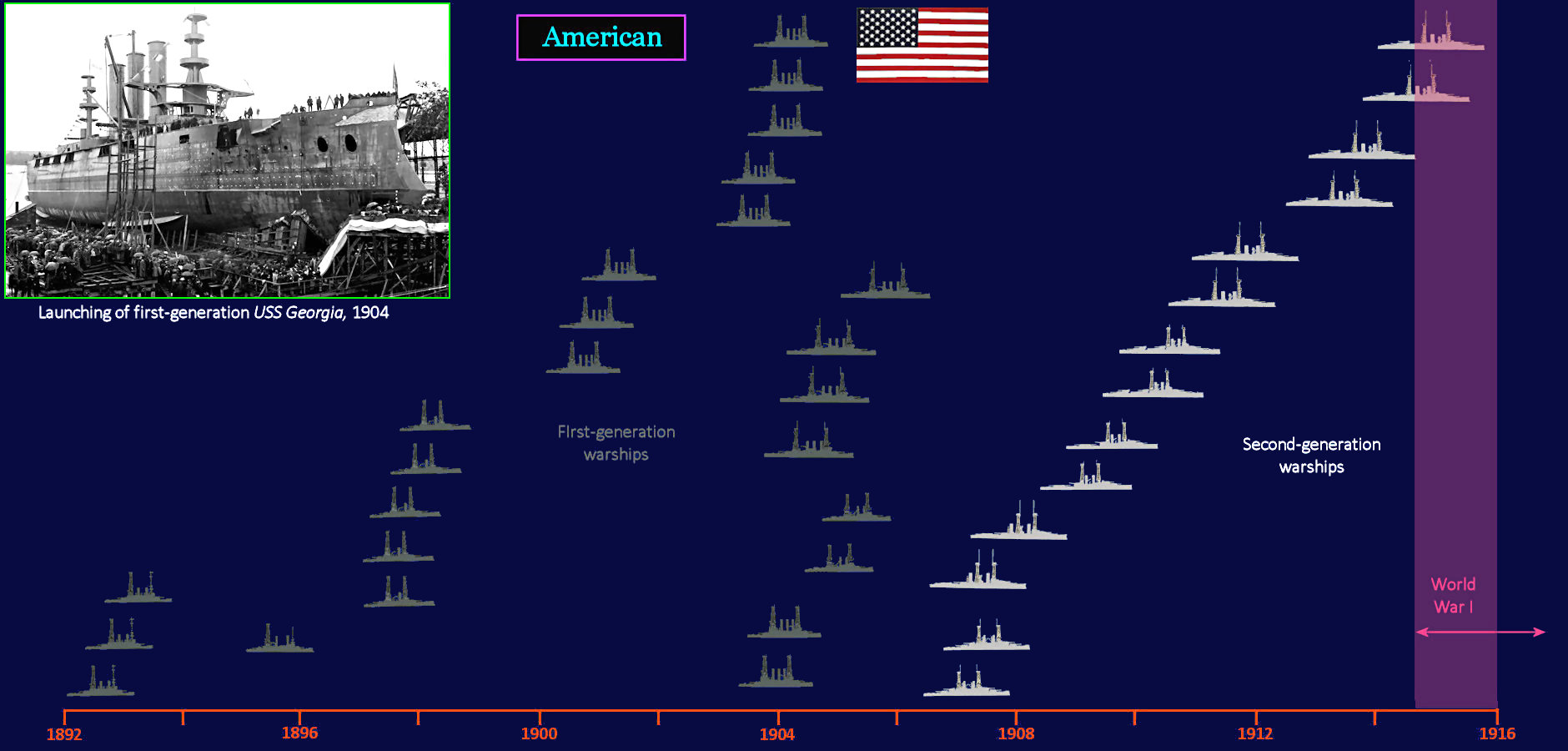
America Joins the Race America has almost no navy at all when the race begins, in 1890, but begins building new steel warships at a rapid clip. This is largely due to the energetic efforts of Theodore Roosevelt, who studied naval power at Harvard before serving as Assistant Secretary of the Navy, prior to becoming President. By 1910, US Navy spending is five times what it had been 20 years earlier. Both Germany and France have battleship fleets of similar size. To compare with the British fleet, scroll up to the previous image. | |||||||||
| |||||||||
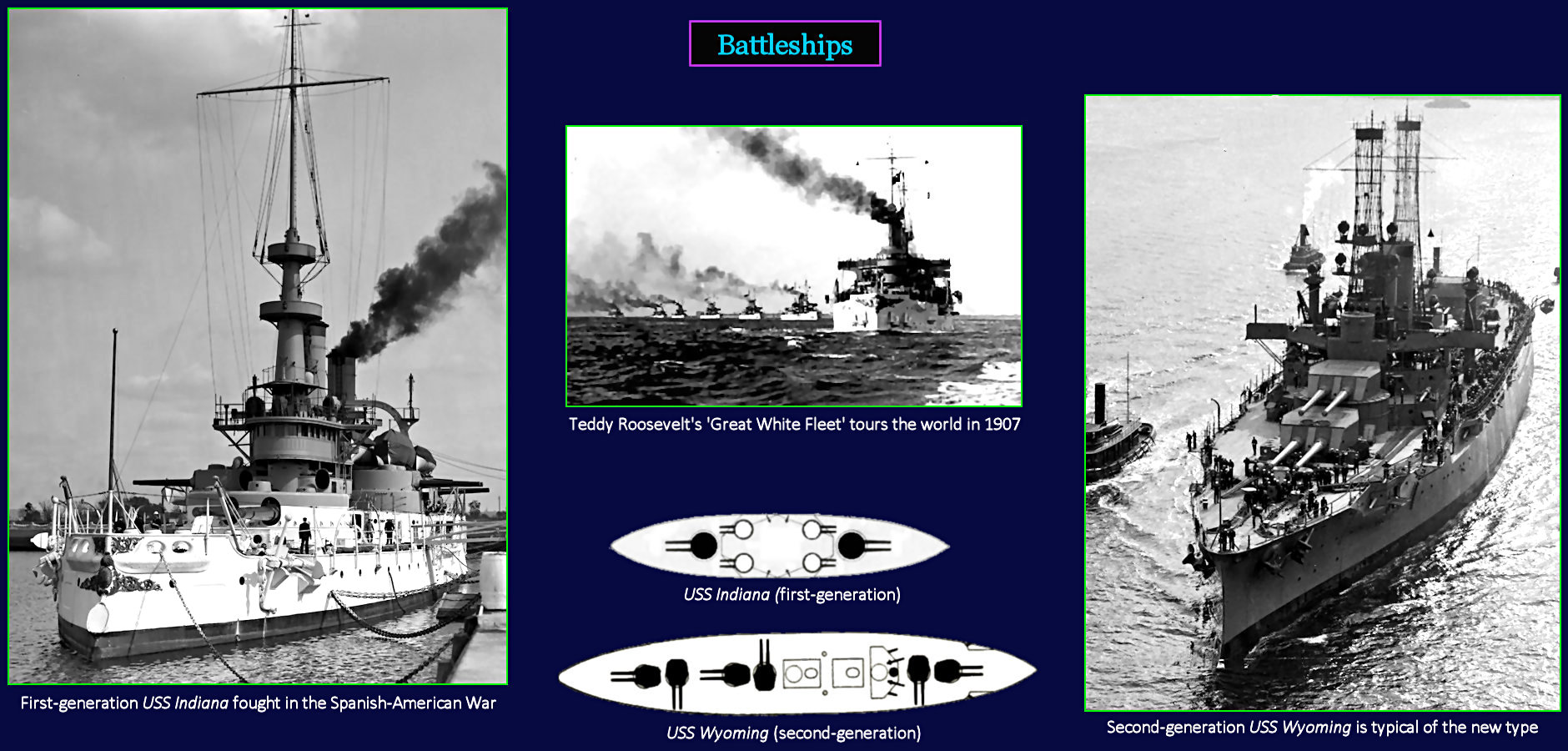
Showing the Flag By 1910, the new US Navy is a match for any in the world, except the British. Young Teddy Roosevelt has a special fondness for the navy, and an unusual appetite for military adventure. A year before becoming President, he makes perhaps his most famous statement. 'Speak softly and carry a big stick. You will go far.' His 'big stick' is the navy, which he parades across the globe in 1907, with 16 battleships (top center). This unprecedented show-the-flag cruise is partly meant to deter Japan from further expansion in the Pacific. Japan has just defeated Russia in a major conflict over control of Korea, after annihilating the entire Russian fleet in a decisive battle. | |||||||||
| |||||||||
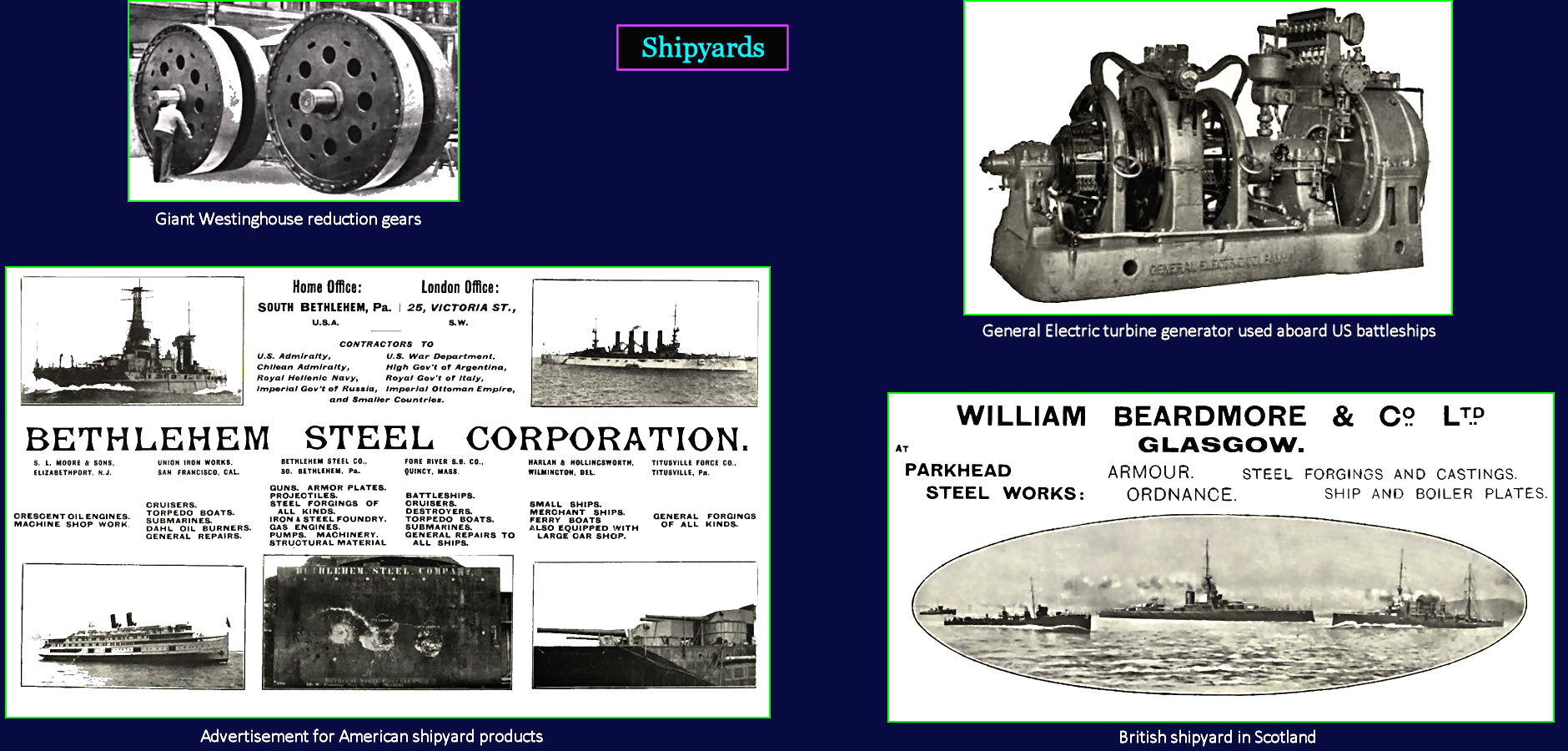
Selling the Product The new warships consume huge amounts of the finest steel. Before World War I breaks out, major ship-builders advertise their products openly to all potential buyers, from whatever nation. The British sell ships and engines to many nations. The Germans provide steel armor even to the British, right up to the beginning of hostilities between these two nations. | |||||||||
| |||||||||
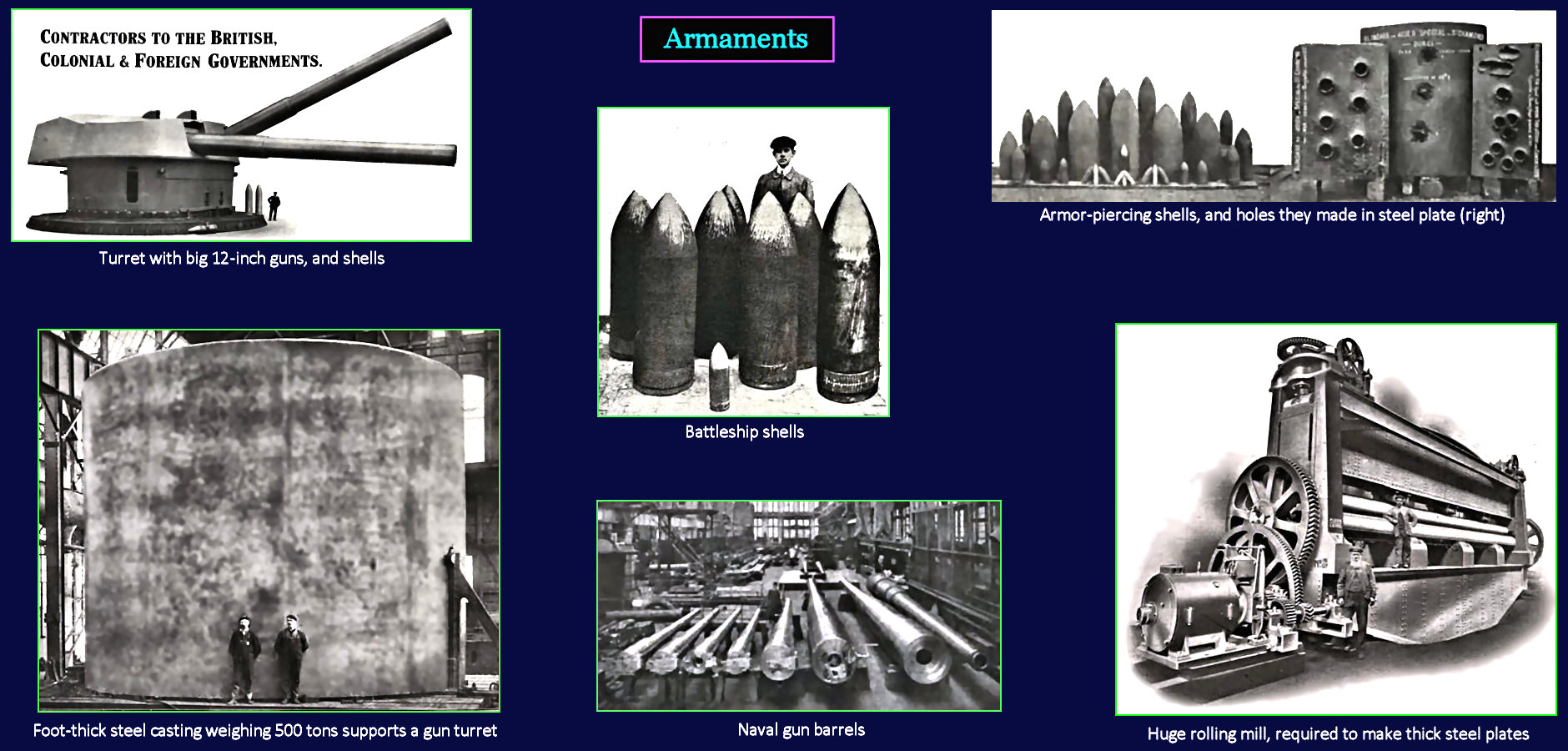
Shells vs Armor Steel hulls, guns and armor all require large amounts of steel. The steel castings which support the main gun turrets are each as heavy as 15 steam locomotives (lower left). | |||||||||