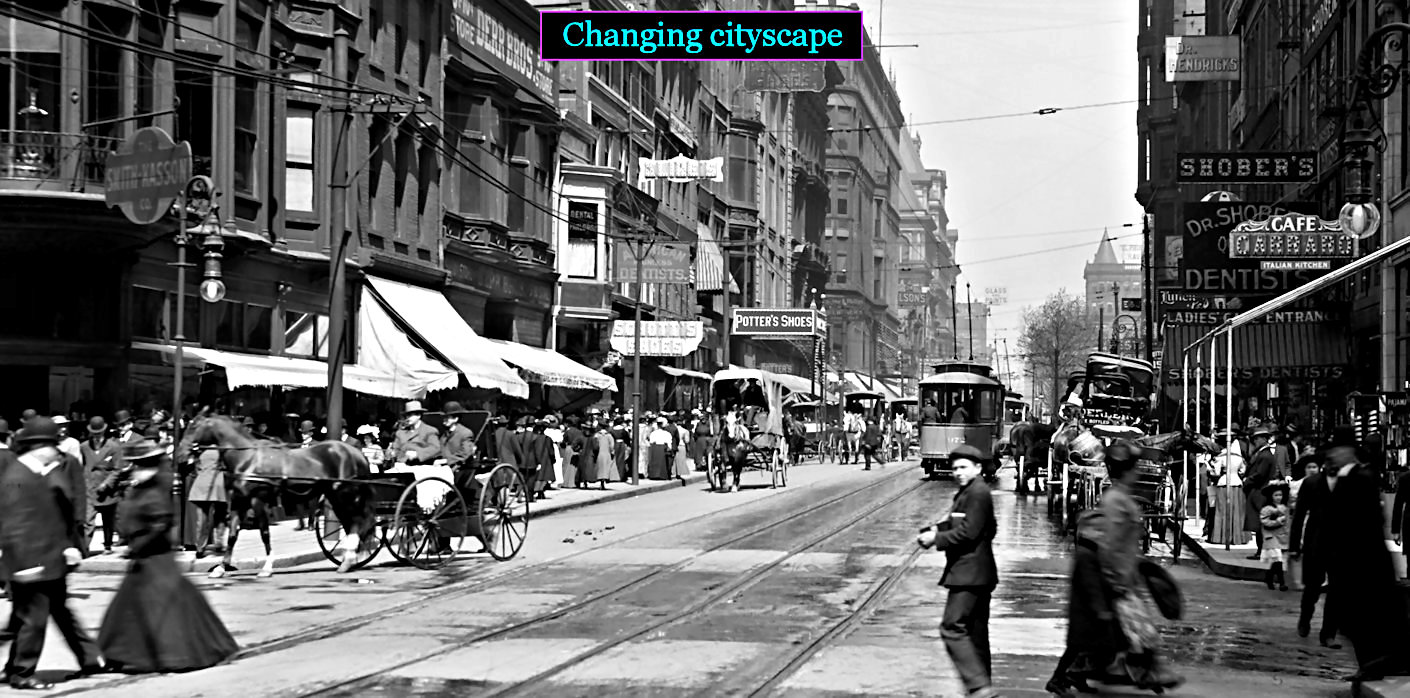
More PeopleThe view shown here is Cincinnati in 1900, the 10th largest city in America at the time. The sidewalks and streetcars are full of people going about their daily business, but not a single automobile is visible. This will change rapidly. In 1900, there are only 8,000 cars registered in the entire country. Just 10 years later, there are half a million. Nothing grows that quickly, but automobiles somehow manage the feat. Increased noise and growing traffic problems will be initially ignored. People can now go anywhere they want, anytime they want. All they need is a car, gasoline, and a good road. These will all come. |
| ||||||||||||||||
| |||||||||
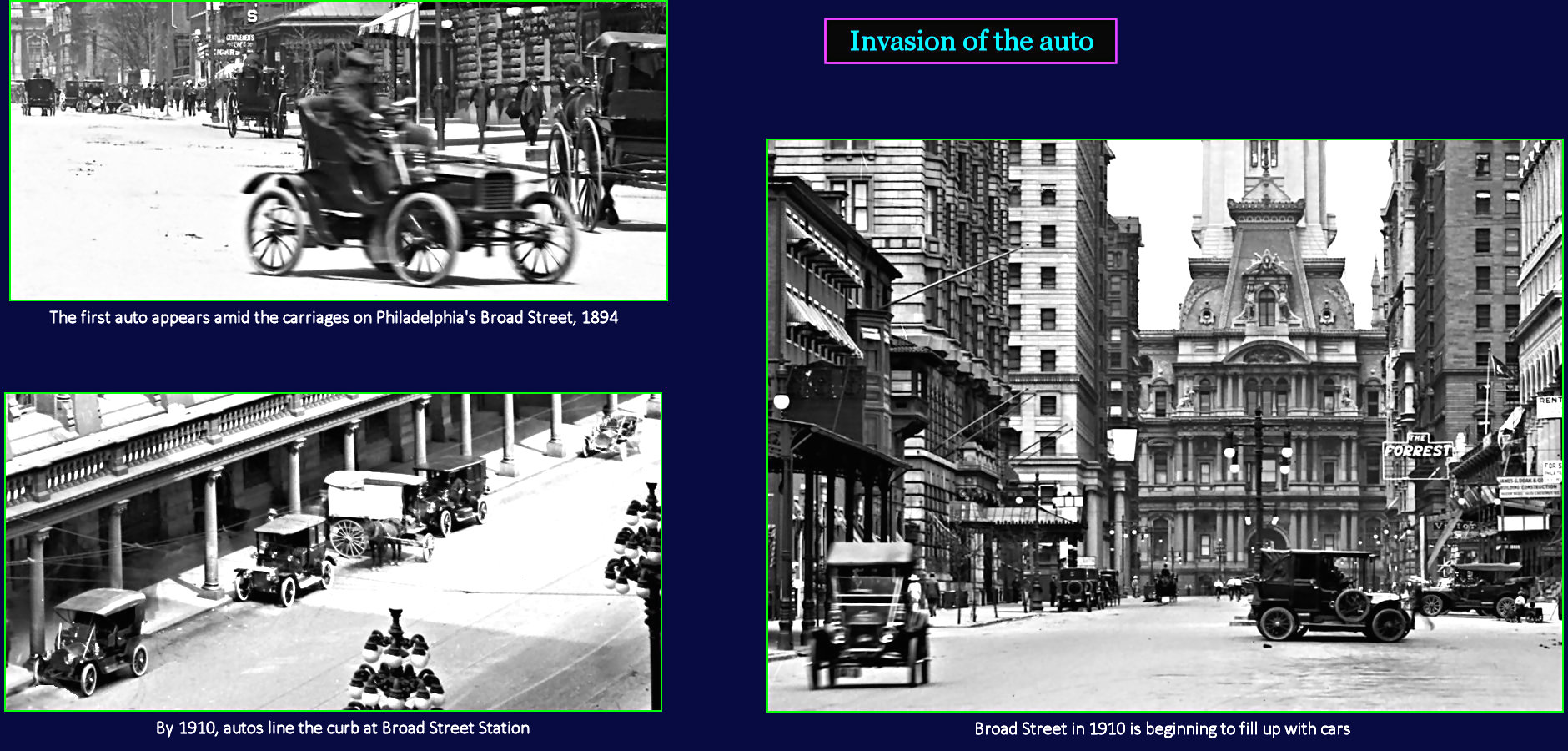
Early Adopters These views are all of Broad Street, Philadelphia, over a range of just 15 years. They illustrate the rapid transformation of the city, as autos spread like dandelions. Most photos of autos from this period are taken in the city, where cameras are common. But autos quickly spread to rural areas as well, despite the muddy roads. | |||||||||
| |||||||||
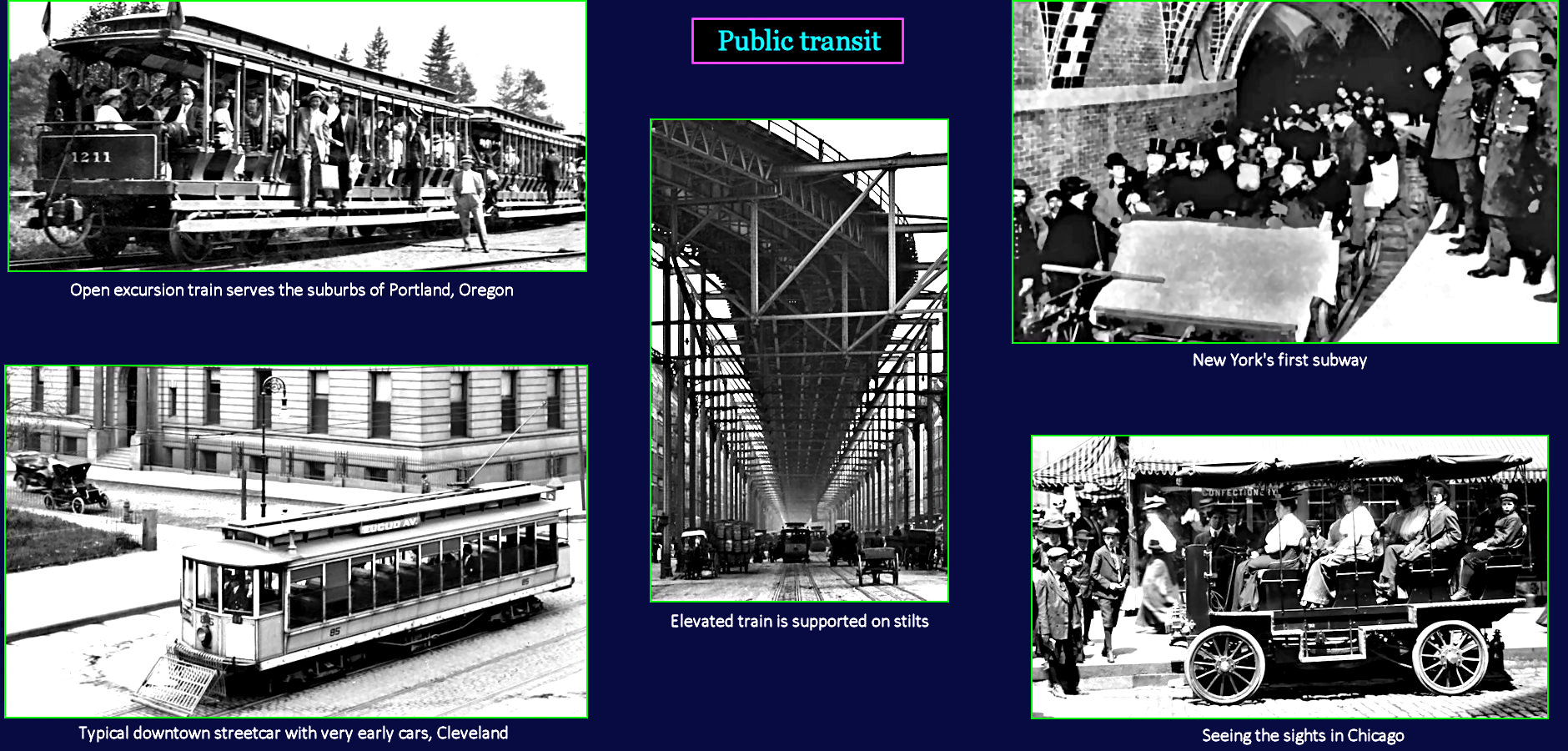
Riding City Rails To travel any distance, city dwellers routinely crowd onto public transport. Horse-drawn cabs are available, but most people use streetcars and urban railroads, which fan out into surrounding suburbs (top left). A new innovation is the elevated train (center), which allows rail companies to penetrate deeper into cities, with minimum disturbance to existing structures. These are not exactly attractive, however, and block out most of the light. Even so, elevated lines are built in New York, Chicago, Philadelphia and Boston. At the same time, subways are just beginning to appear (top right). People can also sometimes tour downtown areas on an electric 'omnibus' (lower right), which is somewhat ungainly, but wonderfully quiet. | |||||||||
| |||||||||
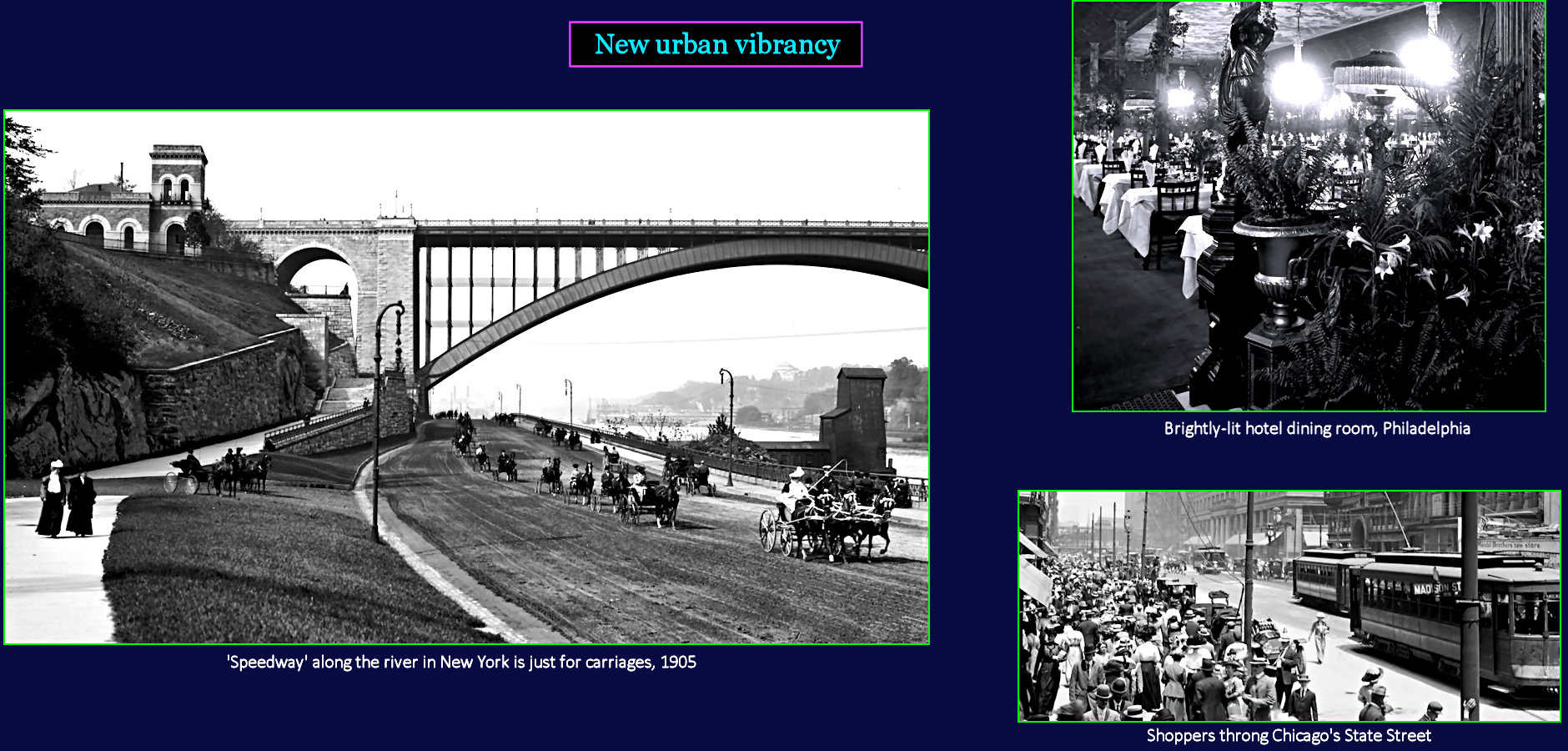
Genteel, but Exciting New York indulges the new fascination with speed by expanding an existing carriage racetrack into a new 'speedway' along the Harlem River. Still reserved for carriages only, it serves mainly as a grand venue where the gentry mix, to display themselves. At the same time, electric indoor lighting is now available almost everywhere (top right). Many factories, office buildings and even steamships, have their own steam-powered generators in the basement (or hull). Shopping is becoming increasingly popular. | |||||||||
| |||||||||
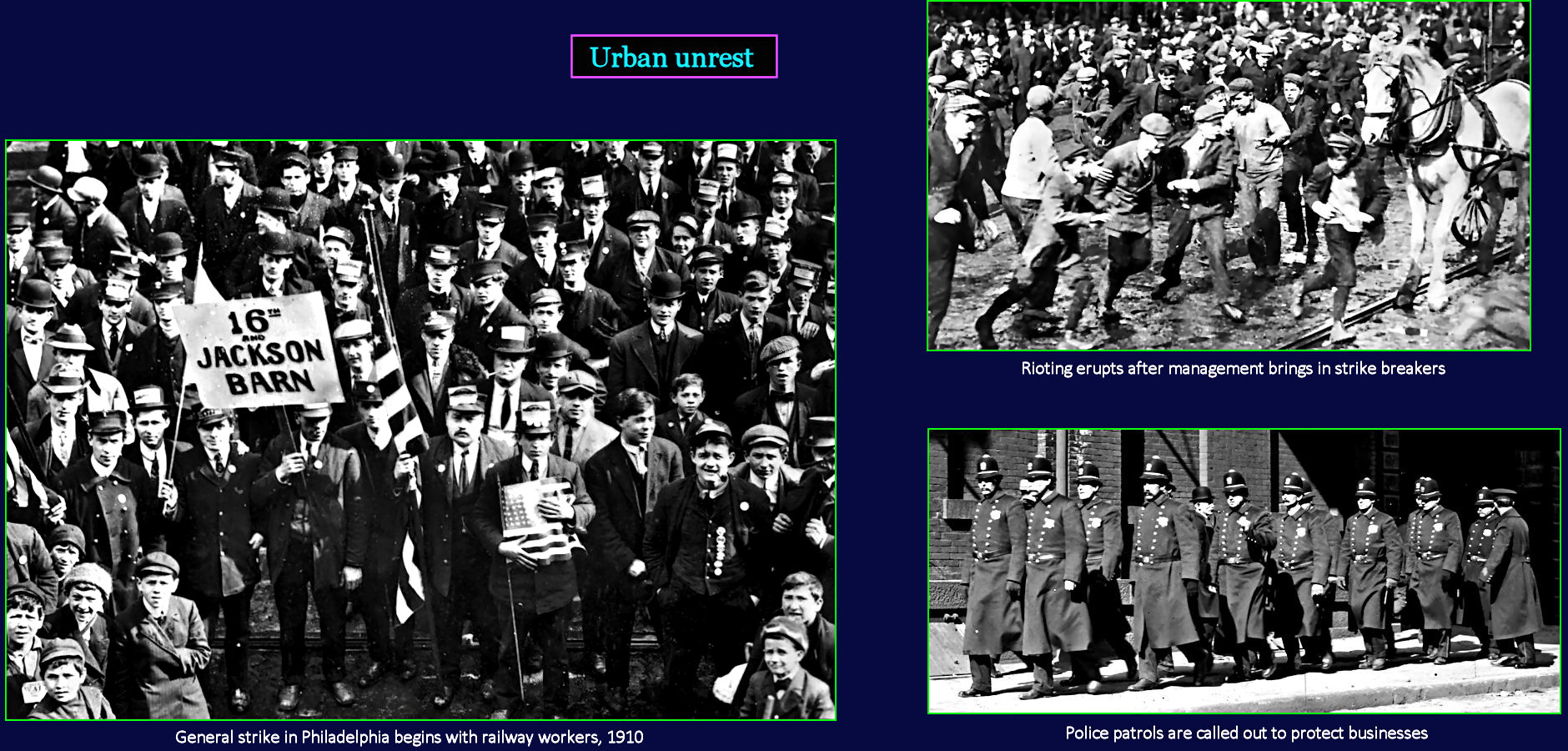
The Price of Change Not all the new changes in urban life are good. The working class does not share in most benefits, and begins demonstrating for better conditions. Philadelphia is hit by a strike against the streetcar company in 1910, demanding higher wages and a 10-hour limit on the workday. Management brings in strike-breakers from New York and Boston, and the unrest widens into a general strike. Police are needed to protect property. | |||||||||
| |||||||||
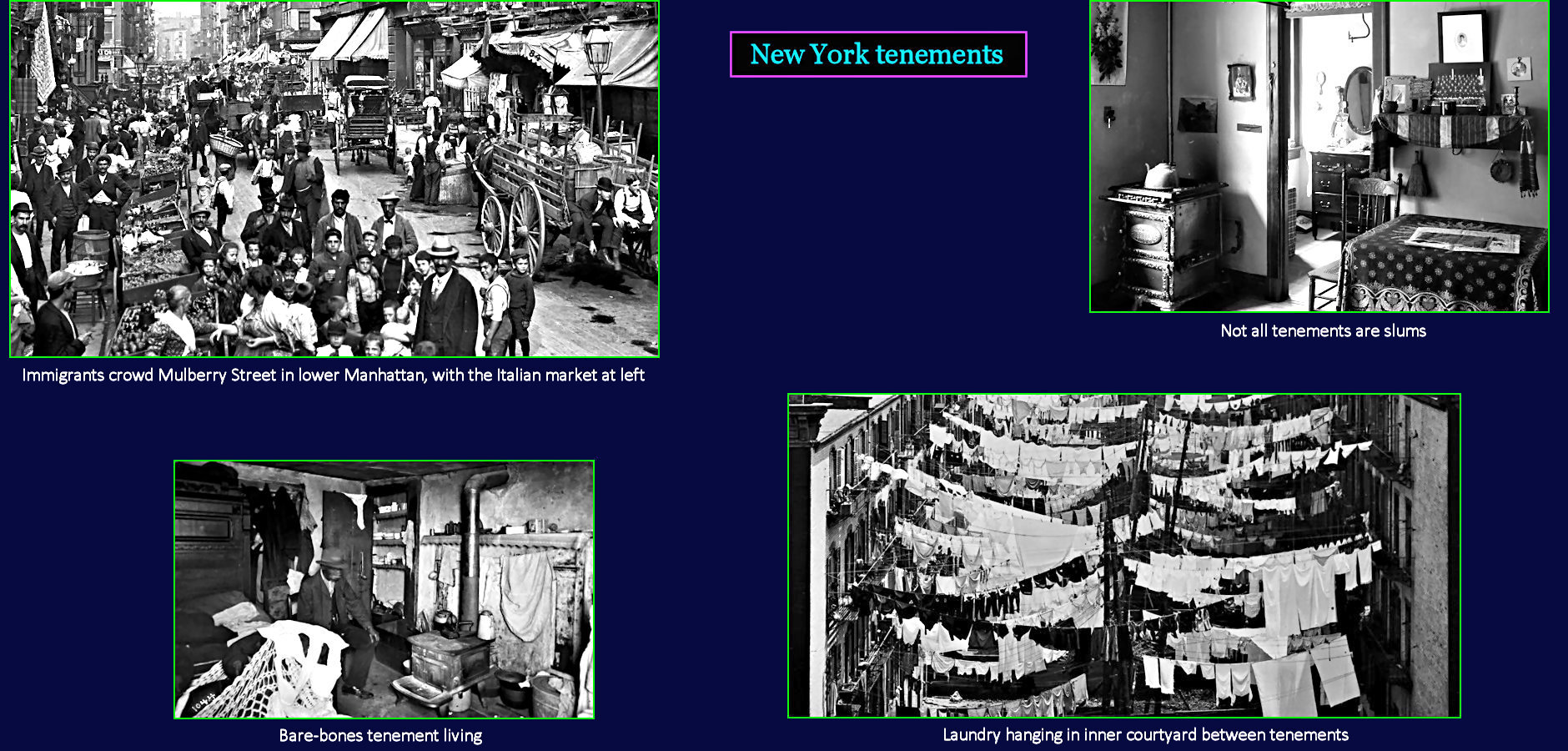
How the Other Half Lives The shortage of decent housing for workers is a problem in major cities. This is especially true in New York, where immigrants are arriving by the boatload every week. The solution is to build large 'tenement' buildings, which are little more than crowded, no-frills dormitories for new arrivals. Stories of tenement filth and misery (lower left) begin to appear in the newspapers. The misery is real, as newly-arrived immigrants have to live somewhere, but their destitute condition and broken English doesn't allow them many options. Conditions vary. Some apartments are even respectable (upper left). | |||||||||