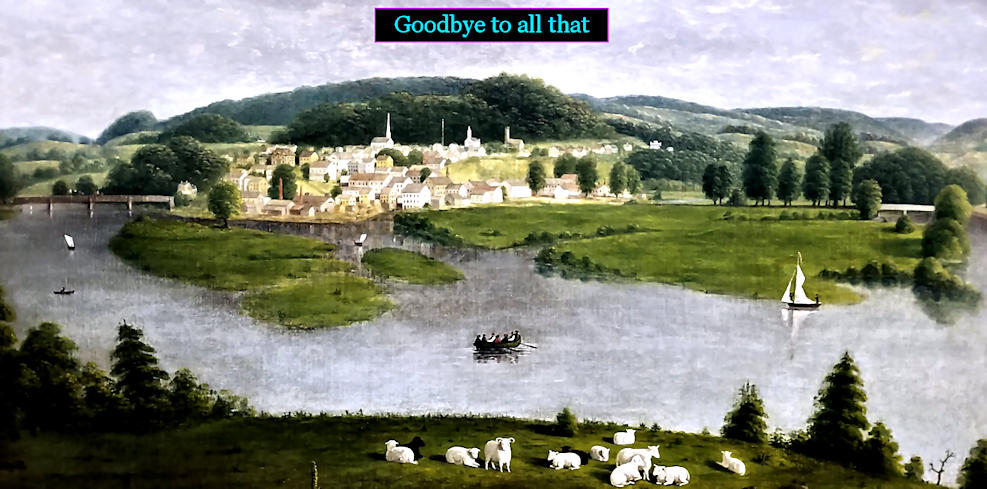
There goes the neighborhoodSteam engines and railroads have already come to larger cities by this time, but not here, not yet. By 1910, most of this is gone, taking with it the delightfully peaceful landscape, and relaxed pace. Industrialism brings many advantages, but at a cost that is only starting to become apparent. There are many tradeoffs. Speed for noise. Shopping choices for bustling commercialism. Convenience for congestion. Sadly, the days of the small town, as seen here, are coming to an end. People still live out on farms, but are becoming increasingly aware of their isolation. Without the internet, there's not much to discuss but the weather. |
| ||||||||||||||||
| |||||||||
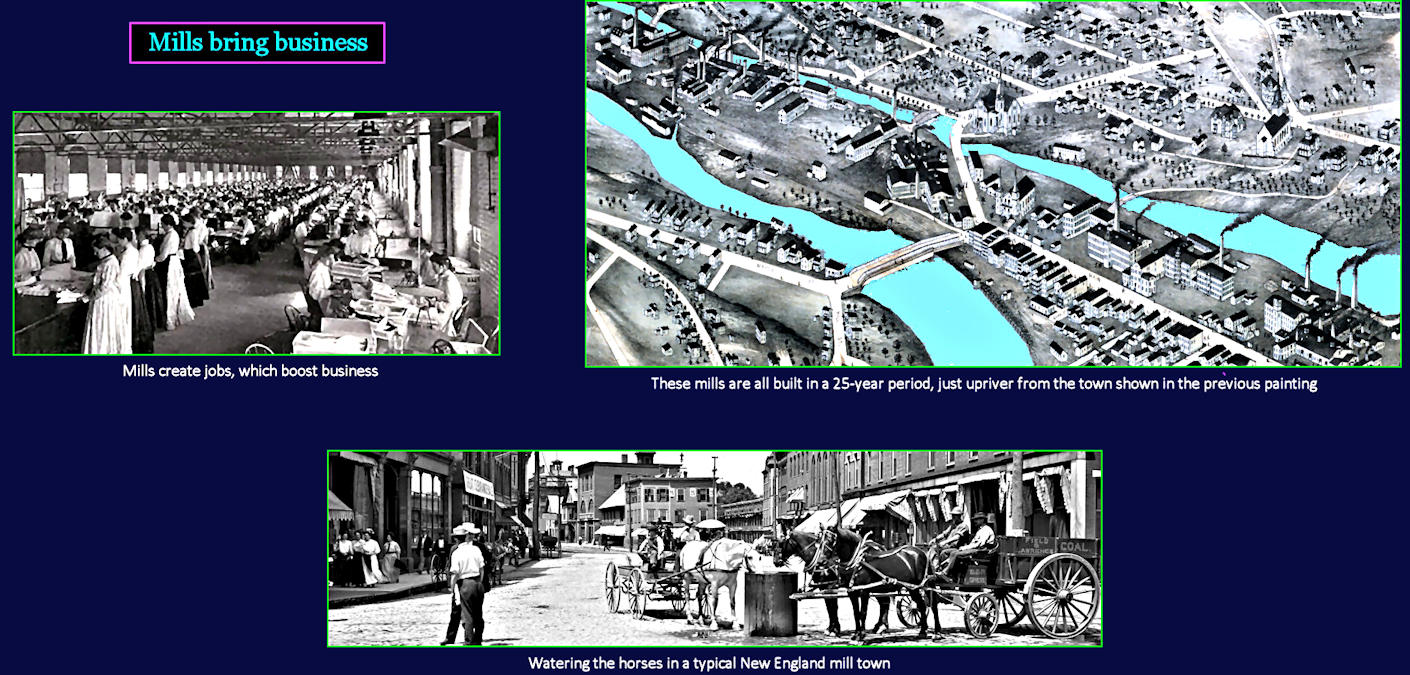
Jobs, Jobs, Jobs The view at upper right shows the mills built just upstream from the rural town in the previous painting. They are all driven by water contained in a long mill pond (the narrower blue area) created by a dam at a set of falls, just out of view. The spent water is discharged by underground pipes into the wider blue area, which is the main river. All this happened back in the period before steam power, but continues on into the coming era of the automobile. New England has dozens of similar 'mill towns.' Cars will soon begin to clog the streets, extinguishing the last vestiges of small-town character. | |||||||||
| |||||||||
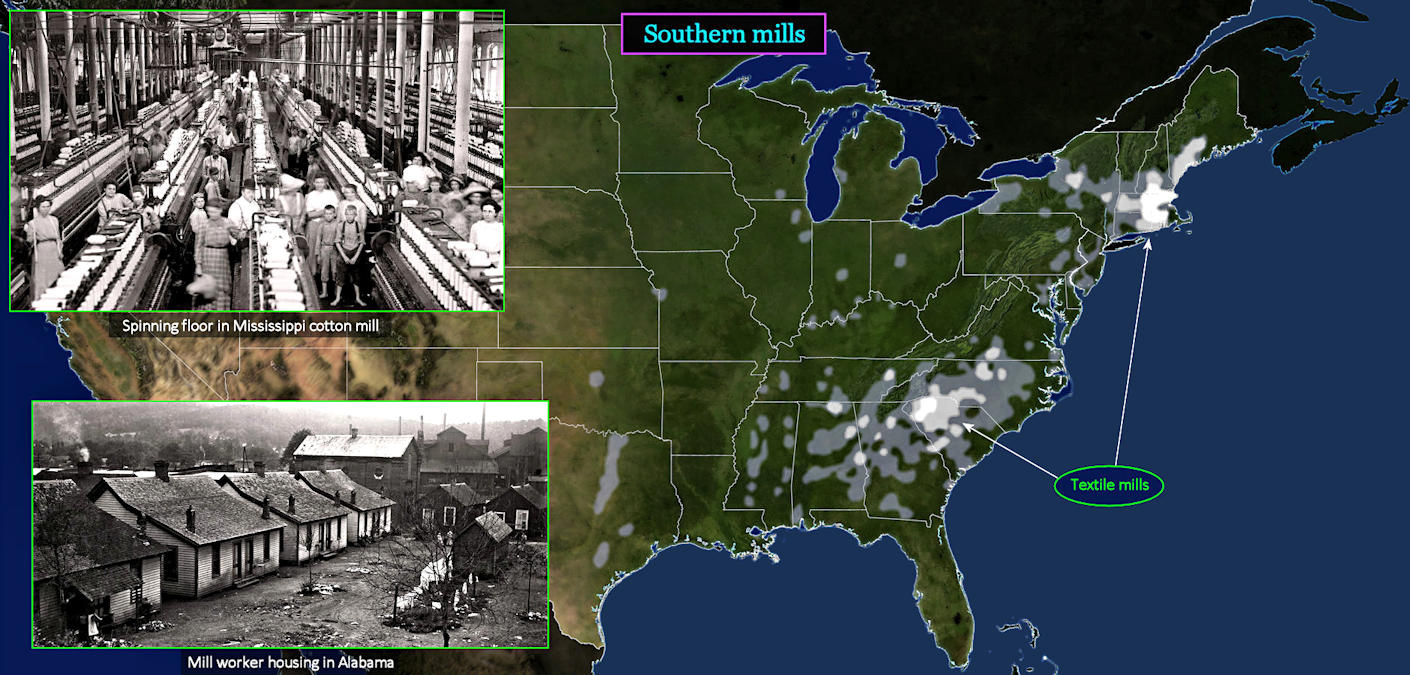
Where all the Cotton Goes Southern mills scattered in upland regions are now challenging New England mills. North Carolina, South Carolina and Georgia are each weaving as much cotton as Massachusetts. These mills often provide the only paying jobs around, with whole families working in the same mill. Housing for the workers has slipped several notches from the early days. Mill workers are typically housed in bare-bones duplex structures that each contain two families, much like those in the Pennsylvania coal-mining regions. | |||||||||
| |||||||||
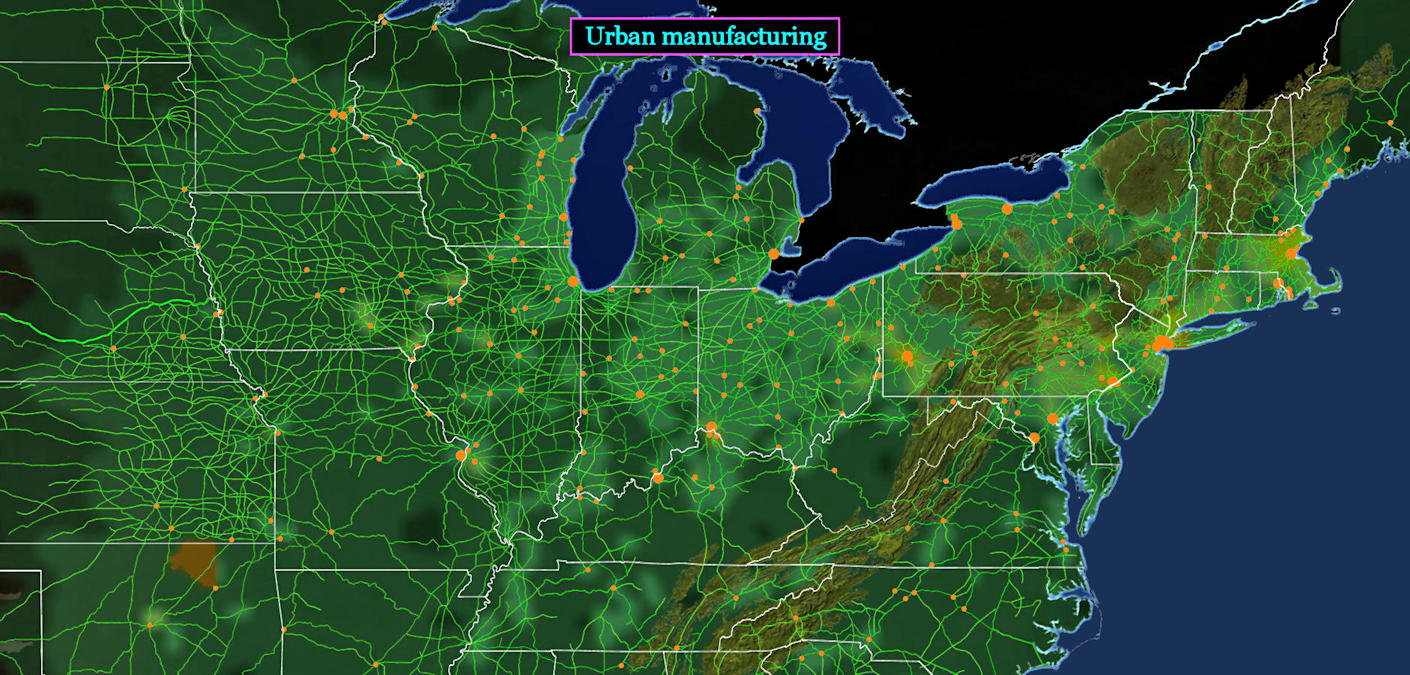
Cities Attract Factories The biggest impact of industrialism is in the cities. Factories are attracted to urban areas, not only for easy access to major rail lines, but also to city water, gas and phone systems. In addition, most customers are located in the city. Urban manufacturing now accounts for at least two-thirds of all manufacturing, even in rural states like Tennessee. In the Northeast, it's over 90%. | |||||||||
| |||||||||
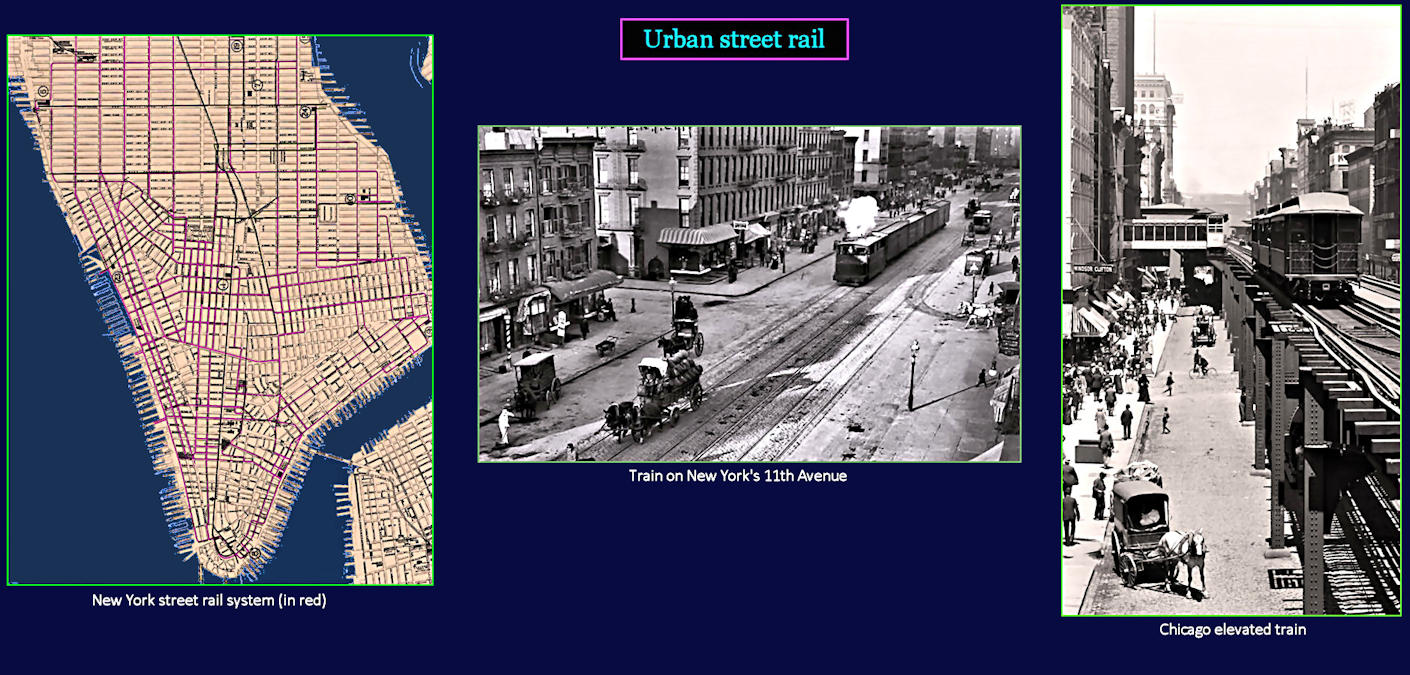
Downtown Rail Service The largest American cities are building out extensive networks of 'street rail,' starting with trollies. Freight trains sometimes appear on downtown streets (center). But the worst encroachment comes with the elevated railways (right), which not only blot out the sun for pedestrians below, but also bring noise directly into windows of upper floor apartments. The attraction of these rail lines is their speed, as elevated trains don't need to dodge through street traffic. They serve the same function as subways, which will gradually replace them as a means of getting downtown. | |||||||||
| |||||||||
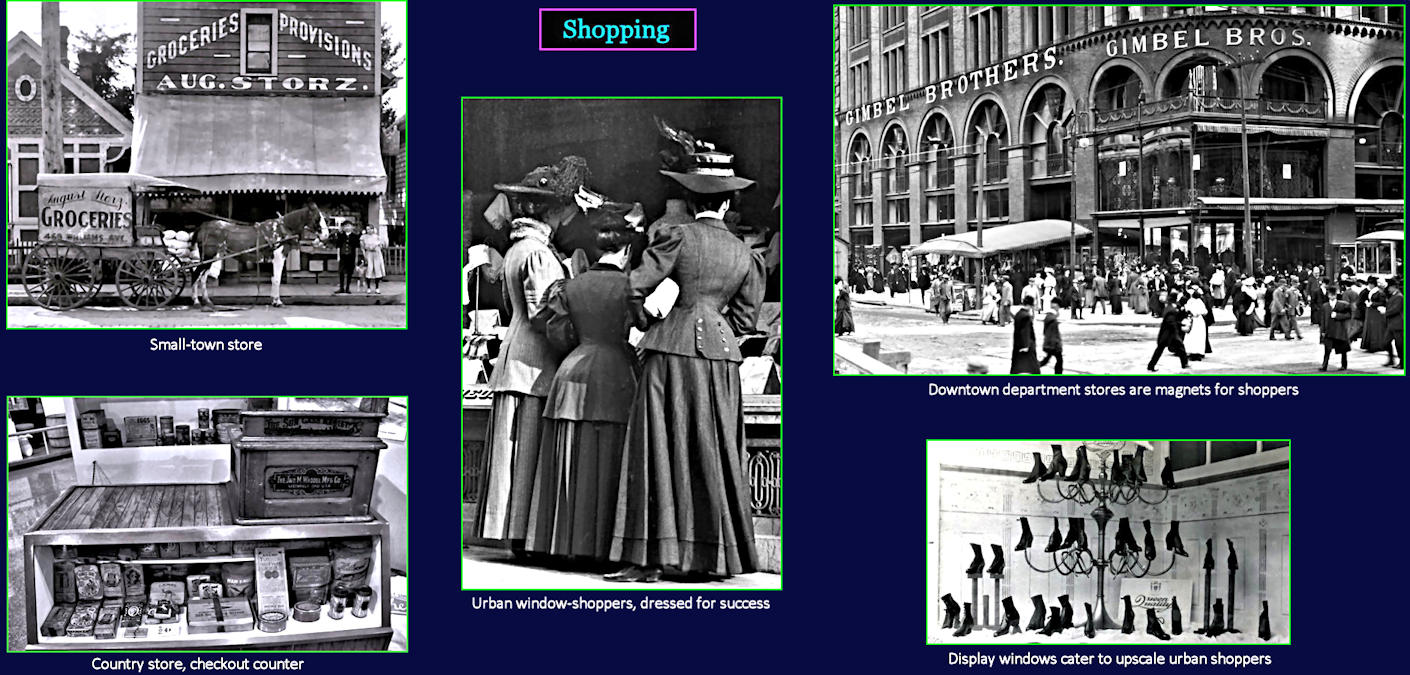
New Urban Recreation In the early 1900s, few Americans are worried that the pace of life seems to have become slightly more frantic. Traffic problems are growing, and crowds are swarming the streets in the larger cities, but people are enjoying the benefits of a stylish new urban life. Nowhere is this more evident than in the stores. They're no longer limited to small storefronts selling mostly dry goods (lower left). Big department stores, like Gimbels in New York (top right), are bursting with attractive products, some imported from the fashion centers of Paris and London. | |||||||||