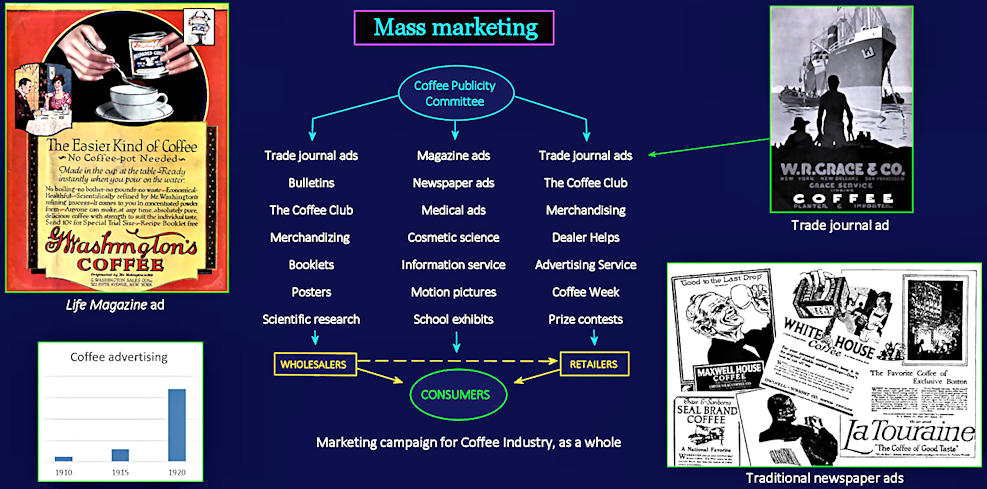
Military-style CampaignsCorporations hire professional advertising firms to handle their campaigns, and bring in the finest, top-dollar illustrators. The best artists sign their work, with signatures sometimes splashed across the ad itself. Some industries band together to present a unified front to the public, and raise awareness of a generic product, like coffee. The multi-pronged marketing campaign illustrated here is created by the 'Coffee Publicity Committee.' The campaign is military-grade in both scope and complexity. It envisions a three-pronged assault aimed at wholesalers, retailers and the general public, all designed to create a groundswell of desire. |
| ||||||||||||||||
| |||||||||
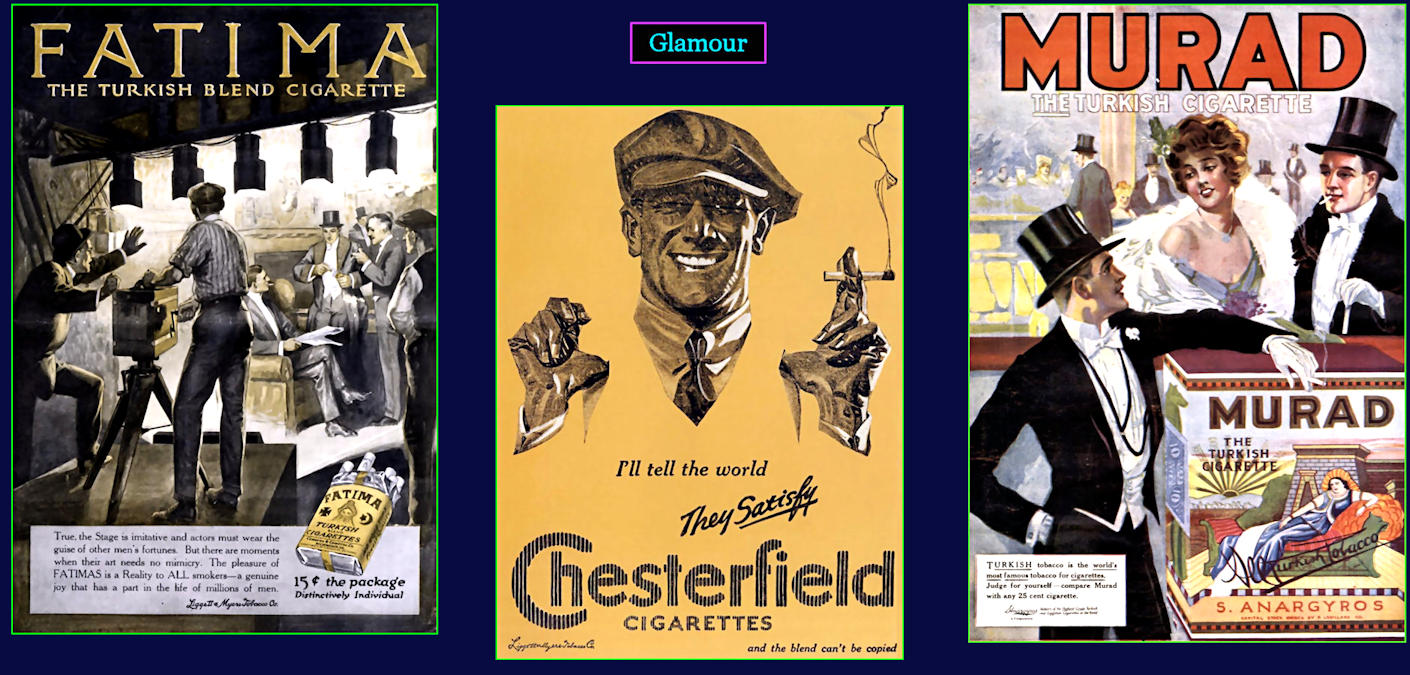
Juicing it Up Splashy ads sometimes feature eye-catching color. This is brand new, made possible by advances in color printing techniques that are still being developed. But color illustrations lose quality when printed on existing equipment. For this reason, color is mostly reserved for magazine covers (inside and out, front and back) and posters, which are printed separately, on better paper, with the best equipment. Advertisers actually prefer less expensive black-and-white for most advertising, since it allows a much wider range of techniques, and reproduces well on the printed page. | |||||||||
| |||||||||
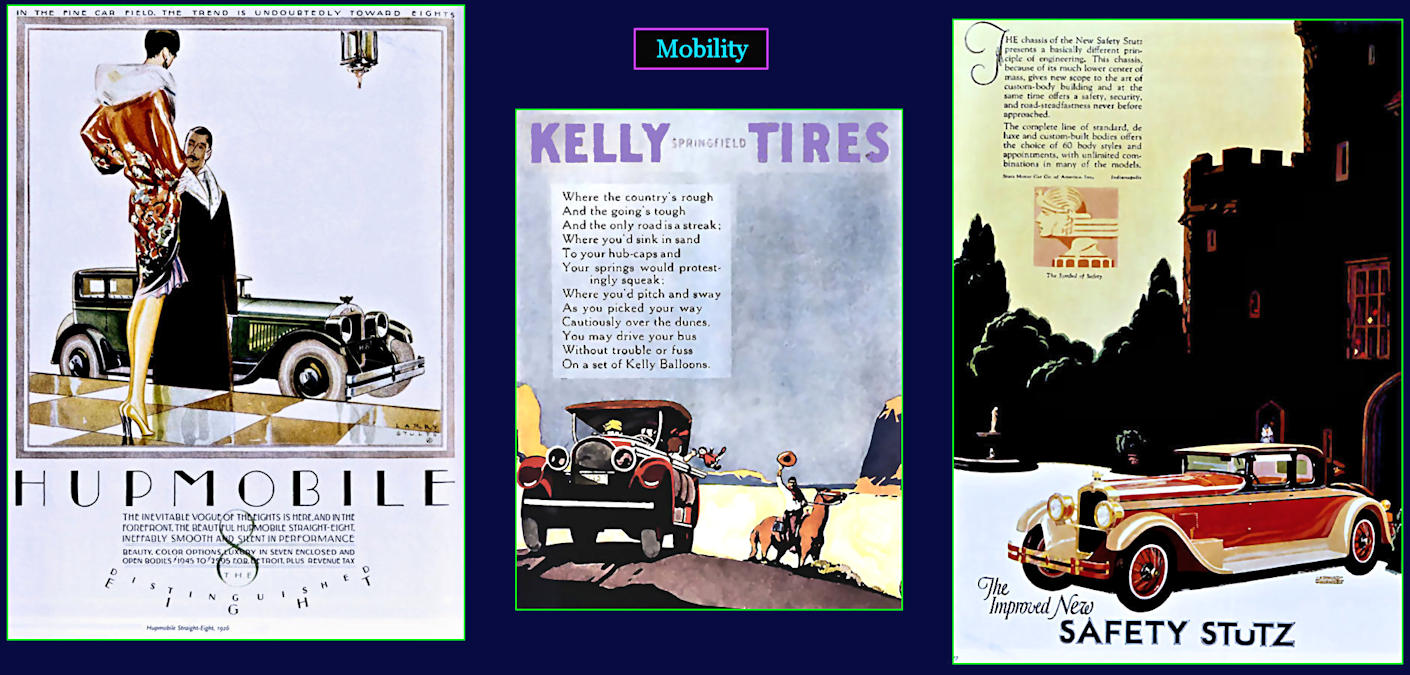
Tantalizing Displays Besides cigarettes, autos are among the most commonly depicted products in the new color media. Full-page ads feature classy cars in glamorous and exotic settings, building an appetite for products that only the wealthy can actually afford. | |||||||||
| |||||||||
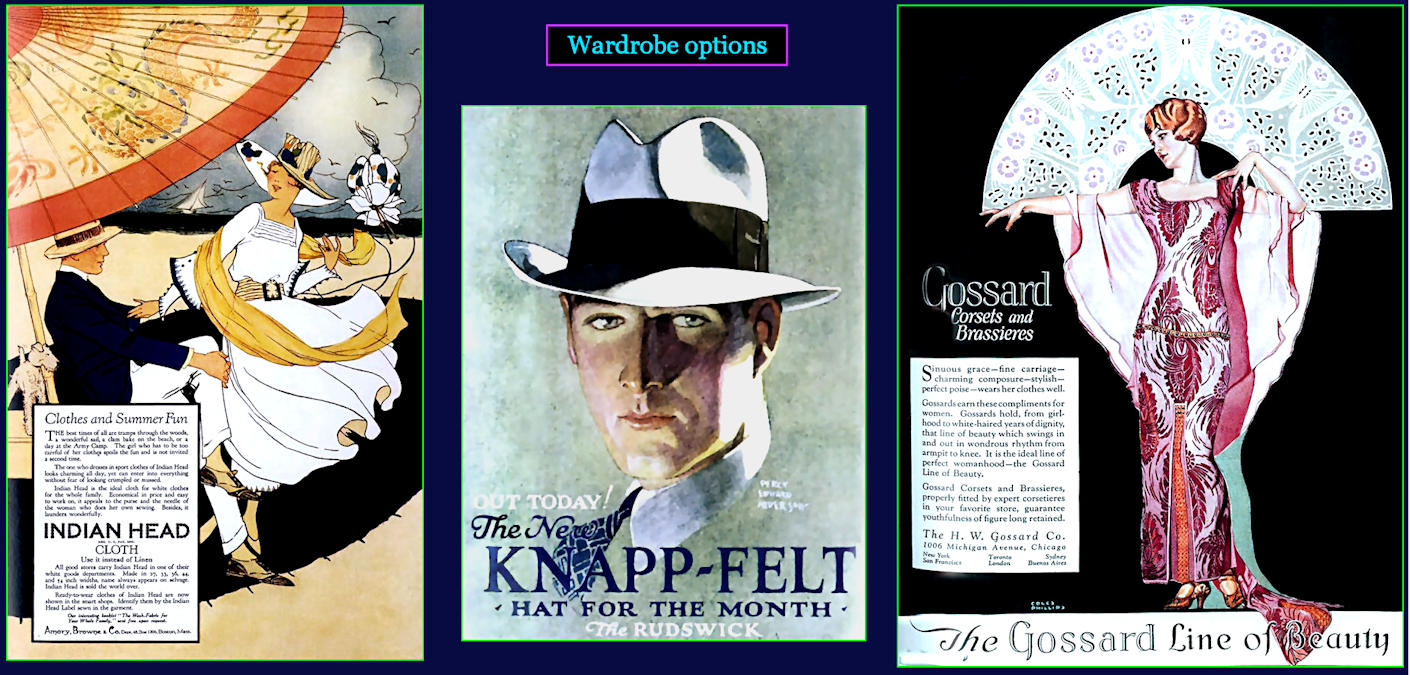
Joining the Smart Set Clothing is something everyone needs. Attractive ads are used to nudge consumers into considering slightly more pricey options, with the implied promise of improving their social status. | |||||||||
| |||||||||
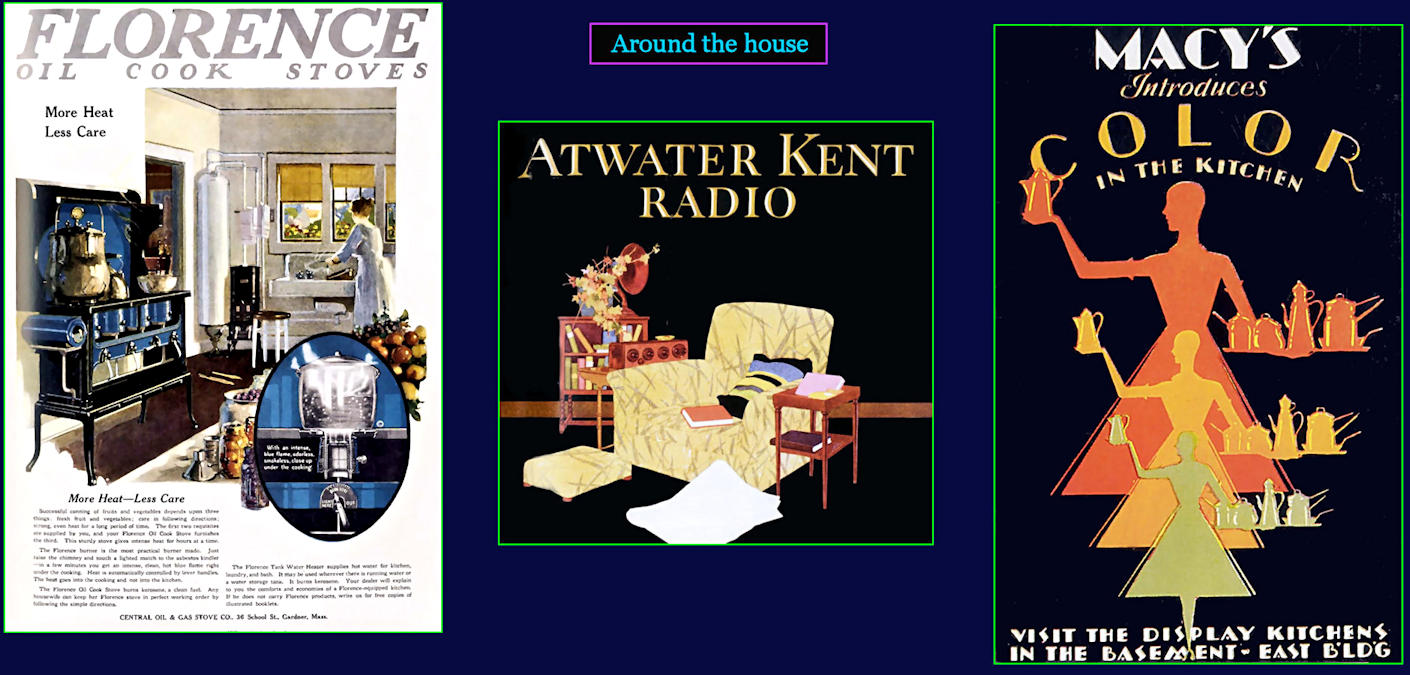
Color in the Home Color ads get a big boost when the products themselves become more colorful. The ad at right announces ordinary kitchen items being offered in bold new colors. This is almost shocking, in a world where manufactured items of any kind generally lack color. | |||||||||
| |||||||||
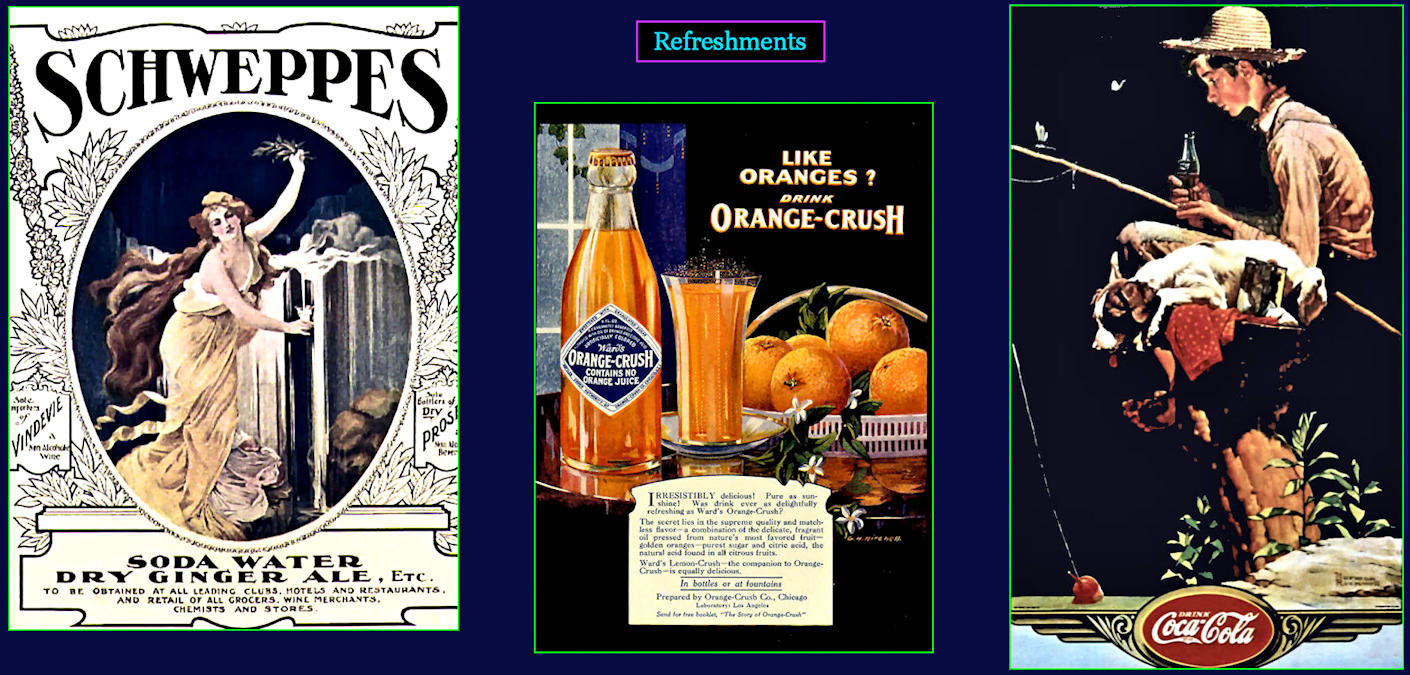
Simple Pleasures Beverages promise a more enjoyable life at little cost. Anyone can afford a Coke, even out on the farm. Artwork for the ad at right was created by Norman Rockwell, the most popular illustrator of the time. | |||||||||