| |
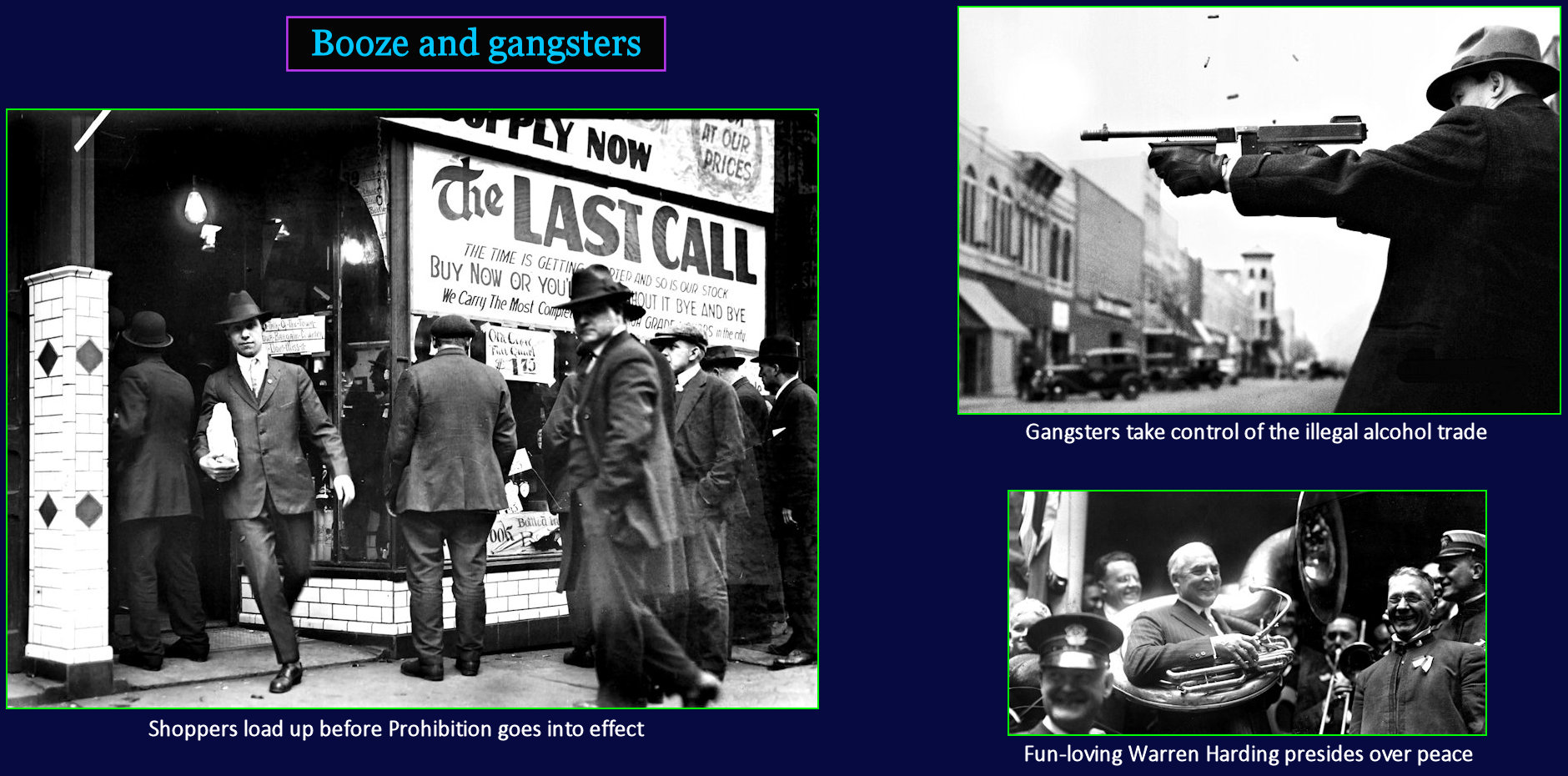
Prohibition and the Mob 'Prohibition' is the name given to the attempt to eliminate the drinking of alcohol in America. People line up to get their last bottles before it takes effect. Afterwards, enterprising urban dwellers set up illegal bars, called 'speakeasies,' in secret basements. In rural areas, 'bootleggers' set up their own stills to make a rough-and-ready liquor. Along coastlines, anyone with a small boat can attempt to shuttle liquor ashore from vessels anchored just beyond the legal limit. Over time, organized crime takes control of most illegal shipments. |
| |||||||||
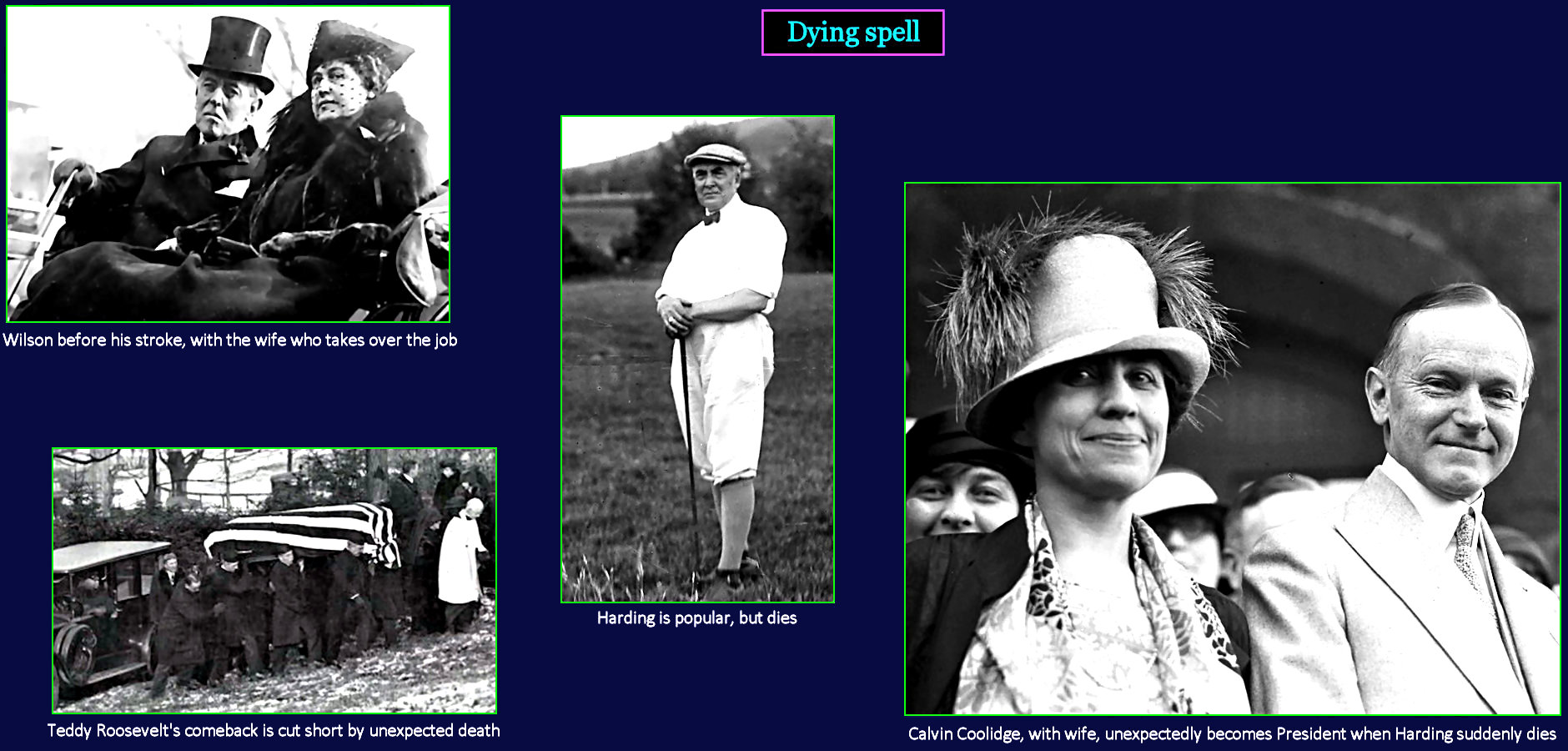
Troubling Events As Prohibition takes hold, ordinary Americans try to make the best of it. Farmers are hard hit by a sudden drop in prices for grain, which had doubled during the four wartime years, but now return to previous levels. President Wilson suffers a stroke after returning from Europe, which leaves him bedridden, and barely able to function. Disappearing from public view, his wife Edith secretly assumes his duties during the remaining five months of his term. Theodore Roosevelt is the overwhelming favorite to succeed Wilson, but dies unexpectedly. Warren Harding, a relative unknown, is elected instead, with a promise to 'return to normalcy.' But then Harding, too, dies suddenly, leaving Vice President Calvin Coolidge to take his place. None of this is normal. | |||||||||
| |||||||||
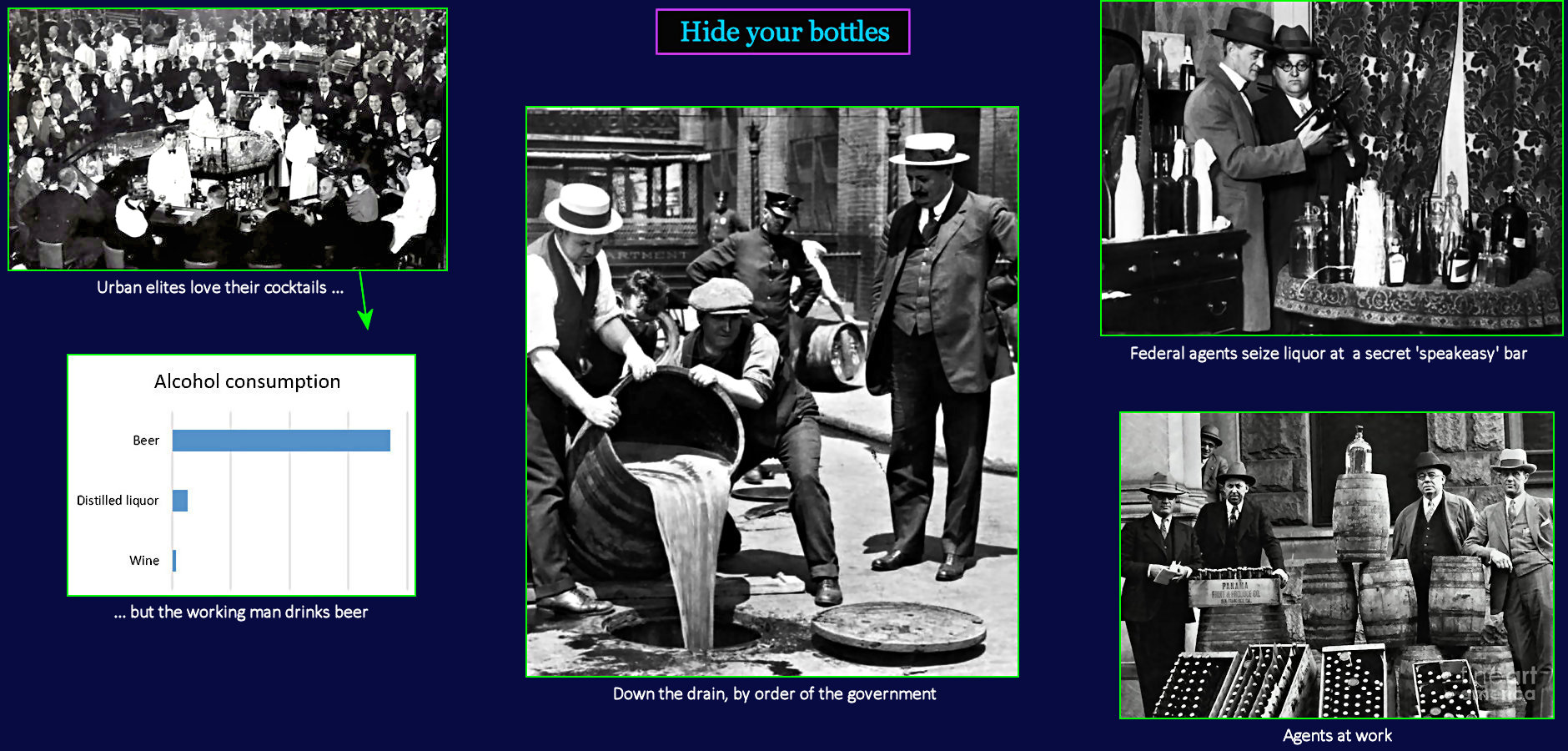
Tumultuous Struggle Prohibition lasts throughout the 1920s. Federal agents make initial attempts to enforce the liquor ban, with several high-profile media events to make the point. They raid illegal speakeasies in the cities, and destroy backwoods stills in rural areas. They smash bottles and barrels, but can't stop the flow of illegal alcohol. American's get their drink wherever they can, sometimes dying from home-brewed 'bathtub gin,' or bottles of lethal raw alcohol. Americans, it seems, need their drink. | |||||||||
| |||||||||
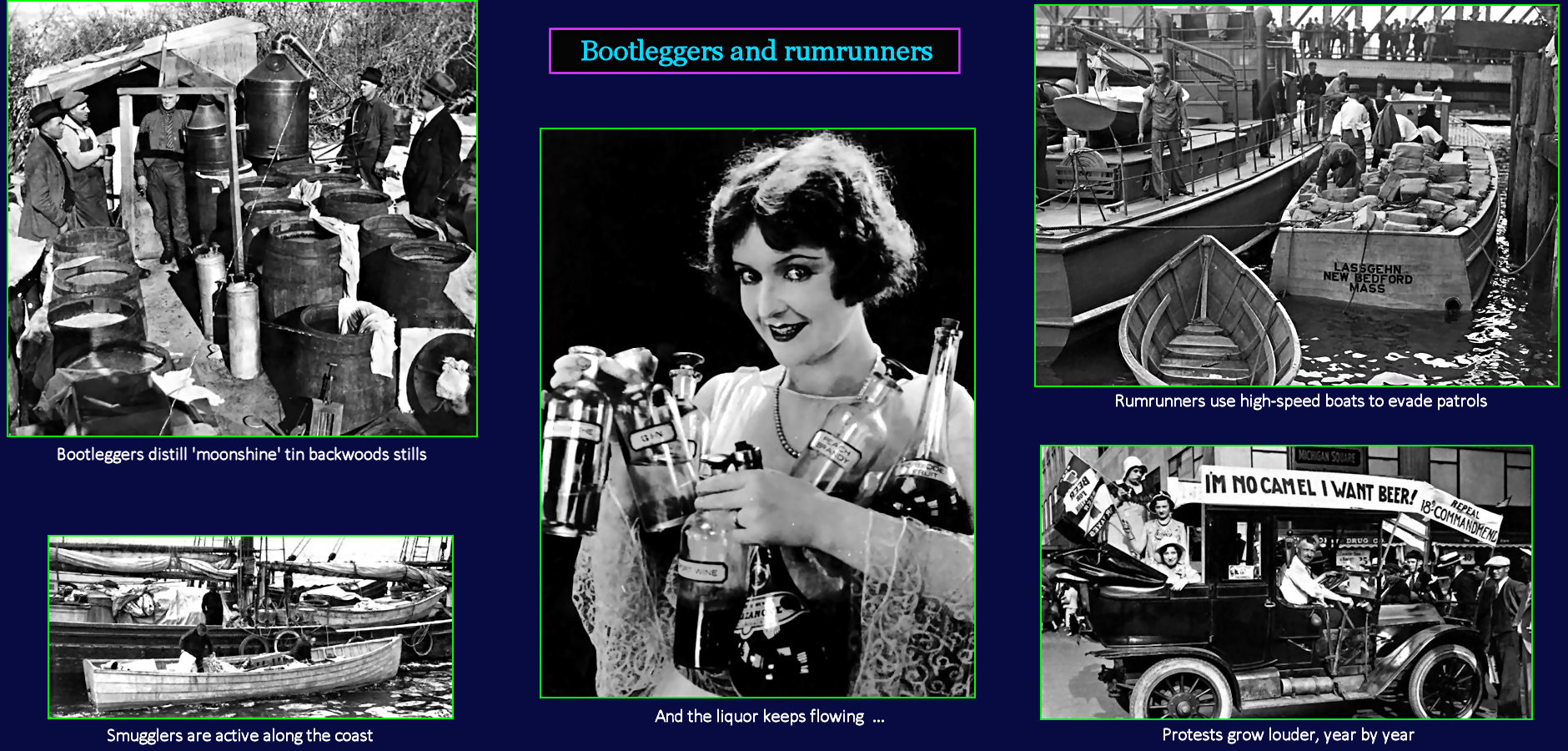
Resistance Fighters Alcoholic beverages can't be produced legally anywhere in America, but that doesn't stop deliveries. Farmers turn to making their own whiskey and gin, using hand-built equipment that sometimes looks preposterous (top left). Hard-hit by the slump in farm prices, these bootleggers adopt a new way of making a living, while dodging the meager law enforcement out in hill country. Beyond that, bottles and kegs can be smuggled across the border, from Canada, or brought in from vessels anchored just offshore. At night, rumrunners offload the liquor, and speed back to land, sometimes outrunning federal agents. It's a low-grade war, which the agents are gradually losing. | |||||||||
| |||||||||
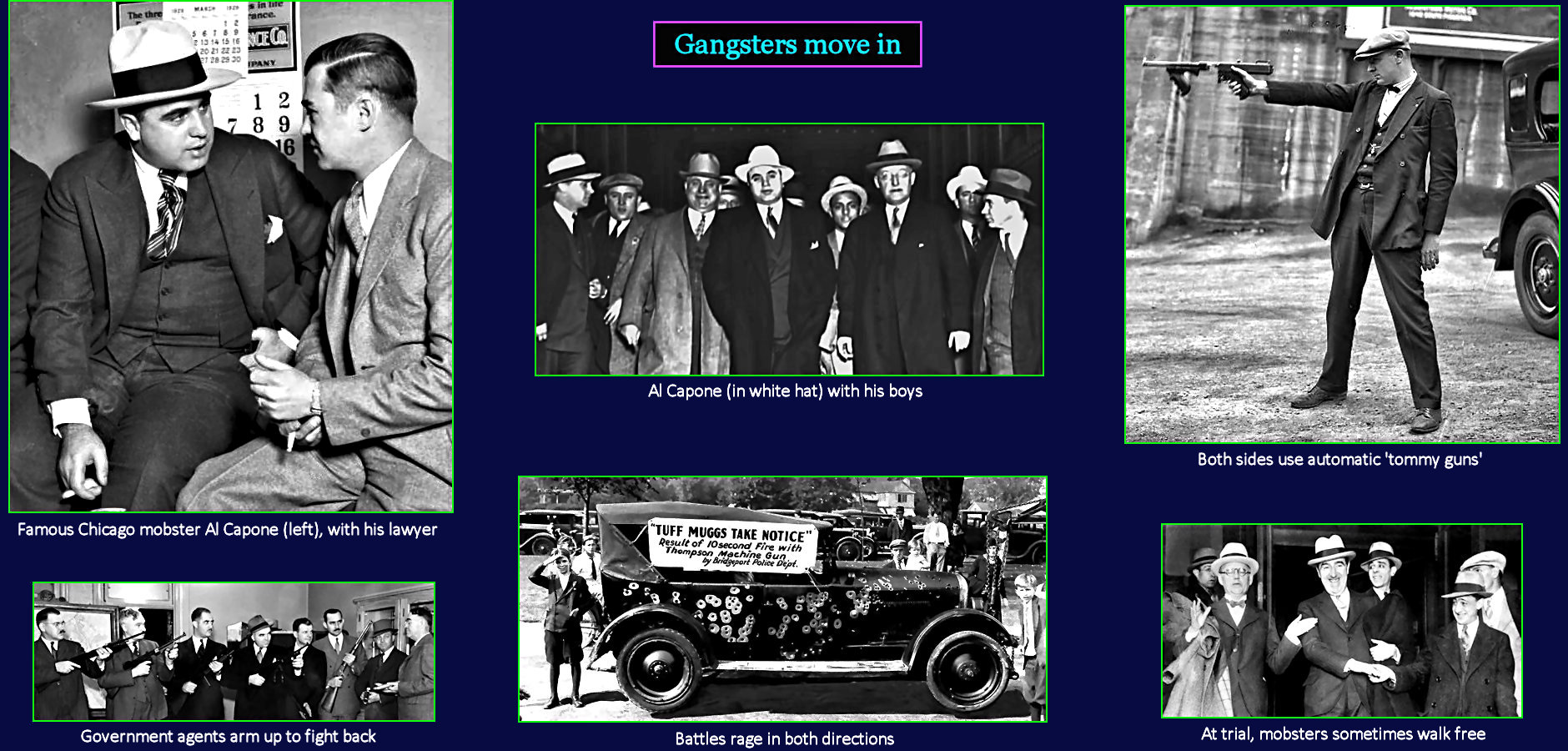
Capone vs the Feds As the 1920s roll on, organized crime operations take a larger and larger role in distributing bootleg liquor. Inevitably, local gang wars break out in major markets, with rival gangs sometimes shooting it out in restaurants with machine guns. Law enforcement tries to counter this disturbing new trend, also adopting automatic weapons. Government agents display their own brand of bravado (lower left). Even when caught, however, mobsters might beat the rap in court, walking free with big grins (lower right). None of this is a good look for America. | |||||||||
| |||||||||
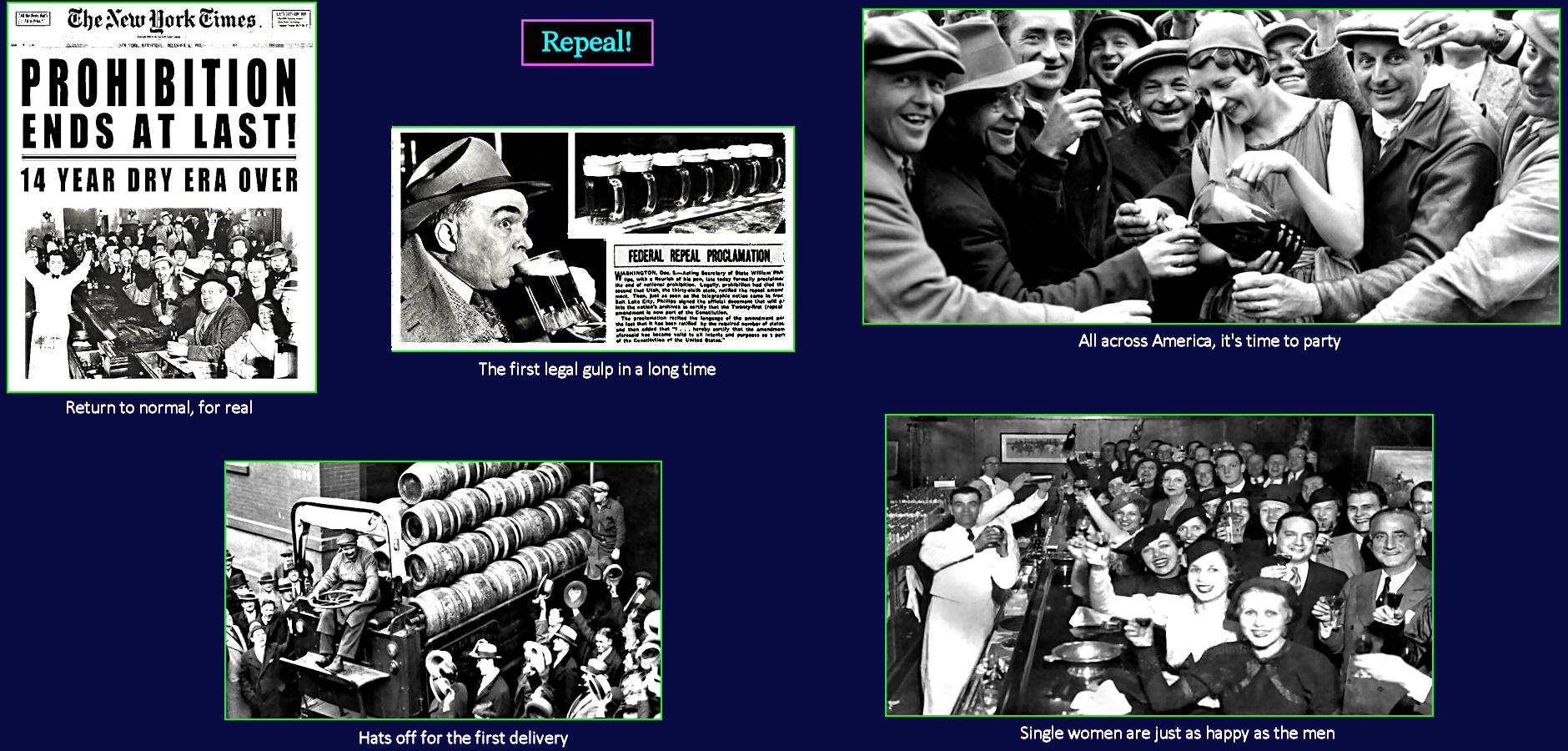
We'll Drink to That! Conditions continue to spiral out of control, especially in the cities, until Congress is forced to admit that the whole Prohibition effort is unrealistic and unenforceable. The 18th Amendment, which had made Prohibition legal, is finally repealed by ratification of the 21st Amendment in 1933. This prompts a huge party all across America, with women enthusiastically joining in the celebration. | |||||||||