| |
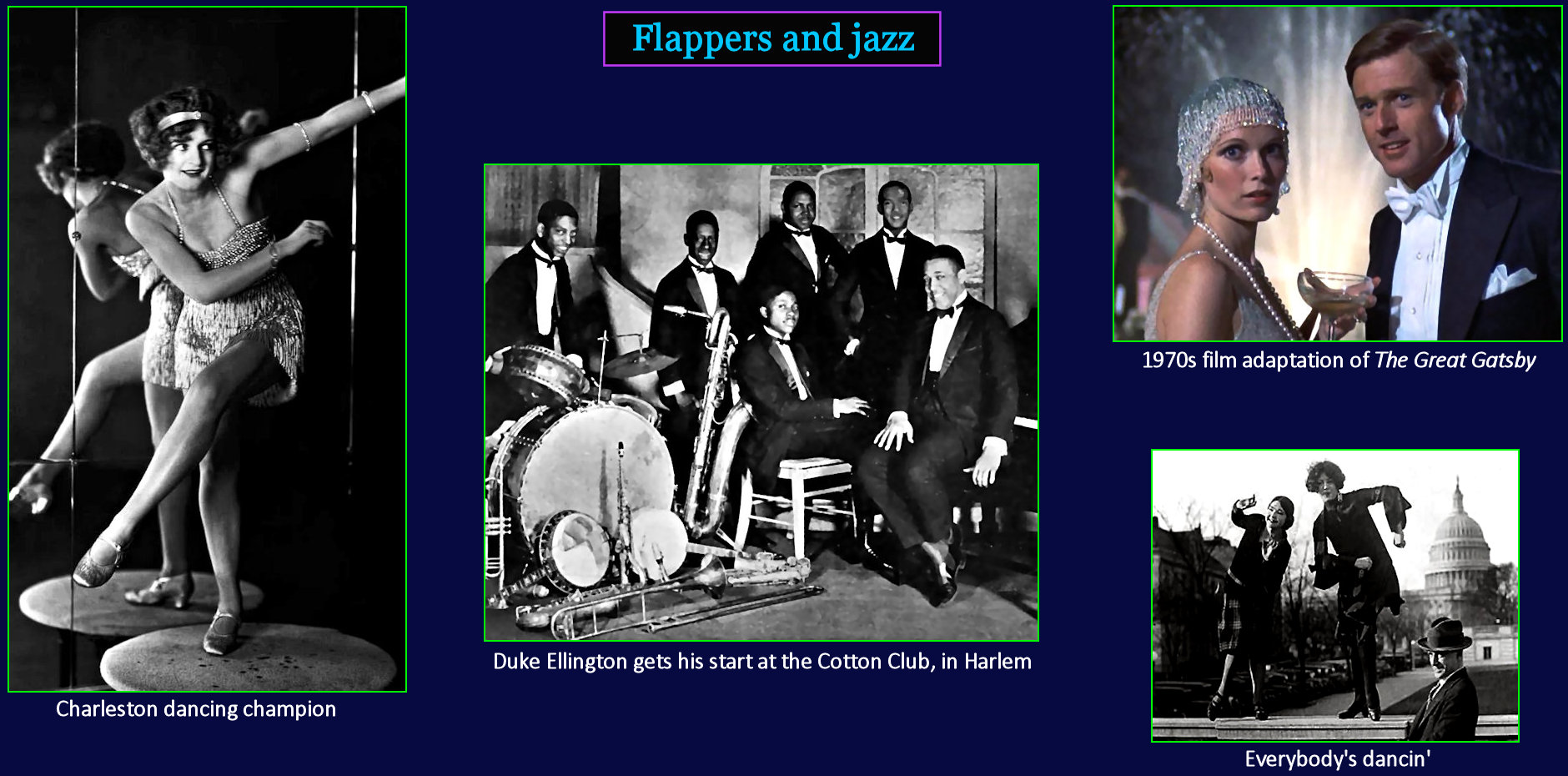
Energetic Outburst Jazz is the most thoroughly American creation ever to be let loose on an unsuspecting world. Everyone is beguiled by its unrestrained energy. Even the staid Brits. Duke Ellington leads the charge, while other black performers help keep the pulse going. Prohibition is still in effect, but clubs find ways to keep the mood light. The Cotton Club in New York's upscale black district, Harlem, is the white-hot, glowing center of this powerful new force. Out in the country, not so much. |
| |||||||||
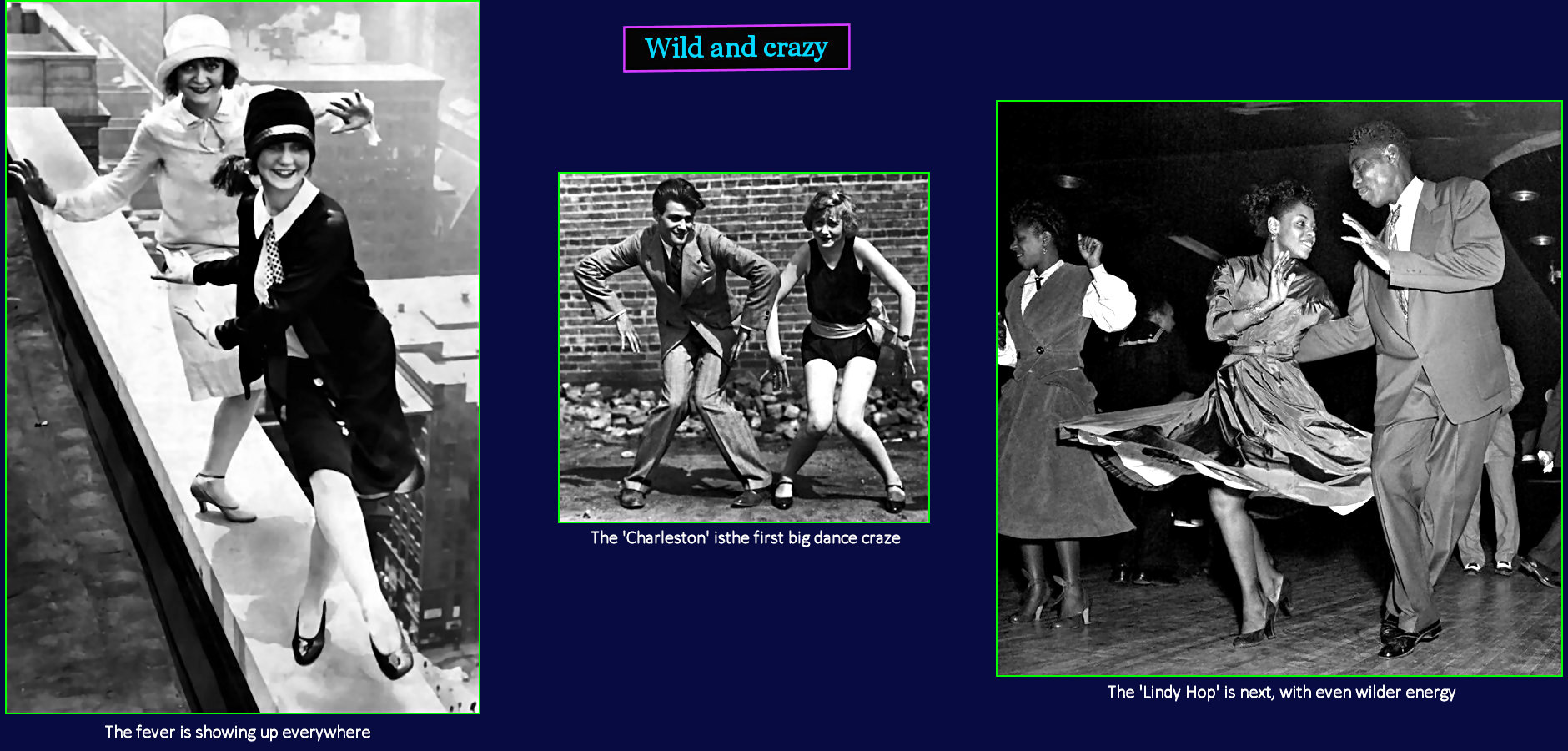
Spreading Fever Wild and crazy are the watchwords of the day, as dance fever sweeps America. Nothing like this has ever happened before. Women don't show leg, and they certainly don't jump up in front of a crowd and start attracting attention. The first craze is the 'Charleston,' an energetic dance that first appears in a Broadway show called 'Runnin Wild.' It runs for seven months at a New York movie house, and then spreads west. The Charleston uses a simple twisting step, with some gag moves thrown in. A few years later, after Charles Lindbergh makes his ground-breaking flight across the Atlantic, the 'Lindy Hop' erupts. It's so tricky, no one thinks it will ever catch on. But it does. With young, naturally athletic dancers, the variations are endless. | |||||||||
| |||||||||
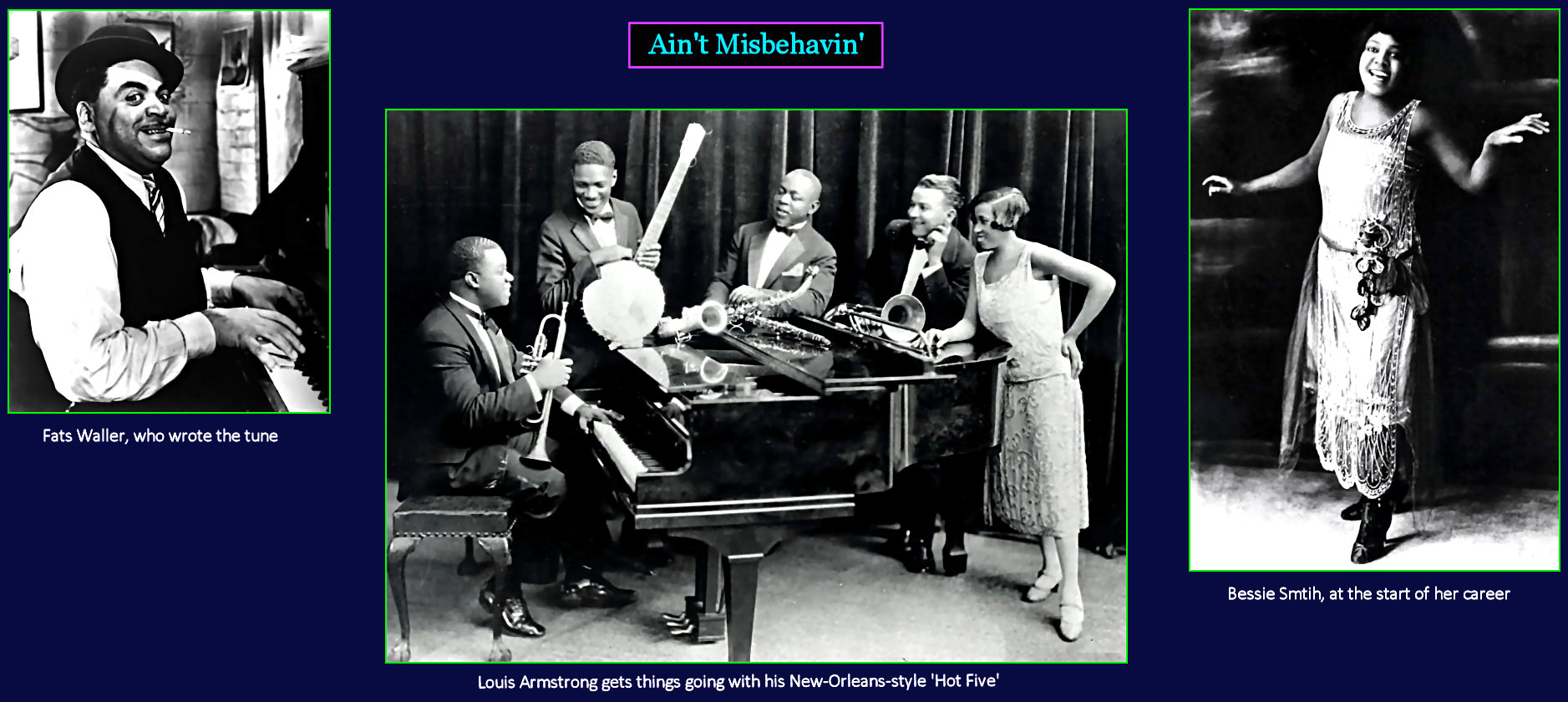
Performers Fan the Frenzy The fuel behind the dance craze is music, and Fats Waller's 'Ain't Misbehavin' (top left) is emblematic of the playful mood. Wild and unrestrained, jazz explodes with innovation, while it's catchy 'swing' rhythm gets feet tapping and dancers out of their chairs. It's unexpected, and refreshingly jubilant, blending Dixieland with New Orleans ragtime. Without jazz, there would be no flappers. Almost all the jazz flows from a newly-emerging African-American community in Harlem, and almost all the great musicians of the era are black. It's the beginning, however limited, of the integration of black culture into American life. | |||||||||
| |||||||||
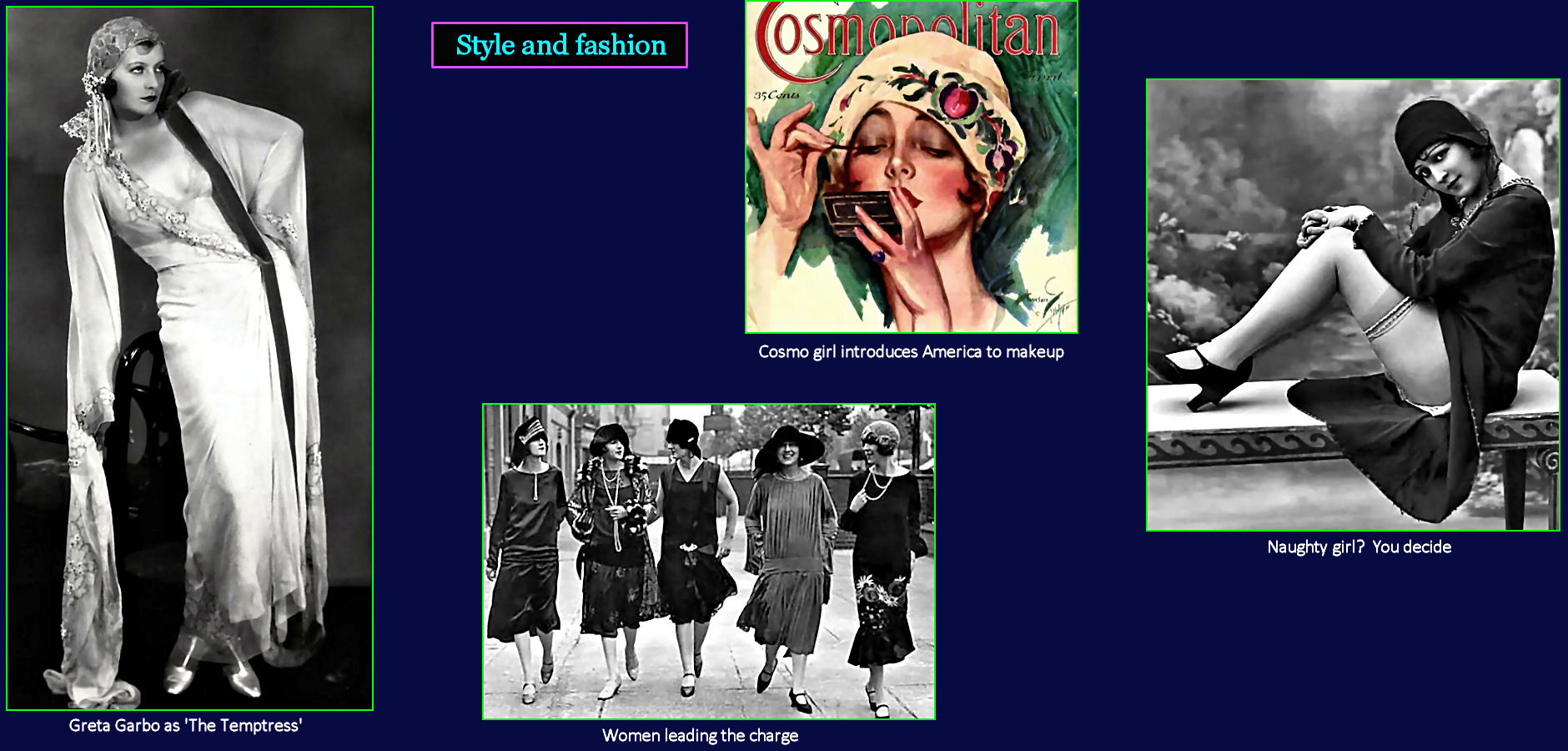
Bobbed Hair and Short Skirts Fashions reflect the relaxed, playful atmosphere. Makeup is now a must-have element of urban chic. Clothing is altogether slinkier, from swishing skirts and diaphanous gowns to the revealing tease. It's America's first performance art, elevating women from the status of elegant background furnishings to center-stage performers. Women's self-liberation is arriving all at once, without anyone's permission. | |||||||||
| |||||||||
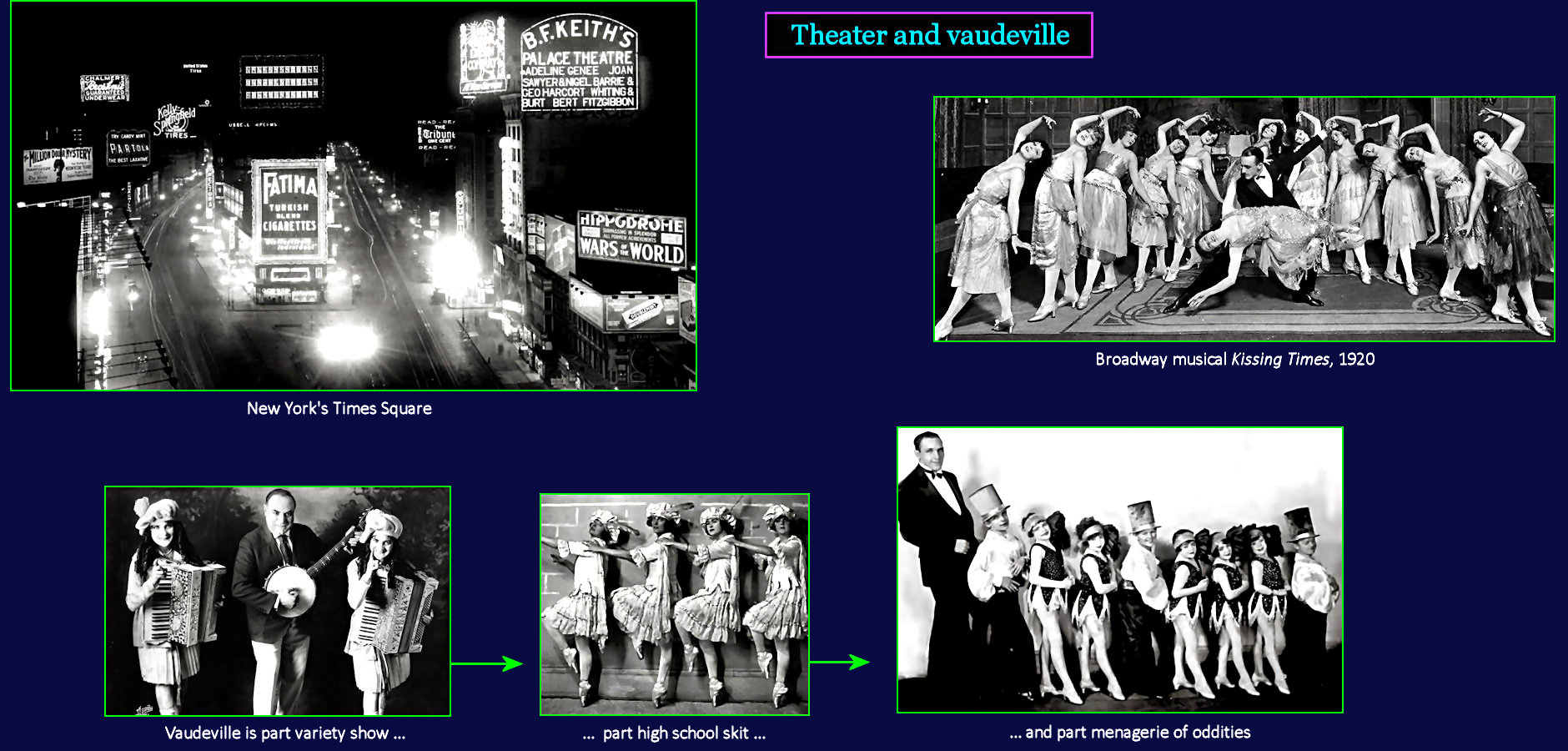
On the Road Urban elites have always enjoyed a wide array of entertainment options, but now the cavalcade of fun is expanding westward towards Iowa farmers, as well. New York remains Ground Zero for theater, but the world of 'vaudeville' is delivering packaged shows to smaller cities across America. Vaudeville is a mish-mash of acts, offering something for everyone. With shows traveling to 700 theaters, and employing 25,000 performers, acts range from singers, dancers and comedians, to magicians, ventriloquists and the truly quirky. Like the Sears Catalog, which brings shopping to the farm, vaudeville now delivers entertainments deep into America's heartland. | |||||||||
| |||||||||
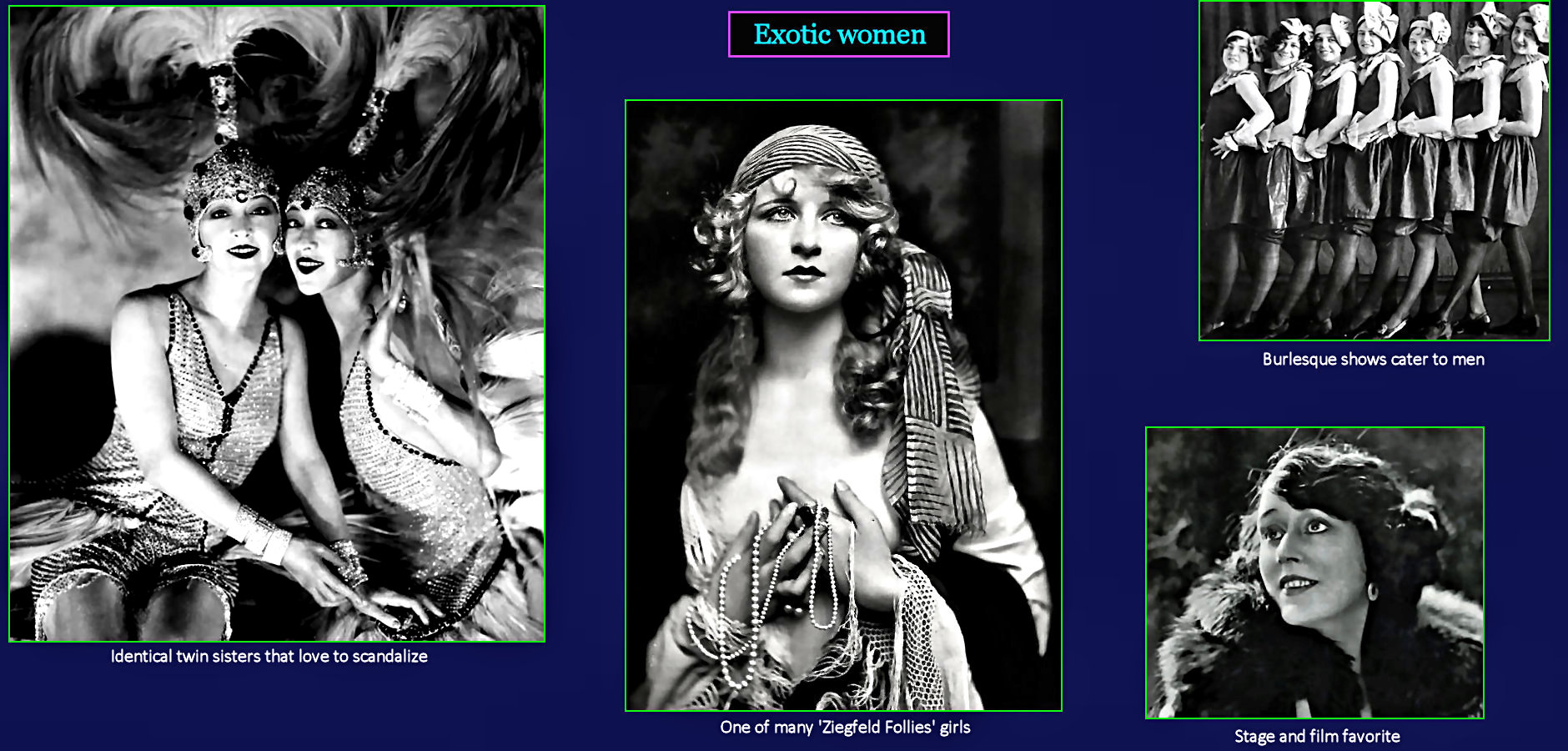
Get Ready, America If anything can sum up the experience of the Roaring 20s, it might be the 'Ziegfeld Follies,' a series of New York productions based on a similar show in Paris. As a lavish variety-style revue, it blends Broadway with vaudeville, and features a stage full of exotic young women dressed in over-the-top, gypsy-style outfits. The influence spreads throughout the entertainment world, from simple burlesque shows to glamorous film stars. | |||||||||