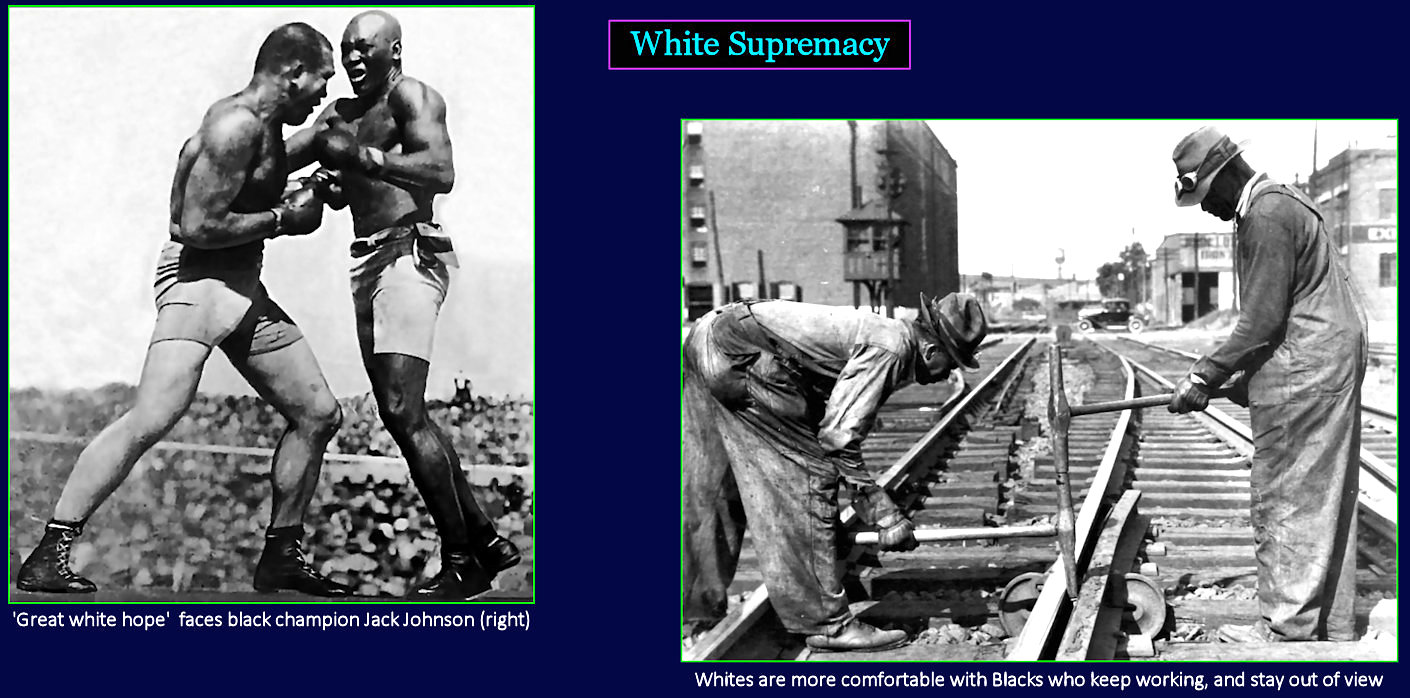
White SupremacyNorthern efforts to integrate former slaves back into southern white society have largely failed. There are now 10 million Blacks in America, but few have property, education or skills. They're basically being ignored. The Supreme Court rules that it's perfectly legal to keep Blacks separated from Whites, as long as public facilities are essentially 'equal.' It's painfully obvious that they're not equal, but segregation is now firmly established. |
| ||||||||||||||||
| |||||||||
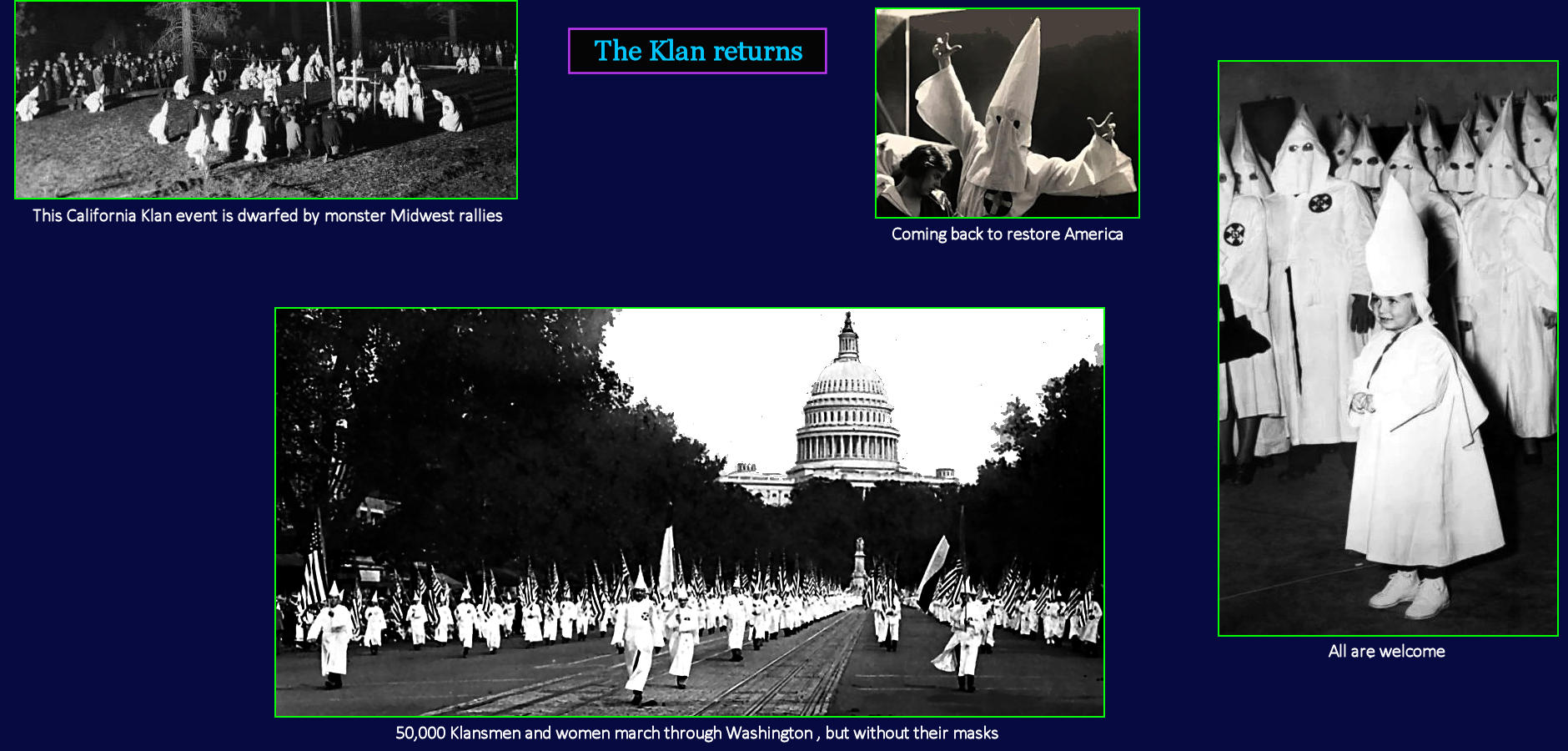
Show of White Solidarity The surprising re-emergence of the Ku Klux Klan in 1915 is a stark reminder that 'White Supremacy' advocates, including Teddy Roosevelt, are still widely influential in America. The KKK was considered extinct, having been quickly outlawed soon after the Civil War. But a block-buster film is now released which glorifies the Klan as noble, dedicated to preserving America from defilement by Blacks. This leads to the immediate re-emergence of white-robed KKK members, in huge numbers, from Massachusetts to California. There are two giant KKK marches in Washington, though marchers aren't allowed to hide their faces. A rally in Indiana, of all places, attracts 200,000, while KKK membership for the entire country eventually tops 5 million. | |||||||||
| |||||||||
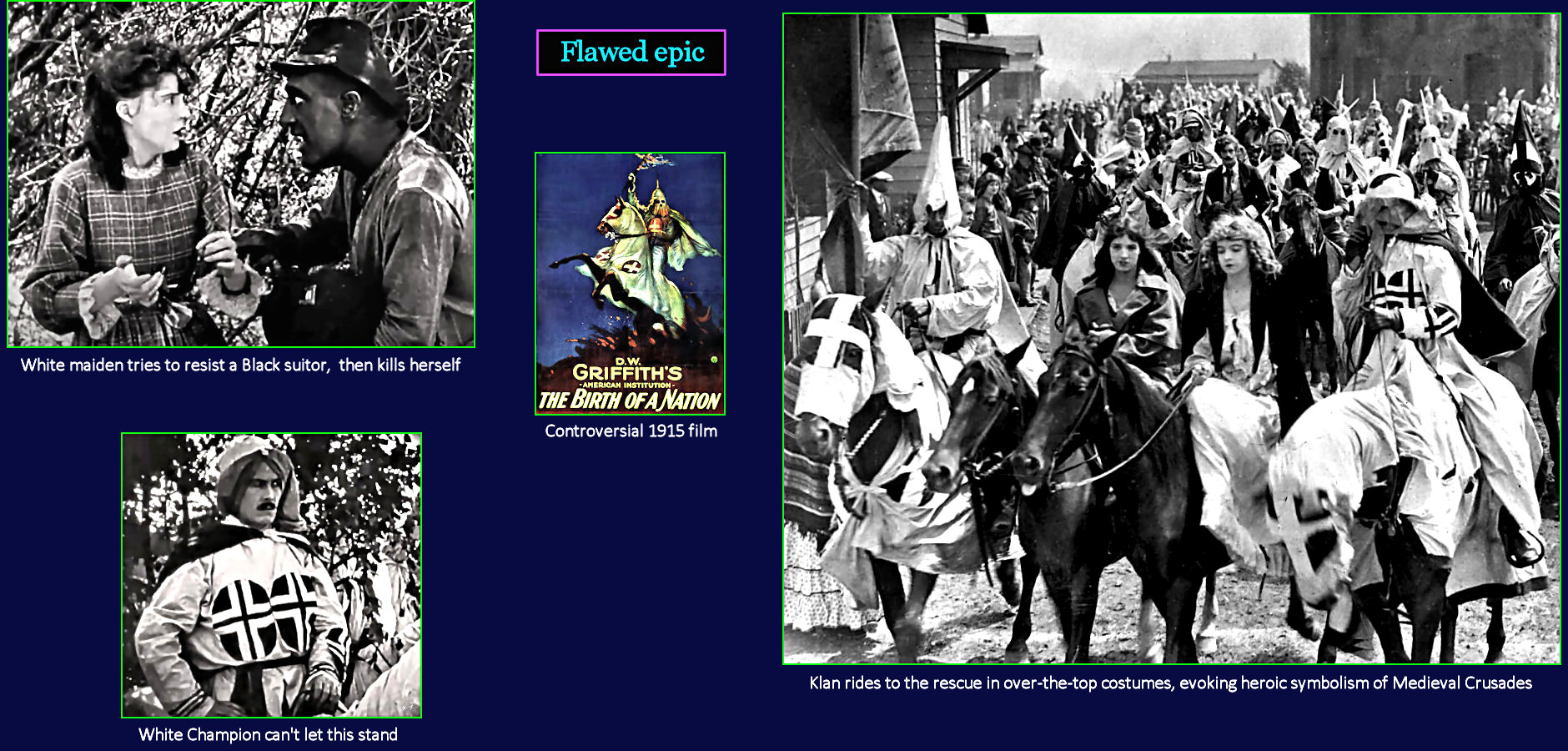
Media Assist The KKK revival is sparked by the 1915 release of Birth of a Nation, which creates a sensation as America's first epic film, and sparks controversy that continues to this day. The sprawling 3-hour drama begins with a cinematically masterful portrayal of the Civil War, with broad historical accuracy. Audiences are mesmerized when the intermission arrives, at the mid-point. What follows, however, is a depiction of the Reconstruction Era that quickly veers off into a distorted portrayal of actual events. Clueless Blacks are portrayed as easily manipulated by demonic Northerners, who are bent upon using Blacks to subjugate Whites. Klansmen arrive as saviors. Critics are immediately outraged, but white audiences respond with enthusiastic cheers and hoots. | |||||||||
| |||||||||
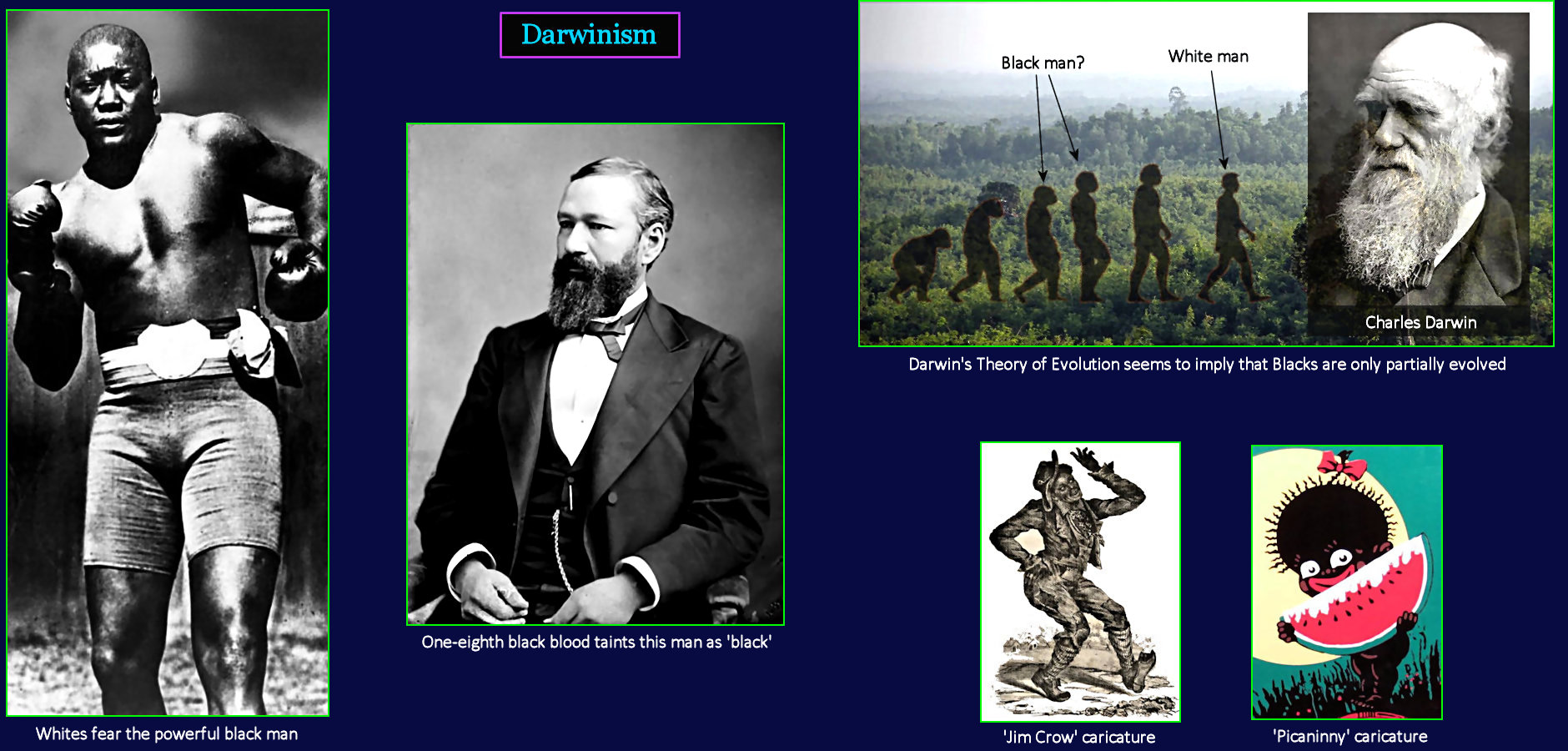
Science Muddies the Picture Lying at the heart of White Supremacist theory is a reliance on seemingly scientific evidence. Darwin's 'survival of the fittest' model is stretched to explain why Blacks can never match the achievements of Whites. They have been left behind by simple human evolution. Cartoon portrayals of Blacks (lower right) reinforce this belief, although Darwin himself believes that all human races belong to a single species. This includes Blacks. A more vexing problem is how to treat people of mixed heritage. The seemingly 'white' man shown above (center) has a single black great-grandparent, giving him one-eighth black blood. Is he thus tainted as inferior? The Supreme Court rules that a state law treating him as black is not racially discriminatory. | |||||||||
| |||||||||
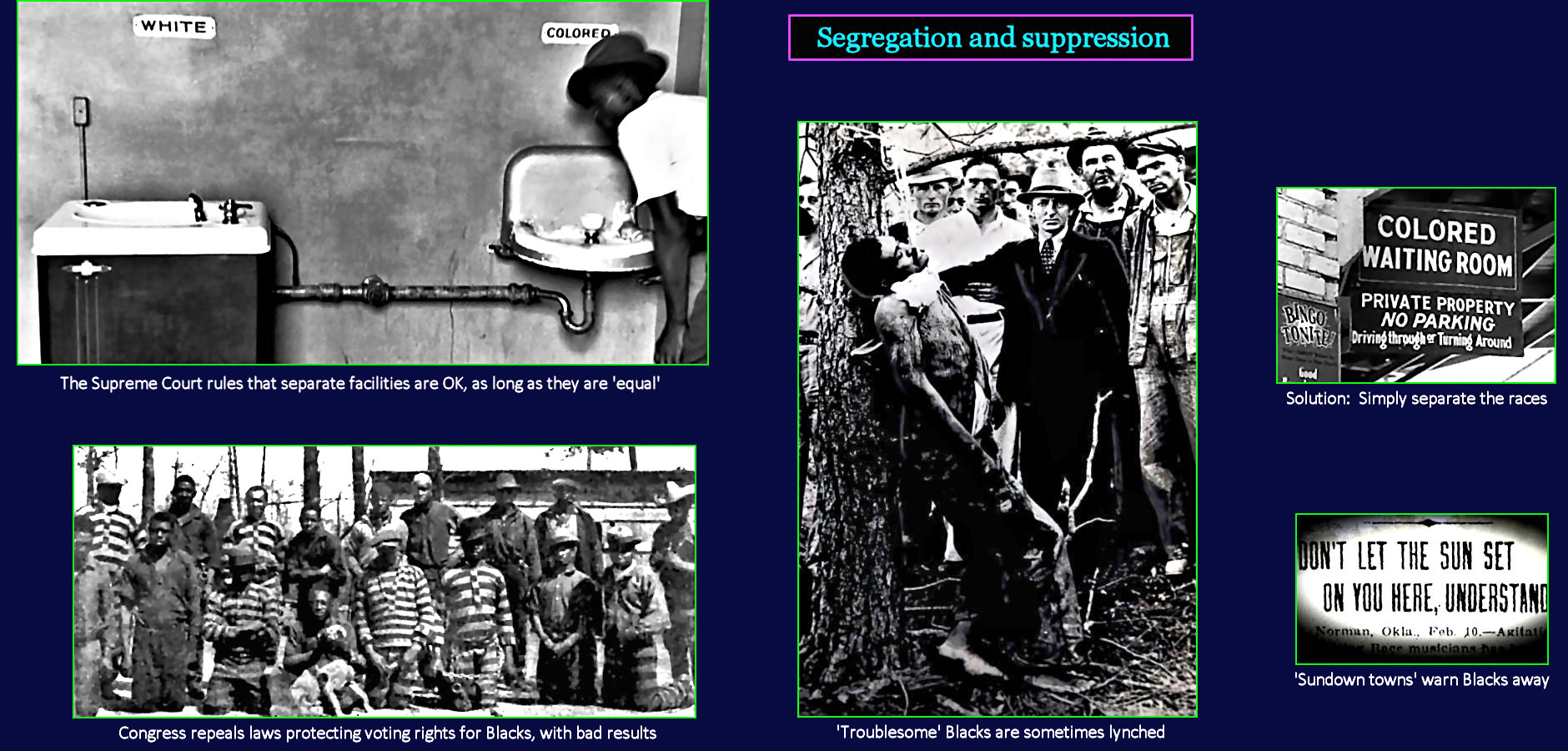
Segregation is the Answer This leads to a long period during which the accepted solution is to keep Blacks separated from Whites. Blacks are effectively limited to buying property only in districts which already contain Blacks. Towns find ways to enforce so-called 'Sundown' rules, which allow Blacks to travel through their towns, so long as they don't stay the night. Public rest rooms, waiting rooms, and even water fountains are created in duplicate. One set for Whites, the other for Blacks. This leads to a widespread pattern of segregation of the races, which is nearly as acceptable in northern Minnesota as in southern Mississippi. Segregation often turns into other forms of discrimination against Blacks, including vigilante 'justice' that sometimes ends with a lynching (center). | |||||||||
| |||||||||
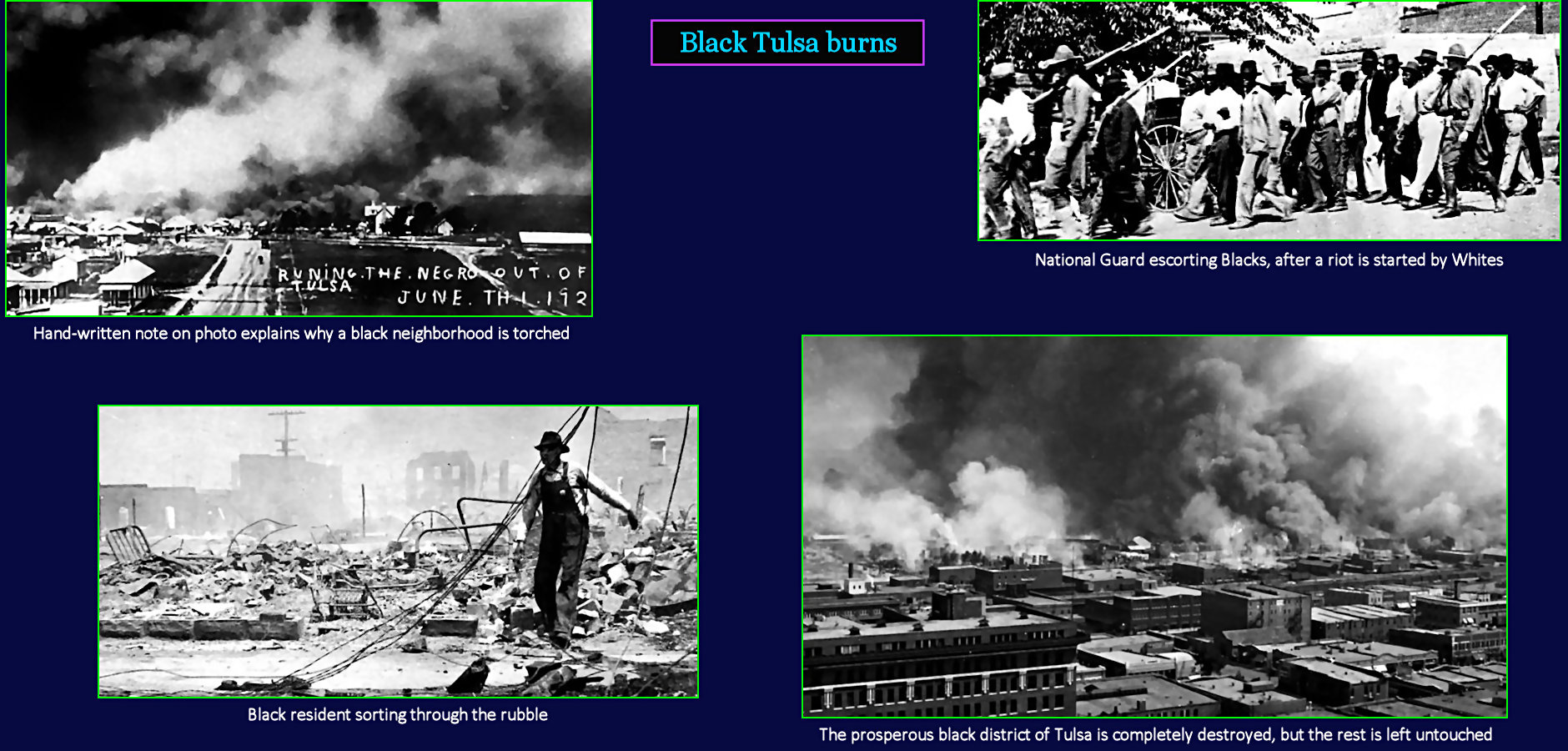
Backlash Against Successful Blacks Inevitably, Whites sometimes take things too far, which is tragically the case in Tulsa, Oklahoma. A group of Blacks assemble around a jail where a Black is thought to be awaiting lynching, prompting city officials to hastily deputize a white mob. A riot ensues, with looting that leads to fires. When it's over, the entire section where prosperous Blacks had been living has burned to the ground, while surrounding white areas are left untouched. Hundreds of Blacks lie dead in the rubble. Although it's a headline event all across America, there is no mention of it in the press within Tulsa itself. Amazingly, Tulsa manages to erase almost all memory of the incident for 100 years, even among long-time residents, until a TV documentary is finally aired. | |||||||||