| |
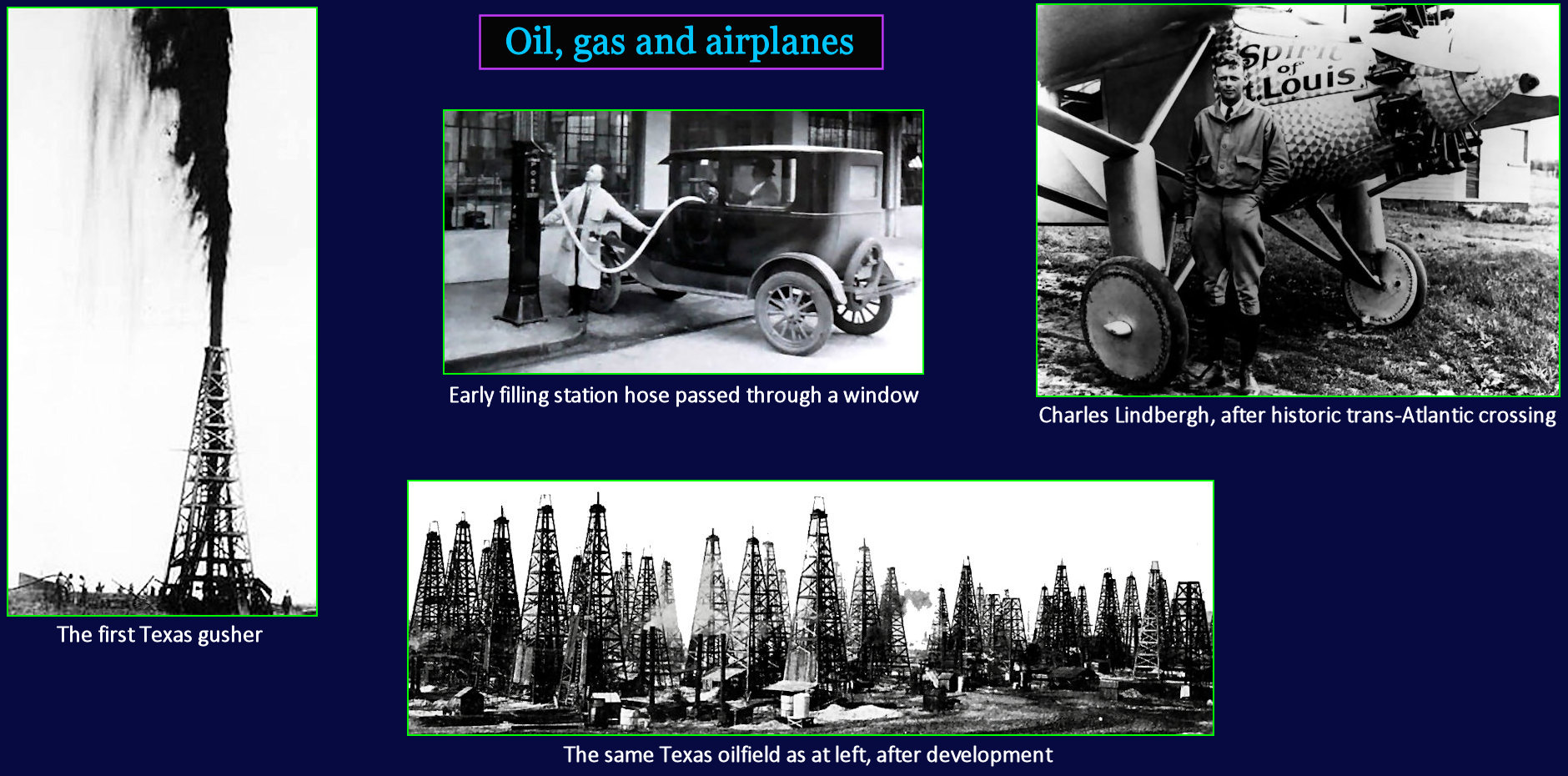
Gusher Oil is discovered in California back in 1875, but the first spectacular 'gusher' is drilled in South Texas in 1901. A million barrels shoot skyward in the first week. Game on. The rush to exploit this field results in a whole array of derricks, practically on top of one another. The proportion of crude oil being refined into gasoline for cars is growing, and there's an immediate need to build more gas stations. Early gas tanks are located under the driver's seat, which makes filling them a challenge (center top). Meanwhile, Lindbergh is able to claim his prize (top right). |
| |||||||||
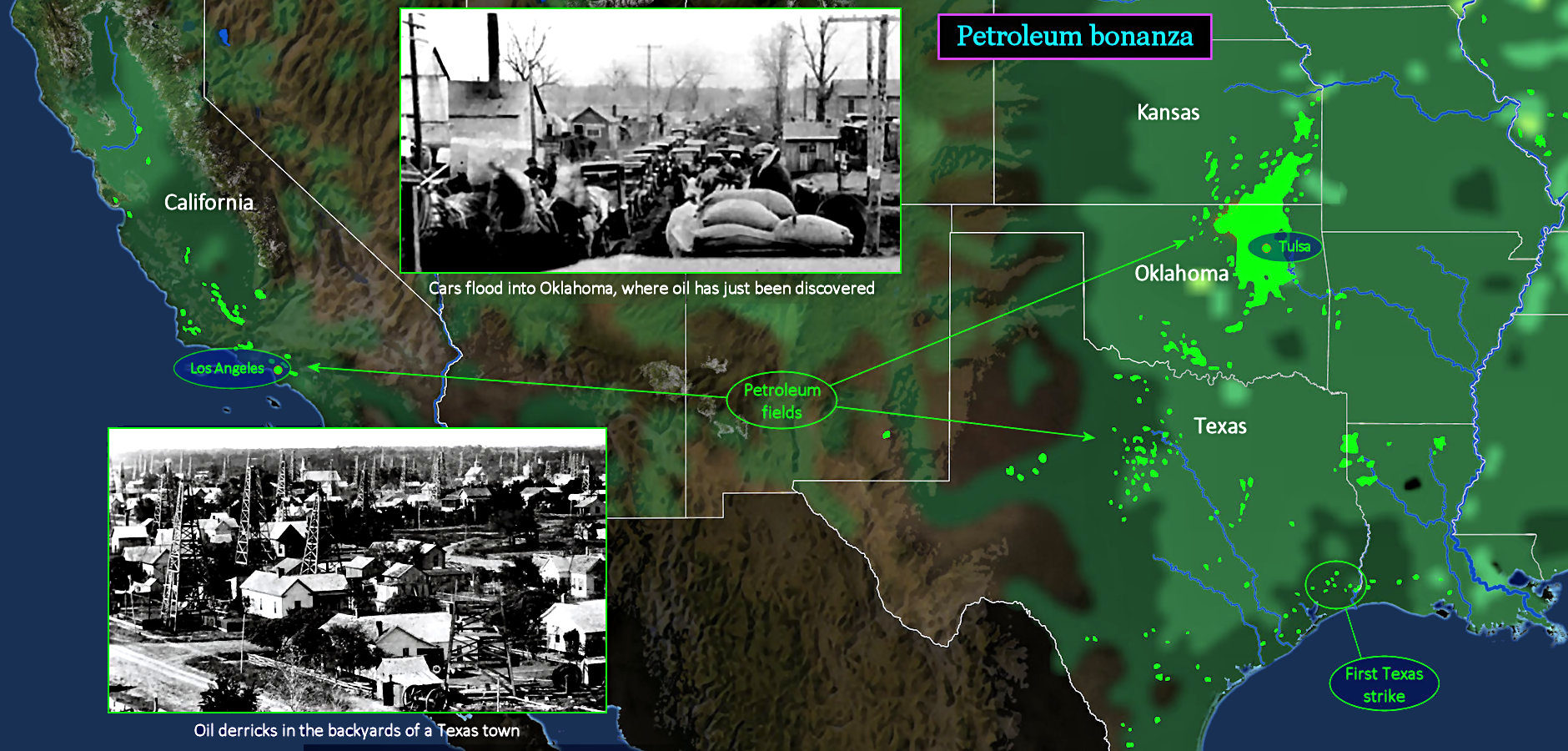
The Next Big Rush Areas shown in BRIGHT GREEN above indicate the location of known oil fields by 1910. Although the oil rushes in Texas and Oklahoma explode at almost the same moment, the sheer size of the Oklahoma fields soon results in Tulsa becoming the oil capital of America. In Texas, oil is sometimes discovered beneath towns already in existence, resulting in rigs being erected right between the houses (lower left). Substantial discoveries are also made in the Los Angeles basin of southern California. | |||||||||
| |||||||||
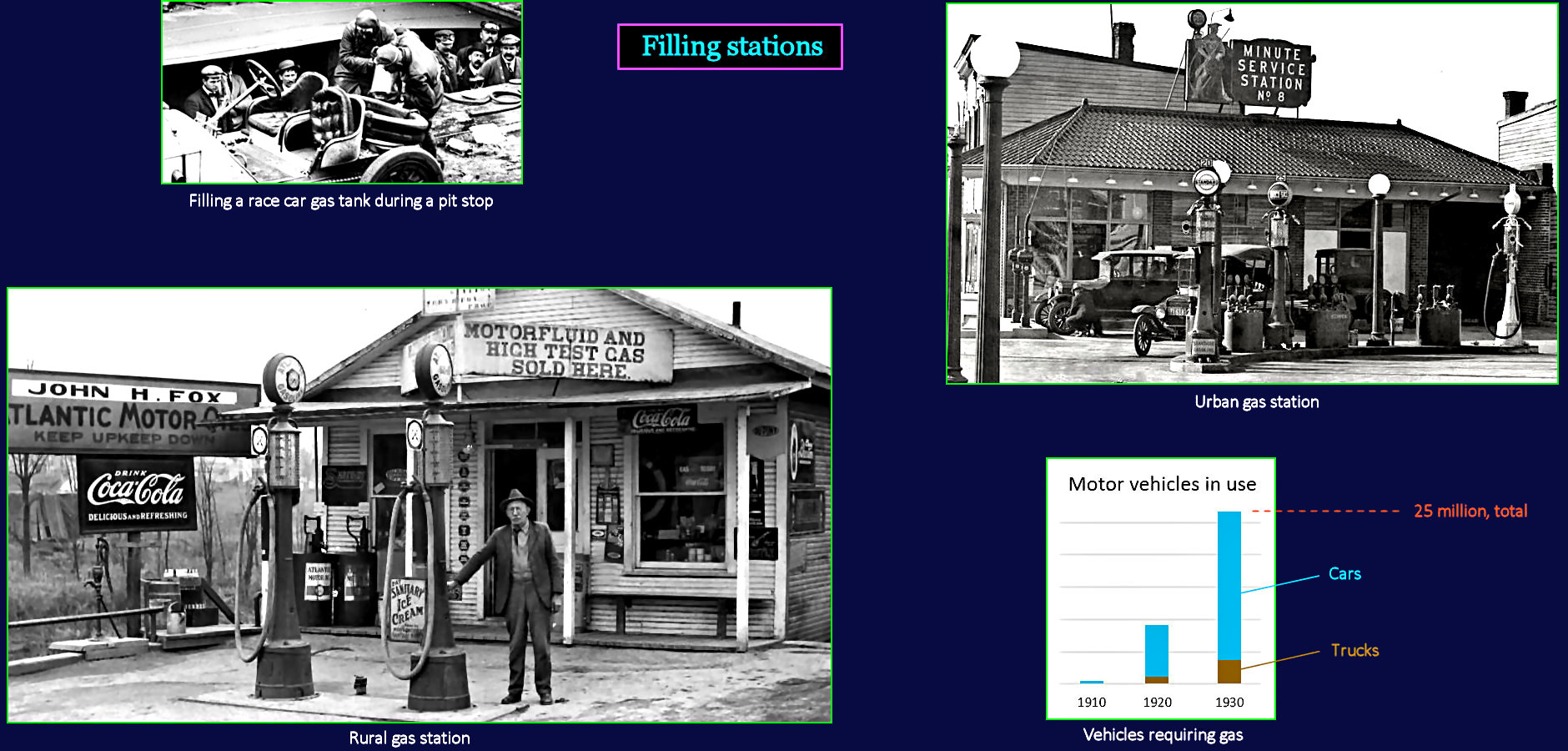
Fill 'er Up Gas stations are originally called 'filling' stations, and are rare at first. In places without pumps, tanks have to be filled from portable cans (top left). Soon enough, filling stations begin appearing all over America, with long rubber hoses trailing along the ground from tanks out back, or tall pumps in front. | |||||||||
| |||||||||
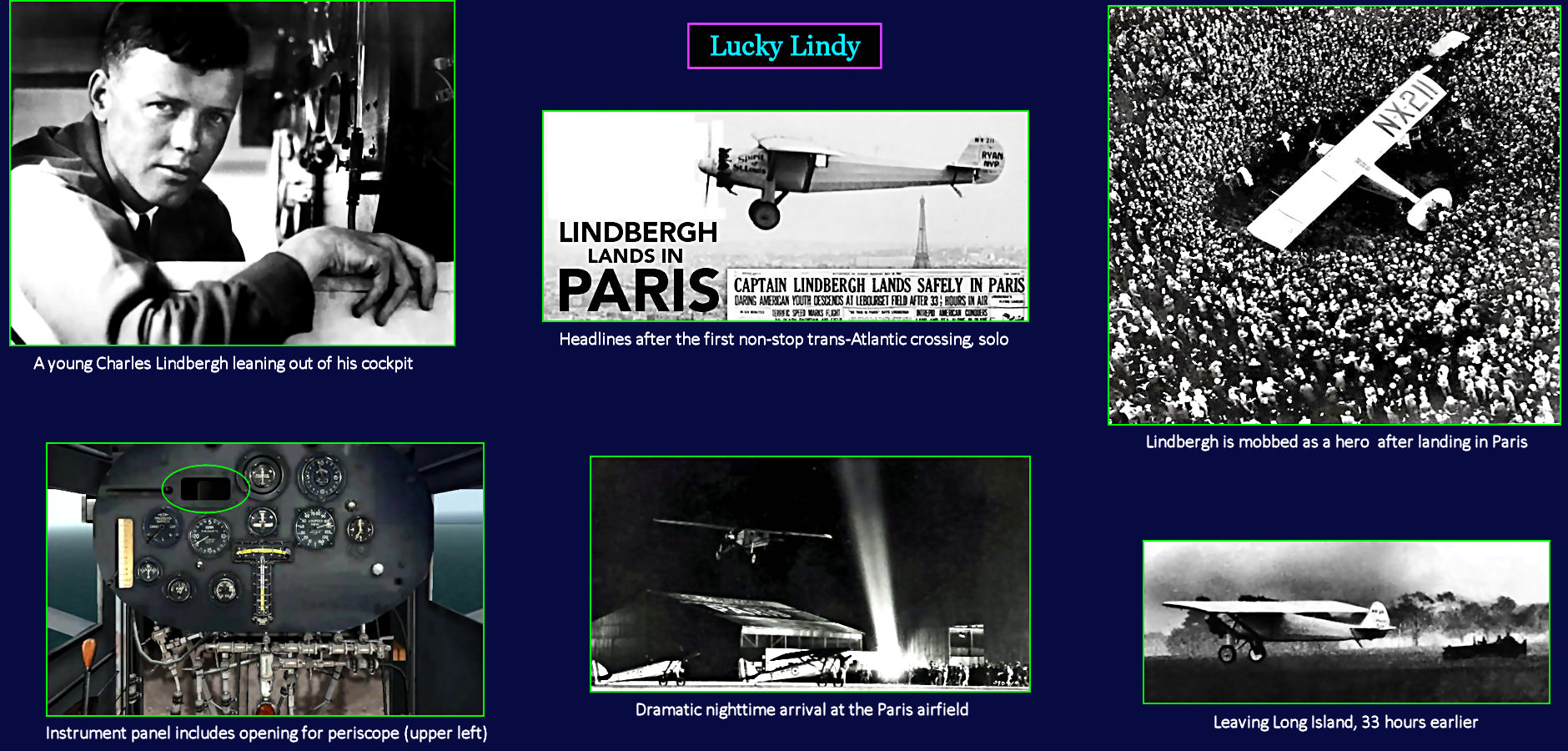
Instant Hero When Charles Lindbergh takes off on his quest to cross the Atlantic, solo, he only brings five sandwiches for the trip. He turns back briefly after just an hour, when ice starts forming on the wings, but then resumes his 33-hour flight. He needs so much fuel that an extra fuel tank has to be installed where the windshield would normally be. A periscope enables looking forward, over the tank. He selects which tank to use by operating valves on exposed piping in the cockpit (lower left). When he finally arrives over Paris, at night, searchlights are turned on, and car headlights are aimed at the runway to help guide him down to a safe landing. After a triumphal three-week European tour, Lindbergh returns to America to tour for another three months, speaking in 82 cities. | |||||||||
| |||||||||
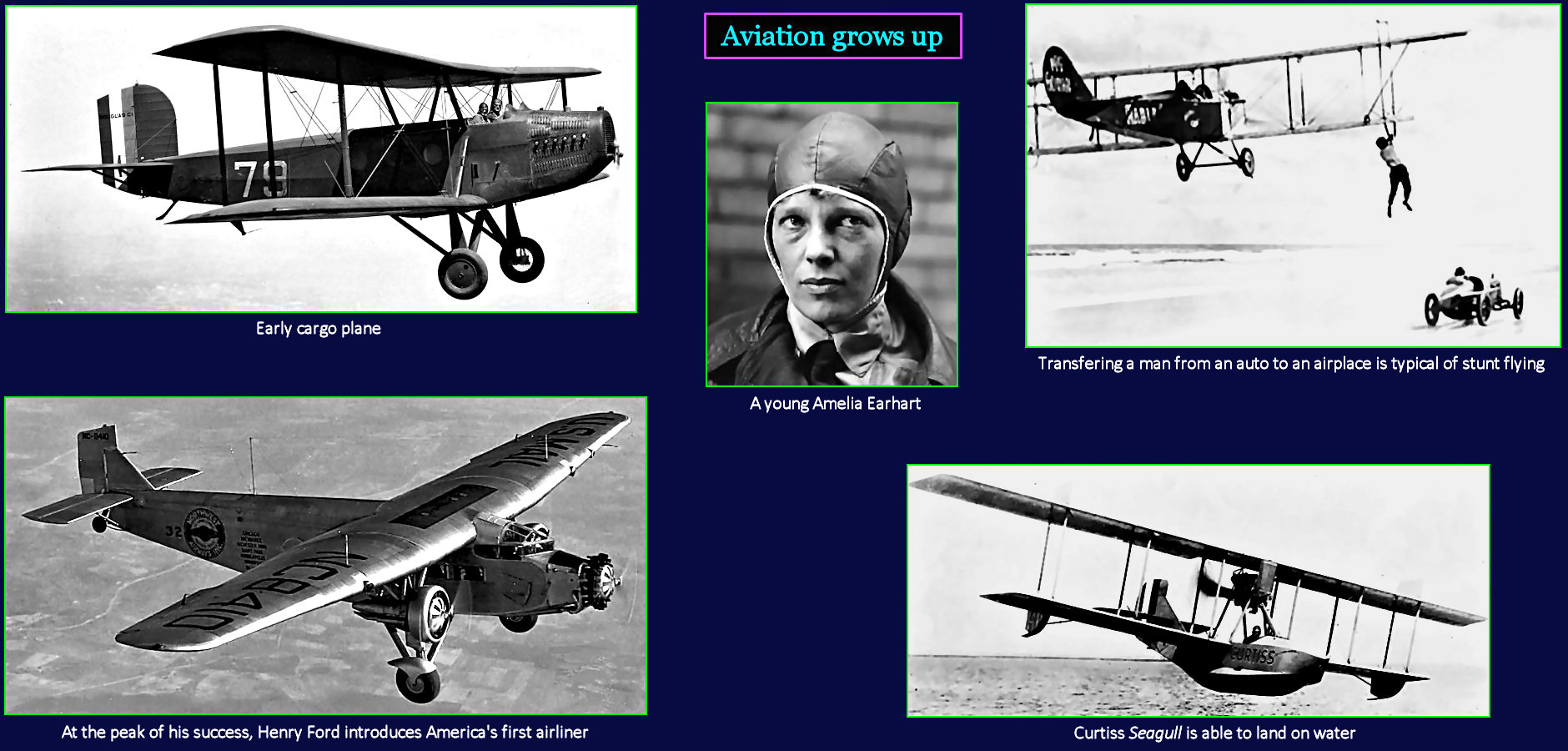
Early Uses Most airplanes in the 1920s are still biplanes, with double-decked wings, and most just carry just cargo (top left). Newer designs, like Lindbergh's, are monoplanes, with a single wingspan. When Henry Ford decides to try his hand at aircraft design, he produces a three-engine passenger craft called the Ford Tri-Motor (lower left). It mounts three big radial engines, similar to those used on World War II bombers. The Tri-Motor is one of the first aircraft built from sheets of corrugated aluminum, rather than fabric stretched over a wooden framework. Just a year after Lindbergh's historic flight, Amelia Earhart becomes America's new darling, as the first female to fly solo across America and back (center top). | |||||||||
| |||||||||
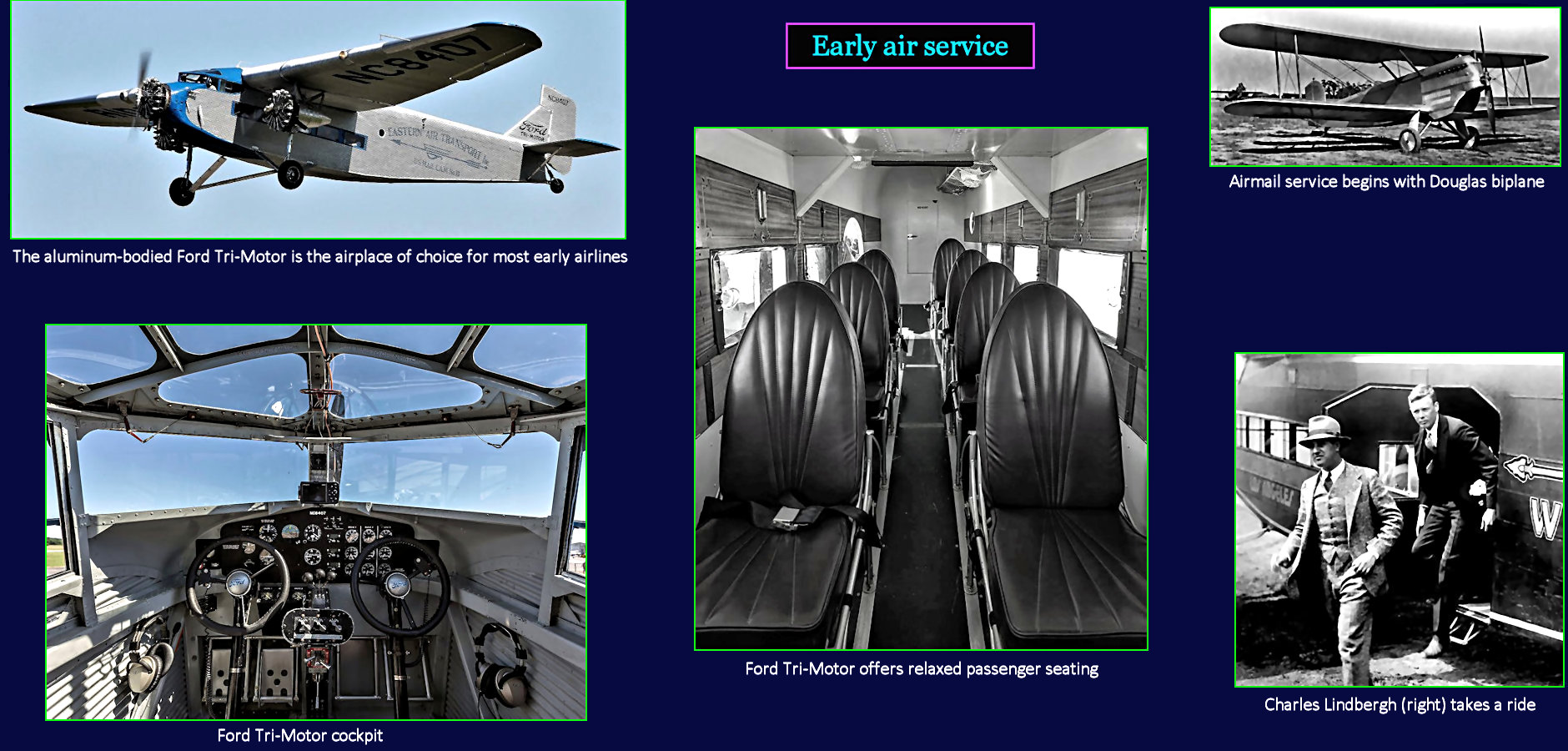
Making it a Business When American Airlines is formed in 1930, it combines the operations of 82 smaller existing operators. Like other carriers, its main revenue source is airmail and cargo delivery. Other early airlines include Delta, Western, Eastern, Northwest and Pan American. For passenger routes, most use the Ford Tri-Motor, which boasts nine comfy passenger seats, with big windows (center). | |||||||||