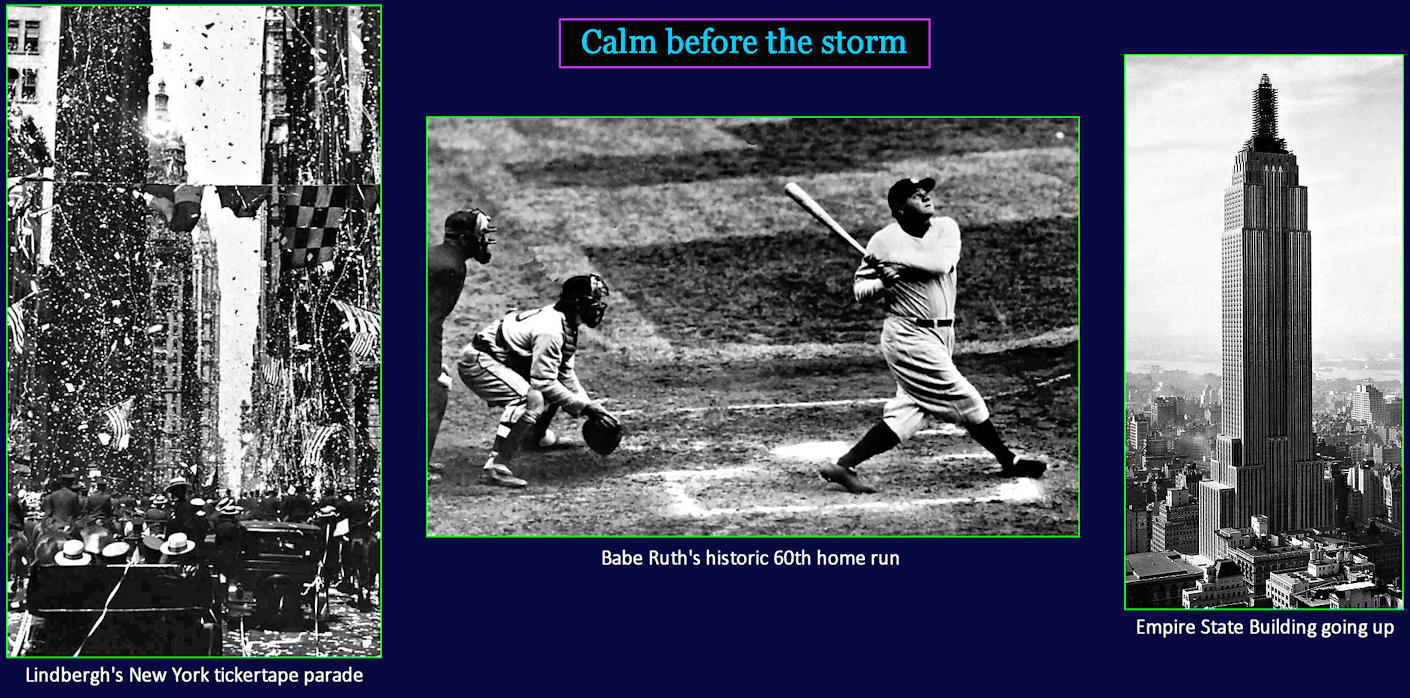
Before the CrashManufacturing is America's driving force, led by the big Midwestern automakers. Meanwhile, corporations further west are beginning to acquire large tracts of farmland, leading to something we now call 'agribusiness.' The fever pitch is most evident in America's major cities, where a new burst of skyscraper construction seems to ignite spontaneously, everywhere at once. The Empire State Building in New York is the crown jewel. To top it all, everyone seems to know someone who's making a killing in the red-hot stock market. Cracks, however, are beginning to appear. New York stockbrokers are the first to sense that something might be amiss. |
| ||||||||||||||||
| |||||||||
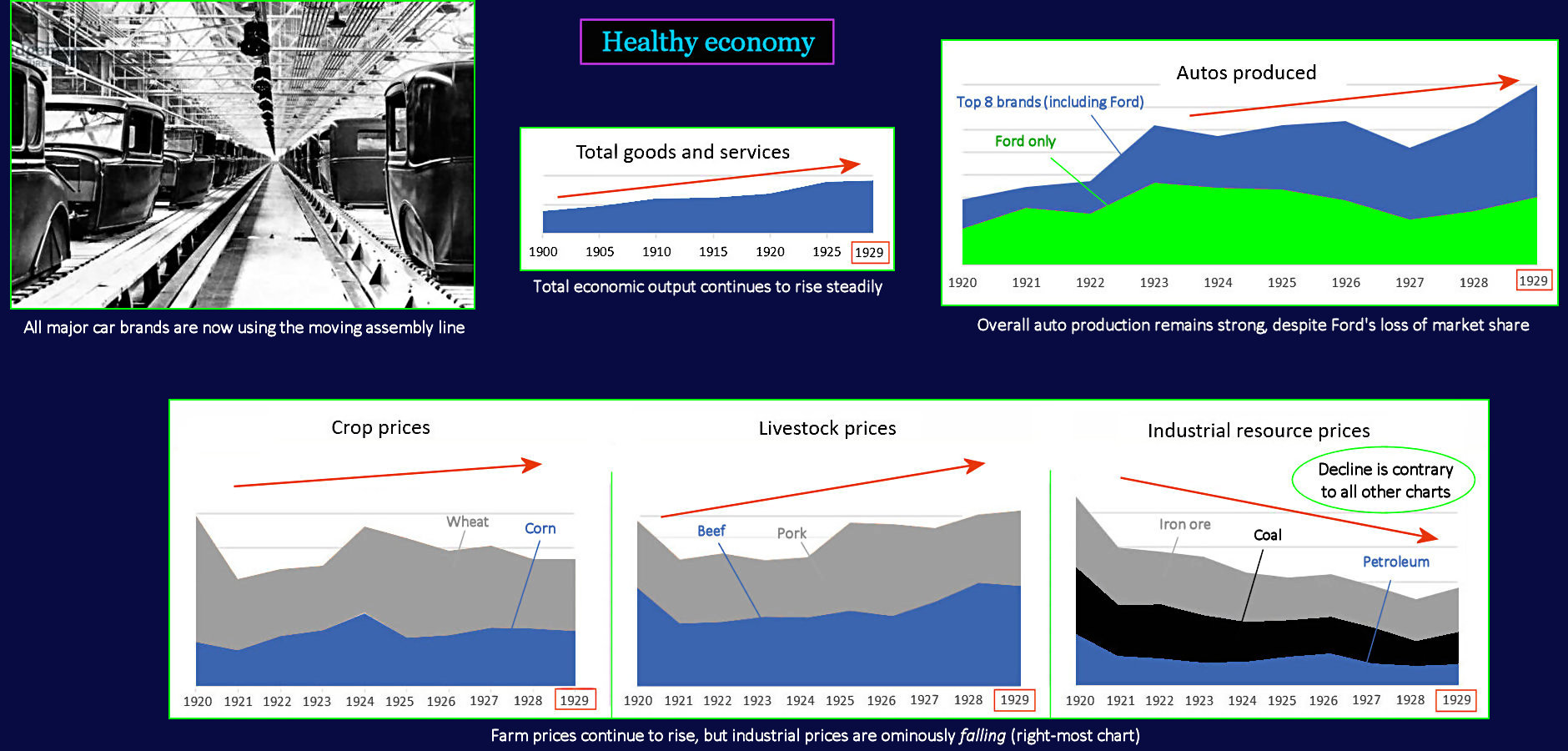
All Good, Except Iron Americans have little reason to fear an impending disaster. The small chart (center top) shows a 30-year stretch of steady economic growth, with barely a bump. Auto production continues to rise, as increasingly popular General Motors brands kept eating into Ford's share (top right). Auto sales hit a new high going into the year of the crash. The set of charts across the bottom tells a somewhat different story. The prices of farm products are rising (two left-most charts), but prices for industrial resources are steadily dropping (right-most chart). During the previous 80 years, every panic was preceded by a similar drop in the price of iron. | |||||||||
| |||||||||
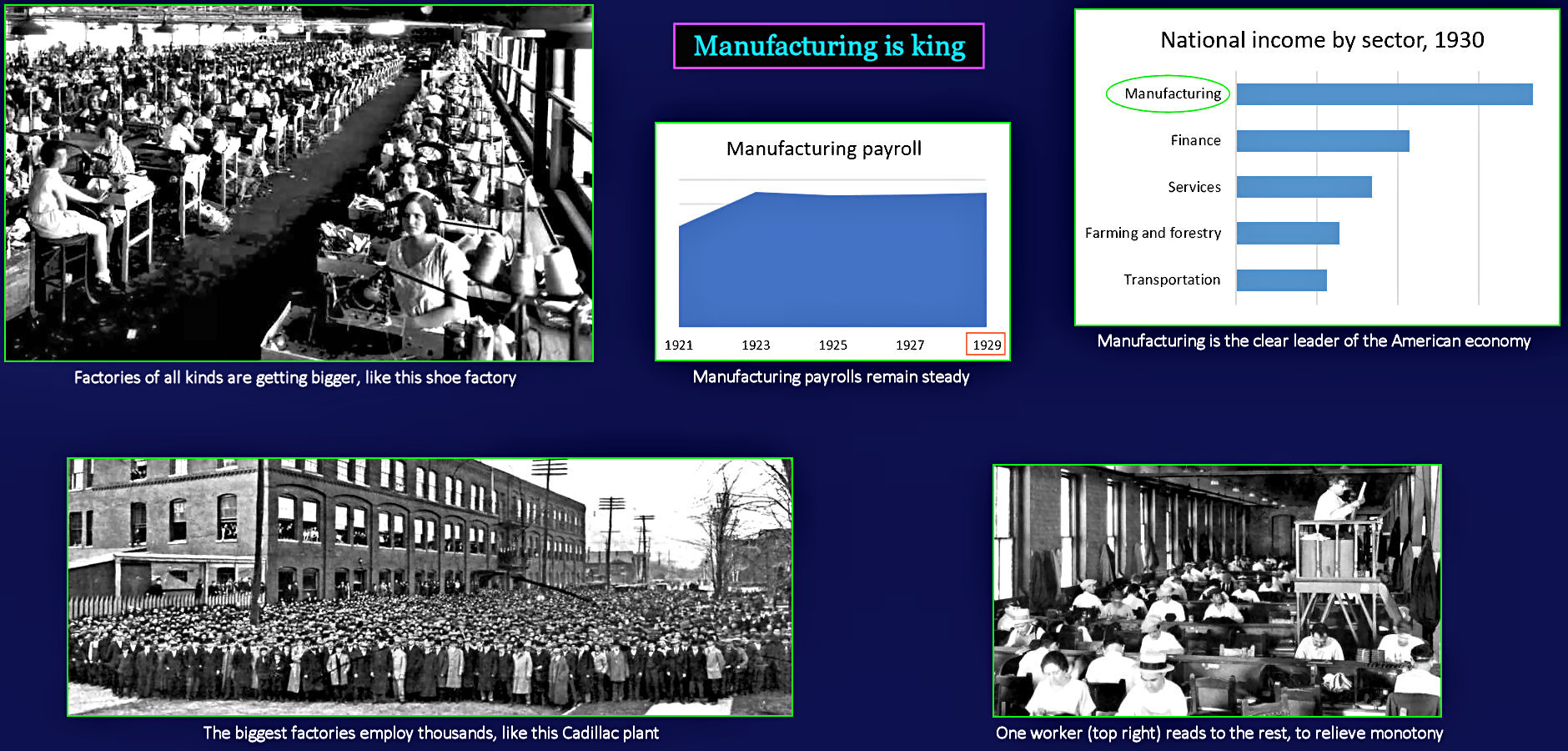
Bigger, More Efficient Factories of all kinds are growing in size (top and bottom left), producing higher profits. This is largely due to improved machinery, and an increased focus on efficiency. The smaller chart (center top) shows steady manufacturing payroll (total wages), which is a better measure of economic conditions than the actual number of jobs. That's because wage cuts reduce family income, even when workers are not losing jobs. Manufacturing remains America's strongest sector (top right), accounting for one-fifth of all income, and one-third of all jobs. But worker burnout is still a problem, leading to attempts to improve worker morale. Some plants select one worker to read to the others, as they work (lower right). | |||||||||
| |||||||||
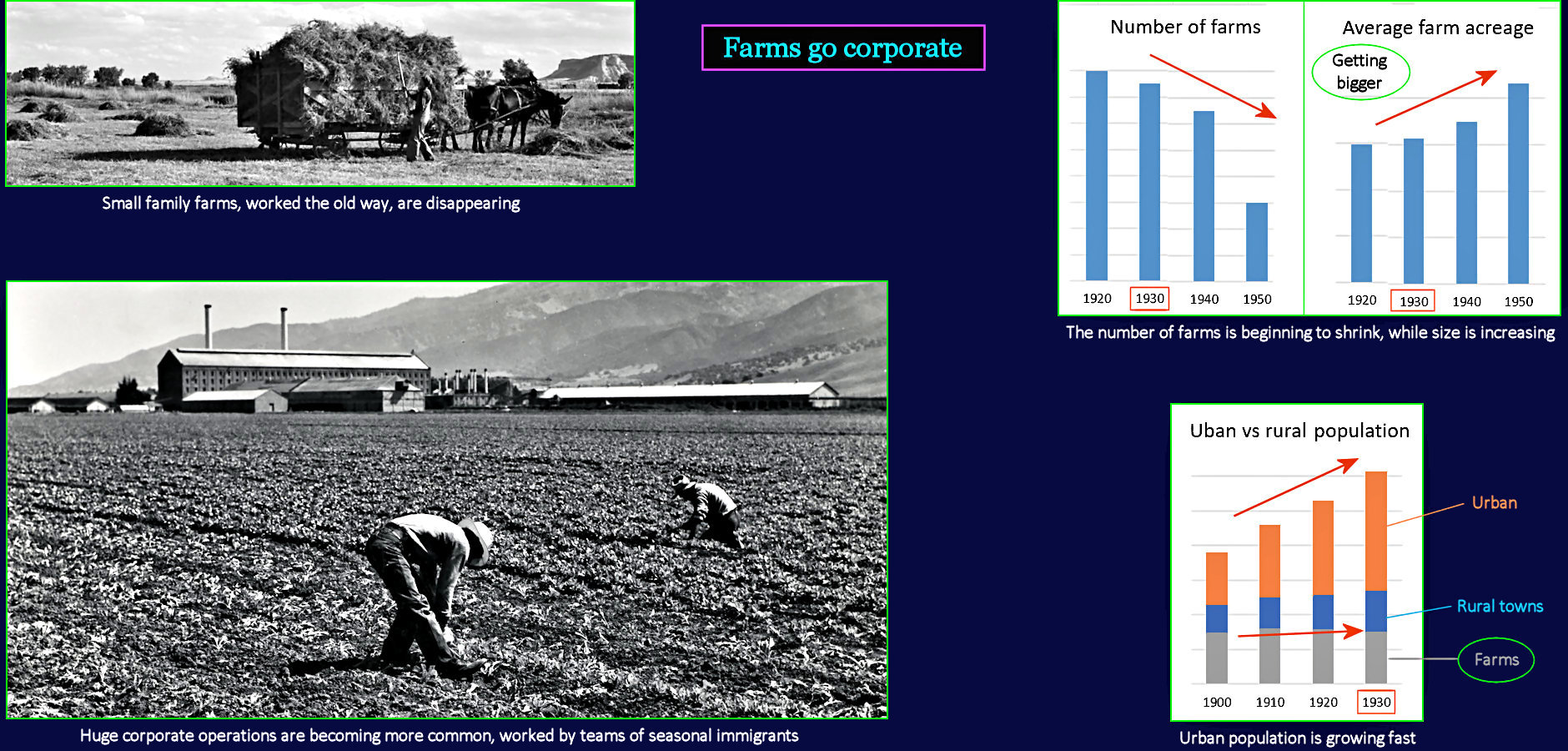
Even Farms Go Big By the late 1920s, the wave of corporate expansion is beginning to extend into farming. Well-financed operators can erect large factories close to the fields, especially out west. The sugar refinery in the photo at lower left processes sugar beets from huge fields surrounding the plant, tended by migrant labor. Field hands routinely travel hundreds of miles to arrive in the fields at harvest time, often from Mexico. The poverty of migrant farm workers, travelling from site to site, and living in shabby shacks, is well documented by government photographers traveling the country. This new kind of industrial farming leads to a gradual reduction in the number of small-time farmers, who are beginning to sell out and move to the city (lower right). | |||||||||
| |||||||||
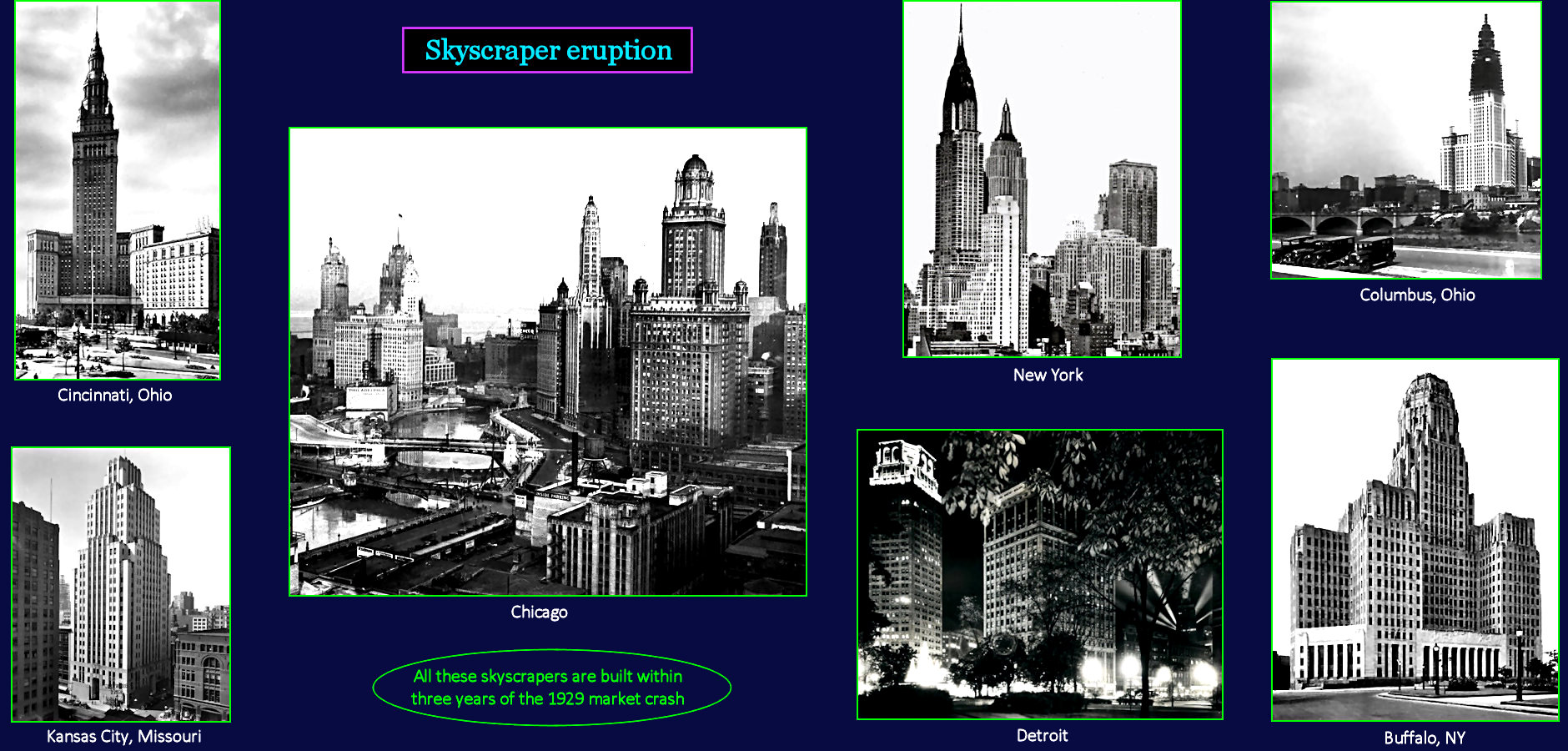
Going Vertical A new crop of skyscrapers puts the final exclamation point on the Roaring 20s. The years between 1927 and 1930 produce an astonishing array of vertical office buildings, some in trendy new 'Art Deco' styling. Best-known of these is New York's remarkable Chrysler Building. It's the world's tallest building for just a year, before being overtaken by the Empire State Building as the tallest, and last, of the new giants. Opening two years into the Depression, and distant from the downtown business center, the Empire State Building is a commercial flop. One year later, it's still three-quarters vacant. After five years, elevators only service the first 41 floors, plus the ever-popular observation deck on the 86th floor. Income from visitors to this deck keeps the building open. | |||||||||
| |||||||||
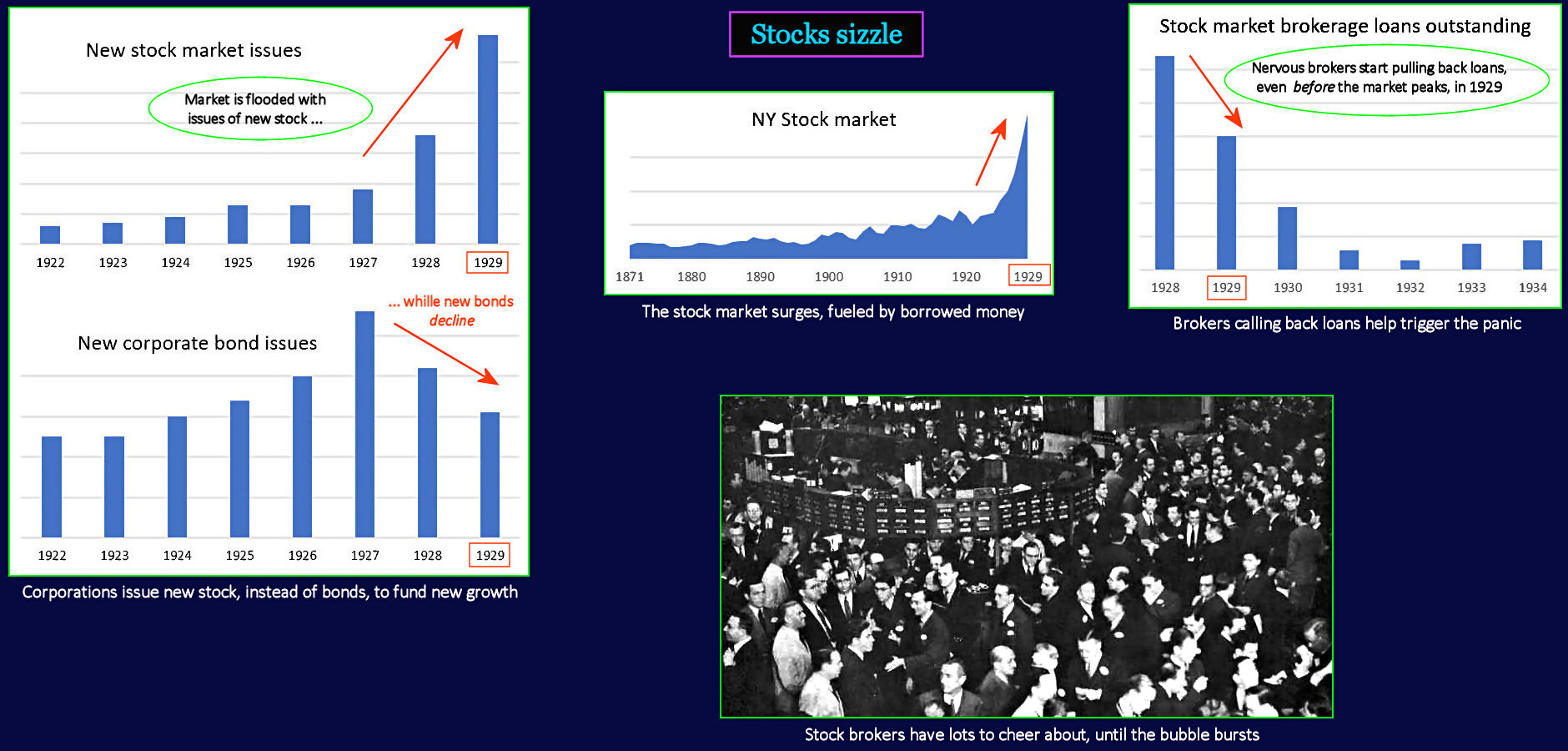
Huge Party The dramatic surge and collapse of the stock market in 1929 is unique in American history. Only the Nasdaq 'dot-com bubble' 70 years later comes even close. But the causes of the two bubbles are different. The dot-com bubble is based on media-driven hype over newly-emerging technologies that are only in the concept stage. The 1929 buying frenzy is similar, but led by established companies with proven products. The 1926-1929 surge is supercharged by a flood of brand-new stock issues, which increase five-fold in just three years (chart, upper left). Margin debt offered by brokers, however, begins declining a full year before the market peaks in 1929, helping to trigger the eventual crash (upper right). In 2000, the market peaks first. | |||||||||