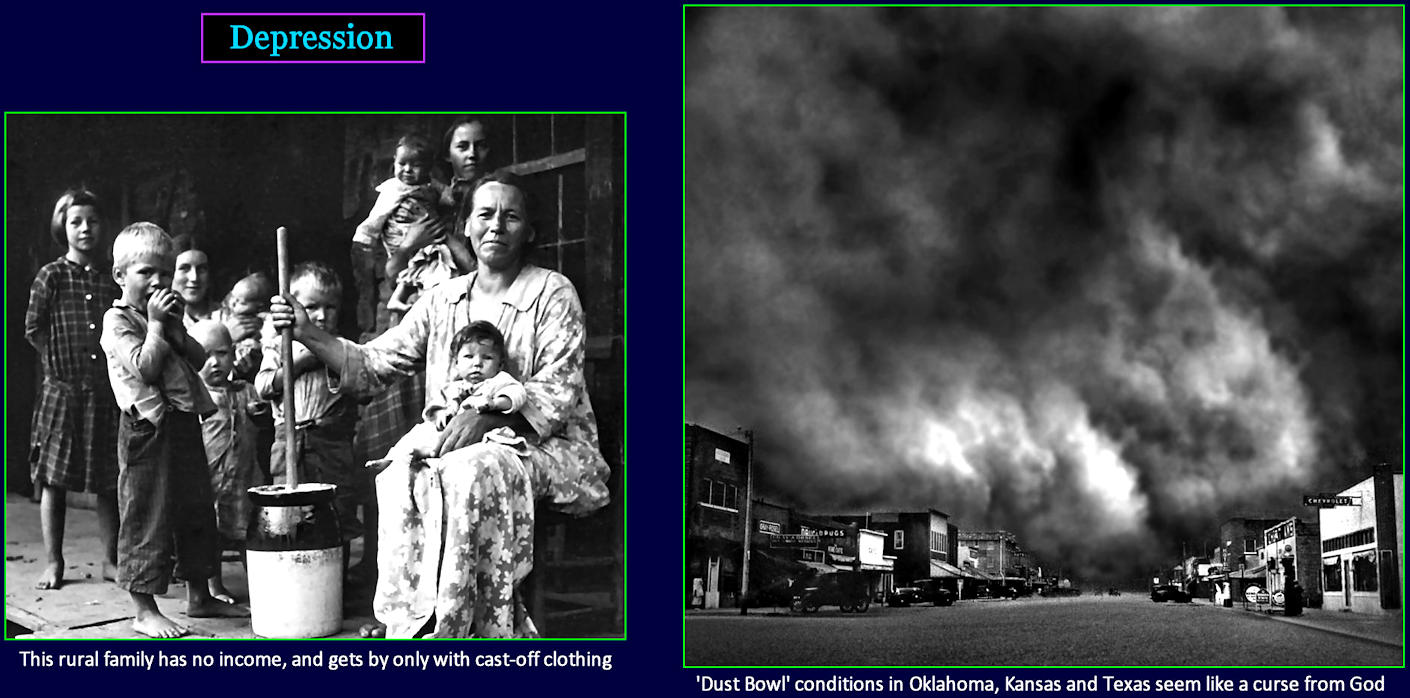
Prosperity EndsMany businesses go under, but at a rate only slightly higher than normal. Instead, managers lay off workers as needed to keep the doors open, accepting reduced profit. Plans to expand, or buy new equipment, are put on hold. Beyond that, there's little enthusiasm to re-hire laid off workers after conditions finally begin to improve. No previous panic has lasted more than four years. This time, unemployment remains stubbornly high for 10 years. Farmers have fewer options. Steeply falling prices for wheat and corn are followed by a prolonged drought in Oklahoma, Kansas and Texas. This ushers in the terrible Dust Bowl years, which finally break many farmers. |
| ||||||||||||||||
| |||||||||
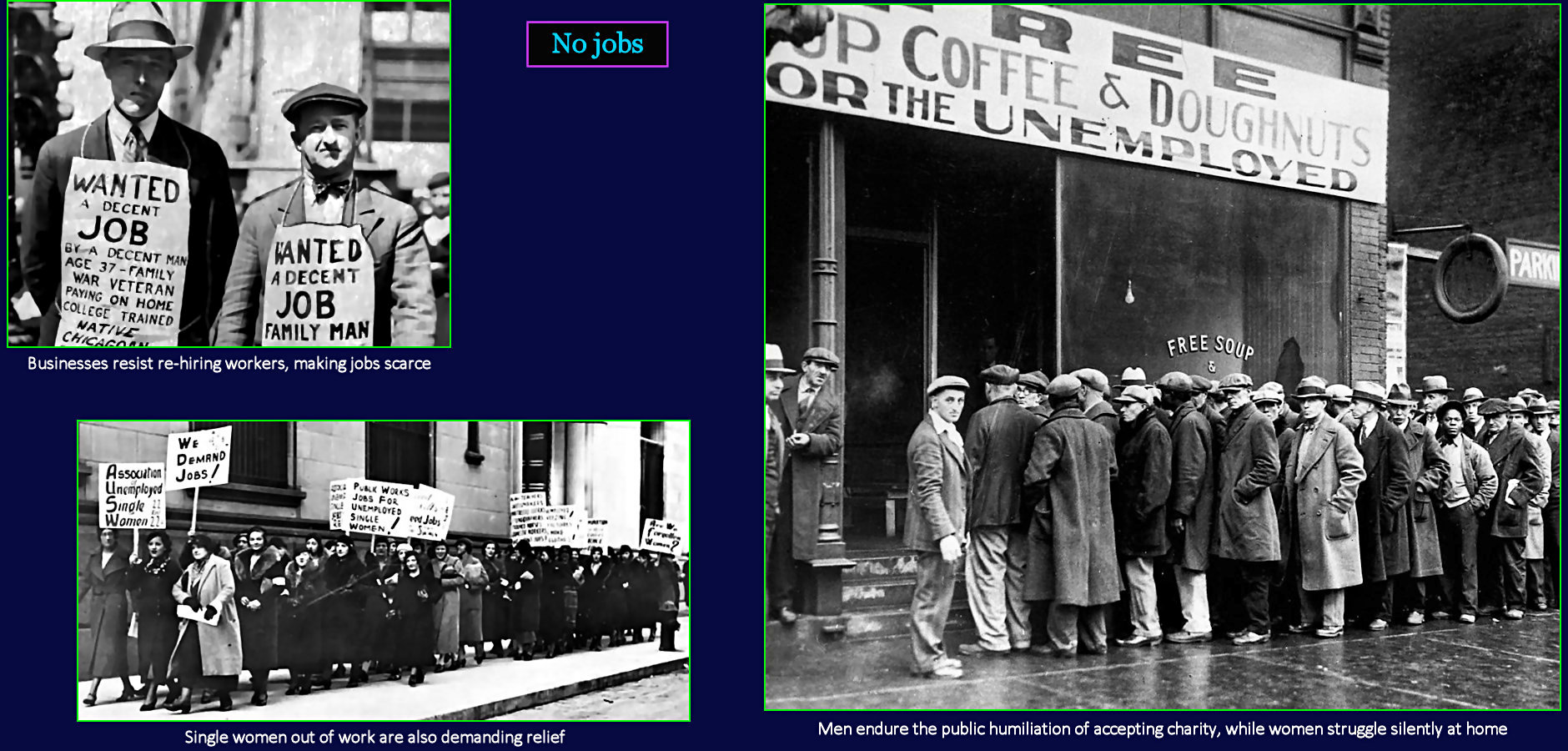
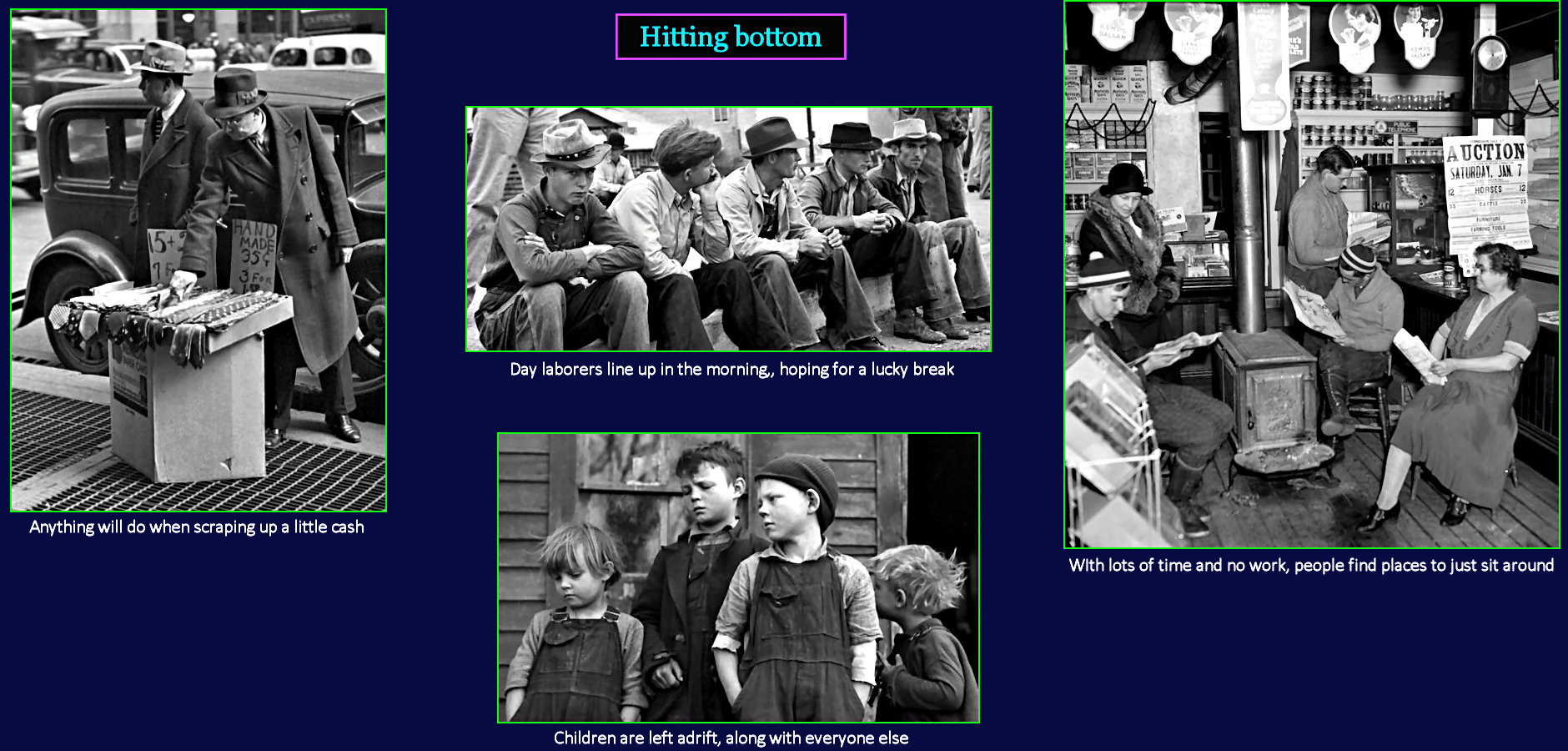
Armies of Unemployed The unemployment crisis is most visible in the cities, where the vast majority of manufacturing jobs are located. Normally, businesses begin re-hiring as soon as economic conditions start to improve. But this doesn't happen during the 1930s. Almost all measures of economic activity have begun to increase by 1933, but managers remain reluctant to restore lost jobs. Profits were totally wiped out two years earlier, and have recovered only slightly since then. Spending on construction and investment remains at very low levels, for fear of another downcycle. Churches and other civic organizations try to fill some of the gap, providing free meals for as many as they can. But this doesn't begin to make up for the loss of so many paychecks. | |||||||||
| |||||||||
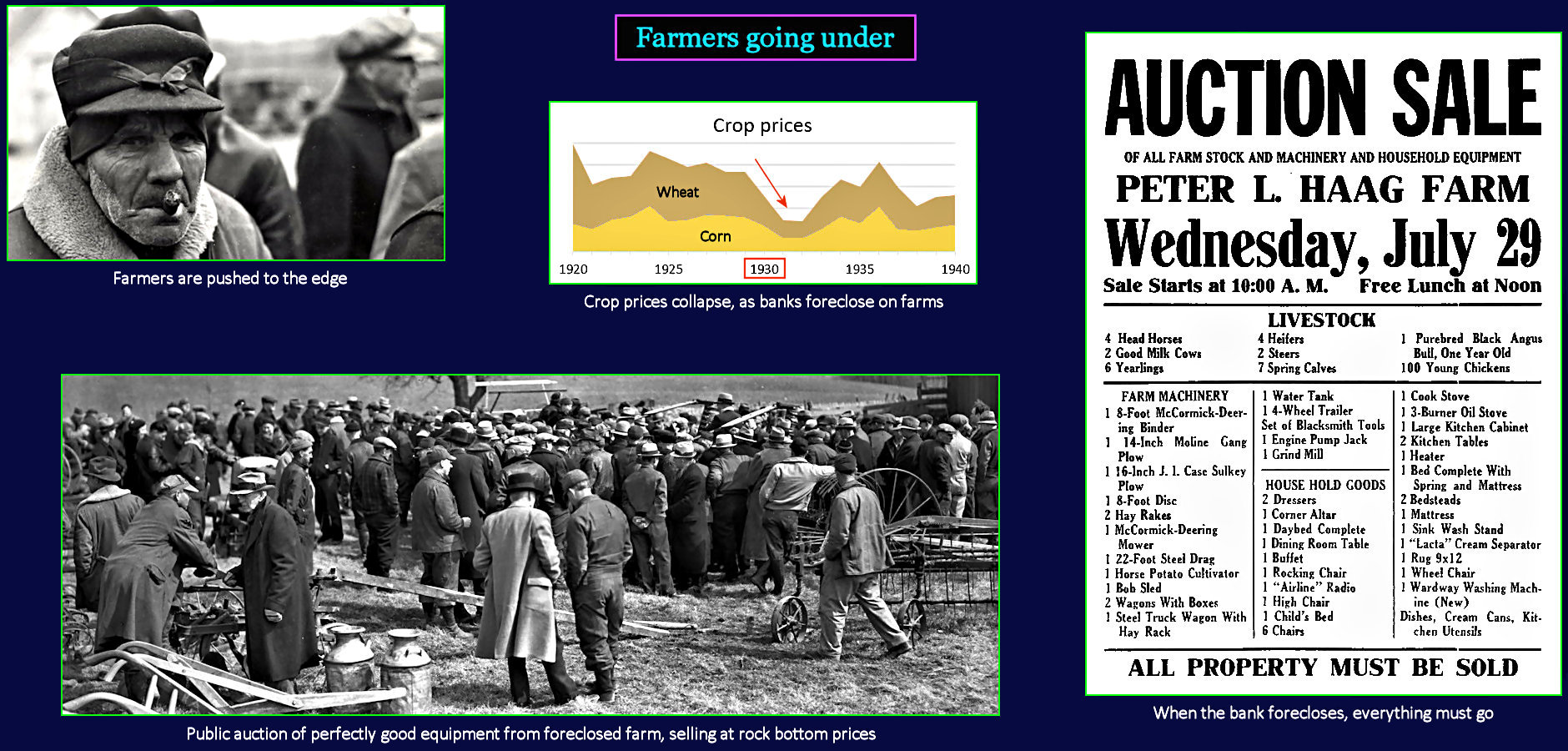
Foreclosure Auctions Farmers are hit by a double whammy. Prices for corn and wheat, their primary cash crops, plummet by well over half. At the same time, rural banks are failing, unable to cover sudden withdrawals from a pool of assets that now includes almost worthless stock and real estate holdings. Farmers are left stranded. They depend upon bank loans in the spring to tide them over until crops can be sold in the fall. Even when banks manage to stay open, in order to do so they are sometimes forced to foreclose on failing farms. Farm auctions are a sad affair. Among the buyers are groups of uneasy farmers, shuffling hopelessly about, who can't afford to scoop up the bargains, even at distressed prices. It's a fate that seems to be overtaking the entire farming community. | |||||||||
| |||||||||
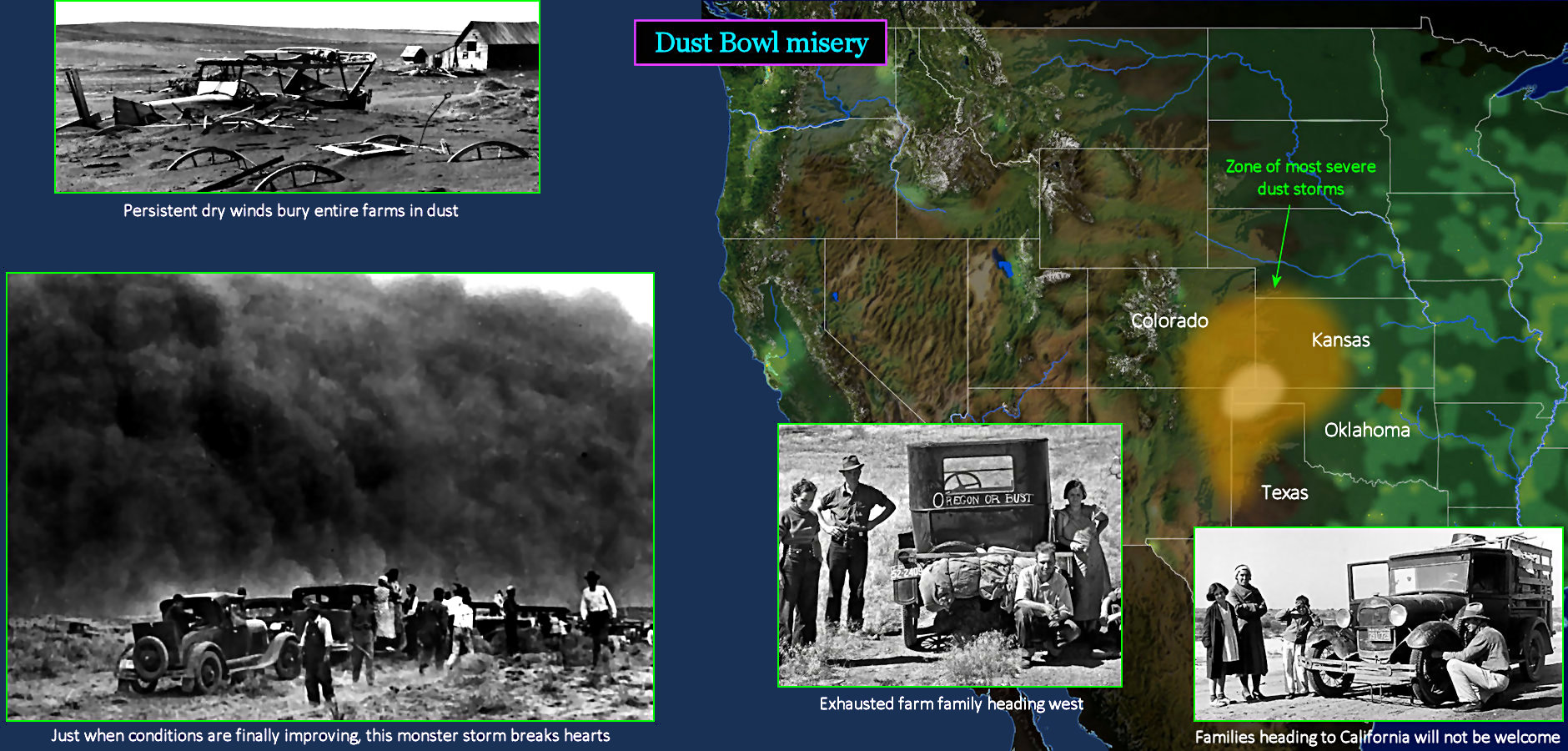
Giving Up The Dust Bowl years are a cruel blow to farmers on the edge of the prairie (see map). Wheat farming in these areas is unusually good during much of the 1920s, with plentiful rain and moderate winters resulting in a tripling of farm acreage. Now, as farmers rush to put unused land to the plow, the weather turns abruptly dry. Newly-plowed fields are exposed to drying winds that kick up a powdery dust, billowing high into the sky. Crops fail, as farmers are kept busy digging out from recurring dust storms. The situation becomes critical in 1933, with storms depositing dust as far away as Boston. Many farmers are forced to abandon their homes and head west, where they're often treated as beggars. | |||||||||
| |||||||||
Out of Options America is now experiencing misery at every level. Bank failures don't mean much when your savings are gone anyway. Many Americans are left hoping for a miracle. | |||||||||
| |||||||||
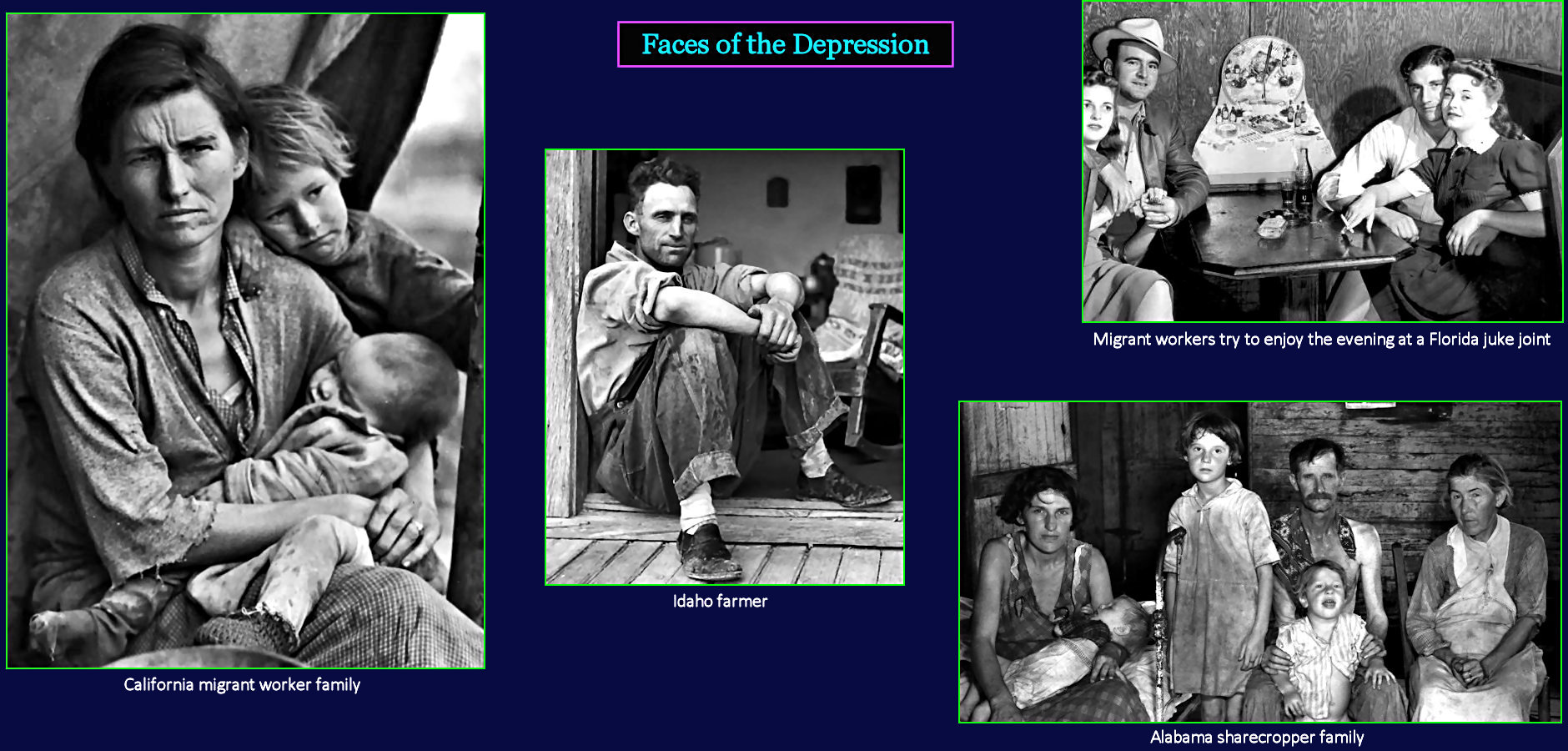
Beaten Down The Depression wears people down. It goes on and on, with little prospect for change, especially in rural areas. The terrible blight contrasts painfully with the happier years of the 1920s, leaving people stunned and hopeless. People get by as best they can, on a mixture of neighborly aid and sheer desperation. | |||||||||