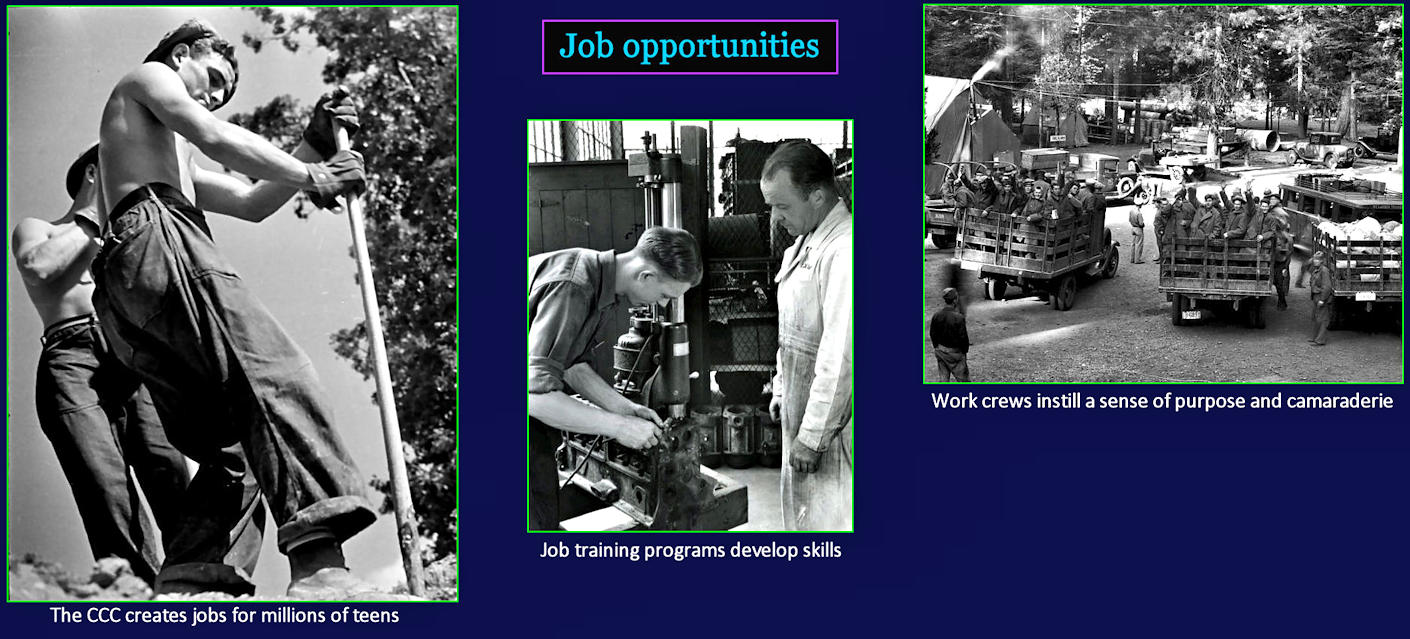
Hitting the Ground RunningThe plan is easy to replicate, and within two months there are 1,500 camps, housing a quarter million single young men. Most are aged 18-25, from homes that are already on local relief due to job loss or hardship. Ex-military men are added as an afterthought. This follows a second round of World War One veterans camping out in Washington, demanding early payment of promised war benefits. War veterans can be any age, married or not. Beyond simply planting trees, work ranges from flood control and erosion prevention, to stocking streams with fish and erecting fire lookouts. With a 2-year limit on service, the supply of recruits is continually refreshed. |
| ||||||||||||||||
| |||||||||
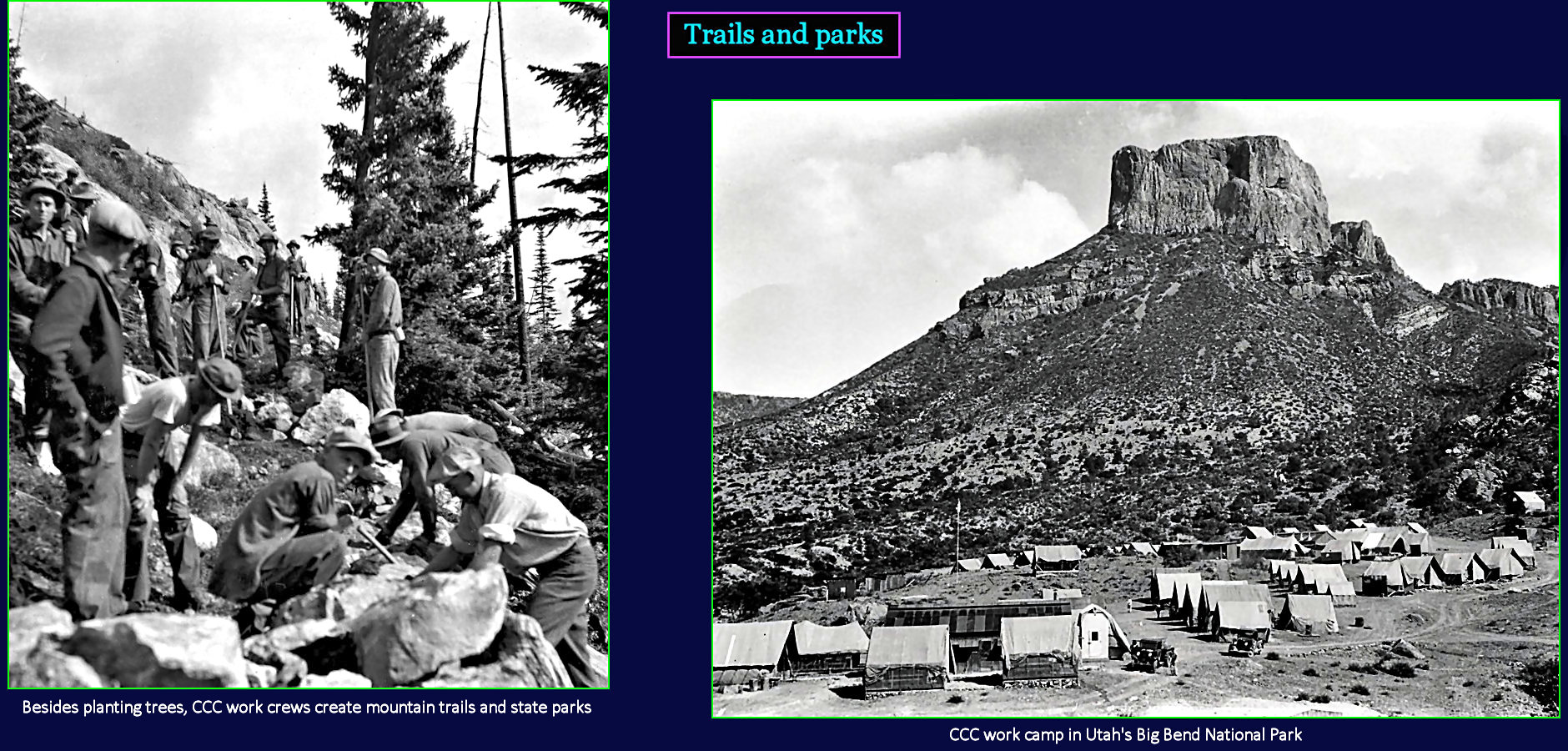
Out West Many CCC recruits are sent to national parks out west, to establish mountain trails, check erosion and reforest areas burned or logged. In addition, the CCC creates 800 state parks on lakes or ponds, with rustic picnic tables, fire pits and outhouses. | |||||||||
| |||||||||
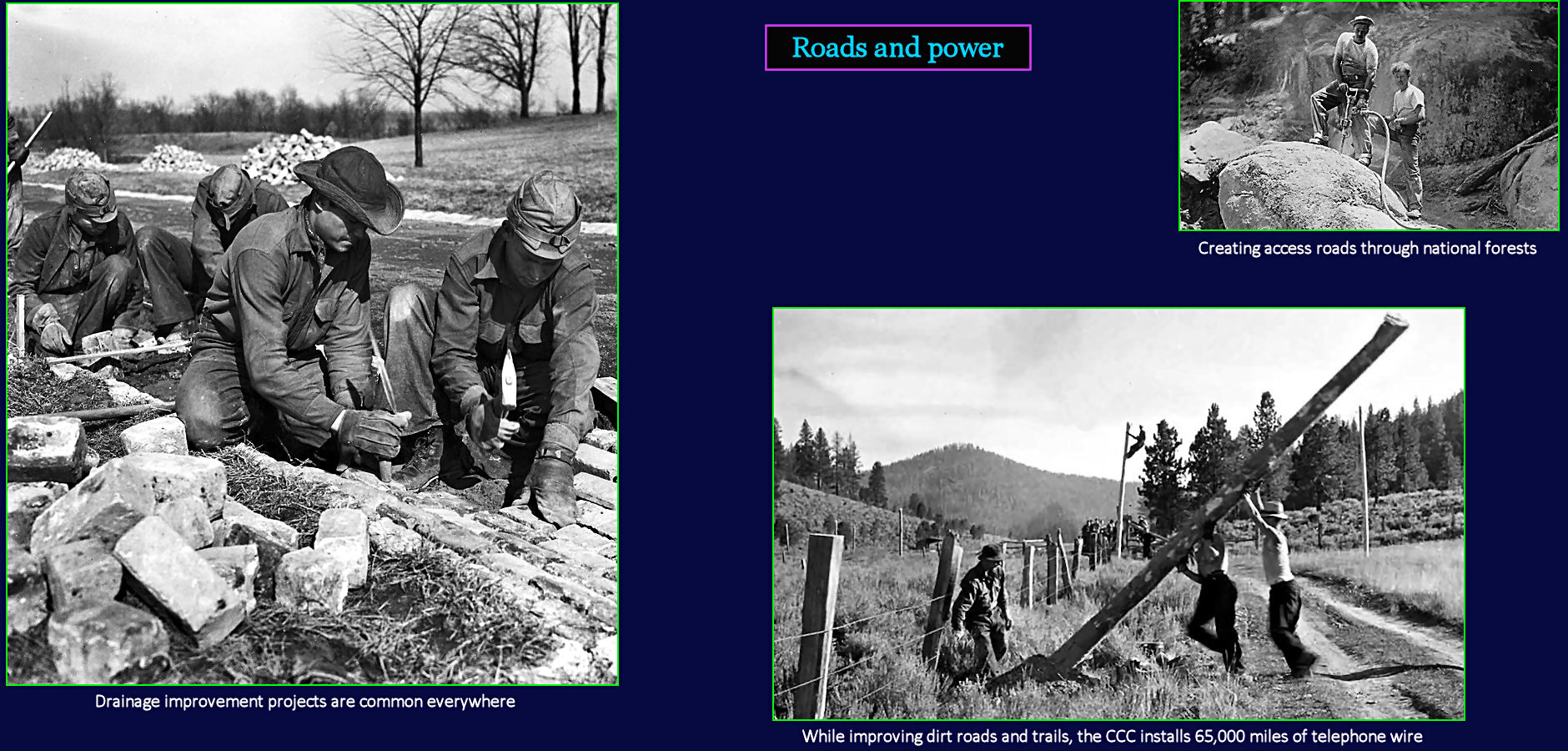
On-the-job Training The CCC is credited with building 100,000 miles of access roads and trails, along with 40,000 bridges, which help open up national forests in the West. It builds 3,500 fire lookout stations, and erects 45,000 buildings of all sorts, including many in parks. | |||||||||
| |||||||||
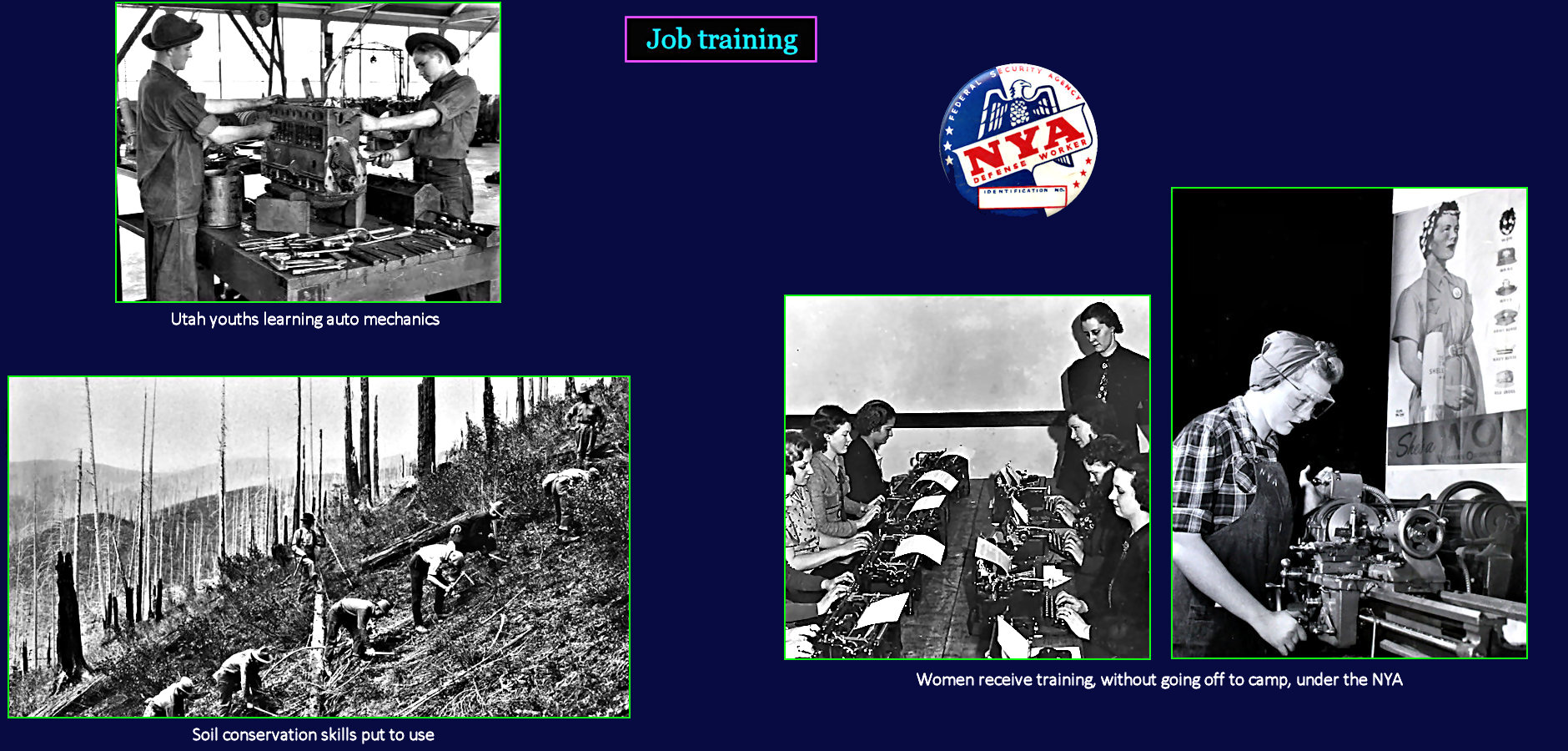
Gaining Experience CCC youths receive valuable training, usually on the job, but sometimes in facilities. Training is also provided by the National Youth Administration (NYA). This was a separate program, for high school and college youths who want to stay at home. Women make up half its enrollment. | |||||||||
| |||||||||
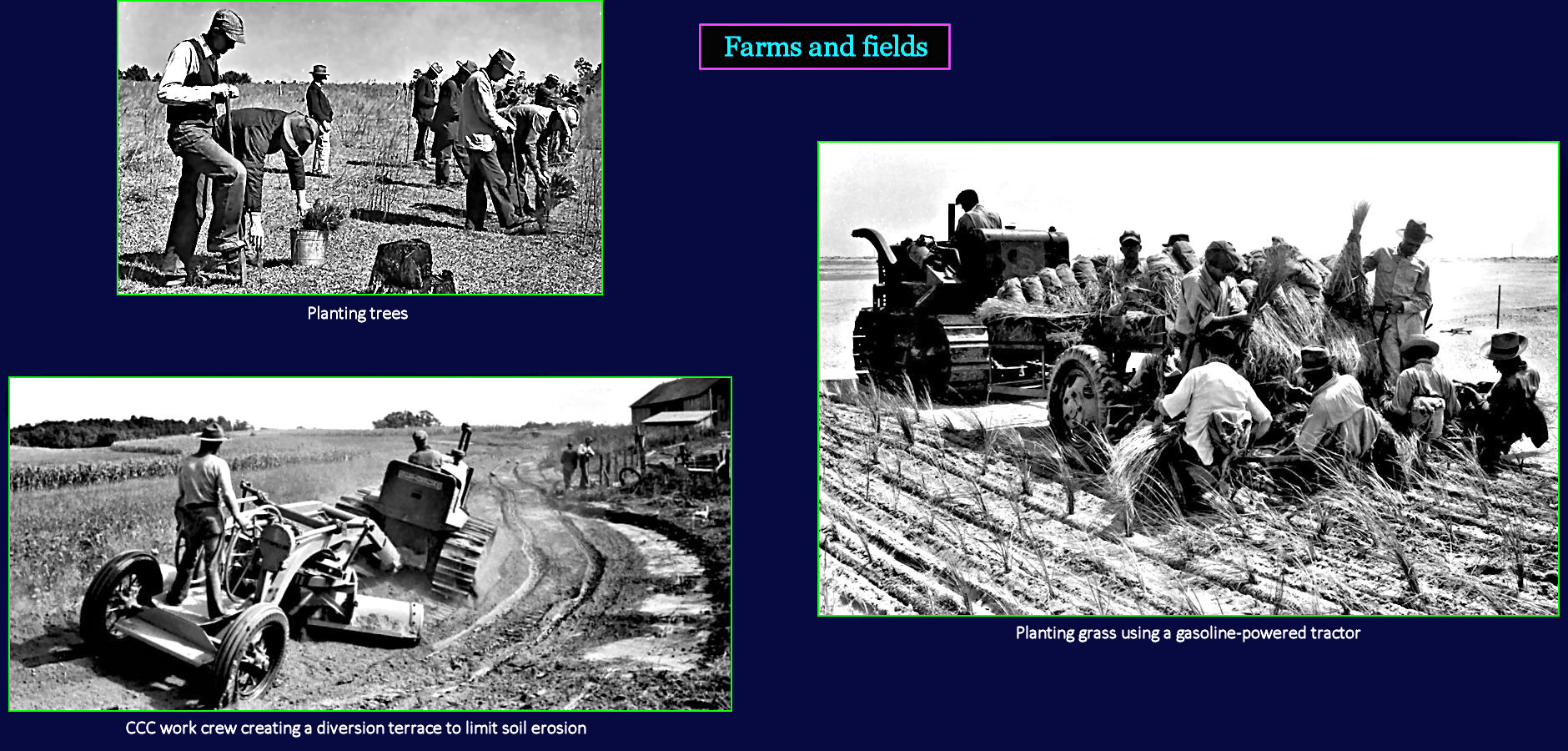
Conservation Work Most CCC youths work in the woods or on roads, but some are employed on farms, to control soil erosion. | |||||||||
| |||||||||
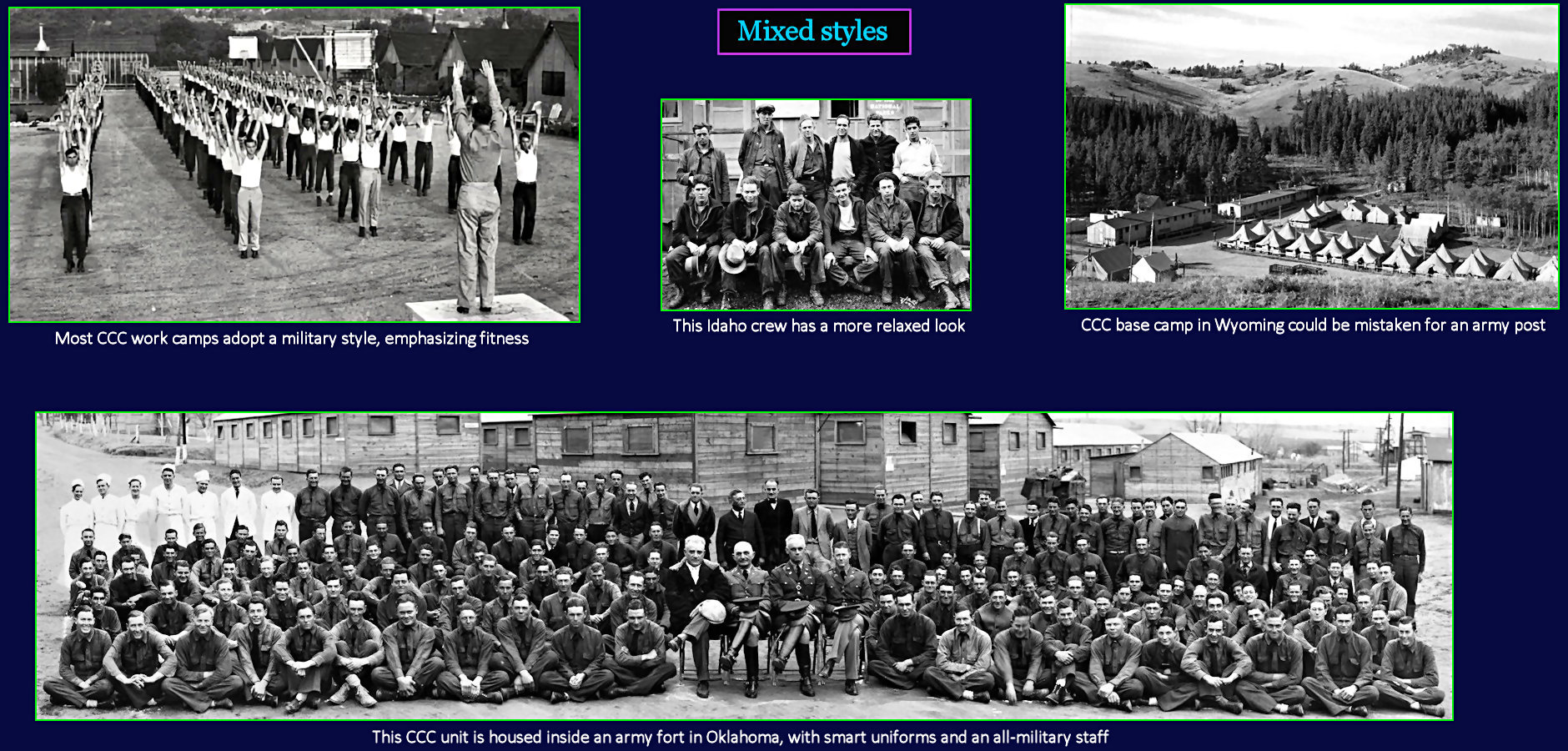
Army Flavor One important side benefit of working under the CCC is exposure to other males of the same age. Group living conditions promote bonding, and many friendships started in CCC last for years. The military-style administration in most camps is also good preparation for life in the army, for those that will enlist during World War II, which is just a few years away. | |||||||||