| |
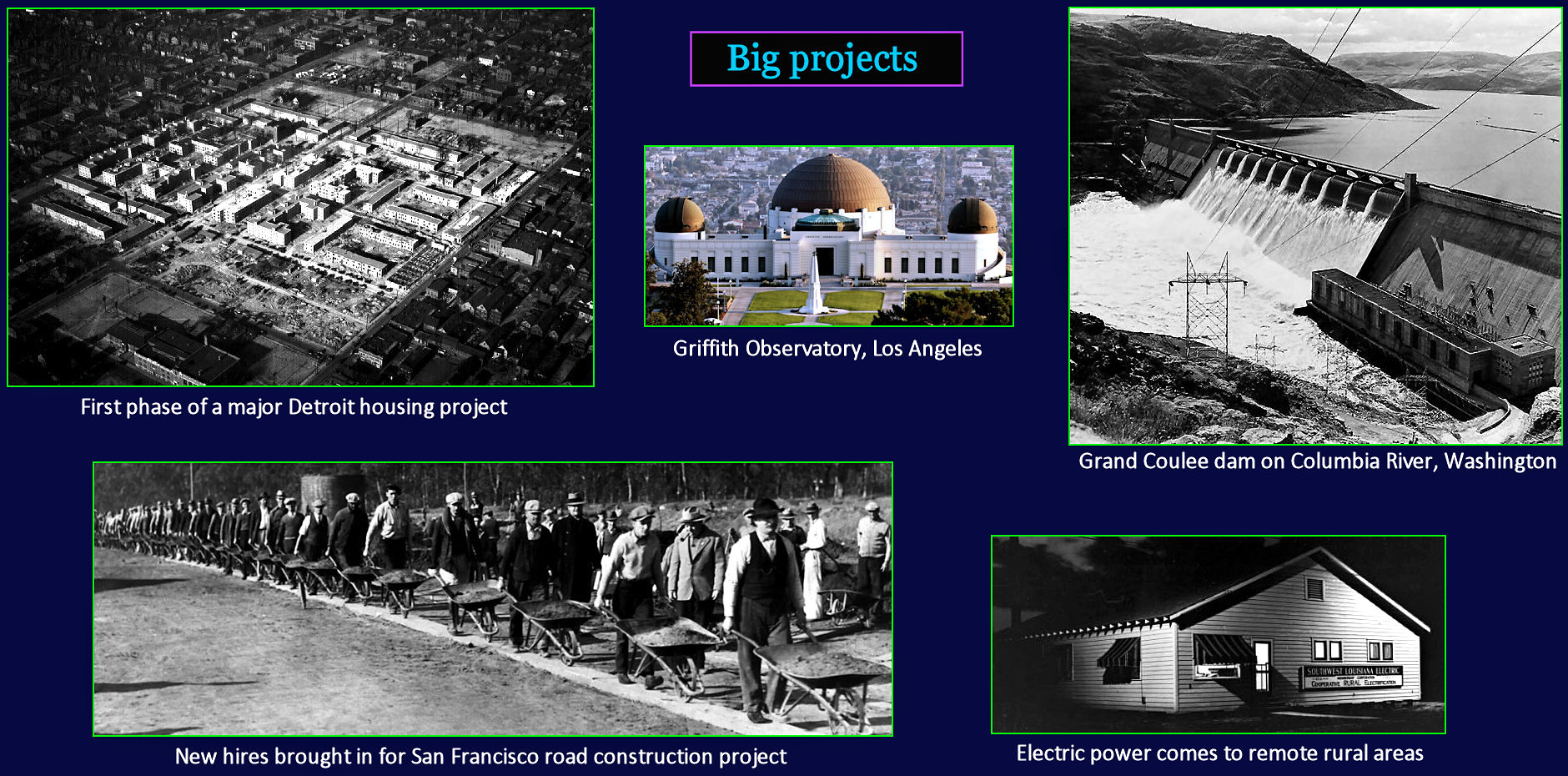
Going Really Big The Works Progress Administration (WPA) is the centerpiece of Roosevelt's New Deal. It's nation-wide in scope, amounting to America's first big 'infrastructure' program. The government has subsidized canals and railroads in the past, but this is a much larger effort. Before the WPA, the most expensive federal responsibility, besides maintaining coastal forts and naval bases, is funding the Postal Service, with 50,000 post offices, and a third of a million mail carriers. WPA construction projects nearly double total federal spending. |
| |||||||||
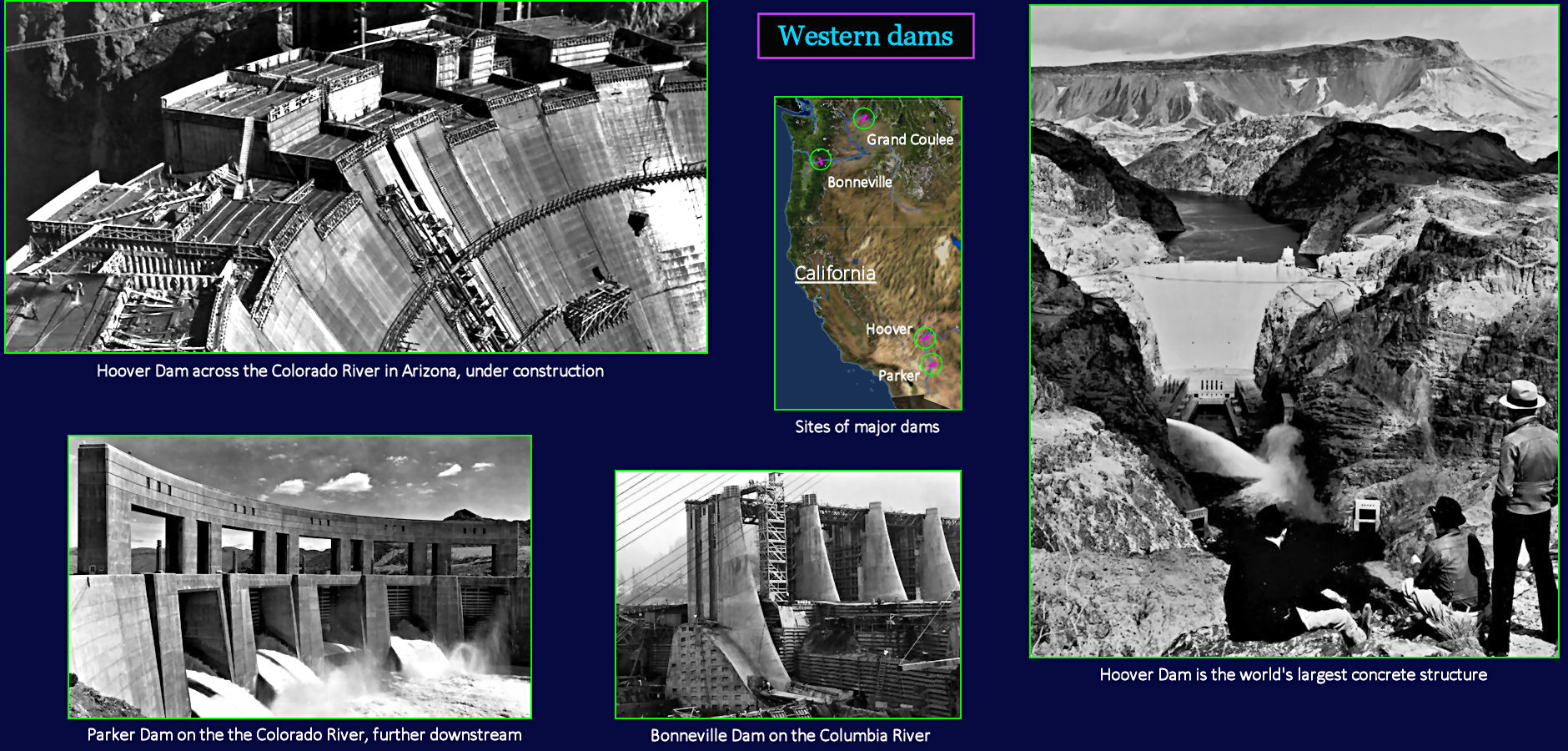
Concrete Monsters The biggest dams are all out west. Biggest of all is Hoover Dam, on the Colorado River (top left and right). Over 700 feet tall, it creates America's largest reservoir, which is the main source of irrigation for the American Southwest. It's also capable of generating lots of electricity, though there are few customers anywhere near. Parker Dam (lower left) is half as tall. The other two giants out west are built on the Columbia River, which separates Washington State from Oregon. Grand Coulee Dam is 550 feet tall, and is also built to provide irrigation and electrical power. Bonneville Dam (center bottom) is closer to the coast, and much lower, but includes the highest single-lift lock in the world, at 60 feet. | |||||||||
| |||||||||
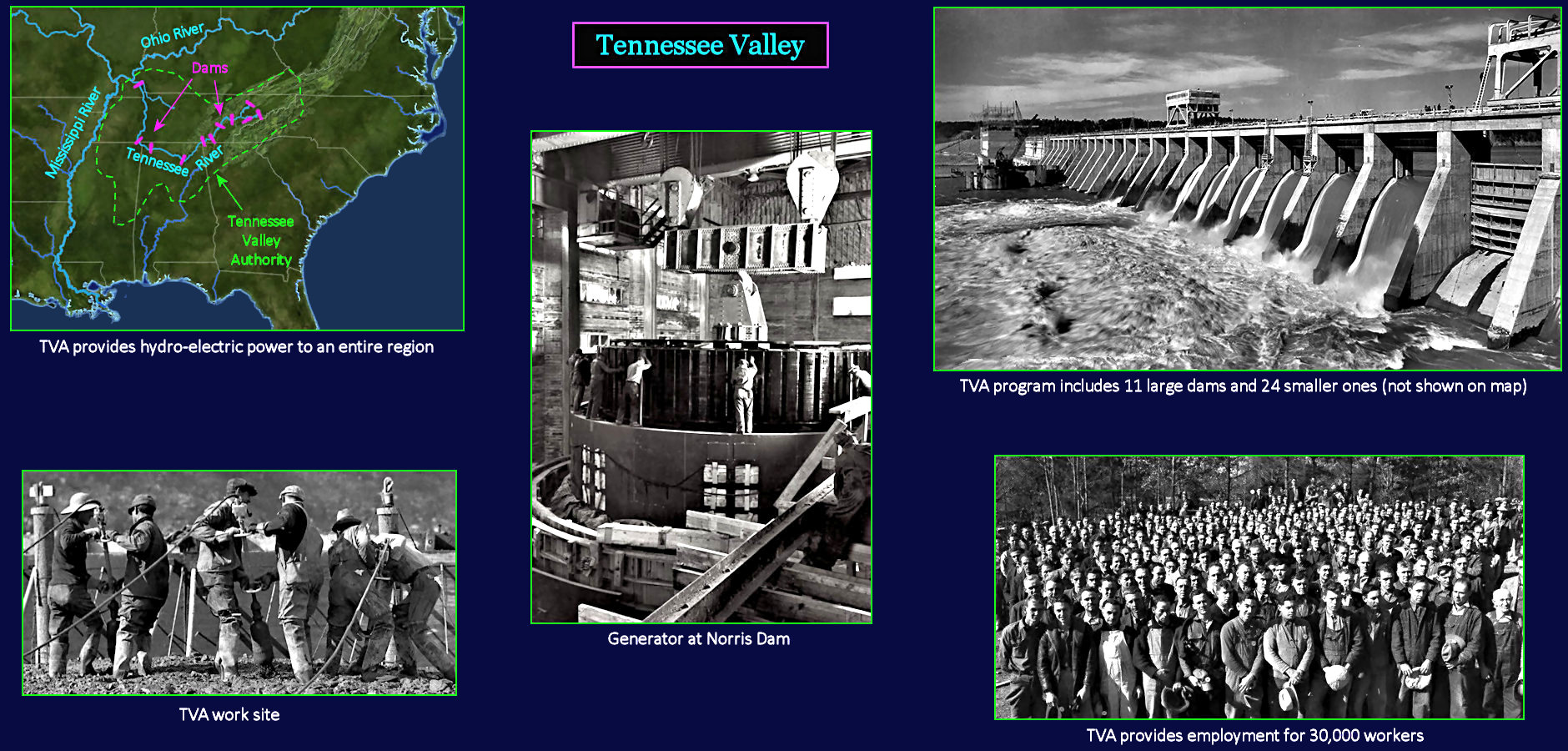
Huge TVA Footprint The Tennessee Valley Authority (TVA) is created to build dams, and deliver electrical power to a vast region which has virtually no other source of power. Farms tend to be scattered and isolated, which normally makes installing a rural power system just too costly. Utility poles must be installed to service each farm, individually. Unlike the Mississippi, which follows a wide, fairly level valley, the Tennessee cascades down many channels from the Appalachian Mountains, to the east. To control flooding and provide power, 11 major dams are constructed on the Tennessee River itself, while 14 smaller dams are built on tributaries. | |||||||||
| |||||||||
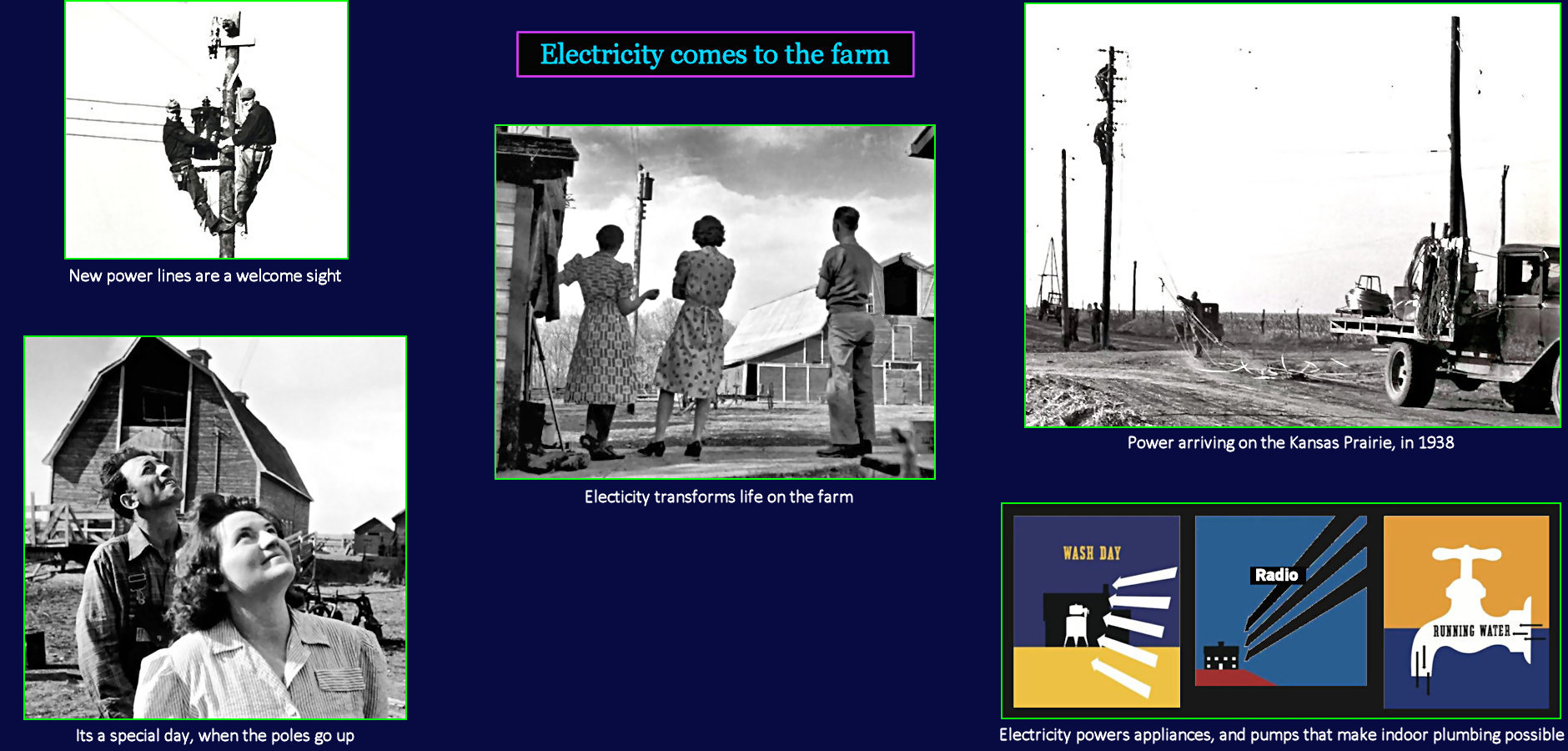
Finally, Electricity on the Farm It's surprising how much of modern life requires electricity. Electric lights replace kerosene lanterns, which are an inconvenient first hazard. But washing machines, radios and water systems also need power. Without electric pumps, water must be hand-carried from a well or hand pump, making indoor plumbing impractical. That's why so many rural homesteads are serviced by outhouses. In a real sense, TVA brings the modern world into the farm for the first time. | |||||||||
| |||||||||
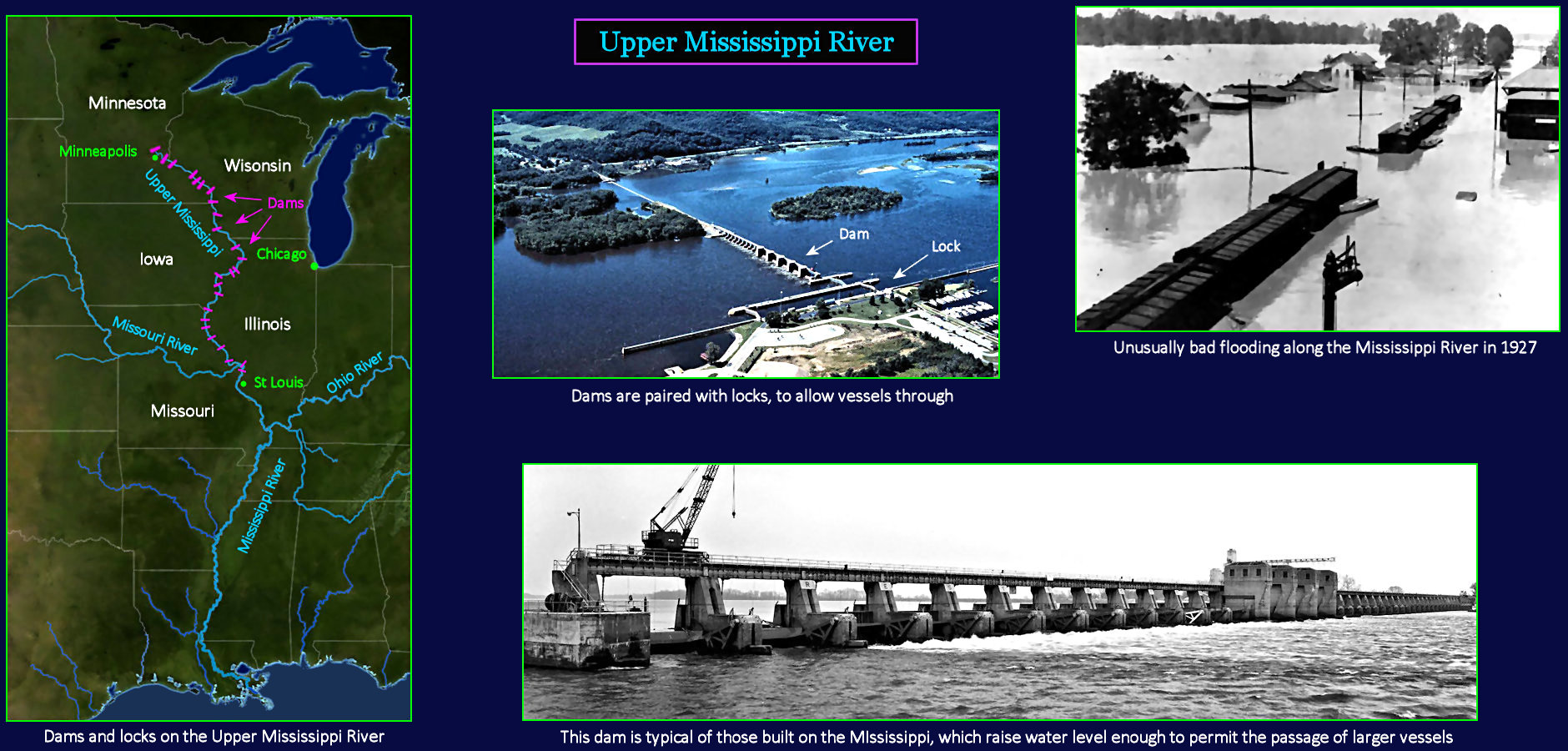
Lesser Dams Although it is rarely mentioned, the Upper Mississippi River (above the point where the Ohio and Missouri Rivers join the flow) also receives a lot of attention from Army Corps engineers. Twenty dams are constructed on this stretch of river, each one paired with a canal-type lock to allow vessels to bypass the dam. These dams are partly a response to a recent major flooding event on the Mississippi. Most of the damage in 1927 is downstream, but would have been lessened by flood control on the upper region. The Upper Mississippi is much shallower than the rest, with meandering sections of silty back channels that make navigation difficult, even by small steamboats. The new dams double the minimum navigable depth, to 9 feet. | |||||||||
| |||||||||
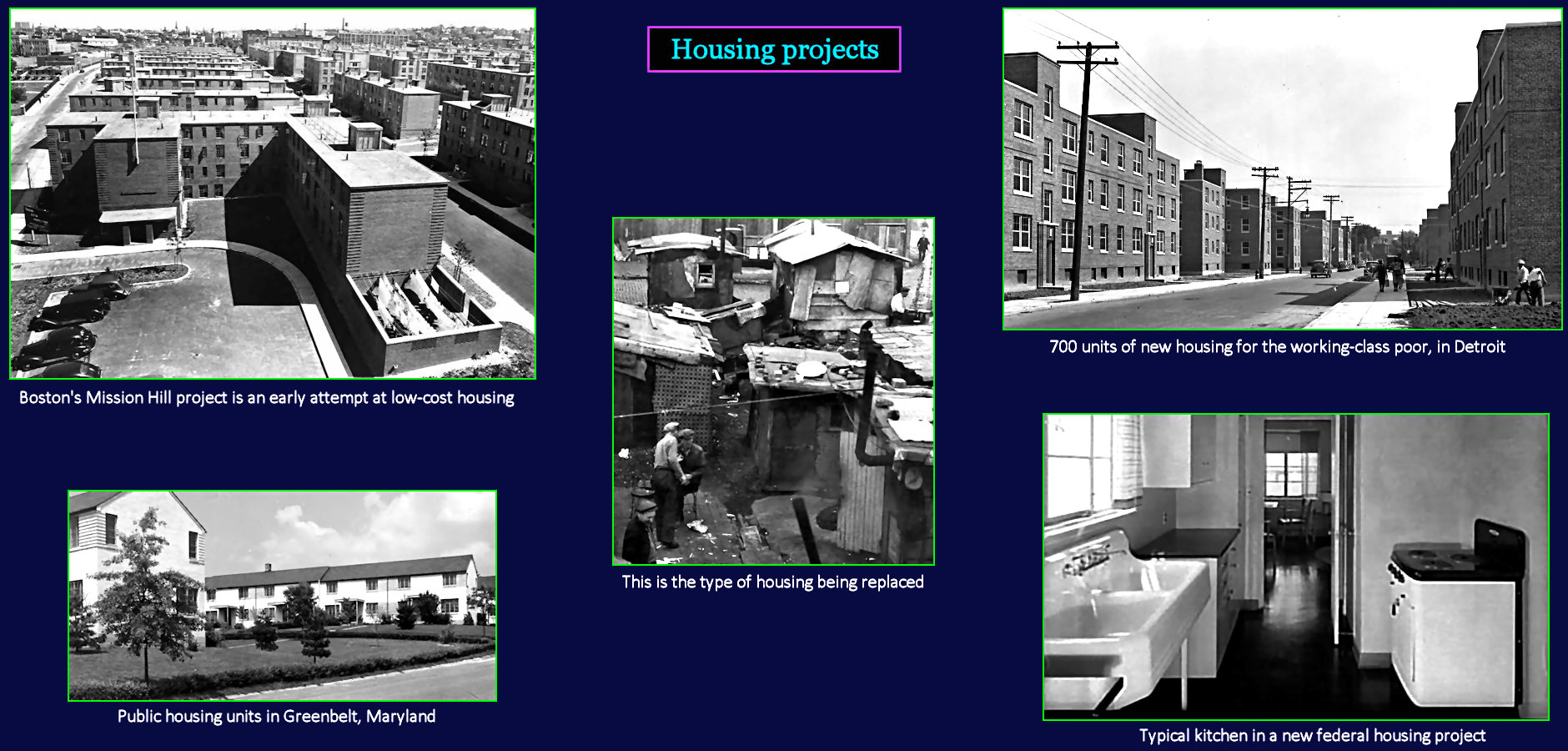
First Low-income Housing There are two housing problems. One is in cities, many so many workers live. Those who lost their jobs might be forced to move to 'Hooverville' encampments just outside the city, where they assemble tiny hovels from discarded rubbish. The other housing problem is in farm country, where families too often live in isolated, tumble-down shacks. New-Deal planners address the urban problem first, since it can be addressed with construction projects that help restore the local economy, at the same time. Detroit and Boston both build large complexes of three-story apartment buildings, clustered together, as a home for low-income renters (top left and right). These are a big step up from existing tenements. | |||||||||