Difficult ProblemFor many, however, it doesn't seem that much has changed. Unemployment remains stubbornly high, and ripple effects through the economy are still causing hardship. This is especially true in rural areas. The federal focus remains on jobs. But housing issues are also receiving lots of attention. Government agencies launch a wide array of programs to address America's housing situation, taking various approaches. In addition, President Roosevelt begins working on the background issue of persistent poverty, which is particularly evident among the elderly. Widows and the disabled are at highest risk. The solution is Social Security. |
| ||||||||||||||||
| |||||||||
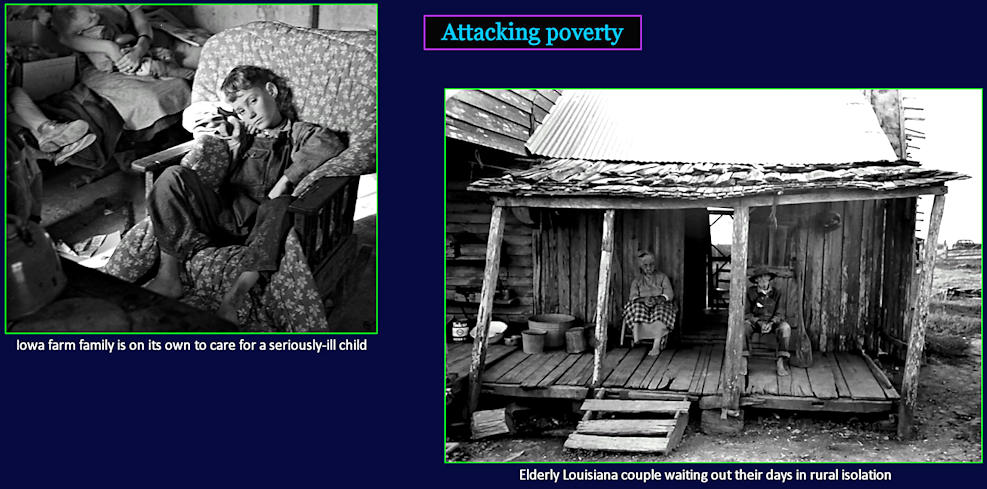
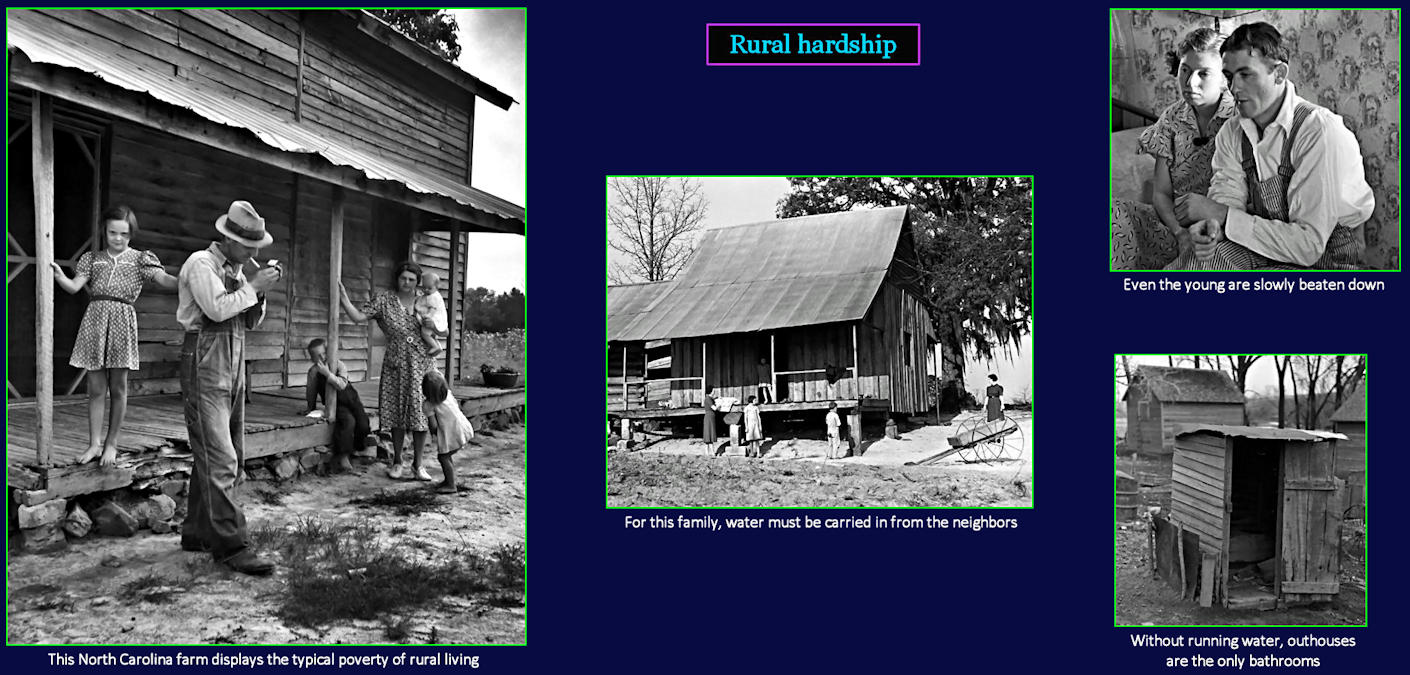
Isolated Existence Nearly half of all Americans are still living in rural areas, where cash is scarce and opportunities few. The country can't be restored to health without helping farmers. But job programs and big construction projects won't work in areas where farms are scattered, and banks failing. The steep decline in farm income has turned around a bit, but is still one-third below former levels. Rural housing is mostly make-shift and bare-bones. Few farms have electricity or running water, and virtually all still rely on outhouses for sanitation. Worse yet, half of all farmers own no land at all. Tenant farmers rent the land they farm, while 'share-croppers' are even more dependent upon their landlords. They own neither land nor equipment. | |||||||||
| |||||||||
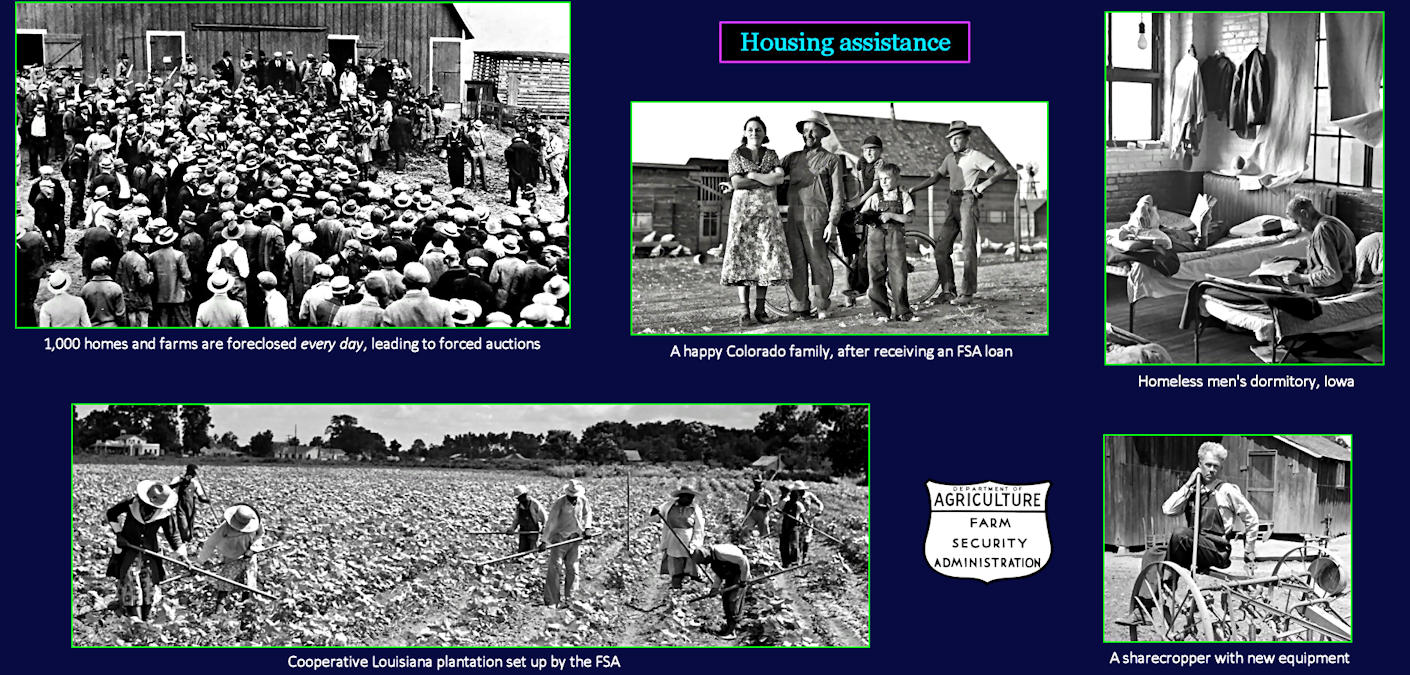
New Government Help With so many rural families in distress, the government tries a variety of programs to help. The FSA provides low-cost loans to purchase land and equipment. It buys out some farms which are too small to be economically viable, and resettles the families in cooperative plantations. The FSA also provides education to half a million farm families, helping them learn sustainable farming methods. Meanwhile, some city governments also try to help, providing shelters for the homeless. | |||||||||
| |||||||||
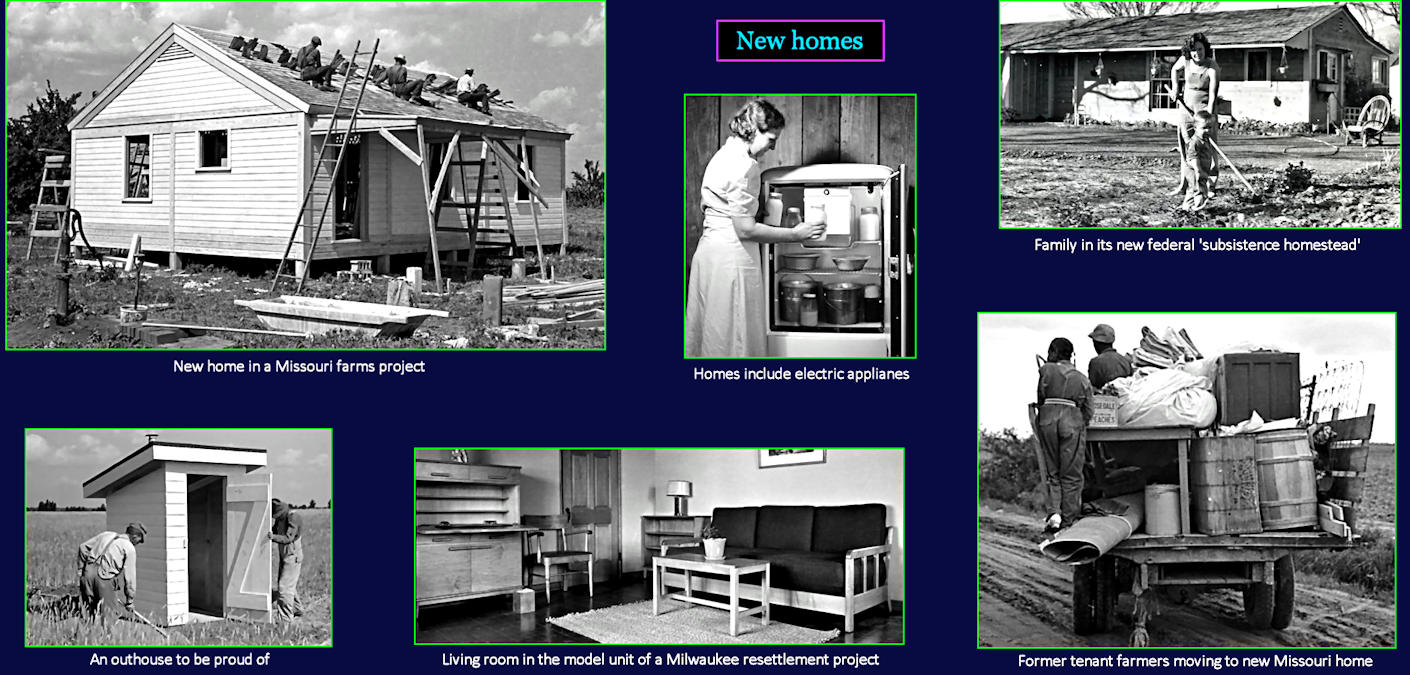
Replacing Shacks The FSA also helps farmers acquire new homes, through loan assistance. In New Jersey, families are assisted in setting up 'subsistence homesteads' on small plots, with houses. | |||||||||
| |||||||||
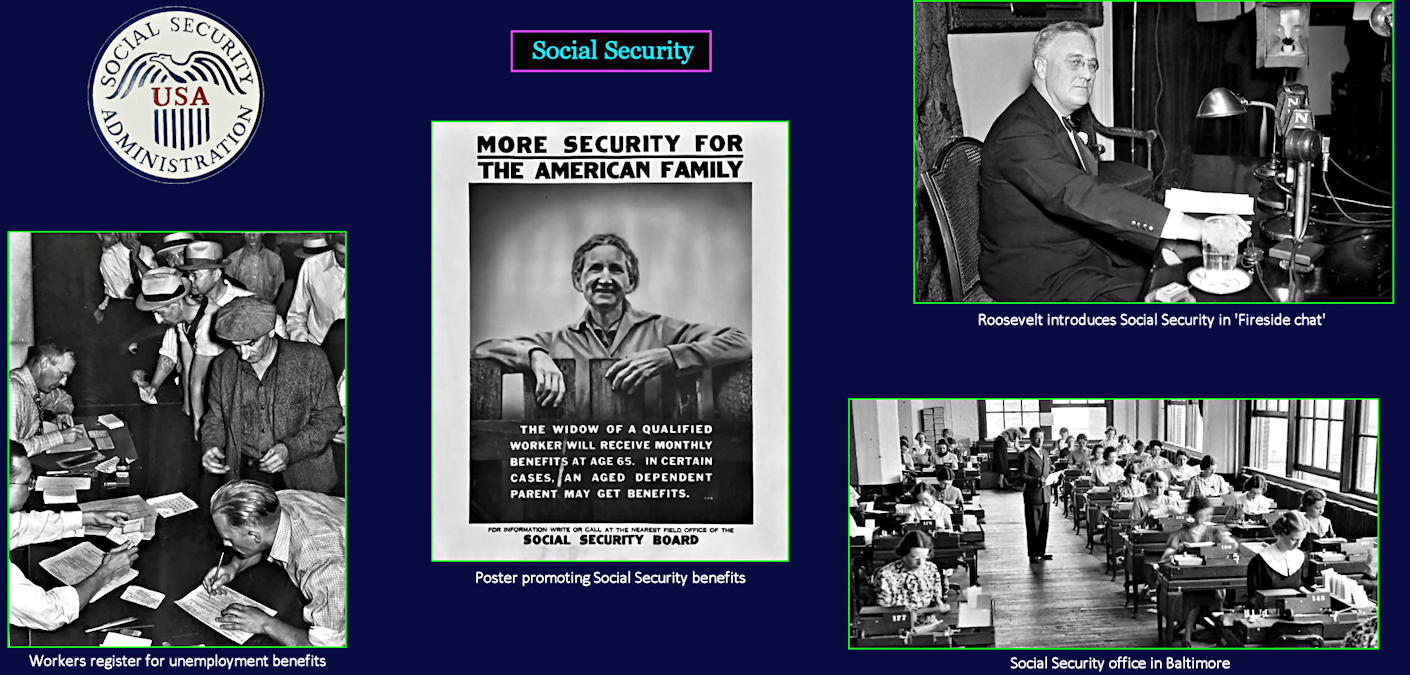
Reaching the Elderly One of the most popular New-Deal programs comes late in the process, as an effort to reduce poverty among older Americans. These are people whose working days are over, and who often live alone. Many are widows, as women tend to outlive their husbands. The Social Security Act of 1935 is still regarded as the centerpiece of America's ongoing effort to eliminate poverty. It includes benefits for the disabled, and temporary aid for the unemployed. Benefits for the elderly kick in at age 65, at a time when the average life expectancy is still only 60. Today, people are living well into their 70s, making this program much more costly. | |||||||||
| |||||||||
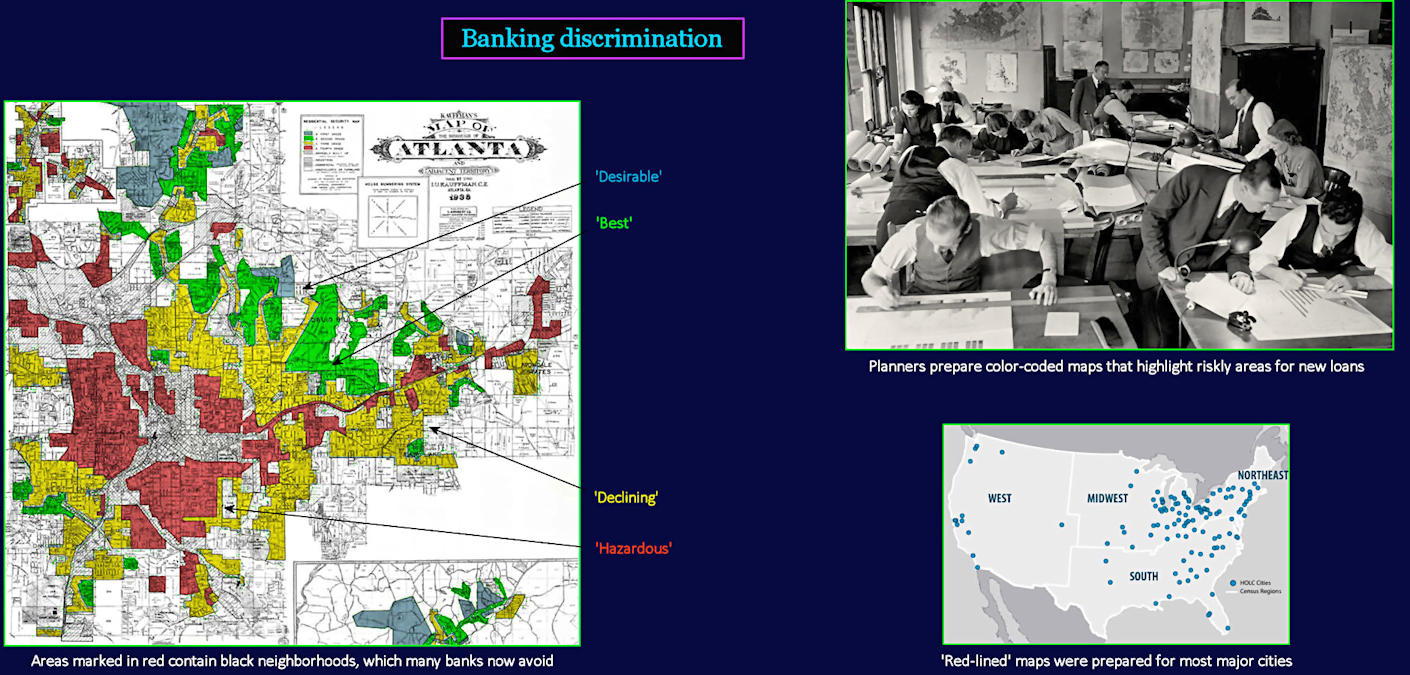
Red-lining with Government Maps One controversial government agency prepares housing maps of most large cities (left). The intent is to identify areas where loans might help, and where they are likely to fail, due to unfavorable conditions. The maps are color-coded, with the least desirable areas shown in red, and labeled as 'hazardous.' Red zones are generally the older areas, with the highest proportion of black families. Even though they are still 85% white, on average, the maps encourage bank loan officers, and insurance agents, to avoid them altogether. This process of 'red-lining' has the effect of maintaining segregation nationwide, with black families continuing to receive inferior services. | |||||||||