| |
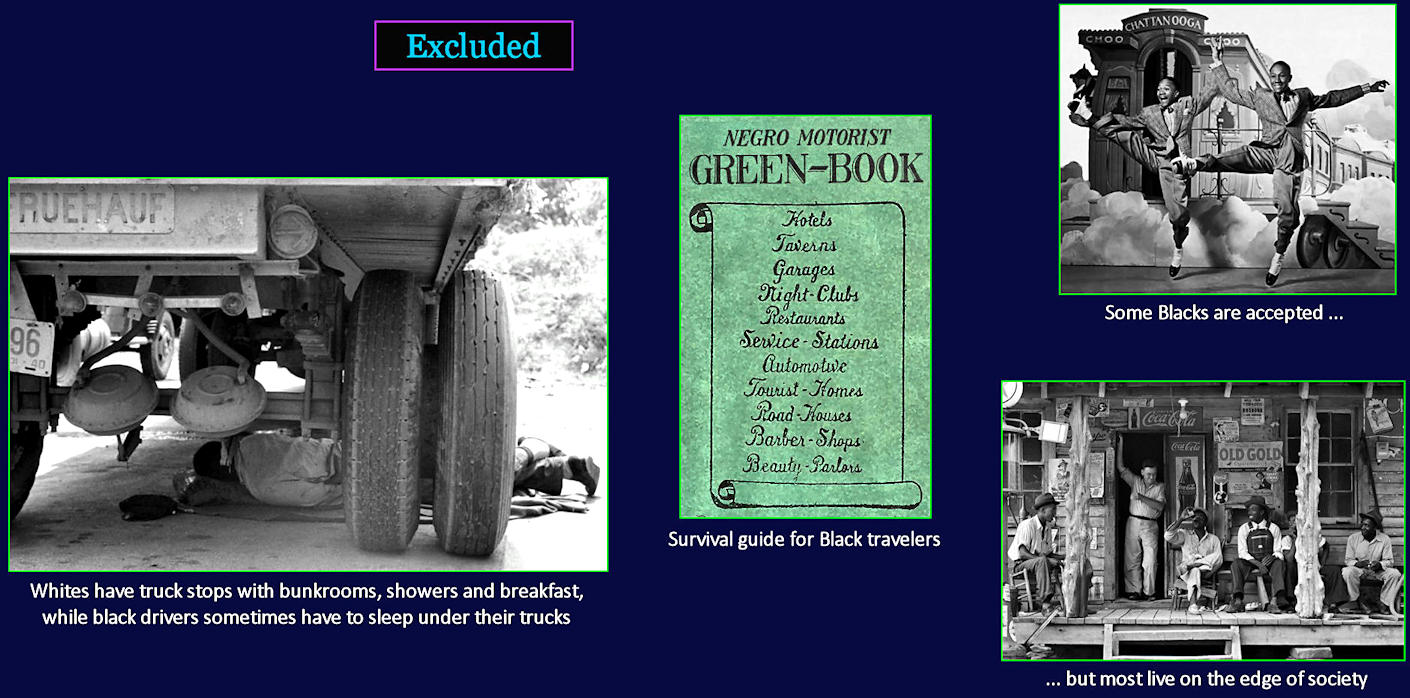
Inequality The judicial theory of 'separate but equal' may sound reasonable. But only a Supreme Court stuffed with aging white men can pretend that this phrase accurately describes America in the 1940s. Separate, yes. Equal, hardly. The discrepancies show up in a thousand ways, epitomized by the Green Book (center above). This wouldn't be necessary if Blacks weren't in sore need of help in finding public services they can actually use. In some places, black truck drivers can only rest under the shade of their own trucks (top left). |
| |||||||||
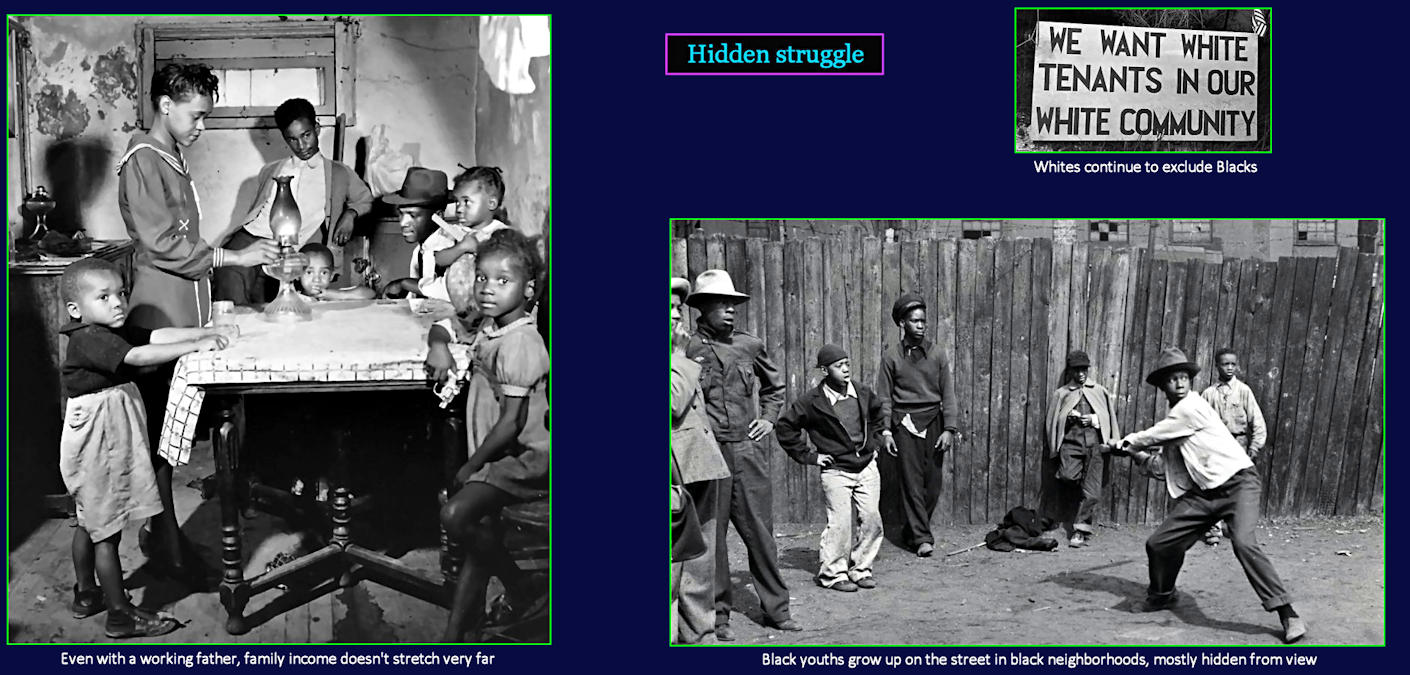
Behind the Curtains There's very little press coverage of life in the black community during the Depression. Out of sight is out of mind. For a variety of reasons, the average unemployment rate for Blacks is three times higher than for Whites. Yet, in photographs of bread lines and soup kitchens, very few black faces are visible. This may be related to hard feelings left over from the 1920s, when Blacks first started streaming north, competing with Whites for automotive jobs. In any case, the struggle for survival in black communities is largely hidden from view. | |||||||||
| |||||||||
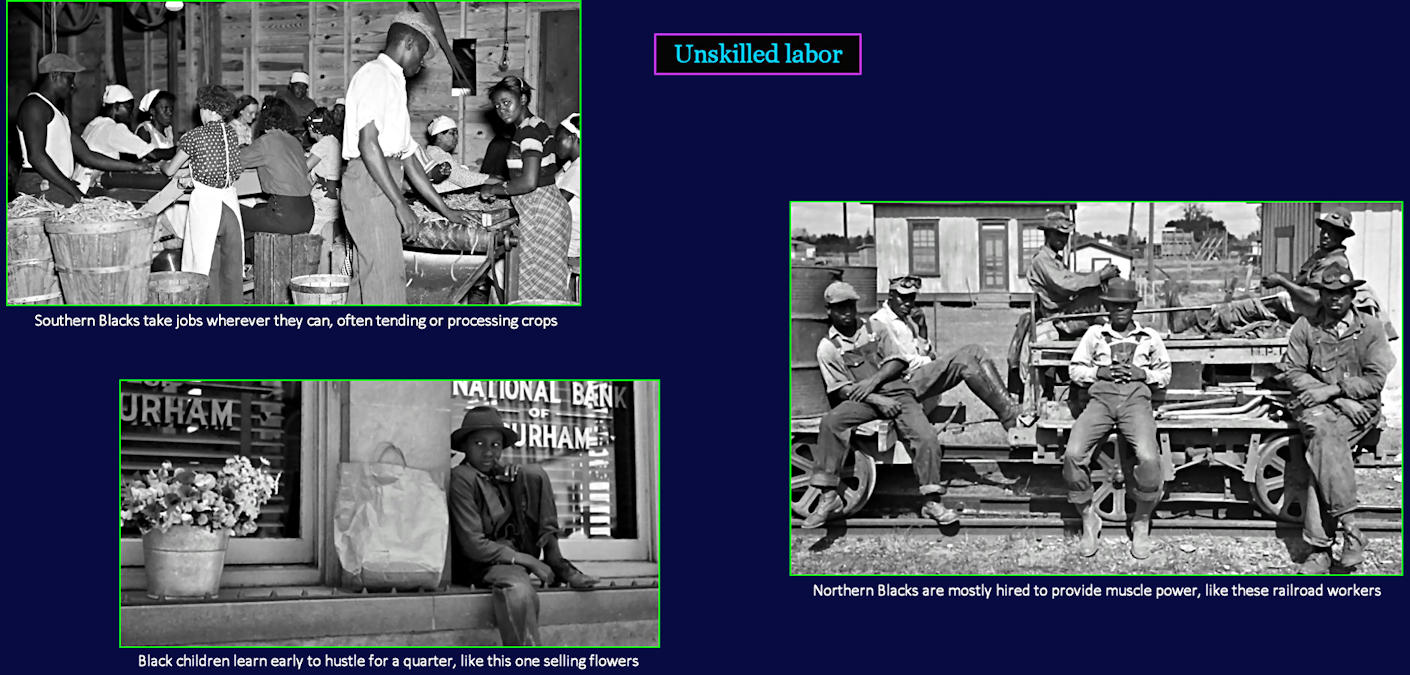
Few Choices Among the many obstacles that keep Blacks in depressed conditions is the reality that good-paying jobs are not open to them. They don't have the education for good positions, or schools where they can get such education. Most can't travel to a job, because they don't have a car. Many simply walk to nearby fields, or produce-packing houses. Some might manage to get selected as a day laborer, picked up off the curb in the morning by a White crew boss with a truck. But limited opportunities lead to reduced living conditions for most black families, especially in the South. This seems to confirm the widespread notion that Blacks are simply too stupid or lazy to get a job. That's just how they are, so it's no use trying to help them. Or so it seems, to many Whites. | |||||||||
| |||||||||
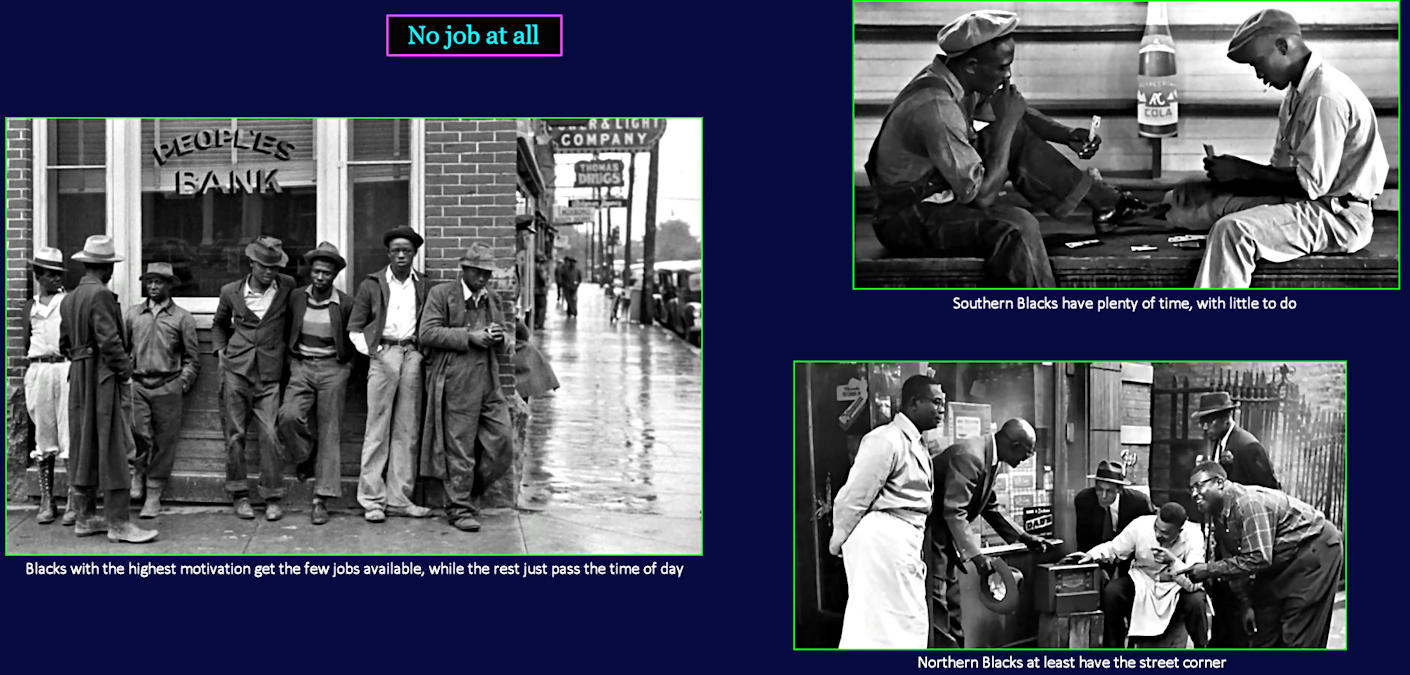
Waiting it Out The Depression makes a bad situation much worse. Blacks are the last to be hired, and first to be fired, when the economy turns sour. In Atlanta, two-thirds of black workers are jobless by mid-Depression. The situation is only slightly better in northern cities. During the first two years of the Depression, car production drops by half, with layoffs hitting Blacks hardest. It's difficult to blame this on laziness. | |||||||||
| |||||||||
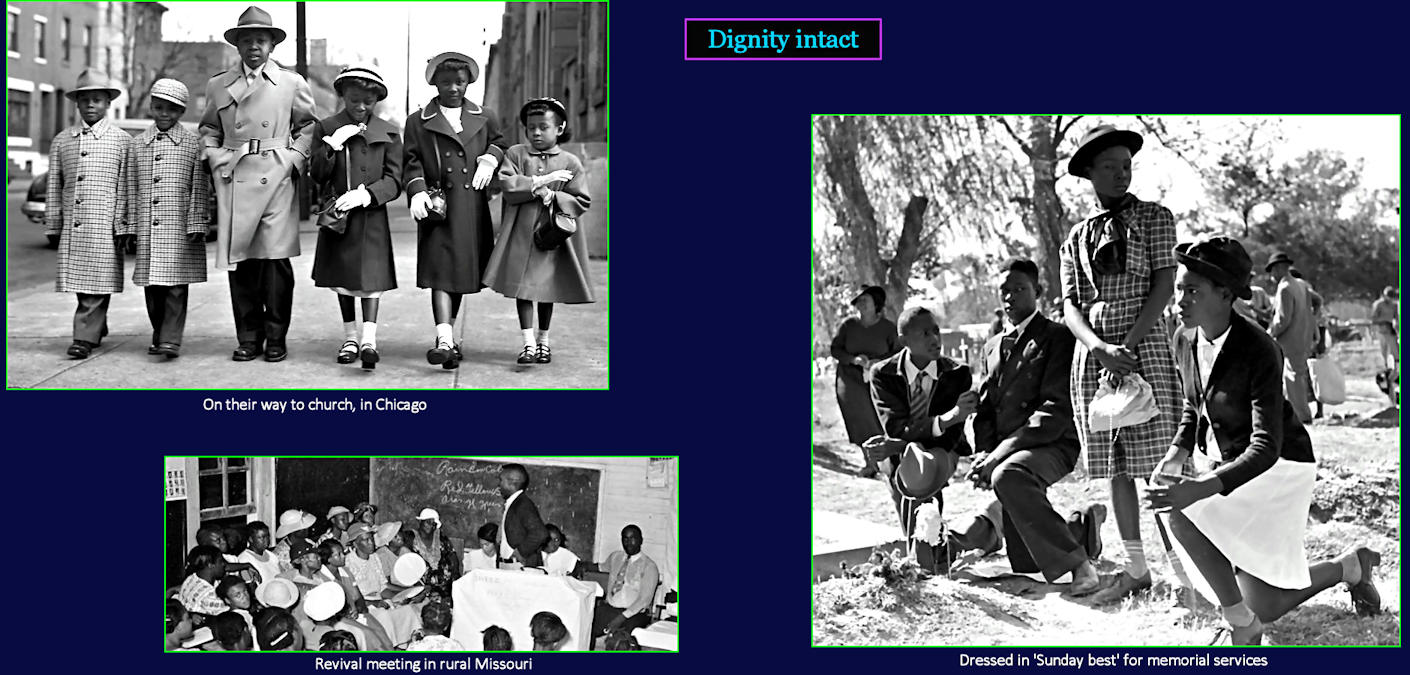
Glimmers of Respectability It's a minor miracle that black communities don't collapse entirely, given the magnitude of forces driving them towards poverty. Still, black neighborhoods remain largely intact, showing a brave face to the world. The children at upper left are clearly from a family in comfortable circumstances, in a city that still has manufacturing jobs. But even black migrant farm workers, among the poorest of the poor, still somehow manage to dress their best for special occasions. Religion is always a comfort, and New-Deal programs manage to reach some of the hardest-hit Southern areas during the late 1930s. | |||||||||
| |||||||||
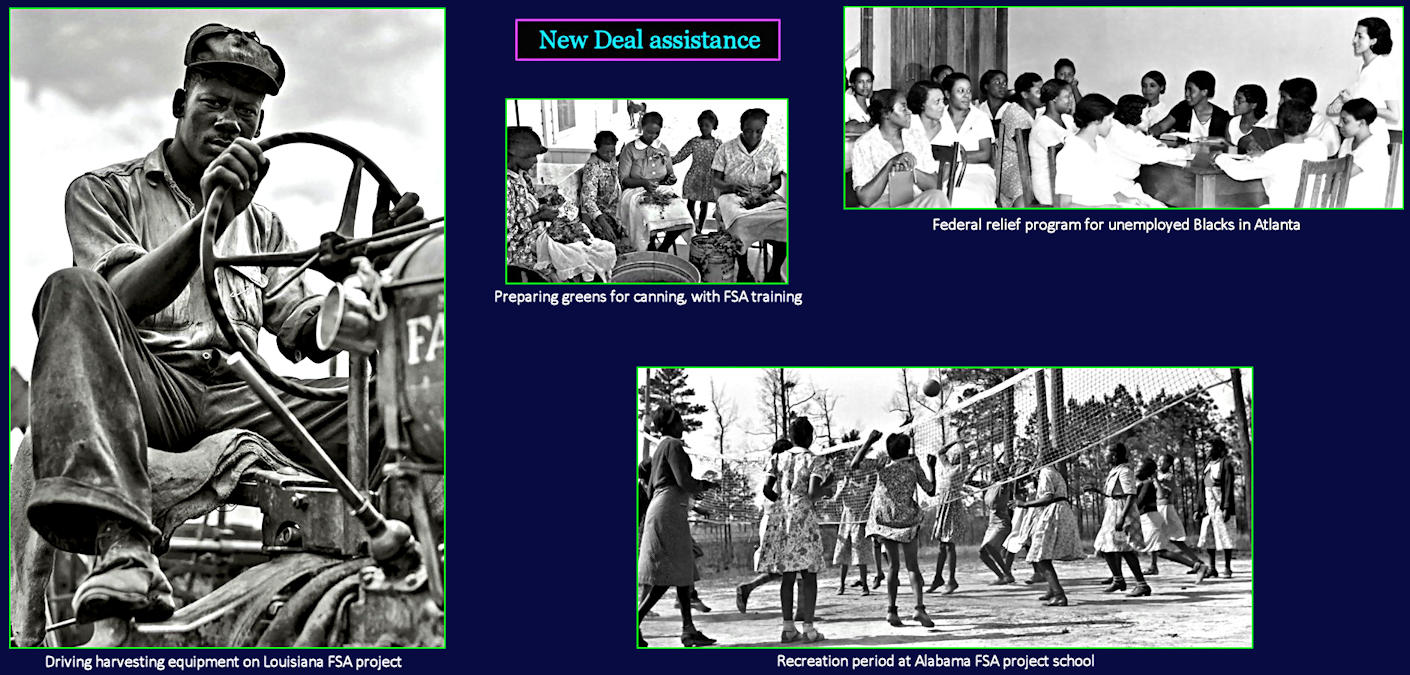
The Rural South Besides direct 'relief' payments to distressed families, the government program most responsible for providing assistance to black families is the Farm Security Administration (FSA). Poverty is at its worst in rural areas. The FSA provides funding for housing and equipment, but also conducts training and education programs. Rural Blacks are introduced to pressure cookers, while some women are trained to use home-weaving looms to bring in a few extra dollars. Local projects to build new schools provide another boost. The cost is moderate, and it helps bolster morale where help is needed the most. | |||||||||