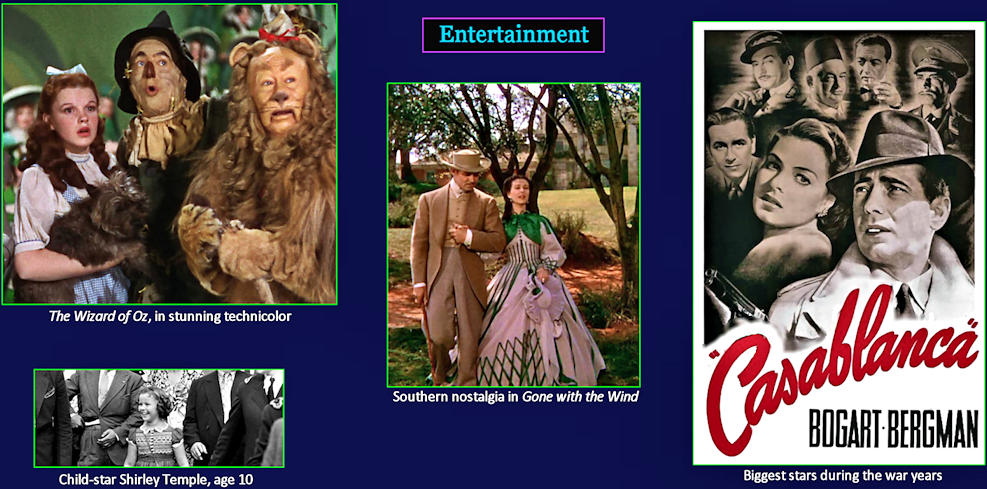
Better than EverDespite the nightmare of war, entertainment is on a tear. Americans adore Judy Garland's innocent virtue in The Wizard of Oz, lush romance in Gone with the Wind, and early war drama in Casablanca. Each sets a new benchmark, and all are still regarded as first-rate classics. Box office receipts are through the roof, as lines wind around the block to get tickets. Stars of the time include the precocious young Shirley Temple. Jazz, too, is shooting upwards, with bigger bands, cleaner sound, and legendary vocalists. Again, the headline artists remain popular to the present day, with stand-out performers like Ella Fitzgerald and Billie Holiday. Lacking big-city venues, staunch Midwesterners make do with their own brand of entertainment, which arrives in a variety of traveling formats. Circuses and rodeos alternate with state fairs, and ever-popular local beauty contests. |
| ||||||||||||||||
| |||||||||
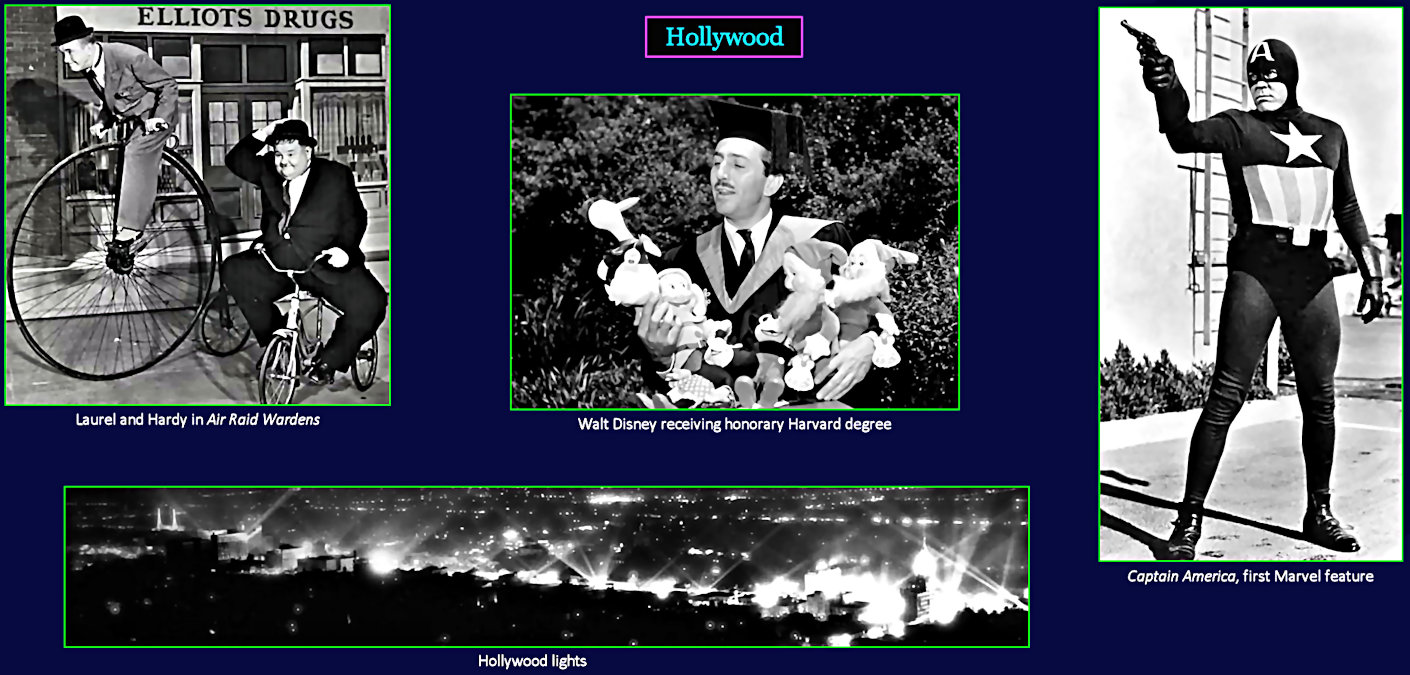
Bursting With Vitality Hollywood is now entering its glory years, as the motion-picture capital of the world. The mix of films is similar to that of today, including broad comedies like the Laurel-and-Hardy spoofs (left), feature-length animations like Disney's Snow White, and the very first Marvel action movie (right). The lights are on, and the cameras rolling. | |||||||||
| |||||||||
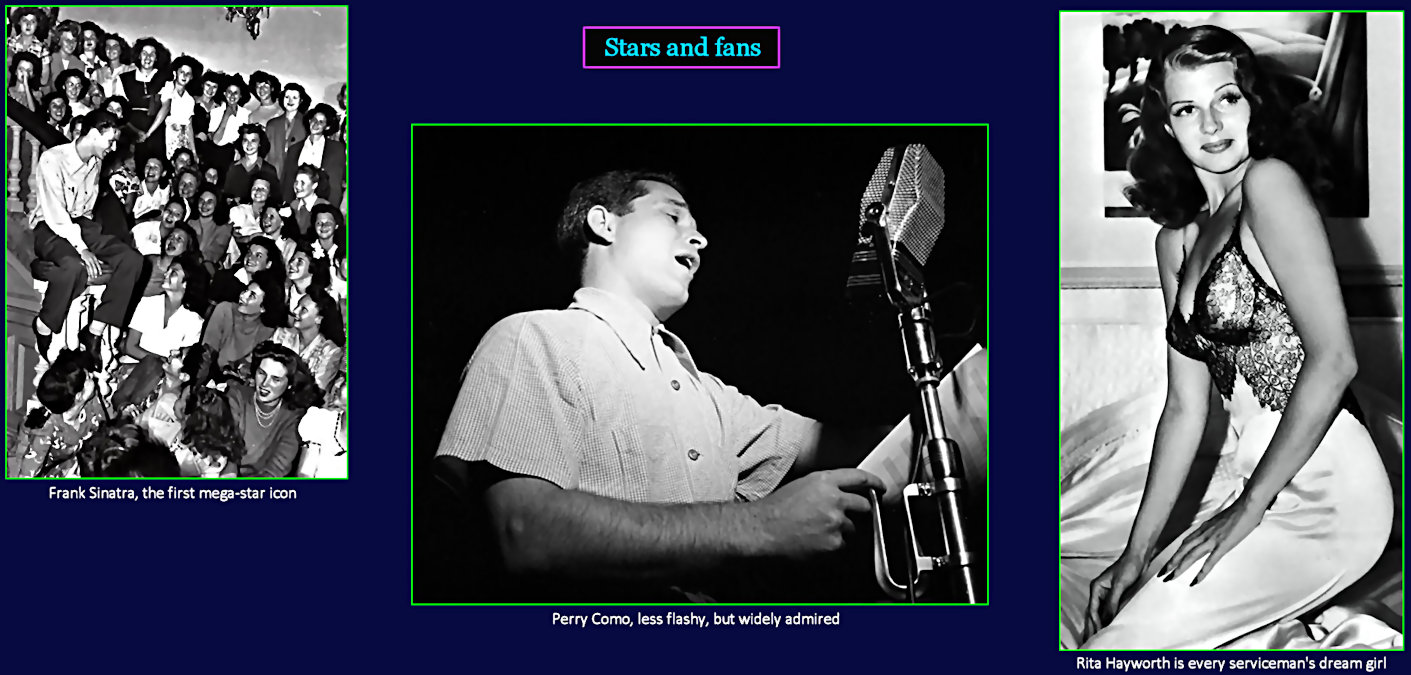
Star Power This is a period of larger-than-life movie stars and recording artists, like 'bobby-sox' teen idol Frank Sinatra (left), and silky-voiced 'crooner' Perry Como (center). Each is adored by legions of fans. Meanwhile, a photo of Rita Hayworth published in Life Magazine just months before America's entry into the Second World War (right), is taken along by many GI's as they head for basic training. | |||||||||
| |||||||||
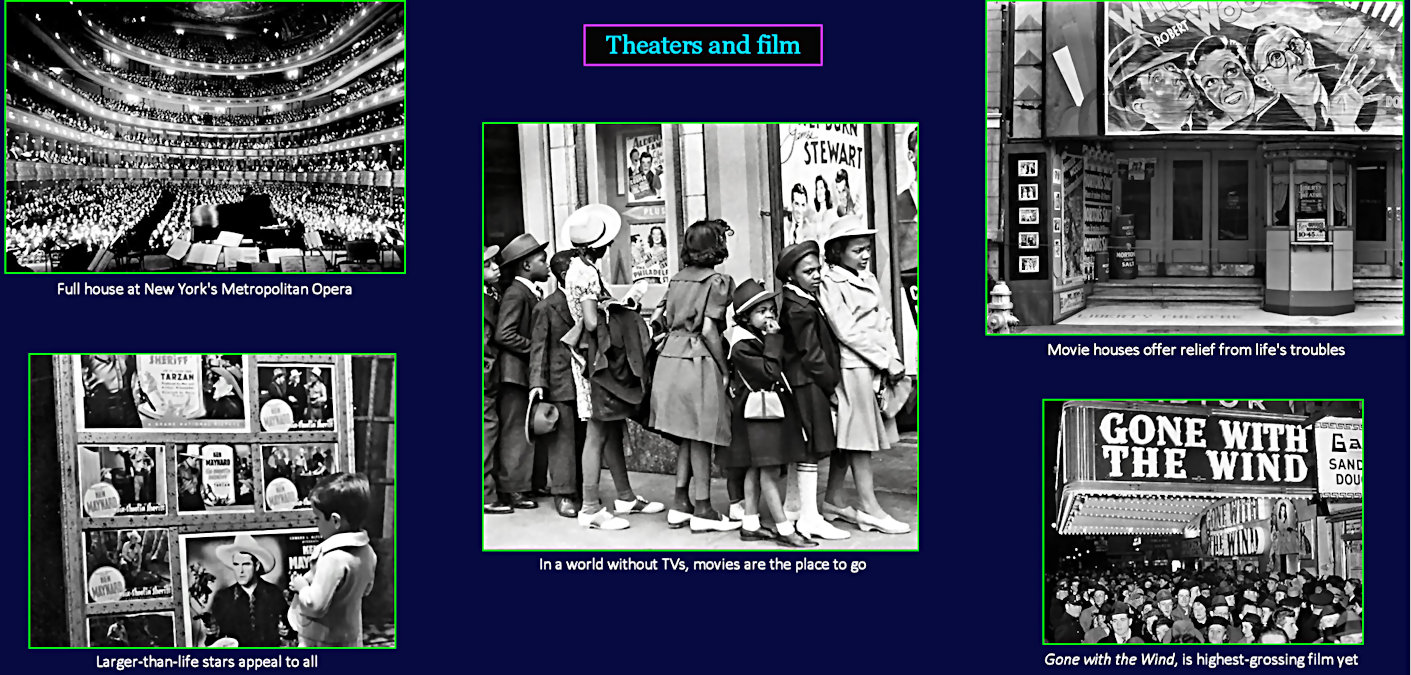
It's Showtime! Sophisticated urban elites have their choice of evening entertainment, including New York's popular Metropolitan Opera (top left). Ordinary Americans have an even larger selection of delights, offered up by local cinemas. Everyone can afford a movie ticket, including the youngest of the young. Movie posters beckon from the sidewalk. | |||||||||
| |||||||||
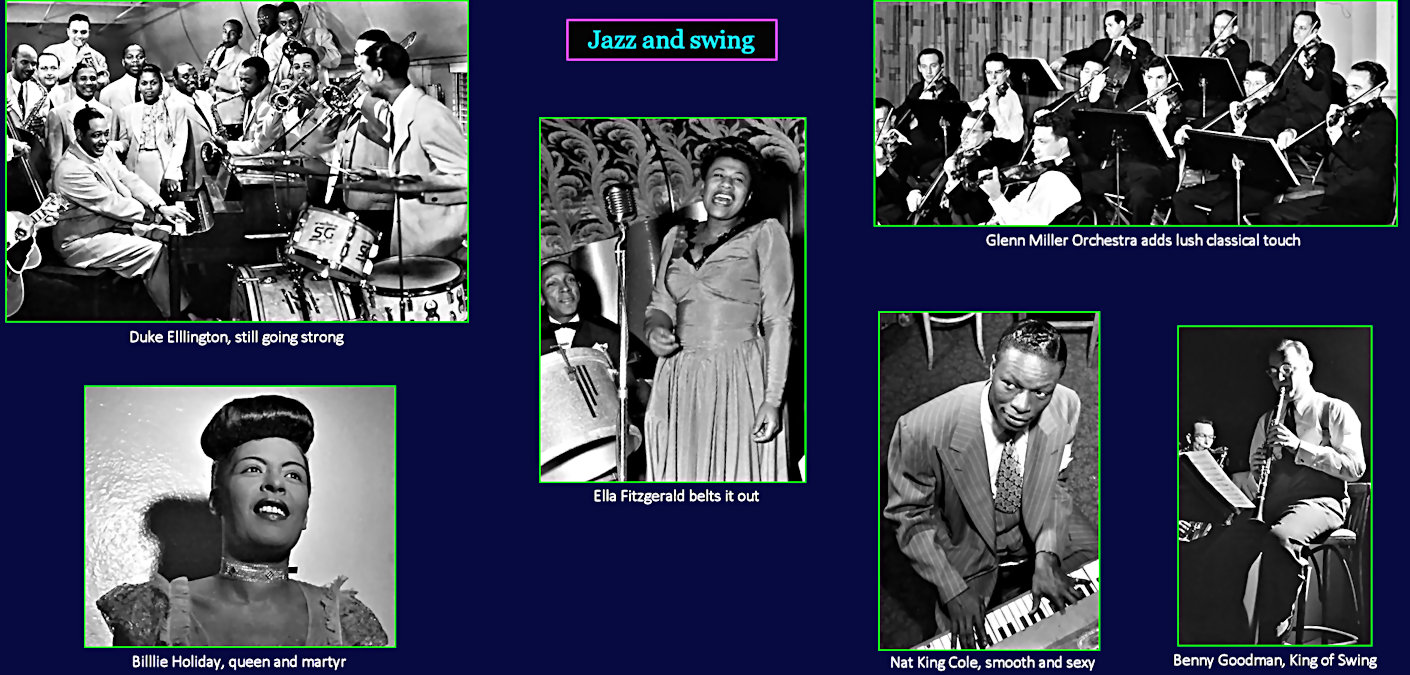
Jazz Grows Up The music scene is bursting with talent. 'Big bands' like the Glenn Miller Orchestra (top right) tour the country, performing all the way into the Midwest. Bands are propelled by the efforts of radio producers, who are always hungry for new 'live' material to put on the air. Benny Goodman's 'Let's Dance' broadcast is an east-coast program which sets the stage for his later arrival in Los Angeles, at the end of a tour. He's instantly crowned 'king of swing' by enthusiastic teenagers, who heard his previous broadcasts. There's also a darker side. Billie Holiday's meteoric career is cut short by the dubious activities of a federal agent, who pursues her relentlessly. He's convinced that black performers are ruining American morals. | |||||||||
| |||||||||
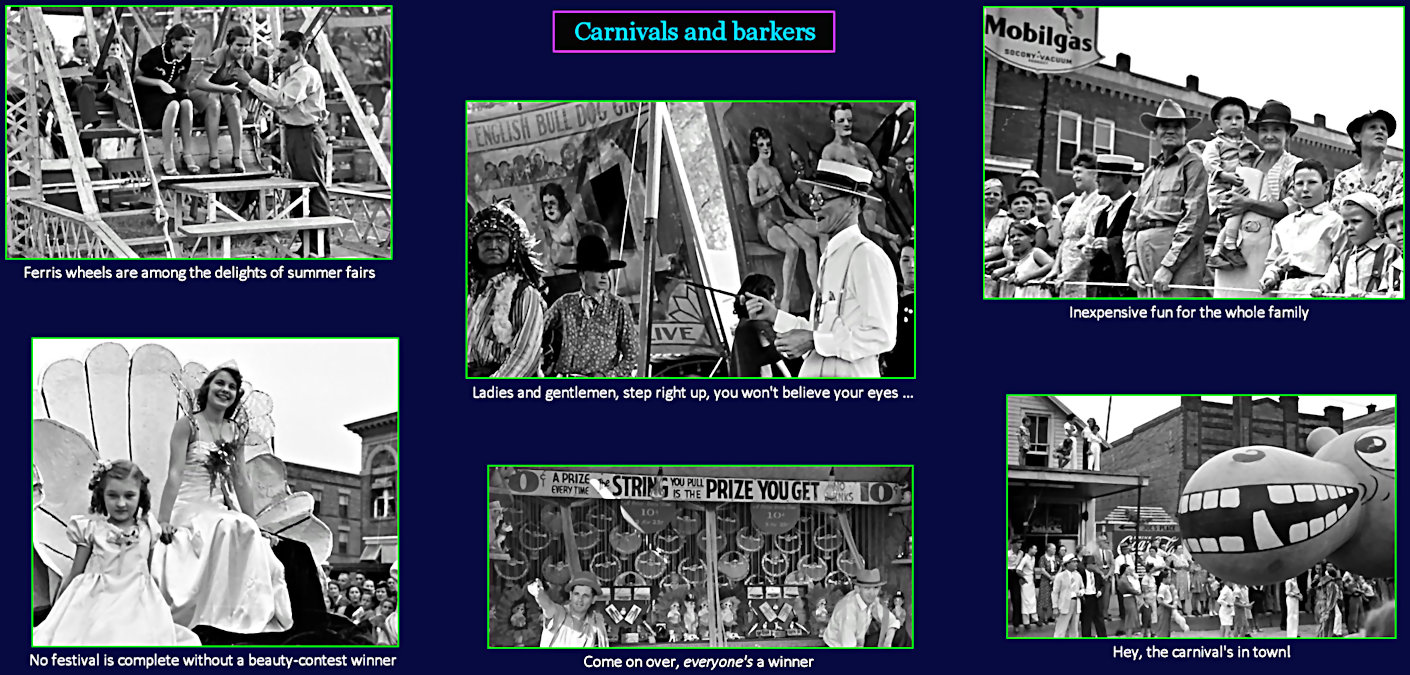
Country Fairs Urban dwellers have many choices for entertainment, but out in the Midwest there's just one big opportunity for the season. The long-awaited mid-summer event. It might be the state fair, traveling carnival, or rice festival (in Louisiana), but everyone shows up for the special activities. Rides, side shows, ring tosses, beauty pageants ... there's something for everyone, with fast-talking carnival 'barkers' to pump up crowd interest (center top). | |||||||||