| |
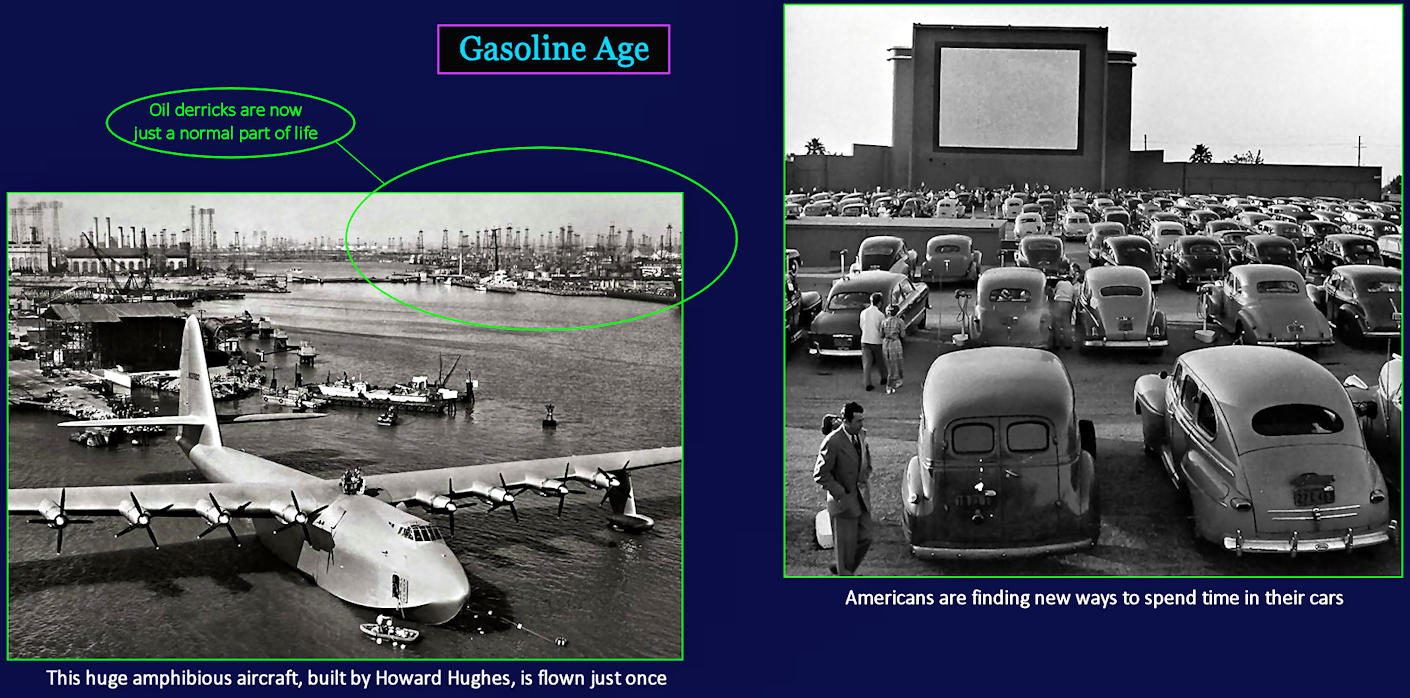
Auto-Centric Living By 1940, America is beginning to look past the long, dark days of Depression living. Most businesses are back to near pre-Depression levels, and families are settling into the hum of a newly-motorized world. For many, this means driving to work. Cars are now completely enclosed, comfortable driving machines. Not only do they take you places, but they can also offer living-room comfort for a deliciously private night at the movies. People park on the beach, eat their lunches, and even attend outdoor church services, all in their cars. |
| |||||||||
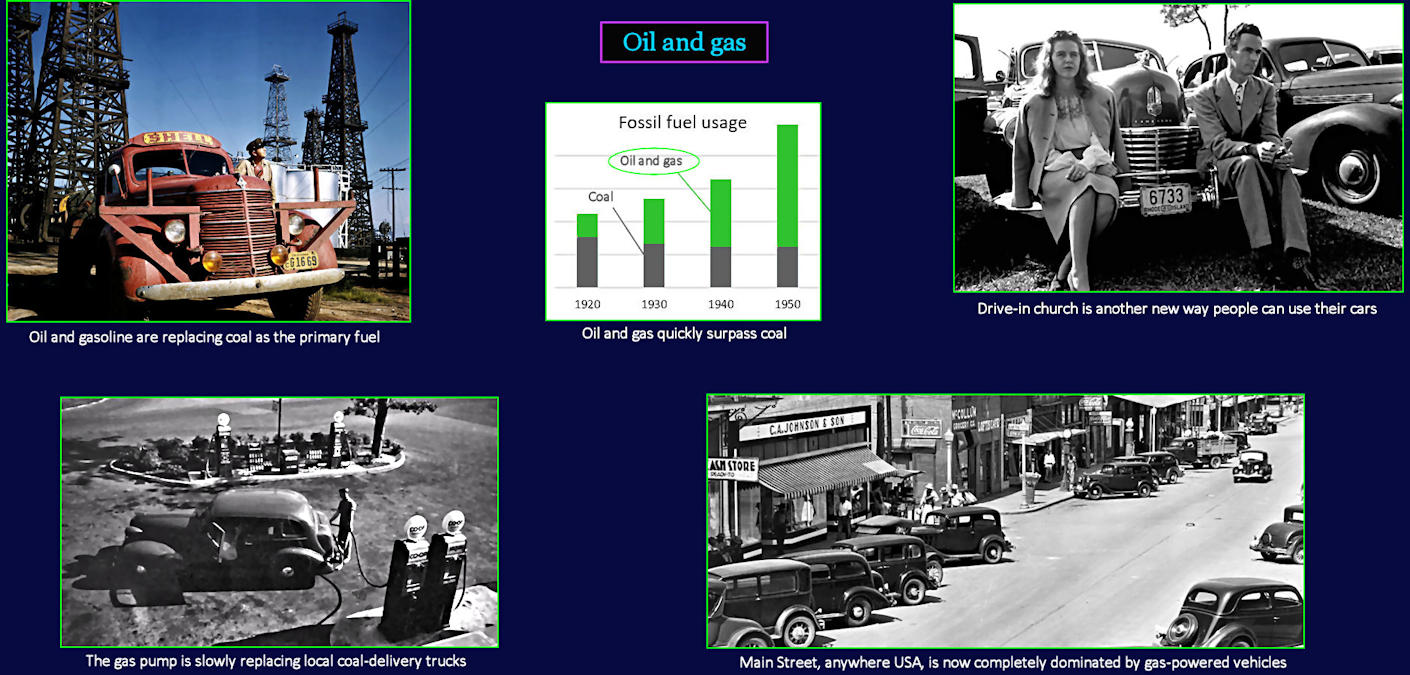
Liquid Fuel The earliest equipment in America was powered by the energy from falling water, turning waterwheels. All later equipment needs some kind of fuel to provide the energy. For a full century, that fuel is coal, which powers locomotives and industrial steam engines of every description. But gasoline offers two distinct advantages for road vehicles. First, you don't need to get a fire going under the boiler, and wait for steam pressure to build, before setting off. Just as importantly, you don't have to keep tending the fire, while driving, as the fire dwindles. Once the old dirt roads are paved over to create the first highways, the onslaught of motoring is unstoppable. | |||||||||
| |||||||||
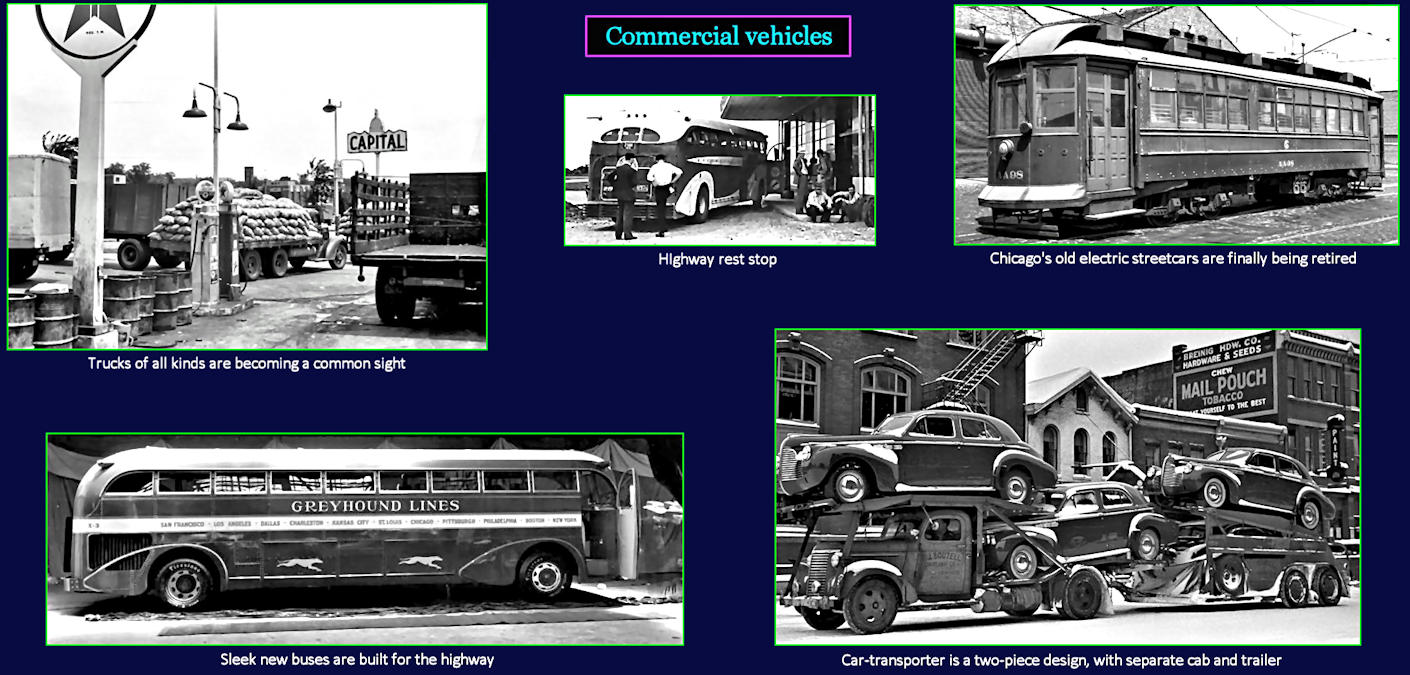
Road Machines Highways usher in a whole new era of inland transport. Trucks run between cities of every size, servicing business needs in a way that trains never could. Trucks can carry a mix of cargo all over town, stopping wherever a delivery is desired. Buses are no longer confined, as the old streetcars were, to streets that need overhead electrical lines or underground cables. Sleek new highway buses (lower left) are comfortable and fast. They allow passengers to travel with suitcases and baggage items that can't be conveniently taken aboard trains. Auto-transport trucks, meanwhile, allow delivery of cars to locations anywhere in America (lower right). | |||||||||
| |||||||||
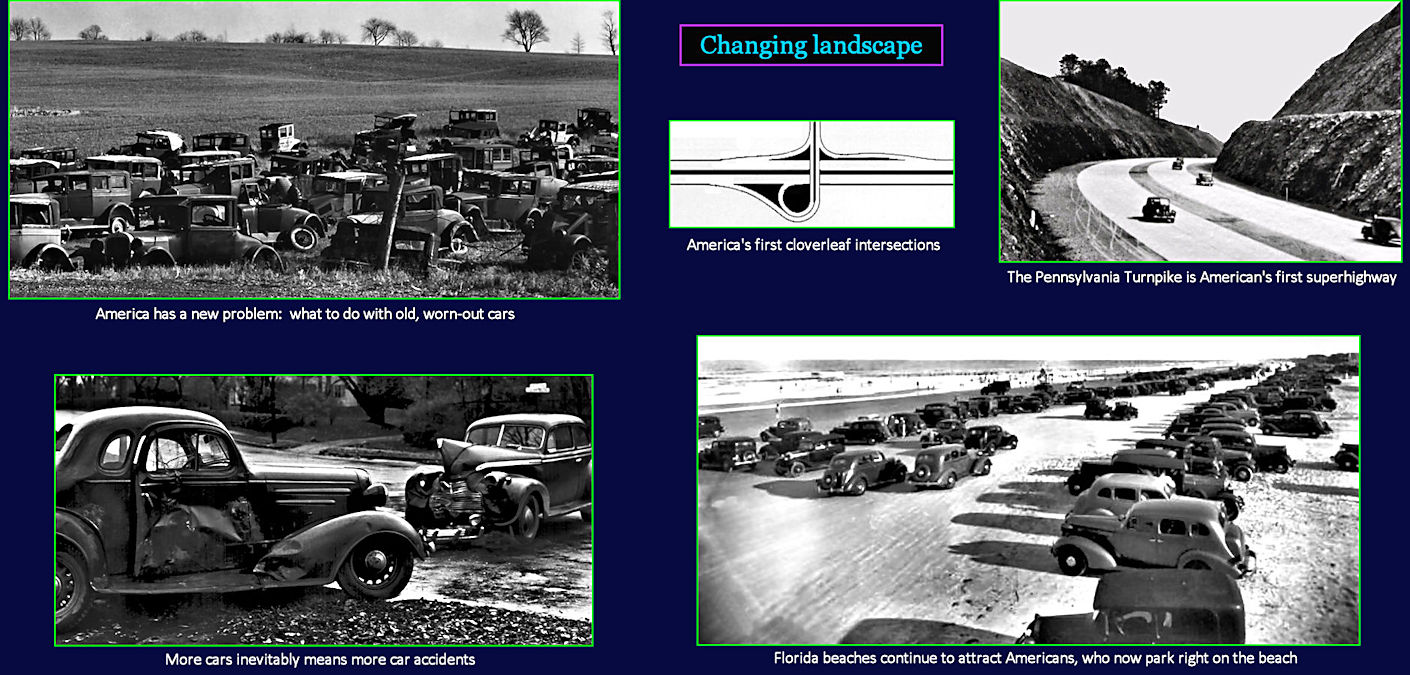
Taking Over the Landscape By the 1940s, the yearly flood of three million new cars is introducing new problems. Growing numbers of cars sold in previous years are beginning to wear out, making unsightly auto junkyards a necessity (top left). Accidents are also becoming more common (lower left). High-speed crashes are now a possibility on the country's first 'limited access' highways, like the Pennsylvania turnpike (top right), and the Merritt Parkway in Connecticut. These are designed for high-speed travel, which can only be achieved by limiting access to specially-designed entrances and exits. The 'cloverleaf' intersection is the result. Meanwhile, car owners are now parking their vehicles in places where they encroach on natural settings, like beaches (lower right). | |||||||||
| |||||||||
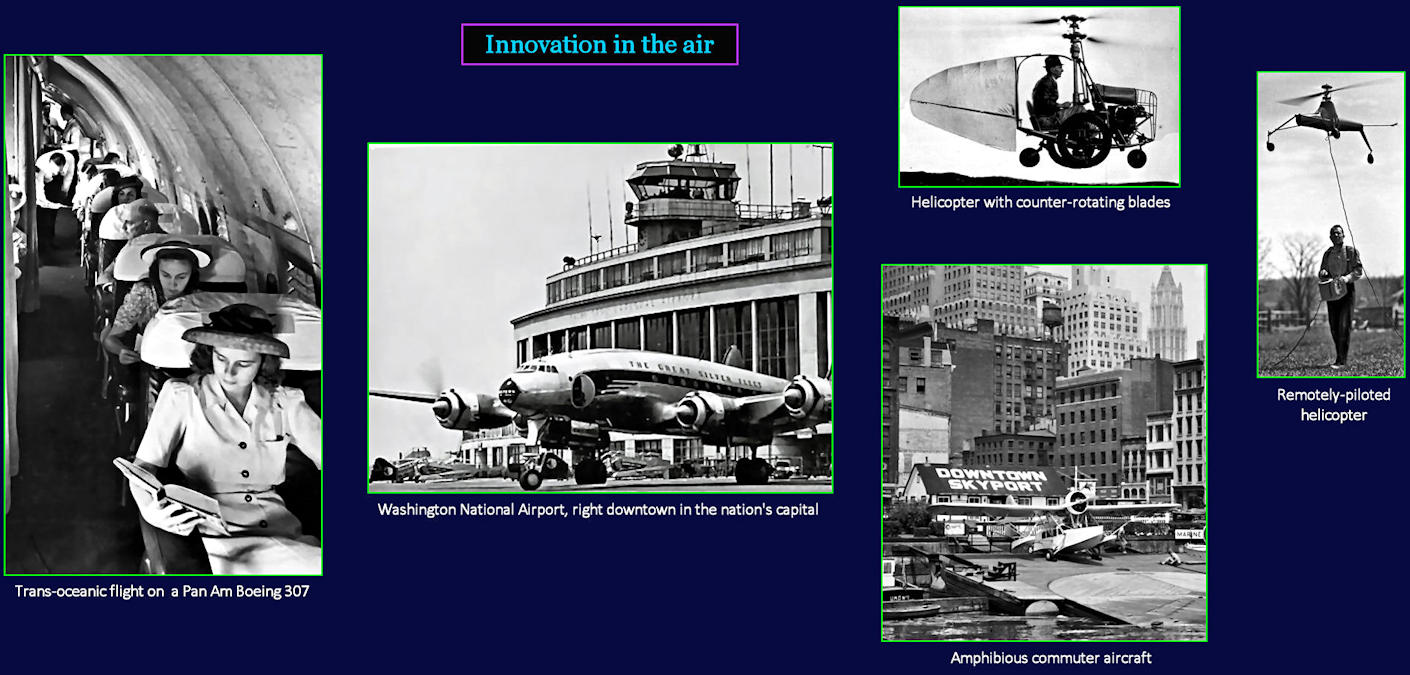
Lots of New Ideas Aircraft are going through their own evolution. Luxurious new airliners mounting four engines can now span oceans in comfort, at much greater speed. Pan Am begins service with the new Boeing 307, with the first pressurized cabin (left). The Lockheed Constellation follows a few years later (left center). Meanwhile, America now has its first personal helicopter (top right, note the hat), and commuter planes that operate from waterfront ramps, rather than airports (right center). Backyard enthusiasts are even pursuing early versions of aerial drones, using controls that communicate with the craft by wire (far right). | |||||||||
| |||||||||
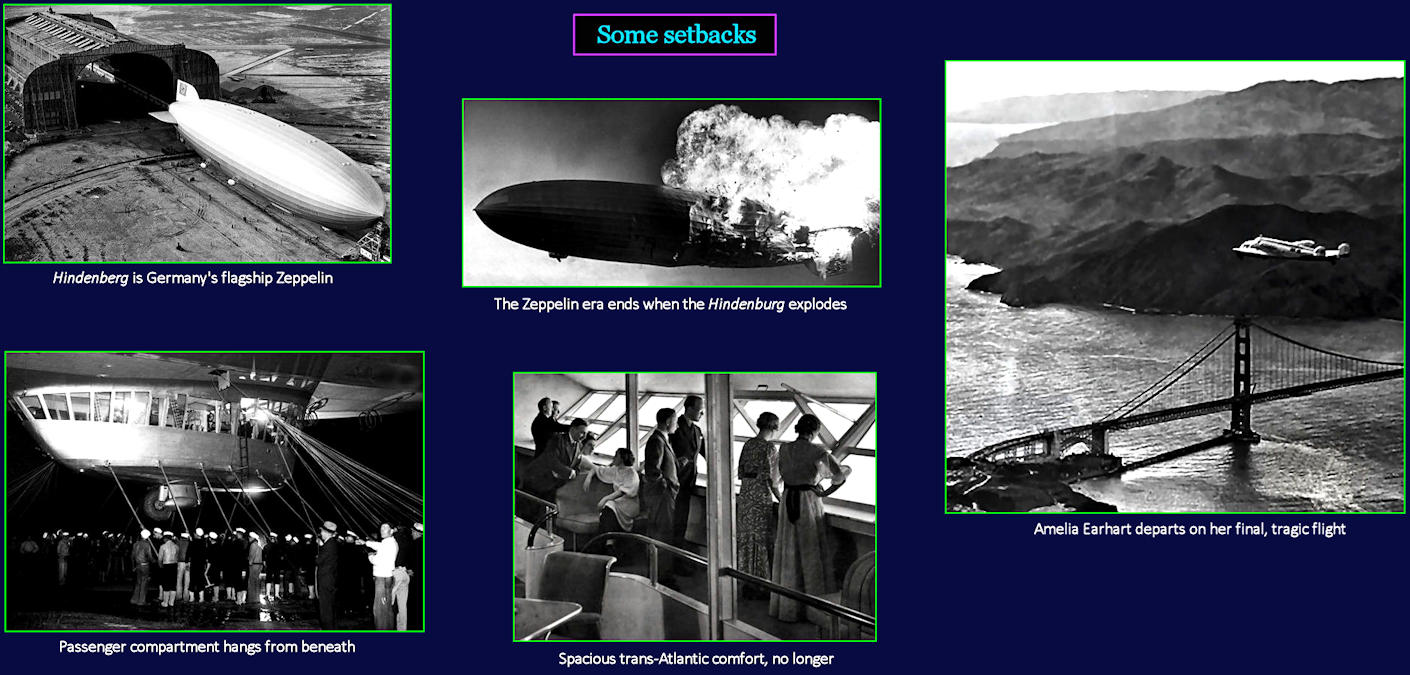
Airship Explodes, Aviator Vanishes Taking a different approach to trans-Atlantic travel, the Germans continue the development of airships called Zeppelins, which stay aloft using immense sausage-shaped balloons filled with lighter-than-air helium. This supports the weight of the passenger cabin, which hangs below (lower left and center). Engines are only needed to propel the craft forward, at speeds four times faster than steamships on the same route. A notorious explosion over New Jersey abruptly ends this service (center top). Meanwhile, spunky Amelia Earhart becomes an American icon, following in Lindbergh's footsteps before she tragically disappears in mid-Pacific, attempting to circle the globe. | |||||||||