The Fight Goes OnWhen American servicemen return home from the Second World War, they leave behind a world in ruins. But back stateside, they are greeted as heroes by a country virtually untouched by war. The nightmare appears to be over. Little do they suspect that troops will soon be going back overseas, to fight again. This time, the Soviets will no longer be allies, but a deadly foe. The old 'hot' war is over, but a new 'Cold War’ is just beginning. In the eyes of military planners, the Soviets are now the center of a suddenly Communist world, dangerous and spreading. China has just followed Russia down the communist path, and the rest of Asia may soon follow. In Congress, everyone wants to know 'who lost China?' Why is a former ally now a Communist adversary? Something must be done quickly, or democracy may soon be pushed aside, worldwide. Or so it seems. |
| ||||||||||||||||
| |||||||||
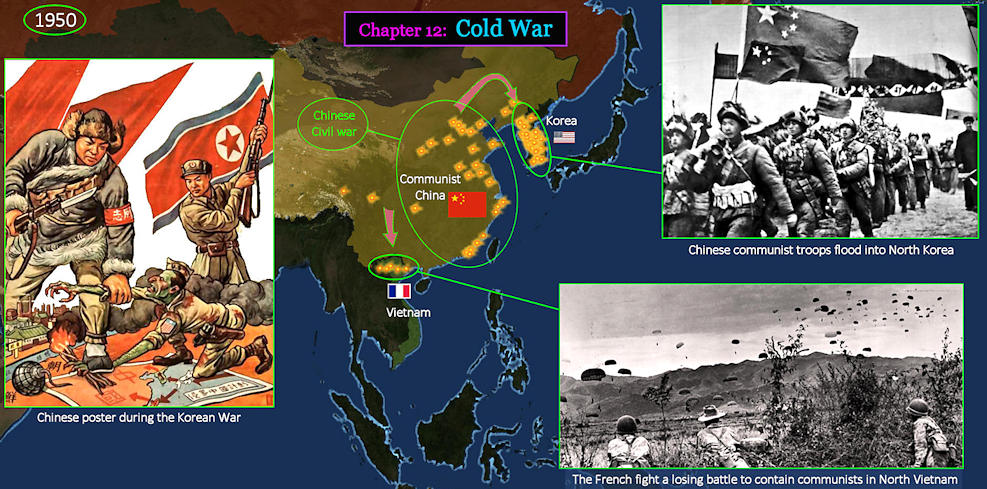
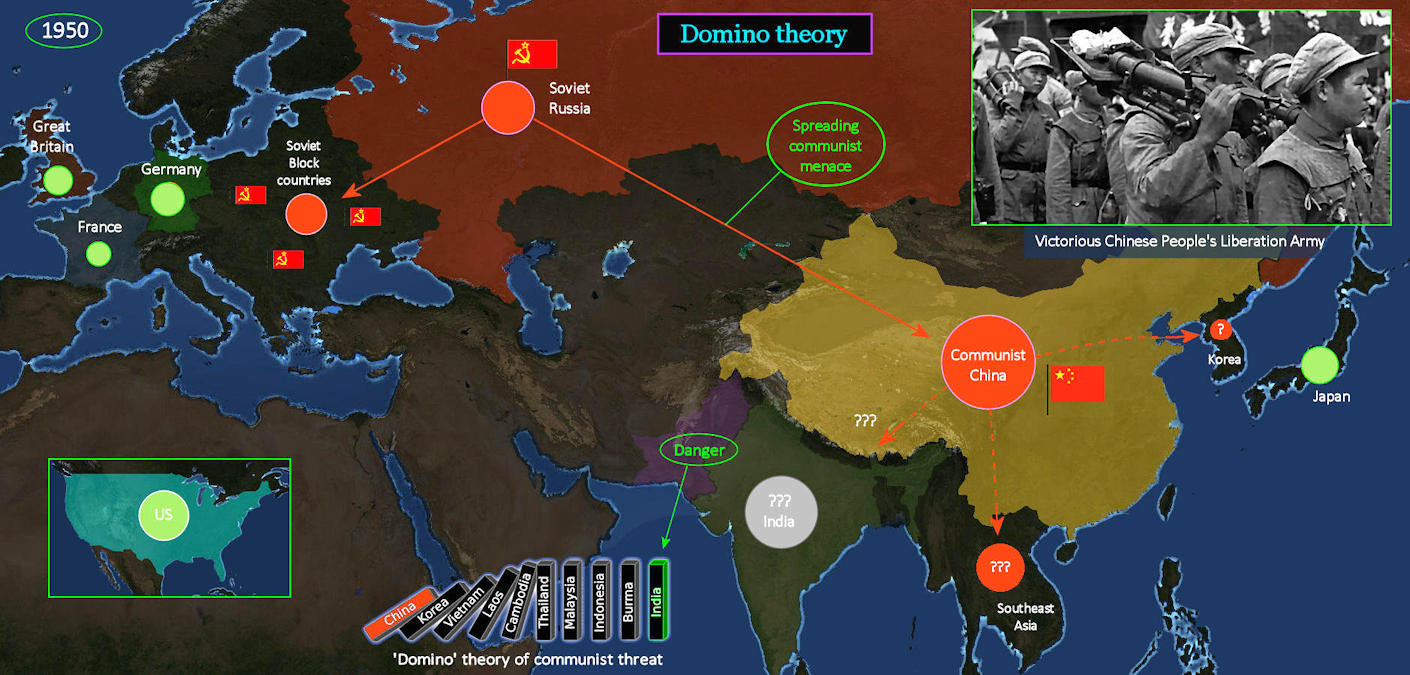
Rise of China The Chinese Civil War ends when communists finally overcome American-supported Nationalists, after a titanic 20-year struggle involving armies on both sides numbering in the millions. There are now fully twice as many people living in Communist countries as in Western Democracies. The size of the circles on the map indicates population in 1950. The conflicts in Korea and Vietnam spawn something called the 'Domino theory,' which is suddenly making Americans hysterical. According to this scenario, each country falling to communism sets up the next to topple, like dominos. This must be stopped before reaching India, which has a population second only to China. | |||||||||
| |||||||||
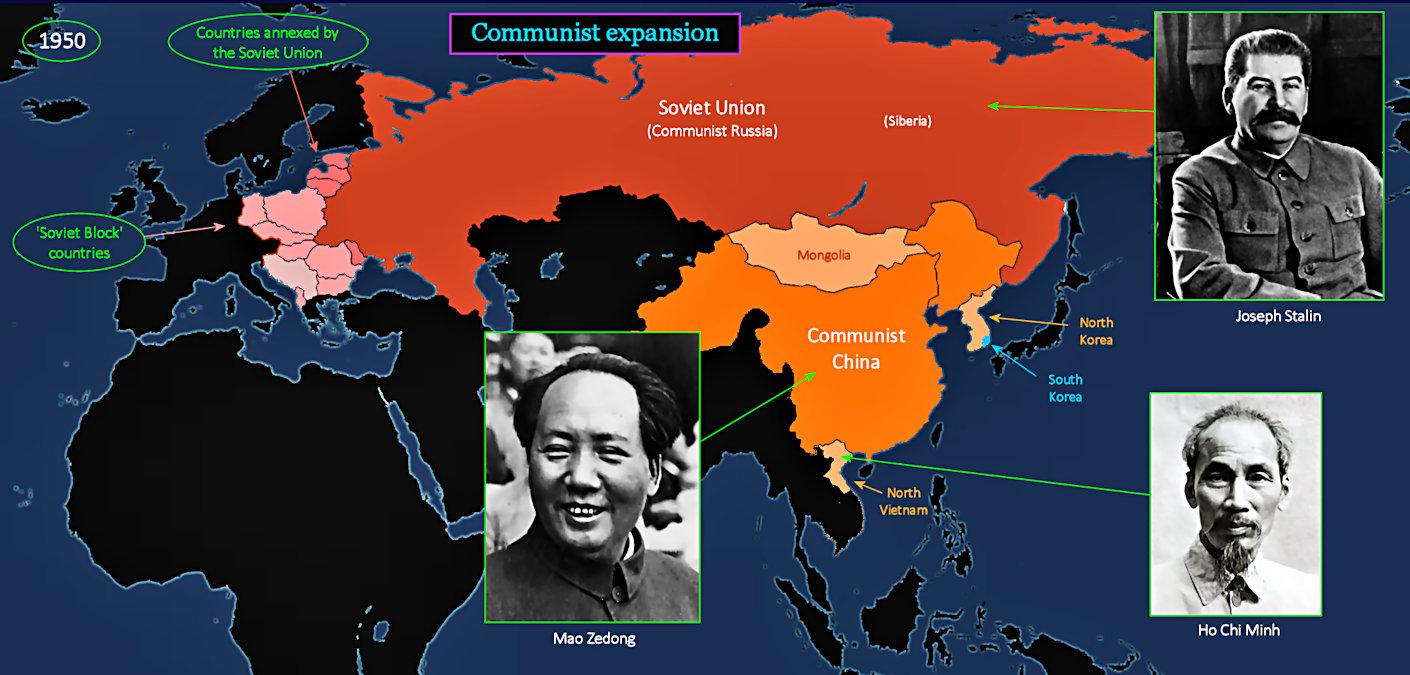
New Threat This is what Asia looks like to American military planners. The immense RED and ORANGE areas on the map are controlled by communist governments. Actually, far more than half of this communist zone is barely inhabited. Siberia, Mongolia and much of western China are nearly vacant. Even so, alarm bells are ringing all over Washington. The small BLUE area in South Korea indicates the tiny patch of non-communist Korea remaining before US forces arrive to push back. | |||||||||
| |||||||||
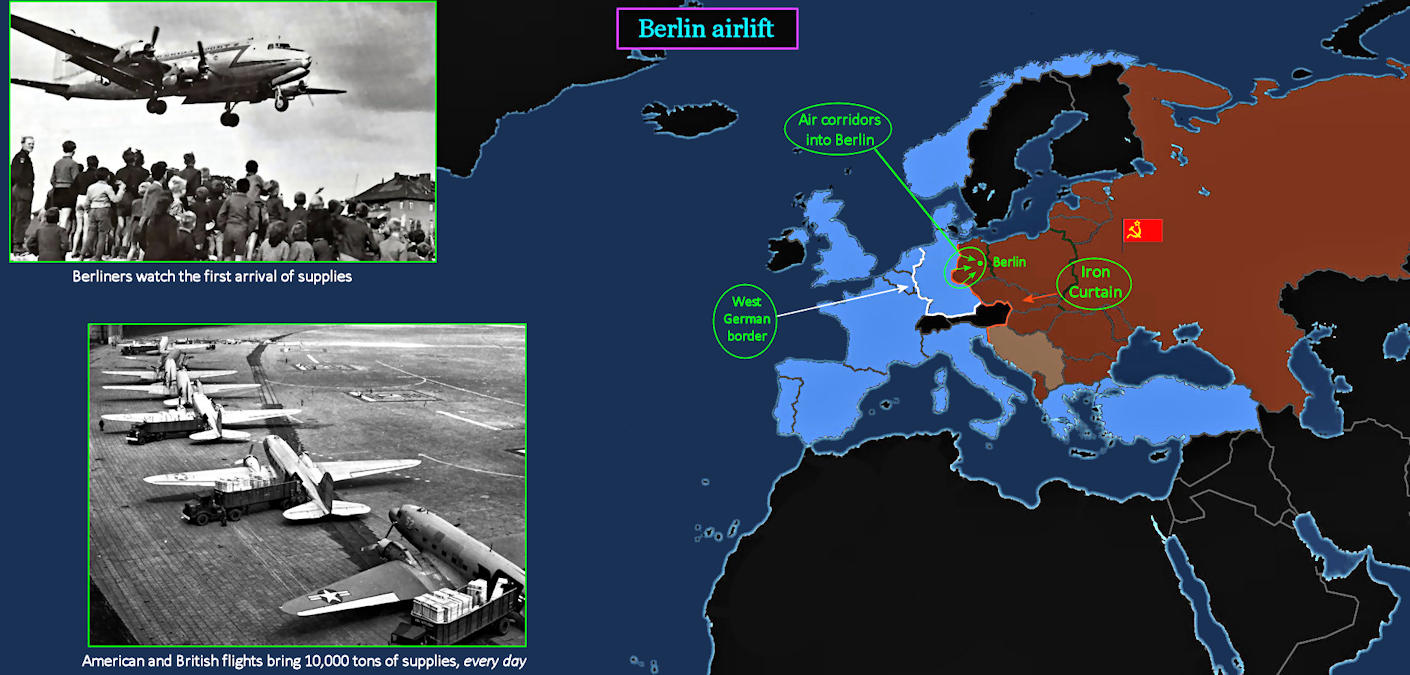
Flash Point in Europe The Cold War actually begins in Germany, two years before the conflict in Korea. Stalin tries to seal off West Berlin, which is awkwardly located behind the Iron Curtain, even though it is under the control of the western allies (America, Britain and France). Stalin tries to gain full control of the city by closing all road and rail access into the city from the west. In retaliation, the western allies shut down the export of goods into the West from any country located behind the Iron Curtain. In the meantime, they take the additional surprising step of trying to keep the city open, by bringing in supplies by air. Aircraft arrive in a continuous stream, all day and all night. Stalin tries harassing the arriving aircraft, but finally gives in after a year, and reopens the roads. | |||||||||
| |||||||||
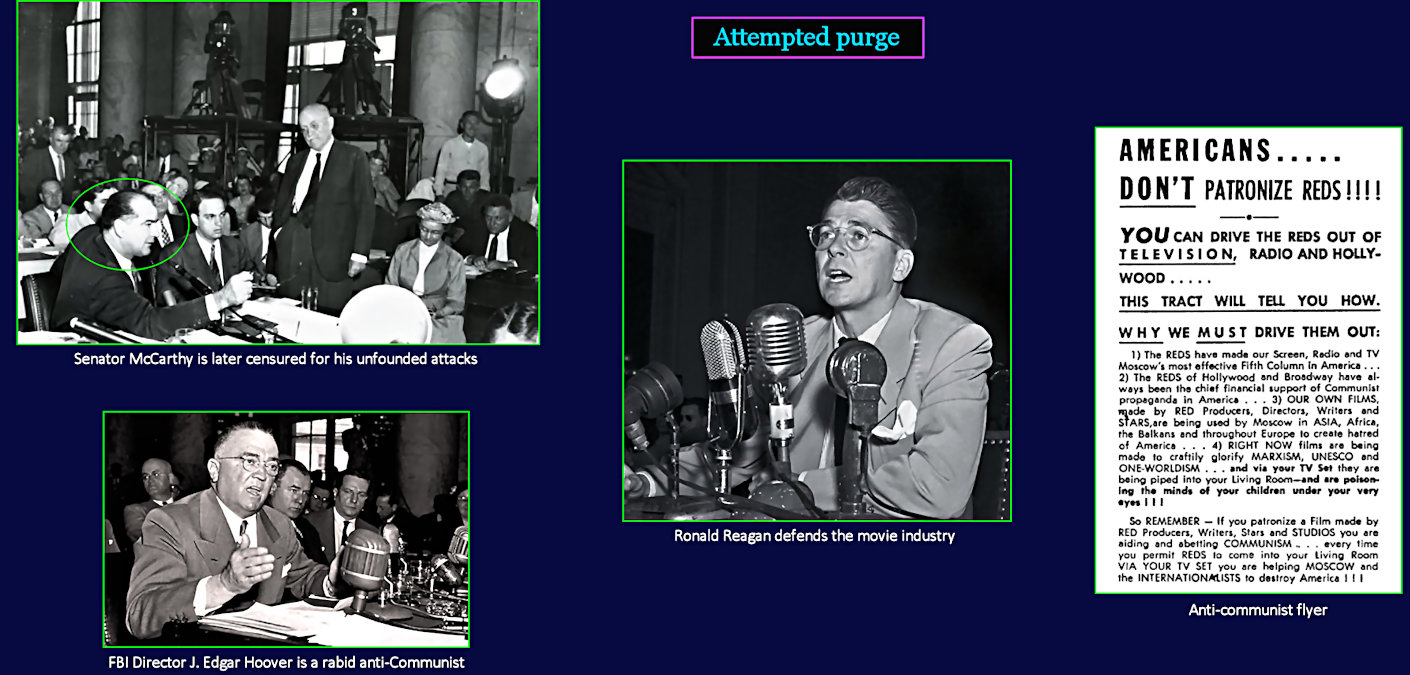
Red Scare A renewed 'Red Scare' begins around the time of the Berlin Airlift, focusing on former Communist Party members in America who, it is said, have penetrated the US State Department, and even Hollywood. The House 'Un-American Activities' Committee begins holding a series of highly-publicized hearings in Washington, to expose Americans who had any involvement with the Communist Party, however brief, back in the 1930s. This effort is championed by vitriolic anti-communists and self-promoters, who combine insinuation, threat and public bullying tactics in an attempt to extort confessions. Future-president Ronald Reagan is head of the Screen Actors Guild, and testifies as a 'friendly' witness that Hollywood is also concerned about possible communist influence. | |||||||||
| |||||||||
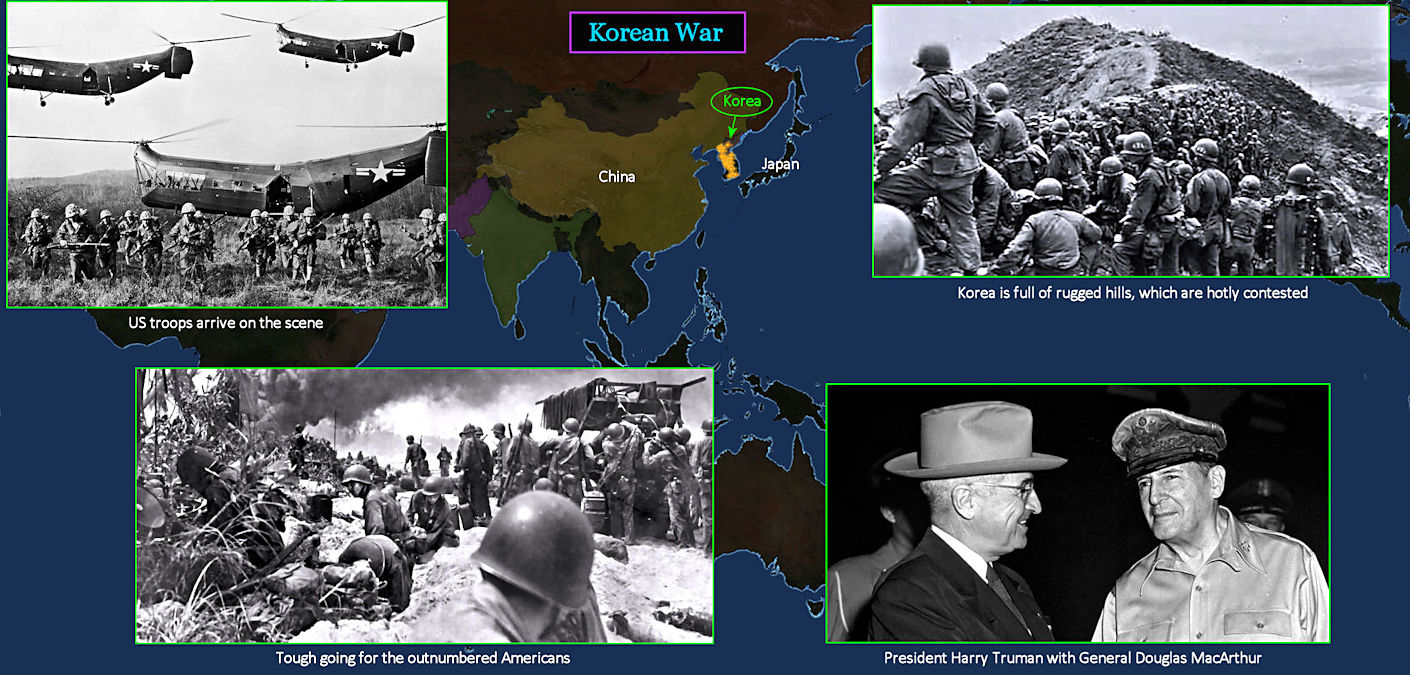
Limits of Power By this time, America's anti-communists juices are in full flow. President Truman sends Americans into Korea, to prevent communists from taking control of the entire country. But after the Americans succeed in pushing the communists north, almost to the Chinese border, China suddenly feels compelled to intervene. It sends vast swarm of Chinese troops over the border to help expel the western 'imperialists.' After bitter fighting in difficult terrain, America is forced to settle for a stalemate, with official borders basically unchanged. | |||||||||