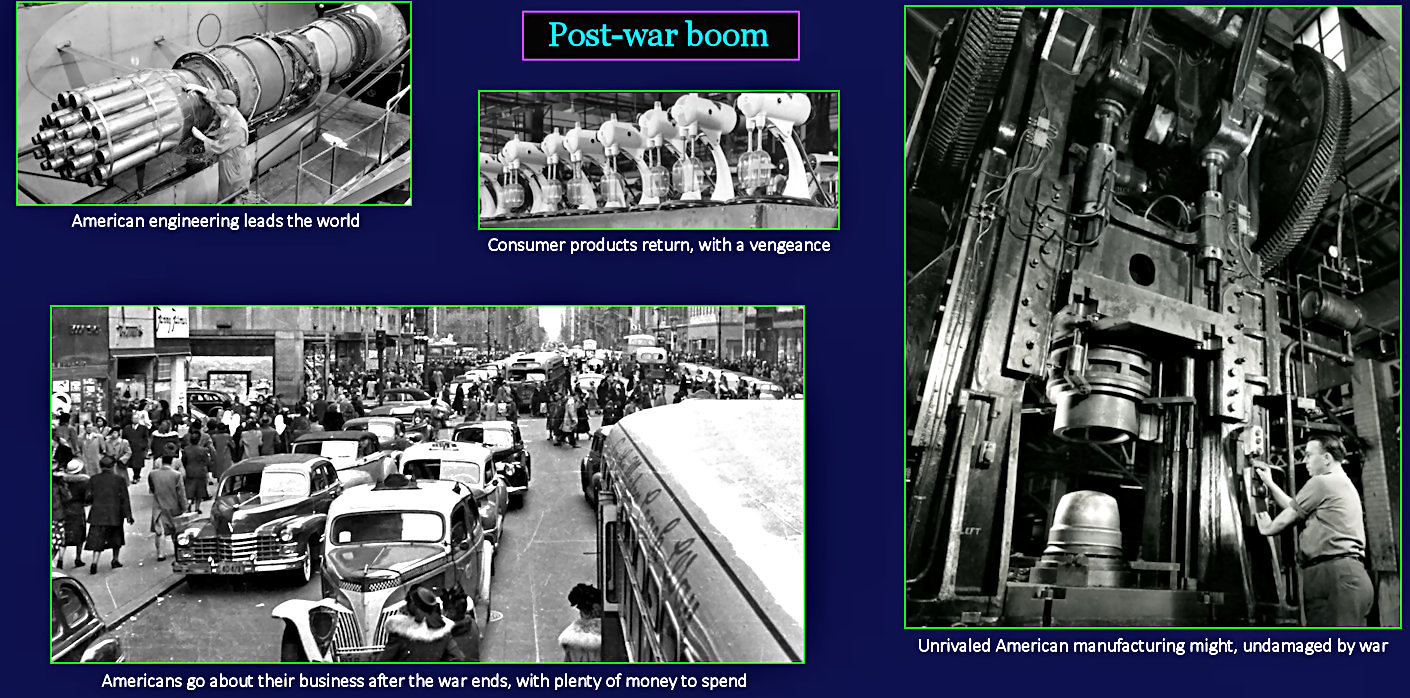
Happy Times are Here AgainBack before World War Two, America is on the ropes, stuck in a long jobless recovery. While it has joined the big leagues of world politics, it's still just a promising upstart. By war's end, America is on top of the world. Luckily, America never has to face the full might of Hitler's war machine, which is fully engaged against Russia. The war against the Japanese in the Pacific is long and difficult, but Japan is a weaker adversary than Germany. America's sudden leap to the top is partly due to its fortunate geographic location. Safely out of bombing range, it's never threatened with invasion. The war boosts the economy, with surging wartime spending. Europe is mostly a smoking ruin, nearly bankrupt, and saddled with millions of homeless war refugees. In an act of enlightened self-interest, America jump-starts much of the European economy with direct financial aid. |
| ||||||||||||||||
| |||||||||
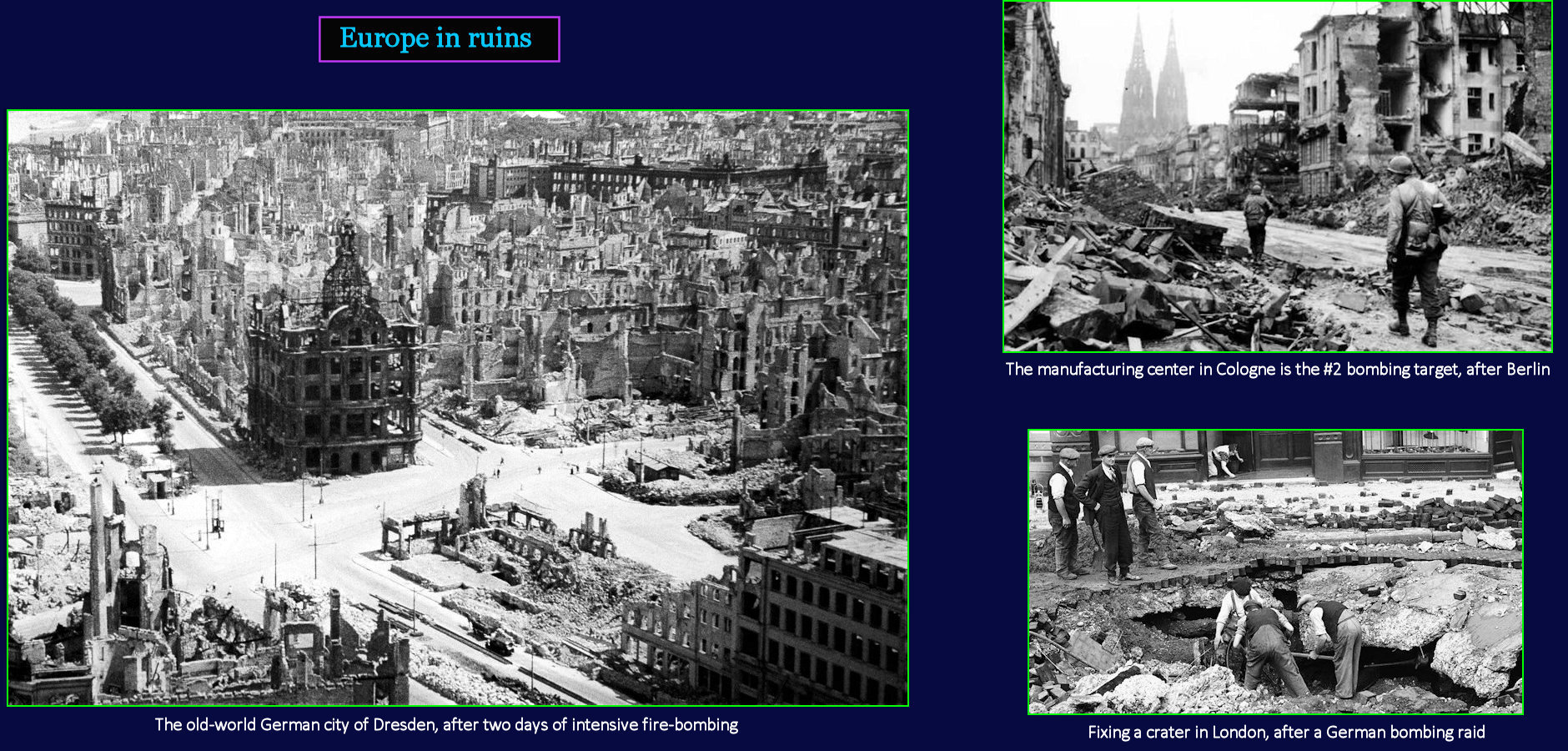
Flip-Side of the Coin The situation on the other side of the Atlantic couldn't be more different. Germany is a hopeless wreck from end to end, with all its industrial cities heavily damaged. During the war, the big allied bombing raids focus on industrial centers, but tactical bombing raids, in support of combat operations, also leave millions of bomb craters all over Europe. This includes France, Italy and the entire Balkans. London has its own special curse, the result of late-war attacks by thousands of V-1 'buzz bombs,' and much more dangerous V-2 rockets. Humanitarian problems are also huge. Food is scarce, and there are 15 million German-speaking people without homes. | |||||||||
| |||||||||
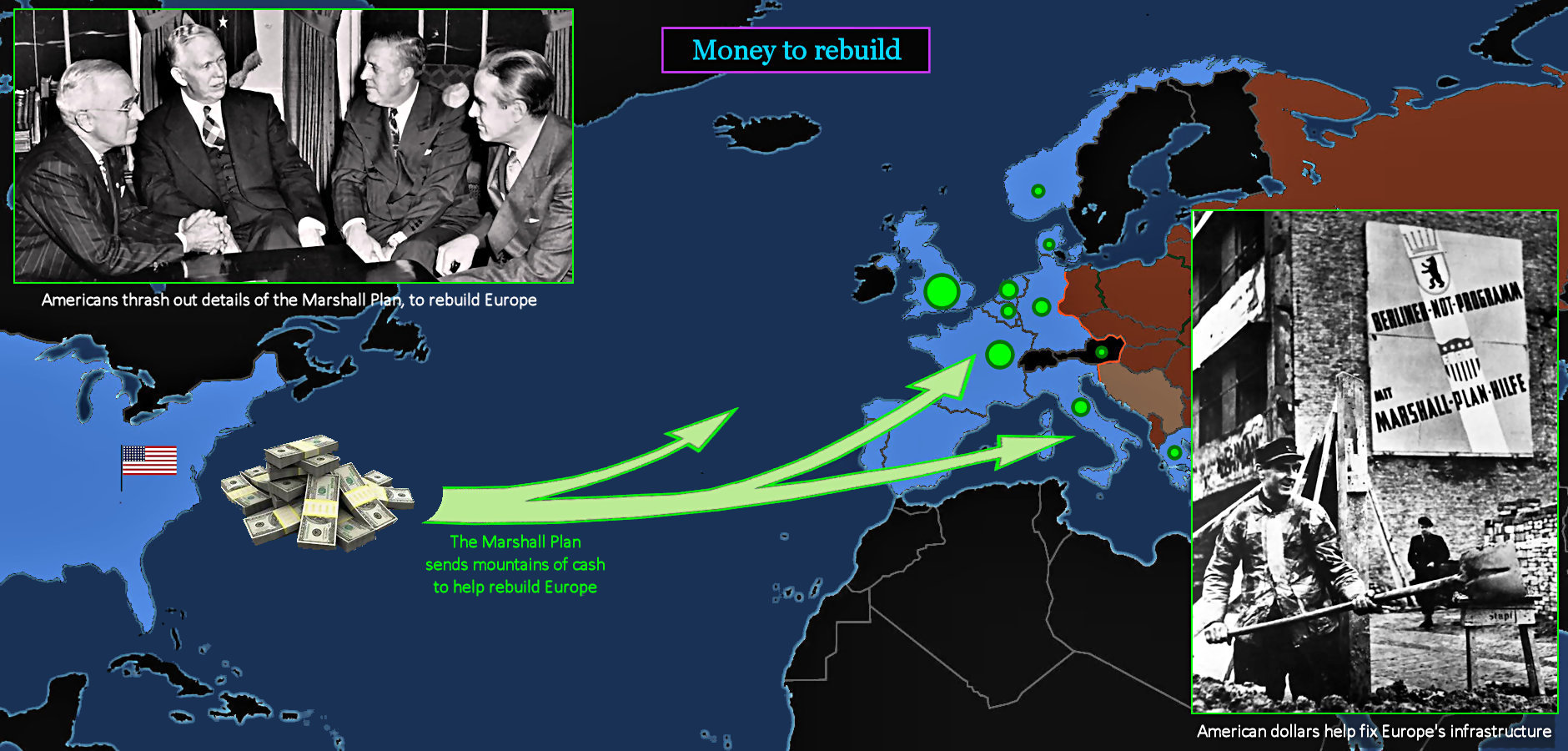
America to the Rescue America's post-war boom is so robust, and the devastation in Europe so deep, that officials in the US State Department decide it would be in America's best interest to help the Europeans rebuild. This is partly a humanitarian decision, and partly a strategy to restore Europe's ability to purchase American goods. GREEN circles on the map are proportional to the amount of US aid. None at all is offered to countries that are now under communist control. Stalin launches a similar plan of his own, but has few resources to support it. Although the aid is gratefully received, economists calculate that the Marshall Plan only boosts the total national income of recipient countries by 3%. Still, it's enough to prime the pump. | |||||||||
| |||||||||
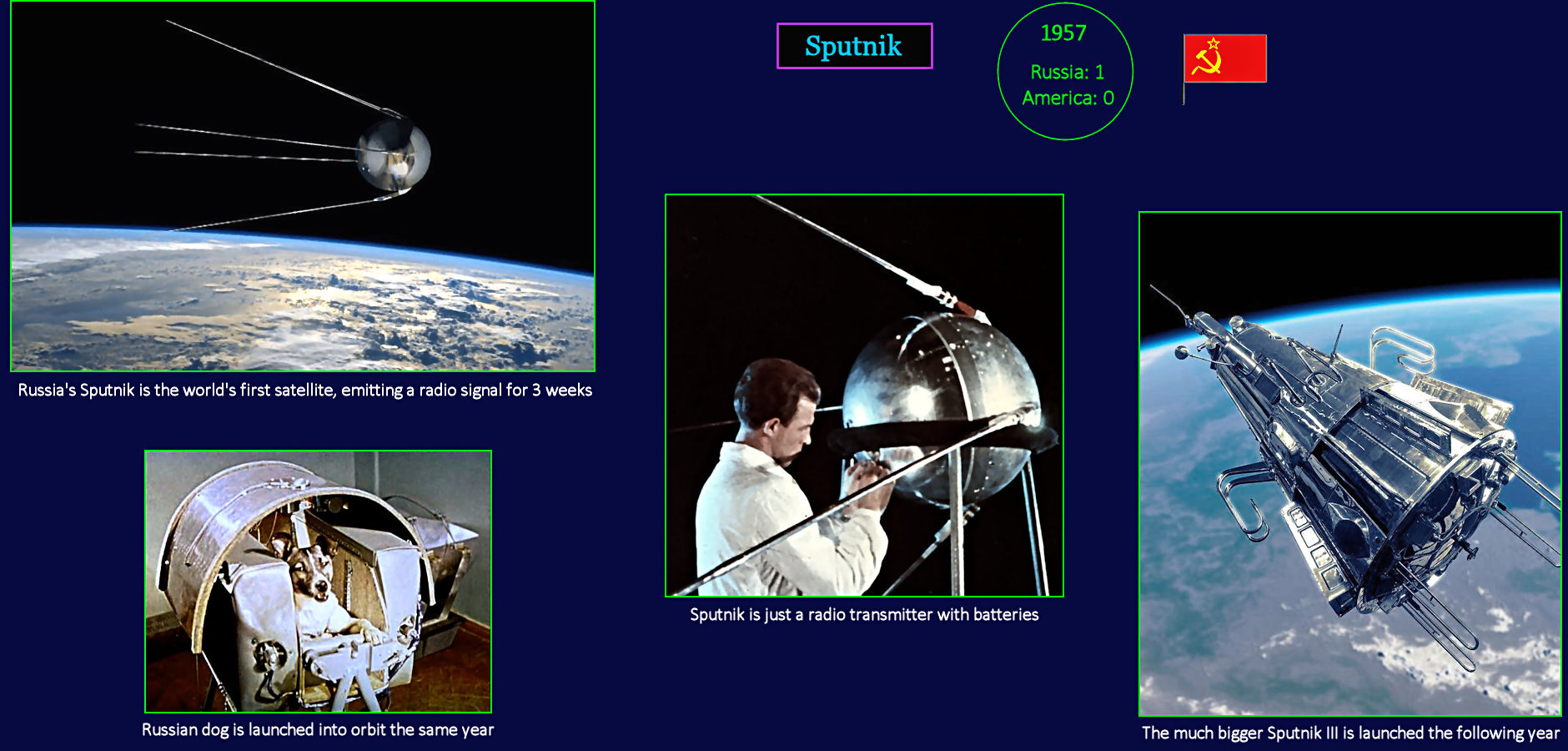
Bright Light in the Sky The term 'Cold War' has little real meaning for most Americans until 1957, when they are suddenly jolted by the news that the Soviets have somehow managed to launch a capsule into space. You can actually look up and see it in the night sky, transmitting a creepy little beeping radio signal that proves it's man-made. Americans are astonished, and a little scared, that the Soviets are now seemingly ahead of the US in technology. This is a real wakeup call for policy-makers, who suddenly realize that the contest between democracy and communism may be trending in the Soviet's favor. | |||||||||
| |||||||||
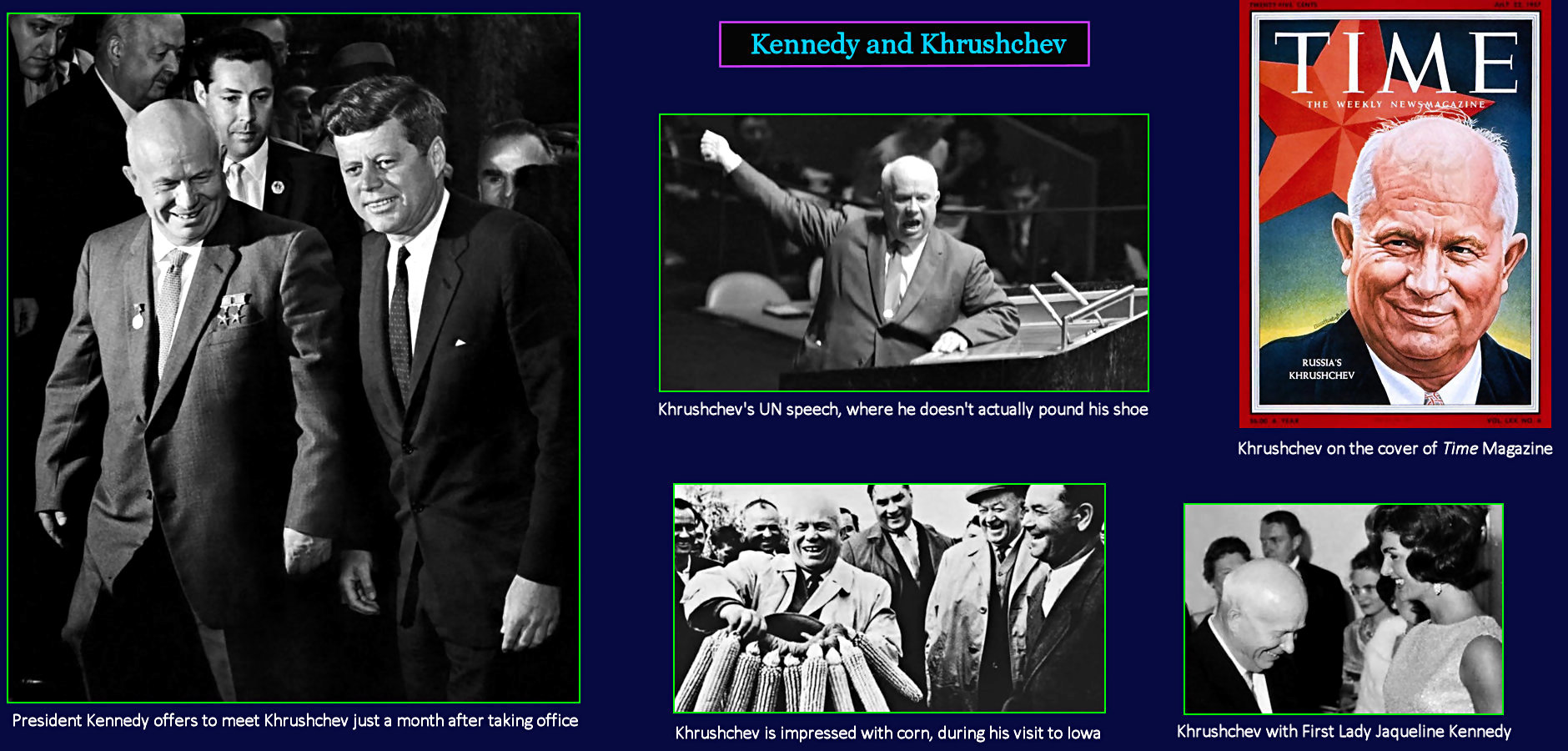
Contest of Will The rivalry becomes far more real when the Soviets select a brash, pugnacious Nikita Khrushchev to replace Stalin, who finally dies just four years before Sputnik. Suddenly, Khrushchev is everywhere on the news, taking jabs at America, and seeming to taunt America's young and untested president, John F. Kennedy. They meet in Vienna, where the loud Russian appears to dominate the more quiet American. Khrushchev has boldly promised to 'bury' the US, which he actually visited shortly before Kennedy took office. He continuously boasts that the Soviets are pulling ahead of America, having just surprised the world by detonating their own atomic bomb, thanks to technology secretly stolen from the American nuclear program. | |||||||||
| |||||||||
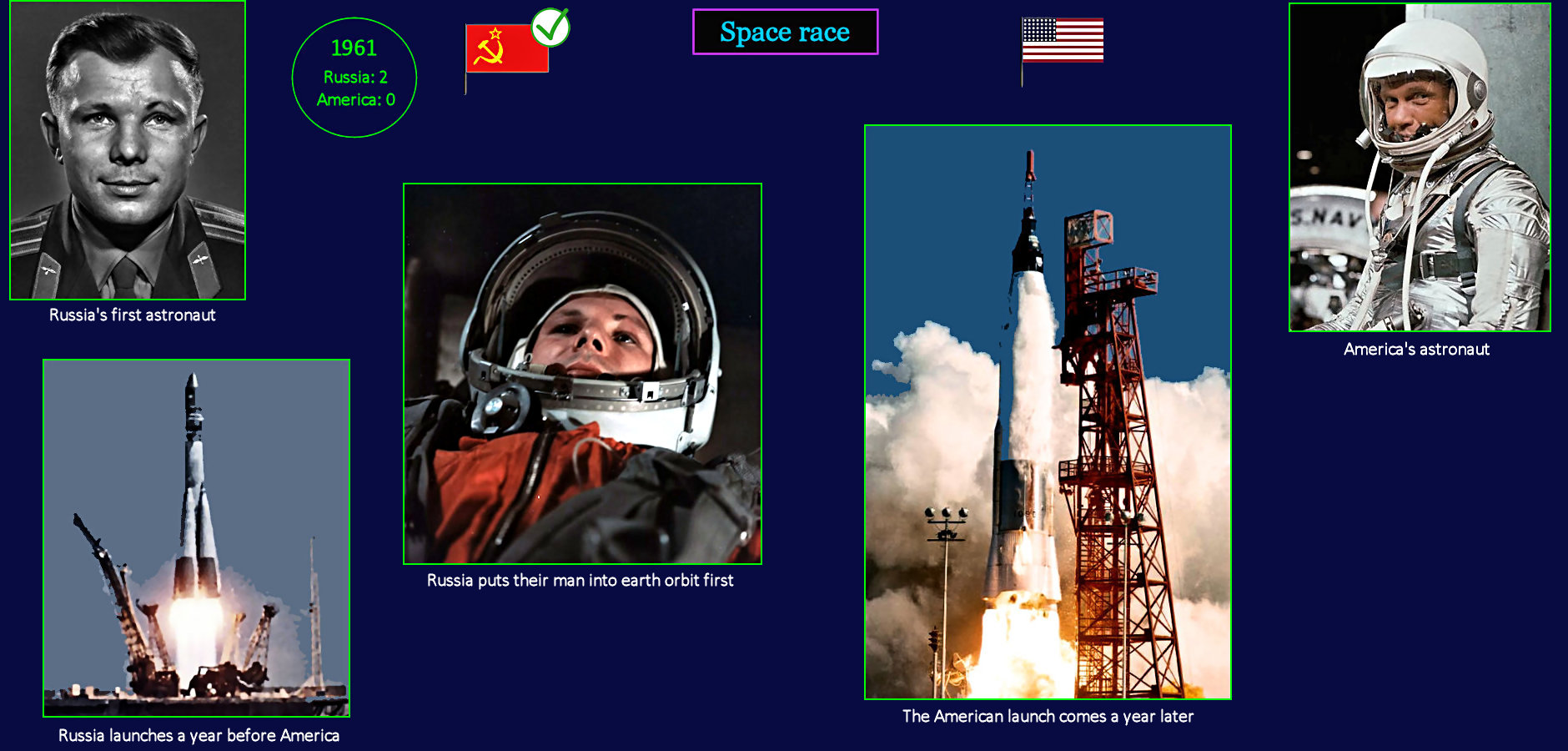
Game On The 'space race' becomes more serious later in the year, when the Soviets are able to launch the first astronaut into earth orbit. Within a month, Kennedy appears on national TV to signal that America is taking up the challenge. He announces the seemingly impossible goal of landing Americans on the moon, and getting them back safely, within 10 years. It's unclear how this can be achieved, but America's young NASA space program suddenly switches into very high gear, committed to catching up with the Soviets. Within a year, NASA is able to match the Soviets by sending its own man into earth orbit, and begins preparing for the far more ambitious task of landing a man on the moon. | |||||||||