| |
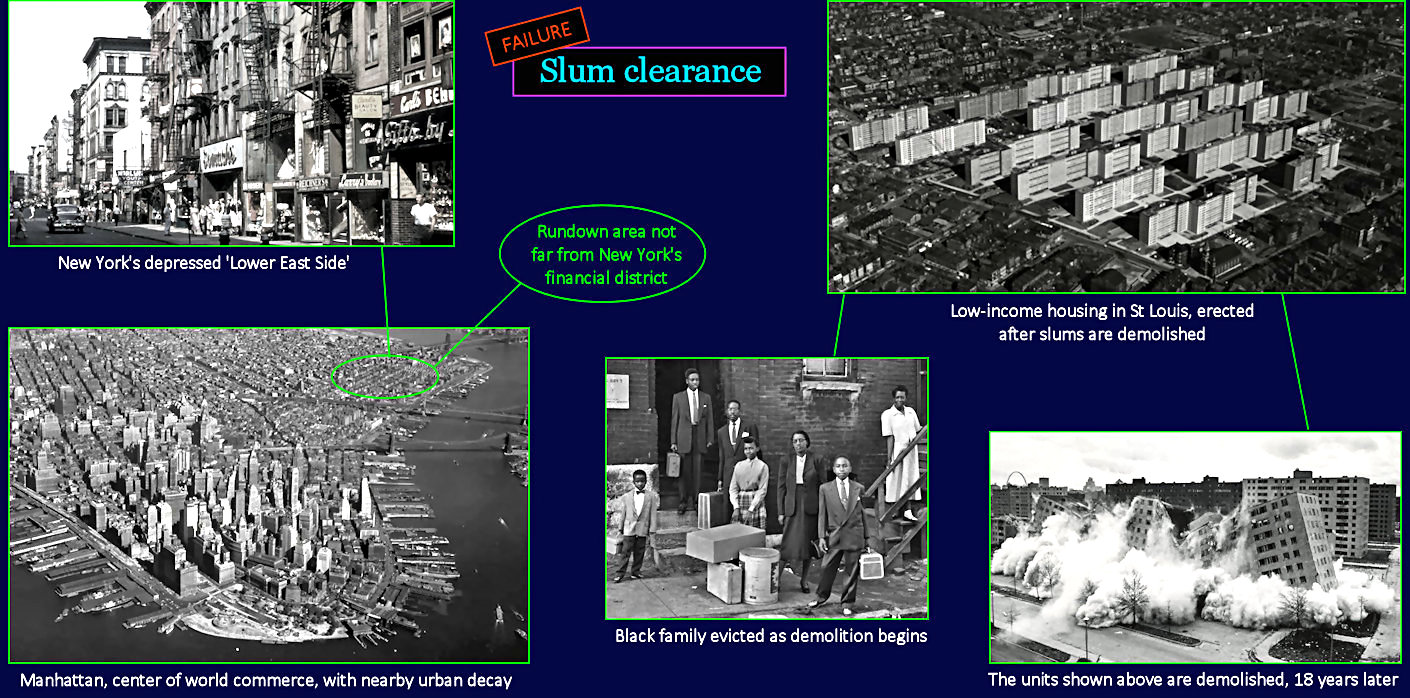
Urban Blight Many big eastern cities have sections of 'urban blight,' which detract from the city's appeal to visitors. New York has an area known as the Lower East Side, where incomes are low and resources meager. It attracts ethnic minorities, who cluster together in shabby neighborhoods that scare away more prosperous families. In St Louis, city planners identify a few areas that might be restored by demolishing and rebuilding. The tear-down phase is relatively easy, but the rebuilding effort turns out to be frustratingly difficult. There are no success stories. |
| |||||||||
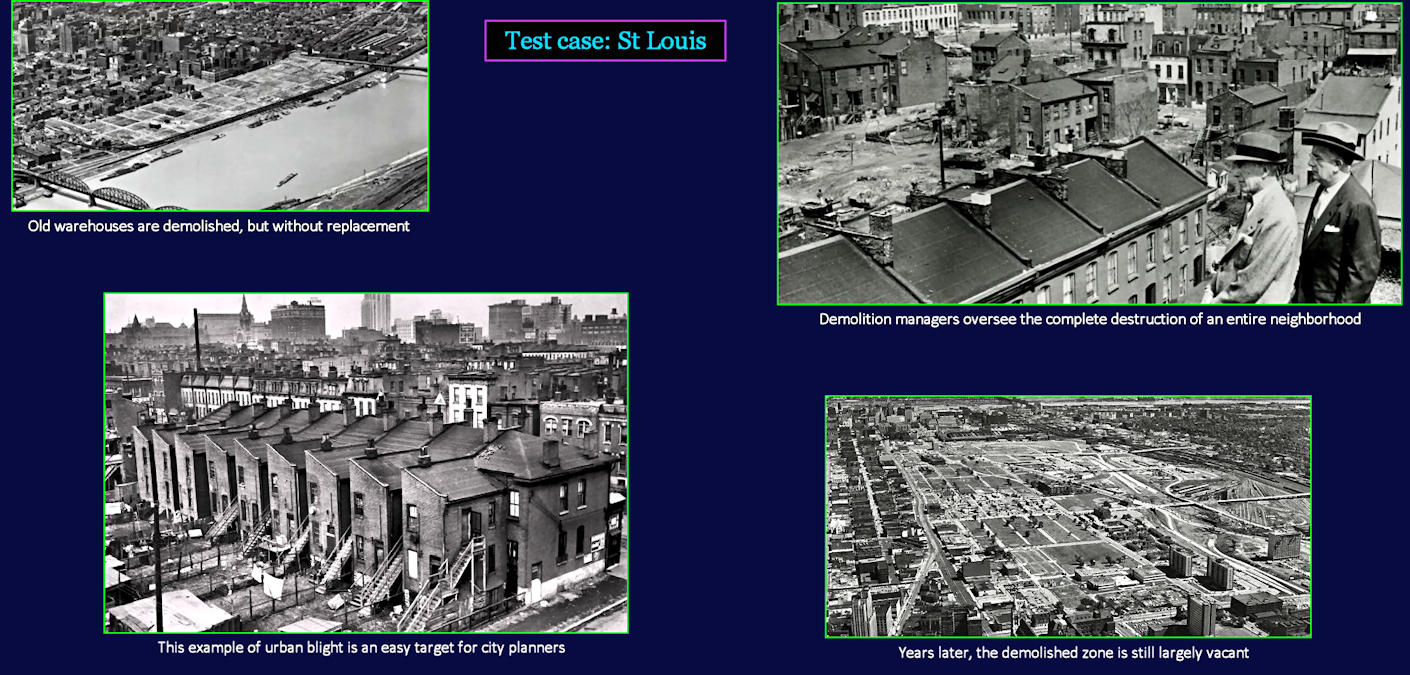
Now What? Urban renewal efforts in St Louis reveal the reality that such projects seem doomed to fail. The initial phase levels a large area of warehouses on the riverfront. With river traffic largely displaced by truck commerce, riverboats have all but disappeared, leaving warehouses empty. But the project stalls after demolition is complete. Planners next target a couple of Black neighborhoods, with much the same result. All the money is spent buying up land, and purchasing buildings, which are then reduced to rubble. There's nothing left for rebuilding, and private developers don't find the sites attractive. Even when new apartment towers are built, they offer little appeal to more prosperous would-be residents. In the end, they too are demolished. | |||||||||
| |||||||||
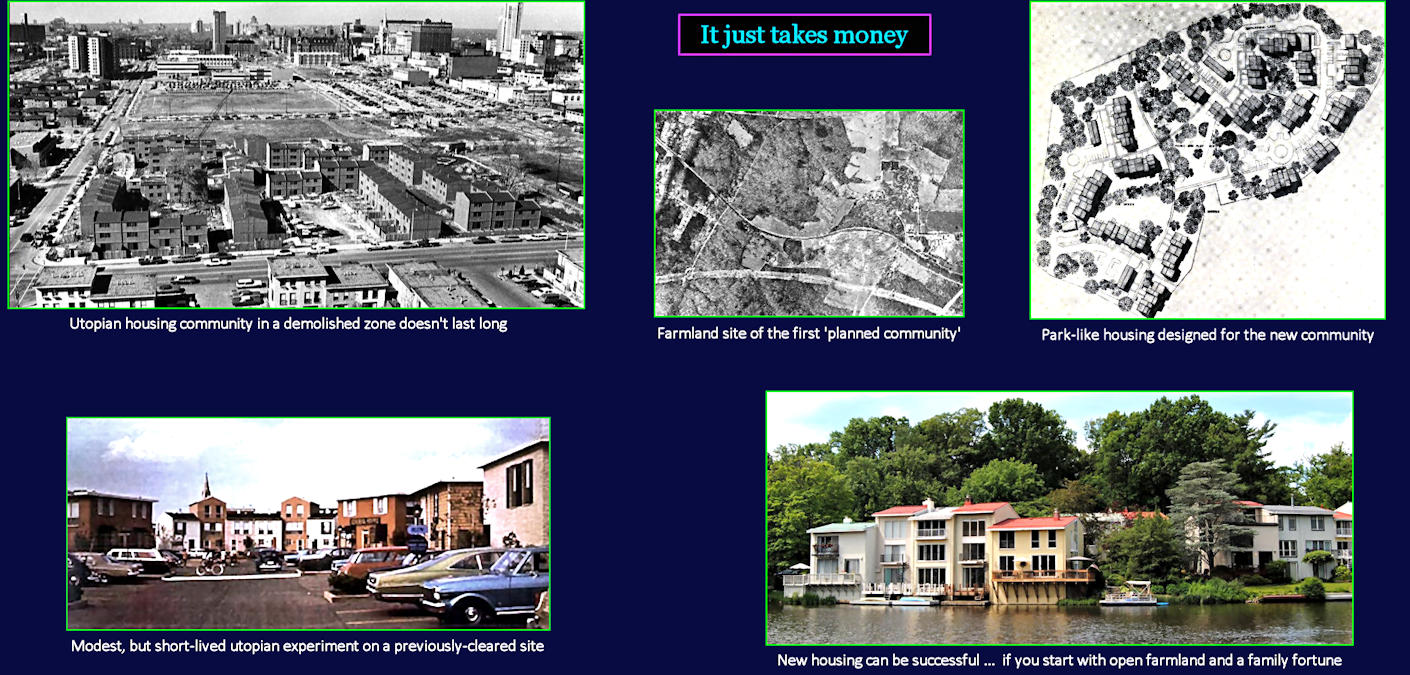
Test Case The demolition of a black neighborhood in central St Louis illustrates the problem. After demolition, a barren expanse remains idle for many years, earning the nickname 'Hiroshima Flats' (top left). A small model neighborhood is finally built at one end, which attracts artists and utopians, for a time. But there are continuing financial losses, and the project eventually fails (bottom left). By contrast, America's first big 'planned community,' created from undeveloped farmland in rural Virginia, is a big success. It includes a lake, parks, golf course, and even bridal paths (top and bottom right). The difference? Money and location. Residents aren't surrounded by the remains of a still-depressed urban center, but instead by carefully groomed parkland. | |||||||||
| |||||||||
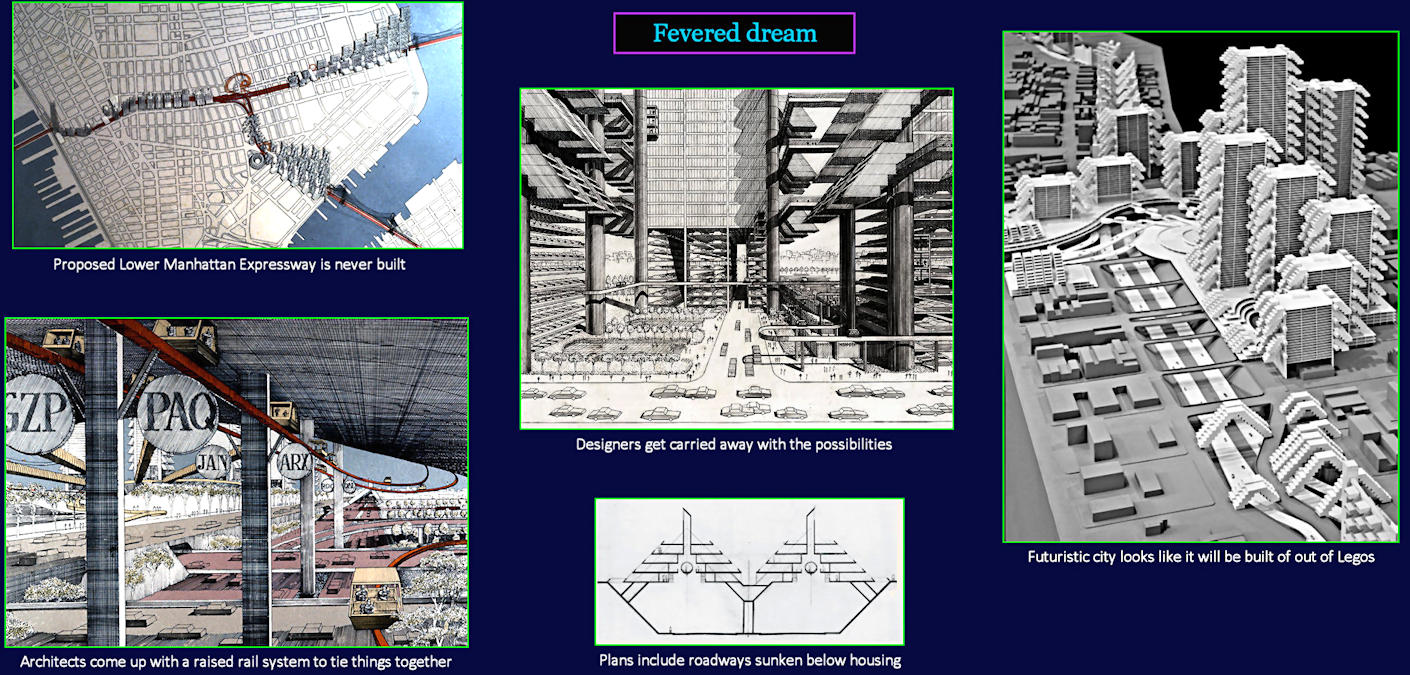
Mind Game Before all the air escapes from the brief experiment known as urban renewal, planners in New York get pretty deep into a utopian redevelopment plan to improve road access to lower Manhattan (top left). In retrospect, it's hard to believe that the early plans, illustrated above, are ever taken seriously. First proposed in 1941, it's actually approved in 1960. In the end, however, the project is finally shelved in 1971, after projected costs skyrocket far above the city's appetite for modernization. | |||||||||
| |||||||||
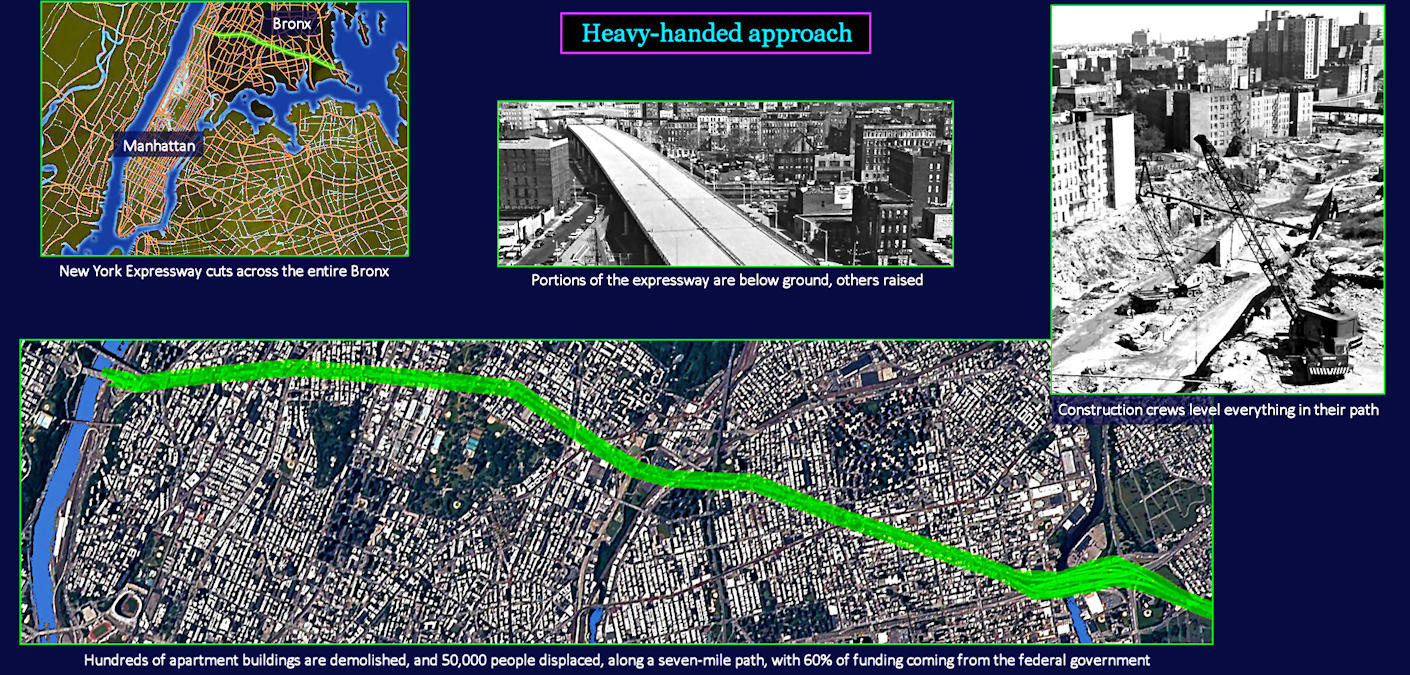
Bulldozer Alley While the visionary plan for lower Manhattan is scrapped, New York still manages to complete what amounts to the most ambitious redevelopment project ever attempted in America. It's called the Cross-Bronx Expressway, because it extends all the way across the Bronx. Along the way, it forces its way through block after block of existing neighborhoods, dividing the area into prosperous areas to the north, and low-income areas to the south. | |||||||||
| |||||||||
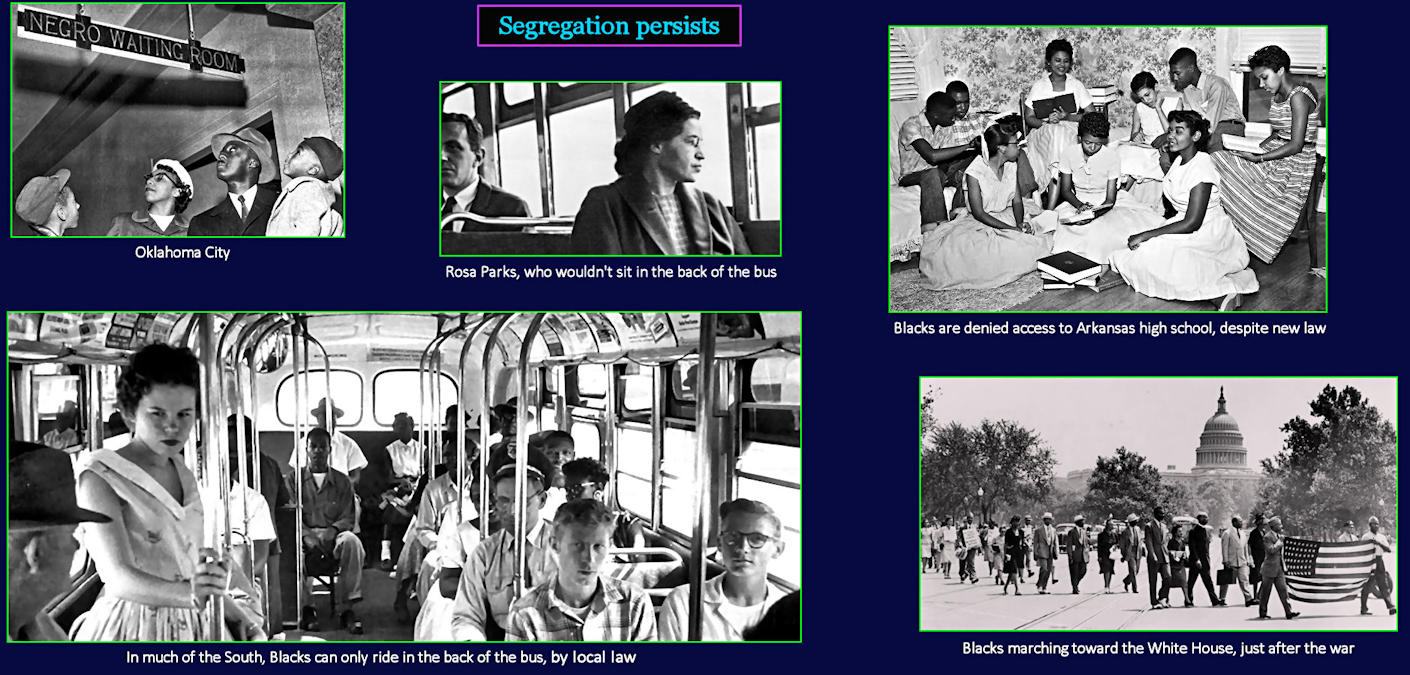
Festering Problem While urban planners struggle to find solutions in the North, Blacks everywhere are still living in a kind of apartheid world, kept carefully separated from Whites by the still-entrenched practice of segregation. Blacks are becoming increasingly dissatisfied with their exclusion from mainstream America. The Civil Rights movement has not yet properly begun, but already there are glimpses of what is to come. A small black woman named Rosa Parks gets the ball rolling in, of all places, deeply racist Montgomery, Alabama. When instructed to take a seat at the back of the bus, with other Blacks, she refuses to move. This is scarcely a year after the Supreme Court rules, in a landmark case, that Blacks must be allowed into public schools, at the very least. | |||||||||