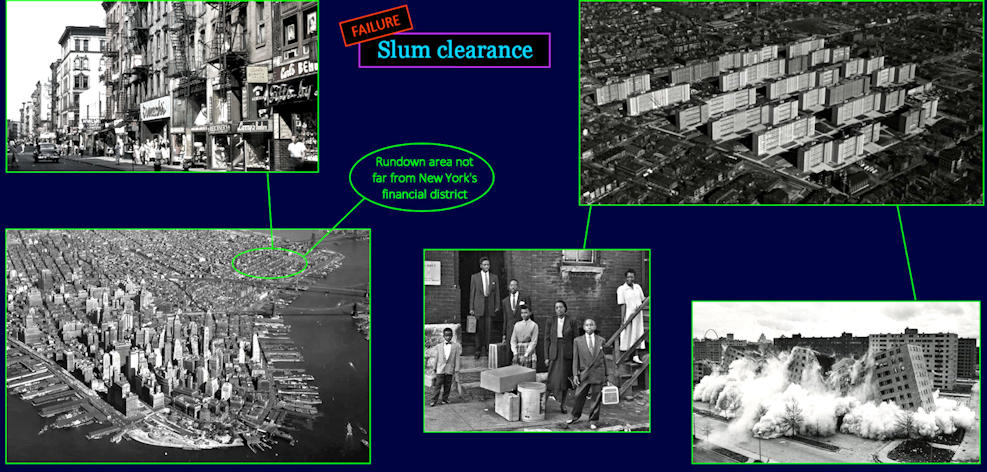
Decaying CitiesWhites are moving out to the suburbs, where the houses are new and the appliances modern. Blacks take their place in residential structures that often date back to the previous century. Some even lack plumbing. Supported by federal funding, a few cities try to keep the blight from spreading. They embark on something called 'urban renewal,' and begin tearing down black slums. This earns it a slightly different name. 'Negro removal.' |
| ||||||||||||||||
| |||||||||
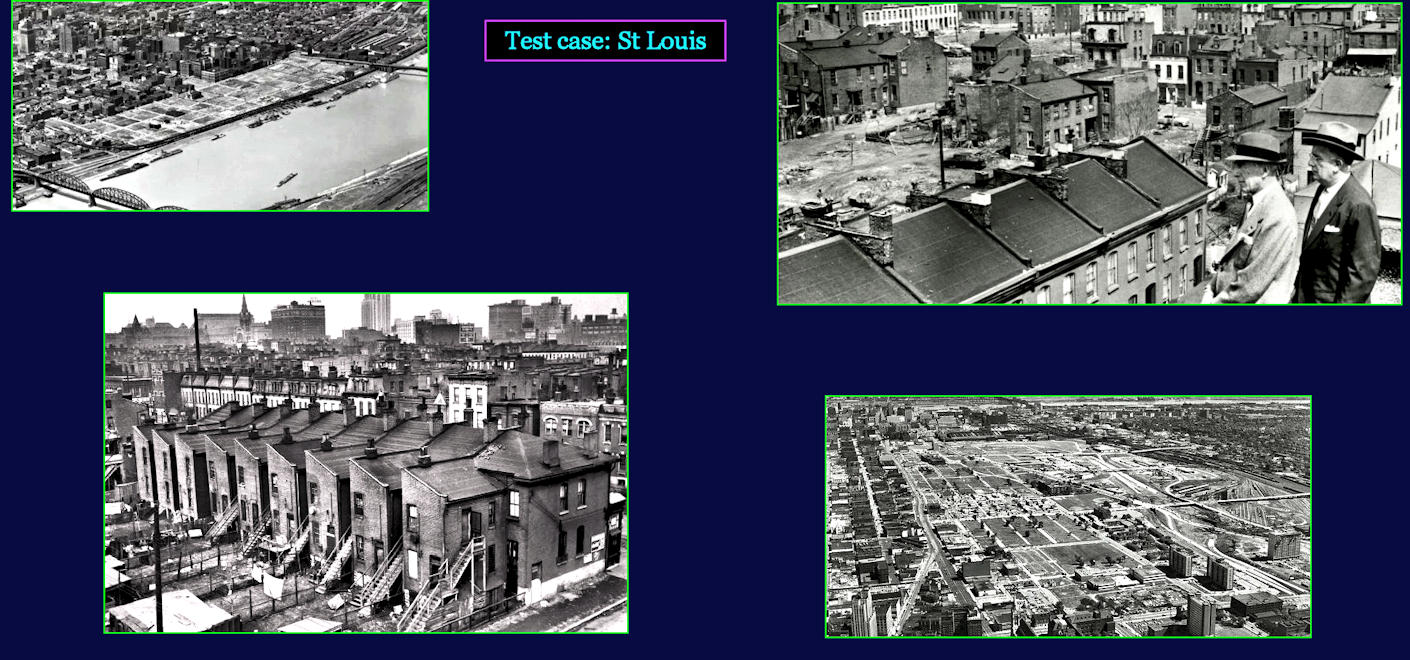
Now What? Urban renewal efforts in St Louis reveal the reality that such projects seem doomed to fail. The initial phase levels a large area of warehouses on the riverfront. But the project stalls after demolition is complete (top left). Planners next target a couple of Black neighborhoods, with much the same result. All the money is spent buying up land, and purchasing buildings, which are then reduced to rubble. Private developers don't find the empty sites attractive, so they lie vacant for years (bottom right). | |||||||||
| |||||||||
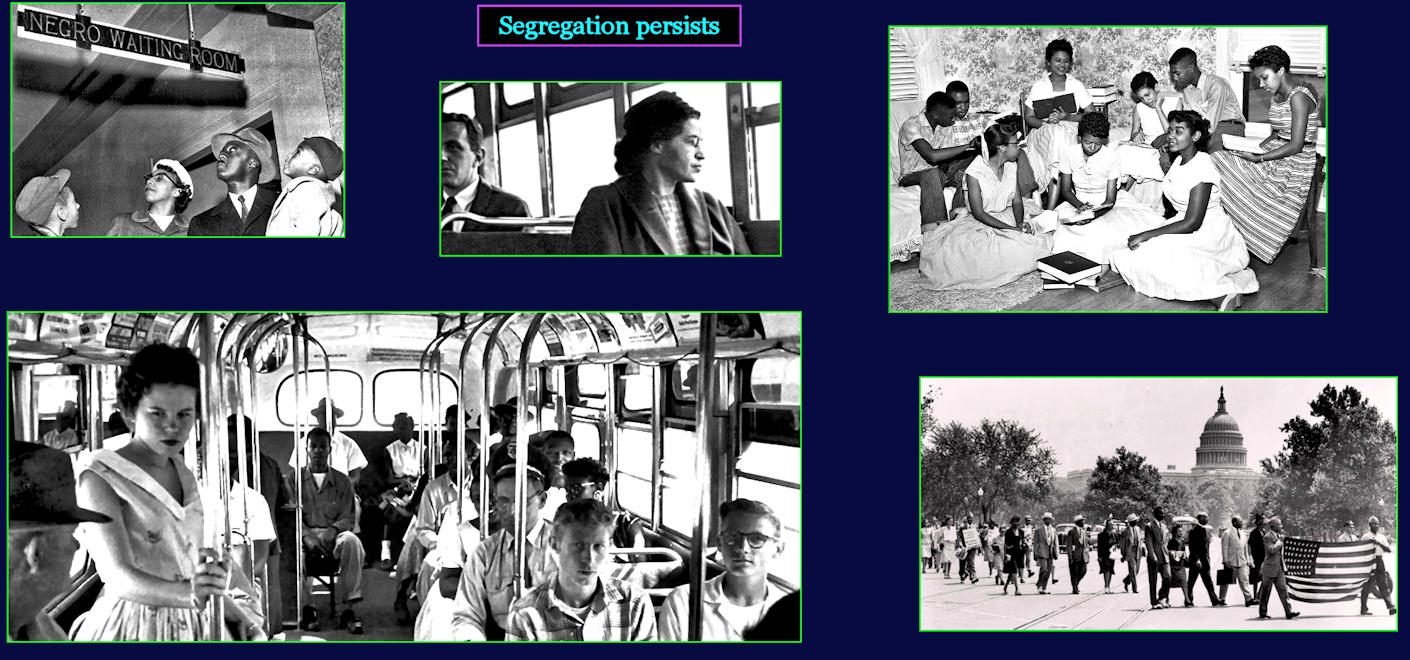
Festering Problem Blacks everywhere continue to line in an apartheid world, kept carefully separated from Whites by the still-entrenched practice of segregation. Blacks are becoming increasingly dissatisfied with their exclusion from mainstream America. The Civil Rights movement has not yet properly begun, but a small black woman named Rosa Parks gets the ball rolling in deeply racist Montgomery, Alabama. When instructed to take a seat at the back of the bus, with other Blacks, she refuses to move (center top). | |||||||||